هنریک ایبسن، نمایشنامه نویس و سراینده ی نروژی، زاده ی سال 1825، از بزرگ ترین ستاره های سپهر هنر و اندیشه ی همه ی جهان و همه ی زبان هاست. (هددا گابلر)، هشتمین نمایش از نمایشنامه های مدرن ایبسن هنوز شگفتی برمی انگیزد و همه را انگشت به دهان می کند. تیمسارزاده ی ناز پرورده ای که از میان پرسمار خواستگاران خویش همسری برگزیده که خانه ی زن وزیر را برایش خریده و به سفر ماه عسل شش ماهه اش برده و... هددا گابلر آدم را به یاد مثل خودمان می اندازد: (تومون خودمون رو می کشه، بیرونمون مردم رو.)
Henrik Johan Ibsen was a major Norwegian playwright largely responsible for the rise of modern realistic drama. He is often referred to as the "father of modern drama." Ibsen is held to be the greatest of Norwegian authors and one of the most important playwrights of all time, celebrated as a national symbol by Norwegians.
His plays were considered scandalous to many of his era, when Victorian values of family life and propriety largely held sway in Europe and any challenge to them was considered immoral and outrageous. Ibsen's work examined the realities that lay behind many facades, possessing a revelatory nature that was disquieting to many contemporaries.
Ibsen largely founded the modern stage by introducing a critical eye and free inquiry into the conditions of life and issues of morality. Victorian-era plays were expected to be moral dramas with noble protagonists pitted against darker forces; every drama was expected to result in a morally appropriate conclusion, meaning that goodness was to bring happiness, and immorality pain. Ibsen challenged this notion and the beliefs of his times and shattered the illusions of his audiences.
What is in a text, what was written, what we read, or, in the case of plays, what is acted out?
Continuing my theatre season, I attended a performance of Hedda Gabler, but read the text before hand, and listened in parallel to an excellent dramatized version .
I had watched another performance during my university days, and my memories of the work seem to be centered on the rights of women. To find their own place in their society and to find and exert their own volition in their lives aI recalled as the core idea in the play.
Hedda (yes, she is such a famous character that the first name itself is enough to know one refers to Ibsen’s creation), has been compared toMedea of Euripides, figure on which I also had recently a multi-media run. Although married, the play bears her maiden name as title. That in itself is enough of a sign of what is to follow.
But reading/listening this about 125 years after it was written, I could not react to the supposed plight of women. Instead I saw nastiness, envy, misdirected frustration, presumptuousness, insolence and a manipulative woman. Generally I do not like to judge characters in my reviews, neither for their morals, nor for the empathy I may feel or not feel for them. What I am trying to say is that the supposed investigation of the core of nature, will, volition, determination of woman, was simply not there for me.
Ibsen admired classical drama and followed the three rules of expounded by Aristotle in his Poetics: unity of time, place and plot. But for me the tragedy was not there. Hedda, a fascinating character, did not reach the stature of a Medea. They share the destructive instincts but one did have a sense of justice, while the other seemed driven by envy and unwarranted frustration.
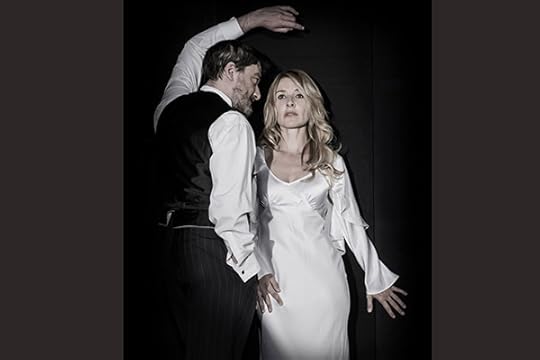
But then I saw the Madrid staging and interpretation and a different play came to the foreground. Hedda came across as a more ambiguous character than I first interpreted. She had toned down her anger and frustration and appeared to live in her own world. She seemed out of place – out of her husband, out of her lover, out of friendship, out of entertainment, out of her suitors, out of beauty and material wellbeing, out of intellectual interests. And may be the costume designs helped in this and in bridging the period gap from the 1890s to today. They were the models by a top Spanish designer who often dresses the royals. And he had the characters begin the play in late 19C clothes but wearing contemporary clothes by the end.
Hedda’s gowns were different. They made her stand out, again, of her world. And as her timeless wardrobe went from the nuptial white at the beginning to pitch black at the end – in grey dégradés – and accompanied her in her estrangement towards the only things that gave her comfort: her guns. Her only possible exit.
Interpretation through declamation, interpretation through movement and gesture, interpretation through stage setting, interpretation through costume dressing..
Ibsen strives to expose the interpersonal tensions that the emptiness of interiority can cause. All the dramatic consistency, dynamism, and Hegelian logic come from a precisely determined nothingness, from an empty being. Everything imminently will explode when a being, swollen to a block with boredom, which persists, by cowardly and insensitive idleness to his entertainment, begins to materialize his distress unmoved. From then on, suffering awaits the imminent moment of abolishing everything. That's a big play that is worth the detour.
Ibsen alcanza con Hedda Gabler las cotas más altas de su teatro. Gracias a este coctel de personalidades que es la obra, Ibsen consigue con Hedda su personaje más complejo y sugerente. Pero, ¿quién es Hedda Gabler? ¿Una hija de puta manipuladora, una niña caprichosa y cruel que se aburre, una fiera que enloquece encerrada en su jaula, una mujer víctima de su género y su cobardía por no atreverse a rebasar los límites?
De lo que no cabe duda es que Hedda Gabler representa los demonios interiores que todos llevamos dentro. Por suerte, no siempre son tan terribles y autodestructivos como en su caso, así, la mayoría de nosotros podemos dominarlos, construir cauces por los que reconducirlos, hacer concesiones sociales y morales sin que por ello suframos un gran menoscabo.
No es el caso de nuestra heroína a quién su condición de mujer deja pocas escapatorias (las pistolas con las que únicamente juega Hedda es un símbolo: “Me quedo ahí y disparo al aire”), y las que le deja, ser madre y esposa amantísima, no le satisfacen o le asquean. Tampoco tiene la posibilidad, bien por su condición de mujer, bien por no poseer las capacidades necesarias, de agarrarse a un objetivo como el que ayuda a Eilert Løvborg.
Eilert es un viejo amigo que vuelve a su vida y al que en tiempos admiró y rechazó por las mismas razones: su desmesura, su libertad para quemar sus turbias pulsiones en indecentes excesos con alcohol y mujeres sin importarle las imposiciones sociales y morales, pues nada hay que Hedda tema más que ser motivo de escándalo, más incluso que el vacío al que se asoma peligrosamente y que la llena de una rabia que emponzoña su interior y que la rebasa salpicando a los que la rodean y cuya felicidad no soporta. Mucho menos la felicidad, y por tanto la paz, que Eilert, su alma gemela, cree que conseguirá una vez publique su extraordinario libro, un libro que revolucionará su campo de estudio y en el que ahoga su furia contra el mundo.
Y para resaltar aún más estas tormentosas almas, el autor rodea a los dos personajes de otros en los que prevalece el ángel que también anida en nosotros con mejor o peor fortuna: Jørgen Tesman, marido de Hedda, su tía, Juliane Tesman, y Thea Elvsted, antigua enamorada de Jørgen y quien presta una ayuda esencial a Eilert en la realización de su libro.
Esta separación de caracteres es muy significativa del pensamiento de Ibsen, pues mientras dota a los primeros de personalidades interesantes, de inteligencia y creatividad, los segundos son aburridos, serios, mediocres, pero asimismo, y al contrario que los primeros, valientes, íntegros, confiados, entregados a los demás. También son personas felices o potencialmente felices. Hedda y Eilert están incapacitados para ello.
Y en medio de ambos grupos encontramos al Juez Brack, amigo de los Tesman. En su interior no parecen existir ni demonios ni ángeles que merezcan tal nombre. Brack es un hombre inteligente, equilibrado, que tuvo la suerte de nacer en un entorno cómodo en el que disponer de todo aquello que precisa y en el que disfrutar, sin escrúpulo alguno, de los placeres que la vida le va ofreciendo, sean lícitos o no, sin desesperarse por lo que al final no pueda saborear. Será el detonante de la tragedia.
Estos son los mimbres, verán ustedes como los entrelazan y qué objeto consiguen crear.
“It’s a release to know that in spite of everything a premeditated act of courage is still possible”—Hedda
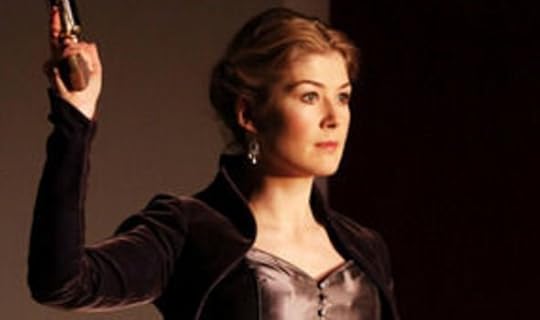
"If in the first act you have hung a pistol on the wall, then in the following one it should be fired. Otherwise don't put it there"--Chekhov
I love this play. I decided to listen to it since I had just (finally!) read The Handmaid’s Tale, so thought about nineteenth century (male) feminist playwright’s Hedda Gabler (and A Doll House, too, yes). He’s been on my mind because of my re-reading of his (environmental politics) play, An Enemy of the People. Hedda is a strong-willed, bright and complicated nineteenth-century woman in an unhappy marriage, bored, bored, bored and driven a little stir-crazy by all the limitations imposed on her by her gendered historical context.
By marriage she is Hedda Tesman, but Ibsen knows Hedda is her own person. She is essentially Hedda Gabler, not Hedda Tesman! And everyone wants Hedda: her milquetoast academic husband George Tesman, the slimy Judge Brack, the passionate writer and thinker Eilert Lovberg. They all want control over her in some way, and Hedda will not be controlled.
But is Hedda having a baby? Many people seem to suspect so. Well, babies are good, right? But Hedda is not made of your prototypical maternal material. As Hedda sees it, having a baby would seal her fate to be under Tesman’s thumb. It’s that whole baby vs. career struggle, in a surprisingly progressive Victorian context. And for a paired text, read Ibsen’s Doll House or The Yellow Wallpaper by Charlotte Perkins Gilman. What was going on with all these persistent nineteenth-century women? Didn’t they know who was in charge?! (Kidding here!) But seriously folks, how long has the struggle for equal rights and self-efficacy been going on for most women all over the planet!? (Forever, correct, and see Marjane Satrapi's Women, Life, Freedom for a comics treatment of Iran after the murder of Mahsa Aminia in September 2022).
So Hedda is a repressed Victorian woman driven maybe a little crazy by her limited options as a woman and all these admiring/controlling/suffocating men. She’s neither admirable nor despicable, but she is never boring.
Oh, that gun you see Hedda fooling around with in the first act? Well, following Chekhov’s dramatic advice, oh, yeah, Ibsen has Hedda fire that gun.
Norwegian playwright, Henrik Ibsen’s work Hedda Gabler, introduced me to one of my favourite female leads in recent memory. What a complex (and painful) character she was.
Hedda is an unhappily newly married woman who has just returned to Oslo after a European honeymoon. It’s clear she was bored witless by the academic efforts of her husband, Jorgen Tesman, during this trip. He’s a sincere, accommodating young man, and spends much of his time and effort researching European history for a book he is writing. He has high hopes to provide for the high expectations of his wife, she is the daughter of a general and hasn’t had to do without much during her privileged life.
There is another academic on the scene, a man called Eljert Lovberg, now this guy has some sort of sketchy past – we don’t’ get to learn about this until later in the play, but his actions – previous and current – have a significant impact on the turn of events in this story. There is another young lady coming in and out of scene, called Mrs Elvsted, an old school friend of Hedda. They didn’t really hang in the same circles as each other – however, Mrs Elvsted is also involved in the various interpersonal relationship (past and current) involved here. It’s messy.
I found the storyline riveting. It held my interest from start to finish. But for me, the real interest was Hedda. She is a very demanding young woman, totally unsuited to her new husband. I don’t think he gets that – like most blokes, he’s a bit slow off the mark when it comes to relationships. But she’s more than just demanding. She shows signs of being selfish, narcissistic, revengeful, and cruel – for starts. But it’s all couched in the rigidly stuffy, social mores of nineteenth-century Norway.
The ending surprised me. Now to check out some of the Hedda Gabler plays available on YouTube.
I enjoyed this one so much I started another of Ibsen’s plays immediately after - Wild Duck.
4 Stars
Footnote: There were numerous notes, in pencil, made by a previous reader in this book. I found it really amusing, it was almost like a buddy read! Most notes were innocuous – however a couple stood out.
The first was ”kill yourself”, the second ”Lying bitch!!”.
Now this added to my enjoyment – it made me pause a few times and think about this person, who they are/were, what they were like and what they thought of the story. One thing I can say for sure is, this phantom buddy reader of mine was emotionally invested in Hedda Gabler. I can understand that.
That's a charming character, Hedda Gabler, troubled, complex, surprising, full of dark corners and embers, who tosses us from one feeling to another. Hedda Gabler is terrible, cruel, and destructive, but we understand her; she touches us with her inability to bear the mediocrity, the ugliness, and the ridiculousness of life. She is bored, Hedda; she is bored to death, stuck in a life that does not suit her, is not her size, and is going into a tailspin. There are aspirations in her, demands that violently clash with the world around her; she is both executioner and victim; she shocks us with her darkness, but we pity her. As if her conviction that life is not worth living placed her beyond good and evil. As if the tensions between the constraints of conventions, the narrowness of what life offers him, and his deep desires could only produce an explosive force.
It's a liberation to know that an act of spontaneous courage is yet possible in this world. An act that has something of unconditional beauty. Hedda Gabler ~~ Henrik Ibsen
Hedda ~~ abrasive and openly sarcastic ~~ why have men tried to own her. She is intelligent. She's well‐born. She's also lethal, as we soon find out. Hedda is willful, insatiable, articulate, but no more demanding of others than she is of herself.
One of the problems with Ibsen's play is that none of the supporting characters are as interesting as Hedda. Judge Brack comes closest, but even he is no match for Hedda.
Make no mistake, this play is an actress' dream. Even minor female roles such as Aunt Julie are given interesting moments that allow them to shine.
Nearly 130 years later, Hedda is still as powerful as ever.
ایبسن نمایشنامه فمینیستی مینوشت وقتی هنوز فمنیسم مد نبود. من با ترجمه مشیری خوندم، از فیدی پلاس، که بعد رفتم مقدمه بهزاد قادری ر از طاقچه بینهایت خوندم و فهمیدم اشتباه کردم توی انتخاب ترجمه. بهزاد قادری یک مقدمه مفصل برای این نمایشنامه و آثار ایبسن داره که خوندنش خیلی کمک کرد بهم و احتمالا به بقیه هم کمک کرده چون توی ریویوو ها مشخصه. دوستش دارم ♡
Hedda Gabler is Ibsen's attempt to explore on the male and female inner selves, and how they conduct themselves according to their inner feelings and conflicts while being submissive to social restrictions and obligations. Unlike in A Doll's House, this is done from the perception of self rather than from the perception of society.
Hedda Gabler, a spirited woman, is married to a naive lethargic academic. Being a general's daughter, Hedda has a natural knack for adventure. But her nature is not complimented by her marriage, and she feels bored and restless. This makes her cold, reckless, and manipulative complicating many lives including hers.
This is a dark tale that gives the reader some uncomfortable sensations. However, the reader cannot deny certain truths that are expounded. Some truths are bitter and uncomfortable, yet, they are true. The honest and bold exposition of these truths adopted by Ibsen gives the play a touch of reality.
Realism is also injected into the characters so well by Ibsen that we do not see them as fictitious characters but as real humans with flesh and blood. I had similar feelings about the characters of A Doll's House. It is a characteristic feature of Ibsen that made his plays so popular and widely performed.
Ibsen's writing is brilliant; it's full of suspense and drama. I love his clever and witty dialogues. They keep the reader actively engaged with the read. Hedda Gabler is a play; it was written to be performed. Yet, the reading is no less exciting than watching a performance because it's written in such a way that the drama is unfolded in the reader's mind when reading the text. That is the ability of a genius playwright. And Henrik Ibsen stands tall in the category.
We read this in high school. We were sixteen, what did we know? Fifty years later it is the most awesome work. Godzilla loosed upon the innocent villagers. They don’t stand a chance. Stomp. Crash. Kaboom. It’s so cool. Go monster!
اگه به هدا گابلر به عنوان یک اثر زمانمند نگاه کنیم، در زمان خودش یه شاهکار هنجارشکنانه و خیلی جلوتر از زمان خودش بوده؛ چرا؟ چون دقیقا عین نمایشنامه عروسکخانه (البته به مراتب دیوانهوارتر) از اولین نمونههای ادبیات فمنیستیه؛ اونم قبل از اینکه اصلا چیزی به نام فمنیست خیلی تو دنیا مطرح باشه. توی دنیای مردسالار عصر ایبسن، این نمایشنامه میتونه حرفای بسیار زیادی برای گفتن داشته باشه. از طرفی، از نظر ساختاری، نمادین و عمق روایت هم (همونطور که مترجم نزدیک n صفحه برای این نمایشنامه و ابعاد و حواشیاش تحلیل و توضیح آورده) واقعا متن خوبی به نظر میرسه.
اما آیا هدا گابلر (رویکرد و خود شخصیتش) در زمان حال جایی داره؟ به نظر من اندکی بله و بسیاری هم نه! به نظر من دنیای الان با تقریب خوبی از اون مردسالاری دوران ایبسن گذشته (البته اگه نسل قدیمیتر کشورهای جهان سوم و... رو قلم بگیریم و به اینکه بعد این مردسالاری به چه چیز مبتذلتری تبدیل شده کاری نداشته باشیم). برای همین، به نظر من هدا گابلر با تمام خوبیها و بدیهاش، خیلی اثر سرآمدتری از مادام بوواری نیست (حداقل در مقوله فمنیستیاش و نه در عمق اساطیری و نمادینش). به نظر من مادام بوواری فقط به گذشته تعلق داره. درسته که خیلی مشکلات و دغدغههای هدا گابلر هنوزم وجود داره و اون جنس محرومیت و عدم آزادیِ تحمیلی از سوی دنیای مردانه که هدا حس میکنه، هنوزم کم و بیش تو برخی زندگیها پیدا میشه، ولی به نظر من دنیای امروز تا حد خوبی از این معضلات عبور کرده - دستکم از نظر فرم و صورتِ این دست از مشکلات.
حالا منظورم از اینا چیه؟ هدا گابلر دقیقا عین مادام بوواری تن به ازدواجی مصلحتی و آروم با یه آدم خوب و تلاشگر داده؛ در واقع، اونم آدمی که نویسنده کلیشهوار، ازش یه ابله میسازه: ترکیبی از خوبی و پاکی و سادگی و لودگی و نفهمبازی و نادیدهگرفتنِ افراطی (حتی اگه عین یورگن تسمانِ این نمایشنامه باهوش و درس خونده باشن). به زبان ساده، مردانی گاو! و هدا گابلر چیکار میکنه؟ با جسارتی بینظیر (!) در دوران خودش، دست به هنجارشکنی میزنه و سعی بر تغییر سرنوشت مردها داره تا به آزادی که میخواد برسه. هدا روش خاصی در این رویه داره و در نهایت، موفق میشه سرنوشت همسر و دلدار قدیمیاش رو، که انسان شدیدا دستکاری (manipulate) کنیه، شخم بزنه. تنها کسی که زور هدا بهش نمیرسه، قاضی بِرکه.حالا قاضی برک کیه؟ به نظر یه دغلباز قهار و قدرتمند و مردسالار اما در عین حال، انگار ناموفق در مسائل مربوط به جنس مخالفی عین هدا. قاضی بِرک در زمینهٔ رفتار و کنترل هدا جوری باهاش شطرنج بازی میکنه که از اینکه هدا لقب «تنها خروس مرغدونی» رو بهش میده، نه تنها ناراحت نمیشه، بلکه خوشحالم میشه. (اینجا یه اسپویل سنگین داریم) به نوعی برک نقش خدای مردسالاری کثیف رو بازی میکنه و هدا که زورش بهش نمیرسه، از در دوستی و خنده و عشوهگری و... وارد میشه و تهش که شکست میخوره، انتقام خودشو از این شکست در قبال بردگیِ مردسالاری با گرفتن جون خودش میگیره؛ که تهش مثلا بفهمیم سایهٔ مردسالاریِ کثیف هنوز قدرتمند و پیروزه در عرصهٔ زندگی، اما هدا گابلر در داستانِ نمادینِ زندگیِ آزادیطلبانه پیروز نهاییه.
اما خب که چی؟ خب من از شخصیتی به نام هدا گابلر، اگر در زمانهٔ حال وجود داشته باشه، متنفرم؛ همونطور که از قاضی برکها متنفر بوده و هستم. به نظرم این تایپ شخصیتهای قالبی باید به تاریخ بپیوندن؛ در واقع، همه تایپ شخصیتهای این نمایشنامه. این دنیا نباید دیگه به زنانی انقدر اسیر و نادیدهگرفته شده که ضد مرد شده باشن نیاز داشته باشه. و نه به مردانی که هر یک به نوعی ابلهاند یا سودازده و دغلباز و سرکوب شده و شیطان صفت. به نظر من دنیای الان با همه خوبیا و بدیاش شاید کمکم بتونه این دو قطبی رو از بین ببره. به تمام ارکان هستی قسم، آزادی طلبی واقعی با مقصر انگاری جنس مقابل به دست نمیاد و هرگونه اقدام رادیکالی (از جمله سعی بر دستکاری کردن سرنوشتِ جنس مخالف و... برای شکستن جبر زندگی و بازپسگیری آزادی یا حفظ آزادی که از هدا و قاضی به چشم خورد) همه چیز رو تو دنیای الان بدتر میکنه. زمانی که این دو قطبی تو خودش حل بشه و بفهمیم ما همه ادما، فارغ از جنسیت، یه مشت دردیم و مشکل و ناتوانی و محرومیت و جبرکشیدن و... شاید چیزا اوکه شد.
اما اگه ایبسن به عمد کاراکتر هدا گابلر رو جوری درست کرده که مورد تنفر کسی مثل من واقع بشه، بهش تعظیم میکنم. البته این کار از ایبسن هیچ بعید نیست، چرا که مترجمم یه جاهایی به عدم رشد برخی از جنبههای شخصیتی هدا گابلر اشاره میکنه. خلاصه، «اگه هدا گابلر قهرمان زمانهی خودش بوده، به نظر من ضدقهرمان دنیای الانه یا حداقل دنیای الانِ من».
I want for once in my life to have power to mould a human destiny.
People are in other rooms, people sitting on sofas and people behind desks. Voices from other rooms and voices carry. People have their destinies as their children in hearts cold ashen wombs worth nothing until it thrown away. I don't want to call it human. I don't see arms and legs and feet. I felt the tragedy of the loss of Hedda Gabler's life to her own colorless lightning when the speed stopped. Big eyes in a head and I don't know what is moving it other than the dull throb of a heartless hum. She wouldn't know what she had given up but I did because it was too late. Too late to say anything, too late to be human.
Hedda Gabler is married, now. She's bored, always. She says she's bored, until then. Hands cocked on the trigger of her pistol aimed in the air. She would have been waiting for visitors while the adults are away. The Dennis menace down the street who harkens threats to your retreating back. She would crush you with her two fingers as you watch from a distance. Unsafe, if you are chilled by coldness. Eyebrows pulled up to trigger the expectant of the weather report. Another day and a good chance of rain. The play in my head was people in other rooms. No temperature. Our nephew is married now. Shotgun wedding. Money is loaned, honeymooner tours and whims. Go live in a villa because Hedda told Tesman she would like to live there one day. It was on a walk after a party, probably some weather happened. May I have this dance card filled eventually. You're going to get old.
There should be a third. Another face between in the conversations. You're on the way to old. There is another and they are in another room. Go see what they want. They must want you. Sit by them. Hedda would be the one directing and she is on the couch and the figures she can't quite make out from between her little fingers are behind the desk. He's watching you. Make your play. You're married now. They bought you. You married aunts. You are hitched.
Hedda talks far too much to the judge Brack. If you were in the audience and the actors weren't good enough to hush and carry their voices you could read between the lines that she's married and the old Hedda Gabler days are over. He would have been something to her. I can imagine a lover, although the true object was more likely at this point to have her somewhere that wasn't on top. Somewhere he wants her. The Hedda Gabler days are over. She talks and talks to Brack as if she could talk her way into something. I wonder how an actress would play these scenes. In my mind her face is disconnected from her mouth. Her eyes are unfired. She talks without living of all of the other people. People who loved her, or they said it was love, other people they might have loved. She doesn't say it is love. Her lips move. Their children are in their scripts. They are making something out of all of these open mouths that says married, married, children next.
She would not want to stay in their room, pitter patter of feet underneath. It would have to be through a door and to somewhere else. I wonder she was so restless after months of taking trains with the same face of her husband to look on day after day. She could have gotten off anywhere else and instead she is in a villa that was purchased for her on nothing more than a speculation of a career enough to provide for a wife. Were those all the words it took to earn her cold hand? She could have looked for another face than that of Judge Brack to hold the other. I didn't see his face. I heard a voice from far away, like that of a far away bitchy guy at a Morrissey concert who does not like your shoes. Oh no you didn't! Girlfriend, you are so bad. Just words from far away and they mean nothing. My girlfriend, my wife, my Hedda Gabler are you so bad? Do they care? She pretends that the hat belonging to her Aunt in law belonged to the maid. How long would these mean girl shenanigans move her eyes? I don't believe she ever cared. She's a statue in the chair until her girlhood source of moving her eyes Lovborg sits beside her on her waiting room sofa. He talked dirty to her on her parent's waiting room sofa. Say my words. He has words of his own. Did she want him to love her? She burns his child, his script, words of life and I don't know what they mean because he's sitting on her sofa and it is barren there. He has words to say he still loves her, or that firebrand actress, or his runaway adulterer. I really didn't care if she had to be that girl who wants her ex boyfriend to never find anyone else. When Hedda thinks that he died by his own hand she is relieved as if he took the proper way out. This time she felt he should not have been in another's control. Oh no, but he didn't. He was murdered by the firebrand. Her pistol, her red handed. The judge will keep her secret...
I had a similar feeling about Ibsen's A Doll's House that I really didn't care what the big speech Nora makes about her freedom said. She didn't test the possibilities of her own world, only resented limits she accepted. She didn't know herself and what I felt was where the self should be. The ache was a hole. She can say whatever sounds good but she is still only dancing for someone else. Hedda cannot bear to be in his debt. She moves from her sofa to go to another room. She shoots herself. Her eyes followed others for some kind of life and they were always in another room from the one she was in.
Oh, what curse is it that makes everything I touch turn ludicrous and mean?
I felt for Hedda when she is dead that I didn't when she was alive. I would know pretty damned quickly that she wasn't someone I needed in my life (she doesn't have one). I would be worried about myself in her cold gaze, with nothing for myself to look at. Pull the trigger and it is blank. But when she's dead she could finally want one, to acknowledge there was nothing. A blank face with nothing left in it meant more to me than all of the dead living boredom. If she was bored, as she claims from her dead language that says nothing to me. Bored, bored, bored. She wouldn't see anything. She only wants to tear apart. I see a black stage when I think of her desire to burn. Where did the gaze go? I didn't feel the others did either, in their other rooms, look out the window. I read that Hedda may have been pregnant herself. That wasn't my feeling, because I didn't see a kick. What if she had been a baby herself? I had a feeling like that, but only when she was dead.
I have brooded and brooded over the last tragic incident in the play, when a mad whim seized Hedda, and I was sad to acknowledge that this dramatic work produced a curious feeling of emptiness in my brain. Yet it's a play that greatly trouble(s)d me, and possibly same effect can be triggered in any reader, I mean with regards to disquietness. We learn through some interesting glimpses that Hedda is not her husband's wife (a scholar) but her father's daughter (a late general), and she likes to play with pistols, same like many other humans in the current violent international circumstances. A very good play to depict and test human beings, human emotions and human destinies. And, although launched in 1890, it's a far too modern play.
HEDDA GABLER is a classic 19th-century play that delves into the complexities of human relationships and the constraints imposed on individuals, particularly women, in a society bound by social expectations.
The eponymous character, Hedda Gabler, is a woman trapped in a stifling marriage with George Tesman, a scholar. The drama unfolds as Hedda grapples with her dissatisfaction and seeks meaning and control in her life.
Hedda's character is marked by a profound sense of ennui and a desire for a life beyond societal norms. As she navigates her constrained existence, her actions become increasingly manipulative and destructive. The arrival of Eilert Løvborg, a former lover and a rival to Tesman, adds tension to the narrative. Hedda's complex relationships with Tesman, Løvborg, and others in her social circle reveal a web of psychological intricacies and power dynamics.
The play is renowned for its exploration of themes such as individuality, societal expectations, and the consequences of thwarted desires. Hedda's tragic fate becomes emblematic of the stifling conditions faced by women in the 19th century, highlighting the struggle for autonomy and fulfillment in a world that often confines them to predefined roles.
هدا گابلر ها، مادام بورای ها، مِدهآ ها و نورا ها و آناکارنینا ها کسانی هستن که من اگر روزی با آدمی که عاشقشم ازدواج نکنم، بهشون تبدیل میشم.
تصور من اینه. چون من خودم رو در هیچکدوم از این زنهای جنون زدهی مالیخولیایی دیوانهی زرنگ سنت شکنِ ضدقهرمان و شکست خورده در جامعهای مردسالار نمیبینم مگر به اون دلیل؛ و بخاطر زنانگیمه که میتونم خوب درک کنم با چه شرایط و بدبختیهایی به تدریج میتونم تبدیل به اونها بشم.
«درک این نکته براتون مشکله که یه دختر جوون اگر فرصتی پیش بیاد یواشکی و بی خبر کسی باید خوشحال بشه که هر از گاهی به دنیایی سرک بکشه که قدغن کردهندربارهش چیزی بدونه؟ »
و شگفت انگیزه، تحسین برانگیزه که تمام این کرکترها رو مرد ها نوشتن، چرا که این به دو معناست: ریزبینی و درک بالای اونها از موجود زن و دوم زنهایی که تو زندگیشون بودن.
🚫اسپویل نمیتونم دست از این فکر بردارم که چقدر مردسالاری و مطیع مردها بودن و حریفشون نشدن تو اون زمونه سنگین-سنگینتر از الان- بوده که برای هدا تصورِ آزادیِ خودکشی شیرین تر از زندگی ملال آور نکبتیش بوده.
اما تمام مشکل و نفرت من از هدا گابلرهای مدعی که مدام دم از شجاعت و جرات میزنن همینه که از اولش نمیرن با لاوبرگ ها ازدواج کنن تا زندگی رو به کام خودشون و بقیه زهر نکنن... چون درک میکنم که در ازای از دست دادن آزادی عشق پرشور، آزادیِ مردنِ پرشور رو انتخاب کنی. انتخاب با خودته. اولی برای آدم های شجاع و دومی برای آدمهای ضعیف.
This is one of the early plays involved in the cultural shift from melodramatic performances, along to a more naturalistic, ‘realistic’ core that we recognise in theatre and film today. Being written and set in 1890, Hedda Gabler is a surprisingly progressive piece that comments on issues and disparities within society today, from sexism, to mental health, to class.
“It's a liberation to know that an act of spontaneous courage is yet possible in this world. An act that has something of unconditional beauty.”
Hedda was one of the first female leading characters, and one that I would argue serves as an antagonist and protagonist. The audience/reader sympathises for Hedda being a victim of circumstance and trapped by patriarchal hegemonic values, but in this twisty-turny play, you come to also feel an aversion for Hedda. She is manipulative, cruel, cold and owner of many more vices, and seems to obtain few genuine virtues.
Talking about the rest of the cast, I think that on initial introduction, they seem like slight caricatures, such as husband George Tesman, the oblivious academic, and Brack, the slick and powerful lawyer. However, whilst saying that, throughout the course of the play, we really see these characters develop into their own personalities. I think Ibsen did a great job at taking typical characters, and then making them atypical, introducing a greater level of psychology and characterisation that makes it seem more realistic.
This multi-dimensional depth to Hedda Gabler is one of the reasons that makes it great. Thoroughly enjoyable, engaging, thought-provoking and progressive. This is a great play that in my opinion gets better and better as the script goes on. A play that incorporates an intriguing character story, but one that engages with societal issues in a natural and organic manner.
Henrik Ibsen’s 1890 play about a conniving woman in Oslo (then Kristiania) who plays both sides is as good and relevant today as it was back then.
My high school English teacher told me that human nature doesn’t change – maybe that’s why classic literature, and drama, stays important decades, even centuries, later. Families are just as dysfunctional and people are just as low down and dirty today as they were in the nineteenth century.
This is widely regarded as one of the most important plays in modern theater and I can see why, Ibsen’s ability to cram a lot of backstory into a scene or a line of dialogue is masterful.
Like every play, this needs to be seen or at least dramatized and I listened to a production on Audible. Good stuff.
Ibsen's plays are full of characters unhappy with the life they are socially expected to live and feel a wish to break away from it. A Doll's House is about a woman that chose to break away from such a life upon being disillusioned about it while Ghosts is about a woman who regrets missing the opportunity when she had a chance. Here, we have a woman who is tempted to break away from socially expected life but is afraid of scandel. There is thus this frustration which doesn't leave her much to find happiness in happiness of others, like George's aunt.
This frustration at being unable to do so shows in wrong ways. Like someone who, being angry at a person he/she can't harm, takes it out on inanimate objects or his subordinates; she takes to manipulating life of others.
Hedda thus becomes a dislikeable character from her very first words. She is manipulative, bullish and narcissistic (I have a strong crush on her). There are references even from days before she married, to her need to control life of others and not let herself be vulnerable even for love. What follows the marriage is history ... or well at least the plot of play. George's being easily controllable might be why she married him.
Not as good as A Doll's House or Ghosts, still it has a lot of what makes Ibsen one of my three favorite playwrights along with Shakespeare and Beckett.
هیچ ایدهای ندارم که در چه زمان و مکانی به سرم زد که نمایشنامهی هدا گابلر را پیدا کنم و بخوانم. یادم است دو نسخه از آن پیدا کردم: یکی نشر بیدگل که خیلی کت-و-کلفتتر (به خاطر تحلیل و نقد) و خیلی هم گرانتر بود، و یکی هم نسخهی نشر علمی و فرهنگی. کلا طرفدار نوشتن نقد و بررسی یک اثر در کنار خود آن اثر و چاپ آن به عنوان یک کتاب نیستم، به نظرم یک جورهایی اجبار خواننده به خرید چند صفحه کاغذ اضافهایست که توی خریدهایش نبوده. اگر بخواهم نقد و بررسی بخوانم خودم به دنبالش میروم و مقاله میخوانم. نشر نیلوفر و نشر بیدگل خیلی از این کارها میکنند و خب من نمیپسندم. به هر حال نهایتا نسخهی نشر علمی و فرهنگی را خریدم که معروفتر هم بود.
من زیاد اهل نمایشنامهخوانی نیستم. میخوانم ولی تک-و-توک (اگر نمایشنامههای خوبی میشناسید که برای من تازهکار خوب باشند برایم کامنت کنید لطفا)؛ اما این یکی را خیلی دوست داشتم. یک کمدی مختصرْ مفید با صحنههای غیر قابل پیشبینی و کششی که تو را مدام مجبور میکند منتظر پردههای بعدی باشی. نمیتوانم تصور کنم تئاترش را دوست خواهم داشت یا نه ولی احتمالا خوشم بیاید.
مثل اینکه هنریک ایبسن یکی از بزرگترین نمایشنامهنویسان دوران بوده و من شخصا حتی اسمش را نشنیده بودم. میگویند به قدری آثار نوآور، جنجالی و مهمی را خلق کرده که همپایهی شکسپیر در انگلستان است و تاثیر زیادی روی نمایشنامههای بعد از خودش هم داشته. در پایان نمایشنامه واقعا با این قضیه موافق بودم. در هدا گابلر همه چیز غیر منتظره است. نمیتوانی بگویی با یک چیز جنایی یا درام طرفی ولی رگههایی از هر چیزی در آن به چشم میخورد و ژانر ندارد. خواندنش آدم را درگیر میکند و من عاشق کتابهایی هستم که درگیرم کنند.
هدا گابلر نمایشنامهی خیلی کوتاهیست و نهایتا یک ساعته تمام میشود ولی آخر کار واقعا راضیتان میکند و مجبور میشوید فکر کنید. هنریک ایبسن آن روی پست و کثیف و غیر قابل فهم آدمها را میزند توی صورتمان و میگوید: «فکر نکنید در مورد آدمها همه چیز را میدانید!» و راست میگوید. آدمها پیچیدهتر از این حرفها هستند؛ همهشان.
پیشنهادش میکنم. بخوانید و بیایید در موردش حرف بزنیم. از آن کتابهاست که باید در موردش حرف زد.
A couple of summers ago I read all of Ibsen’s plays in translation. My favourites were Ghosts, Hedda Gabler, A Doll’s House, and Rosmersholm. There is something so perfect about Hedda Gabler – whether it is Hedda’s character (her sarcasm, cynicism, her boredom) or the tightly-written narrative. Is Hedda unlikeable? Probably, but not for me. Ibsen’s sympathetic portrayal shows a woman lost, possibly mentally ill, and trapped by 19th-century patriarchal norms.
Despite my love for August Strindberg’s plays (especially his Miss Julie), I prefer Ibsen for his strong female characters. Strindberg was not a fan of Ibsen or his female characters: Nietzche’s Übermensch theory had a significant impact on him. He believed that this theory offered him hope against the emancipation of women/future world domination by women.
One of my favourite lines from the play is: “One is not always mistress of one’s thoughts–” Indeed.
I liked that by having a female character who feels constrained by the expectation to marry and have children, it opens some discussion on feminism, marriage and expectations of women. Hedda Gabbler’s idea of a good time is chilling with friends and be rich. And I liked that this lead to us having an arguably, villainous female character. Reading deeper it seems to discuss the concept of women that some people have of women being a salvation to the wayward ways of men. The characters all had complex histories and relationships with each other. That led to a lot of drama and I enjoyed that! It left me feeling like no one truly gets a happy ending. I love a dark play.
What a character, Hedda Gabler! A woman who could be called evil but in fact a woman in desperate need for something extraordinary even if it is in death. Blasphemous in a way, she cares less about the outcome than what leads to it. In short, one of the most powerful, interesting and well-crafted characters in literature. Four stars dedicated to her. Otherwise, the story is good but far from perfect.
هِدا گابلر میخواهد خدا باشد، سرنوشت انسانها را در دست بگیرد، و بیزار است از بنده بودن. این است که با هوش و درایت، آدمها را بازی میدهد، میکشد و زنده میکند، و وقتی خودش توسط وکیل براک تبدیل به بنده میشود، مرگ را ترجیح میدهد. هدا حوصلهاش سر رفته، هدفی در زندگی ندارد. برای او پیدا کردن هدف در زندگی، به معنای کنترل و هدایت دیگران است. مثلا اینکه شوهرش را وارد سیاست کند. این است که برای دیگران نقشه میکشد، تا انگیزهی زندگی داشته باشد. هدا آدمها را آزار میدهد (مواجهاش با عمه در پردهی اول)، و هم آنها را شیفتهی خودش میکند، مثل نورای عروسکخانه که عاشقان و شیفتگانی داشت. هدا به خانم الوشتد حسادت میکند، به خاطر اینکه او توانسته در «خلق» چیزی سهیم باشد؛ ولی هدا زندگی خودش را فاقد این غنا میداند.
2024: ReRead wegen eines anstehenden Theaterbesuchs. Herrlich! Freue mich.
2016: Ibsens bösartig-melancholische Frauenfiguren sind einfach herrlich. (: Die Dialoge seiner Dramen sind so spitz und voller Hinterhältigkeiten - sehr lesenswert. Zudem ein großartiges Portrait des bürgerlichen Lebens 1890 in Norwegen.