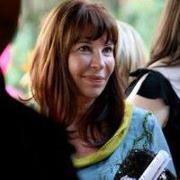
On a ‘considered’ whim writer Karin Cronje packs up her life and flies across the world to teach English in a small Korean village. The result is a poignant, heart-achingly funny, scandalous, and deeply moving account of incomprehension, awe, dislocation, belonging, the sticky business of identity and the loss of it, sanity, and the loss of that. Characters like Dae-ho, her guru man, who reminds her to breathe; dazzling Mae and her bar, Goldfinger; Leona with her rattle snake tongue, and all the others she can’t understand are now the people in her life. Back home is her son who has fallen in with a suspect character and her friends who now seem like dung beetles each rolling their own ball of muck. They, together with the tip of the African continent, are about to disappear into the sea. She has only herself. And that sure as hell feels inadequate. With her inimitable voice Karin Cronje shocks and delights as she digs deeply into the full catastrophe of being human.
At the age of forty-eight writer Karin Cronje left her job as a book publicist and without much thought went off to teach English in South Korea. She needed to pay bills, most especially her son’s university fees. There might be other ways to pay the bills – but Cronje seems not to have considered them. And what good luck for us as readers, because the memoir that resulted from those years in South Korea is funny, wise, salty, entertaining, poignant and thought-provoking. All of this, and more. It’s 2008 and Cronje is both battling culture shock, losing her ability to do much more than merely function, nuanced language deserts her, both metaphorically and in a practical sense, while adjusting to strange foods, a dingy apartment and an inability to even read the signs around her or get her computer working properly. Cronje runs headlong into life in a strange place – and this memoir brings it to life in a breathless, heady, at times almost stream of consciousness delivery. This is a plunge into the experience, it’s visceral and alive and the experience pulses with pain and confusion at times – which is brought vividly to life in these pages. On the strange experience of entry into this other life: ‘She was born in Korea, aged forty-eight. The past has evaporated. There are only flat-line snippets, a vague outline with a trail. Look, there goes the trail, it goes and goes, it is lost in the moon. And the moon dissolves, no moon on Planet Korea.’ And we are with Cronje as she struggles to make sense of the strange landscape of another world, a world where alphabet is different, of course, and where her seemingly irrepressible loudness must be quelled to fit in with the culture, at least a little. It is not surprisingly all but the most basic language and communication deserts her and she looks around her: ‘Who are these English teachers? We are an endless sea of indistinguishable whiteness: the tide comes in, the tide goes out. One Western face after another. They hate that they are dependent on an outside force, which has the one thing they lack and want: English.’ And, while adjusting to this new home and teaching, Cronje is also doing battle with the main character in the novel she is writing. Because that was another reason for coming to Korea to teach: to have time to write. The fact that she doesn’t much like her main character and the character’s motivations are all a little bit murky, only adds to the chaotic, crazy landscape of Cronje in South Korea. Her observations of the Koreans add to the texture of this memoir. Explaining their incredible work ethic, she does comment that it means they are over-worked, and exhausted. As are the children who sent to the cram school after hours, the place where Cronje teaches. She tries hard to peer beyond the surface, asking: ‘But what do I know what lies beyond their inscrutability? What does it mean to have your will and wishes, from an early age, subjected to the greater good of the group? They are a closed book forever.’ And then there are the difficulties of the Hangul writing system, and the difficulty of learning the language and distinguishing the different sounds of the language. But Cronje keeps a sense of humour, which sparks off the page, as the writing segues from Sparkly writing from first person to a wryly observed third person as Cronje watches herself all at sea. And there’s the teaching, of course and Cronje’s attempts to get her pupils to enunciate the “r”. She teaching them to trill a Afrikaans ‘r’ to much merriment – and then ponders how to teach them to make the more demure English ‘r’ sound. But little by little the sun comes in. Her son comes to visit and his long, tall presence makes a statement, both bringing her joy and impressing all those he comes into contact with: he even gets more than half a potato at the restaurant where she’s been eating (and only receiving half a spud). Cronje moves on from the school she’s been teaching at to a university. While the teachers’ pod is den of politics, she instead makes heartfelt friendships with other Koreans, mostly notably her yoga teacher. She makes headway on her novel – and then it is to be published. And this means she has to cut her time in Korea short, and return to Cape Town to be present at publication and book launch. And the memoir doesn’t end there. What follows is a nightmarish publication journey, as well as a spiral into mental despair that is harrowing to read about it – but it’s all part of the story and journey. This is a fun, lively memoir of a plucky woman, and of an experience that turned her inside out. Highly recommended.
My cousin is currently teaching in Korea. This made me select the book - to get an idea what it is like. Luckily these younger adults are a group of friends that will make the experience hopefully better. My heart bled for Karin Cronje, she describes the culture shock really well, I was so with her there. The food, the food poisoning, the difficulty in understanding people without being able to see what is in their eyes... She also really connects with a few kindred souls, this becomes something positive to cling to. She needed to earn well & wanted to finish her book. She manages to do this and decides to return to South Africa. Here she really unravels and makes a number of weird decisions. The book now becomes very interesting, if at times exasperating. I found it difficult to put down, especially towards the end.
There are many reasons why we travel, in words and in the world. Cronje points to some of the paths and explores them in this beautifully-crafted memoir about the time she spent teaching English in Korea and her unexpectedly shattering homecoming after two years abroad. A stunning book in every respect.
This book was different to what I expected but very enjoyable. It explored more than her travels in South Korea it also explored her mind and thoughts.
I had the hardest time reading this book. My horrible impatience catching up with me? Maybe because I could not tolerate that inexplicable eating of her own tail all the time. Cronje saw it, understood but could do nothing about it. Had to go through the entire damn process painful step by step and I hated to watch.
I really thought I had written a review for this. Hmm... Maybe my thoughts were more vivid than the time I had on hand?
I loved the first part of this book. You see, I have LIVED this. I taught English in South Korea for 3 years! Dude! I KNOW what she was talking about. But then part 2 happened - which I hoped would show more of the expat experience in Korea. Alas, it just became a self-absorbed issue. Part 3 was even worse. I know this sounds terrible. How can someone knock the experiences someone lived through? How can I judge their life? I'm not... really. I am judging the choices that were put in the memoir.
Overall, this had very little to do with the expat experience of living in South Korea - a culture that is so vastly different from the western experience that it really is noteworthy and has great opportunity for growth and humour. This was more to do with a woman trying to heal - from something that isn't discussed in the first part of the book - and who probably makes an unwise decision to teach English abroad as it is not for the faint of heart. Basically, I think my biggest objection was that the book was misleading. I bought it because it was an expat South Korean experience. Instead that was only the introduction. The rest was unrelated.
About half way through the book I wanted to drop it, as I wanted less angst of the writer, and more calm reporting of the experience in S Korea. However, I am glad I persevered. Once the writer is back in SA, it all starts to make sense. The book is part travel book, and part personal journey of 3 year's of the writer's life, straddling S Korea and SA.