

What do you think?

The Making of Victorian Values: Decency and Dissent in Britain: 1789-1837
A history of pre-Victorian England likens elements of the period to those of today's world, in an account that cites the contributions of Romantic authors, profiles the role of imperialism, and traces Britain's influence as an economic and political power. By the author of The Triumph of Laughter.
445 pages, Hardcover
First published January 1, 2007
About the author
Ben Wilson
10 books87 followersBen Wilson was born in 1980 and educated at Pembroke College, Cambridge, where he graduated with a first class degree and an MPhil in history. He is the author of three books and was named in 2005 as one of Waterstone's 25 Authors of the Future. He has consulted on scripts for various TV history progammes, and has himself appeared on TV and on national radio in the UK, Ireland and the USA. He has given lectures at Tate Britain, Cambridge and Zagreb and at book festivals in the UK including the Edinburgh Festival. He has written for the Spectator, Literary Review, Independent on Sunday, Scotsman, Men's Health, Guardian Online and GQ.
He is the author of five previous books, including What Price Liberty?, for which he received the Somerset Maugham Award, and the Sunday Times bestseller Empire of the Deep: The Rise and Fall of the British Navy.
He is the author of five previous books, including What Price Liberty?, for which he received the Somerset Maugham Award, and the Sunday Times bestseller Empire of the Deep: The Rise and Fall of the British Navy.
Ratings & Reviews
Friends & Following
Create a free account to discover what your friends think of this book!
Community Reviews
Displaying 1 - 22 of 22 reviews

November 16, 2012
This is a well written, and very interesting history of the early 19th century. The writing is engaging and full of detail and the whole thing holds together really well. One thing that struck me especially is how little times have changed, many of the concerns facing the middle classes of the period were exactly the same as today and even expressed in the same manner. Issues of public drunkenness, binge drinking, and the growth of 'fast food' diets among the working class as well as worries that increased unemployment was leading to an over reliance on 'benefits' especially could have been taken directly from many contemporary media outlets. While the solutions put forward to combat these issues were also identical to those being suggested today. I'm not sure if this is a good sign that the 'moral decay' of the modern world is actually a constant concern but nonetheless it was fascinating reading.

October 11, 2009
Wonderful history of the war between cant and pleasure before the Victorian age. It's amazing what he fits in here--the rise of the cult of sensibility, the war against the poor (work houses, etc.), changing attitudes towards policing, etc. It is well-written and fun. But he is serious when it is called for as when he points out the hypocrisies of the time--the rich holding one standard for themselves and another for the poor. I highly recommend.

June 20, 2019
Interesting to visit the pre-Victorian UK in an era of cultural revolution, when reformers tried to squelch drunkenness, prostitution, coarse language, etc. Many of the forces at play then & there seem eerily familiar. Should we give money to panhandlers or does that encourage indigence? In those days there was the pejorative term 'cant'; today it's 'pc' (political correctness). Then, a post-reform child told his grandmother not to use the word 'belly' in public; now maybe it would be the word 'oriental'.
The reform movements were partly inspired by post-French Revolution fear of the riotous masses. For example, reformers squelched festivals during which masked villagers would mock & threaten their 'betters'. Also, there was a desire to mold the disorderly poor into productive proles for modern industry: for example pre-reform workers demanded to be provided with beer by their employers and took Mondays off as unofficial hangover holidays.
Ben Wilson swings the reader's sympathy back and forth from the resisters to the reformers. On one hand you have the cruelty of a reformer's giant hamster wheel for prisoners and on the other you have reformers abolishing slavery.
One major difference between reformers then & now is that many or most pre-Victorian reformers were inspired by evangelical Christianity.
The reform movements were partly inspired by post-French Revolution fear of the riotous masses. For example, reformers squelched festivals during which masked villagers would mock & threaten their 'betters'. Also, there was a desire to mold the disorderly poor into productive proles for modern industry: for example pre-reform workers demanded to be provided with beer by their employers and took Mondays off as unofficial hangover holidays.
Ben Wilson swings the reader's sympathy back and forth from the resisters to the reformers. On one hand you have the cruelty of a reformer's giant hamster wheel for prisoners and on the other you have reformers abolishing slavery.
One major difference between reformers then & now is that many or most pre-Victorian reformers were inspired by evangelical Christianity.

September 21, 2015
A bit repetitive, but otherwise very interesting

January 30, 2026
This is a deeply disappointing and flawed work of History which by regarding an entire age through the single lens of 'cant', that is, hypocrisy, provides a narrow view of early nineteenth century society that ignores much of the people and most of the more noticeable social changes.
Ben Wilson has not so much written a History of England in the Regency Age, as a study of London society as seen through contemporary commentators, whether they be writers, journalists, poets, or politicians. His approach is not only mono-focal but also refracted by the media upon which he relies for evidence, with the result that his analysis lacks context, ignores almost entirely the demographic, economic, and technological changes of the period, and fails to recognise the vast material developments which underlay and indeed determined changes in public mores and attitudes.
Wilson measures every word by his calibration of 'cant' and rejects those writings and deeds which do not accord with his hypothesis, thereby creating a narrow and pejorative reading of the past, often conveyed in prose which is not only sententious, and even didactic, but also subject to the cardinal errors of not just applying the standards of today to the past, but also of holding historical. agents up against modern values, so as to find his subjects wanting without regard to the mentalities and context of their time. In this, he lacks empathy for the period he has studied and has no sympathy for people of a different time, facing material struggles and intellectual challenges with which he cannot sympathise. Cobbett is therefore chided for holding opinions which are intentionally taken out of context so they can no longer deemed be acceptable, while Place is lauded because his outlier attitudes are in accord with today's opinion, as though voices of the past are to be given validity only in so far as they speak in ways which conform to twenty-first century thinking. This is not Histpry, but polemic.
The concept of 'cant', as articulated by contemporaries, is a useful means by which to explore parts of early nineteenth century culture, but it is one strand of historical discourse, and to pursue it singularly to the exclusion of other, contrary methods is to do an injustice to the past and those who lived in so different an age. And whoever heard of a History of this period which gives one sentence to Luddism and ignores the Swing Riots completely, while giving a whole chapter to the 'Don Juan' of Byron and the dissipations of Edward Kean? This is therefore not a popular History, but through its single focus upon 'cant' and its exclusive use of elite literature, an elitist interpretation of a popular age that fails to do justice to its subject.
Ben Wilson has not so much written a History of England in the Regency Age, as a study of London society as seen through contemporary commentators, whether they be writers, journalists, poets, or politicians. His approach is not only mono-focal but also refracted by the media upon which he relies for evidence, with the result that his analysis lacks context, ignores almost entirely the demographic, economic, and technological changes of the period, and fails to recognise the vast material developments which underlay and indeed determined changes in public mores and attitudes.
Wilson measures every word by his calibration of 'cant' and rejects those writings and deeds which do not accord with his hypothesis, thereby creating a narrow and pejorative reading of the past, often conveyed in prose which is not only sententious, and even didactic, but also subject to the cardinal errors of not just applying the standards of today to the past, but also of holding historical. agents up against modern values, so as to find his subjects wanting without regard to the mentalities and context of their time. In this, he lacks empathy for the period he has studied and has no sympathy for people of a different time, facing material struggles and intellectual challenges with which he cannot sympathise. Cobbett is therefore chided for holding opinions which are intentionally taken out of context so they can no longer deemed be acceptable, while Place is lauded because his outlier attitudes are in accord with today's opinion, as though voices of the past are to be given validity only in so far as they speak in ways which conform to twenty-first century thinking. This is not Histpry, but polemic.
The concept of 'cant', as articulated by contemporaries, is a useful means by which to explore parts of early nineteenth century culture, but it is one strand of historical discourse, and to pursue it singularly to the exclusion of other, contrary methods is to do an injustice to the past and those who lived in so different an age. And whoever heard of a History of this period which gives one sentence to Luddism and ignores the Swing Riots completely, while giving a whole chapter to the 'Don Juan' of Byron and the dissipations of Edward Kean? This is therefore not a popular History, but through its single focus upon 'cant' and its exclusive use of elite literature, an elitist interpretation of a popular age that fails to do justice to its subject.

August 9, 2018
I recall really enjoying this book and the ideas that it contained, the pages seemed to fly by!

February 11, 2023
Great overview of the social transitions for the Regency to the Victorian period.

February 26, 2023
A magnificently researched book on a fascinating subject. Dense and challenging at times, but really really interesting and informative.

July 10, 2012
I bought this book because I was interested in understanding how Britain evolved from the bawdy society of the Regency era and before to the staid Victorians of the later 1800's. Wilson tries to pin down this slippery subject, though as I read his book I had a sense of him snatching at butterflies, trying to hold on to enough of them for long enough to get a sense of the whole. Amidst his very high-brow writing style (as I read the book I kept thinking I was glad I didn't have to take one of my kids' Accelerated Reader tests on it; I know my comprehension was down because of the sky-high difficulty level) I grasped a lot of anecdotal examples of a freer society before the 1820's and a gradually more self-regulated one after. I can see that with the introduction of a regular police force, increased enforcement of Sabbath observance, the ballooning fashion of moral "cant, " and a crackdown on the more riotous behaviors of the poor, that times were changing. I recognize the rampant hypocrisy that Wilson was so quick to equate with moral reformers of today (I resented his lack of objectivity on this). And I understand that the insecurity of the Napoleonic Wars years caused a lot of philosophical re-evaluation. But even after reading this book, I would have a really difficult time writing an essay on the topic, "What caused the value shift in England from the Regency to Victorian eras?"
January 20, 2008
I picked this up based on a review in The Economist, it's by a young up and coming British historian. Lots of fact and anecdote relating to the change in the British attitude towards various debaucheries that took place between the years cited in the title. Excellent backdrop for contemplating why a society might suddenly value thrift, propriety, and conformity in the face of external national threats (Napoleon in the Victorians' case, 9-11 in our own).
There's not too much coverage of the "dissent" faction, other than of the poet Byron and a couple practical-minded parliamentarians. A constant theme of the author is to pick out incidents that shed light on the difference between an honest concern for the less well-enough and a pious officious interference with their limited pleasures.

March 31, 2008
A fascinating subject! There is an implication that today there is a movement in out culture to return to Victorian values and ostensibly because they were so darned moral. As author Ben Wilson examines the era we find a fascinating tendency towards hypocrisy and moral paranoia. There are some illuminating tidbits of history here which are interesting for anyone interested in the Victorian era and either how it influences our moral squeamishness today or informs of the culture from which some of our favorite authors, poets and murderers (Sweeney Todd...he was a real dude!) come from. What was it to be English? How did it evolve? Nifty. I am only part way through. Not as quick and fun to read as a novel but nifty. Ciao!
January 23, 2016
I was spellbound by this great piece of british history. It opened up a lot of things for me, particularly due to my interest in social constructionism, conformity, aesthetics, morality, etc.
'Cant' was a new term for me and I was surprised not to see much about that in the current literature. I felt that cant is the precursor of what we now call political correctness. Being an immigrant from India I feel that India is currently going through a similar phase, and feel quite nostalgic for certain things which were present when I was a kid.
This book led me to his book on William Hone which was good.
'Cant' was a new term for me and I was surprised not to see much about that in the current literature. I felt that cant is the precursor of what we now call political correctness. Being an immigrant from India I feel that India is currently going through a similar phase, and feel quite nostalgic for certain things which were present when I was a kid.
This book led me to his book on William Hone which was good.
October 17, 2013
Very interesting history of England during the late Georgian and Regency periods, which explores the reasons values shifted in England from frank openness (and bawdiness) to the Victorian standards of maintaining the appearance of virtue and extreme sexual prudishness. I didn't always follow the author's arguments but I learned a lot.

October 17, 2014
The best thing about this book is the cover. Confusing at times and downright dull at others, this is a very dry and meandering look at the UK from 1789 to 1837 (when Victoria took the throne.)
January 25, 2010
Rather more dulce than utile. I.e., you have to actually read this one if you want to acquire its thrust. The more American top-down-quicky-file-cabinet approach won't get it. After the French Revolution, the British upper-crust was scared witless of what had happened in France happening there.

April 8, 2021
Fascinating to read how history repeats itself. So often we tell ourselves that the speed of change during our lifetime is unprecedented. Not so, as is so brilliantly set out here. A great introduction to the reign of George III and the Regency too.

Did Not Finish
October 22, 2025DNF
Interesting material, but I just could not get on with the writing style; too meandering, too repetitious. I couldn't hold onto the point made at the start of the page by the time I'd reached the end of it.
Interesting material, but I just could not get on with the writing style; too meandering, too repetitious. I couldn't hold onto the point made at the start of the page by the time I'd reached the end of it.

April 3, 2009
aka, they had waaaaay more fun in the 18th century . . .

Read
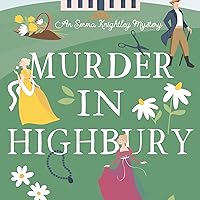
January 4, 2010The Making of Victorian Values: Decency and Dissent in Britain: 1789-1837 by Ben Wilson (2007)
February 22, 2009
A treasure trove of beautifully written social history.

February 1, 2011
read the republished version under the name "The Making of Victorian Values" Really good read.

June 1, 2014
Tough going in places, and a bit repetitive. But some lovely nuggets in there.
Displaying 1 - 22 of 22 reviews