Jump to ratings and reviews
Rate this book

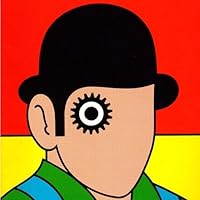
Seduction of the Innocent: The Influence of Comic Books on Today's Youth

Rate this book
Seduction of the The Influence of Comic Books on Today's Youth by Fredric Wertham.

400 pages, Hardcover

First published January 1, 1954

15 people are currently reading
612 people want to read

About the author

Fredric Wertham

29 books1 follower

Ratings & Reviews

What do you think?
Rate this book

Friends & Following

Create a free account to discover what your friends think of this book!

Community Reviews

5 stars
21 (11%)
4 stars
26 (14%)
3 stars
35 (19%)
2 stars
39 (22%)
1 star
55 (31%)
Displaying 1 - 30 of 55 reviews
Profile Image for Lisa Feld.
Author 1 book26 followers
March 19, 2021
I've heard about this book and its impact on the comics industry for more than twenty years, but this is the first time I've gotten my hands on a copy instead of relying on someone else's summary and quotes--the book has been out of print for sixty years, and not even libraries seem to have wanted to hold on to their copies.

It's very strange to finally read it at a moment when we are so attuned to fake news. Wertham claims in the beginning to have spent seven years on detailed studies of comics and their impact on children, but throughout, he mainly gives anecdotal and incomplete information. We get our first survey of a dozen adolescents and their reading levels on page 129, and the entire book has one footnote, on page 223. Instead, we get quotes and details with no context -- children act out seemingly without reason or motive. In part, this is because Wertham maintains that all children can be saved, and the only way to make that feasible is to set aside anything he isn't empowered to fix: in Wertham's world, no one has schizophrenia, dyslexia, or a learning disability; such are mentioned only as bad diagnoses by other doctors. Along the same lines, no parent abuses their child in any way. If pre-teens engage in gang activity or sex trafficking, it's purely because they read about it in comics, no other influences from their homes or neighborhoods, and no indication of why these kids are troubled while other kids who read comics are well adjusted. Reading this book, I was constantly aware of how much was being left out of every story, every quote, so that Wertham could pin children's problems on something he could fix.

The sad thing is, Wertham is doing this with the best of motives. He's worried that power fantasies make kids idolize fascism. He's angry that comics reinforce stereotypes about people of color and make them targets of violence and rape. He's upset that the advertisements in comics take advantage of teenage insecurities, shaming both boys and girls into buying snake-oil cures to reshape their bodies. These are all topics dear to my heart. But in the service of these ideals, he not only cherry-picks anecdotal evidence from kids (claiming that because kids lie, no study or survey would be accurate anyway), he fudges details about the comics themselves. He says that comics get cancelled or switch titles so often that mentioning a title or issue number wouldn't tell the reader anything, and therefore describes both national trends and individual instances with no citations. He says nine panels of a particular comic were devoted to violent acts, but doesn't say what percentage that is of the whole comic (or what counts as violent). And over and over, he assumes correlation means causation, that reading lurid material causes violence, instead of considering that violent people may choose reading material that reflects their interests.

If nothing else, the book reminded me of just how much damage we can do when we care deeply about making the world better but just can't get the data to fit our ideals and expectations.
347 reviews12 followers
October 10, 2025
I have read about this book in the Comic Buyers Guide in many articles as well as letters criticizing it's scientific validity. Finding a copy of this book was hard since many libraries have had copies stolen by comic book collectors. Searching through the Internet Archive I finally got to read Fredric Wertham's polemic against comic books of the early 1950s also available on the site. This book blames comic book not only for juvenile delinquency but for bad self image. drug abuse, lower literacy rates, and homosexuality. Wertham only proved that juvenile delinquents read comic books as did most children at that time including those who were not engaging in criminal behavior. Fredric Wertham I concede cared about young people especially African American youth that he helped by his studies showing the harmful effects of segregation. Many of his accusations have been repeated as to television. rap, internet use, and now video games. Blaming the media consumed by children seems to be a simplistic thing to me since there are other factors such as racist policies, poverty, lead poison, and an educational system that has failed many students. Dr Fredric Wertham really went over the top when he made Wonderwoman and Batman into gay role models but many parents will sympathize with his other assertions. I am not qualified to scientifically evaluate juvenile delinquents but I would like to hear what professionals think of this book.
Profile Image for John Pistelli.
Author 9 books364 followers
February 22, 2016
When I was younger—say in the late 1980s, early 1990s—the concept of free artistic expression was primarily associated with the social and political left. The totalitarian states of international communism were discredited; second-wave feminism had clearly overreached in its anti-porn crusades; and tirades against the objectionable character of both elite and popular culture were associated largely with the religious and racial right’s crusades against alleged Satanism and against queer and black arts. I am thinking of the controversies over heavy metal, NEA funding, and “Cop Killer,” for example. But when I was a kid, I didn’t listen to rap or heavy metal and I didn’t attend elite art exhibitions; instead I avidly read comic books. In those pre-Internet days, the folk memory of comic-book readers tended to elide the 1950s public outcry against comics—which led to their being tried in the Senate Subcommittee on Juvenile Delinquency Hearings and to the self-imposition by the industry of the absurdly censorious comics code—with the ‘80s/‘90s posturing of the religious right (and of certain New Democrat or blue dog allies, such as Tipper Gore). I had certainly heard of Fredric Wertham by the time I was 11 or 12, but, lacking good information, I pictured him as a Pat Robertson or Pat Buchanan or Bill Bennett type.

As comics have over the last generation come under increased academic jurisdiction, though, readers have noticed that Wertham was in fact far more like the type of person who would today profess comics studies, a leftist less enamored than were prior generations of free speech. (See, for instance, Chris Bishop’s very engaging and informative lecture.) In the introduction to the most recent edition of Wertham’s 1954 anti-comics polemic, Seduction of the Innocent, James E. Reibman sets the record straight: “Of course, the irony in all this is that Fredric Wertham, a traditional left-wing European intellectual and product of the Enlightenment tradition, continues to be both castigated and characterized as a reactionary.” Seduction of the Innocent, then, is in a very different genre from the Chick-tract-type screed; it is, rather, a lament over the demise of high bourgeois culture sung by an impeccably cultured exile of that culture’s European calamity. (Wertham was brought up within the kultur-loving humanistic milieu of the assimilated Jewish bourgeoisie.) It is more like Theodor Adorno than Jesse Helms.

When read with the above understanding, Seduction of the Innocent is an almost sympathetic book. The psychiatrist Wetham was a crusader for racial equality who opened a clinic in Harlem (named after Paul Lafargue) for indigent black youth; he collaborated with or earned the praise of Richard Wright, Paul Robeson, Ralph Ellison and Thurgood Marshall. That comics promote racial hatred was, not at all unreasonably, one of his chief complaints:
If I were to make the briefest summary of what children have told us about how different peoples are represented to them in the lore of crime comics, it would be that there are two kinds of people: on the one hand is the tall, blond, regular-featured man sometimes disguised as a superman (or superman disguised as a man) and the pretty young blonde girl with the super-breast. On the other hand are the inferior people: natives, primitives, savages, “ape men,” Negroes, Jews, Indians, Italians, Slavs, Chinese and Japanese, immigrants of every description, people with irregular features, swarthy skins, physical deformities, Oriental features.
He also charged comics with misogyny and the promotion of sadism. While psychoanalytically informed, he rejected Freud’s pessimism about human nature; a devoted reader of Dickens, he was a Rousseauist who did not believe in innate human aggression. No death drives or will-to-power for him. He is at his most attractive in Seduction of the Innocent when fighting the almost eugenic contempt with which the judicial system and society at large treated young criminal offenders and their parents. He saw ordinary children and their parents as preyed upon by much larger social forces, which made it difficult for them to negotiate normative social life. And while he was obviously well aware of such oppressive forces as poverty and racism, he became convinced that comic books—and the industry behind them, which he viewed as a rapacious and amoral capitalist force—were an autonomous vector for cultural damage. Hence, his long and rather unfocused polemic against them.

Besides racism, misogyny, and sadism, Wetham also charged comics with poor aesthetic standards in everything from printing materials to spelling; with the promotion of crime and violence; with inspiring children to undertake all sorts of dangerous acts (jumping off the roof to try to fly like Superman, etc.); with numbing children’s sensibilities so that they cannot appreciate great literature and art; and with being produced by an industry that mistreated its creators, strong-armed its distributors, and bought off off “experts” and politicians (he never states outright, but carefully implies, what we now know to be true of the early comics’ mafia connections, as elaborated by Chris Bishop in the lecture linked above).

Despite Wertham’s left-wing credentials, he shared the mid-century left’s dim view of homosexuality, seeing it as a lamentable form of maladjustment brought about by a corrupt society. For this reason, he is perhaps best remembered for his actually rather perceptive, if undeniably homophobic, attack on Batman as homoerotic text (this is another reason, I believe, that he was misremembered as right-wing by the time of my adolescence):
In the Batman type of comic book such a relationship is depicted to children before they can even read. Batman and Robin, the "dynamic duo," also known as the "daring duo," go into action in their special uniforms. They constantly rescue each other from violent attacks by an unending number of enemies. The feeling is conveyed that that we men must stick together because there are so many villainous creatures who have to be exterminated. They lurk not only under every bed but also behind every star in the sky. Either Batman or his young boy friend or both are captured, threatened with every imaginable weapon, almost blown to bits, almost crushed to death, almost annihilated. Sometimes Batman ends up in bed injured and young Robin is shown sitting next to him. At home they lead an idyllic life. They are Bruce Wayne and “Dick” Grayson. Bruce Wayne is described as a “socialite” and the official relationship is that Dick is Bruce’s ward. They live in sumptuous quarters, with beautiful flowers in large vases, and have a butler, Alfred. Batman is sometimes shown in a dressing gown. As they sit by the fireplace the young boy sometimes worries about his partner: “Something’s wrong with Bruce. He hasn’t been himself these past few days.” It is like a wish dream of two homosexuals living together.
Unfortunately for his credibility, he was also convinced that there were subliminal images in comics art, finding women’s pudenda and the like in the cross-hatching on a well-muscled hero’s shoulder; this is bizarre, because Wertham’s perfectly correct assessment of comics’ wretched business practices should have told him that nobody got paid enough to bother with such minutia!

And Wertham, to be fair, was not much of a totalitarian censor. His proposal was to ban the sale of “crime comics” (though this was a pretty all-encompassing term to him; he thought Donald Duck was, for all practical purposes, a crime comic) to children under 15. He was not for any kind of outright ban—and certainly, he was at pains to emphasize, not for any restriction on what adults could purchase and read. In his defense, one might note that the comics of the time really were pretty wild and that today we accept without objection things like rating systems, which inform consumers without much interfering with free expression. On a more personal note, I might add that I essentially agree with his defense of the subtler pleasures and greater intellectual demands of high culture against sensationalist mass-produced pop culture—but this, for me, is on grounds of aesthetics, not ethics or politics.

Anyway, while it is well and good to re-assess Wertham’s book with a greater understanding of his not totally unsympathetic intellectual position, the book is still the product of a faulty worldview, in my judgment. For one thing, Wertham was in a sense not socialist enough; even if we accept that cultural objects can do mental harm to vulnerable children (and this remains an “if,” as far as I know), why blame cultural objects themselves and not the structural forces that create vulnerability in the first place? Furthermore, I do accept that his Rouseauist/Dickensian picture of the unsullied innocent coming into the world to be snatched from the virtuous hands of his mother by greedy capitalists peddling smut was no doubt a welcome (over)correction to some elitist and racist opinions of the innate inferiority of the poor; but even so, I don’t believe it does anyone any good in the long run to deny some of the harder truths of existence. Throughout the book, Wertham complains of Superman’s Nietzschean lineage (if he grasped the ironies attending the creation of super-heroes not by Aryan fascists but by assimilationist Jewish working-class immigrants’ sons, he does not mention it):
As our work went on we established the basic ingredients of the most numerous and widely read comic books: violence; sadism and cruelty; the superman philosophy, an offshoot of Nietzsche’s superman who said, “When you go to women, don’t forget the whip.” We also found that what seemed at first like a problem in child psychology had much wider implications. Why does our civilization give to the child not its best but its worst, in paper, in language, in art, in ideas? What is the social meaning of these supermen, superwomen, super-lovers, superboys, supergirls, super-ducks, super-mice, super-magicians, super-safecrackers? How did Nietzsche get into the nursery?
But Nietzsche is already in the nursery, as is Freud. I have no desire to let theory obliterate common sense: it is surely best not to rear children exclusively on texts and images that are poor in quality and utterly cynical about sex and violence. But we are born with the full panoply of human potential, including the potential for aggression, greed, hate, sadism, masochism, and all the rest; as these are ineradicable, they are best confronted. Wertham spends a lot of time attacking what I believe is, even now, a consensus position among educators and psychologists: some fantasy violence is not terrible for children and can even be an inoculation against the real thing.

As for Nietzsche, while he certainly wrote some disturbing sentences and was obviously taken up by some far-worse-than-dubious admirers, one fails to learns the lessons of The Genealogy of Morals at one’s peril. Just as Wertham’s polemic against sensationalism is amazingly sensationalist (seduction! of the innocent!), so too is his moral crusade no less an exercise in power-seeking than the actions of his opponents. While Nietzsche may slight some of our nobler drives, I accept his argument that no human pursuit, not the most artistic or the most holy or the most egalitarian, is totally free from the quest to dominate or from impulses of aggression. To deny this is to leave oneself open to dangerous delusions of righteousness. Such delusions, it seems to me, have done more damage than violent comic books or pornography. The books that have proved most corrupting have been books like the Bible, the Koran, and The Communist Manifesto; surely, more people have been slaughtered for the ideals of Rousseau than for the anti-ideals of Sade.

A final word against censorship—and censoriousness, which I also dislike. The imposition of the restrictive comics code was the end result of Wertham’s activism. And the end result of the comics code was to put EC Comics out of business. EC’s company of superb writers and artists—Harvey Kurtzman, Al Feldstein, Wally Wood, Bernard Krigstein, among others—were making thoughtful, humane, literary, beautiful comics that went some way toward correcting the flaws of comics that Wertham was most reasonable in pointing out—their simplistic worldview, their illiteracy, their racism, their intellectual poverty, their low artistic standards. It would take almost thirty years for the promise of EC to begin to be realized again, as the code eased off, and American comics could again pursue the creation of serious artistic work. In short, Wertham did more damage to the artists who might have been his allies than he did to the crass and mobbed-up money-men of the industry itself, who simply adjusted, as they always do. Feel free to take this as a parable directed at the Werthamites of today.
Profile Image for Daniel A..
301 reviews
May 7, 2017
Never before have I read such an important book—that was also this bad. Yes, "Dr." Fredric Wertham's Seduction of the Innocent is vital to understand the history of comics (and why for so long they really were "just for kids"), but good lord, rarely has such shoddy science made such an impact on popular culture, to its eternal detriment.

For those unfamiliar, Seduction of the Innocent was Fredric Wertham's study—more of a polemic, really—of the alleged effects of comic books on juvenile delinquency. To readers in Joe McCarthy's 1950s, Wertham's study was more than compelling; it was disturbing and a rally cry. In the wake of the publication of Seduction of the Innocent, parents nationwide destroyed and burned comic books of all sorts, censorship was seriously discussed—and the U.S. Senate held hearings to determine their ultimate fate; the outcome was the Comics Code Authority, which transformed comic books from an almost universally-read medium into the juvenilia for which comics were reviled for generations, both by parents (again) and critics. Not until Robert Kanigher and Carmine Infantino revived The Flash a few years later did comics even begin to recover from the damage that Wertham perpetrated.

It is true that the picture that Wertham paints in Seduction of the Innocent is dire indeed. The problem, which is what makes the book such a dire travesty, is that Wertham largely distorted, manipulated, or outright fabricated data wholesale to reach the conclusion he wanted—i.e., Bad Science™, in spades. More recent writers, David Hajdu especially, have brought clearly to light exactly what a serious breach of scientific ethics and method Wertham committed, and while Wertham's end of protecting children is admirable, his means were . . . perhaps all too appropriate for the McCarthy era. Yes, the 1950s were a simpler time, but many commentators have shown that beneath that façade of a "simpler time" was a grave conformity and nasty antipathy to civil liberties, and Seduction of the Innocent fits that ugly mold perfectly.

If Wertham's thesis were accurate, it would be an excellent call to arms for the betterment of society. But given the scientific fraud Wertham committed, Seduction of the Innocent is—while no less vital a read—an awful call to arms never to let our irrational fear of youth culture overtake us again. That comics have re-entered a renaissance in recent years is of no matter; Wertham's legacy is one of almost total destruction of a valuable medium of communication.
Profile Image for Michael.
1,078 reviews199 followers
November 7, 2007
Unfortunately very dated, fortunately still good for a laugh or two. Wertham's obsession with Batman's supposed homosexuality spread like a weed in America's collective subconscious - sad to think that was his primary legacy.
Profile Image for Keith Bowden.
311 reviews13 followers
November 22, 2014
Fredric Wertham and Patricia Cornwell have similar deductive reasoning. Start with a premise, and ignore the facts until you prove it. Make shit up if you have to! Wertham was well-intentioned, but hated comic books and was caught up in the paranoia and fear of the times.

According to Wertham, a "bad child" was all about the influence of comic books. Home life had no influence, parents were never a negative factor (even single-mother-druggie-prostitutes were not to be blamed for a rebellious child).

I can't really rate the book on its own merits - my rating is purely about its place in history and impact on a medium.
Profile Image for Gerd.
557 reviews39 followers
October 25, 2017
Best read as a manifest of its times, because as such it has its entertaining moments.

Wertham does come off as well intended at first, and some of his observations are not too far out there. Quite actually some of it is still relevant and heavily discussed today.
Topics like the objectification of women, racial prejudice and unnecessary use of overt violence... but just when he has you got so far to believe him having half a brain comes some nonsense like this:
Superwoman (Wonder Woman) is always a horror type. She is physically very powerful, tortures men, has her own female following, is the cruel, "phallic" woman. While she is a frightening figure for boys, she is an undesirable ideal for girls, being the exact opposite of what girls are supposed to want to be.


Add to this that the whole text is terribly overwritten, Wertham makes the same point over and over at the start of each new chapter, as if it could gain any credibility if only said often enough. His point being a variation on: "This kid read a comic book and got incited by it to torture/murder/rape another person" - the scary thing about this being that one gets the sense that Wertham really believed so, leading towards the end to him making the statement that kids and minors commiting terrible crimes are not to blame for their actions, the comic book industry is at fault.
(Seriously, anybody seeking to excuse rapists, in fact demanding they should not be punished for their actions, should be shot on sight.)

Half of the text could have been cut out, never missing anything.
Speaking of missing, Wertham never cites any (reliable) sources for anything he writes. For all we can tell each and everything is just Urban Myth because a lot of his anecdotes have this "A friend / a cousin / a guy I once knew" vibe to them. It's all kept just plausible enough to maybe believable, yet too intangible to prove.


Another "charming" quality of the author is, he poses himself as open minded at first, only to then constantly go on about how comics wake (dangerous) homoerotic thoughts in children, how they normalize the idea of homosexuality, how they prepare kids for (homo-)sexual abuse ...

While his entry about how Batman and Robin really are a gay pair is involuntary comedy of the finest, his blatant homophobia is anything but funny.


This said, I liked the literary quotes, like his bending The Bard's words to his use:
"Thus comic books make cowards of us all"

or this not very subtle, but highly enjoyable play on the title of Steinbeck's famous novel (or Robert Burns' poetry, as such):
As late as 1951 a liberal magazine, The Reporter, carried an article on "The Comic Book Industry" in which it gave what it thought was the answer: Children are charmed by comic books because in them they can follow "the fortunes of cowhands and mice."
Profile Image for Todd.
984 reviews14 followers
May 28, 2015
Now, I know that rating this book a one is a bit extreme. It could be that I'm a comics fan and am rating it that as a reaction to the effect it had on the comic industry, but it's not. This is a one star based on my English Degree. This is a terribly constructed book. The arguments are almost entirely based on anecdotes without an actual statistic in sight. In fact he only references statistics in a passing reference about how you can't trust statistics because the institutions putting them out lie, which of course he offers absolutely no evidence for.

I honestly expected a lot more about sex and homosexuality based on what I'd heard. He honestly mentions homosexuality for about 2 pages and just leaves it to be assumed that 1.) it's a bad thing (which gets a slight pass because of when it was written) 2.) comics actually encourage it.

The sad thing is that sometimes he makes good points but has poor conclusions. Instead of saying "We should be helping our children choose better reading material and making sure that these comics are available only to adults." He says "Comics are evil and vile. We should make sure that all comics are destroyed and never published again. They could never possibly be used to make actual literary art."

His other big failing is that he lumps early Superman and Wonder Woman in with EC. He assumes that they are all evil. So if I read an early Wonder Woman, which he calls one of the worst, and see that I don't consider it objectionable (other than the terrible writing and cheesy as a massive plate of nachos dialogue) then how can I trust what else he says?

Also he constantly brings up the damage to the eye motif in comics. He NEVER explains what in the world makes this motif so absolutely horrific. Never. I mean sure it's not the best but why is this such a sticking point that he can't explain to me why this image is so detrimental to children's hygiene.

I'm tempted to give this two stars because he makes some valid points about the portrayal of minorities and advertisements aimed at young girls about breast size that could lead to negative body image, and an overall these comics aren't really for kids and we need to do something about it attitude. But these points are so buried underneath his screeching about the evils that they are barely there.

Also he repeatedly uses a terrible metaphor comparing children with plant life. He wants to make sure that kids are given proper fertilizer. I mean it's the worst.
Profile Image for Alex.
16 reviews1 follower
August 10, 2019
Deeply homophobic, reactionary, and filled with "WON'T SOMEONE PLEASE THINK IF THE CHILDREN" type pleas of sentimentality. Wertham's research and citations are shotty at best, often amounting to little more than random anecdotes of his own interactions. While he has the occasional clever insight, he always loops it back to blaming comics books as the one and only cause, almost feeling like self parody. His writing seems more concerned with sensationalism and shock value than any actual search for truth. Even the comic books in question he cites are often vague and unspecific.
It's also rather a shame that he doesn't seem to be able to see any positives in the medium at all, to Wertham they're entirely negative. This is an attitude that pops up with every new medium or style of popular entertainment, video games being the current hot button topic. The older generation is always convinced that their media was superior, that the current pop entertainment is trash with no artistic merit, and honestly I'm really tired of it. I got halfway through this and gave up. The blatant homophobia in his analysis of Batman and his manipulative cherry picking of evidence was just too much.
Profile Image for allowableman2.
80 reviews7 followers
July 29, 2025
Civil rights activist or not
This guy fucking sucks
Every take you see on Twitter about superheroes being fascist status quo keepers has its genesis in this book
Profile Image for Brian.
115 reviews31 followers
May 9, 2014
I like comic books. I like the idea of comic books even more than comic books themselves. I actually never was much of a collector or anything; I doubt I ever had even a hundred at one time. Of those, I have less than 30, I think, today.

But because I love the idea, I occasionally go out on the web looking for them, usually ending up thoroughly frustrated by confusing websites and high prices. I was doing that when I came across this book, available on the web. I started reading it and was immediately riveted.

Basically, Dr. Wertham is advocating taking comic books away from children under 15. He's writing in 1954 and since I don't really read comic books today I have no way of knowing whether anything has changed in their content. The early days of movies were very risqué, then they changed (whether they liked it or not), and now they've gone back again, exponentially more graphic. Maybe the same thing happened with comic books.

Dr. Wertham's particular focus is crime comic books, but in these he includes superhero comics. He mentions Superman and Batman specifically. Batman, I think, gets a little more attention, thanks to its homoerotic overtones. (Figures. Batman was always my favorite. Well, at least I've never asked my wife to dress up as Robin.) Mostly, though, it's the violence that interests Wertham, and the way it is marketed to young children and defended by some in the psychological community.

Sometimes the publisher's name on the comic book and the name and contents of the book show a ludicrous discrepancy. For instance, one of the 1952 crop has on its first page a horrible picture of a man shot in the stomach, with a face of agonized pain, and such dialogue as: "You know as well as I do that any water he'd drink'd pour right out of his gut! It'd be MURDER!" The name of the publisher is: Tiny Tots Comics, Inc.

He makes a good case. When I was (much) younger, I used to be in that group that says it is uninfluenced by media. The most common example given is advertisements. "Advertisements don't affect me." Yeah, well, I've learned since then. I've learned that (a) companies don't spend billions on "useless" advertisements and (b) I can be swayed in various ways by advertising. I know that even if an advertisement turns me off to a product that it has swayed me. And if it can have an affect at my age, what can the media do to young children? Maybe the better question is, What can't it do?

I believe in psychology (psychiatry, with its drugs, makes me a little nervous sometimes), and I always have. Again, though, my eyes have opened a little as time has passed. And this, appropriately enough, because of true crime. I'm referring to those creatures that crop up in courtrooms all over the country and who are called "expert witnesses." If there's one thing true crime teaches us, it is that one can find an "expert" to espouse any opinion. The comic book industry, as Wertham tells us, made effective use of such "witnesses," who became defenders of the status quo.

The experts not only justify sadism but advise it. One of them, a child psychiatrist, writes: "In general we have offered to the strip writer the following advice: 'Actual mutilation . . . should not occur . . . unless the situation can be morally justified. . . . If such an act is committed by some fanciful primitive or by some enemy character it can be more readily accepted and used by the child."' In its long and tortuous history, psychiatry has never reached a lower point of morality than this "advice" by a psychiatric defender of comic books.

One of the comic book industry's most cherished defenses was that it produced comic book versions of the classics. (At least one of the comic books I still retain is one of these, White Fang.) Here again, Wertham makes a good point (more than one, actually).

I have never seen any good effects from comic books that condense classics. Classic books are a child's companion, often for life. Comic-book versions deprive the child of these companions. They do active harm by blocking one of the child's avenues to the finer things of life. There is a comic book which has on its cover two struggling men, one manacled with chains locked around hands and feet, the other with upraised fist and a reddened, bloody bandage around his head; onlookers: a man with a heavy iron mallet on one side and a man with a rifle and a bayonet on the other. The first eight pictures of this comic book show an evil-looking man with a big knife held like a dagger threatening a child who says: "Oh, don't cut my throat, sir!" Am I correct in classifying this as a crime comic? Or should I accept it as what it pretends to be - Dickens' Great Expectations?

One of things I liked very much about this book is Wertham's reasonableness. He doesn't blame the kids and he doesn't blame the parents. I get so sick of the "parents are to blame" argument, an argument that I feel exists in a theoretical fairyland totally divorced from reality. The people to blame are the ones making money -- millions, billions of dollars -- who are not only clearly self-interested, but who also have the financial means to foist whatever they want on the rest of us. That's how Wertham sees it, too (at least, so far as the well-being of children is affected).

But this, of course, brings up questions of civil liberties and censorship. Wetham says:

There seems to be a widely held belief that democracy demands leaving the regulation of children's reading to the individual. Leaving everything to the individual is actually not democracy; it is anarchy. And it is a pity that children should suffer from the anarchistic trends in our society.

I can't tell you how much this statement speaks to me. I personally believe that America is on the road to anarchy, that its national identity is becoming noticeable by its absence, and that its best chance of survival in the next 200 years is the complete cultural conquest of the rest of the world. (Well, that, and its nuclear weaponry.) And what we do to our children, as well as what we don't do for them, is a prime example. If it isn't comic books these days, then it's video games and an internet where anything goes. Oh, but it's the parents' fault if their children get into any of the bad stuff. As if individual parents alone can fight society itself. It's almost as if we need a totalitarian family structure to combat an anarchistic society. It's crazy.

And yet...I like comic books. I read some of Wertham's descriptions of the horrible things in the comic books of his time (I grew up in the 60s and 70s) and what do I think? I think, Man, I'd like to see some of those comic books! They sound like fun.

But just because it's fun doesn't mean it's good or good for you. This book reminded me of that much at least.
Profile Image for Gabriel.
312 reviews24 followers
December 16, 2009
For those so interested, the copy I'm reading is here.

To know thine enemy ... one must read their writings. But, in doing so with Dr. Frederic Wertham, I noticed that there was more similarities in the way he and I thought, than differences. The premise of this book, by the way, was not to ban comics forever (though, shortsighted that he was, he did not see the artistry they would become in the future) but rather institute a restriction on who can buy which comics at what age. You know, what we have in place for movies, video games, some music and even books now. He wanted to take the "Crime Comic Books" (which included the Suspenstories as well as Batman, Superman and Wonder Woman) and restrict those to the 15 and older crowd.

For those who refuse to read it (or try and can't get past the fact that this is an editorial essay on the evils of comic books), here's the main arguments: a) the linking of violence and sexual imagery has created sado-masochists, b) the prevalence of gorier scenes in comic books have forced other media to follow suit (namely television and movies), c) the crowd being targeted by the ads are too young to understand the "motives" (when any are given) behind the scenes of violence if they even see more than just the pictures, d) all of this combined creates an atmosphere where delinquency is viewed as normal and powerful and morality is viewed as passe and weak.

In the end, I do believe that there does need to be a balance between those comics meant for little kids and those that are meant for more adult readers. I also believe that finding a way to let the little kids who still need to learn balanced emotional health have access to only those comics which do not glorify what is destructive to societies is wise.

However, I do disagree with a few of his main reasons for the arguments (besides the general well-being of the children). First, if his only interaction has been with children who "became maladjusted" after reading these books, than it doesn't matter if they really are a minority, his whole point of view is skewed. And in a democracy - a true democracy - there is rule by majority. What we have done in the US (supposedly) is try to take into account the minority opinions also and balance out the majority versus the minority, but he claims that rule by majority is not democracy at all. He claims, in fact, that by letting the majority rule, we are preventing democracy from occurring. Also, he claims that comic books have no redeeming value and this is a horrible falsehood. The fact that he didn't recognize a burgeoning art when it was being birthed is a big problem. That he could not see they would have literary value (and, in fact, did at times back then also), is unfortunate.

That these same arguments have been used for movies, television, video games, music and will be continued to be used forever is a tragedy of our world. Those who make the arguments do have the society's best interest at heart, I do not doubt that. But that we can't find other ways of helping educate all people in finding and praising the "good" as well as the "horror" is the root of the problem.

As far as his writing goes, it was fun to read someone so sarcastic.
Profile Image for David.
39 reviews10 followers
January 27, 2025
Wertham’s whole methodology is fatally flawed. Wertham says at the outset that he is a psychologist who specializes in juvenile delinquents. So his whole case is mainly just that most of the juvenile delinquents he saw read comic books. But that's meaningless, because at the time the great majority of boys in that age group read comic books.

He doesn't seem to be offering any evidence that juvenile delinquents read comic books at higher rates than other members of their demographic.

It’s like saying that drinking milk causes juvenile delinquency because most juvenile delinquents drank milk before becoming delinquents
Profile Image for Rob.
589 reviews3 followers
December 31, 2024
Fascinating read as a treatise against comic books. Outdated societal norms blamed on children influenced by the stories at the time. It would be interesting to see a comparison of then versus now when it comes to those norms.
Profile Image for Mad.
293 reviews24 followers
Read
February 20, 2023
Ho letto questo libro per un semplice motivo: la curiosità e lo scandalo. Andando un po' a informarmi sulla storia dei fumetti, sembra che questo saggio rivoluzionò la percezione di essi dell'epoca (1953), denunciando l'influenza che questi avevano sulle "giovani menti" e di come le traviassero, portandole verso il crimine, la vita sessuale attiva e (nessuno osi!) l'omosessualità. L'intenzione, lo ammetto, era di farmi quattro risate alle spalle del perbenismo e dell'ottica dei tempi passati e in effetti è stato così, sebbene alcune cose sottolineate (l'estrema violenza e le scene sessuali esplicite mostrate) siano inaccettabili anche oggi. Ma è quando si parla di omosessualità e femminilità che davvero si possono prendere i pop-corn e ridere, perchè è allora che il "saggio" (lo metto tra virgolette perchè è molto poco scientifico il modo in cui presenta i fatti, senza fonti o riferimenti chiari) dà il meglio di sè.
I momenti più belli sono quando si parla di Batman e Wonder Woman. Quest'ultima in particolare, è il bersaglio di una polemica intensa: infatti, invece di considerarla idolo del femminismo e portabandiera di una femminilità diversa da quella tradizionale, l'autore ci mostra tutto il suo bigottismo criticando come essa metta in ridicolo gli uomini, li "domini" fisicamente e come (lo scandalo!) non sia una donna morigerata casa e chiesa. Ah, e mettiamoci anche un'accusa (questo è per lui) di omosessualità (eh, sì, non sia mai essere lesbiche!).
Con Batman invece vediamo attaccato il suo rapporto con Robin, mettendo in mezzo i rapporti dell'Antica Grecia tra maestro e allievo e lo scandalo di come in Batman non ci sia un personaggio femminile "buono" (lui intende donna-angelo e femmina morigerata). Egli sottolinea come il mostrare Bruce e il suo protetto in un'idilliaca scena di convivenza possa scatenare "sintomi omosessuali" nei giovani che lo leggono (no comment).
Come cambiano i tempi!
Profile Image for Simon.
42 reviews3 followers
September 2, 2015
Our kids are becoming homosexuals, criminals and sexually destructive, and it's because they read comic books. An absolute nugget of 50s weirdness, a perfect blend of hillarious nonsense moral panic (regardless of decade or target, it all boils down to one thing: kids are so stupid they can't distinguish between reality and fiction) and sensationalist rhethoric of that era ("Doped-Up Bimbo Found Dead In Alleyway!". Any fan of comic books, the weirder parts of sociology/history or the funniest part of moral america owes themselves to pick this up if they find it at a reasonable price - Since everything in this book is obviously crock of shit nonsense, it hasn't been reprinted in decades, so a used copy is at least 60 bucks. It also seems to be near impossible to find, a full digital version on the internet included.

At least Wertham got one thing right, and that's the gay overtones in the old Batman comics.
Profile Image for Britton.
398 reviews89 followers
Read
August 25, 2020

Pretty laughable nowadays, though I suppose hindsight is 20/20 when looking back. If there's anything this book should prove, it's the collective stupidity that mankind is capable of. Hopefully this book will become a distant memory as comics continues to grow and thrive as a creative, artistic medium.
Profile Image for Caroline Morrelli.
39 reviews1 follower
April 14, 2023
I read this for a research project on comic books I am doing and oh wow it’s worse then I thought. Poorly read watched and supposed interviews are clearly fabricated. Makes so many extremely nonsensical reaches in certain areas. I’d laugh if it hadn’t ruined the comic book industry for several decades. Read it and weep- I don’t know what Wertham was thinking when he said comics cause illiteracy because I feel like I lost most of my brain cells while reading that.
Profile Image for Tommy.
338 reviews41 followers
December 23, 2019
Ridiculously moralistic. The introduction by James E. Reibman is a nauseating hagiographic to who he sees as a good liberal deeply concerned with social "mental hygiene" that unintentionally proves Wertham was an ideologue and not really interested in impartial science. The thesis is violence isn't primarily rooted in biology but was a media generated meme that should be eliminated at its source... not interpersonal relations but naughty media corrupting the "innocent". Example of style:
Some time after I had become aware of the effects of comic books, a woman visited me. She was a civic leader in the community and invited me to give some lectures on child guidance, education and delinquency. We had a very pleasant conversation. It happened that on that very morning I had been overruled by the Children's Court. I had examined a boy who had threatened a woman teacher with a switchblade knife. Ten years before, that would have been a most unusual case, but now I had seen quite a number of similar ones. This particular boy seemed to me a very good subject for treatment. He was not really a "bad boy," and I do not believe in the philosophy that children have instinctive aggressive urges to commit such acts. In going over his life, I had asked him about his reading. He was enthusiastic about comic books. I looked over some of those he liked best. They were filled with alluring tales of shooting, knifing, hitting and strangling. He was so intelligent, frank and open that I considered him not an inferior child, but a superior one. I know that many people glibly call such a child maladjusted, but in reality he was a child well adjusted to what we had offered him to adjust to. In other words, I felt this was a seduced child. But the Court decided otherwise. They felt that society had to be protected from this menace. So they sent him to a reformatory.
Profile Image for Robin.
2,197 reviews25 followers
March 23, 2008
A friend who is a longtime comic book reader encouraged me to read this title so I could know more about the history of comic books in this country but this book is so enormously difficult to read because Wertham is very preachy and continues to offer page after page of various descriptions of delinquent kids in the early 1950s and the cause of all their acting out? COMIC BOOKS! These comics sound and look even more tawdry than today's titles.

IT was really tough to read and I didn't get through the entire book before I had to return it to the library that sent it for me, I have to admit.
Profile Image for Krotpong.
49 reviews1 follower
January 28, 2008
Comic books will turn your children into axe hacking maniac rapist murderers. This is the book that yanked the guts out of an entire industry.
Profile Image for Coffee.
43 reviews
October 2, 2018
Probably the worst "nonfiction" book I've attempted to read. Pure propaganda, really. I am not sure how much of this is fabricated (though it seems to be most of it).
Profile Image for Steph.
28 reviews
January 16, 2024
5 stars not because I agree with the content of the book. 5 stars on pure entertainment value
Profile Image for David.
20 reviews2 followers
May 31, 2022
The most infamous book in comic book fandom and yet most have only seen small excepts from the book.
Written by a psychiatrist who genuinely cared about the well-being of children, it caused a congressional investigation into the comics industry and led to the creation of the Comics Code censor board. Then it is revealed years later that Wertham may have manipulated his collected data and fabricated patient testimonies, which was against the APA Ethics Code.

This book is a very fascinating historical document that is outdated in many ways, like how clinical research in the 1950s are done vs. now. Unlike modern psych books, this book does not have any citations in the text, so I cannot look up the comics he is talking about, and Wertham relies heavily on anecdotes from troubled youth, which is not a good way to draw conclusions beyond a small sample group.
To be perfectly honest, Dr. Wertham does have a point about children being exposed to content far too violent and sexualized for them, and I agree that many of the horror and crime comics of the era were not at all child friendly. However, he takes his assumptions a step too far, claiming that there is no artistic merit at all in comics, and that they damage “real” literature, movies and TV, making them as violent as comics themselves.
Dr. Wertham stated multiple times that “crime comic books” increases juvenile delinquency, citing several court cases, while acknowledging that comics are not the sole factor in negatively affecting children. Then he notes that the term “crime comic books” includes a wide range of genres, including Westerns, superhero, and sci-fi so his viewpoint is flawed to a degree.
As now commonly known, Dr. Wertham took serious issue with superheroes, like Superman symbolizing fascism, Wonder Woman’s “unladylike” strength going against 50s era housewife sensibilities, and the homoeroticism found in the Batman comics. He also argued against romance comics and their flawed manipulative portrayal of relationships.

For a long discredited psychology book, it is worth reading though just to understand its impact on pop culture, but it can no longer be taken seriously after almost 70 years later.
Profile Image for Taylor Cayes.
345 reviews
March 8, 2018
This book was a really interesting look into a cultural phenomenon that took place in the middle of the 20th century. I went into this with a preconceived notion of what Wertham would say, but I was surprised to find that he made a lot of great points and he had some really valid objections to crime and horror comics of the time. However, his shortsightedness is painfully obvious in his descriptions of how comic books instill homosexuality in our youth. His work at a homosexual "rehabilitation" clinic is a harsh reminder that everything has to be taken with a grain of salt from someone who may have been well intentioned but was clearly mistaken on some subjects. Another of Wertham's faults is his conflation of common comic books of the time with comic books as a medium. Throughout the book he goes to great lengths to make it clear that the entire sequential narrative medium is without either literary or artistic merit entirely. This is definitely only a read for someone intensely interested in the movement that caused comic books to come under the thumb of the Comics Code Authority, formed as an alternative to government regulation when threatened with extinction. In the end, for all of Wertham's faults, I can't help but leave this book feeling that he probably changed comics and comic book culture for the better following the debacle; I'm not sure that comic books would have advanced as much in the second half of the 20th century if there hadn't been this pressure to reduce the rampant violence and sexually sadistic content in them.
443 reviews3 followers
January 6, 2022
It's hard to look at this book without considering the impact it had on the comic book industry as a whole - the formation of the Comic Book Authority Code, the fall of EC Comics and at least two decades of censorship within the industry.

That said, I was surprised to see the (in)famous child psychologist had some valid points. He does show how many Golden Age Comics were written with varying degrees of jingoism and racism, especially to Black characters. He also has a whole chapter dedicated to a gimmicky ads found in comics promising to help young people gain/lose weight to appear more attractive - a rather forward-thinking commentary on body issues which still plague our society.

But I wouldn't go so far as to call even remotely Wertham objective. For every valid criticism of the content of comic books, there are dozens of points supported by flimsy evidence, anecdotes or straw man arguments. He lumps superheroes in with "crime comics", which is a little bit like saying "Iron Man" is a war movie since it begins in the Middle East. And of course, the most alarming of all superhero comics is . . . Wonder Woman (this was written in the 50's after all).

Ultimately, I can't really recommend this as anything other than a curious time capsule, though one that had devastating effects on the industry as a whole.
8 reviews
July 9, 2022
I wish I could unread it I felt like I lost 10 years off my life span reading this I would rather gut myself with a fork then read about how this dude thought comic books caused violence, mental illness, and queer behavior (which he considered a mental illness) the changes this dude made to comic books such as not talking bad about police, no morally gray characters, no interracial relationships, every family having to be shown as the "white picket fence" family, disturbing imagery (like drugs or even monsters) not being shown, and covering every woman (ironic because he was so sexually frustrated) is mind-blowing I understand it was the 1950s but god damn this is one of the most sexist and homophobic piece of material I've ever read he had to falsify his evidence because he knew his ideas were bullshit in the beginning I wish I could curb stomp this asshat :)
This entire review has been hidden because of spoilers.
150 reviews
February 5, 2024
I genuinely enjoyed reading this book. My complaint is that it portrays itself as a study of psychiatry, when it is closer to a literary tale that narrates a tale of psychiatry. Wertham has a lot of good ideas, and I support many of his claims about comic books based on what he states and my own experience with comic books. But this book is full of rhetoric and anecdotal statements such as “Kafka for kiddies!” and “Nietzsche in the nursery” that it’s difficult to take it seriously as an academic work.

The book was perhaps twice as long as it could’ve been. Each chapter has a “different” element of the comic book problem, yet he refers back to the exact same premise in each chapter. From a literary perspective, changing the focal theme of each respective chapter could’ve allowed him to write what he intended in less words and less disorder.
22 reviews
December 11, 2017
It's hard to rate a book like this that's so stridently advocating a position one disagrees with. That being said, Dr. Wertham does a decent job of making his case, but falls short by stating things that are sometimes outright wrong. He makes a big deal about how much research into comics themselves that he's done and yet either repeats things told to him by his child clients without verifying them or simply exaggerates details to make his rhetorical point. I have to give him his due that it was well written and mostly on-topic, although the appeals to emotion often undercut his point of scientific proof of his thesis.
Displaying 1 - 30 of 55 reviews

Can't find what you're looking for?

Get help and learn more about the design.