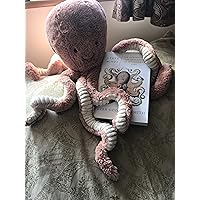
I finished the acclaimed Irish novel, The Dark, by John McGahern, while on a vacation to Waikiki, Hawaii. And, yes, ‘tis (dark). The book begins with an enraged father forcing his young son to strip, then bend over a chair to await the sting of the belt, while his younger siblings watch in terror. It goes on a few chapters later to show the boy and father in bed together. Family members sharing a bed was not uncommon in the early part of the last century (nor is it today in economically-challenged countries. But on this night, the father was in a ‘loving’ mood. Later the book concludes with father and son sharing a bed in a rooming house when the father visits after the son has grown up and gone away to college. How can this be anything, but dark? That said, it’s a worthy read, compelling and illustrative of certain truths, one being that love, or something strangely resemblant, can and does exist between two people in an abusive relationship. Truth number two: while the previously-mentioned truth was probably common in olden times before people were exposed to the liberating influences of modern Freudian Psychology and its therapies, it is rare today, probably only existing in social backwaters and old cultures.
I found myself unable to leave The Dark’s tortured pages while in sunny Hawaii (I only had the final two chapters left to read). I’m not a sadist or a masochist, but the book is finely written and realistic, exposing the realities of some families’ lives that are often repressed, denied, or allowed to scar over. And there is the author’s Catholicism and my own (albeit, lapsed), and all its attendant guilt and fear. The ultimate authority figure in 1960’s Ireland (excepting God and the Pope), the priest, also abuses the POV character in an almost surreal scene bringing to life the power imbalance between cowed believers and venerated God-go betweens. The Dark so effectively depicted such things that it was banned in Catholic Ireland when it was published in 1965. I, for one, was never abused by the Catholic priests where I went to school, nor did I know of anyone who was. But, sadly, nowadays, tales of clerical abuse are so common they scarcely cause a yawn.
Finally I had ‘closure’ with the book. Yes, closure, because that’s one of the payoffs of good literature, especially good ‘dark’ literature. After pulling you into someone’s, or several someone’s’ lives and all their problems, we need resolution; we need a denouement. We get something like that here.
Why do we torture ourselves with this foolish human compulsion to hold onto the familiar if it’s less than perfect, or even dark. Why does The Dark’s young male protagonist respectfully listen to and honor his father, a man who bullied him for all twenty years of his life? Perhaps it’s because, along with the growing sense of our own immortality as we grow older, there’s a growing awareness of the fragility of our footprint, not the carbon one, but the real one, and the transitory aspect of our relationships. It’s all about legacy and influence. What remains of us after we’re gone? The ancients were obviously concerned about this, the wealthiest among them leaving behind the awe-inspiring pyramids and other mega structures. They knew that not much remains of a man or woman and his or her endeavors a hundred or so years after their passing. The things that remain the longest are the feelings and memories we leave behind in others who truly knew us and loved us. And, of course, in exceptional works of literarture. But these will fade in time as well. And McGahern’s The Dark illustrates this sad fact very well.