

What do you think?

The Story of the Siren
This work has been selected by scholars as being culturally important and is part of the knowledge base of civilization as we know it.
This work is in the public domain in the United States of America, and possibly other nations. Within the United States, you may freely copy and distribute this work, as no entity (individual or corporate) has a copyright on the body of the work.
Scholars believe, and we concur, that this work is important enough to be preserved, reproduced, and made generally available to the public. To ensure a quality reading experience, this work has been proofread and republished using a format that seamlessly blends the original graphical elements with text in an easy-to-read typeface.
We appreciate your support of the preservation process, and thank you for being an important part of keeping this knowledge alive and relevant.
This work is in the public domain in the United States of America, and possibly other nations. Within the United States, you may freely copy and distribute this work, as no entity (individual or corporate) has a copyright on the body of the work.
Scholars believe, and we concur, that this work is important enough to be preserved, reproduced, and made generally available to the public. To ensure a quality reading experience, this work has been proofread and republished using a format that seamlessly blends the original graphical elements with text in an easy-to-read typeface.
We appreciate your support of the preservation process, and thank you for being an important part of keeping this knowledge alive and relevant.
22 pages, Paperback
First published May 1, 2000
About the author
E.M. Forster
749 books4,502 followersEdward Morgan Forster, generally published as E.M. Forster, was an English novelist, essayist, and short story writer. He is known best for his ironic and well-plotted novels examining class difference and hypocrisy in early 20th-century British society. His humanistic impulse toward understanding and sympathy may be aptly summed up in the epigraph to his 1910 novel Howards End: "Only connect".
He had five novels published in his lifetime, achieving his greatest success with A Passage to India (1924) which takes as its subject the relationship between East and West, seen through the lens of India in the later days of the British Raj.
Forster's views as a secular humanist are at the heart of his work, which often depicts the pursuit of personal connections in spite of the restrictions of contemporary society. He is noted for his use of symbolism as a technique in his novels, and he has been criticised for his attachment to mysticism. His other works include Where Angels Fear to Tread (1905), The Longest Journey (1907), A Room with a View (1908) and Maurice (1971), his posthumously published novel which tells of the coming of age of an explicitly gay male character.
He had five novels published in his lifetime, achieving his greatest success with A Passage to India (1924) which takes as its subject the relationship between East and West, seen through the lens of India in the later days of the British Raj.
Forster's views as a secular humanist are at the heart of his work, which often depicts the pursuit of personal connections in spite of the restrictions of contemporary society. He is noted for his use of symbolism as a technique in his novels, and he has been criticised for his attachment to mysticism. His other works include Where Angels Fear to Tread (1905), The Longest Journey (1907), A Room with a View (1908) and Maurice (1971), his posthumously published novel which tells of the coming of age of an explicitly gay male character.
Ratings & Reviews
Friends & Following
Create a free account to discover what your friends think of this book!
Community Reviews
Displaying 1 - 14 of 14 reviews

August 28, 2014
"The Story of the Siren" is from the collection "The Eternal Moment and other stories", published in 1928. The individual stories within the collection are:
"The Eternal Moment"
"The Machine Stops" (link here to my separate review)
"The Point of It"
"Mr Andrews"
"Co-ordination"
"The Story of the Siren"
The Story of the Siren is the most abstruse of these stories. Several of these stories included symbols, and this one is perhaps the most metaphorical.
The story tells the tale of a young man who has seen a siren living deep in the sea. He marries a girl who also has seen her. The people believe that their child will reveal the siren to everybody, bringing her out of the sea, to "destroy silence and save the world". However a priest insists
It is difficult to fathom the meaning behind this story. E.M. Forster was very concerned with spiritual ideas. Some of his ancestors had been members of a social reform group within the Church of England. He was also interested in Eastern religions. Forster's experience of the different religions he came across during his time in India, his interest in paganism, his fear that a deliberate exaggeration of imagination could undermine an individual's sense of reality; all these thoughts played into his explorations here, where he points out the dangers of a distorted perspective. One interpretation could be that it would require a revolution in values, a casting out of old traditional theologies, in order to achieve perfect harmony with Nature. Only then might come the emergence of a new man, or possibly a saviour.
The whole is an interesting collection, and in these stories a reader can discern many of the same themes which E.M. Forster is concerned with in his longer novels. His early experiences in life, as with so many writers, go some way to explaining his later influences and preoccupations.
Link here to a review of the whole collection
"The Eternal Moment"
"The Machine Stops" (link here to my separate review)
"The Point of It"
"Mr Andrews"
"Co-ordination"
"The Story of the Siren"
The Story of the Siren is the most abstruse of these stories. Several of these stories included symbols, and this one is perhaps the most metaphorical.
The story tells the tale of a young man who has seen a siren living deep in the sea. He marries a girl who also has seen her. The people believe that their child will reveal the siren to everybody, bringing her out of the sea, to "destroy silence and save the world". However a priest insists
It is difficult to fathom the meaning behind this story. E.M. Forster was very concerned with spiritual ideas. Some of his ancestors had been members of a social reform group within the Church of England. He was also interested in Eastern religions. Forster's experience of the different religions he came across during his time in India, his interest in paganism, his fear that a deliberate exaggeration of imagination could undermine an individual's sense of reality; all these thoughts played into his explorations here, where he points out the dangers of a distorted perspective. One interpretation could be that it would require a revolution in values, a casting out of old traditional theologies, in order to achieve perfect harmony with Nature. Only then might come the emergence of a new man, or possibly a saviour.
The whole is an interesting collection, and in these stories a reader can discern many of the same themes which E.M. Forster is concerned with in his longer novels. His early experiences in life, as with so many writers, go some way to explaining his later influences and preoccupations.
Link here to a review of the whole collection

June 20, 2014
From BBC radio 4 Extra:
The Story of the Siren is the first in our series of short fiction by EM Forster. It is an unsettling story about a sea nymph and an ill fated young Sicilian. The novelist best known for twentieth century classics including A Passage to India, A Room with a View and Maurice was also a prolific writer of short stories. In them he explored many of the themes central to his novels, including the morals of the middle classes in the early twentieth century, and his fascination with culture and mores of the beguiling South. The reader is Dan Stevens.
Abridged by Richard Hamilton. Produced by Elizabeth Allard.
Free download available at InternetArchive
The Story of the Siren is the first in our series of short fiction by EM Forster. It is an unsettling story about a sea nymph and an ill fated young Sicilian. The novelist best known for twentieth century classics including A Passage to India, A Room with a View and Maurice was also a prolific writer of short stories. In them he explored many of the themes central to his novels, including the morals of the middle classes in the early twentieth century, and his fascination with culture and mores of the beguiling South. The reader is Dan Stevens.
Abridged by Richard Hamilton. Produced by Elizabeth Allard.
Free download available at InternetArchive

February 19, 2015
The cream of Edwardian supernatural fiction and, in my personal opinion, the best thing E.M. Forster ever wrote,The Story of the Siren is a a prayer of hope for the future and a hymn to the destructive and redemptive power of nature. Told in the format of a story-within-a-story, a pompous British tourist in Sicily loses a manuscript on Deism to the sea and in return hears a terrifying and wonderful story about a mermaid from his tour guide.
The story he hears is brutal, violent and sad, echoing melancholy mermaid tales such as Hans Christian Anderson's The Little Mermaid and Oscar Wilde's The Fisherman and His Soul. However, Forster's contribution to mermaid tales has a powerful political side, being a condemnation of the repression and hypocrisy of early twentieth-century society, especially its treatment of outsiders. "People began to hate us. The children first- everything begins with them."
Some readers might find the strong anti-Christian streak in this story a little unsettling. It's undeniable that The Story of the Siren characterises the Edwardian Christian church as dogmatic, misogynistic and at odds with the natural world, which in Forster's works is dangerous but authentic and redemptive. The mermaid is nature at its most untameable:
"The priests have blessed the air, so she cannot breathe it, and blessed the rocks, so that she cannot sit on them. But the sea no man can bless, because it is too big, and always changing. Therefore she lives in the sea."
The story he hears is brutal, violent and sad, echoing melancholy mermaid tales such as Hans Christian Anderson's The Little Mermaid and Oscar Wilde's The Fisherman and His Soul. However, Forster's contribution to mermaid tales has a powerful political side, being a condemnation of the repression and hypocrisy of early twentieth-century society, especially its treatment of outsiders. "People began to hate us. The children first- everything begins with them."
Some readers might find the strong anti-Christian streak in this story a little unsettling. It's undeniable that The Story of the Siren characterises the Edwardian Christian church as dogmatic, misogynistic and at odds with the natural world, which in Forster's works is dangerous but authentic and redemptive. The mermaid is nature at its most untameable:
"The priests have blessed the air, so she cannot breathe it, and blessed the rocks, so that she cannot sit on them. But the sea no man can bless, because it is too big, and always changing. Therefore she lives in the sea."

May 19, 2016
Listened to this short story via audiobook and highly recommend the audiobook read by Dan Stevens (also known as Matthew Crawley in Downton Abbey).

July 16, 2023
Every time I read an E.M. Forster story new to me, I marvel at his craftsmanship as a writer. This short story begins with a British man visiting Sicily, losing a manuscript in the water. A beautiful young local man offers to dive in and rescue the manuscript. He does that, but he also tells the tourist a storyof fable, perhaps of the church vs a nature religion including a mermaid. Stunning.
December 13, 2020
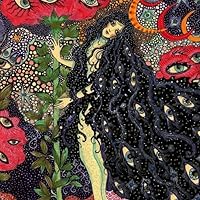
'Silence and loneliness cannot last for ever. It may be a hundred or a thousand years, but the sea lasts longer, and she shall come out of it and sing.'

August 16, 2023
I really loved Forster's writing in this story. The first two pages were truly breathtaking: the tension, the cast, the setting, the story - everything was so beautifully carved in its place. I kinda lost interest as the story meandered into a Italo Calvino-esque folktail about a crazy brother, but overall, this definitely made me want to read more of Forster's shorter works.

January 16, 2023
I was so engrossed by the narration and the framing device pulled me back and reminded me of itself.

September 9, 2024
Kinda silly but a little evocative!

February 5, 2025
Another great story by EM Forster

May 1, 2025
Here we have a wonderful short love story regarding a man falling in love with a siren. A beautiful story with a tragic ending

September 3, 2025
Goodreads missed a couple of this author's short stories. They're all good stories.

October 28, 2011
beautiful.

May 14, 2014
I liked its philosophy about Church and insight of life.
Displaying 1 - 14 of 14 reviews