Jump to ratings and reviews
Rate this book

George Mills

Rate this book
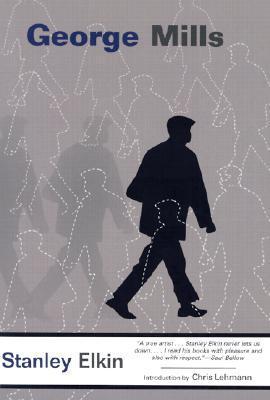
An ambitious, digressive, and endlessly entertaining account of the thousand-year history of the George Millses, George Mills is the antithesis to the typical Horatio Alger story. Since the First Crusade, there has always been a George Mills, who―despite his best efforts―is unable to improve his position in life or that of his descendants. Instead, all the George Millses are forced to accept their lot as true blue-collar workers, serving important personages in a series of odd jobs ranging from horse talker in a salt mine to working as a furniture mover in contemporary St. Louis. But the latest in the long line of George Millses may also be the last, as he obsesses about his family’s history and determines that he will be the one to break this doomed cycle of servitude.

518 pages, Paperback

First published January 1, 1982

24 people are currently reading
703 people want to read

About the author

Stanley Elkin

53 books126 followers
Stanley Lawrence Elkin was a Jewish American novelist, short story writer, and essayist. His extravagant, satirical fiction revolves around American consumerism, popular culture, and male-female relationships.

During his career, Elkin published ten novels, two volumes of novellas, two books of short stories, a collection of essays, and one (unproduced) screenplay. Elkin's work revolves about American pop culture, which it portrays in innumerable darkly comic variations. Characters take full precedence over plot.

His language throughout is extravagant and exuberant, baroque and flowery, taking fantastic flight from his characters' endless patter. "He was like a jazz artist who would go off on riffs," said critic William Gass. In a review of George Mills, Ralph B. Sipper wrote, "Elkin's trademark is to tightrope his way from comedy to tragedy with hardly a slip."

About the influence of ethnicity on his work Elkin said he admired most "the writers who are stylists, Jewish or not. Bellow is a stylist, and he is Jewish. William Gass is a stylist, and he is not Jewish. What I go for in my work is language."

Ratings & Reviews

What do you think?
Rate this book

Friends & Following

Create a free account to discover what your friends think of this book!

Community Reviews

5 stars
48 (31%)
4 stars
44 (29%)
3 stars
38 (25%)
2 stars
12 (7%)
1 star
9 (5%)
Displaying 1 - 26 of 26 reviews
Profile Image for Vit Babenco.
1,784 reviews5,787 followers
June 4, 2023
Stanley Elkin begins from afar, from the First Crusade, when the first George Mills founded a dynasty of Millses – yeomen, servants and blue collars for a thousand years.
Some are born to rule and some are born to serve… “Some are born to endless night…”
Cursed were the meek. He knew that. So be it. The last would never be first. He knew that. He knew everything, his low-born essence, his unswerving blue obedience and commissionaire’s style – everything.

The little man’s tragedy is a widely known genre and Stanley Elkin decided to create a little man’s comedy so George Mills is a comedy but nonetheless sad.
Our lives happen to us. We don’t make them up. For every hero who means to cross an ocean on a raft, there are a hundred men fallen overboard, a thousand, who find themselves in the lifeboat by accident.

Thus for a thousand years a long, long train of Georges have been serving all sorts of mountebanks, charlatans and crooks: religious, political, spiritual, occult and financial.
They’re crooks, George. They don’t do real harm or they’d have to shut down. They’re crooks but white collar. Like salesmen, like priests, like anybody alive in the business of making people feel good. Because don’t kid yourself, kid, comfort is an industry. It always was. The king’s wizards and jesters, and the king himself.

And the life of those who serve is always harder and sadder than the life of those whom they serve.
“Madness is a full-time occupation, but only for the madman.”
Servitude is a full-time occupation, but only for the flunkey.
Profile Image for Jonathan.
1,009 reviews1,230 followers
June 27, 2014
''Learn this, Mills. There are distinctions between men, humanity is dealt out like cards. There is natural suzerainty* like the face value on coins. ... It's as simple as the scorn in my voice when I talk to you like this, as natural as the italics my kind use and your kind don't. Now do as I tell you, get on your horse.''

'You've doomed me,' Mills said. 'You've cursed my race.' ''It was so. Mills apologized silently to the sons he was yet to have - if they ever got out of this mess - for the heritage he was yet to give them, grieved for the Millsness he was doomed to pass on, for the frayed, flawed genes - he thought blood - of the second-rate, back-seat, low-down life.''


Here, in part one of the novel, at the time of the First Crusade, our Ur-George and all his Georgic decedents receive their place in the structure of society, they are defined and delineated and trapped. They will remain so for 1000 years. Always subservient, always second-rate, always existing just above the bread-line.

Part two leaps us forward to two generations of Georges in the twentieth century (with much more focus on the son). This is the main focus of the novel, and forms the majority of the book.

After that, we spend some time in the early 19thc, before coming back to the "current" George.

So, that is the temporal structure.

The prose, however, the prose is just astonishingly good. "He do the police in different voices", that’s for sure. I include some more quotes here, to give you a taste:

**********

from p7

"There was no sea of course, only the flat and fertile plains, pastures, arbors, and orchards - a green garden of agriculture in which the peasants and farmers seemed engaged in some perpetual in-gathering, a harvest like a parable, as astonishing to themselves as to Guillalume and Mills who, in what was not then even England, had, in that wet and misty bronchial climate, seen bumper crops merely of grass, measly grains, skinny fruit. Here it was the actual skins and juices of fruit staining the farmers' flesh and beads, all their up-shirtsleeved bucolic condition, their breech-clouts puddle-muddied at the knees with a liquid loam of opulent fermentation, a liquor of citrics, a sour mash of rotting - because there was too much to in-gather, vegetables discarded half eaten - potato and cabbage, squashed squash, cucumber and carrot, a visible strata of vegetable artifact, a landscape of the overripe like a squishy gravel of flora. The horses leading them through all this, grazing at sweet-toothed will, chewing in surfeited content from the broad green groaning board of earth."


p354

"And do you know, madam, in what my honor subsists? Why in my peculiar, spangled lust. In the singularity of my ruling passion, my most feeling fetish. Which we neither hide nor hinder, watch nor ward. Why should we? Is the Prince custodian of his ruling passion or only the lowly drayman of his drives?"

"Hear hear!" said honoured guests. And 'Three Cheers!' And 'Give three times three!'

"I asked to milk you, madam. No husband but husbandman plain enough. Oh, plain. Plain, quite plainly. Ive this sweet tooth for softs, this yen for your puddings. George the Famished, George the Parched. Georgie the pap prince. Feed us, ma'am. Slake the slake rake! Sow, sew this rip!"


************

See now, that is just lovely stuff.

So, in short, this book is funny, beautiful, filthy, sad and all the rest. Flashes of Barth (Sot-Weed period) and Coover abound, though Elkin is very much his own man. That Gass praised his prose should be praise enough.

A big, messy, wonderful book.


*http://en.wikipedia.org/wiki/Suzerainty
Profile Image for Adam.
423 reviews182 followers
August 15, 2017
With this, I've now read every Elkin novel. This one won a critics award the year I was born and has seemingly fell victim to a cruel, capricious oblivion. That fate, and all Elkin, is droll and lachrymose. He is not more widely read, I suspect, because writers know that to read him is their ruin, while readers know he ruins so many other authors. Yet you, too, should read every Elkin novel anyway.

There was a plot of some sort--behind the brilliant pretext of a millennia of runners-up--but that's not the point. Never is. "Elkin" is the name for a flow whose overflowing tributaries are language, thought, reality, perception, wonder, worry and dismay. He piles on punchlines and pulls no punches. In the obvious he finds the overlooked; in the everyday, the once-in-a-lifetime. The combination of lexical panache and side-splitting Weltschmerz is absolutely singular. I can't wait to begin reading all his novels for the second time.
Profile Image for Heronimo Gieronymus.
489 reviews150 followers
February 21, 2018
I am here to say, point blank, without any fear I may be overstating it: Stantley Elkin is a devastatingly great writer, a giant giant giant, the definition of humbling. This is only the third of his novels I have read (after commencing w/ a certain esteemed collection of early short stories). I was completely knocked out by the last one, THE DICK GIBSON SHOW, instantaneously rendered a gaga in-it-for-life acolyte. It was simply one of the finest novels I had ever read, as formidable a literary achievement as any William Gaddis totem, as fun as a night out w/ the most amusing perennially-tipsy motormouthed raconteur in the district. I had it on good word that GEORGE MILLS was Elkin's most ambitious and dazzling achievement. And certainly when you find a man this eminent in the dazzlement biz the tendency is gonna be to gravitate to what word on the street would lead you to believe is the prima ultra, all-cylinders, all-hands-on-deck stuff. There cannot be many 20th century novels superior to GEORGE MILLS. I mean: really. Lineage, identity, the body politic, History w/ that capital H, the horizon of All Life. Its staggering heterogeneity, its whirlwind ability to follow a surprise w/ a surprise w/ a surprise until you are drunk and dizzy, the untouchable things it can do w/ a riff: giddy-making genius that will have a tendency to make anybody who fashions his or herself a serviceable assembler of quality sentences blanch w/ sallow shame. The extraordinary scope of GEORGE MILLS makes this a comedy w/ a thousand years as backdrop and the whole tricky cosmos looming. It is indeed a spectacularly ambitious novel, both earthy and of the stratospheres, both chaos and design. Up there w/ Wiliam Gaddis's THE RECOGNITIONS and Robert Coover's JOHN'S WIFE. It truly doesn't get any better. I am in thrall, rapture, bowed reverence. GEORGE MILLS, man. Fuck me.
Profile Image for Old Man JP.
1,183 reviews76 followers
August 29, 2022
I think this book demonstrates, to me, how different each of us readers are in our opinions of what we read. This is my first book by Stanley Elkin, a writer who many readers rave about, but it was a bit of a disappointment for me. I found it very disjointed and, at times, confusing and difficult to follow. Elkin writes in very long convoluted sentences, something that in some writers I find enjoyable but, for some reason, not with Elkin. This book had a great premise. It was about a thousand year succession of George Mills, in which every generation of George Mills was an unsuccessful mediocre follower who never achieved anything in life. It seems like a premise that couldn't miss but, although Elkins writing was good, never resonated with me. I will probably give Stanley Elkin another try though because this attempt may have been a little unfair. I tried reading this while on a family reunion vacation at Lake Tahoe and had constant interruptions and distractions by my kids and grandkids whenever I attempted to read.
Profile Image for Josh.
151 reviews5 followers
May 19, 2014
I changed my opinion of this long, dense book about eight times over the course of reading it (I'm not sure what this is, this is great, this is a sloppy mess, this is spinning its wheels, this is great, this is good, this is all over the place, this is amazing), and my final determination is that it's a difficult, digressive, virtuosic masterpiece about everything. Some books I think, "Yeah, I can picture the writing process here, the effort, the time, the construction," but this book fills me with slack-jawed wonderment that a mind and imagination like Stanley Elkin's spent some time on this planet. Taking place primarily in then-contemporary early '80s St. Louis, "George Mills" the book is about George Mills the man, a middle-aged blue collar worker who is the latest, and possibly last, in an unbroken thousand-year chain of George Millses, only children, blue collar workers all, but the book also includes the First Crusades, the court of King George IV, a harem in the Orient, a Jerry Lewis telethon, the Cassadaga spiritualist camp in the '40s and '50s, a dying rich woman seeking a miracle cure in Mexico, oversexed teens, a disgraced televangelist, the political machinations of higher education faculty and administration angling for jobs, gossip, class, history, life, lawyers, miniature trains, elevator operators, marijuana, and the Meals on Wheels program.
Profile Image for Jeremy Hornik.
829 reviews21 followers
June 16, 2012
This book took me six months to read. It had extremely vivid prose (perhaps overly vivid prose), a meandering plot, and a generally morose point of view. It seemed like I couldn't go more than a few pages without drifting away.

Still, I never wanted to quit. So many gems! So little impetus to turn the page.
Profile Image for Thomas.
574 reviews99 followers
October 1, 2020
elkin's part of the american post modern crew along with dudes like barth and coover and pynchon so like you'd expect from those other authors there's some great prose and some good jokes and a lot of maximalism, but also there's actually quite a bit of carefully observed stuff about race and class in america which i didn't really expect but appreciated.
926 reviews23 followers
January 27, 2015
Every novel of reputed worth, no matter how much I may or may not like it, has something of merit to recommend it. The pleasures I derived from this one, however, were woefully out of proportion to the time I spent with it.

Thirty years ago I had read "The Dick Gibson Show", and nothing except disappointment sticks with me. At the beginning of the year, I read "The Living End", and I was again puzzled by and disappointed. After finishing Marilynne Robinson's Homecoming, I waded into what some have considered Elkins masterpiece, George Mills. Reading this, I was for a long, long while disappointed, frustrated that the story seemed to be going nowhere, that there were continual digressions and one long, very difficult conversation that was supposed to convey more than it said (the Cassadaga colloquy between the present young Mills and Wickland, about his stillborn sister). Another such conversation occurs later in the novel, between Messenger and Mills, with Louise present, who asked (as I was thinking), "what the hell are you talking about?"

There's much cleverness in some of the dialogue and the rampaging soliliquies, but it doesn't seem to serve the story well. Tristram Shandy was another novel, that though it sounded good in theory, was one I could not tolerate. While I did suffer the same frustrations as I did with TS, I held on to the end, eager to see what sort of grace Mills had experienced and hear something of his thoughts on it at the sermon he early in the novel promised to deliver. At a certain point, still hundreds of pages from that final sermon, I figured that it (the sermon) was going to be little more than a present-day avatar of the wisdom his line's progenitor delivered to the Cossacks, meandering and simple-minded. And that's what it turned out to be, anticlimactic, as he'd just a few pages before decided that he'd not experienced any sort of grace at all, unless it was to realize that the 1000-year line of Mills, since he was childless, had come to an end with him.

The first part of the novel tells the tale of the first Mills who is called to serve an inept Knight in the Crusades. They wander and get lost in Eastern Europe and end up working in a salt mine. Later, escaping, they encounter Cossacks in the mountains, and certain death is forestalled when Mills' horse (to whom he talked incessantly in the salt mines) begins to walk about in circles. Then the novel jumps into the present day, with the 50th generation Mills working as mover for property evictees, mostly poor Blacks. Then there is long digression into the life of young 50th generation Mills when he is living with his family in Cassadaga, FL, home to carnies and spiritualists. Then the story takes a new turn, and 50th generation Mills is serving as personal assistant to an old rich woman, Judith Glazer, who is dying of cancer and is taking Laetrile treatment in Mexico. After her death, the story shifts to 43rd generation Mills, who, after insulting George IV, is sent on a bogus political mission to Constantinople, where he insults the Emperor, becomes a Janissary, then a mock eunuch in the emporor's harem, from which he escapes to settle in the United States. Then the story returns to the contemporary Mills, where he is finding one thing after another not working out for him, while all around they appear to be for others... And then, there's the sermon, which concludes the novel.

To call this novel a shaggy-dog story is to exaggerate the term. This is, perhaps, the great American shaggy-dog story, replete with a lot of characters whose function is to both mimic previous Millsian episodes and foretell the story's conclusion. In such a novel, the point is less the destination than the journey. I guess I just simply don't have it in me to enjoy the sort of verbal dexterity that Elkin wields, especially when it is not in service to a plot or story dynamics that I find more natural and congenial.
332 reviews6 followers
September 6, 2013
Elkins was extolled by critics in the 60's-80's. but seems forgotten today. George Mills is not surprisingly about generations of George Millses, representing the nameless poor, those who do the menial tasks, fixed in class, fixed in poverty, expecting nothing and getting nothing. The Mills curse takes on mythic proportions and even smacks of Greek tragedy. It deals with issues like death, spiritualism, loyalty, marital fidelity, exploitation of the poor and mental illness. At the same time it's a very funny book: excoriating the rich, mystics, do-gooders, academia and even meals-on-wheels. There are beautiful flights of language and amazing set pieces. It flagged at the end somewhat and the end was somewhat disappointing, but this is a remarkable book that, like Elkin, deserves to be remembered
Profile Image for Meghan.
123 reviews1 follower
December 14, 2007
So the description of this book on the site says it's endlessly entertaining, and on my copy there is a quote from Salman Rushdie about how much he liked it...but maybe there's something I missed. I found it hard to follow and it was difficult to connect with any of the characters, as soon as I thought I might like them they we swapped out for a new character. There were some sections that I enjoyed, but many that I was completely bored with. It took me FOREVER to read this book because I wasn't really into most of it. So glad it's done and that I am reading The Third Policeman now.
Profile Image for Erik Wyse.
129 reviews3 followers
June 22, 2014
A wholly unique and ambitious novel. Largely plotless, meandering between rich scenes and setups. The language is as verbose and rich as any I've encountered, as Elkin tends towards longer sentences that twist and turn.
Profile Image for Anwar Sadat.
1 review
December 18, 2013
Thank you, John Keeney, for introducing me to one of the great American authors and novels.
379 reviews1 follower
September 4, 2022
Stanley Elkin's 1982 novel is a tale of one thousand years of men - all named George Mills - each of whom have blue-collar jobs which put them in the vicinity of greatness - the first George Mills shoveled horseshit during the First Crusade - while managing never to achieve it themselves, and the efforts of the current George Mills to break the cycle. The novel is at times fascinating, but at other times reading this novel feels like we're running through mud. Elkin is a wonderful wordsmith - his dry humor brings to mind an earlier Christopher Moore (George Mills was released in 1982) without Moore's gift for plotting - whose characterizations are deft, and his book has a lot to say about the human condition, but George Mills is also numbingly repetitive and feels as if Elkin was paid by the word. The effect, at least to me, was much like paying to see a master musician do nothing but play scales.
Profile Image for George.
3,259 reviews
February 8, 2024
An overly long, humorous novel that is novel of a collection of parts rather than a solid whole of a book.

Part one begins with a George Mills in medieval Poland looking for a crusade. Part two sees a George Mills making a living by moving furniture out of the apartments of evicted black people. A younger George Mills becomes involves with a religious group. George believes he has been 'saved', but provides no concrete evidence, though many take him at his word.

I particularly enjoyed the George Mills who takes on a short job as an aide to a rich, young, dying woman. They go to Mexico together, to a laetrile clinic.

I found this book a difficult read. There is minimal plot development and little character development.
However, there are some funny scenarios and witty dialogue.

This book was the winner of the 1982 National Book Critics Circle award for fiction.
40 reviews2 followers
February 14, 2025
At the micro level this book was irresistible. Elkin’s style is deft and wry. He spins long sentences with razor sharp word choice and comedic timing. At a macro level, however, this book felt like it was written with no outline and no second draft. It felt somehow like a live recording of a skilled jam band where some moments could get pretty tedious while others felt like lightning in a bottle. I just don’t think the premise of the George Mills curse was explored enough nor was it central enough to the present day parts of the book. The George mills from the Ottoman part of the book was way more interesting than the Mills we spend the most of the book with which really hurt the flow of the novel since the main character was so bland (when other in his lineage weren’t). I will agree that this is a funny book though, but I’m not sure funny books warrant 518 pages.
Profile Image for Richard O'Brien.
Author 13 books9 followers
September 29, 2019
Tedious is a word that comes to mind to describe Elkin’s novel. There was some good dialogue, but the novel, for me, was off to a disjointed start and never got better.

It was an excellent idea, fifty generations of men destined to never rise above their station and remain in some form or another of servitude, but overall I didn’t care for any of the characters. Still, the prose was something to be admired, even if the novel was fragmented in the sense that some elements of the story never came together.

I wanted to like this one, but ultimately, this novel just didn’t so it for me. Also, it didn’t age well.
1,987 reviews111 followers
February 9, 2024
A thousand years, generation after generation of George Mills have been cursed into a life somewhere just below mediocrity. I think this is supposed to be funny, but I never got the humor. The events seemed to be limited to sex or violence or humiliation or sex and violence and humiliation. The writing is outstanding. But apart from the extensive vocabulary and creative turn of phrase, I found nothing to enjoy in this novel. It is my 2nd by Elkin and it should be my last.
Profile Image for Steven.
488 reviews16 followers
February 10, 2024
5. 4. Pick a number. Parts as great as Magic Kingdom….including a150 page passage of time, astral projection and cousins dying that stands with some of the best Elkin I’ve yet read. He gets graded on a curve…less than (parts equal to…anything) Magic Kingdom, Mrs. Ted Bliss. Star warring against- I dunno- Most anything else: 21 gun salute! On par with the Franchiser. Fucker can write
Profile Image for Alanseinfeld.
207 reviews
October 13, 2024
Interesting style and use of language. I enjoyed Elkins conversational narrative in telling his story.As much as I liked this book, I found it dragged at times, over-playing the intracacy. All in all, this is good reading probably worthy of 3 and a half stars. I definitely want to read more of Elkins books.
Profile Image for Robert Chapman.
48 reviews
February 13, 2020
I thought writing while under the influence of hallucinogens went out of practice in the late sixties. Guess I was wrong.
Profile Image for Bryan--The Bee’s Knees.
407 reviews69 followers
October 29, 2019
Review originally written for Amazon in 2013:

George Mills is the story of the title character and of his ancestral line, all of whom are named George Mills, and whose destinies, because of fate or fortune or bad luck or genes or the weight of all those other George Millses before them or just from general inclination, has been consignment to the role of the nobody, the character actor, the serf, the hack driver. From a stable boy in the first crusade--whose horse leads the first George to servitude in a salt mine rather than the Holy Land--to a furniture re-possessor in St. Louis, George Mills is a chronicle of a man who represents the masses; of all those at the mercy of circumstance or providence; of the countless backs that civilization breaks as it marches on.

That vague synopsis will in no way prepare the unfamiliar reader with George Mills. It would be like saying that Gravity's Rainbow is an 'analysis of the impact of technology on society' (which is a direct quote from the book's Goodread's page), and expecting that to impart any meaningful sense of the book. And though I never believe much in the efficacy of comparing one author to another, it is indeed the smattering I've read of Gravity's Rainbow that most reminds me of George Mills. Stylistically difficult, syntactically challenging, crammed full of obscurities and inside jokes, often scathingly funny (sometimes scatologically so), witty in an ultra-refined slapstick sort of way, and (if anyone could ever reach an agreement on how to define it) probably a text-book example of post-modernist writing,
I would want to recommend George Mills to those readers who feel that most literature is not challenging enough for them--both from a thematic standpoint as well as a technical one. I don't know that I'm in that crowd; if the theme is tough, I need a break on the whiz-bang techniques, and if the prose is a challenge, I'd like a relatively accessible theme to hang my hat on. Stanley Elkin is in Gass/Gaddis/Pynchon/Barth territory--that's neither good nor bad, it just is. My own appreciation for George Mills may have increased if I'd been prepped for it; that, or maybe it'll take re-reading it someday when I've carved out a place to perch among my ever-expanding to-be-read pile. My assessment at this point is that there were periodic flashes of genuine delight as I was reading my first attempt at Stanley Elkins, but the mental gymnastics necessary for 500 pages of his prose hijinks left me too tired to appreciate all I was reading. I'm not that nimble. Toward the end, I could recognize what was charming but was too much in a hurry to be finished too stop and relish it.

This won't be my last Elkin foray--I've heard too many good things about Van Gogh's Room at Arles to stop now, and I've also got Searches and Seizures on my shelf as part of that TBR pile. But both of those are made up of novellas and shorter stories--which may be the perfect way for me to digest Elkin's writing. While I can say that I thought George Mills was often excellent, it was also exhausting. It has, I believe, not just too many notes--it's crammed full of them.
Profile Image for David.
134 reviews1 follower
June 29, 2011
Never using one adjective when he could use three or more, Elkin's book was just not appealing to me. It starts with an interesting premise, following the men of the Mills line for a thousand years, each succeeding generation with a son named "George" and each generation cursed to a life on society's outskirts, 50 generations of futility as laborers and n'er do wells until the current George Mills, who works as a mover for a business that evicts the poor from there homes in St Louis, decides it's time the curse is lifted. More interested in literary style than plot, there are sections that are quite interesting but nothing seems to cohere as a story. Back to the simplicities if genre fiction for me...
Profile Image for Andrew.
Author 5 books31 followers
September 5, 2007
This book is really a 3.5 star book, but the fact that I jerked off once or twice while reading it pushes it into the fourth when forced to choose. The first chapter is awful, and then it gets fantastic. Elkin's language is exciting; his plots not to so much. But who gives a shit about plot anyway when he can write about "taut auras", "the feeble litter of the lightly trafficked park", "effluent participatory chivalry" etc.
Profile Image for Tom.
182 reviews30 followers
September 27, 2018
On hearing one time too many that "less is more" Mr. Elkin was quoted as saying that "less is less, more is more, fat fat and thin thin and enough is enough."

After reading 4/5ths of this novel, and very much enjoying a good deal of what I read, the splendid avalanche of Elkin's prose and characters, I'm afraid I just reached the "enough is enough" stage.
Profile Image for Andrew.
2,258 reviews931 followers
Read
November 7, 2018
As with so many novels of this era, this is something so big, so broad in scope, that it's hard to make sense of it at times. And yet the writing was consistently excellent, the many bearers of the moniker George Mills so well-executed as feckless and essentially screwed individuals, that it was hard not to be charmed. The ending wasn't much to write home about, and with a project like this, it would be hard to give it the ending it deserves -- another feature typical of the '60s/'70s big-dick American novels. If you're into these things, I would recommend George Mills, but if you're even on the fence, it might be one to skip.
Displaying 1 - 26 of 26 reviews

Can't find what you're looking for?

Get help and learn more about the design.