
What do you think?
Rate this book


157 pages, Hardcover
First published March 5, 1970


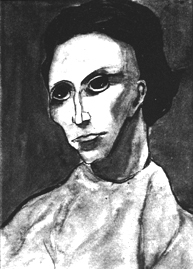
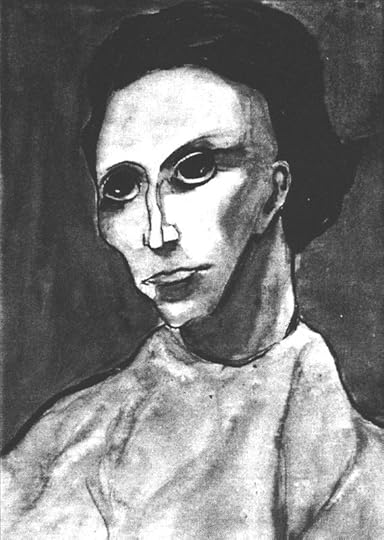
’I know I’ve got a death-wish. I’ve never enjoyed my life, I’ve never liked people. I love the mountains because they are the negation of life, indestructible, inhuman, untouchable, indifferent, as I want to be. Human beings are hateful; I loathe their ugly faces and messy emotions. I’d like to destroy them all, People have always been horrible to me; they’ve always rejected me and betrayed me. Not one of them has ever been kind. Not one single person has even attempted to understand me, to see things from my point of view. They’ve all been against me, ever sine I can remember, even when I was six years old. What sort of human beings are these, who can be inhuman to a child of six? How can I help hating them all? Sometimes they disgust me so much that I feel I can’t go on living among them—that I must escape from the loathsome creatures swarming like maggots all over the earth’Certainly not a pleasant depiction of life. By stepping into her mind, Kavan manages to build an incredible empathy, aided of course by her irresistibly beautiful prose. The reader is told of her tragic childhood under an obdurate mother who despised her for not being born male, and, especially if the reader has read several of her other stories, begins to pity her for her victim status. While she evinces a clouded perception due the victimization, being embraced by hatred and coldness instead of love, that forged her in childhood, she is acutely aware of her slanted views and refuses to apologize for them. She hates everything around her, and the disgust that the world shows back at her only solidifies her perceptions. ‘And I thought, maladjusted to what, for heaven’s sake?’ she asks in Out and Away, a depiction of her time spent at a private school and of her early awareness to her damaged mental states, ‘To their stupid school? I certainly hope I am.’ She admits that she exists in a perception that she has created, and feels swallowed up and helpless within it.
’Why am I locked in this nightmare of violence, isolation and cruelty? Since the universe only exists in my mind, I must have created the place, loathsome, foul as it is. I live alone in my mind, and alone I’m being crushed to suffocation, immured by the walls I have made. It’s unbearable. I can’t possibly live in this terrible, hideous, revolting creation of mine.’Society has created a life for her devoid of love and support. Years of abuse from family, lovers, institutions have created a frightening realm around her. What is especially heart-breaking is her admission that, despite her hatred for humanity, how being among these people that she depicts in extreme, revolting details, is preferable to the solitude of her inner world. ‘I sometimes wonder if,’ she writes in A Town Garden, ‘in the last resort, the parks with their swarming crowds may not be preferable to the silent emptiness of an enclosed garden, where no one, not even a ghost, ever speaks a word.’ How terrible she must have felt in every waking moment.
’It was as if she’d always been lost and living in chaos, until this man had appeared like a magician and put everything right. The few brief flashes of happiness she had known before had always been against a permanent background of black isolation, a terrifying utter loneliness, the metaphysical horror of which she’d never been able to convey to any lover or psychiatrist. Now suddenly, miraculously, that terror had gone; she was no longer alone, and could only respond with boundless devotion to the miracle worker.’However, as in Obsessional, Kavan became suicidal under the crushing depression that befell her after his death.
‘Since he’d gone, the world had become unnervingly strange. There was nothing she could do and nowhere she could go. She felt lost, lonely, dazed, deprived of everything, even of her identity, which was not strong enough to survive without his constant encouragement and reassurance.’Having seen the hopeful transformation in Kavan with Bluth, despite the obsessive and portentous doom that comes with it, the sadness of the character in an event that may mirror his Bluth's death is especially heart breaking. What hurts most is seeing the potential for strengths that lie inside of Kavan and watching her be robbed of them and cornered into the deep, dark depression that is always looming over her incredibly talented and brilliant mind. Kavan also offers extensive views on her failed second marriage with the alcoholic artist Stuart Edmonds, whom she refers to as Oblomov to emphasize his inability to take charge of his life, in the story Now and Then. She chronicles their downfall, blaming him for their problems as she watches him grow fat and cold towards her. ‘Outwardly, and in every other way, he’s become totally unlike the man I married.’


One hot night a leopard came into my room and lay down on the bed beside me. I was half asleep, and did not realise at first that it was a leopard. I seemed to be dreaming the sound of some large, soft-footed creature padding quietly through the house, the doors of which were wide open because of the intense heat. It was almost too dark to see the lithe, muscular shape coming into my room, treading softly on velvet paws, coming straight to the bed without hesitation, as if perfectly familiar with its position. A light spring, then warm breath on my arm, on my neck and shoulder, as the visitor sniffed me before lying down.
Sometimes he would suddenly come indoors, and silently go all through the house at a quick trot, unexpectedly entering one room after another, before he left again with the same mysterious abruptness. At other times he would lie just inside or outside, with his head resting on the threshold, motionless except for his watchful moving eyes, and the twitching of his sensitive nostrils in response to stimuli which my less acute senses could not perceive.
It was at this moment, when I was dazzled by the violent colours and the terrific glare, that the young man... reappeared like a mirage, the red of his flying cloak vibrating against the vivid emerald-green waves. This time, through a haze of shimmering brilliance, I saw that the leopard was with him, majestic and larger than life, moving as gracefully as if the waves were solid glass... I hurried towards the edge of the water, then suddenly stopped, intimidated by the colossal size of the giant rollers towering over me... Their exploding roar deafened me, I was half-blinded by the salt spray, the whole beach was a swirling, glittering dazzle, in which I lost sight of the two sea-borne shapes.
But, very occasionally he still enters my dreams, which disturbs me and makes me feel restless and sad. Although I never remember the dreams when I wake, for days afterwards they seem to weigh me down with the obscure bitterness of a loss which should have been prevented, and for which I am myself to blame.
All I wanted then was for everything to go on as before, so that I could stay deeply asleep, and be no more than a hole in space, not here or anywhere at all, for as long as possible, preferably forever.
The headlights pounce again, the white flare of light, jabbing forward, becomes an instrument to impale, to eviscerate. Four shapes are transfixed, four white faces, frighteningly close, against a black backdrop of reeling mountains, white fish-faces staring with open mouths. The air goes colder and darker, thunder booms in the ice; ice-cold breathing down from the summits like a command. Assert the supremacy of the high mountains.
The incident was unduly prolonged. Strange caterwaulings went on interminably and indistinct shapes fell about. When at last it was over, I drove on as if nothing had happened. Nothing had, really.

"The world belongs to heartless people and to machines which can't give. Only the others, the heroes, know how to give. Out of their great generosity they gave me the truth, paid me the compliment of not lying to me. Not one of them ever told me life was worth living. They are the only people I've ever loved..." (36)
![Profile Image for s.penkevich [hiatus-will return-miss you all].](/_next/image?url=https%3A%2F%2Fi.gr-assets.com%2Fimages%2FS%2Fcompressed.photo.goodreads.com%2Fusers%2F1735525095i%2F6431467._UX200_CR0%2C11%2C200%2C200_.jpg&w=128&q=75)


