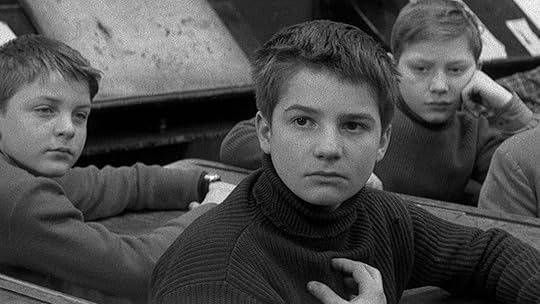
Pocket Essentials is a dynamic series of books that are concise, lively, and easy to read. Packed with facts as well as expert opinions, each book has all the key information you need to know about such popular topics as film, television, cult fiction, history, and more. By the mid-1960s, the likes of Jean-Luc Godard, Francois Truffaut, and Claude Chabrol had changed the rules of film-making forever, but the French New Wave as such was over. This guide reviews and analyzes all of the major films in the movement and offers profiles of its principal stars, such as Jean-Paul Belmondo, Anna Karina, and Brigitte Bardot. There is also an introductory essay which examines the social context of the movement in France as well as the directors' considerable influence on later-generations of film-makers across the globe.
A spiffy, nifty little guide starting in 1956 with Brigitte Bardot in And God Created Woman, yes, a pretty ridiculous place to start but Chris Wiegand seems to know what he’s talking about. Most of this book is made up of two-page-long excitable enthusiastic reviews. I’ve seen about half of these and I can see why anybody could be a fan of some of them but there’s always the odd tarantula on the angel cake . One of the black poisonous spiders is named Jean-Luc Godard, I hate his stuff. Because of this book and the entire rest of the film-watching universe I just saw Pierrot le Fou. Ugh, ech. It was like an unfunny two hour long Monty Python sketch in French. The one where they parody wacky French existential films like Pierrot le Fou. And because old Jean Luc never bothered with such tiresome things as scripts and storyboards, he could and did make a film every six weeks or so in the 1960s, and apparently they’re all great. All exciting, all a breath of fresh air. I’m the only person I know who doesn’t aimez le Godard so what do I know.
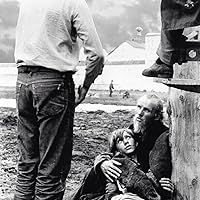
One of the best of these movies is Cleo from 5 to 7 directed by Agnes Varda, a recent discovery of mine. I then saw Faces Places and only today saw The Gleaners and I, both also by Agnes. These last two are documentaries, that is to say, improvisations on a theme with a camera instead of a saxophone. The Gleaners and I is all about scavenging, dumpster diving, following the harvest for what’s left, scouring the marketplace after the stalls have been packed up, and many curious characters are discovered in the France of the year 2000 eating only vegetables found in bins and boxes and never getting ill once. In one sequence Agnes stumbles on a minor tale of woe in a small town, whereby a bunch of hippies had been scavenging the bins outside the town’s supermarket, and the manager got mad at them and began pouring bleach into his bins to stop them, and they got mad back and graffitied up his walls and so on, so they got arrested and charged, and Agnes got all the parties together and interviewed them all, the hippies, the manager and the local magistrate. No, they didn’t end up singing Where Have All the Flowers Gone. Well, anyway, Agnes Varda is great. Way better than that Godard.
I'm mostly away watching films at the moment, and don't much feel like reading. But to keep up the numbers, why not read a short, easy book about films? Also a couple of weeks ago this was the only reasonably-priced book about French New Wave on Kindle.
The enterprise began somewhat farcically as I became worried that part of the book was missing: it didn't look like there was enough % left to fit in the rest of the content mentioned in the index ... but in my absent-mindedness I'd been reading an unusually long and generous preview of The New Wave: Truffaut, Godard, Chabrol, Rohmer, Rivette by James Monaco. (It was more interesting and substantial so I wouldn't mind reading more when I can be bothered with a 300-pager.)
As other reviewers have said, this is a beginners' guide. However, of the Nouvelle Vague films I saw before this year, I watched pretty much all of them on my own and didn't have an opportunity to discuss them until they came up in conversation, sometimes months or years later, by which time I may had forgotten some of the detail. So although the pieces on individual films were very brief, they were still very welcome. And there were enough films mentioned which I haven't yet seen to make it of some value as a prompt.
It would have been easier to have this as a paperback, so that the lists could be consulted more easily, and so that it could perhaps be given, lent or sold on once I'd seen more of them or got a more substantial book on the subject.
Totally posuer's book. It's a good guide, but what it is used for is to pick up girls. For the beginner, study some of the names, film titles (in French if possible) and hide the book in your pocket. It's small, and you can hide it before your date shows up for the agreed upon and mutual appointment. Remember to drop a name or two in a natural manner - and then bingo she will be interested in you. And please don't mention my name. That's for me to use for my own purposes with respect to dates, etc.
For an absolute beginner, this is a good book to start with. After you have seen the major films of the French New Wave, the book offers not but a little bit of interesting analysis. After a short while, therefore, the book almost gets a bit obsolete. Then, of course, you can always lend it to a friend who needs some guidance in the subject. This book is made to be passed around. Therefore, I do recommend it. It is handy, informative, if a bit too simple.
Another short & fascinating history. I've added countless films to my to watch list on Letterboxd. One section of this was short descriptions of films which really felt like I was reading the abouts of movies on Letterboxd, something I have done so much of recently. Also in terms of access to material, the Internet has really changed everything. The author discussed not being able to find many of the films mentioned, or suggesting where you can try and find some of the DVDs, and it makes me think watching movies back in the day was either much more random, or alternatively much more thoughtful. Going to Blockbuster when we were younger, I think the randomness is in what is available in those minutes you have to search, but the thoughtful choice is knowing that if there are two things you want to see, you have to wait another week or two to be able to go back and pick that other one.
I saw a review on here that mentioned pretentious men reading this before dates to name drop and attempt to impress their dates. cringe. If you can get away from the aura that surrounds such knowledge of the French Wave and cinema in general, then it is really so so interesting.
This is an introductory book to the French New Wave. By introduction, I really do mean an introduction: Wiegand gives short descriptions and reviews for a range of films that can be said to belong, picking up on the central themes. Mixed with some paragraphs providing essential historical background, it functions either as an index book for Nouvelle Vague films or a more narratively interesting Wiki page for complete newcomers.
Benim gibi "Yeni Dalga"ya aşık olanların okuması kaçınılmaz olan ama fazlasıyla yüzeysel bir kitap. Yazılması çok zor da olmamıştır gibi görünüyor. Yazar Chris Wiegend'ın bazı filmlere verdiği notlar ise görmelere seza. "Une Femme est Une Femme" gibi gayet iyi ama Godard filmografisinde ilk-5'e koymayacağım bir filme 5/5 uygun görürken, yine Godard'ın (naçiz kanaatimce) en iyi filmi ve sinema tarihinin ilk-10 filminden biri olan "Masculin Feminin"e 3/5 vermiş yazar. Dolayısıyla fazlasıyla kişisel bir bakış açısı söz konusu. Sadece ilk 20-25 sayfayı içeren Yeni Dalga analizi ise ortalama seviyede.