

What do you think?

Parallel Lives
One of comics’ true visionary formalists reinvents science fiction in this graphic novel.
This collects six wildly inventive short comics stories that might collectively be dubbed “speculative memoir.” Schrauwen’s deadpan depictions of his and his offspring's upcoming lives include alien abduction, dialogue with future agents, and coded messages in envelopes at breakfast.
This collects six wildly inventive short comics stories that might collectively be dubbed “speculative memoir.” Schrauwen’s deadpan depictions of his and his offspring's upcoming lives include alien abduction, dialogue with future agents, and coded messages in envelopes at breakfast.
125 pages, Kindle Edition
First published February 1, 2018
About the author
Olivier Schrauwen
34 books207 followersOlivier Schrauwen is a Belgian cartoonist and musician, currently based in Berlin.
Schrauwen was born in 1977 in Bruges, a city in the Dutch-speaking part of Belgium. He studied animation at the Academy of Art in Gent, then obtained a master degree in comics at the 'École superieure des Art Saint-Luc' in Brussels.
His works include the surreal Arsène Schrauwen (2014), the six sci-fi stories collected in Parallel Lives (2018), the pirate story Portrait of a Drunk (2019) in collaboration with French cartoonists Ruppert and Mulot, and his slice-of-life magnum opus Sunday (2024).
Schrauwen was born in 1977 in Bruges, a city in the Dutch-speaking part of Belgium. He studied animation at the Academy of Art in Gent, then obtained a master degree in comics at the 'École superieure des Art Saint-Luc' in Brussels.
His works include the surreal Arsène Schrauwen (2014), the six sci-fi stories collected in Parallel Lives (2018), the pirate story Portrait of a Drunk (2019) in collaboration with French cartoonists Ruppert and Mulot, and his slice-of-life magnum opus Sunday (2024).
Ratings & Reviews
Friends & Following
Create a free account to discover what your friends think of this book!
Community Reviews
Displaying 1 - 30 of 102 reviews

December 19, 2018
A collection of linked short comics stories by the Belgian cartoonist Olivier Schrauwen, whose mock-biographical story of his grandfather's life in the Belgian Congo, Arsene Schrauwen, I much admired, and whose previous collection of stories, The Man Who Grew His Beard, I loved. These are meta-fictional experiments, all of them, both exploring and making fun of narrative and memoir, and I guess the idea of "speculative memoir" applies here again in Parallel Lives. Surrealism? Absurdism? Surrealstic sci-fi? I guess, sure. all of that. And nods to early comics history such as the work of Winsor McKay that also involves often dizzying formal experiments with storytelling and representation.
In this volume Schrauwen plays around with various stories of past and future Schrauwen family yarns; the first is a tongue-in-cheek alien abduction story.
"As a professional graphic novelist, I chose to tell this story in comics form. I believe that precisely in this gray area--the overlap between what can be said in words and what's best shown in images--lies the language that can truly convey the profound mystery of the events that I have experienced."
Ha! Schrauwen's precise point is that neither comics not any other narrative can "truly" convey anything whatsoever about the "profound mystery" of experience. And the current view about the nature of comics doing something completely different (and thus, it is implied, better) at rendering the "truths" of "reality," Schrauwen also spoofs. So he just has fun with it all, but it is cerebral fun.
“Hello” features an attempt through technology to help us learn from the past through technological renditions of experience. Schrauwen's father Armand is beamed to the future via something called a Bomann Kühlbox T5000. But nope, people in the future don't learn from literature or history or biography any more than they do today!
In another story, instead of "Spotify," we have “Cartoonify,” where the app allows its user to “experience life as a cartoon character in an animated world," and Schrauwen amusingly shows us what this might mean: Comics "reality" is a strange, flat, tw0-dimensional but experimental world. Pretty funny.
The final, novella-length “Space Bodies” imagines a future where conventional sexual intercourse is seen as boring and passe compared to the Sexotron (such as Woody Allen's Orgasmatron from Sleeper). So this story stays with the futuristic tech theme, though I was interested in this story least.
Overall I really liked this volume; its inventive, funny, though also a bit creepy, and maybe worrisome about the future. Formally remarkable cartooning. They're stories for the head, not the heart, but they are impressive.
In this volume Schrauwen plays around with various stories of past and future Schrauwen family yarns; the first is a tongue-in-cheek alien abduction story.
"As a professional graphic novelist, I chose to tell this story in comics form. I believe that precisely in this gray area--the overlap between what can be said in words and what's best shown in images--lies the language that can truly convey the profound mystery of the events that I have experienced."
Ha! Schrauwen's precise point is that neither comics not any other narrative can "truly" convey anything whatsoever about the "profound mystery" of experience. And the current view about the nature of comics doing something completely different (and thus, it is implied, better) at rendering the "truths" of "reality," Schrauwen also spoofs. So he just has fun with it all, but it is cerebral fun.
“Hello” features an attempt through technology to help us learn from the past through technological renditions of experience. Schrauwen's father Armand is beamed to the future via something called a Bomann Kühlbox T5000. But nope, people in the future don't learn from literature or history or biography any more than they do today!
In another story, instead of "Spotify," we have “Cartoonify,” where the app allows its user to “experience life as a cartoon character in an animated world," and Schrauwen amusingly shows us what this might mean: Comics "reality" is a strange, flat, tw0-dimensional but experimental world. Pretty funny.
The final, novella-length “Space Bodies” imagines a future where conventional sexual intercourse is seen as boring and passe compared to the Sexotron (such as Woody Allen's Orgasmatron from Sleeper). So this story stays with the futuristic tech theme, though I was interested in this story least.
Overall I really liked this volume; its inventive, funny, though also a bit creepy, and maybe worrisome about the future. Formally remarkable cartooning. They're stories for the head, not the heart, but they are impressive.

July 14, 2020
En poco tiempo Olivier Schrauwen ha pasado de desconocido bizarro a autor imprescindible en mi comiteca física y mental.
Sin duda este es mi tomo favorito de los tres que he leído de su obra: seis historietas en las que se adentra en la ciencia ficción más clásica (a veces no tanto) para rebozarlas en un extraño sentido del humor, una capacidad narrativa encomiable y unas decisiones creativas magistrales. A todo ello hay que sumar sus habituales rasgos tales como la hipersexualización, un maravilloso contrapunto de patetismo, esas identidades de género libérrimas y esos histriónicos colores pastel que hacen que te quedes varios minutos mirando la página.
Oly, estoy contigo: hay que meterte en una cápsula de nitrógeno líquido para que sigas haciendo historietas del futuro en el futuro.
Y para toda la eternidad.
Sin duda este es mi tomo favorito de los tres que he leído de su obra: seis historietas en las que se adentra en la ciencia ficción más clásica (a veces no tanto) para rebozarlas en un extraño sentido del humor, una capacidad narrativa encomiable y unas decisiones creativas magistrales. A todo ello hay que sumar sus habituales rasgos tales como la hipersexualización, un maravilloso contrapunto de patetismo, esas identidades de género libérrimas y esos histriónicos colores pastel que hacen que te quedes varios minutos mirando la página.
Oly, estoy contigo: hay que meterte en una cápsula de nitrógeno líquido para que sigas haciendo historietas del futuro en el futuro.
Y para toda la eternidad.

December 31, 2018
Chris Ware needs to step up because Schrauwen is getting better and might replace him as ~ the great living graphic novelist ~ soon?!
it's about the narration in comics
it's about the narration in comics

December 6, 2018
Seriously some of the best reading material I have experienced so far this year. Along with Patrick Kyle and Yuichi Yokoyama, O. Schrauwen is an auteur whose work I cannot get enough of.
It's 100% wow moments at the turn of every page. Embrace the uneven drawing lines and colour errors (some characters are not properly coloured in in certain panels) and spelling mistakes. The rushed-feeling of some of the sketches only adds to the urgency of the message that is trying to be said. I will admit that some of the stories (the details) are a bit too quirky (even to my tastes) but they are not just quirky for quirkiness' sake. They are there for a reason. And I appreciate that (very much).
I have said this of the works I admire most--this is going to make you want to create (assuming you are a creator; maybe, even if you are not). The final story in this collection, "Space Bodies," reminds of French comics I would read as a child that had to do with the future (everyone is wearing leggings made out of shiny material, there are men in white beards and tons of phantasmagorical colours). Schrauwen completely nails that look and feel.
Another thing that totally got to me was the different styles of story-telling Schrauwen would employ. Some comics would only be 2 pages long (but consist of 70+ tiny TINY panels) while other stories will only contain 4-6 panels per page. It's truly amazing to be able to watch someone who is so confident in their style, try and develop new modes of visual story-telling. Like, it is all very familiar-looking but there's always that one (or two) thing(s) that sets it apart from your run-of-the-mill comic/graphic novel.
This collection is another reason I can add to why I think Schrauwen deserves some gold medals.
It's 100% wow moments at the turn of every page. Embrace the uneven drawing lines and colour errors (some characters are not properly coloured in in certain panels) and spelling mistakes. The rushed-feeling of some of the sketches only adds to the urgency of the message that is trying to be said. I will admit that some of the stories (the details) are a bit too quirky (even to my tastes) but they are not just quirky for quirkiness' sake. They are there for a reason. And I appreciate that (very much).
I have said this of the works I admire most--this is going to make you want to create (assuming you are a creator; maybe, even if you are not). The final story in this collection, "Space Bodies," reminds of French comics I would read as a child that had to do with the future (everyone is wearing leggings made out of shiny material, there are men in white beards and tons of phantasmagorical colours). Schrauwen completely nails that look and feel.
Another thing that totally got to me was the different styles of story-telling Schrauwen would employ. Some comics would only be 2 pages long (but consist of 70+ tiny TINY panels) while other stories will only contain 4-6 panels per page. It's truly amazing to be able to watch someone who is so confident in their style, try and develop new modes of visual story-telling. Like, it is all very familiar-looking but there's always that one (or two) thing(s) that sets it apart from your run-of-the-mill comic/graphic novel.
This collection is another reason I can add to why I think Schrauwen deserves some gold medals.

February 10, 2021
holy heck. this collection of speculative fiction comics from Schrauwen were 5/6 bangers, and the one that isn't only doesn't make the cut because I have a personal distaste for tiny panels on a whole page (thankfully that story is limited to 2 pages).
What Schrawuen does here is what I also love about the work of Sophia Foster Domino and Tillie Walden's speculative fiction work: the depiction of a future that's far from perfect but livable and often great in ways that can't be discounted (universal income anyone?). Schrauwen then uses these various settings for hilarious stories that take unexpected turns and sometimes the oddest happy endings. I never thought I'd read a comic whose climax involved scatting and trolling of cerebral nanocomputers but that's what my favorite story here does.
Schrauewen, marry me, please.
What Schrawuen does here is what I also love about the work of Sophia Foster Domino and Tillie Walden's speculative fiction work: the depiction of a future that's far from perfect but livable and often great in ways that can't be discounted (universal income anyone?). Schrauwen then uses these various settings for hilarious stories that take unexpected turns and sometimes the oddest happy endings. I never thought I'd read a comic whose climax involved scatting and trolling of cerebral nanocomputers but that's what my favorite story here does.
Schrauewen, marry me, please.

February 23, 2021
La paleta de colores es alucinante. Predominan los neones que hechizan la mirada. Hay ocasiones en las que la mezcla de color es tan subyugante que te olvidas de prestar atención a la chatarra mental que te cuenta. Las historias recuerdan a Miguel Noguera con un ligero deje de Chris Ware.
Espléndida, como siempre, la edición de Fulgencio Pimentel.
Espléndida, como siempre, la edición de Fulgencio Pimentel.

April 5, 2020
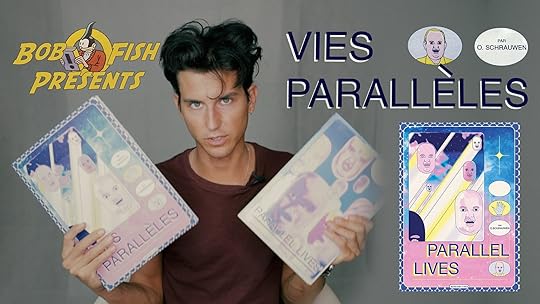
Stunning Surreal Science Fiction!
My video review :
https://youtu.be/zx0sUUTBErc
Overview of Olivier Schrauwen's beautiful oeuvre:
https://youtu.be/Ec8B76Hfc8w

April 28, 2019
Zes sf-verhalen met een twist. Schrauwen op z'n best: hoogste score in het spectrum van de oogverblinding!
Read
June 4, 2019Is Olivier Schrauwen the most talented, inventive and interesting cartoonist of this period? Well, so it seems to me. Looking forward to read his next works.

March 5, 2020
Oliver Schrauwen has wormed his way into my top five cartoonists. His drawing style is truly bizarre (and continually hilarious), and his stories even more so. Parallel Lives presents several (six, I think?) interlinked stories with deep roots in the best kind of sci-fi.

February 1, 2019
Years ago I heard about Olivier Schrauwen when his graphic novel was published. I remember paging through it at the bookstore and thinking, Nah, I don’t like the art. It had been recommended but I was feeling cheap. I have a bad memory and when his linked story collection PARALLEL LIVES came out recently and was well received, I wasn’t feeling as cheap and bought it. The art didn’t do much for me, at first. The color looks airbrushed, a style I never was fond of, and the drawings felt awkward. The stories were laid out with dialogue in type, another thing I don’t like, but they were so weird that I found myself pulled in. About halfway through these tales of alien abduction and future worlds, I realized this was a great book, with great art and great stories. Nothing progresses as expected and everything resonates like a bell that can’t be unrung. I took my doses small, knowing how strong they were, and when I finished I decided I wanted to read everything by Schrauwen. It was then I realized how I missed the opportunity to read him earlier. I find that often what I end up loving most is what I hated at first.
November 8, 2022
A smashing collection of speculative comics that dodges rote dystopias in favour of something more colourful and nuanced. Some of the topics covered are direct-to-brain trolling, an app that cartoonifies reality and the manchildren who use it, far-future hedonism, and of course, even further-future space travel. Art-wise our man comes off as a combination of Moebius and Chris Forgues, and the stories themselves are inventive and often wickedly funny. Big rec from me.

August 20, 2022
Me ha llamado mucho el estilo, los colores y el arte en general de éste cómic. Las historias me han parecido muy originales y sobre todo los mundos que crea. Sin embargo creo que me hubiera gustado más si cada una de las seis historias no hubieran tenido cierta misoginia y cierta sexualización con la que no he podido empatizar.

March 18, 2019
I'm not sure what to make of this. 6 vaguely (thematically) linked short pieces all featuring versions of the author. Gender fluidity seems to be a feature.

June 11, 2021
Like his earlier collection of short comics, The Man Who Grew His Beard, Parallel Lives feels like a cohesive work, its constituent comics tied together by shared themes, tone and style. The elevator pitch, I guess, is that this is Olivier Schrauwen tackling sci-fi. In particular, three comics from the collection’s mid-section (“Hello”, “Cartoonify” and “The Scatman”) feel like an alt comix answer to Black Mirror, examining modern society through the lens of imagined future technology. The final comic, “Space Bodies” – which at 66 pages takes up more than half of the book – is a weird space adventure in a far-flung galaxy, reminding me a bit of Aâma by Frederik Peeters. The opener, “Greys”, is a story of alien abduction. Only one comic here, the two-page “Mister Yellow”, doesn’t really fit the theme.
Perhaps more importantly than their use of sci-fi tropes, the comics here are all united by the way they employ a light, comedic tone to provide an often dark commentary on humanity. All of the stories revolve around ultimately rather pathetic characters, who engage in largely meaningless activities, and fail in their endeavours. More positively, many of these comics feature characters taking great joy in simply living, and particularly in exploring and appreciating the world around them (though admittedly this naïve joie de vivre is both celebrated and ridiculed). Several of the comics also exhibit a preoccupation with sexuality and human bodies, reminding me of Michael DeForge in the way that bodies and sex are depicted as totally unsexy, and actually kind of disgusting. Another common thread is a post-modern meta-fictional approach, which is particularly prominent in “Greys”, “Cartoonify” and “Space Bodies”, which repeatedly remind the reader that they’re comics, and toy with the way that the medium can tell stories, at times subverting the very idea of story.
Put simply, all of the comics contained in Parallel Lives are excellent. My personal favourites are “Space Bodies” and “Mister Yellow”, but there isn’t a weak one in the bunch. As in his other work, Schrauwen manages to speak meaningfully about life, in a pretty universal way, through the medium of totally outlandish stories. These comics are cerebral and not always straightforward – a casual reader might just see nonsense and miss the depth – but they’re never dull or obtuse. On the contrary, they’re consistently fun, and occasionally laugh-out-loud funny.
My only complaint is that the comics here all have a strange type of roughness to them. The most jarring manifestation of this is the use of plain digital text, which is placed awkwardly in speech bubbles, without centring or being made to fill out the space. There’s also a general crudeness – even ugliness – to the artwork, and particularly to the way faces are drawn, that somehow rubs me the wrong way. There are a number of spelling mistakes and colouring errors too, though these don’t bother me as much. I’m sure that this is all deliberate, considering Schrauwen’s gorgeous art in The Man Who Grew His Beard, and Fantagraphics’s usual production standards. I suppose they serve as reminders that this is a comic, eliciting a kind of Verfremdungseffekt and reinforcing the stories’ meta-fictional aspects. They also contribute to an “outsider art” feel, and the conceit that these comics aren’t just works of fiction, but are rather testaments of events that their author perceives to be true.
Having just described the art as rough, crude and ugly, I now have to do a bit of back-pedalling. I don’t mean to say that this comic looks bad overall, just that there’s a certain aspect of its aesthetic that doesn’t quite sit well with me – like a hint of unpleasant sourness in an otherwise enjoyable meal. In fact, some of the artwork in these comics looks absolutely great. Closer “Space Bodies” stands out in this respect, thanks to its consistently gorgeous colouring and its depictions of some brilliant otherworldly weirdness. Moreover, the comic medium is consistently used to great storytelling effect, and there’s some really interesting experimentation with panelling. Even the crudeness of the way faces are drawn serves a purpose, accentuating the characters’ childishness and absurdity.
In short, this is an excellent collection of comics, further cementing Schrauwen’s position as one of my favourite creators, even if some odd artistic choices prevent it from being one of my favourites from within his œuvre.
Perhaps more importantly than their use of sci-fi tropes, the comics here are all united by the way they employ a light, comedic tone to provide an often dark commentary on humanity. All of the stories revolve around ultimately rather pathetic characters, who engage in largely meaningless activities, and fail in their endeavours. More positively, many of these comics feature characters taking great joy in simply living, and particularly in exploring and appreciating the world around them (though admittedly this naïve joie de vivre is both celebrated and ridiculed). Several of the comics also exhibit a preoccupation with sexuality and human bodies, reminding me of Michael DeForge in the way that bodies and sex are depicted as totally unsexy, and actually kind of disgusting. Another common thread is a post-modern meta-fictional approach, which is particularly prominent in “Greys”, “Cartoonify” and “Space Bodies”, which repeatedly remind the reader that they’re comics, and toy with the way that the medium can tell stories, at times subverting the very idea of story.
Put simply, all of the comics contained in Parallel Lives are excellent. My personal favourites are “Space Bodies” and “Mister Yellow”, but there isn’t a weak one in the bunch. As in his other work, Schrauwen manages to speak meaningfully about life, in a pretty universal way, through the medium of totally outlandish stories. These comics are cerebral and not always straightforward – a casual reader might just see nonsense and miss the depth – but they’re never dull or obtuse. On the contrary, they’re consistently fun, and occasionally laugh-out-loud funny.
My only complaint is that the comics here all have a strange type of roughness to them. The most jarring manifestation of this is the use of plain digital text, which is placed awkwardly in speech bubbles, without centring or being made to fill out the space. There’s also a general crudeness – even ugliness – to the artwork, and particularly to the way faces are drawn, that somehow rubs me the wrong way. There are a number of spelling mistakes and colouring errors too, though these don’t bother me as much. I’m sure that this is all deliberate, considering Schrauwen’s gorgeous art in The Man Who Grew His Beard, and Fantagraphics’s usual production standards. I suppose they serve as reminders that this is a comic, eliciting a kind of Verfremdungseffekt and reinforcing the stories’ meta-fictional aspects. They also contribute to an “outsider art” feel, and the conceit that these comics aren’t just works of fiction, but are rather testaments of events that their author perceives to be true.
Having just described the art as rough, crude and ugly, I now have to do a bit of back-pedalling. I don’t mean to say that this comic looks bad overall, just that there’s a certain aspect of its aesthetic that doesn’t quite sit well with me – like a hint of unpleasant sourness in an otherwise enjoyable meal. In fact, some of the artwork in these comics looks absolutely great. Closer “Space Bodies” stands out in this respect, thanks to its consistently gorgeous colouring and its depictions of some brilliant otherworldly weirdness. Moreover, the comic medium is consistently used to great storytelling effect, and there’s some really interesting experimentation with panelling. Even the crudeness of the way faces are drawn serves a purpose, accentuating the characters’ childishness and absurdity.
In short, this is an excellent collection of comics, further cementing Schrauwen’s position as one of my favourite creators, even if some odd artistic choices prevent it from being one of my favourites from within his œuvre.

February 4, 2026
In Parallel Lives, Belgian cartoonist Olivier Schrauwen presents multiple versions of himself across the space-time continuum and well into dimensions that are untraceable in any normal sense, and he does so in a delivery that is decidedly singular. There’s no one else making comics like Schrauwen, and any given story is like an absurd deep dive into the universe of the cartoonist’s mind, where the fantastic collides with the casual, and the timing and observation of storytelling work along with a completely alien structure.
“Greys” is a recounting of an abduction experience, presented as a firsthand account byO. Schrauwen in order to make some sense of his experience. In many ways, its a recounting of any number of abduction stories you could read, presented with the same sense that because it sounds like all the others then that must give it veracity, right? Right? Well, no, but what it does do is create a shared mythology that provides comfort for some people while offering others a springboard for their own individuality.
That’s where O. Schrauwen’s narrative comes into place, where at first he is the object of the typical strange sexual medical experiment fantasy that so many people relate their experience as, but this soon turns into an exercise in philosophy fulfillment, where Schrauwen’s view of human history is validated by a surreal alien tour through the same. But this validation is the common way religious epiphanies are received, in that wider views of things beyond our knowledge either wholly support or entirely contradict what we already feel we know and provide such an intense emotional experience that we embrace it as the truth.
Leastwise, Schrauwen’s recounting is so bizarrely matter-of-fact and unadorned with any clever twists that it comes off as pretty creepy, like a story about an encounter with Bigfoot when you’re a kid in the 1970s. Something about the familiarity and the earnestness is unsettling.
In “Hello,” Armand Schrauwen, a collector of antiques, comes upon a monitor that receives transmissions from an inventor from the past, but the collector doesn’t really know what to make of it, so goes about its future life while the inventor from the past gets irritated that no one pays attention to him. The way Schrauwen the cartoonist fashions Schrauwen the inventor’s behavior, though, it’s really like someone messaging a woman in the present and being frustrated when she doesn’t play along with whatever game he is proposing. The future people have their own game, though, and inventor can’t even conceive of it. Parable? Fable? Cautionary tale? Comeuppance? Take your pick.
The third story presents a neurological app called Cartoonify that turns a person’s perceptions into cartoons. Things become simpler, easier to do, the world becomes more two-dimensional. While a person’s experience during cartoonification might be satisfying to the person, it’s less so to the people who encounter the person. For instance, when Oly has sex with his girlfriend he is satisfied but she is left feeling like a balloon animal. It reminds me of the degree to which superhero action films are animated to the degree that if your eyes are not attuned to the computer animation used in the action scenes — which they wouldn’t be if you’re not an avid gamer — then the scenes look like simplified reality in your perception. They just look wrong, part of a shared illusion brought on by visual and perceptual grooming. In context of this story, being cartoonified proves unfulfilling.
“The Scatman” focuses on Ooh-lee, who lives in a future when the forms of networks we currently use on computers have become neurological and Ooh-lee finds herself stricken with a voice in her head that she is convinced is a troll, much like one we would encounter on a social network. In her brain, though, the troll is inescapable, and his tactic is to narrate her life as if she were fictional. This leads to a number of stated observations that prevent Ooh-lee from taking any stance of willful ignorance about anything in her life, and this constant facing of the unbearable truths are wearing her down. Is the troll cartoonist Schrauwen? Or someone like Armand Schrauwen, speaking from the past? Or is it someone in a story we have yet to read?
“Mister Yellow” packs a tale of paranoia and fear that eventually goes well into two pages with 70 panels on each page. Olver keeps encountering a man in yellow that he calls the Yellow Man, and who, Olver becomes convinced, is out to get him in myriad ways. Faced with the irrationality of his encounters with the man, and suspicions regarding his wife, Olver keeps it to himself, and the situation careens out of control before coming to a mysterious, but mostly happy ending that seems to be asking whether there is a plan rather than randomness and, if there is, are we even equipped to connect the dots in a coherent way? Should we just maybe let things unfold and not torture ourselves?
In “Space Bodies” a group of beings who have become all-knowing and left behind their physical form decide they want their humanity back. Olivier Schrauwen is one of them. Well, not the being, but the body the being inhabits, and Olivier’s first course of action is to rediscover storytelling while addressing people in the past. Amusement between Olivier and his companion Bo ensues as they begin to skewer the curious affectations of human storytelling, as well as sexual practices and gender roles. The bodies are a novelty and so are the results of having bodies as expressed through stories, but having a physical presence also gives them the opportunity to enjoy the wonders of exploration as they descend on a planet for study purposes. Physical presence also brings about the possibility of danger, which is something they have lost the feeling of and don’t quite know how to react to and sets them on a path of biological rediscovery hinting that origin might be destiny.
But this last story also connects back to an earlier one that brings everything full circle and offers some sort of coherency to the experience, though it’s difficult to say what sort of coherency. At the very least, it all makes an internal sort of sense and that has to do with the state of being human. Throughout the book, Schrauwen evokes such diverse visual elements as Steve Ditko, Jack Chick, and French animator René Laloux, as he explores his own versions of the big picture territory they also mined.
Schrauwen’s book is not separate accounts of various realities, but instances of realities interacting and seemingly creating a smooth continuity throughout all the disjointed points in space-time. It’s all connected, but it may not all be connected together one thing that we can see. Even in revealing the pathways and offering glimpses of the whole, the multiverse is still pretty mysterious, and Schrauwen is the perfect cartoonist to evoke that. It’s a triumph of a fourth-dimensional narrative being mashed into a third-dimensional delivery system.
“Greys” is a recounting of an abduction experience, presented as a firsthand account byO. Schrauwen in order to make some sense of his experience. In many ways, its a recounting of any number of abduction stories you could read, presented with the same sense that because it sounds like all the others then that must give it veracity, right? Right? Well, no, but what it does do is create a shared mythology that provides comfort for some people while offering others a springboard for their own individuality.
That’s where O. Schrauwen’s narrative comes into place, where at first he is the object of the typical strange sexual medical experiment fantasy that so many people relate their experience as, but this soon turns into an exercise in philosophy fulfillment, where Schrauwen’s view of human history is validated by a surreal alien tour through the same. But this validation is the common way religious epiphanies are received, in that wider views of things beyond our knowledge either wholly support or entirely contradict what we already feel we know and provide such an intense emotional experience that we embrace it as the truth.
Leastwise, Schrauwen’s recounting is so bizarrely matter-of-fact and unadorned with any clever twists that it comes off as pretty creepy, like a story about an encounter with Bigfoot when you’re a kid in the 1970s. Something about the familiarity and the earnestness is unsettling.
In “Hello,” Armand Schrauwen, a collector of antiques, comes upon a monitor that receives transmissions from an inventor from the past, but the collector doesn’t really know what to make of it, so goes about its future life while the inventor from the past gets irritated that no one pays attention to him. The way Schrauwen the cartoonist fashions Schrauwen the inventor’s behavior, though, it’s really like someone messaging a woman in the present and being frustrated when she doesn’t play along with whatever game he is proposing. The future people have their own game, though, and inventor can’t even conceive of it. Parable? Fable? Cautionary tale? Comeuppance? Take your pick.
The third story presents a neurological app called Cartoonify that turns a person’s perceptions into cartoons. Things become simpler, easier to do, the world becomes more two-dimensional. While a person’s experience during cartoonification might be satisfying to the person, it’s less so to the people who encounter the person. For instance, when Oly has sex with his girlfriend he is satisfied but she is left feeling like a balloon animal. It reminds me of the degree to which superhero action films are animated to the degree that if your eyes are not attuned to the computer animation used in the action scenes — which they wouldn’t be if you’re not an avid gamer — then the scenes look like simplified reality in your perception. They just look wrong, part of a shared illusion brought on by visual and perceptual grooming. In context of this story, being cartoonified proves unfulfilling.
“The Scatman” focuses on Ooh-lee, who lives in a future when the forms of networks we currently use on computers have become neurological and Ooh-lee finds herself stricken with a voice in her head that she is convinced is a troll, much like one we would encounter on a social network. In her brain, though, the troll is inescapable, and his tactic is to narrate her life as if she were fictional. This leads to a number of stated observations that prevent Ooh-lee from taking any stance of willful ignorance about anything in her life, and this constant facing of the unbearable truths are wearing her down. Is the troll cartoonist Schrauwen? Or someone like Armand Schrauwen, speaking from the past? Or is it someone in a story we have yet to read?
“Mister Yellow” packs a tale of paranoia and fear that eventually goes well into two pages with 70 panels on each page. Olver keeps encountering a man in yellow that he calls the Yellow Man, and who, Olver becomes convinced, is out to get him in myriad ways. Faced with the irrationality of his encounters with the man, and suspicions regarding his wife, Olver keeps it to himself, and the situation careens out of control before coming to a mysterious, but mostly happy ending that seems to be asking whether there is a plan rather than randomness and, if there is, are we even equipped to connect the dots in a coherent way? Should we just maybe let things unfold and not torture ourselves?
In “Space Bodies” a group of beings who have become all-knowing and left behind their physical form decide they want their humanity back. Olivier Schrauwen is one of them. Well, not the being, but the body the being inhabits, and Olivier’s first course of action is to rediscover storytelling while addressing people in the past. Amusement between Olivier and his companion Bo ensues as they begin to skewer the curious affectations of human storytelling, as well as sexual practices and gender roles. The bodies are a novelty and so are the results of having bodies as expressed through stories, but having a physical presence also gives them the opportunity to enjoy the wonders of exploration as they descend on a planet for study purposes. Physical presence also brings about the possibility of danger, which is something they have lost the feeling of and don’t quite know how to react to and sets them on a path of biological rediscovery hinting that origin might be destiny.
But this last story also connects back to an earlier one that brings everything full circle and offers some sort of coherency to the experience, though it’s difficult to say what sort of coherency. At the very least, it all makes an internal sort of sense and that has to do with the state of being human. Throughout the book, Schrauwen evokes such diverse visual elements as Steve Ditko, Jack Chick, and French animator René Laloux, as he explores his own versions of the big picture territory they also mined.
Schrauwen’s book is not separate accounts of various realities, but instances of realities interacting and seemingly creating a smooth continuity throughout all the disjointed points in space-time. It’s all connected, but it may not all be connected together one thing that we can see. Even in revealing the pathways and offering glimpses of the whole, the multiverse is still pretty mysterious, and Schrauwen is the perfect cartoonist to evoke that. It’s a triumph of a fourth-dimensional narrative being mashed into a third-dimensional delivery system.

April 30, 2019
Eerie and hilarious, the stories collected in Parallel Lives left me feeling enjoyably unsettled. These visions of the future and of advanced technologies depict societies and cultures built around (what seems to us, at least) polymorphous perversity—but in the best way.
The book celebrates gender non-conformism and biological mutability, and its characters are as profoundly curious about exploring their bodies as they are about exploring new worlds, the distant past, and the far future. Its light pink and blue color palette gives the book a cutesy, child-like vibe, and its many baby-faced characters and their guileless expressions only add to the childish sense of joy and, here’s the word again, polymorphous perversity.
Parallel Lives imagines futures where people are forever in a state of wonder, self-discovery, and endless fascination, but the book is also itself an object of wonder, discovery, and fascination.
The book celebrates gender non-conformism and biological mutability, and its characters are as profoundly curious about exploring their bodies as they are about exploring new worlds, the distant past, and the far future. Its light pink and blue color palette gives the book a cutesy, child-like vibe, and its many baby-faced characters and their guileless expressions only add to the childish sense of joy and, here’s the word again, polymorphous perversity.
Parallel Lives imagines futures where people are forever in a state of wonder, self-discovery, and endless fascination, but the book is also itself an object of wonder, discovery, and fascination.

July 1, 2019
This book is truly bizarre, in every sense of the word. My main question about Schrauwen and his work is...are these characters with HIS name or a variation thereof based on him? Are they him in the future? Or real relatives or relations? This book begins on a very different note than it ends ; at first it seems to be about aliens and probing. The beginning story is told by a Schrauwen (one of the MANY, it seems) about his experience with aliens. The story then moves into that man testifying to people of the DISTANT future about this and getting frustrated that they either are NOT listening or have no intention of responding. THEN the story becomes about future people, their post gender, post sex, completely technology fueled culture and two, in particular trying to explore and navigate a dangerous tundra, then jungle terrain on a new planet. I just made so much sense out of that book...I defy you to create a more concrete synopsis. This book is printed in those beautiful, painfully bright risograph colors and uses a combination of printing qualities, overlapping and textures mixed with CRISP clear, almost Industrial design line work. Schrauwen is a mystery...maybe he IS from the future and is telling us about his entire LINE of artists and graphic novelists from the year 2280.

September 2, 2018
Schrauwen is a brilliant cartoonist and this work is exceptionally smart and thought-provoking. But it just doesn't connect with me on an emotional level (I suspect cerebral art such as this is not supposed to do so) - and I guess that sort of connection is paramount with me in the end. I admire this, but I can't love it: it gets a solid 4 out of 5.

June 14, 2020
Atrapado por el exotismo de las emociones con las que me golpea Schrauwen. Él, como siempre, en su línea. Paseíto sensorial altamente recomendable. Lo más cercano que se me ocurre a esto es intentar debatir sobre el devenir de la humanidad en un lúdico viajecito de tripis con colegas. Sorprende la lógica argumentativa de la demencia de O. Schrauwen; aquí y en todas sus batallitas.

January 14, 2020
2,5
At times fascinating and original,
at times tedious and even repulsive,
but never really compelling or enjoyable
At times fascinating and original,
at times tedious and even repulsive,
but never really compelling or enjoyable

December 18, 2025
Very creative story telling that expanded my conception of graphic writing.

December 23, 2018
Schrauwen is just the best. His version of the future is so stupid and believable without relying on cynical easy satire. His range in content and style is unparalleled. And he's just so funny. I love you, Ollie.
I haven't seen any mention of where these stories previously appeared, so here's that for those who are interested:
"Greys" was previously published as a standalone mini-comic by Desert Island, and also printed in French by Arbitraire, and in Spanish with accompanying English translation in the Fulgencio Pimentel anthology Terry.
"Hello" was previously published in the Landfill Editions anthology Mould Map 3.
"Cartoonify" was previously published in French with accompanying English translation in the Lagon Revue anthology Volcan.
"The Scatman" was previously published in French with accompanying English translation in the Lagon Revue anthology Gouffre.
"Mister Yellow" was previously published in the Breakdown Press & Lagon Revue collaborative anthology Dôme.
"Space Bodies" is entirely new and the latter takes up about half of the book!
I haven't seen any mention of where these stories previously appeared, so here's that for those who are interested:
"Greys" was previously published as a standalone mini-comic by Desert Island, and also printed in French by Arbitraire, and in Spanish with accompanying English translation in the Fulgencio Pimentel anthology Terry.
"Hello" was previously published in the Landfill Editions anthology Mould Map 3.
"Cartoonify" was previously published in French with accompanying English translation in the Lagon Revue anthology Volcan.
"The Scatman" was previously published in French with accompanying English translation in the Lagon Revue anthology Gouffre.
"Mister Yellow" was previously published in the Breakdown Press & Lagon Revue collaborative anthology Dôme.
"Space Bodies" is entirely new and the latter takes up about half of the book!

March 17, 2019
A series of interconnected stories that occur sometime in the future, told from the POV of somebody in the present communicating to the future (in the present of the future), and from the POV of people in the future trying to remember what their lives were like before endless space travel and gender-fluid hormonal balancing among all of the travelers. Schrauwen's Parallel Lives is often funny while also questioning norms of time and gender.

May 1, 2023
Zbiór opowiadań „Parallel Lives” to - niepozbawiony humoru - romans Schrauwena z estetyką science fiction, w którym pod płaszczykiem absurdu przedstawił kilka czarnych scenariuszy dotyczących kondycji człowieka przyszłości. Czego tu nie ma? Klasyczna historia o porwaniu przez kosmitów i wykonywaniu badań nad ludzką naturą wydaje się w tym zbiorze najnormalniejsza.
Wyobrażenie autora o kolejnych wiekach i dekadach pełne jest szalonych pomysłów i hedonistycznych wizji związanych zarówno z seksualnością, jak i technologią. Aplikacja, która pozwoli zmienić użytkownika i jego otoczenie w kreskówkowy wymiar 2D; troll, potrafiący utkwić w mózgu i komentować każdą czynność ofiary niczym narrator w powieści dotyczącej jej życia; urządzenie umożliwiające kontakt z kolejnymi pokoleniami – to tylko część szalonych pomysłów, jakie znalazły ujście w tych fabułach. Całość kładzie mocny nacisk na kontakt i szukanie jakiejś formy porozumienia z przyszłością. W „Hello” ojciec autora próbuje relacjonować potomnym swoje codzienne życie online, okazuje się jednak, że zatopiona w erotycznych uniesieniach ludzkość średnio przejmuje się czasami minionymi. W „Space bodies” bohaterem jest sam Olivier wysłany do przyszłości przez swojego ojca.
We wspomnianym (najdłuższym tutaj) „Space bodies” odkrywanie przez bohaterów klasycznej seksualności i kultury (symbolizowanej przez literaturę) jest niesatysfakcjonującym dziwadłem, o którym zresztą dowiadują się tylko dlatego, że „sexotrony” służące do zaspokajania ich potrzeb uległy zniszczeniu, a hormonalna terapia, jakiej są poddawani na co dzień, musiała zostać przerwana i nagle zaczęli rozwijać się zgodnie z naturą. Większość historii jest bardzo meta, z istotną rolą narratora, którym czasem jest autor, czasem jego alter-ego, czasem ojciec - Armand Schrauwen.
Śmiertelna powaga przechodzi płynnie w groteskę, co zresztą intensyfikuje zniekształcona kreska przyozdobiona plamami nanoszonymi aerografem i gryzącymi się kolorami. Trochę jak sci-fi z poprzednich dekad, lecz podkręcone niespotykaną dawką absurdu. Poczucie obcowania z estetyką retro zostaje z czytelnikiem do końca
Zaintrygowało mnie na tyle, że przeczytałem dwukrotnie i mam wielki apetyt na więcej
Wyobrażenie autora o kolejnych wiekach i dekadach pełne jest szalonych pomysłów i hedonistycznych wizji związanych zarówno z seksualnością, jak i technologią. Aplikacja, która pozwoli zmienić użytkownika i jego otoczenie w kreskówkowy wymiar 2D; troll, potrafiący utkwić w mózgu i komentować każdą czynność ofiary niczym narrator w powieści dotyczącej jej życia; urządzenie umożliwiające kontakt z kolejnymi pokoleniami – to tylko część szalonych pomysłów, jakie znalazły ujście w tych fabułach. Całość kładzie mocny nacisk na kontakt i szukanie jakiejś formy porozumienia z przyszłością. W „Hello” ojciec autora próbuje relacjonować potomnym swoje codzienne życie online, okazuje się jednak, że zatopiona w erotycznych uniesieniach ludzkość średnio przejmuje się czasami minionymi. W „Space bodies” bohaterem jest sam Olivier wysłany do przyszłości przez swojego ojca.
We wspomnianym (najdłuższym tutaj) „Space bodies” odkrywanie przez bohaterów klasycznej seksualności i kultury (symbolizowanej przez literaturę) jest niesatysfakcjonującym dziwadłem, o którym zresztą dowiadują się tylko dlatego, że „sexotrony” służące do zaspokajania ich potrzeb uległy zniszczeniu, a hormonalna terapia, jakiej są poddawani na co dzień, musiała zostać przerwana i nagle zaczęli rozwijać się zgodnie z naturą. Większość historii jest bardzo meta, z istotną rolą narratora, którym czasem jest autor, czasem jego alter-ego, czasem ojciec - Armand Schrauwen.
Śmiertelna powaga przechodzi płynnie w groteskę, co zresztą intensyfikuje zniekształcona kreska przyozdobiona plamami nanoszonymi aerografem i gryzącymi się kolorami. Trochę jak sci-fi z poprzednich dekad, lecz podkręcone niespotykaną dawką absurdu. Poczucie obcowania z estetyką retro zostaje z czytelnikiem do końca
Zaintrygowało mnie na tyle, że przeczytałem dwukrotnie i mam wielki apetyt na więcej

December 18, 2018
Not exactly my favorite thing in regards to storytelling, but I will acknowledge the mastery in cartooning the shit out of gender-fluid futurism.

April 21, 2023
This is damn good

February 16, 2019
This is the weirdest book I’ve ever read.
October 26, 2023
Wow what a banger. I really liked how this approached science fiction. all the stories take place in the future but seemingly in different stages of the future. the short stories in the first half are like 50-100 years in the future and the longer story is 200 years. Each of these build on top of each other and only expand on the world through timelines and snapshots of different things the future can offer. All these stories are bangers too, with interesting and funny concepts that are all very entertainjng

June 24, 2019
This might be the best book of 2018
Displaying 1 - 30 of 102 reviews