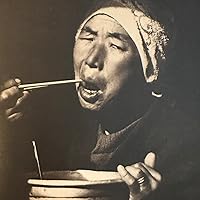
If you can find a copy of this book and can convince someone to let you paw through it, do so.
It's long out of print, collectible, and fragile due to the fact it's softcover. Did I mention it's expensive? It is, but oh, is it worth it!
I put off buying a copy for many years because it was just too expensive for a book I couldn't look at first -- and whose value I'd damage just by opening it. However, after reading Wikipedia's small section on Kowloon Walled City I was so intrigued that I knew I had to buy it.
I debated a long time about pulling the cellophane cover off. Had to end up doing it after a few drinks. Once I opened it, I realized it was everything I'd hoped it would be.
Understand, Kowloon was destroyed several years ago. It no longer exists. No real maps were ever made of the place and the most complete record of it exists in these pages. It's as close as you can get to visiting the city without somehow going back in time.
And what is Kowloon Walled City? It was 6.5 acre piece of property where regulation was non-existant and the population built and built and built until it was a solid block of a building fourteen stories high with absolutely no planning or design. Everything went on within its walls and it was a fully functioning city outside of Hong Kong. Sort of a city state, sort of a country, sort of an anarchist commune, and completely unlike anything built before or since.
This book is the only key to unlocking the understanding of what it was to live and breathe within those walls. Of course it gets five stars, how could I give it anything else?
This book describes Kowloon Walled City which is a district in Hong Kong. The Walled City was destroyed in 1993. It had its own laws, and many traffics took place there, it was the triads kingdom, and many refugees used to live inside. But its for its incredible architecture that the place is the most interesting. Imagine a huge block, fourteen storeys high sometimes, and conceived by no architect whatsoever. With the years, corridors, floors were added. Inside, you cannot see the light of day. People lived in community, children playing on the rooftop. The place is amazing to the eye (look at some pictures if you can) eventhough it was probably unsanitary, it's like a great human ant-hill greatly depicted in this book.
If you can find a copy, buy it. A lavish photojournalistic record of the last four years (or so) of the Walled City of Kowloon before it was demolished, City of Darkness is a mesmerizing glimpse into a world that only existed for the briefest of moments in reality. The Kowloon that Greg Girard knew was only one of many Walled Cities that stood in that spot. There is a brief, but illustrative history of the site at the front of the book accompanied by historic photos. Most of it is just background to help the reader make sense of how a place like the Walled City could possibly exist (in communist China no less). The personal stories of select inhabitants told throughout the rest of the book provide a unique perspective into a way of life that would seem baffling to most outsiders, making the Walled City seem almost normal when examined up close, but always alluding to the uniqueness of this place and the conditions that created it.
The photos are striking. The stories are illuminating. The subject is utterly unique and now completely gone (paved over with a shopping mall and rec center). It's an extremely hard book to find. I searched through rare booksellers both on and offline for over two years before finding a copy at a price I could afford. I only knew of the book because William Gibson referenced it in the acknowledgements for his novel, Idoru. But it was worth the effort and every penny spent. Find this book if you can.
This is a very in depth set of interviews and articles written on one of the most mysterious/misunderstood locations in Hong Kong. I read the Chinese translated version of this book which likely is based off the revisited version published in 2014. He original was actually done in English. Through various interviewed articles, a side of old Hong Kong is shown that is likely not well known to the world. This is a long read but kept me captivated to finish in less than a day.
Love the photos. Love the stories. It's an amazing book which captures a part of Hong Kong so few of us really know or remember. And the amazing photos! This is a worthy tribute to the people who once lived in that walled city.
The book does cost a terrifying fortune, but I was lucky enough to persuade my parents to get it for me for Christmas. :D Definitely worth it, for me anyway, since I was and am deeply fascinated by the place. And did I mention the beautiful photos? I especially love one of a Chinese herbal doctor. He looked old, in his seventies, and he was sitting at his bed. But he was awfully tall, and sat ramrod straight. He was not someone you would mess with. The reader is offered a glimpse of his proud dignity, his fierceness, and a glimpse of the many years he had witnessed. I was immediately captivated. I have never seen a photo where the portrait looks back so strongly.
It's an invaluable document of what would otherwise be forever lost without a record. Having said so it is not as good as I would have hope for, in part because of the amateurish nature of the content (both photographic and written) and in part because it lacks any academic rigor; it is rather (much like the City itself as the authors would have it) a labyrinthine collection of anecdotes and memories, which may be others predilection but it certainly wasn't mine.
I’m very lucky that my tutor at university requested this book for the library here - as it’s very rare and quite expensive - but for anyone who has the money, it’s an incredible thing to own. The photos are beautiful, varied, intimate and almost dreamlike. :) But what strikes me the most is what an incredible piece of history and photojournalism this is. Had Greg Girard not taken these photos and Ian Lambot not compiled the text - the story of the city of darkness would be far more shrouded and opaque. Girard’s dedication and respect for the people who he photographed is clear and the interviews tell so much about this unique space - between two imperiums and in a kind of capitalism that is becoming all too familiar - this group of people carved out a community and constructed an incredible complex in which to make their lives. Resilience, determination and care for one another are present but also a defiant pride in a city that was derided for its various vices. Finally, image of opium addiction amongst the crumbling edifice of British colonialism is quite something, given the history of how the British came to rule such a place. Many were also refugees from economic hardship in China or the cultural revolution and this makes the story so much more complex. Girard said he used 800 rolls of film on one of his projects and this one, completed over four years, shows an incredible dedication. The pictures themselves have a real richness and humanity.
A glorious book that gave me a very positive message about humans, and plenty of inspiration in life. These are stories of people stretched, of people on the very edge; in a no-man's-land between British Hong Kong and China.
Some of the photographs in here so achingly beautiful, I couldn't help but stare. Recommended to everybody.
Absolutely excellent. Girard is a skillful photographer. He manages to capture the humanity, the tightness, the dreariness of the Walled City. It's worth the price, and worth finding. I highly recommend it.
A dazzling account of a real place that's stranger than anything one could make up. There's a forward by William Gibson, who used the idea of this place in his book "Visible Light."
A fascinating glimpse into a place and a time that is no more. For most visitors and even inhabitants of HK, the Kowloon Walled City was either unknown or feared, rumoured to be a lawless area teeming with crime and squalor, where the triads held sway. The photographs in this book were taken past the hey-day of the triads, so what we see are everyday folk – herbalist, baker, shopkeeper, hairdresser, dentist, machinist, etc.-- going about their everyday business.
It serves as a valuable historical record of a very special place where the destitute and the disenfranchised came together and made the best of shockingly wretched conditions, without recourse to law or help from anyone else.
This book is a testament to the resourcefulness and indomitability of the human spirit.
The Chinese translation (黑暗之城:九龍城寨的日與夜), published in 2015, is in my opinion an inferior edition marred by redactions and omissions. My 5-star rating is accorded to the original edition by Greg Girard and Ian Lambot published in 1993.
When the camera takes a photo of a moving person, it captures that specific moment of the person. The face will be blurred with a white haze, almost like a halo, as if there is two faces. If he is walking or moving, then similarly, the motion of this fraction of second and the next becomes indistinct like an amoeba during its asexual reproduction.
This book is like that camera. It captures the Kowloon Walled City in her twilight. The name speaks for itself. "Kowloon Walled City" is a city without the wall because it was already demolished by the Japanese during the Second World War to build the airport. By the time Ian Lambot and his crew arrived, the city is where the (unlicensed) dentists and (unregulated) factories established themselves to take advantages of the low rents and loose regulations (if any) there. It was almost an anti-climax because the triad, according to the inhabitants, were almost gone as well. As the demolition plan was announced, the people, with little bargaining power, can only hope for the best from the government.
It was unusual how this little space housed how such variety of people. People produced, among other things, fish balls and roasted pork. Other manufactured rulers, textiles and even rubber plumbers. Contrary to popular belief, the dentists were not totally unlicensed. Some of them had a Chinese qualification but it was not recognized by the Hong Kong authority, while some received training under the old apprentice system and so did not sit for the formal examination. One person raised pigeons on the roof, not for consuming them but for long-distance competition. The inhabitants had no qualm in living side by side with those factories. May be they accepted them as a matter of fact since the rents and housing prices within the city were much lower.
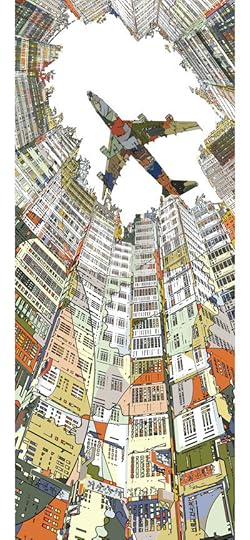
As there was no planning whatsoever and shops, factories and residence intermixed, a distinct kind of architecture began to emerge. It was architecture with innumerable architects. The developers built their own buildings, being oblivious to the neighboring building. Viewed from the outside, the buildings exhibited no horizontal uniformity, as if they had no relationship. However within them, staircases were often constructed to cross from one building to another. As a result, there was a maze-like structure within city. Moreover, as the buildings were so close together, a child can practically hop from one roof to another.
However each and every single one of those buildings were now demolished. A public park was constructed on the original site. We can only know the city by looking at the photos. As the book consists of interviews, I always wonder the aftermaths of the interviewees. One of the few things I know is that the Kowloon Walled City Kai Fong Association still exists. By chance, I came across it. It was relocated to a humble site near a mall in Wong Tai Sin district.
There is a second edition of this book. This review will be updated after I get hold of that edition.
Wonderful book. I was inspired to read it after à visit to Kowloon Walled City Park which is now part of a public garden in Kowloon. It was so beautiful and so quiet I wanted to know more about the "den of thieves,prostitutes and drug addicts " I 'd heard about. By reading this book I have discovered the other unexpected side: the resourcefulness of the ordinary people who lived there. And the photographs are revealing and at the same time stimulate the imagination.
A fascinating recounting of what life was like in the Kowloon Walled City, a self-governed zone in Hong Kong born of a peculiar artifact of history. The opportunity to get a glimpse of what the ordinary life of the residents was like in the City, and what were their feelings regarding its impending destruction is extraordinarily invaluable, and I'm glad the authors did the job of collecting these stories.
It is a really interesting book. I got fascinated by the story of Kowloon since I first heard of it. The pictures and the interviews do it justice and they satisfy my curiosity. Wish I could visit it. :)
Thank you our National Repository Library and the interlibrary loan system! I read about this book online and then got a shock trying to look for a copy and saw the prices. But got lucky as it was available in NRL (for non-Finnish book that's definitely not given, especially a book like this which has been a rarity in our libraries to begin with!)
Okay, okay, enough gushing about libraries, what about the book itself? Tremendously interesting and important documentation of the curious community that was Kowloon Walled City. There are a lot of excellent photographs but also a few articles and many interviews from the residents and/or workers of Walled City. The interviews were made after the clearance was announced, so most of them comment on what they think about it, their chances outside and the monetary compensation they'll get for their flats and/or businesses. Nobody was really happy to leave despite the living conditions, many of them quite elderly at the time of the interview and thus starting a new life didn't look easy at all. But the biggest concern was money: the compensation wouldn't be enough because living and business was so much more costly outside Walled City.
And while you empathize with the people as they were worried about their future, seeing and reading about the conditions of the buildings and the lack of any regulation or proper checks on the business practices (which everybody says is the reason they had their factories and shops inside the City, no licences, no regulations, cheaper in every way), you see that it couldn't go on like that. The people interviewed were quite proud of their work though. There were some who were openly more carefree (like the cake/pastry seller) which made his shop sound dingier than others though.
So, if the book has a fault, it's here: the interviewees feel quite similar, most of them were probably from the more well-off part of the population and maybe self-regulated their business more than some others. I understand that though, they were also probably the ones willing to talk. Many of them made references to the drug related problems etc. but also said that they never had any problems with them or real crime. The interviewed policeman at least said there were some stuff that's better left untold. I don't mean I'd want to read it was the vice den it had a reputation of, in fact, it's better to hear it wasn't as riddled with crime as claimed, but it still feels a little one-sided and sugarcoated. There's not much about Triads except that they operated there. Yes, I get why but maybe an article on the subject would've been a way to shed a light on that/crime in general.
The history article was fascinating, it's incredible how the City turned from military fort to nearly disappeared place just to become a squatter and refugee village and then grow exponentially while governments basically said "no can do" and turned a blind eye. The book also answered one of my questions that I had been wondering about, how the City was allowed to grow into tightly built dirty megacomplex. Well, since no country's government wanted to kick a hornet's nest, contractors just came and made deals and built.
Even though I said the interviews are in many ways similar, I still think it's valuable to have these collected, to give a glimpse of the life inside by insiders. What I'm interested in now to know, is how people of Walled City fared after they had to leave. I have to see if there's any information anywhere... The book's look on the City might be tad... well, romanticized is not exactly a right word, but somewhat polished (the photos show the ugly too though) let's say, but it's still a great document. If you can find the book, I recommend reading it!
EDIT: Ooh, the revisited edition of this book, released in 2014, explores topics that I hoped this version had. I knew there was a newer edition but couldn't find it... maybe I have to try again, I'd really like to read what's been added.
Ante otra hiperfijación sobre el espacio asiático y mi constante fascinación por los asentamientos informales, cuando me enteré de la existencia de la que fue la villa mas grande del mundo en la bahía de Kowloon, quise agarrar este libro al ver que estaba tan citado en la wikipedia de la Ciudad Amurallada de Kowloon.
A niveles generales no puedo decir que sea una experiencia decepcionante, de hecho, es un archivo impresionante de algo que no existe desde 1993 y que creo que transmite muy bien lo que era vivir en semejante monstruo de construcciones irregulares, sanidad dudosa y mucho, pero mucho trabajo honesto hecho al margen de la ley. De alguna manera también expresa muy bien los limites del Hong Kong británico y un remanente de un tipo de política gubernamental que ya no está en este mundo. Es un retrato bastante honesto de la pobreza y de como la gente de las villas vive y hace un esfuerzo notable por humanizar un espacio que fue comunmente asociado a droga y crimenes por personas que no lo conocían a fondo.
Las fotos son bastante increíbles y hay algunas muy bonitas, sobre todo las de niños jugando en los techos. Ese aspecto hace que este libro seguramente sea mas valioso en físico que en digital, pues el formato en el que lo agarré la verdad era bastante tosco y no lo pude convertir a epub de ninguna manera, lo que me dificultó la lectura. Entiendo que es un libro muy difícil de conseguir por lo que le deben haber hecho pocas ediciones y estoy segura que si lo hubiera leído en físico me habría parecido un display mas fascinante de información e historias.
Los testimonios son buenos, pero peca de tener demasiados y reiterar mucho en sus planteos (tal persona llegó a la ciudad-puso un negocio-esta triste porque la van a demoler, asi se pueden resumir basicamente el 70% de ellos). Desde mi perspectiva hubiera sacado un par, ni hablar de que podrían haber planteado preguntas mas rigurosas sobre las condiciones de vida de la ciudad y como sus habitantes la percibían mas allá de una simple declaración. Se nota que es un texto divulgativo, con lo bueno y lo malo que eso implica.
Siento también que algunos testimonios no están bien aprovechados, sobre todo el del ex-14K. Considerando que es el único ex miembro de una tríada y un ex adicto, aspectos que son moneda corriente en las historias de varios testimonios, esperaba algo mas de jugo ahí. Probablemente tenga que ver con el entrevistado y lo sensible detrás de los temas, pero igualmente siento que había mas tela para cortar.
Es muy accesible así que si les interesa esta cuestión en particular, recomiendo leer. Por mi parte, me gustaría leer algo mas académico sobre este tema, pero habrá que seguir indagando.
The book is so well written, photographs so superb and everything so perfectly put together, it felt like I spent a great part of my life in Kowloon Walled City. I enjoyed every single page. This book is a masterpiece.
Without the aura of pop culture idolization, Kowloon Walled City's story is simple and easy to understand. This high-density slum-like building has become a unique aesthetic symbol after its demolition, Hong Kong people need to embrace their city and its history and be proud of it.
Great photos and solid history about the normalcy and absurdity of Kowloon. Took off a star because the interviews with people were a bit boring - I assume this was to hammer down the normalcy point, but then should have included less interviews
read this for research and was not disappointed, gorgeous pictures and a treasure trove of information, so many lives in such a small space... one of the few available in english about such a remarkable city/building no less.
Very interesting and such a niche and in-depth insight into a well documented, but heavily misconstrued story of culture and connection the walled city created. So full of life and understanding that’s so important in doing such a place (and the people of that place) justice!