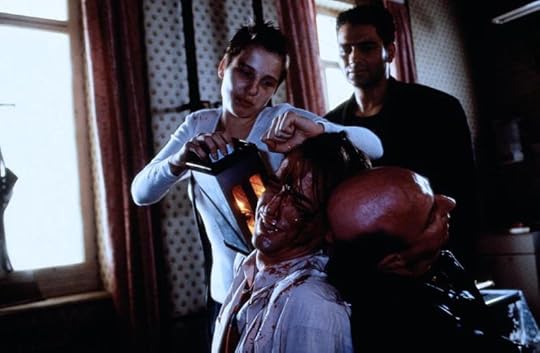
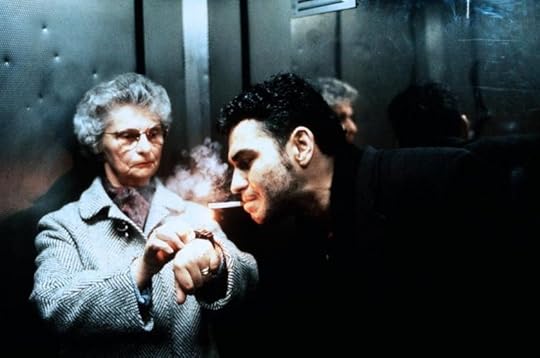
When a Turkish laborer is stabbed to death in Frankfurt's red light district, the local polcie see no need to work overtime. But when the laborer's wife comes to him for help, wise-cracking detective Kemal Kayankaya, a Turkish immigrant himself, smells a rat. The dead man wasn't the kind of guy who spent time with prostitutes. What gives? The deeper he digs, the more Kayankaya finds that the vitim was a good guy, a poor immigrant just trying to look out for his family. So who wanted him dead, and why? On the way to find out, Kayankaya has run-ins with prostitutes and drug addicts, gets beaten up by anonymous thugs, survives a gas attack, and suffers several close encounters with a Fiat.
And then there's the police cover-up he stumbles upon ...
Jakob Arjouni (alias of Jakob Bothe) published his first novel Happy Birthday, Türke! (1985) at the age of 20.Later he wrote his first play Die Garagen. He became famous after publishing his criminal novel Kayankaya, which was then translated into 10 different languages.
In 1987, he received the Baden-Württembergischen Autorenpreis für das deutschsprachige Jugendtheater for his play Nazim schiebt ab. In 1992, he received the German Crime Fiction Prize for One Man, One Murder. He died, aged 48, in Berlin, after a long fight against pancreatic cancer.
Jakob Bothe alla nascita si chiamava Jakob Michelsen e poi ha preso il nom de plume di Jakob Arjouni, che se ho capito bene è il cognome di sua moglie. Si può dire che ha bruciato le tappe: questo suo primo romanzo, primo della saga dedicata al detective privato turco-tedesco Kemal Kayankaya, è apparsa quando aveva 20 anni: è stato subito un successo, tradotto in dieci lingue. E a solo 48 anni Arjouni ci ha lasciati.
Kemal Kayankaya vive e lavora, come il suo creatore, a Francoforte sul Meno, la città di Goethe. Ho detto lavora, ma non è che i clienti facciano proprio la fila. Anzi, quando si presenta la moglie del morto, Kemal Kayankaya accetta l’incarico pur non capendo una parola di quello che la donna gli sta dicendo. Perché lei parla in turco e Kemal Kayankaya di turco ha conservato davvero poco, ancora meno della lingua: ormai è tedesco. Anche se il suo gusto per il fumo ha molto di turco. Almeno nel numero di sigarette quotidiane.
Questo detective privato dal nome turco, e per il resto è probabilmente tedesco, ama bere, come si conviene a un private eye: prende sonore sbornie. E prende sonore sberle, come spesso succede anche ai suoi colleghi più qualificati: solo che Kemal Kayankaya se può le restituisce senza perdere tempo in salamelecchi. Ha la lingua veloce e tagliente, a volte così tanto da mettersi nei guai: ma essere sarcastico e spaccone è più forte di lui. Però, a volte, Arjouni spinge un po’ troppo il pedale della comicità, e appesantisce la narrazione. Come si può capire siamo in pieno hard boiled: il fumo può essere scambiato per nebbia, le prostitute sfilano, hanno la lingua lunga e il cuore grande, ma possono venderti per una banconota di grosso taglio, la polizia non disdegna i corrotti in divisa, ma neppure in borghese, la droga scorre per strade marciapiedi e case.
La novità è che questo tedesco che si è inventato un protagonista dalle origini turche sa raccontare questa popolazione che in Germania è cospicua, giocando nelle sfumature tra immigrati di prima, seconda o terza generazione. È questa la parte più divertente e meglio riuscita.
Come dicevo, il difetto maggiore è che Arjouni a volte vuole strappare la risata a ogni costo. Il che scombussola un po’ anche lo sviluppo dei fatti. Così può succedere che si voglia far passare per suicidio uno spacciatore d’eroina che ha un coltello piantato in mezzo alla schiena.
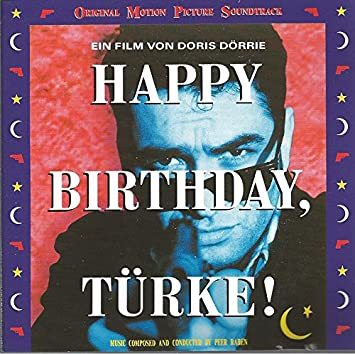
Prima di andarsene Arjouni ha fatto in tempo a scrivere altre quattro avventure di Kemal Kayankaya. Doris Dorrie ha portato sullo schermo questa prima mantenendo il titolo originale.
Really good, fast read. This series of 5 books was written in the 80s, chronicling some of the social and cultural topics and very much reminds me of what was happening in Germany during my teenage years. The prejudices and dependencies of both the German as well as Turkish (and any other "Gastarbeiter" nationals) people towards each other is clearly shown. Whilst the detective is very much of the old school hard-living and hard-drinking lonely wolf type, the culture perspective of the books remind you more of Henning Mankell's books.
Looking at the books from a 21st century point of view, you also notice how incredibly far most European nations, but definitely Germany, has come in accepting different ways of life, but also benefiting from these differences. Germany's prosperity then and now is greatly aided by immigrants, be it immigrants from other European countries, Turkey or the recent flood of immigrants from Syria and other places. I have just spend 3 weeks in Germany, and as a German national living in the UK, I have to say I was quite proud of how much Germany has learned to accept and integrate people and to look at them not only as an obligation but as a benefit to society.
I will certainly try and read all 5 books and it is a shame that the author died, as it would be really interesting to see how his writing would have developed. Highly recommend these for a quick, but interesting read.
Waking up on his twenty-sixth birthday in August 1983, private investigator Kemal Kayankaya faces his first battle of the day with the infernal fly that has disturbed his sleep and consoles himself by cracking open one of the many beers that he consumes over the course of the next three days. Born to now deceased Turkish parents from Ankara, his adoption and upbringing by the Holzheims, a family of German nationals, was his passport to German citizenship, although he has never been in doubt as to his status as an unwelcome "darkie" in 1980's Germany. Kayankaya has a very big chip on his shoulder but it will only take the reader a matter of pages before they come to understand why and are given a flavour of the prejudice and stereotyping that has marked his years. Regarded as the proverbial second-class citizen, he encounters Germans who either assume he does not speak the language and/or works in the sanitation industry, only to be flabbergasted when he opens his mouth to reveal an excellent grasp of the national language given his status as a lowly foreigner. Even those he knows quite well spare no expense, with his neighbours who share his office block referring to him as "Mustafa", joking about his ill-manners and generally taking every opportunity for exploiting his position as the butt of easy jokes.
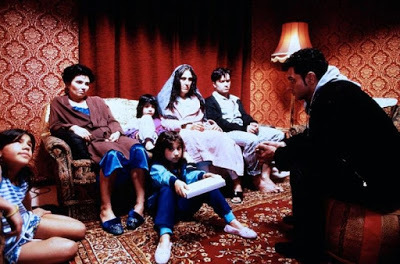
Late morning with his feet up and relaxing in his office, Kemal Kayankaya who has been in possession of a private investigators license for three years is approached by a Turkish widow keen to know just who murdered her husband. Offering a hefty daily rate with expenses added he is keen to be of service, despite her surprise at him neither understanding or speaking the Turkish language. The grieving Ilter Hamul tells Kayankaya about her husband, Ahmed's, recent demise found with a knife in his back deep in the red-light district. She suspects that finding the murder of a Turkish factory worker is not high on the priority list of the local police, and contrary to the view of her mother and siblings who advise her to leave it to the authorities, she feels a need to uncover the circumstances of his violent end. Whilst his widow admits to knowing little about his unspecified occupation and whereabouts in the last few years of his life, an interview with her taciturn wider family reveals a dearth of facts about just what Ahmed was involved in, but unabashed Kemal Kayankaya doesn't give up easily.
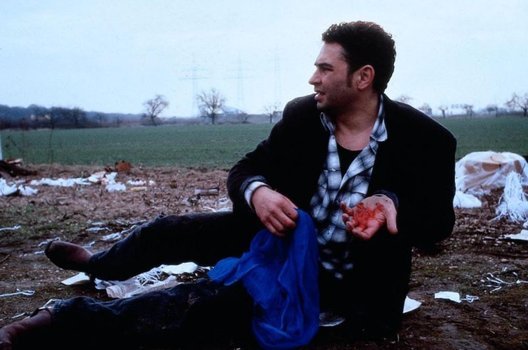
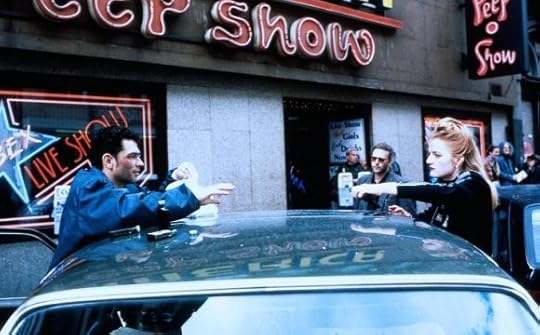
First off, he bluffs his way into various police departments under false identities, brazening out the hostile investigators assigned to the Ahmed Hamul investigation who confront him. Piecing together Ahmed's employment history and meeting his ex-colleagues sets him in pursuit of a supposed girlfriend with a drug habit who makes her money from prostitution. With very little factual detail to go on, he elbows his way into bars and infiltrates the world of the unsavoury haunts and strip-clubs of Frankfurt. His outspoken and abrasive attitude makes him no end of enemies and en route to the denouement he takes several beatings as he flies by the seat of his pants and narrowly escapes being run down by a Fiat on the loose and incapacitated by tear-gas. Many of his discoveries are rather fortuitous, a matter of being in the right place at the right time and passing the time of day with the drug addicts and hookers who frequent the area, even passing himself off as supposed john! At other times he bluffs his way to elicit disclosure from the police passing as a supposed Turkish envoy and public prosecutor. Coincidences abound, cliches are rife but humorous dialogue and fast thinking means Happy Birthday, Turk! never takes itself too seriously. Along the way Kayankaya also manages to uncover that the sister-in-law of Hamul is herself a heroin addict, that his father-in-law's fatal accident was a matter of a police cover-up and deliver the truth to Ilter Hamul.
Just short of two-hundred pages this is very different to my usual genre of crime fiction, but is an absolute hoot from start to finish. Short and to the point, Happy Birthday, Turk! allows the wisecracking and smart-mouthed Kemal Kayankaya to never outstay his welcome and means that for those who might not necessary gravitate to the hardboiled private eye genre, this is a welcome foray. I suspect if this had been a lengthier text then I would not have found it so palatable as my usual reading taste is for something with a little more depth, however the over the top violence and bawdy humour of Kayankaya emphasises his status as the ultimate outsider, used to being given a rough ride in his adopted country. I would definitely read more of the unique Kayankaya, a perceptive "immigrant" whose wit allows him to poke fun at the natives who belittle him and beat them at their own game with a tongue-in-cheek line in national stereotyping (sausages and sauerkraut)!
An excellent translation courtesy of Anselm Hollo means the fast talking Kayankaya is a worthy equal to any apathetic American gumshoe on a diet of fast-food and alcohol who becomes more jaded with each and every day. First published in 1985 in Germany when Arjourni was just nineteen, this is the first of five novels in what is now considered a seminal series in crime fiction and shines a light on the world of a Turkish-German private investigator.
A quick and interesting noir read, written in the early 80s and with a special focus on the stigma attached to Turkish immigrant population in West Germany. This was Jakob Arjouni writing his debut novel at the age of 20 and it feels fresh and brash, playing fast and loose with genre conventions and carving a unique little space in the world of international noir with a social conscience. I shall be checking out more of this series, especially if they're all under 200 pages.
You know, I didn't think "A German detective novel, THAT'LL be a laugh riot!" but I guess I should have. LOVED this book and am moving onto the other ones in the series.
Arjouni does noir with a smirk. It reminds me a bit of a very German James Ellroy--tons of wordplay, an awareness of social commentary, and quick punchy dialog delivered by a grizzled, world-weary, not-entirely-a-good-guy protagonist. The story itself is short and relatively straightforward, in a way that avoids the crazy-complicated pretentiousness that a lot of modern mystery novels suffer from. (Ooo, grammar.) I'm still amazed that this book was so good when I'm not even reading it in the original language, and I have to give major props to Anselm Hollo, who translated it.
If you like hardboiled detective fiction, you may find it a bit ridiculous, but I'd definitely suggest giving it a shot. And DEFINITELY if you read a lot of Agatha Christie or Sherlock Holmes as a kid.
Okay, I am going to stop writing and go read the second book :P
Αν και γενικά δεν μου αρέσουν τέτοιου είδους βιβλία, το συγκεκριμένο ήταν αρκετά καλό. Κατά λάθος έπεσε στα χέρια μου και εφόσον ήταν μικρό αποφάσισα να κάνω μία προσπάθεια να το διαβάσω. Ομολογώ ότι στην αρχή δεν με κέρδισε άλλα όσο κυλούσαν οι σελίδες τόσο το ενδιαφέρον αυξάνονταν. Δεν το άφησα μέχρι να αποκαλυφθεί ο δολοφόνος και η αιτία. Άξιζε η ανάγνωσή του εν τέλει.
Locker leichte Unterhaltung, ein wenig noir-Gefühl, da manche Passagen an Marlow erinnern. Daher werde ich den Autor nicht weiter lesen, da ich dann doch lieber das Original Raymond Chandler lese.
Dieses Buch fand ich so großartig, dass ich gar nicht weiß, wohin mit all meiner Freude! Bücher, die einen so richtig begeistern, sind immer etwas ganz besonderes und es fällt mir schwer, "Happy birthday, Türke!" mit Worten gerecht zu werden. Denn wenn ein Buch es mir so richtig angetan hat, dann neige ich auch leicht zur Glorifizierung. Daher kann es gut sein, dass ich schlichtweg blind bin für eventuelle Schwächen, die „Happy birthday, Türke“ haben könnte. Denn auch, wenn ich beispielsweise das Ende recht früh erahnen konnte, war die Geschichte in meinen Augen so genial erzählt, so rund, so zufriedenstellend in allen für mich relevanten Punkten, was bleibt mir da mehr, als begeistert zu sein?!
Besonders, da ich von Hause aus eine Schwäche für diese Art von Detektivromanen habe. Der hartgesottene Privatdetektiv, der sein Whiskeyglas nicht nur in einem Zug leert, sondern es auch ohne mit der Wimper zu zucken zerkaut, hinunterschluckt, aufsteht, loszieht und seinen verdammten Fall klärt. Für diese Art von Figurenzeichnung sollte man ein wenig Begeisterungsfähigkeit mitbringen, um Freude an den Geschichten um den Frankfurter Privatdetektiv Kemal Kayankaya zu haben.
Kemal Kayankaya, 26, Privatdetektiv in Frankfurt am Main, versteht wunderbar hessisch, aber kein Wort türkisch. Da fühlen sich schon die ersten auf den Schlips getreten, türkische wie hessische Mitbürger. In Ankara geboren, ist er nach dem Tod seiner Eltern in Frankfurt am Main aufgewachsen, ein hessischer Bub durch und durch quasi, auch wenn seine Mitmenschen in ihm nur den Türken sehen. Es gibt viele Szenen, die das Thema aufgreifen und erstaunlich wenige Menschen in diesem Buch, die ohne Schranken denken können. Bedenkt man, dass „Happy birthday, Türke“ in den frühen 1980er Jahren geschrieben wurde, fällt auf, dass... ja, was eigentlich? Dass auch in den 80er Jahren Alltagsrassismus überall anzutreffen war? Dass Menschen damals auch nicht klüger waren, nicht toleranter? Aber es gibt wie immer beide Seiten, die netten und die garstigen, auch im Buch. Damals und heute.
Und das Buch will da auch gar nicht mit dem erhobenen Zeigefinger mahnen, zumindest kam es mir so nicht vor. Es bildet einfach die Realität ab, gerade was die sozialkritischen Themen angeht. Die Story selbst ist fiktiv und dabei ein absolut stimmiger Kriminalfall. Und es geht ordentlich zur Sache, ganz so, wie ich es mir bei einem Privatdetektiv-Krimi vorstelle. Da wird ordentlich ausgeteilt und eingesteckt, im Milieu ermittelt, man trifft sich in dunklen Gassen und in noch dunkleren Kneipen, Fäuste fliegen, ebenso die dicken Sprüche, und das alles mit einer klitzekleinen Prise Humor, einer Art Nonchalance. Ganz der toughe Typ, trotz zerschlagener Nase. Zugeschwollenes Auge, Tritte in die Nieren, ach was, das macht doch nichts. Ein Indianer kennt keinen Schmerz. Ein Privatdetektiv auch nicht. Diese Attitüde macht für mich den Charme solcher Geschichten aus.
Charme hat auch die Art, wie Jakob Arjouni die Geschichte erzählt. Sehr konzentriert und doch mit ein paar Anekdoten hier und da kommt ein perfektes Lesetempo zustande, auf gerade einmal 170 Seiten entsteht eine Geschichte, die man auf 400 Seiten auch nicht besser hätte erzählen können. Es ist einfach alles drin, alles dran. Ein Privatdetektivkrimi, hard-boiled wie man es aus den USA kennt, aber dabei doch ganz verwurzelt in dem, was die damals noch deutsch-deutsche Geschichte prägte. Ein Kriminalroman mit einem starken Zeitgeist.
Jakob Arjouni hat neben zahlreichen anderen Romanen insgesamt 5 Bände der Kemal Kayankaya-Reihe geschrieben, der letzte Band „Bruder Kemal“ erschien 2012. Der Autor verstarb 2013 und hinterlässt mit seinem Werk einen der wichtigsten Wegsteine der jüngeren, deutschsprachigen Kriminalliteratur.
Fazit: Hier ist einfach alles stimmig, ein wunderbares Stück Kriminalliteratur! Der Privatdetektiv Kemal Kayankaya ist mit seinen 26 Jahren noch nicht ganz so abgefuckt wie manch andere Ermittler in diesem Genre, hat aber trotzdem die nötige Tiefe und die richtige Einstellung, um als Figur zu funktionieren und zu begeistern. Ein Krimi, den man lesen sollte, wenn man sich ein umfangreiches Bild von der jüngeren, deutschsprachigen (Krimi-)Literatur machen möchte.
Głównym bohaterem jest dwudziestosześcioletni Turek - Kemal Kayankaya. Nie jest on jednak typowym Turkiem, ponieważ jako dziecko został zaadoptowany przez niemiecką rodzinę, nie zna tureckiego ani tureckich obyczajów, wychowany został jak typowe niemieckie dziecko, a właściwie jak typowy frankfurtczyk. Dla innych jest jednak Turkiem, ze względu na wygląd i nazwisko. A że akcja powieści rozgrywa się w latach 80., Kayankaya ma do czynienia z całą gamą uprzedzeń według fali gastarbeiterów z Turcji. Poniżające stwierdzenia są na porządku dziennym, traktowanie go jak nieproszonego gościa także. Kemal jest prywatnym detektywem, żyje samotnie, dni spędza na pracy lub konsumpcji alkoholu i paleniu. Aż pewnego dnia odwiedza go Turczynka, której mąż został zamordowany. Policja nie czyni właściwie nic, by posunąć śledztwo do przodu, a ona ma pewne podejrzenia. Kayankayę wybrała przypadkowo z książki telefonicznej, zachęciło ją do kontaktu jego tureckie nazwisko.
Kemal porusza się po najciemniejszych ulicach Frankfurtu, przesiaduje w spelunkach, rozmawia z podejrzanymi typami, spotyka prostytutki i ich alfonsów, pije litrami whiskey i się bije.
It’s easy to see that Chandler and Hammett are influences for Arjouni, but he falls well short of their standard, both in the plot, which lacks credibility, and in the writing, which lacks impact, his attempts at humour usually falling flat. The novel is narrated by his private investigator, and Turkish immigrant, Kemal Kayankaya, and based in the seedier areas of Arjouni’s native Frankfurt. The PI is a well-drawn character, and the city comes over as raw and grimy; he succeeds in creating an atmosphere, but doesn’t build on it. Kayankaya investigates the death of a Turkish labourer on the steps of his ‘junkie prostitute’ girlfriend’s apartment building. Those great authors he aspires to used many of the same tropes, common in the genre. For Arjouni they read like a cliche, Hammett and Chandler gave them stories that oomph that made them special.
Es bietet eine interessante Anschauung für den heutigen Rassismus in Deutschland an. Ein Türke(?), der niemals seine Eltern gesehen hat und fast über die türkische Etikette ahnungslos ist, sieht der Wahrheit ins Gesicht. Egal inwieweit integriert bist du, wirst du immer für Ausländer gehalten. in den Augen der Deutschen bleibt man als ein asozialer Kanak.
Als ein Türke, der in der Türkei geboren und aufgewachsen ist, kann ich Herrn Kemal kaum einen Türken nennen. Er beherrscht kein Türkisch, hat keine türkischen Gewohnheiten; nur wie er aussieht ist was, das in ihm türkisch ist, was mir unsichtbar ist natürlich.
Dies alle beiseite, war dieses Buch mein allererster deutscher Roman. Ich will hier mich bei meinem Professor Herrn Ersel Kayaoglu für diesen einen Vorschlag beziehungsweise seine lobende Erwähnung von diesem Buch in seiner Vorlesung besonders bedanken.
Strange, that I'm just now getting round to reading his first novel, having read about a dozen of his books before and enjoyed them all. This is still one of his very best. I can recommend it to anyone who enjoys a ripping good detective story. Next up will be Arjouni's second novel with private detective Kayankaya (which I haven't yet read either)!
At least this was a quick read because otherwise I was underwhelmed. Set in Frankfurt, Germany and featuring a PI of Turkish heritage who, instead of being a smart wisecracking operator, was pretty boorish and blundered through the rather ludicrous plot.
3,5 ⭐️ cooles Buch! Fand es sehr unterhaltsam und hat Spaß gemacht zu lesen. Hatte es für 2€ auf dem Flohmarkt geholt und ehrlicherweise bezweifelt ob ich es tatsächlich überhaupt lesen würde, aber muss sagen es hat meine Erwartungen absolut übertroffen hahah Ich fand die Story spannend, wobei manche Stellen auch mal unnötig in die Länge gezogen wurden und es an anderen Stellen nur kurz und oberflächlich gehalten wurde. Ich habe tatsächlich bis zum Ende mitgefiebert was jetzt rauskommen wird. Und yes das Ende hatte mich echt überrascht - wobei ich wusste mit dieser Figur stimmt iwas nicht! Ah hätte mir übrigens auch bisschen mehr zu Ayse gewünscht, oder generell zu Ahmeds Familie. Könnte mir durchaus vorstellen einen weiteren Kayankaya Fall zu lesen, mochte seine Figur echt gerne. Was mich außerdem gewundert hat war die Tatsache dass der Autor Deutscher ist. Fand es mit diesem background Wissen manchmal komisch zu lesen wie er schreibt ehrlich gesagt hahaha Wie auch immer, würds empfehlen wenn man einfach sowas kurzes spannendes lesen will!
Ein richtig saftiger, klassischer Krimi. Ich mochte dieses hessische Lokalkolorit total – die Sprache, die Kneipen, das Milieu, das alles hat für mich sehr gut funktioniert. Dazu dieser Privatdetektiv mit eindeutigem Westernhelden-Vibe: hart im Nehmen, ständig am Rand der Legalität, aber doch mit einem inneren Kompass.
Angenehm fand ich auch, dass das Buch politisch alles andere als glattgebügelt ist. Sehr spürbar ein älteres Buch… Der Umgang mit Rassismus ist rau, sarkastisch und oft witzig. Es zeigt Vorurteile, statt sie pädagogisch weichzuspülen oder einzuordnen, und genau dadurch knallt es ständig. Dazu: Alkohol, Schlägereien, dreckige Sprüche. Viel Durchwursteln. Das gibt ein stimmiges Genre-Gefühl dazu und passt zu diesem „Großstadt-Western“. Trotz all dem Posengehabe ist der Held natürlich kein Supermann, sondern eine Figur mit Schwächen und Herz, die auch einstecken muss, gut austariert.
Häufig kam es mir so vor, als wäre es eigentlich Stoff für ein Schauspiel oder Spielfilm, mit seinem typischen Milieus und Bildern. Im positiven Sinne war alles sehr nah am Klischee.
Sprachlich ist der Roman rund, direkt und sehr gut lesbar – ich konnte ihn praktisch in einem Rutsch durchlesen. Unterm Strich: ein schneller, dreckiger, unterhaltsamer Krimi, der Spaß macht, ohne lieb und brav sein zu wollen. Ein sehr ehrliches Buch.
Whilst trying to work out why I was so irritated by this book, I settled on the hard drinking elements of the story that I disliked. It was so repetitive that it felt forced. As if you could not write a crime novel without a hard drinking investigator which sadly. for me, made the whole plot feel contrived.
It was hard to put this to one side as, for me, it overwhelmed the narrative. What was more interesting was that our Turkish PI was, more German than most of the gastarbeiters of the period, yet through him we saw, a full picture of the disdain and abuse suffered.
Whilst. for me, original in its setting/period, I could not seem to see the plot, characters as anything other than derivatives of better written hard-boiled crime.
I learned about this book from following Ric Jerrom who narrates "Past Tense" by Catherine Aird.
Ric Jerrom gives a spectacular performance in this book too.
Kayankaya is a private investigator and a little on a violent side. In fact, there are a lot of beating up in this book more than I normally encounter in my usual cozy mystery reading or listening.
Review of Melville House's new crime imprint and the Kayankaya series in particular (including Happy Birthday, Turk!, One Man, One Murder, More Beer, and Kismet) published in The L Magazine. See review (here: http://goo.gl/qJ5RD) or full text below.
***
“Crime=Culture.” So says Dumbo publisher Melville House about their new imprint, Melville International Crime. MIC represents the publisher’s latest venture to expand their existing catalog of fiction in translation, but although Melville House has introduced innovative series before, cultivating a line of international crime novels is not a particularly new idea. Gowanus-based Akashic Books launched its city-specific Noir series in 2004, and Soho Crime was dedicated to armchair travel and murder long before the Stieg Larsson boom. However, it is interesting to see a boutique press like Melville turn its attention to genre fiction.
Among the first books published by MIC are the “Kanyankaya Thrillers” by German author Jakob Arjouni. His private eye Kemal Kanyankaya is a character straight out of Hammet and a quintessential outsider-investigator: an ethnic Turk raised by adoptive German parents, he has always lived between two worlds in his hometown of Frankfurt, never entirely comfortable in either.
Happy Birthday, Turk! (easily the best in the series) finds the down-and-out Kanyankaya hired by a Turkish woman to track down the killer of her husband, a laborer whose death isn’t a high priority for local police. More Beer takes the suspicious conviction of four “eco-terrorists”in a bombing and murder as its premise; in One Man, One Murder, a German man hires the PI to find his girlfriend, a Thai prostitute who was kidnapped while trying to collect forged visa papers. Kismet, the most recent installment, finds Kanyankaya facing off with a violent Croatian gang. All unfold in a matter of days and are laced with Kanyankaya’s engagingly laconic sarcasm. There’s also a frank brutality which affirms the high stakes of each case and the lengths that Kanyankaya will go to get his man: he’s drugged, attacked by rats, suffers joint dislocations, is locked in a room full of tear gas, and is roundly beaten on numerous occasions.
Individually, however, the series is spotty. In both More Beer and One Man, One Murder, the intrigues become so entangled that it’s hard to care when Kanyankaya reveals whodunit—after making several key discoveries to which the reader is not privy. The detective’s understandable bitterness at being treated as an interloper or a fetish object feels increasingly belabored as he subjects every potential client to the same litmus test: “You must have checked the Yellow Pages. But why Kanyankaya, why not Müller?”And while he continues to investigate several cases after being fired and gives an impassioned speech about disenfranchised immigrants in Germany, he’s by no means an idealist. Treating housewives, prostitutes, buddies, and corrupt officials with equal disdain, it’s hard to believe that he ever cares much about the people involved in his investigations—he just wants the satisfaction of winning.
With this new imprint, Melville is capitalizing on their strengths in ways which stand to benefit both their current and potential audiences. Crime fiction fans are generally completists who want to read all of a favorite detective’s cases—even the rocky ones. And Melville has a knack for series—they’ve resurrected the novella as a viable (and marketable) form with their brilliant “Art of the Novella” line, establishing their press as a quality arbiter of taste while also engendering something like brand loyalty.
By expanding into international crime fiction, Melville stands to create a similar loyalty among new readers. Any even marginally good crime novel serves as a shorthand introduction to the social concerns, epochal tensions, and defining fears of its culture, the way the Kanyankaya thrillers address Germany’s struggle with immigration, cultural inclusion, and nationalism. Crime is culture, made accessible.
Although he was born in Turkey, Kemal Kayankaya has lived all but one year of his life in Germany. After his parents both died, he was adopted and raised by a German family and became a German citizen. In spite of that, he is still an outsider. Other people judge him on his outward characteristics, and he is subjected to verbal and physical harassment because of his racial background. And he can't even speak Turkish!
Kayankaya is a private investigator, and he is hired by a fellow Turk to investigate the murder of her husband, Ahmed Hamul. He was stabbed to death in Frankfurt's red light district, and the police have basically done nothing to find out what happened. Kayankaya has precious little to work with, but he scrapes up some information that leads him to a prostitute. Hamul's family is of little help; they seem curiously uninformed about what he was doing with the last few years of his life. Kayankaya is a definite representation of the hard-boiled dick, living a hard-drinking, spare life. As he begins the case, he is also celebrating his 26th birthday. Well, if you can call getting pulverized by a pimp and otherwise mistreated celebrating. Within the three days that he spends on the case, he is savagely beaten, almost run down by a car and attacked with tear gas. He finds evidence of drug dealing and police corruption; and eventually, he exacts justice for more than one victim.
Although the protagonist has been compared to Philip Marlowe and Sam Spade, I found the link to be tenuous at best. Kayankaya proceeds by interviewing several people. He teams up with a retired police lieutenant named Loff who is bored with his life. I didn't really see why Loff put so much effort into helping Kayankaya out; there didn't seem to be much motivation for him to go out of the way and endanger himself just because he's bored.
The book is billed as "pitch-black noir". I would agree that it is hard-boiled, but the "noir" label just doesn't seem to fit, in my opinion. The story doesn't have that doomed sense of hopelessness and bleakness that I associate with noir.
Overall, I was neutral about the book. I think it had possibilities that weren't realized. The racial tension could have been escalated; the characters weren't fleshed out enough to care about. The book is translated from the German, so it may have lost something in the telling.
Quite a bit of Hammett and Chandler in the style, and a lot of humor both in the things Kayankaya sees and in everything that happens around him. Brilliant. A hard-boiled Turkish private investigator from Frankfurt, and this starts the series. Classically chandlery, yet modern. This just has to be my favorite detective/policesque hero set in Germany - simply because I can't think of any others that I might enjoy as much. (If y'all know any, please suggest. I like my heroes with an edge, like Harry Hole, Harry Bosch, Kari Vaara, Lisbeth Salander, Konrad Sejer, inspector Winter...)
A delightful detective novella, full of humorous irony. Read on Kindle. I had enjoyed what was sadly this author's final book when it was sent to me by Real Reader, so I'm endeavouring to catch up with the previous four books. A German author who has created a private detective of Turkish extraction brought up as a German, who breaks all the rules, and seems to take nothing too seriously. Thoroughly enjoyable.
Valla Almanca yorum yazamayacağım. Zaten 100 sayfasını okuyup yıllarca ara vermiştim. Şimdi bir iki günde bitirdim. Polisiye olduğu için de Almanca da olduğundan ne kadar anladım kimbilir. Ama belki daha geyik bir romanla Almanca serüvenini canlı tutabilirim. Şimdi endişem Fransızcayı unutmuş olmak. Bu romandan aklımda kalacak sözcük arsch. Jemand sözcüğünü de yanlış biliyormuşum. Bir sürü başka sözcüğü yine öğrenemedim. Ah ah!
Billed as a Turkish-German Sam Spade, Kayankaya is much more fascinating that that. He's a fish out of water with a twist: born in Turkey, raised by German foster parents in Frankfurt, he doesn't speak a word of Turkish, yet he's always taken for a foreigner due to his appearance and Turkish name. A page turner in the classic hard-boiled P.I. genre.
On the back of this book it says "The greatest German crime novel since World War II." I certainly hope not. It is an unoriginal work in the hard boiled private detective genre. The characters are not very interesting nor is the plot or the setting.
The German mystery writer Arjouni became known for his Kayankaya series of crime novels, featuring private investigator Kemal Kayankaya, and set in Frankfurt am Main. Most of Arjouni’s works are written with a sharp eye for the experiences of the outsider in German society. Kayankaya was born in Turkey but at a very young age adopted and brought up by a German family. So apart from his appearance, he is culturally German, and despite the expectations of those he meets, in fact rather unfamiliar with what it means to be Turkish. He only speaks the German language – so he is a “Turk” who doesn’t speak Turkish, and is trapped between cultures. Debauched, hard-drinking, and self-loathing, Kayankaya is a hard-boiled detective in the American mold of Hammett and Chandler.
The story of Happy Birthday, Turk! centers on the stabbing death of a Turkish laborer on the steps of his “junkie prostitute” girlfriend’s apartment building. The case is brought to Kayankaya by the wife of the murdered man after the police are unwilling / unable to investigate in depth. So Kayankaya dives into the seedy underworld of Frankfurt’s red-light district, overindulging in Scotch and caffeine, making enemies on both sides of the law, and all the while slowly gathering pieces of the puzzle.
The tone of this hard-boiled detective novel reminds me of Raymond Chandler and Phillip Kerr, spiced with down-beat images and similes to bolster its noir feel. Happy Birthday Turk is set in Germany, involving protagonist Kamal Kayadkaya (a Turk who immigrated to Frankfurt over a decade ago) over the three day duration of his private investigation into a Turk's murder. The novel opens in the morning with Kamal a hangover following a night of birthday drinking. The morning agony begins with trying to make a cup coffee, commencing with rescuing a used filter from the trash bin and ending with a flawed cup of liquid necessitating Kamal to spit stray coffee grounds onto the linoleium floor of his kitchen. Kind of makes me think of the first long scene in Altman's movie version of The Goodbye Look. The writing, voice, tone, and similes in this short novel are wonderful. The plot isn't convoluted but is complex enough and demonstrate a good investigative procedural coupled with social comment.
Kemal Kayankaya – the name is without doubt Turkish. But Kemal doesn’t speak Turkish because he was adopted by a German couple when he was still a toddler. His parents, immigrants from Anatolia in Frankfurt/Main, died young. And so Kemal grew up like any other German child, except for his name.
A very clever choice by the author, I can say. Because it makes the hero of Happy Birthday, Turk! a born outsider - for many Germans he is the Turk who they think cannot speak proper German and should probably work as a garbage collector and for the Turks he is encountering in his work as a private investigator he is the fellow countryman who truly understands them because he has the same background as they do. But both sides are wrong.
In reality this cocky, quick-witted young man in his late twenties with the talent for seeking trouble who after several attempts to find his true vocation somehow acquired a license for his business, and who has an issue with alcohol, is – like many literary heroes of this genre – a romantic to the core. Just scratch a bit on the surface and you will see…
And this is the case with which the Philip Marlowe of Frankfurt has to deal in this book:
Ahmed Hamul, the husband of Ilter, Kayankaya's client, was found stabbed to death on the streets of Frankfurt's red light district. Since the police is not very eager to solve the case and because the wife has little trust in them, she is asking her alleged compatriot for help to find out who murdered her husband. Kayankaya accepts and finds himself soon in a case that gets much bigger than he initially thought.
While meeting the family, K. remarks that the brother-in-law has a particularly low opinion of the victim and except for Ahmet's widow nobody seems really very interested in finding the truth. Also that the family is hiding the youngest daughter under the pretext that she is ill is a hint for the private eye that something is fishy here.
The police proves little willingness to give the needed information to Kemal and his impudent behavior to some of the admittetly racist policemen doesn't exactly help. Kommissar Futt (a dialect word for vagina by the way), one of the least endearing exemplars in this biotop is leading the investigation and makes it a personal issue to keep Kayankaya, who fooled him once as alleged investigator from the Turkish Embassy, in the dark.
But fortunately, Kayankaya is in friendly terms with the retired police commissioner Löff who is pulling some strings with his former colleagues and is also later of great help. The slightly chaotic Kayankaya and his unofficial assistant who in his very German pedantic way tries to teach his friend some order and discipline and organization are an odd couple and this adds to the humor in the book which is frequently supported by witty dialogues and descriptions.
While some facts are hinting at a conflict in the red light district - Ahmet had obviously a girl friend among the prostitutes there - it is soon obvious that the issue is bigger than Kayankaya thought. It turns out that Ahmet was close with his father-in-law, who got killed in a car accident just months before. Unless the car accident wasn't exactly an accident as one of the children that witnessed the event, claimed. But Kayankaya cannot ask the child, because it too fell victim to an accident...
I don't want to give the whole story away, that would spoil the fun for possible future readers of the book. Honestly speaking, the plot was rather conventional and I saw it more or less coming from an early stage of the book.
But when this sounds a bit derogative, I don't really mean it. Arjouni was 23 when the book was published first and it is quite an accomplishment for such a young author to deliver such a fast-paced classical hardboiled crime novel with an interesting main character.
And there is more to the book. As someone who has lived in Frankfurt for several years in the 1990s I can say that the book gives an authentic impression of the place to its readers. Starting from the Frankfurt dialect that is used in the German version (yes, Kayankaya "babbelt" frequently in Frankfurterish - how funny is that?) to the description of the locations ("Wasserhäuschen" inclusive - a kind of kiosk open 24/7, literally "little water house", the typical place for an alcoholic to buy and drink his booze), it all fits. And there is plenty of hilarious situations that give Kayankaya not only opportunity for acerbic or ironic remarks but also for a playful inventiveness on his (and the author's) side.
Was Frankfurt, the city with the highest percentage of migrants (and the highest crime rate in Germany) really that racist in the 1980s? I cannot really say from my own experience - but I am not a migrant and my living conditions and the milieu in which I lived and worked there a few years later were very different from Kayankaya's. Since the whole book is so well written and researched, probably it was.
A good decision by the author was also to choose Frankfurt and not Berlin as the location for this novel. In no other place in Germany is the connection between big money and crime so tangible as here, no other city in Germany looks like a miniature version of Metropolis, no other city has this mixture of backwater mentality and delusions of grandeur.
The only bad thing about the book is that it is such a fast read. I finished it in one sitting during a flight from Istanbul to Almaty. But there are four more Kayankaya novels and I am quite sure you will like all of them. (The whole set is translated and available in the Melville International Crime series)
Jakob Arjouni died last year after a long battle with cancer. A real loss for German literature and especially for crime fiction afficionados. I can also strongly recommend his Magic Hoffmann, a crime novel too (but without Kayankaya).
I thought this mystery set in Frankfurt was the first in the series, but I think the publication dates of the reprints fooled KDL, my usual reliable source. Oh well. I'll read another. These were first published in the 1980s, and it's interesting to read about a different time when phone booths and phone books were a regular part of life. This is the seedier side of Frankfurt and Germany. Can you really buy Scotch in fast food restaurants? I'm interested in the Turkish-born German author. I haven't been to Frankfurt yet, but he paints a picture of a place--even if it's part of the urban society that I don't usually see no matter what city I'm in. We're staying not far from the train station, so I'll get a glimpse of the area Arjouni wrote about.
Das Buch punktet nicht wirklich durch die eher weniger originelle Story, sondern durch Jakob Arjounis Fähigkeit diese zu erzählen. Das Buch lässt sich gut und schnell lesen und bleibt einem dennoch im Gegensatz zu dem durchschnittlichen Krimi gut in Erinnerung, da es den Alltagsrassismus, den der Türkische Hauptcharakter erlebt, thematisiert und vor allem seine alltäglichkeit einprägsam darstellt. Dennoch ist der Hauptcharakter auch selbst rassistisch und sexistisch. Vor allem letzteres stellt Arjouni nicht wertend dar. Alles in allem ist es dennoch interessant das Buch zu lesen, da es einem einen Blick in das Frankfurt und auch Deutschland der 80er Jahre aus der Sicht eines türkischstämmigen Menschens gibt. Insgesamt würde ich dem Buch irgendwas zwischen 3 und 4 Sternen geben.