

What do you think?

Breaking Hate: Confronting the New Culture of Extremism
From a onetime white-supremacist leader now working to disengage people from extremist movements, Breaking Hate is a "riveting" (James Clapper), "groundbreaking" (Malcolm Nance), "horrifying [but] hopeful" (S.E. Cupp) exploration of how to heal a nation reeling from hate and violence.
Today's extremist violence surges into our lives from what seems like every direction -- vehicles hurtling down city sidewalks; cyber-threats levied against political leaders and backed up with violence; automatic weapons unleashed on mall shoppers, students, and the faithful in houses of worship. As varied as the violent acts are the attackers themselves -- neo-Nazis, white nationalists, the alt-right, InCels, and Islamist jihadists, to name just a few. In a world where hate has united communities that traffic in radical doctrines and rationalize their use of violence to rally the disaffected, the fear of losing a loved one to extremism or falling victim to terrorism has become almost universal.
Told with startling honesty and intimacy, Breaking Hate is both the inside story of how extremists lure the unwitting to their causes and a guide for how everyday Americans can win them-and our civil democracy-back. Former extremist Christian Picciolini unravels this sobering narrative from the frontlines, where he has worked for two decades as a peace advocate and "hate breaker." He draws from the firsthand experiences of extremists he has helped to disengage, revealing how violent movements target the vulnerable and exploit their essential human desires, and how the right interventions can save lives.
Along the way, Picciolini solves the puzzle of why extremism has come to define our era, laying bare the ways in which modern society-from "fake news" and social media propaganda to coded language and a White House that inflames rather than heals-has polarized and radicalized an entire generation.
Piercing, empathetic, and unrestrained, Breaking Hate tells the sweeping story of the challenge of our time and provides a roadmap to overcoming it.
Today's extremist violence surges into our lives from what seems like every direction -- vehicles hurtling down city sidewalks; cyber-threats levied against political leaders and backed up with violence; automatic weapons unleashed on mall shoppers, students, and the faithful in houses of worship. As varied as the violent acts are the attackers themselves -- neo-Nazis, white nationalists, the alt-right, InCels, and Islamist jihadists, to name just a few. In a world where hate has united communities that traffic in radical doctrines and rationalize their use of violence to rally the disaffected, the fear of losing a loved one to extremism or falling victim to terrorism has become almost universal.
Told with startling honesty and intimacy, Breaking Hate is both the inside story of how extremists lure the unwitting to their causes and a guide for how everyday Americans can win them-and our civil democracy-back. Former extremist Christian Picciolini unravels this sobering narrative from the frontlines, where he has worked for two decades as a peace advocate and "hate breaker." He draws from the firsthand experiences of extremists he has helped to disengage, revealing how violent movements target the vulnerable and exploit their essential human desires, and how the right interventions can save lives.
Along the way, Picciolini solves the puzzle of why extremism has come to define our era, laying bare the ways in which modern society-from "fake news" and social media propaganda to coded language and a White House that inflames rather than heals-has polarized and radicalized an entire generation.
Piercing, empathetic, and unrestrained, Breaking Hate tells the sweeping story of the challenge of our time and provides a roadmap to overcoming it.
272 pages, Hardcover
Published February 25, 2020
About the author
Christian Picciolini
6 books120 followersChristian Picciolini is an award-winning television producer, a public speaker, author, antiracism advocate, and a former extremist. After leaving the hate movement he helped create during the 1980s and 90s, he began the painstaking process of making amends and rebuilding his life. Christian went on to earn a degree in international relations from DePaul University and launched Goldmill Group, a counter-extremism consulting and digital media firm. In 2016, he won an Emmy Award for producing an anti-hate advertising campaign aimed at helping people disengage from extremism. For nearly two decades, Christian has helped hundreds of individuals leave hate behind through his disengagement work and the organizations he founded. He has spoken all over the world, including the TEDx stage, where he shares his unique and extensive knowledge about how to effectively prevent and counter extremism. Christian chronicles his involvement in and exit from the early American white-supremacist skinhead movement in his memoir, WHITE AMERICAN YOUTH, and is the featured subject in season 3 of WBEZ’s 'Motive' podcast, which received the 2021 National Edward R. Murrow Award for best podcast in large market radio. He showcased his disengagement work in a second book, BREAKING HATE: Confronting the New Culture of Extremism, published in 2020 by Hachette Books, as well as in the MSNBC documentary series of the same name, which aired in 2018-2019. He is the host of the 'F Your Racist History' podcast, a scripted history show that tells America's hidden, overlooked, and unknown racist origin stories. The first season of it is currently available across major podcast platforms.
Ratings & Reviews
Friends & Following
Create a free account to discover what your friends think of this book!
Community Reviews
Displaying 1 - 30 of 43 reviews

May 4, 2021
Breaking Hate: Confronting the New Culture of Extremism by Christian Picciolini represents a book about the possibility for transformation, particularly apt as it comes from a former Neo-Nazi who many considered nonredeemable but someone who, having participated in his own self-healing has become what the author calls a "hate-breaker".

However, this book is not about Christian Picciolini's own transformation, a tale that is to be found in his earlier work, White American Youth: My Descent Into America's Most Violent Hate Movement & How I Got Out. Rather, Breaking Hate is a series of case studies, merged with a kind of methodology for dealing with hate & extremism. Having looked at the earlier book, I have to say that this one is much better written, exceedingly more polished. In fact, over time, this high school drop-out & former evangelist for white separatism has fallen in love with the English language, something that is evident with this work by Mr. Picciolini.
The author contends that America's culture of hate began with Columbus & the near-eradication of the land's indigenous population, hit a peak with the presence of slavery, continued with the 1915 cinematic work, The Birth of a Nation, a film embraced by the KKK (at that time 15% of the white population) & has continued via racial exclusion laws passed by congress, Timothy McVeigh's Oklahoma City devastation, influenced by the book Turner Diaries & hoping to launch a race war in America.
More recently, the embers of hate were rekindled at Charlottesville & have been further stoked by Donald Trump's white nationalist rhetoric, focused on "identity politics", with a particular excoriation of immigrants from what he termed "shithole countries".
Christian Picciolini is a man who grew up in Blue Island, a blue collar suburb of Chicago that held a largely Italian community, presided over by local Roman-Catholic churches but in spite of the efforts of family, nuns & priests, he felt isolated & alienated as a youth.
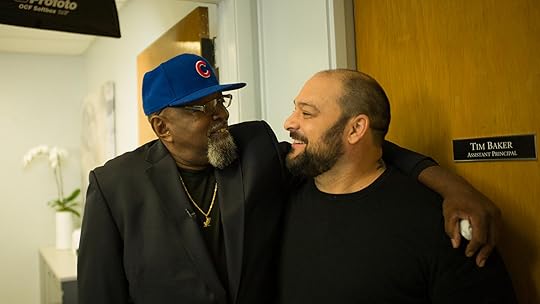
I decided to learn more about the author, who has testified before Congress, worked with the State Department, advised the FBI & the Security Council, spoken to cadets at West Point, to ambassadors at the United Nations, done a Ted-Talk and presided over the MSNBC series, "Breaking Hate". After resolving his own personal "potholes", he took a job with IBM & gained a degree from DePaul University.
The several case studies within Picciolini's book Breaking Hate, contain elements of mystery & bravado, as the author seeks to rescue those embedded in Alt-Right & white nationalist causes of the sort he once embraced, playing the role of a counselor, advocate, researcher, confidant to the FBI (often unheeded) & an unlicensed "pothole-filler", someone who now endeavors to defeat hate & extremism wherever he encounters it by using his own transformation to teach the power of forgiveness, empathy & compassion as the antidote to hate.
I found the case studies within Breaking Hate quite compelling, in particular one where Christian Picciolini quietly confronts a well-known white nationalist with degrees from Duke & the Univ. of Chicago, Richard Spencer, a man responsible for traumatizing Jews & others appeared at an event sponsored by the Human Rights Network in the Spender's hometown of Whitefish, Montana. Picciolini concludes that the demagogue quickly betrayed "potholes", i.e. hurts, insecurities & the lack of a father's love, while ending their 2 hour conversation with a sense of hope for his recovery.
While Breaking Hate has very few Goodreads reviews, it is highly recommended. The book was published in 2020 by Hachette Books.
*Within the book are an excellent forward by Malcolm Nance, uplifting quotes from Eric Hoffer, Martin Luther King & others, an appendix listing resources & support, another with recommendations for further reading + the inclusion of Christian Picciolini's own mantra, taken from Hannibal: inveniam viam aut facium--"find a way, or make one".
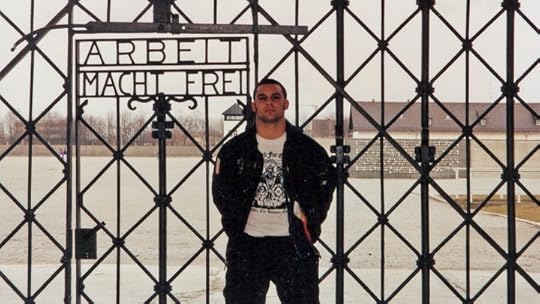
**Within my review are photo images of Christian Picciolini at various stages in his life, including one as a "skinhead" (white nationalist), taken in Germany where he appeared with a "skinhead band" at the height of his descent into extremism.
However, this book is not about Christian Picciolini's own transformation, a tale that is to be found in his earlier work, White American Youth: My Descent Into America's Most Violent Hate Movement & How I Got Out. Rather, Breaking Hate is a series of case studies, merged with a kind of methodology for dealing with hate & extremism. Having looked at the earlier book, I have to say that this one is much better written, exceedingly more polished. In fact, over time, this high school drop-out & former evangelist for white separatism has fallen in love with the English language, something that is evident with this work by Mr. Picciolini.
The author contends that America's culture of hate began with Columbus & the near-eradication of the land's indigenous population, hit a peak with the presence of slavery, continued with the 1915 cinematic work, The Birth of a Nation, a film embraced by the KKK (at that time 15% of the white population) & has continued via racial exclusion laws passed by congress, Timothy McVeigh's Oklahoma City devastation, influenced by the book Turner Diaries & hoping to launch a race war in America.
More recently, the embers of hate were rekindled at Charlottesville & have been further stoked by Donald Trump's white nationalist rhetoric, focused on "identity politics", with a particular excoriation of immigrants from what he termed "shithole countries".
Christian Picciolini is a man who grew up in Blue Island, a blue collar suburb of Chicago that held a largely Italian community, presided over by local Roman-Catholic churches but in spite of the efforts of family, nuns & priests, he felt isolated & alienated as a youth.
For millions of disillusioned young people today who struggle with peer acceptance & isolation, or who feel relegated to the outermost fringes of society because of personal trauma, social anxiety, bullying, or untreated psychological or emotional disorders, "potholes" can force an internalization of pain & emotion. Some express this hurt through self-harm, drug abuse, crime or suicide, while others self-medicate by projecting their pain onto others to achieve a similarly numbing effect.The author employs the phrase "potholes" (unresolved traumas) to describe these wounds & suggests that "potholes don't discriminate". Christian Picciolini caught my attention when he recently took part in a local library zoom-gathering that dealt with hate & extremism in America.
Although "extremism" can be framed by ideological radicalism or militant religious fundamentalism, other destructive behavior can occur, including physical, emotional, sexual abuse, criminality or addiction, extremist behavior in place of or in addition to radical ideological beliefs. In attempting to apply pain management for wounds, the result can be bigotry, cults, xenophobia & even massacres.
I decided to learn more about the author, who has testified before Congress, worked with the State Department, advised the FBI & the Security Council, spoken to cadets at West Point, to ambassadors at the United Nations, done a Ted-Talk and presided over the MSNBC series, "Breaking Hate". After resolving his own personal "potholes", he took a job with IBM & gained a degree from DePaul University.
The several case studies within Picciolini's book Breaking Hate, contain elements of mystery & bravado, as the author seeks to rescue those embedded in Alt-Right & white nationalist causes of the sort he once embraced, playing the role of a counselor, advocate, researcher, confidant to the FBI (often unheeded) & an unlicensed "pothole-filler", someone who now endeavors to defeat hate & extremism wherever he encounters it by using his own transformation to teach the power of forgiveness, empathy & compassion as the antidote to hate.
I found the case studies within Breaking Hate quite compelling, in particular one where Christian Picciolini quietly confronts a well-known white nationalist with degrees from Duke & the Univ. of Chicago, Richard Spencer, a man responsible for traumatizing Jews & others appeared at an event sponsored by the Human Rights Network in the Spender's hometown of Whitefish, Montana. Picciolini concludes that the demagogue quickly betrayed "potholes", i.e. hurts, insecurities & the lack of a father's love, while ending their 2 hour conversation with a sense of hope for his recovery.
While Breaking Hate has very few Goodreads reviews, it is highly recommended. The book was published in 2020 by Hachette Books.
*Within the book are an excellent forward by Malcolm Nance, uplifting quotes from Eric Hoffer, Martin Luther King & others, an appendix listing resources & support, another with recommendations for further reading + the inclusion of Christian Picciolini's own mantra, taken from Hannibal: inveniam viam aut facium--"find a way, or make one".
**Within my review are photo images of Christian Picciolini at various stages in his life, including one as a "skinhead" (white nationalist), taken in Germany where he appeared with a "skinhead band" at the height of his descent into extremism.

February 28, 2020
When I first saw this book it peaked my interest but I was not anticipating how much I enjoyed the reading experience. Christian Picciolini was part of a racist extremist group in his youth, but was able to recognize the unprovoked hatred he was propagating and leave the group. Since that time, he has made it is mission to help others who are targeted by these disgusting hate groups. I was shocked by the statistics in this book and angered by the odious attitudes from so many groups in existence in today’s society.
“In 2017, the FBI reported that since the devastating al-Qaeda terrorist attacks of 9/ 11, more people died on US soil at the hands of white supremacists than by “any other domestic extremist movement.”
Picciolini briefly shares his own descent into a radical group, but focuses the bulk of this book on true stories of individuals targeted and dragged into similar groups. He details how he is able to connect to these individuals and help them find their way out of hate. The ICP (identity, community, purpose) theory of the author’s is discussed at length, showing how hate groups prey on unsuspecting youth and adults who are struggling to find their place in the world. It was incredibly eye opening to see how hate is perpetuated by those who would never be suspected of these disgusting attitudes and beliefs.
“Beneath the thin skin of even the darkest minds and the most dangerous influencers are people who long for connection and love. Unable to find it, they dig deeper holes and bury themselves in them for protection from the elements that batter them, until they unleash their frustrations on others.”
This book ignited a passion to learn more about this topic and I’d highly recommend it to everyone. Especially in today’s political climate, I think these topics are necessary to learn about to stop further radical hatred from harming anymore innocent people.
Thank you to Netgalley and the publisher for an ebook of this title for review.
“In 2017, the FBI reported that since the devastating al-Qaeda terrorist attacks of 9/ 11, more people died on US soil at the hands of white supremacists than by “any other domestic extremist movement.”
Picciolini briefly shares his own descent into a radical group, but focuses the bulk of this book on true stories of individuals targeted and dragged into similar groups. He details how he is able to connect to these individuals and help them find their way out of hate. The ICP (identity, community, purpose) theory of the author’s is discussed at length, showing how hate groups prey on unsuspecting youth and adults who are struggling to find their place in the world. It was incredibly eye opening to see how hate is perpetuated by those who would never be suspected of these disgusting attitudes and beliefs.
“Beneath the thin skin of even the darkest minds and the most dangerous influencers are people who long for connection and love. Unable to find it, they dig deeper holes and bury themselves in them for protection from the elements that batter them, until they unleash their frustrations on others.”
This book ignited a passion to learn more about this topic and I’d highly recommend it to everyone. Especially in today’s political climate, I think these topics are necessary to learn about to stop further radical hatred from harming anymore innocent people.
Thank you to Netgalley and the publisher for an ebook of this title for review.

January 24, 2021
After reading Breaking Hate (220 pages) in one day (it was that compelling), I found a far wider understanding of this white supremacy movement going on in America. I really didn't fully see that the MAGA (Make America Great Again) campaign was, at its core, an effort to make American white again, essentially to make America hate again. Picciolini says that "America was primed for the fires of violent extremism to ignite—and Donald Trump's incendiary "America First" platform lit the fuse.” It’s easy now to see how true this is. “Trump’s polemics against undocumented immigrants and minority groups fanned the flames of racist vitriol.” Picciolini points out that extremists “feast on frenzy and polarization,” with fear acting as the primary sustenance. Extremists use deceptive online marketing tactics, fake crime data, false news/information, and conspiracy theories to lure fresh recruits into their ideology. Hyperbole, paranoia, fear, personal wounds, and the need to fulfill an Identity, belong to a Community, and dedicate to a great Purpose (ICP) all play a role in persuading people to join their cause of racial prejudice. That cause being the protection of the white race as supreme by stopping diversity, mixed-race families, high nonwhite birthrates, and mass migration. “White-genocide” was a new term for me (a wild and false notion that the white race will die because of multiculturalism).
I held my breath a lot during the reading of these real-life events. Picciolini writes with skill and a deep sense of honesty. Kassandra’s story made me cry. Koval’s story made me shudder. The eye-opening information here is shocking as it is heart-wrenching, and more timely today, post-election, than when the book was published in Feb. 2020. By the end, Picciolini shows us that there is hope. His own personal experience and his first-hand experiences with other now ex-extremists (he’s helped over 100 people leave extremists groups) proves that hate can be “unlearned.” Picciolini has a hefty toolbox containing empathy, compassion, self-reflection, and love. But there is one more remarkable instrument that brings these extremists out of their darkness and into the light. It has the initials STC, NTM, but for the full explanation, I encourage you to read this astonishing book. If you really want insights into the current dangers that threaten humanity, our moral values, our world communities, and America—especially after the January 6 attack on our Capitol—this is the book to read for 2021. A must-read for every American and every parent. Paula Cappa is an avid book reviewer and an award-winning supernatural mystery author of novels and short stories.
I held my breath a lot during the reading of these real-life events. Picciolini writes with skill and a deep sense of honesty. Kassandra’s story made me cry. Koval’s story made me shudder. The eye-opening information here is shocking as it is heart-wrenching, and more timely today, post-election, than when the book was published in Feb. 2020. By the end, Picciolini shows us that there is hope. His own personal experience and his first-hand experiences with other now ex-extremists (he’s helped over 100 people leave extremists groups) proves that hate can be “unlearned.” Picciolini has a hefty toolbox containing empathy, compassion, self-reflection, and love. But there is one more remarkable instrument that brings these extremists out of their darkness and into the light. It has the initials STC, NTM, but for the full explanation, I encourage you to read this astonishing book. If you really want insights into the current dangers that threaten humanity, our moral values, our world communities, and America—especially after the January 6 attack on our Capitol—this is the book to read for 2021. A must-read for every American and every parent. Paula Cappa is an avid book reviewer and an award-winning supernatural mystery author of novels and short stories.

March 22, 2020
Reading this book felt a little like going to an exotic zoo in the Midwest. You don't regret going, for the experience allowed you to see that ginormous Komodo dragon you weren't going to find anywhere else. But, the set up is a little shoddy.
Piccolini deserves a 5/5 character rating for his work in protecting America, but the way this book reads makes the novel deserving of a 3/5. There are many narratives packed into one novel, all but that of one main female character were inconclusive. They are short and clipped. Though I acknowledge this is the nature of life, that we aren't going to encounter events that always have a definitive ending, some assurance or assessment at the end of each chapter would have been helpful. The book was a good read overall. I gained insight that is hard to come across online.
Piccolini deserves a 5/5 character rating for his work in protecting America, but the way this book reads makes the novel deserving of a 3/5. There are many narratives packed into one novel, all but that of one main female character were inconclusive. They are short and clipped. Though I acknowledge this is the nature of life, that we aren't going to encounter events that always have a definitive ending, some assurance or assessment at the end of each chapter would have been helpful. The book was a good read overall. I gained insight that is hard to come across online.

April 12, 2020
Piccioloni, a former Hammerskin white-supremacist who now attempts to recover extremists from their hated-filled lives back to a multicultural civil society, has crafted an engaging read based on several ‘case-study’ stories of his work. Picciolini gives honest portrayals of members of hate groups looking to disengage from their hatred. The reader is this able acknowledge and empathize with the struggles of those attempting to disengage, while simultaneously holding their actions within hate groups contemptible and accountable. It is this very balance that Picciolini says is critical to disengagement: empathy from those helping people disengage from hate; respectful dialog and recognition of harm by parties involved; and honest self-reflection on behalf of the extremist looking to reform. 4 out of 5 stars.

December 31, 2019
Eye opening. Told through personal stories, we see how small potholes can become sinkholes for hatred and intolerance with today’s youth. A frightening look at the alt-right and their illogical hatred, warped values and unimaginable propaganda.

March 9, 2022
In Breaking Hate, author Christian Picciolini explains how ordinary people can become racists, what signs to look for, and how to use his method of seven “L” steps to help them find their way out. In his first book, White American Youth, he told how he became a skinhead at an early age, hated all non-whites and Jews, and revered Hitler. Only after he married and had his first child, was he eventually able to reject these long-held beliefs. Breaking Hate sheds light on how white supremacy is rising today, and gives us hope for how we can stop it.
In recent years, it seems that racism is growing, with attacks on students, shoppers in malls, and people in their houses of worship. I wanted to understand why this is happening, and what can be done about it. So in early 2020, I attended a Commonwealth Club program, and heard Christian Picciolini speak about how he got into and out of violent extremism. He had just authored Breaking Hate, and I received an autographed copy of it.
The author follows Dr. Martin Luther King Jr.’s theory that “Darkness cannot drive out darkness; only light can do that. Hate cannot drive out hate; only love can do that”. Christian Picciolini calls his framework the “Seven ‘L’ Steps of Disengagement”: Link, Listen, Learn, Leverage, Lift, Love, and Live. He believes that no person is born to hate – it is a learned behavior. Therefore, it can also be unlearned, through empathy.
I learned that extremists target people who may be seeking their own personal identity, or who feel they don’t belong or fit in, or are lacking a feeling of purpose in their lives. Extremists immerse these people in their hate doctrines, giving them a sense of identity, community, and purpose. The author uses a series of vignettes of those he has helped along the way, giving riveting examples of how good people can unwittingly be caught up in this evil.
Most extremists want to get out of their hateful or violent lives, if given the chance. The author establishes a link with the person by showing them empathy and gaining their trust. He listens to their story, but also listens to what they do not say, learning what might have motivated them to join the group in the first place. He guides the person to leverage opportunities for growth along the way. He helps the person find identity, community, and purpose in ways that will lift them to where they can learn to love, and eventually to live a happy, meaningful life.
I recommend this book. Breaking Hate will give you an understanding of how extremists target vulnerable people, and how normal, good people can get swept up in violent extremism. But it will also give you hope that there is a way out – not easy, not quick, and there may be relapses -- but that people can disengage from hate, learning to love themselves first, and committing to live a happy and productive life.
In recent years, it seems that racism is growing, with attacks on students, shoppers in malls, and people in their houses of worship. I wanted to understand why this is happening, and what can be done about it. So in early 2020, I attended a Commonwealth Club program, and heard Christian Picciolini speak about how he got into and out of violent extremism. He had just authored Breaking Hate, and I received an autographed copy of it.
The author follows Dr. Martin Luther King Jr.’s theory that “Darkness cannot drive out darkness; only light can do that. Hate cannot drive out hate; only love can do that”. Christian Picciolini calls his framework the “Seven ‘L’ Steps of Disengagement”: Link, Listen, Learn, Leverage, Lift, Love, and Live. He believes that no person is born to hate – it is a learned behavior. Therefore, it can also be unlearned, through empathy.
I learned that extremists target people who may be seeking their own personal identity, or who feel they don’t belong or fit in, or are lacking a feeling of purpose in their lives. Extremists immerse these people in their hate doctrines, giving them a sense of identity, community, and purpose. The author uses a series of vignettes of those he has helped along the way, giving riveting examples of how good people can unwittingly be caught up in this evil.
Most extremists want to get out of their hateful or violent lives, if given the chance. The author establishes a link with the person by showing them empathy and gaining their trust. He listens to their story, but also listens to what they do not say, learning what might have motivated them to join the group in the first place. He guides the person to leverage opportunities for growth along the way. He helps the person find identity, community, and purpose in ways that will lift them to where they can learn to love, and eventually to live a happy, meaningful life.
I recommend this book. Breaking Hate will give you an understanding of how extremists target vulnerable people, and how normal, good people can get swept up in violent extremism. But it will also give you hope that there is a way out – not easy, not quick, and there may be relapses -- but that people can disengage from hate, learning to love themselves first, and committing to live a happy and productive life.

December 20, 2023
Interesting insight into what it's like to leave a white nationalist movement! I wavered between 2-3 stars because I had some issues with how the author conflated white nationalism/white supremacy with every other extremist cause that sure, have some similarities, but they do grow out of unique sociopolitical contexts. I think he made too many sweeping statements that went a little too far and when he tried to qualify them like insisting that people of Color and Muslim people should never have to support white nationalists in changing their views... But some of them should, because it's super effective... The message is unclear. I think this comes from maybe editors trying to make this book more of a sociological take even though this author isn't a sociologist, he's not ready to talk in depth about intersectionality, and that's ok! On the other hand, the book sometimes veered into an action novel that didn't demonstrate much except that the author comes off a bit as a badass... Again, fine I guess, but what's the central point of the novel? If it were to understand extremists then it should've been more organized by themes, but if it was a memoir then it should've been more chronological... Anyhow! Doesn't mean this isn't worth reading, but I did get frustrated at times so I can't give this a full three stars.

January 8, 2022
I really thought this book worked in multiple ways. The psychological aspect, the personal accounts weaved in. It’s fascinating especially in this day and age.

August 14, 2021
I listened to the Audible audiobook version.
Christian Picciolini caught my eye the same way Daryl Davis did: he makes deradicalization work. Davis holds the remarkable description of being a black man who befriends KKK members and helps them leave the movement. Picciolini holds the identity of a former white supremacist who deradicalized and now helps others. Both men do this with little outside help or attention. They tirelessly work to save others from a life wasted or destroyed by hatred. I was rather astounded when I first discovered Daryl Davis after going through so much formal education on deradicalization. I assumed you needed a state sponsored effort with therapists and counselors and cultural advisors and the backing of a rehabilitation oriented criminal justice system. And while that may certainly help in other countries (and certainly could in the U.S. if we could fund and stand up such an effort), Davis and Picciolini demonstrate what truly matters: having someone who listens and empathizes.
Reading (or, rather, listening to) this book by Picciolini finally has given me the insight into deradicalization in a way that is much more personal and human than the rather sterile lectures you'd receive in counterterrorism courses. Picciolini's personal history as a former leader of a white power movement make him an ideally suited candidate for a "deradicalizer", so to speak. He truly understands, more than a generic counselor would, the feeling of a person who has "potholes", those areas of unresolved trauma and pain that can manifest into a desire for identity, community, and purpose, or IDP as Picciolini calls it. In order to fulfill IDP, and feeling separated from normal people and communities, individuals with unresolved potholes seek out extremist ideologies.
Picciolini knows how to seek out the potholes, listen to the individuals, "radically empathize" with them, and offer them a new path in life. To you, the reader, this particular sentence may seem rather elegantly simple, but deradicalization is a long, complicated, and painful process. In this book, Picciolini demonstrates how things can go wrong by providing the reader glimpses into some of his attempts at deradicalizing people through his 7 L's system (among which are the words link, listen, and love). You'll follow his attempts to introduce a white supremacist to the Muslims he hates by just simply driving him to a mosque and introducing him to the imam. You'll see how he saves a man and a marriage by helping that same man exit a neo-Nazi death cult. You'll see how he was able to help guide a woman over the phone to safety when she called him in a panic, trapped in a house of a militia group in Texas.
And perhaps most riveting, you'll follow him as he investigates the story of Kassandra (name changed of course for security reasons), a teenage girl in New Jersey who became a white-supremacist Youtuber, and fell in love with a supposed German neo-Nazi who wasn't all he seemed to be. Through Kassandra, Picciolini would discover the vast growth of online trolls and the alt-right composed of some radical Americans for sure, but others foreign, possibly working for foreign nations in destabilization operations and influence campaigns. Picciolini and his family received death threats for trying to help Kassandra out. This particular thread culminates in a gut wrenching confrontation in a California diner, after some seriously impressive detective work on Picciolini's part.
I think more people need to be made aware of Picciolini, particularly in this time of divisive and extreme rhetoric. For my experience in the audiobook, listening to Picciolini speak felt like he was desperate, urging the reader to learn, understand, and empathize. To him, at the time this book was published in February 2020, things were likely going to get worse. He was right. Now more than ever, this country needs a book like this to show the dangers of extremist language and thinking, and offers an amazing guide on how to fight it, not with FBI raids and government surveillance, but with coffee, a nice Sunday drive, a walk in the park, and a person to finally talk to.
A very high recommend from me, and not just because of the book's relevance. If you can, listen to the audiobook as well. There is a certain power in hearing Picciolini's voice that motivates you and comforts you, but also sternly warns you about the dangers ahead. Material wise, you will get an insight into why we have such a large white nationalist problem in the country. And if you know me personally, this will give you insight into why I've been shouting about CVE and rehabilitative criminal justice for years at anyone who would listen. And go watch some videos on Daryl Davis while you're at it. As far as I'm concerned, both these men deserve the highest civilian honors this country can bestow on them.
Christian Picciolini caught my eye the same way Daryl Davis did: he makes deradicalization work. Davis holds the remarkable description of being a black man who befriends KKK members and helps them leave the movement. Picciolini holds the identity of a former white supremacist who deradicalized and now helps others. Both men do this with little outside help or attention. They tirelessly work to save others from a life wasted or destroyed by hatred. I was rather astounded when I first discovered Daryl Davis after going through so much formal education on deradicalization. I assumed you needed a state sponsored effort with therapists and counselors and cultural advisors and the backing of a rehabilitation oriented criminal justice system. And while that may certainly help in other countries (and certainly could in the U.S. if we could fund and stand up such an effort), Davis and Picciolini demonstrate what truly matters: having someone who listens and empathizes.
Reading (or, rather, listening to) this book by Picciolini finally has given me the insight into deradicalization in a way that is much more personal and human than the rather sterile lectures you'd receive in counterterrorism courses. Picciolini's personal history as a former leader of a white power movement make him an ideally suited candidate for a "deradicalizer", so to speak. He truly understands, more than a generic counselor would, the feeling of a person who has "potholes", those areas of unresolved trauma and pain that can manifest into a desire for identity, community, and purpose, or IDP as Picciolini calls it. In order to fulfill IDP, and feeling separated from normal people and communities, individuals with unresolved potholes seek out extremist ideologies.
Picciolini knows how to seek out the potholes, listen to the individuals, "radically empathize" with them, and offer them a new path in life. To you, the reader, this particular sentence may seem rather elegantly simple, but deradicalization is a long, complicated, and painful process. In this book, Picciolini demonstrates how things can go wrong by providing the reader glimpses into some of his attempts at deradicalizing people through his 7 L's system (among which are the words link, listen, and love). You'll follow his attempts to introduce a white supremacist to the Muslims he hates by just simply driving him to a mosque and introducing him to the imam. You'll see how he saves a man and a marriage by helping that same man exit a neo-Nazi death cult. You'll see how he was able to help guide a woman over the phone to safety when she called him in a panic, trapped in a house of a militia group in Texas.
And perhaps most riveting, you'll follow him as he investigates the story of Kassandra (name changed of course for security reasons), a teenage girl in New Jersey who became a white-supremacist Youtuber, and fell in love with a supposed German neo-Nazi who wasn't all he seemed to be. Through Kassandra, Picciolini would discover the vast growth of online trolls and the alt-right composed of some radical Americans for sure, but others foreign, possibly working for foreign nations in destabilization operations and influence campaigns. Picciolini and his family received death threats for trying to help Kassandra out. This particular thread culminates in a gut wrenching confrontation in a California diner, after some seriously impressive detective work on Picciolini's part.
I think more people need to be made aware of Picciolini, particularly in this time of divisive and extreme rhetoric. For my experience in the audiobook, listening to Picciolini speak felt like he was desperate, urging the reader to learn, understand, and empathize. To him, at the time this book was published in February 2020, things were likely going to get worse. He was right. Now more than ever, this country needs a book like this to show the dangers of extremist language and thinking, and offers an amazing guide on how to fight it, not with FBI raids and government surveillance, but with coffee, a nice Sunday drive, a walk in the park, and a person to finally talk to.
A very high recommend from me, and not just because of the book's relevance. If you can, listen to the audiobook as well. There is a certain power in hearing Picciolini's voice that motivates you and comforts you, but also sternly warns you about the dangers ahead. Material wise, you will get an insight into why we have such a large white nationalist problem in the country. And if you know me personally, this will give you insight into why I've been shouting about CVE and rehabilitative criminal justice for years at anyone who would listen. And go watch some videos on Daryl Davis while you're at it. As far as I'm concerned, both these men deserve the highest civilian honors this country can bestow on them.

July 5, 2023
At times this novel felt akin to many of the thriller nonfiction novels I have read – I was on the edge of my seat during many of the chapters, wondering how Christian was going to save the girl or make the villain see the evil of his ways. Having read a few memoirs about people born into cults/extremist beliefs and the factors that lead/enabled them to leave, I’ve learned a lot about the power of “radical empathy”, and “radical empathy” is exactly the term I would use to describe Christian’s approaches. Christian uses his own personal experience of leaving the white supremacist movement and his unique ability to empathize with extremists to give them the tools to leave the communities and beliefs that filled their own personal “potholes”. He looks to cure the illness rather than treat the symptoms.
I initially picked up this book thinking/hoping that it would be an academic explanation of extremism and an approach to understanding how extremist rhetoric has proliferated over the past decade. This book focuses much more on Christian’s personal story and the stories of those he’s worked with – specifically how those many stories have shaped Christian’s view of why people are attracted to these hateful communities and indoctrinated into their beliefs. While this makes the scope of the book much narrower than I was originally anticipating, I believe it is an incredibly worthwhile and insightful read, I highly recommend it.
I initially picked up this book thinking/hoping that it would be an academic explanation of extremism and an approach to understanding how extremist rhetoric has proliferated over the past decade. This book focuses much more on Christian’s personal story and the stories of those he’s worked with – specifically how those many stories have shaped Christian’s view of why people are attracted to these hateful communities and indoctrinated into their beliefs. While this makes the scope of the book much narrower than I was originally anticipating, I believe it is an incredibly worthwhile and insightful read, I highly recommend it.
February 5, 2020
Picciolini is a former white power extremist himself—his music was on Dylann Roof’s playlist—and he writes about trying to repair the damage he’s done by reaching out to other extremists who may sense there’s something wrong but be afraid of whether they can leave. He contends that extremist ideology is often a cover for pain and fear, making it much easier to radicalize a person than deradicalize them. He tells a truly terrifying story of a Russian-backed operation to radicalize young white women, which of course the FBI ignored. In fact, as he says, Russian involvement actually resembles the complicated, conspiratorial narratives he used to believe, making it harder for ordinary people to understand and fight. Trump’s government revoked his nonprofit’s grant for helping white extremists disengage.
What is to be done? Picciolini says that no one is required to engage with or forgive anyone who’s done this kind of harm, but he tries to create links to them. He doesn’t “shame or engage them in debate. Arguing never works.” He listens to their personal stories, trying to find the sources of pain and insecurity that led them to extremism. He asks members of hated groups who are willing to do so to meet with the person—Heather Heyer’s mom and an imam are his examples in the book—and connect with them as people, not as objects of hatred. While “violent or hateful people should not fully enjoy the benefits of a peaceful society until they are accountable for their damage,” he wants to “allow space for rehabilitation and growth to occur,” or else violent extremists won’t see any way out and are more likely to retreat into the perceived acceptance of extremism. I definitely couldn’t do that work, but I’m glad he has committed to doing it.
What is to be done? Picciolini says that no one is required to engage with or forgive anyone who’s done this kind of harm, but he tries to create links to them. He doesn’t “shame or engage them in debate. Arguing never works.” He listens to their personal stories, trying to find the sources of pain and insecurity that led them to extremism. He asks members of hated groups who are willing to do so to meet with the person—Heather Heyer’s mom and an imam are his examples in the book—and connect with them as people, not as objects of hatred. While “violent or hateful people should not fully enjoy the benefits of a peaceful society until they are accountable for their damage,” he wants to “allow space for rehabilitation and growth to occur,” or else violent extremists won’t see any way out and are more likely to retreat into the perceived acceptance of extremism. I definitely couldn’t do that work, but I’m glad he has committed to doing it.

March 8, 2020
Picciolini's message couldn't be more precise. Only love trumps hate and no one is born hating. Gripping book, with heartbreaking testimonials that show perfectly how bad the situation is in the West, and how to fight it back.

January 24, 2021
Christian Picciolini spent time in the white supremacy movement and managed to get himself out that life. He now spends his time trying to get others in that delusional lifestyle out of it.
Picciolini tells how he was recruited and it surprised me that there are active recruiters looking for lost and desperate people. Something Picciolini wrote stuck with me - “For those who align themselves with extremist ideologies, doctrine is but the final component that locks into place.” His portraits of some of those caught in these movements showed that there are risk factors that lead someone to embrace these extreme ideas. They seek acceptance from anywhere. Picciolini theorizes that people need Identity, Community, and Purpose. Some find that in extremist groups and to get someone out of that belief system, Identity, Community, and Purpose need to be found in positive outlets. Interesting read. Recommend for anyone interested in learning more about how people end up in radical extremist movements.
Picciolini tells how he was recruited and it surprised me that there are active recruiters looking for lost and desperate people. Something Picciolini wrote stuck with me - “For those who align themselves with extremist ideologies, doctrine is but the final component that locks into place.” His portraits of some of those caught in these movements showed that there are risk factors that lead someone to embrace these extreme ideas. They seek acceptance from anywhere. Picciolini theorizes that people need Identity, Community, and Purpose. Some find that in extremist groups and to get someone out of that belief system, Identity, Community, and Purpose need to be found in positive outlets. Interesting read. Recommend for anyone interested in learning more about how people end up in radical extremist movements.

September 28, 2024
'Breaking Hate' by Christian Picciolini is a powerfull book about the disengagement with hate. Even Picciolini concetrates on the exit of white supremacy because he shares this story by himself, the book shows a way how to engage with people with extreme opinions. The book is extremely powerfull and a perfecte reference how to shower someone with love and affection to get him out of his rabbit hole of hate.
Picciolini is even describing his meeting with an former ISIS member to give an example that the tactics described in the book are universally useful. He shares the 7 Ls for deradicalization which are very helpful in any human relationship: Link, Listen, Learn, Leverage, Lift, Love and Live. Important is, that the poeple disengaging are showered with love but never get a free pass for their wrongdoings.
The stories he shares are interchangable and I won't review them since the message of the book is important not the shared stories about the people itself. They only help too understand the steps.
Picciolini is even describing his meeting with an former ISIS member to give an example that the tactics described in the book are universally useful. He shares the 7 Ls for deradicalization which are very helpful in any human relationship: Link, Listen, Learn, Leverage, Lift, Love and Live. Important is, that the poeple disengaging are showered with love but never get a free pass for their wrongdoings.
The stories he shares are interchangable and I won't review them since the message of the book is important not the shared stories about the people itself. They only help too understand the steps.

May 17, 2021
Wow. Christian Picciolini is a saint. The work that he is doing is so important but takes a tremendous amount of strength and empathy. I really admire him.
This book and the stories within it were really interesting. His storytelling approach worked well - I often didn't want to stop reading this book. The people he's helped are really something. His patience, dedication, and understanding when helping these people is truly remarkable.
I think during these times of chaos and the rise of white supremacy in the US, it's helpful for those of us who just want to punch Nazis in the face to remember these people have the capability to change, it is not easy, it requires insane amounts of patience and empathy. I'm not saying I would approach a white supremacist with kindness, but this book serves as a good guide into understanding how to help those people if you had them personally in your life.
This book and the stories within it were really interesting. His storytelling approach worked well - I often didn't want to stop reading this book. The people he's helped are really something. His patience, dedication, and understanding when helping these people is truly remarkable.
I think during these times of chaos and the rise of white supremacy in the US, it's helpful for those of us who just want to punch Nazis in the face to remember these people have the capability to change, it is not easy, it requires insane amounts of patience and empathy. I'm not saying I would approach a white supremacist with kindness, but this book serves as a good guide into understanding how to help those people if you had them personally in your life.
July 18, 2022
This should be required reading in every high school in the United States. The author delves into the individual stories of young people caught up in a movement of hate. Access to dark web sites play a part in convincing people that their very existence is threatened by other people who don’t look like them. This book concentrates mainly on the white supremacist movement but also touches on religious jihads; albeit Christian or Muslim.
He explores the ICP theory of radicalization (Identity-Community-Purpose). How much better the world would be if ICP could be harnessed for good rather than evil.
He explores the ICP theory of radicalization (Identity-Community-Purpose). How much better the world would be if ICP could be harnessed for good rather than evil.
Currently Reading
November 15, 2022I would say reading Breaking Hate really opened my eyes to the real world and how it really affected people of several different races. This book has been, like it says in the name, breaking hate. So throughout the book, they have been talking about the different wars and how racial acts have been a problem. In a way reading this book is sort of violent and gruesome because you're reading about all the fatalities and events of the wars. Overall this was a great book and I definitely recommend this book to anyone that hasn't read it.
May 6, 2024
Audiobook.
This one had moments that were very tough for me. I want to believe that people are redeemable and that I would be willing to give someone the chance to confront their inner demons and make true change but, man! It’s tough sometimes.
I also am not someone who gives white supremacists any credit. I definitely believed that they eventually just stumble upon each other and, sure, social media helps them organize but this book definitely describes them as not only organized but actively recruiting. And that there are foreign actors helping in the efforts. It’s terrifying.
This one had moments that were very tough for me. I want to believe that people are redeemable and that I would be willing to give someone the chance to confront their inner demons and make true change but, man! It’s tough sometimes.
I also am not someone who gives white supremacists any credit. I definitely believed that they eventually just stumble upon each other and, sure, social media helps them organize but this book definitely describes them as not only organized but actively recruiting. And that there are foreign actors helping in the efforts. It’s terrifying.
January 31, 2021
I enjoyed the anecdotal stories Christian shares as he explains the de-radicalization process. He does an excellent job of diagnosis the cause, individuals who have hit psychological "pot-holes" search for identity, community and purpose (ICP), as well as offering a cure... understanding, compassion and an alternative source of ICP.
The stories also were enlightening to how alive and well the white power movements are in modern America.
The stories also were enlightening to how alive and well the white power movements are in modern America.

November 25, 2021
Fascinating look into the culture of violent extremism by someone who knows the territory well. Christian Picciolini describes his own young life when he was recruited into a violent skinhead group at 14. He explains how people with early life trauma and vulnerabilities, who are desperately searching for identity, community, and purpose, are drawn into extremist culture, then shows, with riveting personal examples, how he now works to help people recover. This book really opened my eyes.

October 14, 2020
It is important to hear of people leaving hate groups because, among other things, it is a reminder of the humanity they have submerged.
This particular telling has some gripping experiences and some more mundane. It is organized by stage of involvement and of disengagement. This arrangement has the side effect of breaking up the stories. I would have preferred reading whole narratives.
This particular telling has some gripping experiences and some more mundane. It is organized by stage of involvement and of disengagement. This arrangement has the side effect of breaking up the stories. I would have preferred reading whole narratives.

January 4, 2023
Wonderful book for anyone looking to understand domestic terrorism and white supremacist groups.
Also demonstrates that the way to fight it is personal - one-on-one engagement. It is impossible to change opinions in a group setting.
I especially liked Christian's 7 "L" approach.
Link
Listen
Learn
Leverage
Lift
Love
Live
Also demonstrates that the way to fight it is personal - one-on-one engagement. It is impossible to change opinions in a group setting.
I especially liked Christian's 7 "L" approach.
Link
Listen
Learn
Leverage
Lift
Love
Live

November 30, 2020
Powerful and disturbing. Picciolini's work is invaluable, not just because he examines the circumstances that make individuals susceptible to extremist ideas and offers steps toward deradicalization, but also because he speaks from experience and with empathy.
February 21, 2021
Important and gripping. Past member of white supremacy group talks about his own journey and how he has helped others escape that. vivid stories of individuals. The bottom line: empathy, understanding, recognition of the broken places and need for belonging. DPL book 320.53

February 22, 2021
A unique, heartfelt look at how to deprogram folks who espouse extremist, hateful ideology. Picciolini has made quite a journey, having once been a leader of the Hammerskins, himself. Seems like his skills in helping lead others away from hate are now needed more than ever.

May 3, 2021
On the importance of empathy and kindness to those who might deserve it the less. Picciolini is a wonderful human being, I hope his lessons on deradicalization are spread more widely and his organizations will receive more support.

October 8, 2021
Three things make this book stand out: Picciolini’s first-hand experiences, his willingness to see the commonalities among practitioners of different types of hate (white supremacists, Islamist terrorists), and his belief that no one is beyond redemption.

December 2, 2024
I edited this book so I'm partial but it's a hell of a story. I enjoyed working with Christian on the book. I write about the experience here: https://michaelmohr.substack.com/p/ho...
Displaying 1 - 30 of 43 reviews