

What do you think?

What We Talk About When We Talk About Books: The History and Future of Reading
Reports of the death of reading are greatly exaggerated Do you worry that you've lost patience for anything longer than a tweet? If so, you're not alone. Digital-age pundits warn that as our appetite for books dwindles, so too do the virtues in which printed, bound objects once trained the willpower to focus on a sustained argument, the curiosity to look beyond the day's news, the willingness to be alone. The shelves of the world's great libraries, though, tell a more complicated story. Examining the wear and tear on the books that they contain, English professor Leah Price finds scant evidence that a golden age of reading ever existed. From the dawn of mass literacy to the invention of the paperback, most readers already skimmed and multitasked. Print-era doctors even forbade the very same silent absorption now recommended as a cure for electronic addictions. The evidence that books are dying proves even scarcer. In encounters with librarians, booksellers and activists who are reinventing old ways of reading, Price offers fresh hope to bibliophiles and literature lovers alike.
Winner of the Phi Beta Kappa Christian Gauss Award, 2020
Winner of the Phi Beta Kappa Christian Gauss Award, 2020
Audible Audio
First published August 20, 2019
About the author
Leah Price
11 books35 followersLeah Price is an American literary critic who specializes in the British novel and in the history of the book. She is Professor of English Literature at Harvard University, where at the age of 31 she became the first female assistant professor ever to be promoted to tenure.
Ratings & Reviews
Friends & Following
Create a free account to discover what your friends think of this book!
Community Reviews
Displaying 1 - 30 of 284 reviews

March 14, 2020
This caught my eye on the new book non-fiction shelf in the library. It’s an academic book (30 pages of notes and index) written by an English professor but in a non-academic style. Short sentences, punchy writing, the use of “I,” and an avoidance of academic jargon. That being said, it comes across as paragraphs of anecdotes and book trivia on every imaginable way of looking at reading. The subtitle – The History and Future of Reading – is more to the point than the main title.

Threaded through the text are observations on e-book and audio books vs. traditional print – hardbacks and paper. Perhaps surprisingly, print book sales are up and digital seems to be leveling off. We don’t notice that because so many independent and even chain bookstores are closing, but that’s not because everyone is switching to digital; it’s because of bookstore consolidation and on-line sales through Amazon. E-book reader sales are dropping because everyone who wants one has one and most folks nowadays just use their phone or tablet to read digital.
I think at this point we are all aware that you can’t “own’ an e-book. You have a license to read it and you can’t sell it or pass it on to a friend.
There’s a chapter about Reading on the Move -- where we read matters: desk chair, stool, subway, bed, bathtub. Reading on your phone or tablet has the disadvantage of constant interruptions by texts, calls and emails – whether your answer them or not, but I suppose even readers of traditional books hear ‘dinging’ in the background and may choose to interrupt their reading to see what the latest is.
One chapter I found intriguing was Prescribed Reading, about “bibliotherapy” which apparently started in Wales where there were months-long wait times to see a psychologist. One doctor started “prescribing books” for his patients to read while waiting and it caught on. Who knew that there are 100,000 books that offer psychiatric help in layman’s language? The doctors even started to keep track of which books seemed to help patients the most.
It’s good to hear that printed books are still selling – every year there are more stories and feature articles predicting the end of books. Yet television still hasn’t killed off movies or radio. Radio or TV hasn’t killed off books or classrooms as some predicted. Many parents today prefer to see children reading a book book – they’re glad to see their kids take a break from technology.
There have always been naysayers spouting off about the dangers of reading. Don Quixote may have been the first example – his constant late-night reading “dried up his brain.” Several savants in the late 1800’s wrote about the danger to young girls of too much fiction reading, not to mention germs on well-thumbed library books! COVID-19? Massachusetts passed laws related to selling certain types of books (such as criminal biographies) to those under age 16 without parental consent.
Too much reading, especially of fiction, could also lead to insomnia and insanity; it could grow in its addictive nature like alcohol or drugs. (Yes! It’s 2 a.m. but I’m going to finish this last chapter!) Reading can become a substitute for life. True, and we’ve all also read that writing can become a substitute for life too – some write about it rather than live it. But it’s better than us spending our time playing video games.
There are stories of individual books. Hemingway supposedly only cut the first and last pages in his personal copy of Joyce’s Ulysses before he praised it. A character in a Toni Morrison’s novel, God Help the Child, notes that the town clerk keeps two Bibles for swearings-in – one for blacks and one for whites. She thinks words to the effect of “They’ll let me touch all their food but not their Bible.”
In sum, a light read that’s fun to peruse. Its structure lends itself to dipping in wherever you want.
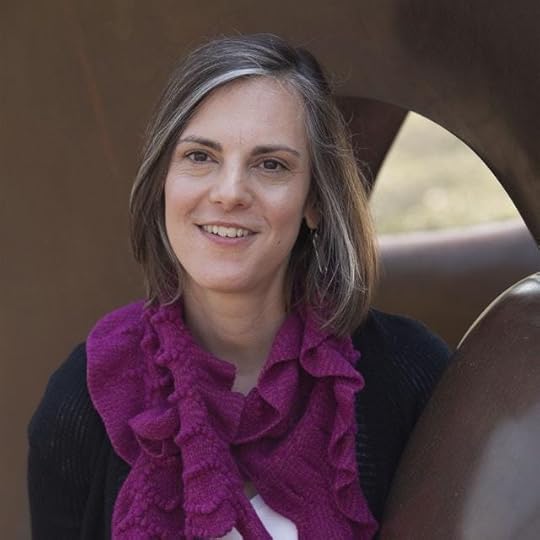
The author (b. 1970) is a Distinguished Professor of English at Rutgers. She has written another book about books: Unpacking My Library: Writers and Their Books.
Top photo a Gutenberg Bible from googleusercontent.com
The author from pup-assets.imgix.net/onix/images
Threaded through the text are observations on e-book and audio books vs. traditional print – hardbacks and paper. Perhaps surprisingly, print book sales are up and digital seems to be leveling off. We don’t notice that because so many independent and even chain bookstores are closing, but that’s not because everyone is switching to digital; it’s because of bookstore consolidation and on-line sales through Amazon. E-book reader sales are dropping because everyone who wants one has one and most folks nowadays just use their phone or tablet to read digital.
I think at this point we are all aware that you can’t “own’ an e-book. You have a license to read it and you can’t sell it or pass it on to a friend.
There’s a chapter about Reading on the Move -- where we read matters: desk chair, stool, subway, bed, bathtub. Reading on your phone or tablet has the disadvantage of constant interruptions by texts, calls and emails – whether your answer them or not, but I suppose even readers of traditional books hear ‘dinging’ in the background and may choose to interrupt their reading to see what the latest is.
One chapter I found intriguing was Prescribed Reading, about “bibliotherapy” which apparently started in Wales where there were months-long wait times to see a psychologist. One doctor started “prescribing books” for his patients to read while waiting and it caught on. Who knew that there are 100,000 books that offer psychiatric help in layman’s language? The doctors even started to keep track of which books seemed to help patients the most.
It’s good to hear that printed books are still selling – every year there are more stories and feature articles predicting the end of books. Yet television still hasn’t killed off movies or radio. Radio or TV hasn’t killed off books or classrooms as some predicted. Many parents today prefer to see children reading a book book – they’re glad to see their kids take a break from technology.
There have always been naysayers spouting off about the dangers of reading. Don Quixote may have been the first example – his constant late-night reading “dried up his brain.” Several savants in the late 1800’s wrote about the danger to young girls of too much fiction reading, not to mention germs on well-thumbed library books! COVID-19? Massachusetts passed laws related to selling certain types of books (such as criminal biographies) to those under age 16 without parental consent.
Too much reading, especially of fiction, could also lead to insomnia and insanity; it could grow in its addictive nature like alcohol or drugs. (Yes! It’s 2 a.m. but I’m going to finish this last chapter!) Reading can become a substitute for life. True, and we’ve all also read that writing can become a substitute for life too – some write about it rather than live it. But it’s better than us spending our time playing video games.
There are stories of individual books. Hemingway supposedly only cut the first and last pages in his personal copy of Joyce’s Ulysses before he praised it. A character in a Toni Morrison’s novel, God Help the Child, notes that the town clerk keeps two Bibles for swearings-in – one for blacks and one for whites. She thinks words to the effect of “They’ll let me touch all their food but not their Bible.”
In sum, a light read that’s fun to peruse. Its structure lends itself to dipping in wherever you want.
The author (b. 1970) is a Distinguished Professor of English at Rutgers. She has written another book about books: Unpacking My Library: Writers and Their Books.
Top photo a Gutenberg Bible from googleusercontent.com
The author from pup-assets.imgix.net/onix/images

November 24, 2019
" . . . while many people I knew wanted to have read books, I never wanted to get over the delicious moment of being in the middle of reading them." -- Leah Price, on page 38
I was hoping this non-fiction work would be a delicious slice of education through entertainment, but it falls short of being truly interesting. Author Price (a distinguished English professor at Rutgers) can quasi-bloviate like the academic she is, and at times my attention span would wane. She does not focus on specific titles, but superficially on the place of books / literacy / reading in our culture during the last 200 or so years. There were some absorbing facts, but it felt too much like a lecture.
I was hoping this non-fiction work would be a delicious slice of education through entertainment, but it falls short of being truly interesting. Author Price (a distinguished English professor at Rutgers) can quasi-bloviate like the academic she is, and at times my attention span would wane. She does not focus on specific titles, but superficially on the place of books / literacy / reading in our culture during the last 200 or so years. There were some absorbing facts, but it felt too much like a lecture.
September 15, 2019
Professor Leah Price writes about the history and future of reading in her new book. I think we can all be reassured that, in one form or another, books and reading will continue to exist. Her chapters read to me like expanded classroom lectures or perhaps TED talks and she is obviously very erudite about the subject matter contained here. Some interesting history, information and shareable quotes.
I was surprised though by several topics that are not addressed in this book. For instance, reader review sites like Goodreads are never mentioned; I think they are an interesting phenomenon that has sprung up in the last decade, providing a place for readers to rate books, share their opinions and meet other readers. Instead of writing in the margins of books, we write reviews and post notes/comments online. It's also a place for authors to meet their readers.
Using sites like NetGalley and Edelweiss, publishers and authors distribute advanced reader copies to avid readers for their opinions and reviews, which may be published in blogs and on these review sites, helping to spread the word about new books.
One section that absolutely gave me a headache was entitled "INTERLEAF: PLEASE LAY FLAT." The sentences were printed across two consecutive pages instead of just the one as we've come to expect. It was amazingly hard to follow those lines, or even remember to do that!
If you enjoy books about books, I think you will find this to be an interesting read.
I was surprised though by several topics that are not addressed in this book. For instance, reader review sites like Goodreads are never mentioned; I think they are an interesting phenomenon that has sprung up in the last decade, providing a place for readers to rate books, share their opinions and meet other readers. Instead of writing in the margins of books, we write reviews and post notes/comments online. It's also a place for authors to meet their readers.
Using sites like NetGalley and Edelweiss, publishers and authors distribute advanced reader copies to avid readers for their opinions and reviews, which may be published in blogs and on these review sites, helping to spread the word about new books.
One section that absolutely gave me a headache was entitled "INTERLEAF: PLEASE LAY FLAT." The sentences were printed across two consecutive pages instead of just the one as we've come to expect. It was amazingly hard to follow those lines, or even remember to do that!
If you enjoy books about books, I think you will find this to be an interesting read.

May 26, 2020
Having such high hopes for this one, because the subject matter should be interesting, I regretted having to finally put it down.
I just couldn't take Price's writing anymore. She strings random publishing and historical trivia together as she intersperses stories of her own "history of the book" courses she teaches
at Harvard.....I thought there was something wrong with my attention span, but then I kept coming across sentences like, "At a time when increasing numbers of books have been digitized by badly paid human scanners whose latex-clad thumbs make the occasional cameo in the corner of a Google Books page, Victorianists rarely set sale for unknown libraries unless we're fishing for something more than the printed text alone."
Victorianists?
Yes, Victorianists, like Price.
In another section, she was describing how people wrote in library books when they weren't supposed to. But she can find a way to use several times as many words:
"The heaviest annotations come before and after a twentieth-century blip when marginalia went underground. ...In the meantime, Victorianists like me shoot jealous glances at well-scribbled pages in front of the sixteenth-century-ists sitting one library desk over.
WTF?
Someone should write a book about the death of editing and proofreading in a book about the life of print. They can cite "What We Talk About When We Talk About Books" as an example.
I just couldn't take Price's writing anymore. She strings random publishing and historical trivia together as she intersperses stories of her own "history of the book" courses she teaches
at Harvard.....I thought there was something wrong with my attention span, but then I kept coming across sentences like, "At a time when increasing numbers of books have been digitized by badly paid human scanners whose latex-clad thumbs make the occasional cameo in the corner of a Google Books page, Victorianists rarely set sale for unknown libraries unless we're fishing for something more than the printed text alone."
Victorianists?
Yes, Victorianists, like Price.
In another section, she was describing how people wrote in library books when they weren't supposed to. But she can find a way to use several times as many words:
"The heaviest annotations come before and after a twentieth-century blip when marginalia went underground. ...In the meantime, Victorianists like me shoot jealous glances at well-scribbled pages in front of the sixteenth-century-ists sitting one library desk over.
WTF?
Someone should write a book about the death of editing and proofreading in a book about the life of print. They can cite "What We Talk About When We Talk About Books" as an example.

September 19, 2019
This was, well, a pretty good book about books. It was somewhat scattered, and sometimes academic, but I kept reading. The early stuff, where she went to look for the physical evidence that books had been read (or not), was the most striking. I didn't keep notes, and I didn't see any reviews here that quite matched my impressions. It is short, and well-written. And your library very likely has it. So, give it a try? 3+ stars from me. Not much a review, is it? Sorry.
The best review I saw was at the New Yorker, by Dan Chiasson: https://www.newyorker.com/magazine/20...
Definitely worth reading, and will give you a pretty good idea of whether (or not) you want to read the book, I think.
". . .the pages of Ernest Hemingway’s unbound press copy of Joyce’s “Ulysses” are mostly uncut. We can’t be sure of what he read, but we can see what he didn’t, or couldn’t, have read in his own copy. The margins of early printed books are full of waggish doodles—a bagpiping monkey, a knight jousting with a snail. Marginalia can record boredom, distraction, and mental drift, or even the refusal to read: in my used copy of John Milton’s “Comus,” the text is covered in elaborate calligraphic “Z”s, to denote snoring. . . .
With a few keystrokes, I found out that Hemingway’s copy of “Ulysses” may have been used more extensively than Price suggests. (A 2014 scholarly paper by John Beall, available as a PDF, finds that, on the basis of the number of cut pages in his copy, Hemingway “probably read well over two-thirds” of the book.) . . .
Her radiant descriptions of the physical properties of books, the forensic traces—from smudges to candle wax—of earlier bodies holding them, immediately sent me to the Internet, where I viewed, up close, papal indulgences printed by Gutenberg and the first vegetarian cookbook in English, “Vegetable Cookery,” from 1833." -- from the New Yorker review, which I recommend.
The best review I saw was at the New Yorker, by Dan Chiasson: https://www.newyorker.com/magazine/20...
Definitely worth reading, and will give you a pretty good idea of whether (or not) you want to read the book, I think.
". . .the pages of Ernest Hemingway’s unbound press copy of Joyce’s “Ulysses” are mostly uncut. We can’t be sure of what he read, but we can see what he didn’t, or couldn’t, have read in his own copy. The margins of early printed books are full of waggish doodles—a bagpiping monkey, a knight jousting with a snail. Marginalia can record boredom, distraction, and mental drift, or even the refusal to read: in my used copy of John Milton’s “Comus,” the text is covered in elaborate calligraphic “Z”s, to denote snoring. . . .
With a few keystrokes, I found out that Hemingway’s copy of “Ulysses” may have been used more extensively than Price suggests. (A 2014 scholarly paper by John Beall, available as a PDF, finds that, on the basis of the number of cut pages in his copy, Hemingway “probably read well over two-thirds” of the book.) . . .
Her radiant descriptions of the physical properties of books, the forensic traces—from smudges to candle wax—of earlier bodies holding them, immediately sent me to the Internet, where I viewed, up close, papal indulgences printed by Gutenberg and the first vegetarian cookbook in English, “Vegetable Cookery,” from 1833." -- from the New Yorker review, which I recommend.
September 13, 2019
Regarding this book
I appreciate:
*The short content
*The well researched topics regarding the trends and reading formats and the hype/fears that have been circulating around these past few decades regarding reading and books
*The reference of the most used social media platforms (bookstagram/Youtube/Kindle) instead of the same old same *Well placed arguments and opinions that are not biased
*The prescribed reading chapter is awesome. This is something new as well as old as recommended reads.
*Favourite chapter happens to be 'Bound By Books' which I will reread at any given time.
Just cos it describes us crazy readers so well!
It's because of this chapter that this read is going to be a 4 ⭐ read for me.
It's just as accurate and interesting with all the weirdest things to read about reading.
.
.
. 💭 What I DID not like:
*Why were the sentences so damn lengthy and written like that in a history text book?
(I kept asking this question right from the beginning till the end.) .
.
.
☕ What could have been done to make it more interesting:
*This is a book about book.
Even though we are hard core readers, we do not enjoy a book written in a very plain way coupled with very long sentences and explained more with decades old examples.
It's important but balancing the examples and references from both the oldest and the latest if given equal importance would have made it a more relatable read for all kinds of readers.
I appreciate:
*The short content
*The well researched topics regarding the trends and reading formats and the hype/fears that have been circulating around these past few decades regarding reading and books
*The reference of the most used social media platforms (bookstagram/Youtube/Kindle) instead of the same old same *Well placed arguments and opinions that are not biased
*The prescribed reading chapter is awesome. This is something new as well as old as recommended reads.
*Favourite chapter happens to be 'Bound By Books' which I will reread at any given time.
Just cos it describes us crazy readers so well!
It's because of this chapter that this read is going to be a 4 ⭐ read for me.
It's just as accurate and interesting with all the weirdest things to read about reading.
.
.
. 💭 What I DID not like:
*Why were the sentences so damn lengthy and written like that in a history text book?
(I kept asking this question right from the beginning till the end.) .
.
.
☕ What could have been done to make it more interesting:
*This is a book about book.
Even though we are hard core readers, we do not enjoy a book written in a very plain way coupled with very long sentences and explained more with decades old examples.
It's important but balancing the examples and references from both the oldest and the latest if given equal importance would have made it a more relatable read for all kinds of readers.

January 15, 2021
лія прайс що бачить, те співає, але бачить вона цілу купу цікавезних історій про те, як люди ставилися до книжок і їхнього вмісту, то й нехай. якщо потрібне щось систематичніше й науковіше, можна вгризтись у її «як робити всіляке з книжками у вікторіанській британії», а «про що ми говоримо» – це feel-good текст про читання, пророкувати якому апокаліптичне майбутнє можуть хіба ті, хто історію читання уявляє в ідеалістичних золотистих барвах. (це, до речі, велике плем'я – самоназвані традиціоналісти, що закликають відродити історію, якої не було, і побиваються через занепад цінностей, яких не сповідували).
український переклад загалом хороший, особливо якщо зважити на те, що перекладачка була заодно й літредакторкою. але мене щоразу смикало від и замість і в транслітерованих іменах (ага, диккенс) – навіть там, де правило дев'ятки до цього не спонукає (ага, сникет і денлингер). і якби в цьому була послідовна стратегія, я б уже якось змирилася, але потім перекладачка видає хью замість г'ю – і зовсім неясно, що вона хотіла зробити.
український переклад загалом хороший, особливо якщо зважити на те, що перекладачка була заодно й літредакторкою. але мене щоразу смикало від и замість і в транслітерованих іменах (ага, диккенс) – навіть там, де правило дев'ятки до цього не спонукає (ага, сникет і денлингер). і якби в цьому була послідовна стратегія, я б уже якось змирилася, але потім перекладачка видає хью замість г'ю – і зовсім неясно, що вона хотіла зробити.

September 14, 2019
I am a book-ophile (or whatever that is) so I was interested in how the book and the reading of the book has changed over time. It's fascinating that each and every era has worried about "the kids these days" and the moral rot of whatever new technology was coming around the corner--even the printed book! We all need to chill out. And I am glad that the e-reader did not take over the printed book.

September 30, 2019
This was pretty bad. Maybe if the author had organized her material in some way, any way, and stuck to a subject for more than a paragraph or two, she might have made her points more effectively and convincingly. Among these are:
• The differing impressions made by the physical presence of a book and the text it embodies.
• The book as the leading edge of capitalist innovation in areas such as mass production, bar code identification, and on-line sales.
• The nature of ebooks not fundamentally affecting the way books are read and used.
She gets a bit into the idea of bibliotherapy, but her treatment of the subject seems more like the hit-and-run sightseeing of a tourist rather than having the depth that would be expected even of a magazine article. I did think it funny when she contrasted the claims of “autobibliographers” like Maureen Corrigan who praise reading as a liberation from confining physical, economic, or intellectual circumstances with judges who impose “alternative sentencing” reading programs as an alternative to jail time.
• The differing impressions made by the physical presence of a book and the text it embodies.
• The book as the leading edge of capitalist innovation in areas such as mass production, bar code identification, and on-line sales.
• The nature of ebooks not fundamentally affecting the way books are read and used.
She gets a bit into the idea of bibliotherapy, but her treatment of the subject seems more like the hit-and-run sightseeing of a tourist rather than having the depth that would be expected even of a magazine article. I did think it funny when she contrasted the claims of “autobibliographers” like Maureen Corrigan who praise reading as a liberation from confining physical, economic, or intellectual circumstances with judges who impose “alternative sentencing” reading programs as an alternative to jail time.

August 20, 2019
This book is perfect for readers that love to read and learn about books. Fascinating, as an avid kindle user I was shocked at what I learned! I have always been a reader since I was 5, I laughed when they worried people wouldn’t read more than 144 characters. I am the opposite, never enjoyed short stories or essays because I crave long meaty books I can get lost in! Very enlightening facts and figures for book lovers and their reading habits, highly recommend.
September 13, 2019
What the fresh hell is up with her writing style. Instead of writing digital vs. analogue, she writes "not-app" to mean paperback books in one paragraph. There's an attempt at "creative language" here that lands on its face like a kid thrown after hitting a curb with his bicycle.
August 24, 2019
Bibliostan World
Review of the Basic Books hardcover (2019) edition
I loved this quirky series of essays on the history of books and reading which covered everything from the different media from stone tablets to e-readers and the different usages or non-usages of books throughout history. Admittedly, books about books are not everyone's cup of tea but this is the sort of stuff that I really enjoy.
A few quirky trivia bits remain burned in my memory:
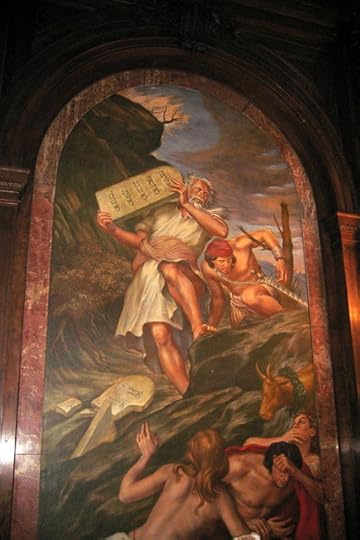
- the 1st mural of Edward Laning's "The Story of the Recorded Word" series in the New York Public Library apparently has "Thou Shalt Not Wipe" instead of "Thou Shalt Not Kill" as the 6th Commandment (a difference of 1 letter in Hebrew). It is hard to verify via photos on the web though.
- in the time that the average American spends on their smartphone every year (approx. 1,500 hours) they could have read Marcel Proust's "In Search of Lost Time" 20 times.
Review of the Basic Books hardcover (2019) edition
I loved this quirky series of essays on the history of books and reading which covered everything from the different media from stone tablets to e-readers and the different usages or non-usages of books throughout history. Admittedly, books about books are not everyone's cup of tea but this is the sort of stuff that I really enjoy.
A few quirky trivia bits remain burned in my memory:
- the 1st mural of Edward Laning's "The Story of the Recorded Word" series in the New York Public Library apparently has "Thou Shalt Not Wipe" instead of "Thou Shalt Not Kill" as the 6th Commandment (a difference of 1 letter in Hebrew). It is hard to verify via photos on the web though.
- in the time that the average American spends on their smartphone every year (approx. 1,500 hours) they could have read Marcel Proust's "In Search of Lost Time" 20 times.

August 8, 2021
Просто прочитайте, що говорить авторка книжки, яка є професоркою в університеті, де викладає історію книги та інші суміжні спеціальності:
"... Але окрім впливу на те, чи читатимуть наші студенти, ми також визначаємо (чи намагаємось визначати), як саме вони читатимуть. Ми вмовляємо першокурсників менше захоплюватися світом, описаним у художньому творі, і присоромлюємо тих, хто читає заради сюжету або обирає улюбленців серед персонажів. Ми навчаємо їх менше звертати увагу на те, що нібито є темою тексту, і зосереджуватися на його мовній структурі, так само, як вони не стали б приділяти особливої ваги тому, як книжка виглядає і відчувається у руках, у порівнянні з її змістом".
"... Але окрім впливу на те, чи читатимуть наші студенти, ми також визначаємо (чи намагаємось визначати), як саме вони читатимуть. Ми вмовляємо першокурсників менше захоплюватися світом, описаним у художньому творі, і присоромлюємо тих, хто читає заради сюжету або обирає улюбленців серед персонажів. Ми навчаємо їх менше звертати увагу на те, що нібито є темою тексту, і зосереджуватися на його мовній структурі, так само, як вони не стали б приділяти особливої ваги тому, як книжка виглядає і відчувається у руках, у порівнянні з її змістом".

Read
August 23, 2019It's a book about the physical book and the history/connections we have with it. But some of what Price says are clearly from being outside the digital book world and rather in the hallowed halls of academia (her belittling of Bookstagram as girls with pretty books and little more than scarves was bizarre, for example).
Maybe because I listened on audio and didn't get invested, but this wasn't particularly revolutionary or insightful. Then again, my knowledge surpasses the average reader's when it comes to books/their history/the industry/etc, so I come with my own biases, too.
Maybe because I listened on audio and didn't get invested, but this wasn't particularly revolutionary or insightful. Then again, my knowledge surpasses the average reader's when it comes to books/their history/the industry/etc, so I come with my own biases, too.
May 18, 2019
This book captivated me with its introduction and is far more interesting than I could have imagined. I’m savoring this one and all the thoughts it triggers.

October 4, 2019
There were some interesting thoughts here, probably needs a more thoughtful reading rather than paying through the audiobook in a day.

Read
October 9, 2019No review. I read about 1/3rd of this and it was a waste of time. I can't imagine giving it anything beyond a one or at most a 2 star. The Introduction alone almost made me abandon and I should have stuck with instinct. It's all over the place, tone seems like a lecture. But the worst aspect is that opinions are often interpreted as facts. It's similar to what our USA media does with so called news or journalism as opposed as for the who, what, where, when, how facts of reality.
Her print copy success comeback dominance over digital forms I do hear. And even with this I don't see her sources for the numbers/ trends she inserts.
There is a certain style of writing here that goes all the way around and never cores. Like listening to a 200 student class lecture by someone who has given it for 5 years by rote twice a week. I think if you are a librarian you will dislike this more than if you are a "civilian". Just a guess.
Her print copy success comeback dominance over digital forms I do hear. And even with this I don't see her sources for the numbers/ trends she inserts.
There is a certain style of writing here that goes all the way around and never cores. Like listening to a 200 student class lecture by someone who has given it for 5 years by rote twice a week. I think if you are a librarian you will dislike this more than if you are a "civilian". Just a guess.

November 24, 2019
The entire first chapter of this book had me nodding along, shouting yes! Absolutely! As the author led me through statistics and a heap of information to support her argument that reading is not dying, that is is changing and that reading has always been changing. This book looks at the history of books starting from the earliest times and travelling through time to now the age of digital books and eReaders. It's an interesting journey, full of times when people agonised about the future of reading and books. Ultimately it is a positive book to read if your business is in books or you are invested in reading. Right book at the right time for me.

November 4, 2020
boring

May 9, 2022
A delightful book about books, this one was an easy two day read. The author makes the case for the presence of books in society, and the benefits they bestow. Along the way, we learn more about book history, from the Renaissance to modern times. I thoroughly enjoyed this book and would recommend it to anyone who reads literature for literature's sake. A very noble effort.
September 14, 2019
This is a book about actual books, not literature. Leah Price an English professor and a book historian shows us the evolution of physical books and how they were read and the future of reading. There are some surprising facts about the books that I didn't know and some of which are full of ironies. A few are: Buying personal copies of books is a recent phenomenon propagated for commercial reasons. Printed books were among the first mass-produced mass-marketed objects in the nineteenth century. Books have been considered sometimes as the cause and sometimes as a cure for insomnia and other diseases.
Reports of the death of the book have been greatly exaggerated. Printing press was itself once a cutting edge technology. The new technology does not mean the end of books; it just means that the books will be read in various different formats along with the hard copies. If we look at the history of physical books, the printed book should be thought of as merely one of the places for storing words and the stories they tell.
What reading a book entails is “the capacity to follow a demanding idea from start to finish." She calls “reading as training for solitary self-sufficiency.” But a part of our reaction to a book is shaped by factors other than the words it contains. We all have feelings about what we read – as I have for this one. The history of books and reading goes back a long time and this book does a fine job of introducing us to the many stories and anecdotes. “Whatever life lessons we can glean from having read, perhaps being middle of a book is what really counts as living.”
Reports of the death of the book have been greatly exaggerated. Printing press was itself once a cutting edge technology. The new technology does not mean the end of books; it just means that the books will be read in various different formats along with the hard copies. If we look at the history of physical books, the printed book should be thought of as merely one of the places for storing words and the stories they tell.
What reading a book entails is “the capacity to follow a demanding idea from start to finish." She calls “reading as training for solitary self-sufficiency.” But a part of our reaction to a book is shaped by factors other than the words it contains. We all have feelings about what we read – as I have for this one. The history of books and reading goes back a long time and this book does a fine job of introducing us to the many stories and anecdotes. “Whatever life lessons we can glean from having read, perhaps being middle of a book is what really counts as living.”

November 20, 2019
3.5/5 stars: ★★★1/2☆
"What We Talk About When We Talk About Books" is a Book History 101 course in about 200 pages. Having taken a few book history courses and having worked in libraries for several years, a lot of the information presented was what I already knew about books: their origins, the cultures they shaped and were shaped by, and their uses in our modern time.
Honestly, the “We” in the title feels, upon reading the text, like “Academics,” the result being “What Academics Talk About When They Talk About Books.” So the observations made, or I should say compiled, by Leah Price were largely academic. That didn’t, however, make this a boring read. While much of the information felt familiar and a little “formal,” it was readable, conversational, and interesting. Amid long passages in which most of the statements felt like things I’d read elsewhere previously, there were tucked away fascinating tidbits about singular events in book history, quirky publishers, sarcastic observers of book culture, and other little facts that often made me laugh or elicit a “hmm” of deeper thought.
Overall, this is a solid summary of many major ideas circulating throughout the field of book history at the moment, with an introduction so succinct, I can see it being assigned to students in actual book history courses. A fun little read for book-lovers who want to know more about the objects they hold so dear.
"What We Talk About When We Talk About Books" is a Book History 101 course in about 200 pages. Having taken a few book history courses and having worked in libraries for several years, a lot of the information presented was what I already knew about books: their origins, the cultures they shaped and were shaped by, and their uses in our modern time.
Honestly, the “We” in the title feels, upon reading the text, like “Academics,” the result being “What Academics Talk About When They Talk About Books.” So the observations made, or I should say compiled, by Leah Price were largely academic. That didn’t, however, make this a boring read. While much of the information felt familiar and a little “formal,” it was readable, conversational, and interesting. Amid long passages in which most of the statements felt like things I’d read elsewhere previously, there were tucked away fascinating tidbits about singular events in book history, quirky publishers, sarcastic observers of book culture, and other little facts that often made me laugh or elicit a “hmm” of deeper thought.
Overall, this is a solid summary of many major ideas circulating throughout the field of book history at the moment, with an introduction so succinct, I can see it being assigned to students in actual book history courses. A fun little read for book-lovers who want to know more about the objects they hold so dear.

December 27, 2022
Scattered. Aiight for what it was. Books Promiscuously Read: Reading as a Way of Life is the next-level, out-of-this-world version of this book, try that one on for size.

August 16, 2019
A fascinating look at the history of the book, not of literature, but of the physical book, along with its impact on self and society, it’s ever adapting formats and brilliant comparisons between technological eras of the book.


Read
July 10, 20242.5*

October 13, 2019
As I read this book I had this irritating suspicion that it was written by a smart person who was being willfully stupid. Why? Just to be contradictory and 'interesting'. The author seemed to be ignoring the obvious in order to be novel. The text felt jumbled and confused due to the author's attempt to appear smarter than everyone else.
Then, just like that, at the bottom of page 159, as I neared the end, the author surprised me with a line of total clarity which, whether she knew it or not, confirmed my feeling and explained this entire book. A colleague told her that authors like her were confusing everything
Exactly. This book is snail-flavored porridge. Maybe it took the writing of this for the author to realize what she'd been doing (but then she didn't have the heart to discard all her work), but for the few pages after that comment a sense of clarity and common sense prevailed. Then, as I should of predicted, the last dozen pages lapsed back into something that smelled of land-mollusk oatmeal.
It barely earned the 3 stars for the brief moments of clarity...the rest was just a bungle of confusion about what books are and the purposes they serve.
Then, just like that, at the bottom of page 159, as I neared the end, the author surprised me with a line of total clarity which, whether she knew it or not, confirmed my feeling and explained this entire book. A colleague told her that authors like her were confusing everything
"by striving for originality at the expense of common sense, we're cooking up the intellectual equivalent of the outlandish dishes invented by celebrity chefs. What you and your colleagues write, she tells me, is snail-flavored porridge".
Exactly. This book is snail-flavored porridge. Maybe it took the writing of this for the author to realize what she'd been doing (but then she didn't have the heart to discard all her work), but for the few pages after that comment a sense of clarity and common sense prevailed. Then, as I should of predicted, the last dozen pages lapsed back into something that smelled of land-mollusk oatmeal.
It barely earned the 3 stars for the brief moments of clarity...the rest was just a bungle of confusion about what books are and the purposes they serve.

September 21, 2019
Books about books and reading are always something I enjoy and so I picked up this up from the library. It's a slim book that talks about the author's experiences with books, reading, the changes in her habits, physical books, etc. Sounds great!
Agree with the negative reviews. There didn't seem to be any cohesion and it did feel like a bunch of TED talks or long reads mashed together as a book. It wasn't particularly interesting and seemed more suited for the author's personal blog or social media account.
It could be just and not being in the mood for this, but it really wasn't about "w" or "us." Which is fine, but the mis-marketing of the book was just a wee bit annoying, again. If you like books though, you might enjoy it. Would recommend it as a library borrow, though.
Agree with the negative reviews. There didn't seem to be any cohesion and it did feel like a bunch of TED talks or long reads mashed together as a book. It wasn't particularly interesting and seemed more suited for the author's personal blog or social media account.
It could be just and not being in the mood for this, but it really wasn't about "w" or "us." Which is fine, but the mis-marketing of the book was just a wee bit annoying, again. If you like books though, you might enjoy it. Would recommend it as a library borrow, though.

November 23, 2019
2.5. I had really high hopes for this as I love to read and to learn. This was just difficult to plow through and the section that had to be read with the book flat was just painful to read. (Maybe because I decided to read this only when I rode the exercise bike.) I thought the section on prescribed reading was interesting but other sections I just had to force myself to read and that just defeats the purpose, in my mind.

November 17, 2022
Chapter 2: The Real Life of Books
"Where today's critics of digital licensing dismiss renting as a poor substitute for owning - assuming that the only party that it benefits is greedy corporations - middle-class Victorian readers paid a premium for the right to get rid of books after reading them. David Copperfield, Jane Eyre, Middlemarch - all the great realist novels were originally rented more often than bought. Their earliest readers saw them as disposable single-use items that you didn't want cluttering up your shelves once their brief life expectancy had elapsed, any more than you'd keep yesterday's newspaper. "
"The assumption that books are made to be bought is in fact a recent innovation, propagated for commercial reasons by interested parties. In the nineteenth century, publishers began trying to persuade readers that far from showing generosity, sharing books was immoral or even disgusting."
"In the new division of labor that Cold War publishers invented, hardbacks were for gifting and displaying, paperbacks for hiding and discarding."
Chapter 3: Reading on the move
"The novelty of paperbacks didn't just lie in the physical lightness of their covers, but also with the social insight that newspapers weren't the only printed commodity that could be funneled through "drugstores, variety stores, stationery stores, cigar stores, confectionary stores, super-markets, railway stations, airports." Tempting readers daily rather than during occasional pilgrimage to a bookstore, Lane brought the mountain to Mohammed."
"Whether vehicled by steam railways or by fiber-optic cable, the logistical freedom afforded by books that can be read anywhere - more: bought anywhere - symbolizes the escape that imaginative literature is tasked with brokering."
"One 1857 etiquette expert warned that while "civilities should be politely acknowledged" on public transport, "a book is the safest resource for an 'unprotected female.'"
"The genre being read mattered as much as the kind of person doing the reading - and the pace at which books were read mattered as much as the time of day at which that reading happened. Reading at the wrong time, at the wrong pace, by the wrong person continued to worry moralists even as the demographics of who counted as the wrong person shifted."
"Books at the wrong time scrambled natural rhythms as surely as books in the wrong hands upended the social order "
"As the books once expected to stimulate retrain to sedate, adults are granted what was, for more than a century, a toddler's prerogative. When nineteenth-century publishers invented the bedtime story, print began its slow march from rule breaker to a schedule setter."
Interleaf: Please Lay Flat
"Readers can likewise learn when to read in print and when to read slowly, when to search an encyclopedia and when to have their souls searched by a poem."
Chapter 5: Bound by Books
"We love and hate characters, but we also love and hate other readers.(...) But loving books doesn't necessarily mean loving other people who love books for a different reason, or put them to a different use."
"From their extracurricular reading, I learned that the love of books takes as many different forms as romantic love does - and that the same act that gives pleasure to one person can pain another."
"Where today's critics of digital licensing dismiss renting as a poor substitute for owning - assuming that the only party that it benefits is greedy corporations - middle-class Victorian readers paid a premium for the right to get rid of books after reading them. David Copperfield, Jane Eyre, Middlemarch - all the great realist novels were originally rented more often than bought. Their earliest readers saw them as disposable single-use items that you didn't want cluttering up your shelves once their brief life expectancy had elapsed, any more than you'd keep yesterday's newspaper. "
"The assumption that books are made to be bought is in fact a recent innovation, propagated for commercial reasons by interested parties. In the nineteenth century, publishers began trying to persuade readers that far from showing generosity, sharing books was immoral or even disgusting."
"In the new division of labor that Cold War publishers invented, hardbacks were for gifting and displaying, paperbacks for hiding and discarding."
Chapter 3: Reading on the move
"The novelty of paperbacks didn't just lie in the physical lightness of their covers, but also with the social insight that newspapers weren't the only printed commodity that could be funneled through "drugstores, variety stores, stationery stores, cigar stores, confectionary stores, super-markets, railway stations, airports." Tempting readers daily rather than during occasional pilgrimage to a bookstore, Lane brought the mountain to Mohammed."
"Whether vehicled by steam railways or by fiber-optic cable, the logistical freedom afforded by books that can be read anywhere - more: bought anywhere - symbolizes the escape that imaginative literature is tasked with brokering."
"One 1857 etiquette expert warned that while "civilities should be politely acknowledged" on public transport, "a book is the safest resource for an 'unprotected female.'"
"The genre being read mattered as much as the kind of person doing the reading - and the pace at which books were read mattered as much as the time of day at which that reading happened. Reading at the wrong time, at the wrong pace, by the wrong person continued to worry moralists even as the demographics of who counted as the wrong person shifted."
"Books at the wrong time scrambled natural rhythms as surely as books in the wrong hands upended the social order "
"As the books once expected to stimulate retrain to sedate, adults are granted what was, for more than a century, a toddler's prerogative. When nineteenth-century publishers invented the bedtime story, print began its slow march from rule breaker to a schedule setter."
Interleaf: Please Lay Flat
"Readers can likewise learn when to read in print and when to read slowly, when to search an encyclopedia and when to have their souls searched by a poem."
Chapter 5: Bound by Books
"We love and hate characters, but we also love and hate other readers.(...) But loving books doesn't necessarily mean loving other people who love books for a different reason, or put them to a different use."
"From their extracurricular reading, I learned that the love of books takes as many different forms as romantic love does - and that the same act that gives pleasure to one person can pain another."
Displaying 1 - 30 of 284 reviews