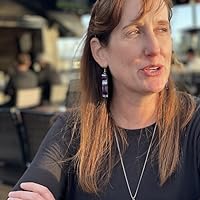
In Chad Abushanab’s debut poetry collection, The Last Visit , he carefully and compassionately explores a family broken by alcoholism and abuse. These poems trace the trajectory of an adolescent living with a violent father struggling with addiction, and recount both the abused child’s perspective and his attempts to reckon with his past as he reaches adulthood, chronicling his own struggles with substance abuse and the reverberations of trauma in his life. Amid the violence and hurt, Abushanab’s verse renders moments of compassion—even the least sympathetic figures are shown to be grappling with their flaws, and the narrator struggles to find compassion and move beyond the memories and habits that haunt him. These well-crafted poems explore how the past shapes us and how difficult it can be to leave behind.
Chosen by judge Jericho Brown for the Donald Justice Poetry Prize, The Last Visit consists of largely formal poems about father-son relationships, addiction, abuse, violence, heredity, trauma, bereavement, grief, depression. Horror-movie motifs regularly appear, acknowledging the dark and twisted scripts often underlying the mundane. It would be really interesting to read an essay considering this book alongside, say, Matt W. Miller's Club Icarus, comparing and contrasting how the two books deal with fatherhood and masculinity, themes that come to the fore in Abushanab's most powerful poems, like "Boys" and "Halloween." My favorite poem, though, was "The Phone," with its unexpectedly shard-sharp ending, in a crystalline moment uniting the emotional to the moral.
What a gorgeous and powerful book. Abushanab's poems are accessible and moving, and his use of form is incredibly deft. It's hard to believe this is a first book, but I can't wait for his second.
I first encountered this poet’s work in the anthology, Gracious: poems from the 21st Century South. I was intrigued and wanted to read more of his work.
In this collection, Abushanab uses conventional and unconventional rhyme patterns. This shows his skillful use of words. In the poem, Missing, the rhyme pattern adds angst and complexity to the piece regarding a missing child. Another poetic device the writer uses well is repetition. In the poem, Custody Denied,he repeats the word unfit and rhymes the end of the lines to the word. That repetition in the poem enforces to the reader the idea of an unfit parent.
True healing, whether personal or societal, begins not with forgetting, but with a clear-eyed, courageous witnessing of the wound. Chad Abushanab’s The Last Visit is this vital, sacred act, rendered with a technical mastery and emotional precision that left me breathless. This debut collection does not merely explore the legacy of familial alcoholism and abuse; it meticulously maps its devastating topography, tracing the fault lines of trauma as they travel from a violent childhood into the substance abuse and fractured relationships of adulthood.
What elevates this work from a powerful personal testament to a work of profound universal significance is Abushanab’s radical, almost superhuman, compassion. The formal verse a choice of stunning potency imposes an order and containment on chaos, mirroring the speaker’s own desperate struggle to structure and understand a past defined by its terrifying lack of control. Within that framework, no one is merely a monster. The violent father, the enabling dynamics, and the speaker himself are all revealed as flawed, suffering humans “grappling with their flaws.” This is the collection’s devastating grace: it insists on the humanity buried beneath the harm, without ever excusing the damage done.
This book is an essential contribution to the literature of resilience. It chronicles not just the breaking, but the agonizing, imperfect work of reassembly. For anyone dedicated to supporting survivors, understanding the intergenerational echo of trauma, or simply bearing witness to the human capacity to endure and seek meaning, The Last Visit is indispensable. It demonstrates, with painful beauty, how the past shapes us, and how the act of speaking it of crafting it into these “well crafted poems” is itself the first, most difficult step toward leaving it behind. A flawless, devastating, and ultimately hopeful masterpiece. Five resounding stars.
It was very interesting to read a contemporary collection of formal verse; many contemporary poets interweave free verse with formal verse in their collections, while this one (and I'd have to go back and reread) is largely, if not completely following formal constraints in every poem. This was admirable, and deftly done, though I felt little kinship with the collection overall: this certainly speaks to my tastes as a reader, not to a failure in the work.
If you want to see what's happening in contemporary formal verse, if you are interested in the problematic relationships between family members, particularly father and son, and how alcoholism informs these traumas, this book is definitely for you.
The material is rough—an abusive, alcoholic father, one's own alcoholism that loses one's marriage and the custody of one's children, a brother's alcoholism that leads to his car crash—but the verse is smooth. Some archaisms, such as "woe" and "spears" to make the rhyme, but, more damagingly, sometimes a looseness in the middle of a poem, where the words fall into the iambs right as rain but without a ripple. Once in a while, an image holds the attention, but not often enough. The best poems here, however, are very fine, "The Way," "The Landlocked Lighthouse," and the wonderfully uncanny poem "Visiting My Own Grave."
Morbid, disturbing, and haunting. This is exactly what my emo-heart needed. I didn't know I was going to love this book so much--I didn't buy it, it was a gift. I wish I had read this much earlier, I think it would have helped me create a better manuscript. I want to recommend this book to everyone!