

What do you think?

All This Could Be Yours
“If I know why he is the way he is then maybe I can learn why I am the way I am,” says Alex Tuchman, strong-headed lawyer, loving mother, and daughter of Victor Tuchman—a power-hungry real estate developer and, by all accounts, a bad man. Now that Victor is on his deathbed, Alex feels she can finally unearth the secrets of who he is and what he did over the course of his life and career. She travels to New Orleans to be with her family, but mostly to interrogate her tightlipped mother, Barbra.
As Barbra fends of Alex’s unrelenting questions, she reflects on her tumultuous life with Victor. Meanwhile Gary, Alex’s brother, is incommunicado, trying to get his movie career off the ground in Los Angeles. And Gary’s wife, Twyla, is having a nervous breakdown, buying up all the lipstick in drug stores around New Orleans and bursting into crying fits. Dysfunction is at its peak. As each family member grapples with Victor’s history, they must figure out a way to move forward—with one another, for themselves, and for the sake of their children.
All This Could Be Yours is a timely, piercing exploration of what it means to be caught in the web of a toxic man who abused his power; it shows how those webs can tangle a family for generations and what it takes to—maybe, hopefully—break free.
As Barbra fends of Alex’s unrelenting questions, she reflects on her tumultuous life with Victor. Meanwhile Gary, Alex’s brother, is incommunicado, trying to get his movie career off the ground in Los Angeles. And Gary’s wife, Twyla, is having a nervous breakdown, buying up all the lipstick in drug stores around New Orleans and bursting into crying fits. Dysfunction is at its peak. As each family member grapples with Victor’s history, they must figure out a way to move forward—with one another, for themselves, and for the sake of their children.
All This Could Be Yours is a timely, piercing exploration of what it means to be caught in the web of a toxic man who abused his power; it shows how those webs can tangle a family for generations and what it takes to—maybe, hopefully—break free.
299 pages, Hardcover
First published October 22, 2019
About the author
Jami Attenberg
13 books1,892 followersI'm the author of Instant Love, The Kept Man, The Melting Season, The Middlesteins, and Saint Mazie, All Grown Up, and All This Could Be Yours, and a memoir, I Came All This Way To Meet You: Writing Myself Home. You can find me on twitter @jamiattenberg. I am the founder of the #1000wordsofsummer annual writing project and have a newsletter called Craft Talk. In 2024 the book version of #1000wordsofsummer will be published along with a new novel. I'm originally from the Chicago area, lived in New York City for sixteen years, and am now happily a New Orleans resident.
Ratings & Reviews
Friends & Following
Create a free account to discover what your friends think of this book!
Community Reviews
Displaying 1 - 30 of 1,492 reviews

November 11, 2019
This is a story about a sublimely dysfunctional family and how that dysfunction is revealed, slowly, artfully, deliberately, makes for a very entertaining read. I particularly appreciate how even the worst of this family, Victor, is treated with some generosity, some understanding that people are complicated, even when they are terrible. I questioned the frame at times but was absolutely enraptured by the portrait within that frame.

January 2, 2019
Five stars, duh.

November 15, 2019
This is my 2nd time reading Jamie Attenberg.
I absolutely hated the ‘popular’ book, “The Middlesteins”. It left a bad taste in my mouth.
So — I’ve been extremely hesitant to read her again. Intentionally passing on her other books.
I liked “All This Could Be Yours” better’ than “The Middlesteins”...but I didn’t exactly feel narrative-energy on my skin, either.
Hmmmm????
I like contemporary fiction. I like messy family drama.....
So?????
I’m left wondering, “what’s not working?”
Why do Jami’s books have me feeling cold?
Jarring? off-putting? Yes... a little.
I did appreciate the themes and topics, ( the pains explored)....yet not fiercely in my gut.
I ‘think’ it’s a styling-thing...
Not sure... puzzling to me too.
Between 2.5 - and 3 stars for me.
I absolutely hated the ‘popular’ book, “The Middlesteins”. It left a bad taste in my mouth.
So — I’ve been extremely hesitant to read her again. Intentionally passing on her other books.
I liked “All This Could Be Yours” better’ than “The Middlesteins”...but I didn’t exactly feel narrative-energy on my skin, either.
Hmmmm????
I like contemporary fiction. I like messy family drama.....
So?????
I’m left wondering, “what’s not working?”
Why do Jami’s books have me feeling cold?
Jarring? off-putting? Yes... a little.
I did appreciate the themes and topics, ( the pains explored)....yet not fiercely in my gut.
I ‘think’ it’s a styling-thing...
Not sure... puzzling to me too.
Between 2.5 - and 3 stars for me.

July 26, 2019
Jami Attenberg is one of those novelists I am always curious about, because I read her books and I know they are good, but they never really connect with me on the level I want them to. This doesn't mean she is a bad writer (she is an objectively good one!) but the way in which her books *should* work for me and then don't quite work for me fascinates me and I cannot figure it out.
The cycle played out again here, this is a messy family drama that shifts perspectives, holds on to a few key reveals, and really asks about anger and forgiveness within families. These are all topics I'm deeply interested in! And I found many of the characters incredibly compelling! It just never quite hit for me in that very specific subjective way that I hoped it would. It's really interesting, really readable, with people who are messy and barely keeping it together and I think it is probably a great fit for 99% of other people who love that kind of book.
At the center of the book is Victor, on his deathbed, after he was a criminal, a bad husband, and a bad father. Not just a little bad, a lot bad. His family reckons with this in different ways. His daughter Alex rages, his son Gary disappears, his wife Barbara gets quiet, his daughter-in-law Twyla prays. And everybody eventually has a breakdown. The characters were so deep and interesting. I loved the way Attenberg really rooted the story in New Orleans. (I wish the cover made this more clear, while there is a storage unit scene, I would have loved a New Orleans-themed cover.)
The shuffling perspectives made it a little harder on me as a reader. Along with our main characters, there's plenty of side characters who come in and out. Sometimes they get a whole chapter, sometimes just a paragraph. I liked the idea but didn't love the execution. But overall it's very smartly plotted, strong use of flashbacks, great reveals.
The cycle played out again here, this is a messy family drama that shifts perspectives, holds on to a few key reveals, and really asks about anger and forgiveness within families. These are all topics I'm deeply interested in! And I found many of the characters incredibly compelling! It just never quite hit for me in that very specific subjective way that I hoped it would. It's really interesting, really readable, with people who are messy and barely keeping it together and I think it is probably a great fit for 99% of other people who love that kind of book.
At the center of the book is Victor, on his deathbed, after he was a criminal, a bad husband, and a bad father. Not just a little bad, a lot bad. His family reckons with this in different ways. His daughter Alex rages, his son Gary disappears, his wife Barbara gets quiet, his daughter-in-law Twyla prays. And everybody eventually has a breakdown. The characters were so deep and interesting. I loved the way Attenberg really rooted the story in New Orleans. (I wish the cover made this more clear, while there is a storage unit scene, I would have loved a New Orleans-themed cover.)
The shuffling perspectives made it a little harder on me as a reader. Along with our main characters, there's plenty of side characters who come in and out. Sometimes they get a whole chapter, sometimes just a paragraph. I liked the idea but didn't love the execution. But overall it's very smartly plotted, strong use of flashbacks, great reveals.

Want to Read
October 18, 2019NOW AVAILABLE!!
i got too many books at BEA and haven't gotten to read this yet, but LOOK!
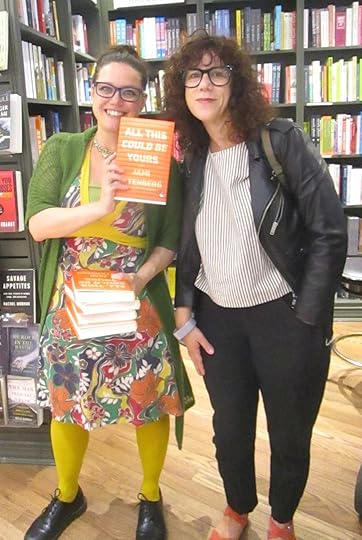
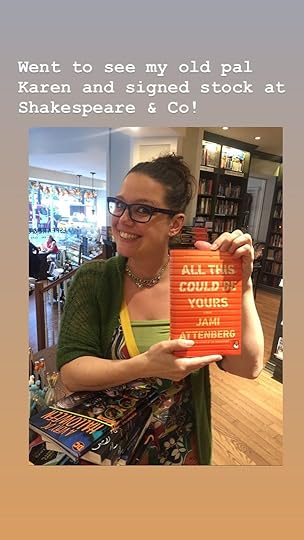
this sounds amazing! don't sit on it like i did! i am going to read mine ASAP!
i got too many books at BEA and haven't gotten to read this yet, but LOOK!
this sounds amazing! don't sit on it like i did! i am going to read mine ASAP!

November 27, 2019
I like her writing a lot, but I’m really not sure what her intent was with this book. Family members have to finally talk to each other when the father is dying. He was a horrible man and nobody is sad he’s going. We follow each family member around and learn about their lives, but that’s it. There are also some long sections on completely peripheral characters that seem to be there just for filler. There isn’t a real plot, and I didn’t see a lot here about the father’s impact on the lives of the family members. There is an incident right before his death that impacts one member, but it seemed more titillating than realistic. Really more like 2.5⭐️.

October 28, 2019
As indicated by its title and “Storage Wars”-esque cover, this little novel - importantly, largely set in New Orleans - is a meditation on dealing with legacies, whether family, relational, economic, civic, institutional, or otherwise.
Most compellingly, I think, the book considers the specific legacies of abuse and especially of neglect - be it emotional, as in parental emotional neglect, or neglect of a marriage, or neglect of a city’s infastructure, or neglect of rules and responsibilities to others - and the human struggle to understand, integrate, and respond to it.
The novel is primarily told through the alternating viewpoints - mostly but not exclusively in the form of internal monologues - of immediate and extended family members of dying wealthy patriarch Victor Tuchman, a ruthless corporate gangster who seems like a horrible amalgamation of Bernie Madoff, Harvey Weinstein, and Jimmy Hoffa. Victor as a character is really only the named storm that has rolled through the Tuchman family and its environs; we hear directly from him once at the outset, but the novel is more concerned with examining the wide swath of fallout and collateral damage his actions have wrought, emotional and otherwise, so he remains mostly a dark and ominous looming presence gradually sketched out for us by others over the course of the novel.
The novel’s structure is appropriate to the examination of a ripple effect and Attenberg’s storytelling method thus seems to take a concentric circular pattern: Attenberg takes pains to explore the motivations of the few characters (primarily matriarch Barbra) who deliberately chose to align their lives with Victor’s, then the ensuing impacts on other characters who just got stuck with him (children for instance, especially Tuchman daughter Alex and son Gary, but also in-laws and grandkids), and then, most interestingly to me, a selection of ancillary characters that these characters encounter during the days Victor lays in his New Orleans hospital bed, whether in the corridors of the hospital itself or in the city’s public transportation, its bars and restaurants, its neighborhoods and parks. In one masterful passage that was but one “page” on my little new Kindle Next Gen, Attenberg ties together the narratives of the primary and all these ancillary characters in a way that I think is worthy of Faulkner, highlighting our for-better-or-for-worse universal interconnectedness. The New Orleans setting seems perfectly appropriate to this endeavor, as the phenomenon of Hurricane Katrina and its ongoing aftermath represents not simply a natural disaster, but rather what happens when one collides with an historical legacy of generations of people’s decisions and actions.
I guess it makes sense that stories centered around families of rich, monstrous parents seem to be having a cultural moment (consider “Succession,” of which I am admittedly a rabid fan...cue tinkly-raging piano music). Attenberg is darkly funny like Succession, but I appreciate that she also embraces an inherently hopeful outlook. Her characters are flawed and struggling but, for the most part, relentlessly reflective and self-examining. They are actively, creatively living with whatever they’ve been left to work with, and it’s a big old mess, but the message here is that it’s never too late (until you’re dead) to weed that garden, to get your hands dirty, to alter your heretofore relentless course and rebuild maybe somehow better.
Most compellingly, I think, the book considers the specific legacies of abuse and especially of neglect - be it emotional, as in parental emotional neglect, or neglect of a marriage, or neglect of a city’s infastructure, or neglect of rules and responsibilities to others - and the human struggle to understand, integrate, and respond to it.
The novel is primarily told through the alternating viewpoints - mostly but not exclusively in the form of internal monologues - of immediate and extended family members of dying wealthy patriarch Victor Tuchman, a ruthless corporate gangster who seems like a horrible amalgamation of Bernie Madoff, Harvey Weinstein, and Jimmy Hoffa. Victor as a character is really only the named storm that has rolled through the Tuchman family and its environs; we hear directly from him once at the outset, but the novel is more concerned with examining the wide swath of fallout and collateral damage his actions have wrought, emotional and otherwise, so he remains mostly a dark and ominous looming presence gradually sketched out for us by others over the course of the novel.
The novel’s structure is appropriate to the examination of a ripple effect and Attenberg’s storytelling method thus seems to take a concentric circular pattern: Attenberg takes pains to explore the motivations of the few characters (primarily matriarch Barbra) who deliberately chose to align their lives with Victor’s, then the ensuing impacts on other characters who just got stuck with him (children for instance, especially Tuchman daughter Alex and son Gary, but also in-laws and grandkids), and then, most interestingly to me, a selection of ancillary characters that these characters encounter during the days Victor lays in his New Orleans hospital bed, whether in the corridors of the hospital itself or in the city’s public transportation, its bars and restaurants, its neighborhoods and parks. In one masterful passage that was but one “page” on my little new Kindle Next Gen, Attenberg ties together the narratives of the primary and all these ancillary characters in a way that I think is worthy of Faulkner, highlighting our for-better-or-for-worse universal interconnectedness. The New Orleans setting seems perfectly appropriate to this endeavor, as the phenomenon of Hurricane Katrina and its ongoing aftermath represents not simply a natural disaster, but rather what happens when one collides with an historical legacy of generations of people’s decisions and actions.
I guess it makes sense that stories centered around families of rich, monstrous parents seem to be having a cultural moment (consider “Succession,” of which I am admittedly a rabid fan...cue tinkly-raging piano music). Attenberg is darkly funny like Succession, but I appreciate that she also embraces an inherently hopeful outlook. Her characters are flawed and struggling but, for the most part, relentlessly reflective and self-examining. They are actively, creatively living with whatever they’ve been left to work with, and it’s a big old mess, but the message here is that it’s never too late (until you’re dead) to weed that garden, to get your hands dirty, to alter your heretofore relentless course and rebuild maybe somehow better.

May 11, 2020
Find all of my reviews at: http://52bookminimum.blogspot.com/
3.5 Stars
All This Could Be Yours is the story of an estranged family who gather together (or avoid even further, in the case of one) at the family patriarch’s deathbed. This is dysfunction at its best as everyone comes to terms with either being raised by or married to a guy like . . . . .

Jamie Attenberg isn’t an author for everyone, but she’s an auto-request for me. Her stories aren’t necessarily life-changers, but boy oh boy are they full of characters you won’t soon forget and pages that practically turn themselves. If you like drama of the nuclear family sort, this may be a winner for you.
Sorry for the lack of “oomph” here. What can I say????

ARC provided by NetGalley in exchange for an honest review. Thank you, NetGalley!
3.5 Stars
All This Could Be Yours is the story of an estranged family who gather together (or avoid even further, in the case of one) at the family patriarch’s deathbed. This is dysfunction at its best as everyone comes to terms with either being raised by or married to a guy like . . . . .
Jamie Attenberg isn’t an author for everyone, but she’s an auto-request for me. Her stories aren’t necessarily life-changers, but boy oh boy are they full of characters you won’t soon forget and pages that practically turn themselves. If you like drama of the nuclear family sort, this may be a winner for you.
Sorry for the lack of “oomph” here. What can I say????
ARC provided by NetGalley in exchange for an honest review. Thank you, NetGalley!

November 20, 2019
This book was fine. The writing was very good. I'm not quite sure what was happening or why. I didn't connect to any of the characters.

June 26, 2020
He always wanted to talk to Alex, because she was not just his sister, but also his friend, and also, they had both survived that house in Connecticut together, and it was a natural instinct to accept her hand when she reached it toward him... and she was so breathless with the news about their father's heart attack she sounded nearly joyful, which anyone else might have found inappropriate but he didn't, he was on her team, and she was on his... pg. 11
So. I went into this book the way I prefer to go into all books, completely blind. What would it be about? What would the author be like? (This is my first Attenberg.) What surprises lay in store for me?
The book does not have a plot. I'm just going to come out and say it. It doesn't have a real story arc. A plot. A getting from point-A to point-B narrative.
It takes place over the course of a day or so after, at the beginning of the book, an evil patriarch of the family has a heart attack. How are is wife, two adult children, and two grandchildren affected by this?
That's it. If you are expecting some kind of resolution, or, like me, were expecting some sort of twist that would bring the whole book together beautifully, you are not going to get it.
You're saying it's open-ended?
No. It's not open-ended. It's not closed-ended. It's not anything-ended, there's no conclusion. There's a beginning, which is: patriarch of the family has a heart attack... but there's no ending and the book isn't going anywhere.
It's basically: look at this family for a day or two.
That might be appealing to some people, unappealing to others. But I think it's a good thing to let people know about. This isn't a traditional narrative.
Attenberg is a good author as in putting-words-together. (Which is different than being a good author in re: plotting.) I recoiled from her writing style at the beginning. It's choppy and consists of short bursts and short sentences pasted together, but I quickly got used to it and actually quite enjoyed it.
She makes a lot of great, true observations about the world. That is a plus.
She also can be funny at times. I never laughed out loud, but I did kind of exhale-air-quickly at a few parts in amusement. This isn't a funny book, but there were a few pieces of humor in there that were very brief - but appreciated by this reader.
The main thrust of this book is not for Attenberg to tell a story. That's not her intent, as we can see from her lack of plot. Instead, she is using this book to make statements and observations about misogyny, abuse, the patriarchy, how women have to navigate a life of being second-class citizens to men, feminism.
Now. I'm a feminist. A lot of GREAT points are being made here by Attenberg. A lot of great points. She had some very relevant, interesting things to say.
Alex realized that this was an important moment in the development of her child. A question was being asked that needed a responsible answer. She could teach her child about honesty, and about the way she deserved to be treated by a man, but also how it was possible to love someone even if they were deeply, deeply, deeply flawed. (And, if she were to be fair to her ex-husband, how it was possible to be attracted to two people at the same time, even have two separate relationships, but that was his line of defense, not hers.)
Or was she supposed to tell Sadie that her father didn't know how to keep his dick in his pants, and that he never had, not for as long as she'd known him, not in college when he was someone else's boyfriend cheating with her, not when they lived together in Chicago when they were in law school, not after they got married and moved to the suburbs where they both were equally bored, but still somehow she had managed to remain faithful while he hadn't. Not ever was there a time when that man's penis stayed put where it was supposed to be, instead of living its life as a free-flying dilettante, a party penis, as if it were some sort of rich-kid celebrity DJ hitting new hot spots, London, Paris, Ibiza, except instead of those cities it would be a paralegal's vagina instead. pg. 32
She makes some amazing points about women's emotional labor.
She loved him. He was the daddy. Her daddy. He flipped through his marked Bible; he had more to say. "It's OK, I'm listening," she said. And that was the day she invented it, this particular glazed expression of hers. She had created it to please her father, but it had served her well in her life. When she wore it, most men thought she was listening to them, and most women knew that the conversation was over. pg. 42
Every woman in this novel has to cover her real self up in some way, stifle herself, manipulate herself for a man. Put up with men's demands and egos in order to achieve what they want out of life (or whatever the patriarchy tells them to want out of life). The only woman who semi-escapes this is Sharon, a black woman on the periphery of this novel who values her independence and decides not to have children or give away any part of herself to please a man. But she still suffers under the patriarchy, as we see here:
She had lived through a long-running commentary on the development of her physique from strangers and acquaintances and certain family members since she was thirteen years old, which meant it had been nearly thirty-seven years that she'd been forced to contemplate her shape by men when she was just trying to live her life, along with all the near misses, gropes, a med school colleague whom she witnessed putting some sort of pill in her beer when he thought she wasn't looking, the tight-gripped greeting of a few men in professional circles, the constant pressure to be something other than herself, phew. No more, she thought. When she went home at night, she wanted quiet. ....
The amount of work that had to be put in to protect the self-esteem of men when women should be worrying instead about building their own. This was why men exhausted her so. It was a wonder the world didn't collapse daily from the weight of men's egos, she thought. pg. 271
It's not as if I don't agree with Attenberg's main points. I do. The patriarchy exists. It's terrible. It makes both women and men terrible. Abuse is horrible, abuse breeds abuse. Misogyny breeds misogyny. Women learn to hate themselves from the patriarchy and from men. Women are still not equal to men in society and that is bad.
HOWEVER. What bothers me about this book is Attenberg's insistence that no man is good. Or, perhaps more accurately, all men are misogynists. It's like this idea that every white person is a racist. I mean, sure, the patriarchy is very strong and even men who think they aren't influenced by the system that keeps men on top are. Everyone is trained in the patriarchy and raised up in the patriarchy. But I resist this all-men-are-bad garbage.
Look, I have some amazing relationships with men in my life. The only good relationship between a man and a woman in this book is the one between Alex and her brother Gary. Gary can't stand women, "except for his daughter." And "except for his sister." All women are this, all women are that, women are such pains in the ass - but I love my daughter and sister. That's misogyny. He's a misogynist.
But Attenberg is saying the only good, true, honest relationship with a man you can have as a woman is with sibling - if you are VERY LUCKY. And I disagree with that. Attenberg is telling us over and over and over again that a man and a woman cannot have an honest, comfortable romantic relationship with each other. It's impossible. I DISAGREE. I have had honest, comfortable relationships with romantic partners. It doesn't have to be the horrorfest she is describing, where even if you didn't marry a Piece of Shit (like the patriarch here), you still have to play games with your man and manipulate your man and perform emotional labor for your man because your man has power over you and you are, always in one way or another, performing to earn your keep. You could be starving yourself to please him, shutting up to please him, not stating your opinion to please him, giving up your job to please him, engaging in sex acts you hate to please him etc. etc. etc. but you are destroying part of your soul in some way to be with a man. It's the price you have to pay for heterosexuality, Attenberg informs us.
NO, IT'S NOT. You do NOT have to do this. Sure, that's going to make things more difficult for you in the dating/relationship world, but it IS possible. You CAN have a bullshit-free relationship. Attenberg does not believe this to be possible.
AS A RESULT of her not thinking a man and a woman can be in a comfortable, relatively honest and loving relationship, she turns a lot of her characters into lesbians.
What do you mean, 'TURNS her characters into lesbians.' You don't 'turn' into a lesbian.
Ha ha ha ha. In Attenberg's world, you do. I mean, men are horrible, right? And since men are so horrible, why not be with women instead? This is some fucked-up thinking. Some Zane shit. It's insulting to men, it's insulting to straight women, and it's insulting to lesbians. "Oh, lesbians are women who have given up on men. Freed themselves from the patriarchy. Found happiness by cutting men out of their lives." That's not how this works. If there was simply a lesbian character in here, I wouldn't be saying this shit, but this book has more than one lesbian, and more than one secret-lesbian (married to a man she has to please and placate for money or status, but then secretly has love affairs with women on the side). This is just bizarre. Lesbians-are-women-who-have-turned-away-from-men-due-to-bad-experiences shit.
She also uses the narrative that's a tired cliche at this point, it's a joke at this point, that women who get interested in feminism start experimenting with f/f sexuality. It's offensive. It's perfectly possible to become a feminist and realize the truth about the patriarchy without deciding to get sexual with another woman. Feminists-are-lesbians-on-some-level shit.
And saying straight women eventually wise up and get with women romantically because men are horrible people is offensive.
I found her main concepts in this vein to be baffling and exasperating.
Also, the ending ("ending") could be a subtle wrap-up. So subtle that you miss the one sentence that explains things. I took it as so-subtle-it-was-unintended, but perhaps Attenberg is creating an ending where she's saying But it's not explicit, clear, or discussed in any way, and you can - I guess - choose to see this ending or choose to see no ending. IMO if the author is going to be this cagey than forget it.
There are other minor missteps here: like when a very minor character LITERALLY throws herself into a volcano to kill herself - which is ludicrous and instantly yanks you out of the novel. And there's this sentence, which I hate:
Alex and Sadie waved at each other, Sadie's smile a metallic gleam of the most expensive, longest-running batch of braces in history, like some well-loved, sentimental Broadway musical. pg. 29
It's almost unfair to mention this sentence. Attenberg is a stellar writer and most of her writing in this book is on-point.
I also was having trouble separating Twyla's voice and Alex's voice in the middle-end of the novel. To be fair, writing perspectives is very difficult. You are one person, so voicing multiple characters distinctly is difficult. I have to point it out, though. It's a weakness in the book.
TL;DR I would not recommend this book to anyone. It's not a book I'd recommend. That's not a criticism of Attenberg's skill with words. She's quite skilled. But the book has quite a few weaknesses: its blanket ideas about men (men are horrible people - whether they mean to be or not, aware of it or not; men are dumb or clueless about women because they are unable to see women as fully human), its ideas about lesbians, its lack of plot. It had a lot of strengths: good writing, some interesting and well-written ideas about the world, the book is smart and observant. You might love it - hopefully my review helps you figure out if this book is for you one way or another.
NAMES IN THIS BOOK
So. I went into this book the way I prefer to go into all books, completely blind. What would it be about? What would the author be like? (This is my first Attenberg.) What surprises lay in store for me?
The book does not have a plot. I'm just going to come out and say it. It doesn't have a real story arc. A plot. A getting from point-A to point-B narrative.
It takes place over the course of a day or so after, at the beginning of the book, an evil patriarch of the family has a heart attack. How are is wife, two adult children, and two grandchildren affected by this?
That's it. If you are expecting some kind of resolution, or, like me, were expecting some sort of twist that would bring the whole book together beautifully, you are not going to get it.
You're saying it's open-ended?
No. It's not open-ended. It's not closed-ended. It's not anything-ended, there's no conclusion. There's a beginning, which is: patriarch of the family has a heart attack... but there's no ending and the book isn't going anywhere.
It's basically: look at this family for a day or two.
That might be appealing to some people, unappealing to others. But I think it's a good thing to let people know about. This isn't a traditional narrative.
Attenberg is a good author as in putting-words-together. (Which is different than being a good author in re: plotting.) I recoiled from her writing style at the beginning. It's choppy and consists of short bursts and short sentences pasted together, but I quickly got used to it and actually quite enjoyed it.
She makes a lot of great, true observations about the world. That is a plus.
She also can be funny at times. I never laughed out loud, but I did kind of exhale-air-quickly at a few parts in amusement. This isn't a funny book, but there were a few pieces of humor in there that were very brief - but appreciated by this reader.
The main thrust of this book is not for Attenberg to tell a story. That's not her intent, as we can see from her lack of plot. Instead, she is using this book to make statements and observations about misogyny, abuse, the patriarchy, how women have to navigate a life of being second-class citizens to men, feminism.
Now. I'm a feminist. A lot of GREAT points are being made here by Attenberg. A lot of great points. She had some very relevant, interesting things to say.
Alex realized that this was an important moment in the development of her child. A question was being asked that needed a responsible answer. She could teach her child about honesty, and about the way she deserved to be treated by a man, but also how it was possible to love someone even if they were deeply, deeply, deeply flawed. (And, if she were to be fair to her ex-husband, how it was possible to be attracted to two people at the same time, even have two separate relationships, but that was his line of defense, not hers.)
Or was she supposed to tell Sadie that her father didn't know how to keep his dick in his pants, and that he never had, not for as long as she'd known him, not in college when he was someone else's boyfriend cheating with her, not when they lived together in Chicago when they were in law school, not after they got married and moved to the suburbs where they both were equally bored, but still somehow she had managed to remain faithful while he hadn't. Not ever was there a time when that man's penis stayed put where it was supposed to be, instead of living its life as a free-flying dilettante, a party penis, as if it were some sort of rich-kid celebrity DJ hitting new hot spots, London, Paris, Ibiza, except instead of those cities it would be a paralegal's vagina instead. pg. 32
She makes some amazing points about women's emotional labor.
She loved him. He was the daddy. Her daddy. He flipped through his marked Bible; he had more to say. "It's OK, I'm listening," she said. And that was the day she invented it, this particular glazed expression of hers. She had created it to please her father, but it had served her well in her life. When she wore it, most men thought she was listening to them, and most women knew that the conversation was over. pg. 42
Every woman in this novel has to cover her real self up in some way, stifle herself, manipulate herself for a man. Put up with men's demands and egos in order to achieve what they want out of life (or whatever the patriarchy tells them to want out of life). The only woman who semi-escapes this is Sharon, a black woman on the periphery of this novel who values her independence and decides not to have children or give away any part of herself to please a man. But she still suffers under the patriarchy, as we see here:
She had lived through a long-running commentary on the development of her physique from strangers and acquaintances and certain family members since she was thirteen years old, which meant it had been nearly thirty-seven years that she'd been forced to contemplate her shape by men when she was just trying to live her life, along with all the near misses, gropes, a med school colleague whom she witnessed putting some sort of pill in her beer when he thought she wasn't looking, the tight-gripped greeting of a few men in professional circles, the constant pressure to be something other than herself, phew. No more, she thought. When she went home at night, she wanted quiet. ....
The amount of work that had to be put in to protect the self-esteem of men when women should be worrying instead about building their own. This was why men exhausted her so. It was a wonder the world didn't collapse daily from the weight of men's egos, she thought. pg. 271
It's not as if I don't agree with Attenberg's main points. I do. The patriarchy exists. It's terrible. It makes both women and men terrible. Abuse is horrible, abuse breeds abuse. Misogyny breeds misogyny. Women learn to hate themselves from the patriarchy and from men. Women are still not equal to men in society and that is bad.
HOWEVER. What bothers me about this book is Attenberg's insistence that no man is good. Or, perhaps more accurately, all men are misogynists. It's like this idea that every white person is a racist. I mean, sure, the patriarchy is very strong and even men who think they aren't influenced by the system that keeps men on top are. Everyone is trained in the patriarchy and raised up in the patriarchy. But I resist this all-men-are-bad garbage.
Look, I have some amazing relationships with men in my life. The only good relationship between a man and a woman in this book is the one between Alex and her brother Gary. Gary can't stand women, "except for his daughter." And "except for his sister." All women are this, all women are that, women are such pains in the ass - but I love my daughter and sister. That's misogyny. He's a misogynist.
But Attenberg is saying the only good, true, honest relationship with a man you can have as a woman is with sibling - if you are VERY LUCKY. And I disagree with that. Attenberg is telling us over and over and over again that a man and a woman cannot have an honest, comfortable romantic relationship with each other. It's impossible. I DISAGREE. I have had honest, comfortable relationships with romantic partners. It doesn't have to be the horrorfest she is describing, where even if you didn't marry a Piece of Shit (like the patriarch here), you still have to play games with your man and manipulate your man and perform emotional labor for your man because your man has power over you and you are, always in one way or another, performing to earn your keep. You could be starving yourself to please him, shutting up to please him, not stating your opinion to please him, giving up your job to please him, engaging in sex acts you hate to please him etc. etc. etc. but you are destroying part of your soul in some way to be with a man. It's the price you have to pay for heterosexuality, Attenberg informs us.
NO, IT'S NOT. You do NOT have to do this. Sure, that's going to make things more difficult for you in the dating/relationship world, but it IS possible. You CAN have a bullshit-free relationship. Attenberg does not believe this to be possible.
AS A RESULT of her not thinking a man and a woman can be in a comfortable, relatively honest and loving relationship, she turns a lot of her characters into lesbians.
What do you mean, 'TURNS her characters into lesbians.' You don't 'turn' into a lesbian.
Ha ha ha ha. In Attenberg's world, you do. I mean, men are horrible, right? And since men are so horrible, why not be with women instead? This is some fucked-up thinking. Some Zane shit. It's insulting to men, it's insulting to straight women, and it's insulting to lesbians. "Oh, lesbians are women who have given up on men. Freed themselves from the patriarchy. Found happiness by cutting men out of their lives." That's not how this works. If there was simply a lesbian character in here, I wouldn't be saying this shit, but this book has more than one lesbian, and more than one secret-lesbian (married to a man she has to please and placate for money or status, but then secretly has love affairs with women on the side). This is just bizarre. Lesbians-are-women-who-have-turned-away-from-men-due-to-bad-experiences shit.
She also uses the narrative that's a tired cliche at this point, it's a joke at this point, that women who get interested in feminism start experimenting with f/f sexuality. It's offensive. It's perfectly possible to become a feminist and realize the truth about the patriarchy without deciding to get sexual with another woman. Feminists-are-lesbians-on-some-level shit.
And saying straight women eventually wise up and get with women romantically because men are horrible people is offensive.
I found her main concepts in this vein to be baffling and exasperating.
Also, the ending ("ending") could be a subtle wrap-up. So subtle that you miss the one sentence that explains things. I took it as so-subtle-it-was-unintended, but perhaps Attenberg is creating an ending where she's saying But it's not explicit, clear, or discussed in any way, and you can - I guess - choose to see this ending or choose to see no ending. IMO if the author is going to be this cagey than forget it.
There are other minor missteps here: like when a very minor character LITERALLY throws herself into a volcano to kill herself - which is ludicrous and instantly yanks you out of the novel. And there's this sentence, which I hate:
Alex and Sadie waved at each other, Sadie's smile a metallic gleam of the most expensive, longest-running batch of braces in history, like some well-loved, sentimental Broadway musical. pg. 29
It's almost unfair to mention this sentence. Attenberg is a stellar writer and most of her writing in this book is on-point.
I also was having trouble separating Twyla's voice and Alex's voice in the middle-end of the novel. To be fair, writing perspectives is very difficult. You are one person, so voicing multiple characters distinctly is difficult. I have to point it out, though. It's a weakness in the book.
TL;DR I would not recommend this book to anyone. It's not a book I'd recommend. That's not a criticism of Attenberg's skill with words. She's quite skilled. But the book has quite a few weaknesses: its blanket ideas about men (men are horrible people - whether they mean to be or not, aware of it or not; men are dumb or clueless about women because they are unable to see women as fully human), its ideas about lesbians, its lack of plot. It had a lot of strengths: good writing, some interesting and well-written ideas about the world, the book is smart and observant. You might love it - hopefully my review helps you figure out if this book is for you one way or another.
NAMES IN THIS BOOK

October 23, 2019
I have read many glowing reviews for this book, and many of those reviews state that this book may not be for everyone. I think I fall into that group of people who are just not the right fit for this book.
All That Could Be Yours is a book about a seriously dysfunctional family. Victor, the family patriarch, is a horrible man in every aspect. There is nothing redeeming about him. His influence on the family causes trouble and dysfunction through multiple generations. This novel explores how Victor's terribleness affects his wife, children and even grandchildren. It is very bleak with really no hint of redemption for any of these characters. I just felt really sad and hopeless after finishing it.
Jami Attenberg has a very original writing style, and I did appreciate the writing and its uniqueness. The perspective shifts between the main characters and even to the occasional perpsective of minor characters along the periphery. This is a character driven book, and the pacing is fairly slow. While there were things that I could appreciate about the writing and the structure of the story, ultimately the characters and plot were so bleak that I just did not find much enjoyment while reading.
Thanks to Net Galley and Houghton Mifflin Harcourt for providing me with a copy in exchange for my honest reivew. This book is available now!
All That Could Be Yours is a book about a seriously dysfunctional family. Victor, the family patriarch, is a horrible man in every aspect. There is nothing redeeming about him. His influence on the family causes trouble and dysfunction through multiple generations. This novel explores how Victor's terribleness affects his wife, children and even grandchildren. It is very bleak with really no hint of redemption for any of these characters. I just felt really sad and hopeless after finishing it.
Jami Attenberg has a very original writing style, and I did appreciate the writing and its uniqueness. The perspective shifts between the main characters and even to the occasional perpsective of minor characters along the periphery. This is a character driven book, and the pacing is fairly slow. While there were things that I could appreciate about the writing and the structure of the story, ultimately the characters and plot were so bleak that I just did not find much enjoyment while reading.
Thanks to Net Galley and Houghton Mifflin Harcourt for providing me with a copy in exchange for my honest reivew. This book is available now!

November 6, 2019
2.5 stars
I finished this one a few days ago but I needed to let it linger for a little bit while I gathered my thoughts. I kept thinking maybe I missed something because this book has such good reviews and some are even saying that it’s the best book they have read this year. This is just proof that everyone’s opinions are different because honestly, I had trouble getting through this one. I couldn’t connect with the characters or the story.
I’m usually a sucker for family drama, especially to the level of dysfunction of the family in this story. I’ve seen some reviews comparing this book to Ask Again, Yes which I absolutely loved but the characters in that story were so much easier to relate to. There were too many characters in this one. I couldn’t really keep track of who was who and sometimes the point of view of two different characters would be intertwined leaving me with that “wait... what?” kind of feeling.
There’s an audience for every book. I unfortunately wasn’t the right person for this one. I did laugh a few times throughout. And I didn’t DNF it because I did have the urge to see where it wound up. I wasn’t really satisfied with that either. I do realize I’m on a pretty lonely island with this one, but I’m okay with that. I can’t love em all!
I finished this one a few days ago but I needed to let it linger for a little bit while I gathered my thoughts. I kept thinking maybe I missed something because this book has such good reviews and some are even saying that it’s the best book they have read this year. This is just proof that everyone’s opinions are different because honestly, I had trouble getting through this one. I couldn’t connect with the characters or the story.
I’m usually a sucker for family drama, especially to the level of dysfunction of the family in this story. I’ve seen some reviews comparing this book to Ask Again, Yes which I absolutely loved but the characters in that story were so much easier to relate to. There were too many characters in this one. I couldn’t really keep track of who was who and sometimes the point of view of two different characters would be intertwined leaving me with that “wait... what?” kind of feeling.
There’s an audience for every book. I unfortunately wasn’t the right person for this one. I did laugh a few times throughout. And I didn’t DNF it because I did have the urge to see where it wound up. I wasn’t really satisfied with that either. I do realize I’m on a pretty lonely island with this one, but I’m okay with that. I can’t love em all!

January 7, 2020
All This Could Be Yours is a slow, meandering portrait of a dysfunctional family. It took me a minute to find its rhythm when I started reading this, but as it progresses, the steady unravelling of flawed characters begins to make perfect sense. This character study asks big questions of its readers, about what makes us who we are, and the irrational nature of familial love. In the end I felt it was well done, and it captured my attention.

November 28, 2020
A sharp edged examination of a family ruled by a cruel, powerful father and a cold, self-absorbed mother. Attenberg is a master at slowly revealing the lives and secrets of her damaged (and often decent) characters. I wanted to find out what happened to each one of them.

November 28, 2019
There are a few writers who I feel write books just for me – Katherine Heiny, Curtis Sittenfeld, Kristen Iskandrian and Jami Attenberg – all American women of my generation who I feel have a definite shared sensibility that really resonates with me. I love Attenberg’s various literary devices deployed to make us consider our shared humanity, or lack thereof, and she puts them to great use here. A man like Victor was always going to be a tough character to read but I loved how rather than make this book about a bad man, Attenberg focussed on the good, if flawed, people who surrounded him. The minor characters she pulls in bring much needed respite, too. This didn’t quite hold me in its grip as tightly as some of Attenberg’s previous novels but I still loved it.

March 14, 2020
Meh. Attenberg uses multiple perspectives, and these shifting perspectives usually aren’t meant to redeem the characters, they mostly unravel more layers of dysfunction. That was pretty good, but she often diverts from the main characters to give perspectives of very tangential characters (I mean very tangential, they would be extras in a film) which was distracting, and I don’t see what was gained.

January 4, 2020
At first, I was really enjoying the stories of each of these characters and the gradual unpeeling of their past(s) and their links to one another. It's a well-written, engaging novel.
And it's not that I didn't see how these characters all revolved around Victor, but it seemed like they all had their own stories to tell and these stories were ones of escape and transformation despite their past(s) with him.
But by the end, it becomes abundantly apparent that the novel is entirely centred around a violent, awful man, who everyone knew was violent and awful. It becomes apparent that the central question the novel seeks to answer is why Barbara loved him despite it all: it was Alex's question at the beginning, and it is repeated at the end.
I was left with this overriding feeling that, yet again, it's all a big pity party for a despicable, violent, misogynistic, criminal guy who ruined lives and got away with it. It's the women at the brunt of this violence who ask the questions, bear the burden of not knowing the answers, internalize it, do the emotional labour.
It's not that Attenberg presents Victor with even a shred of sympathy. She does not. His kids all end up hating him and he dies alone to be buried in a pauper's grave. But that gets lost in the stories of the ruination he caused throughout his life and up to the moment of his death.
I have no time - zero time - for anything that even approaches apologizing for or rationalizing this kind of behaviour, these men. Victor is a serial philanderer, a domestic abuser, a NYC real estate developer who made his money criminally and got away with everything until the pile-up of sexual harassment suits finally caught up with him. It's not exactly a subtle comparison, is it?
And this novel -- although told from the POV of view of all the many women's lives he destroyed -- centres him. It centres an abusive, criminal man at the cost of telling women's stories, it anchors their stories not in their own agency but in their victimhood. It invalidates women's lives as independent and vital and it renders holding bad men accountable for their bad acts during their lives (not after their deaths) moot.
By focusing on their ruination and not their redemption or escape -- or even their anger and their hate! -- it and they ask all the wrong questions, including not only why does Barbara continue to love him (which it tritely makes clear is the grand bargain she struck in return for jewellery and houses), but also whether they were complicit in their own victimization, whether they carry similar evil inside of them. They blame themselves. Alex's early deathbed forgiveness scene, prompted by her mother, comes before all the dirt has come out, but even at this early point in the story it felt to me entirely too forgiving.
The ONLY character who stands up and says, no: I'm not complicit, I'm not responsible, I hate him and will not continue to participate in this charade, I will not forgive him and I will not attend his deathbed is ... get this ... Gary, the son/brother. The only other male character. The only other male character.
This is an authorial choice.
Gary gets to give the speech that resoundingly holds their father accountable and that gives the reader the vicarious outlet for her rage while denying it to Alex, to Barbara, to Twyla. And to Sadie, so we are additionally treated to a glimpse of a second generation of trauma caused by this one man.
Ugh. No.
And it's not that I didn't see how these characters all revolved around Victor, but it seemed like they all had their own stories to tell and these stories were ones of escape and transformation despite their past(s) with him.
But by the end, it becomes abundantly apparent that the novel is entirely centred around a violent, awful man, who everyone knew was violent and awful. It becomes apparent that the central question the novel seeks to answer is why Barbara loved him despite it all: it was Alex's question at the beginning, and it is repeated at the end.
I was left with this overriding feeling that, yet again, it's all a big pity party for a despicable, violent, misogynistic, criminal guy who ruined lives and got away with it. It's the women at the brunt of this violence who ask the questions, bear the burden of not knowing the answers, internalize it, do the emotional labour.
It's not that Attenberg presents Victor with even a shred of sympathy. She does not. His kids all end up hating him and he dies alone to be buried in a pauper's grave. But that gets lost in the stories of the ruination he caused throughout his life and up to the moment of his death.
I have no time - zero time - for anything that even approaches apologizing for or rationalizing this kind of behaviour, these men. Victor is a serial philanderer, a domestic abuser, a NYC real estate developer who made his money criminally and got away with everything until the pile-up of sexual harassment suits finally caught up with him. It's not exactly a subtle comparison, is it?
And this novel -- although told from the POV of view of all the many women's lives he destroyed -- centres him. It centres an abusive, criminal man at the cost of telling women's stories, it anchors their stories not in their own agency but in their victimhood. It invalidates women's lives as independent and vital and it renders holding bad men accountable for their bad acts during their lives (not after their deaths) moot.
By focusing on their ruination and not their redemption or escape -- or even their anger and their hate! -- it and they ask all the wrong questions, including not only why does Barbara continue to love him (which it tritely makes clear is the grand bargain she struck in return for jewellery and houses), but also whether they were complicit in their own victimization, whether they carry similar evil inside of them. They blame themselves. Alex's early deathbed forgiveness scene, prompted by her mother, comes before all the dirt has come out, but even at this early point in the story it felt to me entirely too forgiving.
The ONLY character who stands up and says, no: I'm not complicit, I'm not responsible, I hate him and will not continue to participate in this charade, I will not forgive him and I will not attend his deathbed is ... get this ... Gary, the son/brother. The only other male character. The only other male character.
This is an authorial choice.
Gary gets to give the speech that resoundingly holds their father accountable and that gives the reader the vicarious outlet for her rage while denying it to Alex, to Barbara, to Twyla. And to Sadie, so we are additionally treated to a glimpse of a second generation of trauma caused by this one man.
Ugh. No.
This entire review has been hidden because of spoilers.

December 27, 2019
A very ordinary domestic drama. The characters are interesting and seem to have potential but the novel never gets off the ground. A new character is introduced 50 pages before the end of the book who has only a tangential connection to one of the main characters. Frankly, I don’t think it works and I know it didn’t work for me.

November 12, 2019
This is the story of how a 73-year old Victor, a New York gangster, continues his criminal life right up to the moment of his death from a heart attack. Mysteriously, he and his wife leave Manhattan ostensibly to start a new relationship with their grown kids in New Orleans. But neither Victor nor Alex are falling for it. What are Victors and Barbra's real reasons for moving from Manhattan?
Victor and his wife met at a funeral of one of her family members, the daughter of a criminal. They understood each other immediately. She would keep quiet about his secrets and he would provide her objects, namely furniture and diamonds. Barbra is a tolerant, obliging character who accepts her life as a violent gangster's wife without question. She loves him desperately, affairs, disappearances, and all.
Silence is a big theme of the book. Victor demands silence from his children Gary and daughter Alex when they are young, especially on Sundays, the only day he doesn't work. He strikes his wife when she refuses to remain silent. Other characters value quiet, such as when Gary's wife contemplates living in quiet with her daughter Avery as they separate. Basically, not only is Victor a very bad mad, he’s ugly and mean.
Victor and his wife Barbara have all but neglected their children. Growing up, Nana, Barbra's mother, raised the children with little involvement from Barbra and Victor. Nana basically protected them from Victor and their cold mother.
Victor and Barbra hadn’t visited their children for a decade when they show up in New Orleans, having sold their furniture and their mansion in Connecticut, and make a lame attempt to re-do the past and create a tight family. Victor makes a brief effort with his granddaughter, taking her to school and on trips. But time with Victor proves to his granddaughter that he was a less-than-stellar person. Attempts at reconciliation fail. And then Victor suffers from a heart attack.
Recognizing he’s on his death bed, their daughter Alex demands from her mother to know what Victor did for a living. Barbra refuses to tell her. When Alex attempts to enlist her brother’s wife Twyla to join in Alex’s demand for information, Twyla says to leave it alone. Gary actually refuses to fly back from California for his father’s illness. Says he’s “sitting this one out.”
In an astonishing show of uncaring, Barbra and his children refuse to claim his body. He is buried a month after his death, in a deep hole where bodies are piled on top of each other. It’s a method normally used to bury the indigent. But Victor and Barbra had been very wealthy. How could a family so turn on its patriarch that they essentially abandon his body and allow the state to bury it? Well Victor was a philanderer, a criminal, and abandoned his children. He was a very bad man.
It’s quite illuminating how one misogynistic, violent, patriarch can be inflict so much pain and destruction on a family—immediate family and extended family. Attenburg shows why women stay with men like this. Could Barbra be just as guilty of the violence Victor inflicts on his family? Or is she a victim of domestic violence? Attenberg doesn’t suggest she is. Rather, Barbra knew exactly what she was getting into and willing chose it, remaining in love with Victor throughout his life.
Attenbergs writing is beautiful. She's fond of symbols and metaphors. Barbra is a preening materialistic swan. Swans swim in the background when a character, Sharon, picks freedom over life burdened by living with a man. Characters clean their gardens when they're trying to get their lives in order.
The only problem with Attendberg's writing is her incessant head-hopping. She likes to use the omniscient view which I find jarring and pulls me out of the story.
This novel of family secrets, family ties that are forever broken, lies and deception, and attempts to transcend a horrible family legacy is worth a read.
Victor and his wife met at a funeral of one of her family members, the daughter of a criminal. They understood each other immediately. She would keep quiet about his secrets and he would provide her objects, namely furniture and diamonds. Barbra is a tolerant, obliging character who accepts her life as a violent gangster's wife without question. She loves him desperately, affairs, disappearances, and all.
Silence is a big theme of the book. Victor demands silence from his children Gary and daughter Alex when they are young, especially on Sundays, the only day he doesn't work. He strikes his wife when she refuses to remain silent. Other characters value quiet, such as when Gary's wife contemplates living in quiet with her daughter Avery as they separate. Basically, not only is Victor a very bad mad, he’s ugly and mean.
Victor and his wife Barbara have all but neglected their children. Growing up, Nana, Barbra's mother, raised the children with little involvement from Barbra and Victor. Nana basically protected them from Victor and their cold mother.
Victor and Barbra hadn’t visited their children for a decade when they show up in New Orleans, having sold their furniture and their mansion in Connecticut, and make a lame attempt to re-do the past and create a tight family. Victor makes a brief effort with his granddaughter, taking her to school and on trips. But time with Victor proves to his granddaughter that he was a less-than-stellar person. Attempts at reconciliation fail. And then Victor suffers from a heart attack.
Recognizing he’s on his death bed, their daughter Alex demands from her mother to know what Victor did for a living. Barbra refuses to tell her. When Alex attempts to enlist her brother’s wife Twyla to join in Alex’s demand for information, Twyla says to leave it alone. Gary actually refuses to fly back from California for his father’s illness. Says he’s “sitting this one out.”
In an astonishing show of uncaring, Barbra and his children refuse to claim his body. He is buried a month after his death, in a deep hole where bodies are piled on top of each other. It’s a method normally used to bury the indigent. But Victor and Barbra had been very wealthy. How could a family so turn on its patriarch that they essentially abandon his body and allow the state to bury it? Well Victor was a philanderer, a criminal, and abandoned his children. He was a very bad man.
It’s quite illuminating how one misogynistic, violent, patriarch can be inflict so much pain and destruction on a family—immediate family and extended family. Attenburg shows why women stay with men like this. Could Barbra be just as guilty of the violence Victor inflicts on his family? Or is she a victim of domestic violence? Attenberg doesn’t suggest she is. Rather, Barbra knew exactly what she was getting into and willing chose it, remaining in love with Victor throughout his life.
Attenbergs writing is beautiful. She's fond of symbols and metaphors. Barbra is a preening materialistic swan. Swans swim in the background when a character, Sharon, picks freedom over life burdened by living with a man. Characters clean their gardens when they're trying to get their lives in order.
The only problem with Attendberg's writing is her incessant head-hopping. She likes to use the omniscient view which I find jarring and pulls me out of the story.
This novel of family secrets, family ties that are forever broken, lies and deception, and attempts to transcend a horrible family legacy is worth a read.

October 30, 2019
This book was fine. Probably best since The Middlesteins but still something I was less impressed with. For some reason I don't jive with the voice(s) she brings to her books compared to similar commercial fiction writers who are Attenberg's contemporaries. After 4 novels, I'm probably not going to read her again.

July 21, 2019
I received an advanced copy of the book from NetGalley.
Oh man, I devoured this book! Centered around a man on his deathbed, this book is alive, alive, alive. It explores the effect of a toxic person on those close to them. Family and secrets and connections. It made me want to know more about the inner life of every person I've ever known or met or seen.
Oh man, I devoured this book! Centered around a man on his deathbed, this book is alive, alive, alive. It explores the effect of a toxic person on those close to them. Family and secrets and connections. It made me want to know more about the inner life of every person I've ever known or met or seen.

Did Not Finish
April 4, 2020This wasn’t the book for me - right now. Usually I enjoy or at least appreciate the present tense. But this felt meandering and lacked momentum. There were too many characters, too much exposition. I didn’t know where it was going, and ultimately I didn’t care. Oh well.

November 15, 2019
[4.5 stars]
Thanks to Houghton Mifflin Harcourt for an advanced copy of this book.
2019 has been a stellar year for family dramas and All This Could Be Yours may be the darkest of them all! The level of family dysfunction is high, but what makes it truly dark are the thoughts and feelings of each of these family members. If you need hope in your books, this probably isn’t the choice for you. The story examines what happens when someone you’re “supposed to love” is in danger of dying, but you don’t feel the grief you’re “supposed to feel.” I’m sure this happens often in real life and I’m equally sure that it’s rarely admitted openly. Not surprisingly, this book is full of dark, morbid humor. And, I’ll venture to say that you may not be able to relate to it if you had a normal, happy childhood…but, for those that didn’t, this story will speak to you. 4.5 stars and it’s going on my all my Book Club Recommendations lists (including Short and Coed)!
Visit https://www.sarahsbookshelves.com for more reviews.
Thanks to Houghton Mifflin Harcourt for an advanced copy of this book.
2019 has been a stellar year for family dramas and All This Could Be Yours may be the darkest of them all! The level of family dysfunction is high, but what makes it truly dark are the thoughts and feelings of each of these family members. If you need hope in your books, this probably isn’t the choice for you. The story examines what happens when someone you’re “supposed to love” is in danger of dying, but you don’t feel the grief you’re “supposed to feel.” I’m sure this happens often in real life and I’m equally sure that it’s rarely admitted openly. Not surprisingly, this book is full of dark, morbid humor. And, I’ll venture to say that you may not be able to relate to it if you had a normal, happy childhood…but, for those that didn’t, this story will speak to you. 4.5 stars and it’s going on my all my Book Club Recommendations lists (including Short and Coed)!
Visit https://www.sarahsbookshelves.com for more reviews.

March 9, 2020
What a bunch of insufferable assholes. A family grieves the death of their pompous, violent patriarch. I’d have been on board with this story had I enjoyed Attenberg’s writing. The jumping timelines were great, but too many POV plus bursts of second person were distracting. The few side character stories which briefly overlapped felt like no-purpose filler. Just not a fan of the style, especially for a 300-page book. She tried too hard.

December 30, 2019
4 star writing, 3 star story = 3.5 stars
Watch my full review: https://youtu.be/4trVKuBh7Pk
Watch my full review: https://youtu.be/4trVKuBh7Pk

September 22, 2025
#️⃣4️⃣7️⃣1️⃣ Read & Reviewed in 2025 💔🩸
Date : 🚀 Sunday, September 14, 2025 🚫🔻❌
Word Count📃: 75k Words 🧨🔪🎈
⋆⭒𓆟⋆。˚𖦹𓆜✩⋆ >-;;;;€ᐷ °‧ 𓆝 𓆟 𓆞 ·。
( ˶°ㅁ°) !! My 45th read in "READING AS MANY BOOKS AS I CANNN 😢 cuz smth....happened.....irl.........😥" September ⚡
3️⃣🌟, it definitely feels like messiness is just the entire point of this
——————————————————————
➕➖0️⃣1️⃣2️⃣3️⃣4️⃣5️⃣6️⃣7️⃣8️⃣9️⃣🔟✖️➗
So this is a book about family members who interact with each other on violent abusive and obscure ways. I cannot meet almost every single family member has their own unique characteristics but the overall plot and dynamics gets lost through all the weird and bizzare scenes that happen in the entire book.
They all have their own shared responsibility on all of the effects that it interferes with their lives but they don't even mind even one thing about it. It was very entertaining but it lacks a sense of direction and structure to be anything other than a sitcom comedy episode. Other than craziness and foolishness, they don't have any other things really to relate and interact with. All of that concluded with yet another messy ending that is pretty poetic but not really???? considering all they possess in their lives is chaos and nothing else.
Date : 🚀 Sunday, September 14, 2025 🚫🔻❌
Word Count📃: 75k Words 🧨🔪🎈
⋆⭒𓆟⋆。˚𖦹𓆜✩⋆ >-;;;;€ᐷ °‧ 𓆝 𓆟 𓆞 ·。
( ˶°ㅁ°) !! My 45th read in "READING AS MANY BOOKS AS I CANNN 😢 cuz smth....happened.....irl.........😥" September ⚡
3️⃣🌟, it definitely feels like messiness is just the entire point of this
——————————————————————
➕➖0️⃣1️⃣2️⃣3️⃣4️⃣5️⃣6️⃣7️⃣8️⃣9️⃣🔟✖️➗
So this is a book about family members who interact with each other on violent abusive and obscure ways. I cannot meet almost every single family member has their own unique characteristics but the overall plot and dynamics gets lost through all the weird and bizzare scenes that happen in the entire book.
They all have their own shared responsibility on all of the effects that it interferes with their lives but they don't even mind even one thing about it. It was very entertaining but it lacks a sense of direction and structure to be anything other than a sitcom comedy episode. Other than craziness and foolishness, they don't have any other things really to relate and interact with. All of that concluded with yet another messy ending that is pretty poetic but not really???? considering all they possess in their lives is chaos and nothing else.

February 5, 2020
Another book from the Tournament of Books shortlist, All This Could Be Yours is the story of a patriarch who is not a good person. When he suffers a heart event and is dying in the hospital, the story unfolds through the various people coming to say goodbye.
In a weird complete accident, I read this in the airport and on the plane on the way to say goodbye to my father-in-law, who was in hospice at that point. While our patriarch is a nicer person, there are still just as many complexities when all the people come together. One thing Jami gets right is that rather than being on their best behavior, death tends to make everyone even more themselves.
In a weird complete accident, I read this in the airport and on the plane on the way to say goodbye to my father-in-law, who was in hospice at that point. While our patriarch is a nicer person, there are still just as many complexities when all the people come together. One thing Jami gets right is that rather than being on their best behavior, death tends to make everyone even more themselves.

Read
October 19, 2019I interviewed Jami Attenberg about All This Could Be Yours.
https://www.kirkusreviews.com/feature...
https://www.kirkusreviews.com/feature...

January 7, 2020
Who is forgiveness for? How do parents and their adult children, but also scorned lovers and their unrepentant spouses, recognize their sacrifices to be in each others’ lives, without either side vying to be the more right or most wronged? How do we make our lives out of the insufficient blueprints we are given by our elders?
These are some of the core questions Jami Attenberg presents in All This Could Be Yours, and some of the main ones that remain with me at this novel’s end. Despite its promising start, I felt dissatisfied with the story’s exploration of these topics, not because she doesn’t know how to address them through her compelling characters, but because after takeoff, she could not fly nor land the plane.
THE GOOD:
If nothing else, Attenberg acutely understands the “team” that trauma-bound siblings form with each other. This is a relationship (between Alex and Gary) I wish she would have illustrated more throughout the story, perhaps by getting the two of them together in person. It feels like there is a part of this story, without their full reunion, that was left behind.
THE BAD:
Throughout this book, that’s the key point—I was so mad because I kept getting *glimpses* of what we could be learning about these characters. You see Gary fighting to not carry personality traits from his father, but from an aside given by his wife in her chapter. You see Sadie growing up and into her own (or inherited?) toxic relational traits, but at a lightning pace that doesn’t allow for the reader to fully process anything. I felt like Attenberg was so often trying to be *trendy* and include everyone, tell everything, that she didn’t know how to linger in the moments where she’d enthralled her audience.
THE UGLY:
At first, I commented that “I’m not sure if I like or hate the interludes at the end from random ppl in the hospital/city.”
Then, I wrote in my book thoughts, “WHY DOES SIERRA HAVE HER OWN CHAPTER?!?”
By page 200 or so, my notes were more simple: “Okay, I hate the interludes.”
Sharon’s chapter is an assembly of robotic, matter-of-fact tropes about that Attenberg likely pilfered from a profile of “the real New Orleans locals” in the Times-Picayune or on the city’s NPR station. I get it: she’s trying to show the lives that black, native New Orleanians have outside Herod white, wealthy characters, but these New Orleanians do not actually become characters, just plot devices to bulk up the narrative. It’s demeaning in another way—using them to provide a literary depth this novel doesn’t really have, to try and tell a story she isn’t actually telling. Not only is this cringeworthy in many places (“she had cousins all over the place. Or rather, everyone felt like her cousin. And a lot of them were working *hard.* We power this city, she thought. We are the bodies, we are the labor.”) but it also adds to my frustration at her not adequately telling THE STORY WE WANT FROM THIS NOVEL. Case in point: bring Gary back to New Orleans!!!!
Would not recommend this one, but might try another of her books in a few months.
These are some of the core questions Jami Attenberg presents in All This Could Be Yours, and some of the main ones that remain with me at this novel’s end. Despite its promising start, I felt dissatisfied with the story’s exploration of these topics, not because she doesn’t know how to address them through her compelling characters, but because after takeoff, she could not fly nor land the plane.
THE GOOD:
If nothing else, Attenberg acutely understands the “team” that trauma-bound siblings form with each other. This is a relationship (between Alex and Gary) I wish she would have illustrated more throughout the story, perhaps by getting the two of them together in person. It feels like there is a part of this story, without their full reunion, that was left behind.
THE BAD:
Throughout this book, that’s the key point—I was so mad because I kept getting *glimpses* of what we could be learning about these characters. You see Gary fighting to not carry personality traits from his father, but from an aside given by his wife in her chapter. You see Sadie growing up and into her own (or inherited?) toxic relational traits, but at a lightning pace that doesn’t allow for the reader to fully process anything. I felt like Attenberg was so often trying to be *trendy* and include everyone, tell everything, that she didn’t know how to linger in the moments where she’d enthralled her audience.
THE UGLY:
At first, I commented that “I’m not sure if I like or hate the interludes at the end from random ppl in the hospital/city.”
Then, I wrote in my book thoughts, “WHY DOES SIERRA HAVE HER OWN CHAPTER?!?”
By page 200 or so, my notes were more simple: “Okay, I hate the interludes.”
Sharon’s chapter is an assembly of robotic, matter-of-fact tropes about that Attenberg likely pilfered from a profile of “the real New Orleans locals” in the Times-Picayune or on the city’s NPR station. I get it: she’s trying to show the lives that black, native New Orleanians have outside Herod white, wealthy characters, but these New Orleanians do not actually become characters, just plot devices to bulk up the narrative. It’s demeaning in another way—using them to provide a literary depth this novel doesn’t really have, to try and tell a story she isn’t actually telling. Not only is this cringeworthy in many places (“she had cousins all over the place. Or rather, everyone felt like her cousin. And a lot of them were working *hard.* We power this city, she thought. We are the bodies, we are the labor.”) but it also adds to my frustration at her not adequately telling THE STORY WE WANT FROM THIS NOVEL. Case in point: bring Gary back to New Orleans!!!!
Would not recommend this one, but might try another of her books in a few months.

January 15, 2020
This is the story of a completely dysfunctional family, mostly because of the patriarch Victor, one of the least likable characters I've encountered in a while. He is a big, imposing man, who delves in unspecified criminal behavior, is physically and emotionally abusive to both his wife and children, and has virtually no moral core.
The novel begins with Victor lying in a hospital bed in New Orleans, dying from a heart attack. His wife, Barbra, informs her daughter Alex and son Gary and expects them to come to say goodbye to their father. This is very difficult for both of them, though Alex, being the dutiful daughter, shows up right away from Chicago. They both dislike their father and would rather not have to deal with him at all. They never understood their mother putting up with him for so long. At one point, Victor finally crosses a line and the family is thrown into total turmoil. This is slowly released by the author and it is pretty surprising when the reader discovers it.
This book is a tale for our times. In fact, our demented, cold-hearted leader is briefly referred to, and I felt at times that Victor was very much like Trump--he's a bully, extremely controlling and self-centered, a philanderer and a criminal. This does not make for easy reading. Yet I was very much absorbed by the author's fine writing, and there is some hope delivered at the end. The death of Victor does allow the other members of the family to move on and get on with their lives.
The novel begins with Victor lying in a hospital bed in New Orleans, dying from a heart attack. His wife, Barbra, informs her daughter Alex and son Gary and expects them to come to say goodbye to their father. This is very difficult for both of them, though Alex, being the dutiful daughter, shows up right away from Chicago. They both dislike their father and would rather not have to deal with him at all. They never understood their mother putting up with him for so long. At one point, Victor finally crosses a line and the family is thrown into total turmoil. This is slowly released by the author and it is pretty surprising when the reader discovers it.
This book is a tale for our times. In fact, our demented, cold-hearted leader is briefly referred to, and I felt at times that Victor was very much like Trump--he's a bully, extremely controlling and self-centered, a philanderer and a criminal. This does not make for easy reading. Yet I was very much absorbed by the author's fine writing, and there is some hope delivered at the end. The death of Victor does allow the other members of the family to move on and get on with their lives.
Displaying 1 - 30 of 1,492 reviews