

What do you think?

Atlante delle architetture fantastiche: Utopie urbanistice, edifici leggendari e città ideali: cosa sognavano di costruire i massimi architetti al mondo
Pier Luigi Nervi e Adolf Loos, Leonardo da Vinci e Frank Lloyd Wright, Inigo Jones e Antoni Gaudí, Joseph Paxton e Kenzo Tange, Antonio Sant'Elia e Richard Buckminster Fuller, Arata Isozaki e Étienne-Louis Boullée. I nomi di questo atlante sono infiniti, come infinita è la loro capacità di creare qualcosa che nessuno aveva mai concepito prima.
Il grattacielo alto un miglio, la cupola che sovrasta gran parte di Lower Manhattan, l’arco trionfale a forma di elefante: alcuni degli edifici più impressionanti della storia dell’architettura non sono mai stati realizzati. In tali progetti, gli architetti hanno spinto l’uso dei materiali al limite estremo, esplorato idee nuove e ambiziose, sfidato le convenzioni, concedendosi libertà creative o aprendo la strada verso il futuro. Alcuni sono veri e propri capolavori dell’architettura, altri sono soltanto incantevoli voli di fantasia. Non è stata la mediocrità a ostacolarne la realizzazione; a fermarli sui tavoli da disegno sono stati piuttosto la politica, la mancanza di fondi oppure committenti troppo prudenti, che hanno preferito realizzare progetti tradizionali piuttosto che quelle visioni ardite.
Tra questi edifici mai costruiti ci sono grandiosi progetti che sono diventati dei veri e propri biglietti da visita per i loro ideatori, sperimentazioni al limite della tecnologia, idee visionarie per la città del futuro e autentici articoli di fede architettonica. Strutture come la cupola di Richard Buckminster Fuller su New York o il grattacielo di Frank Lloyd Wright possono sembrare azzardati, ma di fatto hanno indicato una strada, tracciata decenni più tardi da edifici come l’Eden Project in Cornovaglia e lo Shard di Londra. Protagoniste assolute di questo libro illustrato, le architetture fantastiche sono molteplici. Alcune di esse sono disegni di grande bellezza, come l’enorme monumento sferico di Étienne-Louis Boullée per Isaac Newton; altre, come i piani urbanistici di Le Corbusier, sembrano volerci insegnare come vivere; altre ancora, come i «grattacieli orizzontali» di El Lissitzky e le torri coniche di Gaudí a New York, stravolgono ogni convenzione architettonica, oppure sono bizzarre e stimolanti allo stesso tempo, come la Walking City e la Plug-In City di Archigram.
Il grattacielo alto un miglio, la cupola che sovrasta gran parte di Lower Manhattan, l’arco trionfale a forma di elefante: alcuni degli edifici più impressionanti della storia dell’architettura non sono mai stati realizzati. In tali progetti, gli architetti hanno spinto l’uso dei materiali al limite estremo, esplorato idee nuove e ambiziose, sfidato le convenzioni, concedendosi libertà creative o aprendo la strada verso il futuro. Alcuni sono veri e propri capolavori dell’architettura, altri sono soltanto incantevoli voli di fantasia. Non è stata la mediocrità a ostacolarne la realizzazione; a fermarli sui tavoli da disegno sono stati piuttosto la politica, la mancanza di fondi oppure committenti troppo prudenti, che hanno preferito realizzare progetti tradizionali piuttosto che quelle visioni ardite.
Tra questi edifici mai costruiti ci sono grandiosi progetti che sono diventati dei veri e propri biglietti da visita per i loro ideatori, sperimentazioni al limite della tecnologia, idee visionarie per la città del futuro e autentici articoli di fede architettonica. Strutture come la cupola di Richard Buckminster Fuller su New York o il grattacielo di Frank Lloyd Wright possono sembrare azzardati, ma di fatto hanno indicato una strada, tracciata decenni più tardi da edifici come l’Eden Project in Cornovaglia e lo Shard di Londra. Protagoniste assolute di questo libro illustrato, le architetture fantastiche sono molteplici. Alcune di esse sono disegni di grande bellezza, come l’enorme monumento sferico di Étienne-Louis Boullée per Isaac Newton; altre, come i piani urbanistici di Le Corbusier, sembrano volerci insegnare come vivere; altre ancora, come i «grattacieli orizzontali» di El Lissitzky e le torri coniche di Gaudí a New York, stravolgono ogni convenzione architettonica, oppure sono bizzarre e stimolanti allo stesso tempo, come la Walking City e la Plug-In City di Archigram.
256 pages, Hardcover
First published November 2, 2017
About the author
Philip Wilkinson
253 books33 followersPhilip Wilkinson (born 1955) is the author of non-fiction books for children and adults. He was educated at Corpus Christi College, Oxford. He worked as an editor prior to becoming an author.
He specializes in works on history, the arts, religion, and architecture and has written over forty titles.
He specializes in works on history, the arts, religion, and architecture and has written over forty titles.
Ratings & Reviews
Friends & Following
Create a free account to discover what your friends think of this book!
Community Reviews
Displaying 1 - 16 of 16 reviews

January 22, 2019
I have a lot to say. No, not everything's bad.
It's just not good enough. I won't go into details now. I want to do this topic justice.
In the meantime, enjoy this preliminary counter:
Total number of buildings: 50
Total number of buildings by POC: 3
Total number of buildings by men of colour: 2
Total number of buildings by women: 1
Total number of buildings by WOC: 1 (same person as the point before)
Total number of buildings by white men: 47 (= 94%)
Total number of buildings in Europe: to be counted
Total number of buildings in USA: to be counted
Total number of buildings in Asia: to be counted, but I think 3 to a max. of 5
Total number of buildings in Africa: 0
Total number of buildings in Oceania: If I remember correctly - 0
Total number of buildings in South America: 0
It's just not good enough. I won't go into details now. I want to do this topic justice.
In the meantime, enjoy this preliminary counter:
Total number of buildings: 50
Total number of buildings by POC: 3
Total number of buildings by men of colour: 2
Total number of buildings by women: 1
Total number of buildings by WOC: 1 (same person as the point before)
Total number of buildings by white men: 47 (= 94%)
Total number of buildings in Europe: to be counted
Total number of buildings in USA: to be counted
Total number of buildings in Asia: to be counted, but I think 3 to a max. of 5
Total number of buildings in Africa: 0
Total number of buildings in Oceania: If I remember correctly - 0
Total number of buildings in South America: 0

January 8, 2024
Although i started this several months ago I didn't really start reading it properly until last week. I had previously dipped in and out of it. But once i devoted my time to it, what a very interesting and enthralling read, some very quirky, interesting and downright strange designs. It would have been interesting to see some of them come fruition like a giant pyramid crypt in London for 5 million bodies, or a giant elephant in Paris. If they had been built I wonder how they would be perceived today?
A great selection and quite interesting, not a difficult or dense read at all. A bit more details would be nice but a minor quibble. The book has some great illustrations and photographs from more modern times of the models and plans for the buildings and communities.
It does make me curious what contemporary designs are ongoing that will end up future phantoms. Perhaps the proposed Neom in Saudi Arabia will be a future Phantom or drastically different to how we are expecting it today.
A great selection and quite interesting, not a difficult or dense read at all. A bit more details would be nice but a minor quibble. The book has some great illustrations and photographs from more modern times of the models and plans for the buildings and communities.
It does make me curious what contemporary designs are ongoing that will end up future phantoms. Perhaps the proposed Neom in Saudi Arabia will be a future Phantom or drastically different to how we are expecting it today.

July 7, 2022
This is a look - through word descriptions and lavish illustrations - of a selection of building architectural dreams. Dreams since nearly all have never been constructed. Dreams as construction was limited by material insufficiencies and exorbitant costs.
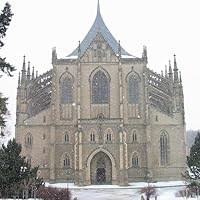
For example, the Beauvais Cathedral whose bishop wanted to push the height of the nave ceiling to 156 feet - which would have been the highest in the world in the late 13th-century. Two attempts and collapses have prevented the nave itself from ever being built. In fact, it is still incomplete and likely never to be "finished".
*How about Leonardo da Vinci's split level city with separate levels for pedestrian walkways verses waterway and wheeled traffic.
*The proposed Benedictine chapel in Australia that got as far as having the stained glass windows constructed but the buildings remain incomplete with the glass packed away still waiting to be used.
*The dome of Manhattan by Buckmeister Fuller which goes with the walking cities of Ron Herron in the Archigram architectural stylings which are definitely of the fantastic and futuristic.
*The French elephant big enough on the inside for two levels which had a garden with trees and running stream as well as a ball room. That's the cover illustration. It was also to have megaphones in the 'ears' so that outsiders could hear the music being played inside.
*The 'Clusters in the Air' which basically looks like trees made of Jenga blocks but it was made to have modules added to the tree-like trunk and leave green and relatively open grounds below for parks and agricultural use.
* Eisenman's nearly Fifty Mile long mega-structure was a split level with residential areas mixed with shopping levels below which was parking for transportation vehicles and even further below ground, the roadways themselves. The illustrative slice made me wonder more where cars were going to enter or exit the building as well as venting of toxic fumes. A mega-mall gone mad or at least reminded me of Hong Kong supertall building complexes.
And there's lots more - from Asian Cairns which are renticular towers with 'pebble-like' modules spirally climbing up and around - to Frank Lloyd Wright's Mile High Skyscraper. Monuments and churches. Commercial buildings as well as residentials. The imagination of these architects is incredible and sometimes a little questionable but in many cases, they are approaching a problem or opportunity from a creative viewpoint. Where beauty and efficiency attempt to meet. In many cases, humanity just isn't ready for some of these "outside of the box" structures.
But it's fun to read about them and look at whatever pictures can be provided/created.
2022-149
For example, the Beauvais Cathedral whose bishop wanted to push the height of the nave ceiling to 156 feet - which would have been the highest in the world in the late 13th-century. Two attempts and collapses have prevented the nave itself from ever being built. In fact, it is still incomplete and likely never to be "finished".
*How about Leonardo da Vinci's split level city with separate levels for pedestrian walkways verses waterway and wheeled traffic.
*The proposed Benedictine chapel in Australia that got as far as having the stained glass windows constructed but the buildings remain incomplete with the glass packed away still waiting to be used.
*The dome of Manhattan by Buckmeister Fuller which goes with the walking cities of Ron Herron in the Archigram architectural stylings which are definitely of the fantastic and futuristic.
*The French elephant big enough on the inside for two levels which had a garden with trees and running stream as well as a ball room. That's the cover illustration. It was also to have megaphones in the 'ears' so that outsiders could hear the music being played inside.
*The 'Clusters in the Air' which basically looks like trees made of Jenga blocks but it was made to have modules added to the tree-like trunk and leave green and relatively open grounds below for parks and agricultural use.
* Eisenman's nearly Fifty Mile long mega-structure was a split level with residential areas mixed with shopping levels below which was parking for transportation vehicles and even further below ground, the roadways themselves. The illustrative slice made me wonder more where cars were going to enter or exit the building as well as venting of toxic fumes. A mega-mall gone mad or at least reminded me of Hong Kong supertall building complexes.
And there's lots more - from Asian Cairns which are renticular towers with 'pebble-like' modules spirally climbing up and around - to Frank Lloyd Wright's Mile High Skyscraper. Monuments and churches. Commercial buildings as well as residentials. The imagination of these architects is incredible and sometimes a little questionable but in many cases, they are approaching a problem or opportunity from a creative viewpoint. Where beauty and efficiency attempt to meet. In many cases, humanity just isn't ready for some of these "outside of the box" structures.
But it's fun to read about them and look at whatever pictures can be provided/created.
2022-149

December 31, 2019
Este libro es una D-E-L-I-C-I-A. Sobre todo para la gente que ama la historia del arte y de la arquitectura. Leí cada página fascinado por tantas obras impresionantes. Una verdadera maravilla. Recomendadísimo.

January 16, 2025
This book is much much more than it appears to be by title and first impression.
You're guided easily through the buildings in chronological order and get an understanding of a lot more than buildings in this way. The changing tastes of different classes, the effect of war and what great potential can be lost within it. Not bad at all for a £6 on sale book.
Accurately, this is a 6 chapter history lesson, get to know renaissance artists dabbling naively but brilliantly at a new field, get to know madmen, would be greats who just didn't quite make the cut, or were shot to bits before their time, leaving behind portfolios and drawings quite unlike anything you've seen before opening this book.
What lured me back each day and became the magnetism to turn pages was not the building designs but the information about the architects, the small events in history like rivets drilled into a thread stopping time splitting into different directions that littered the pages. Time traveling through just a few buildings, their ghosts laid out on the pages staring you in the face, you by proxy understand the following about the time period the concept was proposed:
-The current state of local and geopolitics
-The current economy the city was living with
-Society, classes within it and their roles
- The trends, in art, fashion and buildings that crossed between disciplines and coloured their world.
-The personality, quirks and mind of the architect , scientist (or in some cases just a bollokingly wealthy Victorian business man) who conceived the idea.
It's a great shame some of these buildings were not built I think, equally I'm relieved some were kept in drawers or lost to the deterioration of time.
(Thanks Thomas Wilson but maybe not an Egyptian inspired, glass and iron, 94 storey, pyramidal cemetery monolith on tax payer money housing 5 million corpses suspended over 18 acres of public space in London)
Towards the end of the book we get to our 21st century that is our home, the book starts to feel like a mirror at that point because we see in these modern megastructures a representation of where we are at now. It gives a stark idea of our priorities, big as possible, different as possible, tick as many boxes to get it up. Gone are the whimsical days of Victorians boldly attempting to erect financially impossible towers just to see if they can fuck off Mr.Eiffel, no sir, here are the days of oil money, rounded, bubble forms, glass cladded electric screen blue light tear down the jungle disproportionate power and wealth leave the rest behind cathedrals of the lost that are sprouting up today by force of slave waged imported north Korean and Chinese "workers"
A dark question comes to mind consistently, the impact of these structures on a planet already in an ecologically vulnerable state and the morality of throwing 1000's of billions of dollars into glass towers that only one rank of society could benefit from, well tough shit baby welcome to the reel world, it's blade runner, it's endless tictokers and YouTube stars packing the skys of the tower up top, most of the world doesn't have water or struggles for food, but pat those eyes dry because the towers are carbon neutral and actually the bistro on floor 9 has a mezzanine coffee roasting company from Brixton that source everything organically and donate 20% of their profits, somewhere.
Tick, tick, tick, build!
Chapter 6 paints a glowing artificially coloured glassy iron framed spaceship shaped vision of a future that leaves you left still in an nauseous present, lusting for the relief for the practicality and ingenuity of the recent past.
Or maybe I feel that way just because I prefer brutalism and art deco and can't afford a flight to the UAE.
You're guided easily through the buildings in chronological order and get an understanding of a lot more than buildings in this way. The changing tastes of different classes, the effect of war and what great potential can be lost within it. Not bad at all for a £6 on sale book.
Accurately, this is a 6 chapter history lesson, get to know renaissance artists dabbling naively but brilliantly at a new field, get to know madmen, would be greats who just didn't quite make the cut, or were shot to bits before their time, leaving behind portfolios and drawings quite unlike anything you've seen before opening this book.
What lured me back each day and became the magnetism to turn pages was not the building designs but the information about the architects, the small events in history like rivets drilled into a thread stopping time splitting into different directions that littered the pages. Time traveling through just a few buildings, their ghosts laid out on the pages staring you in the face, you by proxy understand the following about the time period the concept was proposed:
-The current state of local and geopolitics
-The current economy the city was living with
-Society, classes within it and their roles
- The trends, in art, fashion and buildings that crossed between disciplines and coloured their world.
-The personality, quirks and mind of the architect , scientist (or in some cases just a bollokingly wealthy Victorian business man) who conceived the idea.
It's a great shame some of these buildings were not built I think, equally I'm relieved some were kept in drawers or lost to the deterioration of time.
(Thanks Thomas Wilson but maybe not an Egyptian inspired, glass and iron, 94 storey, pyramidal cemetery monolith on tax payer money housing 5 million corpses suspended over 18 acres of public space in London)
Towards the end of the book we get to our 21st century that is our home, the book starts to feel like a mirror at that point because we see in these modern megastructures a representation of where we are at now. It gives a stark idea of our priorities, big as possible, different as possible, tick as many boxes to get it up. Gone are the whimsical days of Victorians boldly attempting to erect financially impossible towers just to see if they can fuck off Mr.Eiffel, no sir, here are the days of oil money, rounded, bubble forms, glass cladded electric screen blue light tear down the jungle disproportionate power and wealth leave the rest behind cathedrals of the lost that are sprouting up today by force of slave waged imported north Korean and Chinese "workers"
A dark question comes to mind consistently, the impact of these structures on a planet already in an ecologically vulnerable state and the morality of throwing 1000's of billions of dollars into glass towers that only one rank of society could benefit from, well tough shit baby welcome to the reel world, it's blade runner, it's endless tictokers and YouTube stars packing the skys of the tower up top, most of the world doesn't have water or struggles for food, but pat those eyes dry because the towers are carbon neutral and actually the bistro on floor 9 has a mezzanine coffee roasting company from Brixton that source everything organically and donate 20% of their profits, somewhere.
Tick, tick, tick, build!
Chapter 6 paints a glowing artificially coloured glassy iron framed spaceship shaped vision of a future that leaves you left still in an nauseous present, lusting for the relief for the practicality and ingenuity of the recent past.
Or maybe I feel that way just because I prefer brutalism and art deco and can't afford a flight to the UAE.

October 30, 2025
Ci sono tanti pregi in questo libro!
L'aspetto fisico del libro stesso, un'edizione lussuosa e piacevolissima al tocco e da sfogliare, con materiali di pregio -quando va detto, va detto!
L'argomento è esposto in modo chiaro e fluido. L'architettura non è esattamente un argomento appassionante per i non-addetti ai lavori, e l'autore riesce benissimo a parlare di nomi e tecniche senza essere pesante o pedante.
Le illustrazioni: schizzi originali, foto di plastici, fotomontaggi, tutto quello che serve al lettore ad immergersi in un mondo urbano che avrebbe potuto essere così diverso, così vivo se solo vi avessero dato una chance!
Gli architetti sono sognatori, ma, ahimè, i soldi sono quelli che plasmano la realtà, e tra quelli e le più incombenti necessità politiche contro tempi di realizzazione al limite del generazionale, i progetti qui esposti non hanno mai potuto vedere la luce.
C'è di che essere grati all'autore per avere messo insieme queste idee -chissà che, magari, un giorno torneranno ad essere concretezza al posto di tante follie edilizie velleitarie e noiosissime!
L'aspetto fisico del libro stesso, un'edizione lussuosa e piacevolissima al tocco e da sfogliare, con materiali di pregio -quando va detto, va detto!
L'argomento è esposto in modo chiaro e fluido. L'architettura non è esattamente un argomento appassionante per i non-addetti ai lavori, e l'autore riesce benissimo a parlare di nomi e tecniche senza essere pesante o pedante.
Le illustrazioni: schizzi originali, foto di plastici, fotomontaggi, tutto quello che serve al lettore ad immergersi in un mondo urbano che avrebbe potuto essere così diverso, così vivo se solo vi avessero dato una chance!
Gli architetti sono sognatori, ma, ahimè, i soldi sono quelli che plasmano la realtà, e tra quelli e le più incombenti necessità politiche contro tempi di realizzazione al limite del generazionale, i progetti qui esposti non hanno mai potuto vedere la luce.
C'è di che essere grati all'autore per avere messo insieme queste idee -chissà che, magari, un giorno torneranno ad essere concretezza al posto di tante follie edilizie velleitarie e noiosissime!
October 19, 2022
Interesting concept again from Philip Wilkinson and certainly worth a read to know some of the best projects that never happened. Lots are well known, some not, some I found particularly interesting and some I didn’t. There isn’t masses of depth on each project, if you find one particularly interesting you probably want to do a bit of wider reading on it.
My personal favourites are Sforzinda, Boullee’s National Library and Lille Cathedral.
My personal favourites are Sforzinda, Boullee’s National Library and Lille Cathedral.

July 1, 2021
Einiges gelernt, was vor allem daran liegt, dass ich über Architektur kaum etwas weiß. Eins der wenigen Bücher jemals, die ich vor allem wegen der ansprechenden Covergestaltung haben wollte. Die deutsche Übersetzung enthält zudem zusätzliche Hinweise auf deutsche Gebäude, die tatsächlich gebaut wurden, und von denen ich einige gerne mal sehen würde.

June 4, 2022
A coffee table book but as I do not have a coffee table i read the ebook version. As ever with these books they are strong on pics and thin on text. Considering it a book about things that never existed it makes a reasnable job of filing the mind of what could be. However it remains a book fundamentaly about nothing!

April 26, 2023
Very insightful and loved all the descriptions. Sometimes I wished the book had more buildings that were actually built from the same architects next to their ideas, because I had to google so many of them instead to learn the visual language of the architects. Maybe this is not what the book is about... but otherwise great book and inspiring.

January 6, 2020
A wonderful atlas of what unbuilt architectures might teach us about architectures that get actually built. From Leonardo Da Vinci to Zaha Hadid, it is simply delightful to flick through, until it gets scary. Really, really scary.

December 24, 2020
Some great dreams of great architecture that never happened. For me, Indigo Jones plans for a new Whitehall Palace, that never was. Only the Banqueting House is the realisation of this dream and it is glorious.
April 14, 2019
52 book challenge - A book with an appealing cover
January 23, 2021
An interesting look at buildings which never made it beyond the drawing board and how their visions related to the thought and challenges of their times.

February 16, 2021
Buena recopilación de obras, pero información insuficiente, nada que no puedas encontrar en una tarde de búsqueda por wikipedia. Maquetación austera, falta de planos y fotografías.
January 20, 2025
Not a single ghost building
Displaying 1 - 16 of 16 reviews