

What do you think?
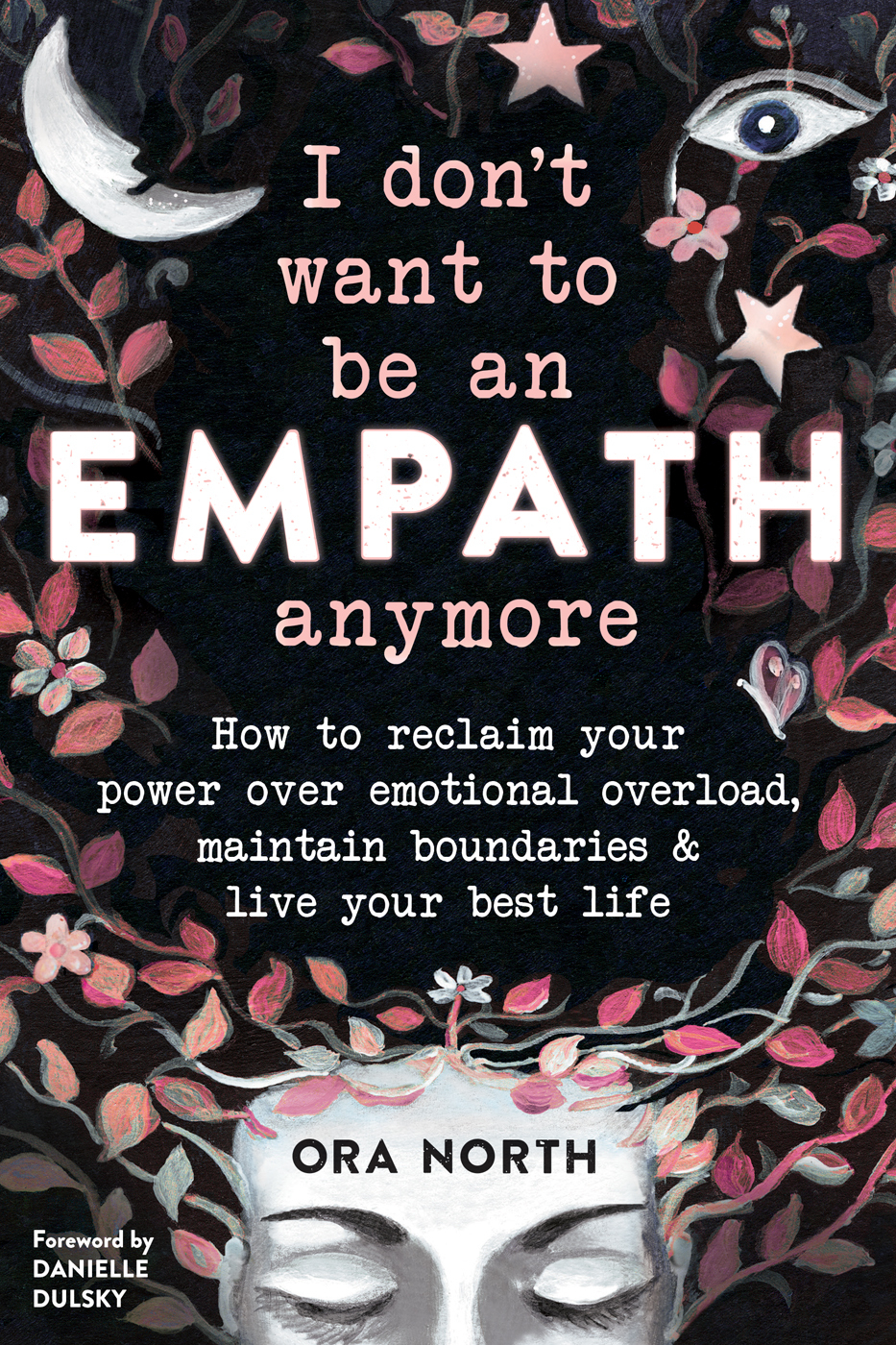
I Don't Want to Be an Empath Anymore: How to Reclaim Your Power Over Emotional Overload, Maintain Boundaries, and Live Your Best Life
Do you feel all the feels—all the time? Are you fed up with the mainstream spiritual “love and light” scene that calls for constant positivity, even in the face of true loss, trauma, and pain? If so, this book is for you.
I Don’t Want to Be an Empath Anymore is a gift for the jaded empath searching for authenticity in spirituality, and spirituality in being authentic—something beyond the clichéd, positive affirmations that seem to invalidate our anger, sadness, and pain. When we feel broken—and when real damage has been done, it’s not always helpful to ignore our feelings and tell ourselves that we are perfect and whole.
In this refreshingly honest guide, shamanic practitioner Ora North offers practical exercises to help you navigate your intuition and empathic sensitivities, create much-needed boundaries, and build confidence. You’ll also learn to balance your emotions and energy, and harness the strength of your shadow side to embrace your whole self and live your best life.
Like the Japanese craft known as Kintsugi—the art of repairing broken pottery using a lacquer dusted with powdered gold—the process of acknowledging and repairing our fragmented selves can make us even more beautiful than before, cracks and all. In this book, you won’t find platitudes or attempts to whitewash your experiences. What you will find are real, practical tools and guidance to help you make the most of your unique abilities.
I Don’t Want to Be an Empath Anymore is a gift for the jaded empath searching for authenticity in spirituality, and spirituality in being authentic—something beyond the clichéd, positive affirmations that seem to invalidate our anger, sadness, and pain. When we feel broken—and when real damage has been done, it’s not always helpful to ignore our feelings and tell ourselves that we are perfect and whole.
In this refreshingly honest guide, shamanic practitioner Ora North offers practical exercises to help you navigate your intuition and empathic sensitivities, create much-needed boundaries, and build confidence. You’ll also learn to balance your emotions and energy, and harness the strength of your shadow side to embrace your whole self and live your best life.
Like the Japanese craft known as Kintsugi—the art of repairing broken pottery using a lacquer dusted with powdered gold—the process of acknowledging and repairing our fragmented selves can make us even more beautiful than before, cracks and all. In this book, you won’t find platitudes or attempts to whitewash your experiences. What you will find are real, practical tools and guidance to help you make the most of your unique abilities.
176 pages, Paperback
Published August 1, 2019
Ratings & Reviews
Friends & Following
Create a free account to discover what your friends think of this book!
Community Reviews
Displaying 1 - 30 of 108 reviews

July 28, 2019
I think this book is wrongly titled. It should be “How to Reclaim Your Empathic Power.” It is not really about NOT wanting to be an empath. It is about how to go from a no controlled empathic state to one where you have regained the mastery and focus by using your sensitivity as a source of power.
All the exercises are great as long as you take the time and do them. This might be better as a workbook since it is such a short read. Everything I read went along with all I have ever heard about being an empath. There weren’t the new cool revelations about how to master being an empath. This is the tried and true stuff you need to remain sane as a sensitive in a non-sensitive world.
This hit the middle of the grade for me since I wasn’t blown away. Wish it had been longer. But a good read.
I received this as an ARC (Advanced Reader Copy) in return for an honest review. I thank NetGalley, the publisher and the author for allowing me to read this title.
All the exercises are great as long as you take the time and do them. This might be better as a workbook since it is such a short read. Everything I read went along with all I have ever heard about being an empath. There weren’t the new cool revelations about how to master being an empath. This is the tried and true stuff you need to remain sane as a sensitive in a non-sensitive world.
This hit the middle of the grade for me since I wasn’t blown away. Wish it had been longer. But a good read.
I received this as an ARC (Advanced Reader Copy) in return for an honest review. I thank NetGalley, the publisher and the author for allowing me to read this title.

September 7, 2019
I thought I was an empath. Well, I think that I'm a really sensitive person, but not an empath.
This book is a simple journey to discover your strenght in your empathy, even if the world seems to be against you every single day.
The journey inside yourself is the first step to become a different person, and everyone can say that for different reasons, because if you know yourself, truly, you know what you can do and what you can't. So, the first step is really generic and common in different personal journeys.
When you are an empath you are very sensitive with and about other people emotions and you understand every person as if you read the minds. The thing is: lots of people are egocentric (even if they don't know) and you can feel alone because you give, give everything to them, but they don't answer your needs. This is very difficult to understand sometime, and every sensitive person try not to be a burden to everyone. Sometime you need help, and I thing the best thing is to understand yourself, you borders and your mental health: you need people who can help you to process yourself and your world in a good way.
The book is full of good ideas, but they are quite common.
Thanks to Netgalley for sending me an arc of this book
This book is a simple journey to discover your strenght in your empathy, even if the world seems to be against you every single day.
The journey inside yourself is the first step to become a different person, and everyone can say that for different reasons, because if you know yourself, truly, you know what you can do and what you can't. So, the first step is really generic and common in different personal journeys.
When you are an empath you are very sensitive with and about other people emotions and you understand every person as if you read the minds. The thing is: lots of people are egocentric (even if they don't know) and you can feel alone because you give, give everything to them, but they don't answer your needs. This is very difficult to understand sometime, and every sensitive person try not to be a burden to everyone. Sometime you need help, and I thing the best thing is to understand yourself, you borders and your mental health: you need people who can help you to process yourself and your world in a good way.
The book is full of good ideas, but they are quite common.
Thanks to Netgalley for sending me an arc of this book

October 30, 2019
Going into this book you have to have a very open mind because this is very much a New Age type of book.
New Age.
[ˈˌn(y)o͞o ˈāj]
NOUN
a broad movement characterized by alternative approaches to traditional Western culture, with an interest in spirituality, mysticism, holism, and environmentalism.
It guides you through the strength that it takes being a Empath and dealing with the complicated emotions that come with it. It is a self-help book that guides you through different prompts that you need to do to control your empath abilities.
empath.
[ˈempaTH]
NOUN
a person with the paranormal ability to apprehend the mental or emotional state of another individual.
Yes, I know your probably thinking people are insane for calling themselves empaths (I'm some cases you may be right), but I believe that some people are sensitive to the feelings of others, they feel their pain and they hurt with them. Maybe its over sensitivity to the changes in their environment, I'm not sure. I think that it's a ability a gift, but a power? No. An Ora North sort of sees it like that to and she guides you to better understand and control your emotions (also how to block out receiving everyone's emotions so you don't get exhausted and overwhelmed). She also gives you examples about her own life etc.
It's interesting, but its hard to distinguish if it's to be taken seriously or not.
New Age.
[ˈˌn(y)o͞o ˈāj]
NOUN
a broad movement characterized by alternative approaches to traditional Western culture, with an interest in spirituality, mysticism, holism, and environmentalism.
It guides you through the strength that it takes being a Empath and dealing with the complicated emotions that come with it. It is a self-help book that guides you through different prompts that you need to do to control your empath abilities.
empath.
[ˈempaTH]
NOUN
a person with the paranormal ability to apprehend the mental or emotional state of another individual.
Yes, I know your probably thinking people are insane for calling themselves empaths (I'm some cases you may be right), but I believe that some people are sensitive to the feelings of others, they feel their pain and they hurt with them. Maybe its over sensitivity to the changes in their environment, I'm not sure. I think that it's a ability a gift, but a power? No. An Ora North sort of sees it like that to and she guides you to better understand and control your emotions (also how to block out receiving everyone's emotions so you don't get exhausted and overwhelmed). She also gives you examples about her own life etc.
It's interesting, but its hard to distinguish if it's to be taken seriously or not.

January 27, 2021
4.5 out of 5 stars. As an empath, I felt personally called out. This book absolutely spoke to my soul.
I Don't Want to Be an Empath Anymore is a book I need to re-visit. It helped me understand my core wounds and how they impact my life. The author has done the work and examines what it means to be an empath. It is an excellent source to help create solid stability in your abilities, and knowing yourself this well prevents others from messing what that stability.
The book explores the many experiences and feelings of empaths. It provides exercises and tools that help you navigate the following:
‣ Focus on who you are for yourself instead of just who you are for other people
‣ Approach your brokenness, shadow side, and your inner child with open eyes and an open heart
‣ Build up your energy signatures and learn what messages your feelings bring you
‣ Differentiate between your own energy and the energy of others, and cleanse yourself of the energy that's not yours
‣ Realize your boundaries are always in their perfect place—How to communicate with your intuition and find and finetune those boundaries
‣ See energetic patterns in your relationships and how they connect to your core wounds
‣ Harness the power of the darkness that is your shadow side. All of those intense emotional ups and downs have revealed a source of clarity and stability in your practice and growth.
I found this book to be insightful, powerful and enriching. It gives you the tools to help you manage your emotions as well as the emotions of others. If you're an empath, you need this book.
I Don't Want to Be an Empath Anymore is a book I need to re-visit. It helped me understand my core wounds and how they impact my life. The author has done the work and examines what it means to be an empath. It is an excellent source to help create solid stability in your abilities, and knowing yourself this well prevents others from messing what that stability.
The book explores the many experiences and feelings of empaths. It provides exercises and tools that help you navigate the following:
‣ Focus on who you are for yourself instead of just who you are for other people
‣ Approach your brokenness, shadow side, and your inner child with open eyes and an open heart
‣ Build up your energy signatures and learn what messages your feelings bring you
‣ Differentiate between your own energy and the energy of others, and cleanse yourself of the energy that's not yours
‣ Realize your boundaries are always in their perfect place—How to communicate with your intuition and find and finetune those boundaries
‣ See energetic patterns in your relationships and how they connect to your core wounds
‣ Harness the power of the darkness that is your shadow side. All of those intense emotional ups and downs have revealed a source of clarity and stability in your practice and growth.
I found this book to be insightful, powerful and enriching. It gives you the tools to help you manage your emotions as well as the emotions of others. If you're an empath, you need this book.

August 23, 2021
I don't really like to use the term empath, largely because I feel that it has become overused and often misused by people, and I've found in my own personal experiences that people have used this term with me as a way to avoid accountability for their own actions, but that being said, I did find that this guide provided some useful exercises for empathic and sensitive people to create better energetic boundaries with others. I definitely felt understood by this book as I've encountered many similar scenarios and people as the author, especially when she noted the toxic positivity that occurs in the spiritual community and the way that heightened empathy has become sensationalized and glorified without really examining how it affects a truly empathic person and their personal relationships. Overall this was a good and valuable read.
September 2, 2020
I'm not usually fond of anything that can be labeled as self-help, but I wanted to read this after seeing it recommended by someone else who was struggling with emotional stress due to the people around them. And since I recently set a goal to reduce stress and strife where I'm able to, I figured reading this as a start wouldn't hurt. Because almost anything is better than thinking about permanent expiration all the time.
First of all, I quickly realized that I am probably not an empath. At least not in the same way as described in this book. I definitely have empathetic traits and qualities, and I'm very sensitive, but the energy/spiritual traits fall flat on me. It's the same for me with religion and general spirit or nature based things; it just...doesn't work for me. But I still took a lot from this book, and I'd actually read it again as a review of the information.
What I did take from this was the importance of recognizing, understanding, and embracing all of my emotions, past and present trauma, and needs. We currently live in a society that likes to push forced/toxic positivity, regardless of what may be going on in your life. I don't think it's acceptable for someone to tell me to be grateful and happy when I recognize names in obituaries almost weekly. Or being made to feel like the ongoing trauma I'm experiencing "isn't that bad" compared to something that happened 80 years ago. Or even if I didn't have stuff going on, I'm not going to be peppy 24/7; it's not my personality and I'm not going to change to make someone else feel better.
One part I really liked was the need to actually work with a wound in order to actually heal. I don't think I've ever actually resolved or tended to an emotional/mental wound properly, which is likely why I bristle at the "healing" or positive energy some people try to throw at me. That (usually) unsolicited attempt at healing me either makes the wound fester, or just doesn't do anything, and it's because it's still infected/clogged.
Anyway, this review is longer than I intended but basically I recommend this for anyone who is having issues with emotional overload [from others] and just needs something to ground them a little. It may not be for everyone, but the author seems solid in regards to the subject, and doesn't do the "just meditate and focus on the good energy only" thing that I half expected.
First of all, I quickly realized that I am probably not an empath. At least not in the same way as described in this book. I definitely have empathetic traits and qualities, and I'm very sensitive, but the energy/spiritual traits fall flat on me. It's the same for me with religion and general spirit or nature based things; it just...doesn't work for me. But I still took a lot from this book, and I'd actually read it again as a review of the information.
What I did take from this was the importance of recognizing, understanding, and embracing all of my emotions, past and present trauma, and needs. We currently live in a society that likes to push forced/toxic positivity, regardless of what may be going on in your life. I don't think it's acceptable for someone to tell me to be grateful and happy when I recognize names in obituaries almost weekly. Or being made to feel like the ongoing trauma I'm experiencing "isn't that bad" compared to something that happened 80 years ago. Or even if I didn't have stuff going on, I'm not going to be peppy 24/7; it's not my personality and I'm not going to change to make someone else feel better.
One part I really liked was the need to actually work with a wound in order to actually heal. I don't think I've ever actually resolved or tended to an emotional/mental wound properly, which is likely why I bristle at the "healing" or positive energy some people try to throw at me. That (usually) unsolicited attempt at healing me either makes the wound fester, or just doesn't do anything, and it's because it's still infected/clogged.
Anyway, this review is longer than I intended but basically I recommend this for anyone who is having issues with emotional overload [from others] and just needs something to ground them a little. It may not be for everyone, but the author seems solid in regards to the subject, and doesn't do the "just meditate and focus on the good energy only" thing that I half expected.

February 1, 2020
Incredibly helpful book. Love the exercises & the careful breakdown of information in each chapter. The author also provided useful hints for engaging with the content of the book, which is not always easy work. Looking forward to more from this author.

December 16, 2019
As someone who only had a very basic and pop-culture-informed understanding of what being an empath entailed, this book really opened my eyes to the inner potential of empaths and how our lives can naturally stifle these gifts. There are a few components to I Don’t Want to Be an Empath Anymore that make it the perfect guidebook for anyone struggling with this topic and those who are not empaths but seek to understand the struggles of those they love.
The first of these is Ora North’s authorial voice. Rich and poetic, it’s simply a delight to read – even when the topics turn toward something heavier. Ora is not afraid to meet the reader in those dark places, and she doles out understanding and illumination in spades. It feels less like reading solo and more like an ongoing conversation with a mentor, creating the perfect tone for those who need that guiding hand. It’s difficult to put the book down once you’ve started reading it!
The next element that sets this book apart from others is the journal prompts at the end of the chapters. Sure, many similar books have prompts, but Ora’s tend to be dynamic and exciting even when the work itself is difficult. She asks readers to look within themselves and ask tough questions, but they’re structured in a way that makes it hard for readers to fall into unfavorable patterns like negative self-talk. Instead, with Ora’s voice firmly in one’s mind, it becomes easier to dig into the work and motivate oneself to actually Get It Done. This is definitely not one of those books you buy with good intentions only to sit on your shelf, collecting dust and regrets.
The last component that I found particularly compelling about this book is the conversation about what it means to be an empath in today’s more positive-facing society. Ora is not afraid to lay out what she thinks about the popularization of woo-woo and how the “just be positive!” mindset can be dangerous for those who still need to be in touch with their shadow selves. Not only is this type of honesty refreshing, but it opens up a whole new space for those of us who have always felt just a little different, a little darker than those around us but who want to celebrate those facets of our personality instead of tucking them away. While reading this, the queer, former-emo/punk teen I used to be was rejoicing in my heart, feeling like she was being seen in ways she had never been before. Ora has a way of celebrating all empaths, regardless of who they were or who they are now. As an editor, this is a technical feat for which I believe Ora needs to be applauded. As a reader, the emotional impact is beyond profound. I know I am not likely to have such an experience from many other places.
In conclusion, I whole-heartedly recommend I Don’t Want to Be an Empath Anymore to those who know they’re empaths and are struggling, those who aren’t sure if they’re an empath but know that something’s not right, and those who aren’t empaths but know people who are. Everyone can learn valuable insights about themselves and those around them from this book, which will quickly become one of the most well-loved and well-read books in your collection.
The first of these is Ora North’s authorial voice. Rich and poetic, it’s simply a delight to read – even when the topics turn toward something heavier. Ora is not afraid to meet the reader in those dark places, and she doles out understanding and illumination in spades. It feels less like reading solo and more like an ongoing conversation with a mentor, creating the perfect tone for those who need that guiding hand. It’s difficult to put the book down once you’ve started reading it!
The next element that sets this book apart from others is the journal prompts at the end of the chapters. Sure, many similar books have prompts, but Ora’s tend to be dynamic and exciting even when the work itself is difficult. She asks readers to look within themselves and ask tough questions, but they’re structured in a way that makes it hard for readers to fall into unfavorable patterns like negative self-talk. Instead, with Ora’s voice firmly in one’s mind, it becomes easier to dig into the work and motivate oneself to actually Get It Done. This is definitely not one of those books you buy with good intentions only to sit on your shelf, collecting dust and regrets.
The last component that I found particularly compelling about this book is the conversation about what it means to be an empath in today’s more positive-facing society. Ora is not afraid to lay out what she thinks about the popularization of woo-woo and how the “just be positive!” mindset can be dangerous for those who still need to be in touch with their shadow selves. Not only is this type of honesty refreshing, but it opens up a whole new space for those of us who have always felt just a little different, a little darker than those around us but who want to celebrate those facets of our personality instead of tucking them away. While reading this, the queer, former-emo/punk teen I used to be was rejoicing in my heart, feeling like she was being seen in ways she had never been before. Ora has a way of celebrating all empaths, regardless of who they were or who they are now. As an editor, this is a technical feat for which I believe Ora needs to be applauded. As a reader, the emotional impact is beyond profound. I know I am not likely to have such an experience from many other places.
In conclusion, I whole-heartedly recommend I Don’t Want to Be an Empath Anymore to those who know they’re empaths and are struggling, those who aren’t sure if they’re an empath but know that something’s not right, and those who aren’t empaths but know people who are. Everyone can learn valuable insights about themselves and those around them from this book, which will quickly become one of the most well-loved and well-read books in your collection.

June 2, 2019
This book would be helpful to someone who identifies as an ‘Empath’ or is emotionally intuitive. It contains many ways to protect yourself against others energy such as using crystals and visualization.
Although I appreciated the caring tone of the book and the ways the author suggested to protect yourself, I found the book to be too negative for me to highly recommend it. I believe in the power of positive thinking and felt this book concentrated too much on the negative. I also didn’t appreciate the way I was being told how I supposedly felt at the start.
Although I don’t share the authors philosophy on being an Empath, I do think this book would be useful to another reader.
Thank you to the publisher and Netgalley for allowing me to read this book in exchange for a honest review.
Although I appreciated the caring tone of the book and the ways the author suggested to protect yourself, I found the book to be too negative for me to highly recommend it. I believe in the power of positive thinking and felt this book concentrated too much on the negative. I also didn’t appreciate the way I was being told how I supposedly felt at the start.
Although I don’t share the authors philosophy on being an Empath, I do think this book would be useful to another reader.
Thank you to the publisher and Netgalley for allowing me to read this book in exchange for a honest review.

January 25, 2022
the overall message and guides that this book present are helpful and great lessons to learn. though I will agree with other reviews when I say I think the title of the book is misleading. not that I didn't enjoy what the book ended up being about, however it isn't about not being an empath and "reclaiming power" on your own emotions. It's more of a guided journey on how to filter everyone else's emotions and have them be in tune with yours.

September 19, 2023
I mean, first off the book's dedication literally says "To Katie, who feels to much", so it went about as great as you can imagine.
But in all seriousness. This book is an AMAZING entry upon the Empathic Self Reflection. I was blown away at all the validation and affirmation this book offered me, even 1 year into my Self Healing Journey. Every little area I thought "well... idk if I'm doing this right" she was right there to tell me that the reason that I couldn't find these methods in books like The Body Keeps the Score, or more Spiritual Ones, is because of my Empath Nature.
She speaks so openly about energy healing that I felt so at ease. It feels like a gentle but heavy conversation said over coffee, and I'm so here for that.
But in all seriousness. This book is an AMAZING entry upon the Empathic Self Reflection. I was blown away at all the validation and affirmation this book offered me, even 1 year into my Self Healing Journey. Every little area I thought "well... idk if I'm doing this right" she was right there to tell me that the reason that I couldn't find these methods in books like The Body Keeps the Score, or more Spiritual Ones, is because of my Empath Nature.
She speaks so openly about energy healing that I felt so at ease. It feels like a gentle but heavy conversation said over coffee, and I'm so here for that.
Read
March 4, 2021A more fitting title for this book would be “Beginner Shadow Work for anyone but especially Empaths”. It’s full of lovely therapeutic exercises for inner child & shadow work. Also includes many thought-provoking ideas about healing.
The author is jaded about the “new age movement” (she freely admits it in the book, this isn’t just an observation). The issue I had was that her feelings bleed into the book and manifested in largely objective and overly cynical ways.
I would recommend it to anyone new to healing and shadow work with the caveat that they take her cynicism with a grain of salt.
The author is jaded about the “new age movement” (she freely admits it in the book, this isn’t just an observation). The issue I had was that her feelings bleed into the book and manifested in largely objective and overly cynical ways.
I would recommend it to anyone new to healing and shadow work with the caveat that they take her cynicism with a grain of salt.

August 1, 2023
2.5
Este libro no era para, siento que va dirigido a un público con ciertas creencias con las cuales no concuerdo del todo.
Si que tiene muy buenos puntos a reflexionar, pero las soluciones que ofrece son muy “mágicas”.
Este libro no era para, siento que va dirigido a un público con ciertas creencias con las cuales no concuerdo del todo.
Si que tiene muy buenos puntos a reflexionar, pero las soluciones que ofrece son muy “mágicas”.

October 29, 2020
As an empath, I cannot recommend this book enough for other empaths. I found myself going from one topic to the next marvelling at the language used for things I have always understood in concept but could not quite describe in words. Nobody that I knew was an empath. So, I lacked the opportunity to learn these things on my own. This book was the tutor I never had.
I can't imagine what this book is like if you are not an empath. I would guess that it would come across as a froo froo. Concepts like cleansing your energy and personifying your emotions must seem really weird. But they were very helpful to me in helping to maintain my emotional state and ensure that what I was feeling was authentic to me. Having these concepts spelled out gave me permission to accept the internal landscape and abilities that I have.
This book really helped me to understand myself.
I can't imagine what this book is like if you are not an empath. I would guess that it would come across as a froo froo. Concepts like cleansing your energy and personifying your emotions must seem really weird. But they were very helpful to me in helping to maintain my emotional state and ensure that what I was feeling was authentic to me. Having these concepts spelled out gave me permission to accept the internal landscape and abilities that I have.
This book really helped me to understand myself.

January 18, 2022
This book is quite great and has helped me to see recurring patterns in myself. I'm going to read it a second time through and focus on one chapter a month to give myself ample time to work through and process the exercises presented. Would recommend to any empath.

March 1, 2024
This book is packed with so much insight and helpful tools for everyone, whether you consider yourself an empath or not. Working through the exercises can help deepen personal awareness, create a healthier relationship with yourself and others, and enable you to reclaim lost parts of yourself while letting go of baggage that might not even be yours to begin with.
One of the most powerful parts of this book for me was becoming aware of "lightwashing" and the distortions of new age thinking:
"I began to use the term 'lightwashing' to describe the act of taking any real emotion that may be difficult and covering it with trite displays of affirmations, positivity memes, rainbows and unicorns, and fake smiles...In the quest to become enlightened beings, we’ve idealized the nonhuman and demonized the human, effectively promoting the idea that we must rid ourselves of our humanness to be spiritual masters.
"Emotions, unfortunately, fall into the category of humanness. This means that emotions, mostly the “negative” ones, are included in the things we should get rid of on our way to enlightenment....One of the ways you can empower yourself as an empath is by connecting more with your humanness, and seeing it as part of the whole of divinity rather than separate from it."
I found it very helpful to reexamine many of the tropes of the new age movement that I have absorbed and internalized to decide if these really serve me and honour all of my feelings and beliefs.
One of the most powerful parts of this book for me was becoming aware of "lightwashing" and the distortions of new age thinking:
"I began to use the term 'lightwashing' to describe the act of taking any real emotion that may be difficult and covering it with trite displays of affirmations, positivity memes, rainbows and unicorns, and fake smiles...In the quest to become enlightened beings, we’ve idealized the nonhuman and demonized the human, effectively promoting the idea that we must rid ourselves of our humanness to be spiritual masters.
"Emotions, unfortunately, fall into the category of humanness. This means that emotions, mostly the “negative” ones, are included in the things we should get rid of on our way to enlightenment....One of the ways you can empower yourself as an empath is by connecting more with your humanness, and seeing it as part of the whole of divinity rather than separate from it."
I found it very helpful to reexamine many of the tropes of the new age movement that I have absorbed and internalized to decide if these really serve me and honour all of my feelings and beliefs.

January 23, 2024
3.5 stars.
I started this book last year and initially was confused because it felt very "witchy" rather than something like a therapist guide. That threw me off but that was more my assumptions of the book that were wrong.
I couldn't connect initially. Was going thru a rough time and I think I was too overwhelmed. I started seeing a therapist and thought let me go back to this book and made so many connections between what my therapist says and this.
Dunno for sure if I'm a proper empath but there were several spots that really connected to me.
You need an open mind otherwise it's gonna feel like some mambo jambo hippie peace love and crystals. The exercises were helpful.
I started this book last year and initially was confused because it felt very "witchy" rather than something like a therapist guide. That threw me off but that was more my assumptions of the book that were wrong.
I couldn't connect initially. Was going thru a rough time and I think I was too overwhelmed. I started seeing a therapist and thought let me go back to this book and made so many connections between what my therapist says and this.
Dunno for sure if I'm a proper empath but there were several spots that really connected to me.
You need an open mind otherwise it's gonna feel like some mambo jambo hippie peace love and crystals. The exercises were helpful.

July 28, 2022
I really liked the book, a lot of great exercises and advise for empaths to protect themselves from overwhelm. However I got annoyed when she claimed a lot of our trauma comes from our mothers (and never mentioned father trauma as a factor) and all the ways our mothers' imperfections can scar us, YET when she gave an example of childhood trauma, it was her FATHER that invalidated her feelings and empathic nature. Maybe stop blaming mothers (human women with human faults) for everything wrong in our lives? Father's hold just as much, if not more in many cases, blame for childhood trauma.

December 25, 2022
I had this on my list and its followed me around in my thoughts. This book really spoke to me about boundaries and energy cleansing. I didn't really understand what shadow self really meant before. I particularly enjoyed the way the author debunks a lot of the self help and wellness quotes like 'good vibes only' and explains why they can be problematic for empaths especially. This book is not for everyone! There are exercises that require deep thought and examination of your inner child, energy and addressing trauma....so, some really deep stuff! This book works better with a journal and working through the tasks. I loved it, and will read more by this author.

December 11, 2023
I’m very unsure of myself when it comes to rating nonfiction, especially self-help books, but there was a lot of stuff in here that resonated with me and I felt like I learned a lot. Took a few pages of notes, we’ll see how well I stick to the practices!

January 30, 2024
I like what North has to say. Boundaries, knowledge, self-care are important to any empath. Those aspect of the book I enjoyed. There are some things I didn’t quite understand. But that could just be that I need to work harder to understand.
incomplete
April 22, 2021DNF
Nope Nope too much wooooo
Nope Nope too much wooooo
April 22, 2023
This book was absolutely life-changing for me. Because of this book I now have a healthier relationship with my emotions and myself.

March 31, 2021
This book is written as a practical guide for empaths to take control of their lives, but I took issue with how incredibly biased it was. The narrator has filled it with hypotheticals and sentences such as "Maybe you too have been walking along a grocery aisle and seen Nutri Grain for sale and thought, yep, I love Nutri Grain!". I get that it is written based on personal experience, but it definitely felt too 'personal' for me.
I ended up giving it two stars instead of one as i'm sure if you were the right type of person, this book would be super beneficial to you. The main thing I have learned from this book- I am not an empath. I think I would maybe have appreciated this book if I was.
I ended up giving it two stars instead of one as i'm sure if you were the right type of person, this book would be super beneficial to you. The main thing I have learned from this book- I am not an empath. I think I would maybe have appreciated this book if I was.

December 31, 2021
This is helpful and insightful. I've been therapeutic journal writing for nearly 20 years, so I've done variations on exercises featured in the book, but they're still helpful and more conscious than a lot of my journal writing.

August 2, 2022
I picked up this book because I love Danielle Dulsky and she wrote the foreword. However, this book frustrated me to the point I am considering giving it a one-star. The only reason it gets two stars is because the author had a pretty good writing style, and she listed a few creative, thought-provoking, and emotionally helpful journal prompts at the end of several chapters.
First of all, the book is poorly titled. It's hard to define what an "Empath" is, and I'm sure Ora North's definition is not correct as she consistently assumes anyone reading this book is indeed an empath. She seems to confuse it with high sensitivity a lot of the time. And yes, I do believe that anyone experiencing high sensitivity for a number of reasons, such as myself, would benefit from reading certain chapters of this book and doing some exercises.
Also, as much as I advocate for the validation of emotions, I don't agree with how Ora North is suggesting to handle them in this book. Basically, the vibe I get from her is everything must be felt. This is not healthy at all when you deal with rumination issues like I do. What's more important than feeling is to PROCESS the emotions. And while logic is indeed over-valued in society to the point that emotion and instinct get pushed to the back burner, it is still something that must be used to process the feeling.
I was incredibly displeased by her section about the narcissism and empath connection, because she implies that narcissists and empaths are actually very similar, and even ties gender into it. There is no scientific proof between any of this, and I believe it dangerous when people over-use the term "narcissist" instead of solely referring to the personality disorder.
First of all, the book is poorly titled. It's hard to define what an "Empath" is, and I'm sure Ora North's definition is not correct as she consistently assumes anyone reading this book is indeed an empath. She seems to confuse it with high sensitivity a lot of the time. And yes, I do believe that anyone experiencing high sensitivity for a number of reasons, such as myself, would benefit from reading certain chapters of this book and doing some exercises.
Also, as much as I advocate for the validation of emotions, I don't agree with how Ora North is suggesting to handle them in this book. Basically, the vibe I get from her is everything must be felt. This is not healthy at all when you deal with rumination issues like I do. What's more important than feeling is to PROCESS the emotions. And while logic is indeed over-valued in society to the point that emotion and instinct get pushed to the back burner, it is still something that must be used to process the feeling.
I was incredibly displeased by her section about the narcissism and empath connection, because she implies that narcissists and empaths are actually very similar, and even ties gender into it. There is no scientific proof between any of this, and I believe it dangerous when people over-use the term "narcissist" instead of solely referring to the personality disorder.
April 26, 2020
This book is for everyone. Empath, overwhelmed empath, borderline empath, on both sides of the empath spectrum.
Read it slow. Do the exercise, proceed.
Intelligently written, authors very own account.
I saw this book on the shelf of a library and took it cause I could relate with the word empath. Two decades of misery of not knowing what's wrong with me - aka - why do I feel everything(so much) was decoded as I read the first few pages. Was glad to know that there is something called overwhelming empathy AND one can heal 💗 with the help of the exercises at the end of each chapter.
Loved the last three chapters, may not seem to be groovy if I'd just read through. Since I accepted my status and worked through the exercises the lethargic, lazy, pessimistic approach to my own well-being is going..gone.
Very well written, direct solutions. There is no need to look elsewhere for more if you get hold of this book. The author when got in touch with, shared that the content and the exercises at the end of chapters will do mighty good to anyone who is on a healing journey or simply looking to learn and take a step towards Self Care. Thank you Ora North for writing this book and sharing with the readers. #oranorth @oranorth
Some may feel they are not ready for the book and that's because of the current level they are in, in the empathy spectrum. If you are not sensitive too, this book helps understand exactly that if just simply read through.
Read it slow. Do the exercise, proceed.
Intelligently written, authors very own account.
I saw this book on the shelf of a library and took it cause I could relate with the word empath. Two decades of misery of not knowing what's wrong with me - aka - why do I feel everything(so much) was decoded as I read the first few pages. Was glad to know that there is something called overwhelming empathy AND one can heal 💗 with the help of the exercises at the end of each chapter.
Loved the last three chapters, may not seem to be groovy if I'd just read through. Since I accepted my status and worked through the exercises the lethargic, lazy, pessimistic approach to my own well-being is going..gone.
Very well written, direct solutions. There is no need to look elsewhere for more if you get hold of this book. The author when got in touch with, shared that the content and the exercises at the end of chapters will do mighty good to anyone who is on a healing journey or simply looking to learn and take a step towards Self Care. Thank you Ora North for writing this book and sharing with the readers. #oranorth @oranorth
Some may feel they are not ready for the book and that's because of the current level they are in, in the empathy spectrum. If you are not sensitive too, this book helps understand exactly that if just simply read through.

December 30, 2020
I've been fairly averse to the term empath. Most of the people I've met who use the term are… I don't know. They somehow seem disconnected from the people they're talking to as well as reality generally. That's a fairly harsh judgment, and I'm really glad I could move past it in order to engage with this book. It turns out the frame or label of empath can be really useful.
This book is written in an intimate and direct way. Ora North is talking to you, the reader directly, and when that reader is I, she hits the mark pretty well. She gets what it's like to feel All The Feelings. She gets what it's like to run into the New Age spirituality that aims for truth but misses experience. She gets what it's like to be tired from the general difficulty of living in a challenging world.
Personally, I didn't learn anything that felt entirely new from this book. That being said, I think it's an excellent introduction to this kind of work and a wonderful overview in general. She has a whole section of ways that common wisdom misses the mark, and for every one of them, I had encountered it in the wild and bounced off in exactly the way she corrected for. The breadth of her advice is broad and provides a bunch of places to begin doing work. And even as a supplement, it was very helpful to get her particular takes all of these things.
This book is written in an intimate and direct way. Ora North is talking to you, the reader directly, and when that reader is I, she hits the mark pretty well. She gets what it's like to feel All The Feelings. She gets what it's like to run into the New Age spirituality that aims for truth but misses experience. She gets what it's like to be tired from the general difficulty of living in a challenging world.
Personally, I didn't learn anything that felt entirely new from this book. That being said, I think it's an excellent introduction to this kind of work and a wonderful overview in general. She has a whole section of ways that common wisdom misses the mark, and for every one of them, I had encountered it in the wild and bounced off in exactly the way she corrected for. The breadth of her advice is broad and provides a bunch of places to begin doing work. And even as a supplement, it was very helpful to get her particular takes all of these things.

January 8, 2020
Synchronicity is a strange and beautiful thing, and is exactly what landed this book in my hands. I didn't know how much I needed this book until I opened it. It's so easy to forget exactly what it means to be empathic; to forget both the blessings and the curses this sensitivity brings - to forget not to beat yourself up and tear yourself down for this gift that seems so incomprehensible to others. North's approach is straight forward, real, and most importantly, both a gentle and raw reminder that brings empaths home to the truth of who they are and who they aren't. She cuts through conditioning, shaming, guilt, people-pleasing, and sheer defeat by presenting beautifully framed perspectives, case studies, exercises, and the reality of gross untruths that many empaths have internalized as shortcomings and massive flaws. This work is such crucial material for any empath - and the people who love them - to more fully understand and embrace this immense gift, and also to extend patience and compassion to themselves, first and foremost, so they can truly offer it to others. I very much look forward to more work from North in the future.

August 11, 2019
Thanks to #netgalley for the ARC. What a relatable and informative read! For a while now I have been getting emotionally drained on a regular basis by the issues/upsets of my friends, issues/events that impacted them way more than me yet each time I was a crying mess and fearful of falling back into my depression rabbit hole. This book came along at a time when I really needed help and guidance to help me sort out my own issues with being overly empathetic and the effects it was having on me. It is well written, very relatable and explanatory and leaves you feeling like you are not alone in this struggle. Completing the exercises really helped too. Whilst I will always be an empath at least after reading this book I am a more empowered empath who knows what her own boundaries are. #oranorth #netgalley #tea_sipping_bookworm #goodreads #litsy
Displaying 1 - 30 of 108 reviews