For 12,000 years, people have left a rich record of their experiences in Utah’s Capitol Reef National Park. In The Capitol Reef Reader, award-winning author and photographer Stephen Trimble collects the best of this writing—160 years worth of words that capture the spirit of the park and its surrounding landscape in personal narratives, philosophical riffs, and historic and scientific records.
The volume features nearly fifty writers who have anchored their attention and imagination in Utah’s least-known national park. The bedrock elders of Colorado Plateau literature are here (Clarence Dutton, Wallace Stegner, Edward Abbey), as are generations of writers who love this land (including Ellen Meloy, Craig Childs, Charles Bowden, Renny Russell, Ann Zwinger, Gary Ferguson, and Rose Houk). Their pieces are a pleasure to read and each reveals a facet of Capitol Reef’s story, creating a gem of a volume. Editor Stephen Trimble guides and orients with commentary and context.
A visual survey of the park in almost 100 photographs adds another layer to our understanding of this place. Historic photos, pictures from Trimble’s forty-five years of hiking the park, as well as images from master visual artists who have worked in Capitol Reef are included. No other book captures the essence of Capitol Reef like this one.
Part of the National Park Reader series, edited by Lance Newman and David Stanley
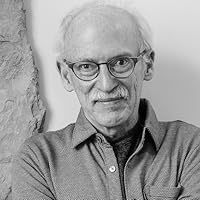
As writer, editor, and photographer, Stephen Trimble has published 25 award-winning books during 45 years of paying attention to the landscapes and peoples of the Desert West. He’s received The Sierra Club's Ansel Adams Award for photography and conservation and a Doctor of Humane Letters from his alma mater, Colorado College. In 2019, he was honored as one of Utah’s 15 most influential artists.
Trimble speaks and writes as a conservation advocate and has taught writing at the University of Utah. He makes his home in Salt Lake City and in the redrock country of Torrey, Utah. Environmental historian James Aton has said: Trimble's books comprise one of the most well-rounded, sustained, and profound visions of people and landscape that we have ever seen in the American West.
Just happened to find this in the library catalog when preparing for a visit back to Capitol Reef, and what a gem of a find! This really covers the gamut--from Fremont and Ancestral Puebloan settlements to more modern Native history, Mormon settlers and other white 19th century explorers, artists, scientists, adventurers, teens and young adults (loved those inclusions!) and more, and lots of fabulous pictures to supplement the text as well. I thought I'd just casually leaf through this book, but I ended up devouring it cover to cover. It really gives you a sense of the place, and I know my upcoming visit will be all the richer for having read this book.
I hope University of Utah Press can get around to publishing a National Park Reader for every park and monument--I will definitely be reading more in this series.
Filled with several pieces along several different angles, from geology to culture to history, and so on, the work takes a very careful and balanced approach to those who are involved in Capitol Reef -- whether it is a Native American, a rancher, a scientist, an adventurer, or naturalist. It's highly informative, entertaining, and well-styled. The only issues I have is that the selections are sometimes just too short for my interest, but I suspect the editor hopes we go find the original sources for deeper digs, and that there are so many references to locations in the book that a better map or more maps could help keep a person keep up.
I saw this while I was shelving at the library, right after a trip to Capitol Reef. I really enjoyed reading about the real life stories that were included and the pictures in the book were stunning. I wish that I had seen this before our trip, but this allowed me to have a better understanding of certain stories.
This was a very interesting anthology about the Capitol Reef area covering everything from history, geology, culture, environment, and politics. I enjoyed some of the excerpts more than others but that is to be expected. I found the writings chosen for the last third of the book to be particularly compelling. All in all, a solid read.
Very enjoyable collection of writings. My copy signed by both Steve Trimble and David Stanley! I told Steve I was dreading a collection of too long New Yorker style articles and instead was pleased to find that most of the readings left me hungry for more!
I do love this book. It was a labor of love for me, sifting through 45 years of reading about and photographing Capitol Reef. Remember that campaign during the National Park Service centennial, "Find Your Park!" This is my park.
Though I live in Utah, I knew next to nothing about Capitol Reef National Park. Then, I found this book. It is a wonderful collection of essays, memories, and photographs of the area. I learned a lot and added several additional titles to my want-to-read list.