Various is the correct author for any book with multiple unknown authors, and is acceptable for books with multiple known authors, especially if not all are known or the list is very long (over 50).
If an editor is known, however, Various is not necessary. List the name of the editor as the primary author (with role "editor"). Contributing authors' names follow it.
Note: WorldCat is an excellent resource for finding author information and contents of anthologies.
From some time during the 19th century, a book of stories used to be published annually in England, called “Printers Pie”. This one, from 1943, is a special children’s version: Junior Printers Pie - A Popular Miscellany of Stories, Games, Puzzles, Rhymes for Young People. It must have stayed around for a couple of decades, as I remember it from my own childhood. I suspect the children’s versions were published less frequently.
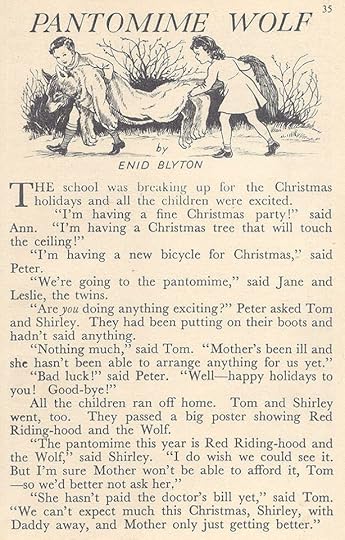
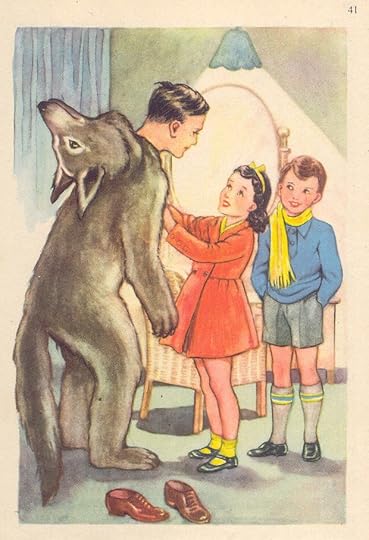
It is a handy size, and the contents are very varied. The cover shows a woodland scene featuring many wild animals, and inside, as it says, are a variety of items. Famous authors such as Richmal Crompton, who wrote the “Just William” series of novels for children, and the world-famous Enid Blyton, were asked to contribute new stories just for this compendium. These stories were never published anywhere else. (You can however read Enid Blyton’s story, “Pantomime Wolf”, complete with the illustrations by Hilda McGavin, on the Enid Blyton website LINK HERE.)
Here is the start:
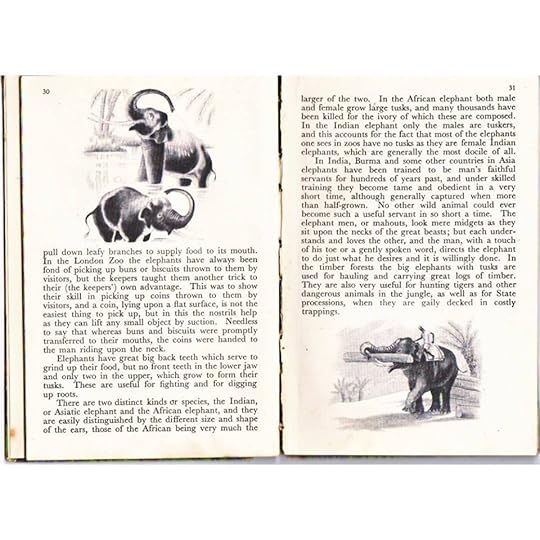
There were poems, puzzles, riddles and conundrums. In this one there are instructions on how to make a working model engine, and one I remember enjoying doing myself (with help from a student who was living with us). It was how to make a miniature bookcase from cigarette cartons and matchboxes, covered, glued together and painted. John persuaded me that we should also make dozens of tiny books - complete with writing - to put inside the bookcase. There were nursery rhymes brought up to date, and quizzes. Quite a cornucopia, in fact, and one story explains the title.
In the story “Printers’ Devil”, a little boy drops the printer’s carefully arranged block of individual letter blocks, and the result is a hopeless hotch-potch of letters. “Printers’ Pie” is a technical term for this occurrence, used by compositors when all the printing blocks have become mixed up into a jumble of letters of various sizes. A mixture of surprises, then, just like these books.
So how did they come about? Interestingly, they are the brainchild of one man, The Inimitable Charles Dickens! He was well used to compiling periodicals of course, such as his own “All the Year Round”, where many famous authors such as Elizabeth Gaskell, Wilkie Collins and Anthony Trollope had their first taste of a wider readership, sometimes under assumed names.
I can do no better than to quote the letter to the readers, which is the foreword at the start of this volume, which explains all:
“I am sure you have read some of the wonderful stories told by Charles Dickens: A Christmas Carol, Oliver Twist, David Copperfield and many others. Just a hundred years ago, in 1843, Charles Dickens became president of the Printers’ Pension, Almshouse and Orphan Asylum Corporation. Why did he do that? To help those men and women who spend their lives in printing books and newspapers and may need money when they grow sick or too old to work, and to provide for the needs of their widows and children. That was a Charity very near to the heart of Charles Dickens, the writer of books, who loved the poor. Since the days of Dickens many famous men have been Presidents: Disraeli (Prime Minister of England), the Duke of Wellington, the last four kings of England, an Archbishop of Canterbury, the Duke of Gloucester, the late Duke of Kent and a long list of other great names.
This year I have the honour to be Festival President and have published this little book - which I hope you will enjoy - so that you may share in remembering those printers, their wives and children who are less fortunate than yourself.
In buying the Junior Printers Pie you have already given money to the Corporation. Perhaps you would like to send a few more shillings? If so, post your stamps or postal orders to me, Walter Hutchinson Esq., 10 Great Queen Street, London WC2. And don’t forget to tell your friends about Junior Printers Pie. I send you my very best wishes.
Walter Hutchinson”
Walter Hutchinson may have been forgotten, but these “Printers Pie” books continued for many years. Dip into it for a while if you come across one; you may find something of interest. The contents are listed at the front, and the book has 54 illustrations, including 24 in 4 colours.
The style and contents of this compilation do show their age; it was intended to amuse and entertain children of getting on for 80 years ago, after all. But as a curiosity, it is well worth a look, especially if you are interested in the various and diverse projects of Charles Dickens.