'Doherty seldom belabors the setting, choosing instead to let time and place gently wash over his audience as he offers subtle observations.' - PUBLISHERS WEEKLY 'An entertaining and intriguing blend of atmosphere and suspense.' - Booklist As Chaucer's pilgrims settle for the night, the Franklin narrates a bloody tale...In 1356, the Black Prince has won his resounding victory at Poitiers, but the impoverished knight Gilbert Savage has received his death wound. As Gilbert lies dying, he tells his squire, Richard Greenele, that the story of his parents perishing during the great plague is untrue, and that Richard, if he wishes to uncover what really happened, must seek out the lawyer Hugo Coticol. Hugo holds a sealed letter which surprisingly contains a macabre confession - a heinous tale of murder which compels Richard to avenge his father's name.
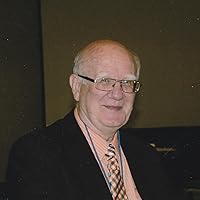
Paul Doherty was born in Middlesbrough (North-Eastern England) in 1946. He had the usual education before studying at Durham for three years for the Catholic priesthood but decided not to proceed. He went to Liverpool University where he gained a First Class Honours Degree in History and won a state scholarship to Exeter College, Oxford, whilst there he met his wife Carla Lynn Corbitt. He continued his studies but decided that the academic world was not for him and became a secondary school teacher.
Paul worked in Ascot, Nottingham and Crawley West Sussex before being appointed as Headmaster to Trinity Catholic School in September 1981. Trinity is a large comprehensive [1700 on roll] which teaches the full ability range, ages 11-18. The school has been described as one of the leading comprehensives in the U.K. In April, 2000 H. M. Inspectorate describe it as an 'Outstanding School', and it was given Beacon status as a Centre of Excellence whilst, in the Chief Inspector’s Report to the Secretary of State for January 2001, Trinity Catholic High School was singled out for praise and received a public accolade.
Paul’s other incarnation is as a novelist. He finished his doctorate on the reign of Edward II of England and, in 1987, began to publish a series of outstanding historical mysteries set in the Middle Age, Classical, Greek, Ancient Egypt and elsewhere. These have been published in the United States by St. Martin’s Press of New York, Edhasa in Spain, and Eichborn, Heyne, Knaur and others in Germany. They have also been published in Holland, Belgium, France, Italy, Romania, Estonia, Czechoslovakia, Russia, Bulgaria, Portugal and China, as well as Argentina and Mexico.
He has been published under several pseudonyms (see the bibliography): C. L. Grace, Paul Harding, Ann Dukthas and Anna Apostolou but now writes only under his own name. He recently launched a very successful series based around the life of Alexander the Great, published by Constable & Robinson in the U.K., and Carroll and Graf in the U.S.A., whilst his novels set in Ancient Egypt have won critical acclaim. Paul has also written several non-fiction titles; A Life of Isabella the She-wolf of France, Wife of Edward II of England, as well as study of the possible murder of Tutankhamun, the boy Pharaoh of Egypt’s 18th Dynasty, and a study on the true fate of Alexander the Great.
Paul and Carla live on the borders of London and Essex, not far from Epping Forest and six of their children have been through his own school. His wife Carla currently owns two horses and is training, for showing and dressage, a beautiful Arab filly named Polly.
Paul lectures for a number of organisations, particularly on historical mysteries, many of which later feature in his writings. A born speaker and trained lecturer Paul Doherty can hold and entertain audiences.
His one great ambition is to petition the Privy Council of England to open the Purbeck marble tomb of Edward II in Gloucester Cathedral. Paul believes the tomb does not house the body
Read this book in 2014, and its the 3rd volume of the amazing "Canterbury Tales, featuring Geoffrey Chaucer.
While on their way to Canterbury, pilgrims need to take shelter in a friary, and its there that the Franklin will his true mysterious bloody tale.
This story is set in the year AD 1356, after the victorious battle of Poitiers, won by the Black Prince, when the dying impoverished Knight, Gilbert Savage, tells his Squire, Richard Greenele, that the story about his parents perishing during the plague is untrue.
In his quest to unravel the truth about his parents, Richard must travel to Colchester and seek out the lawyer, Hugo Coticol, for he has a sealed letter about Richard's parentage, and the horrible secrets surrounding his father's disgraceful death.
Taking this document to heart, Richard will set out to avenge his father's name, and in doing so he'll do anything to set things right for his father and his family name in the end.
Highly recommended, for this is another terrific volume of this wonderful series, and that's why I like to call this episode: "An Excellent Franklin's Tale"!
Doherty delves into Chaucer country! Paul Doherty, who has a number of historical series worth reading, takes up Chaucer again in his third book, "A Tournament of Murders." Dr. Doherty “borrows” from Chaucer his character the Franklin and gives him another “tale.” This time, we find Chaucer’s pilgrims taking shelter in a friary (on their way to Canterbury) and it’s the Franklin’s time to tell a tale. The pilgrims after a long days journey unto this good night have supped and are ready for another tale. It’s a perfect setting too—a dark and stormy night and shadowy figures seem to be lurking about, haunting the “lanes and byways of medieval England. It’s a bloody tale he spins—he insists it’s a true story, one which not only affects his own life but some of his fellow pilgrims!” In 1356, he says, the Black Prince has just won a victory at Poitiers and an impoverished knight, Gilbert, has received his death wound. As he lies dying in a ditch, he tells his squire Richard that the story of his parents perishing during the plague is untrue. Richard, if he wishes to uncover the truth, must travel to Colchester to seek out the lawyer who holds a sealed letter telling the truth of Richard's parentage and the dreadful secrets surrounding his father's disgraceful death. Of course, “the document contains a most macabre confession and Richard finds himself a small step closer to discovering the truth, and compelled to avenge his father's name.” The Franklin continues the story, causing great discomfort (and fear) among the other pilgrims, for, of course, there’s murder that must be taken into account. Not written in rhyming couplets, like the original Tales, A Tournament of Murders nonetheless carries with it the moral or “lesson” that each tale must tell. Doherty takes Chaucer’s idea and changes the intent, of course, as it’s now a murder mystery, but still one that, no doubt, Chaucer would like. Doherty is always relatively easy to read and his plots are realistic and comprehensible and this mystery is a good one to follow—and, indeed, suspenseful.
Esta es la tercera entrega de los cuentos narrados por una serie de peregrinos en su devenir hacia Canterbury. En principio de las tres entregas lo común son los peregrinos en su viaje y paradas en tabernas, los tres cuentos se podrían leer desordenados que no influiría. Este es el que más gustome de los tres, quizás el más flojo es el segundo, en el se mantiene un nivel de misterio e intriga muy interesante.
This is a really good series. You should read them in order and with not too much time between. Helps in figuring out how the people on this pilgrimage are connected easier.
Another excellent medieval series from Paul Doherty. A Tournament of Murders is the third book in a series of 7. Doherty takes the Canterbury Tales Pilgrims and each protagonist tells a story of murder. A brilliantly conceived idea, weaving a well-told mystery, some great characters and a sense of time and place are superbly brought to life. Easy to read and for me a very enjoyable read and an author that never fails to disappoint.
Throughout the Canterbury Mysteries series, Doherty is bringing individual pilgrims to life by having their stories become biographies of who they are. In this 3rd story, the Franklin's tale, not only the Franklin becomes identified with a personal story, but 3 other individuals on the Pilgrimage to Canterbury, become identified. Doherty is inspired!
I am enjoying this series - this is the third installment - the author, Paul Doherty, uses the characters of the Cantebury Tales to tell different mysteries...i find them enjoyable and look forward to the next.
This was really enjoyable; and I didn't guess the killer at all, though I did guess who the Franklin was, and then almost at the end I guessed who the pardoner was (just before it was revealed). I look forward to the next book in the series.
Each one of these is a clever and fascinating mystery within a story with complex characters who never disappoint you at the end of both the travelers tale and the book!
My first detective novels were Miss Marple and then Cadfael. Discovering Paul Doherty was a pleasant suprise, an easy read with a good mystery. I wasn't expecting a conspiracy as intricate which did keep me guessing until almost the end.
Great series so far.....this one may be the best of the series. After the last book in the series (7 ?) this may still be the best in the series.....just my opinion.