What does Lacan show us? He shows us that desire is not a biological function; that it is not correlated with a natural object; and that its object is fantasized. Because of this, desire is extravagant. It cannot be grasped by those who might try to master it. It plays tricks on them. Yet if it is not recognized, it produces symptoms. In psychoanalysis, the goal is to interpret--that is, to read--the message regarding desire that is harbored within the symptom.
Although desire upsets us, it also inspires us to invent artifices that can serve us as a compass. An animal species has a single natural compass. Human beings, on the other hand, have multiple compasses: signifying montages and discourses. They tell you what to do: how to think, how to enjoy, and how to reproduce. Yet each person's fantasy remains irreducible to shared ideals.
Up until recently, all of our compasses, no matter how varied, pointed in the same direction: toward the Father. We considered the patriarch to be an anthropological invariant. His decline accelerated owing to increasing equality, the growth of capitalism, and the ever-greater domination of technology. We have reached the end of the Father Age.
Another discourse is in the process of taking the former's place. It champions innovation over tradition; networks over hierarchies; the draw of the future over the weight of the past; femininity over virility. Where there had previously been a fixed order, transformational flows constantly push back any and all limits.
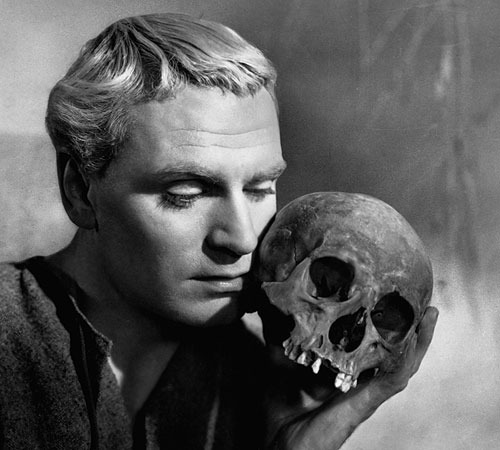
Freud was a product of the Father Age. He did a great deal to save it. The Catholic Church finally realized this. Lacan followed the way paved by Freud, but it led him to posit that the father is a symptom. He demonstrates that here using Hamlet as an example.
What people have latched onto about Lacan's work--his formalization of the Oedipus complex and his emphasis on the Name-of-the-Father--was merely his point of departure. Seminar VI already revises this: the Oedipus complex is not the only solution to desire, it is merely a normalized form thereof; it is, moreover, a pathogenic form; it does not exhaustively explain desire's course. Hence the eulogy of perversion with which this seminar ends: Lacan views perversion here as a rebellion against the identifications that assure the maintenance of social routines.
Jacques-Marie-Émile Lacan was a French psychoanalyst, psychiatrist, and doctor, who made prominent contributions to the psychoanalytic movement. His yearly seminars, conducted in Paris from 1953 until his death in 1981, were a major influence in the French intellectual milieu of the 1960s and 1970s, particularly among post-structuralist thinkers.
Lacan's ideas centered on Freudian concepts such as the unconscious, the castration complex, the ego, focusing on identifications, and the centrality of language to subjectivity. His work was interdisciplinary, drawing on linguistics, philosophy, mathematics, amongst others. Although a controversial and divisive figure, Lacan is widely read in critical theory, literary studies, and twentieth-century French philosophy, as well as in the living practice of clinical psychoanalysis.
Immediately beginning the complete reread this deserves for ultimate satisfaction. Not clarification, it was clear enough to be so enjoyable I just crave the repetition. Then I'll maybe hazard something by way of exuberant blahblah. See me under the bar. __________________
Where to begin again? The graph. S.V introduced the graph as an elaboration of the elementary point de capiton, the emblem of the Lacanian dialectic of anticipation and retroaction; S.VI lingers in it until temporality itself—say, the time it takes to find the words, or their repetition—is revealed as an absolute determination for each element. Which is to say nothing more than that a merely formal-logical definition of A, d, a, m, and so on, is impossible, for comprehension requires that all the elements be grasped as emerging together from their defining encounters. And worked-through in each case, for each subject. Nothing in isolation. It is both a synchronic structure and a diachronic form. Existence and experience. Plots. To demand the meaning of something within Lacanian theory necessarily entails answering where it comes from and how it functions. Lacan says as much in the end, breaking ground for S.VII:
“Psychoanalysis is not a simple reconstruction of the past, nor is it a reduction to pre-established norms; analysis is neither an epos nor an ethos. If I had to compare it to something, it would be to a narrative that would itself be the locus of the encounter at stake in the narrative.”
What else? Dreams, Hamlet, Hamlet, masturbating dogs, cuts and slits. Several sessions explore the account of an analysand who relates a short dream in which he was reunited with his recently deceased father, but that he found himself greatly pained because “he [the father] did not know he was dead.” I am glad to have decided to read this in its entirety twice, because in my first read I completely (symptomatically?) missed the crucial point Lacan develops here: the ignorance that the subject attributes to his dead father, compounded with the guilt arising from the full statement “he did not know he was dead, as I wished,” is essentially a masochistic fantasy the subject relies upon to maintain his own ignorance, that is to say, to maintain himself in a position from which he does not have to confront the pain of existence bereft of the desire to live, deprived of the illusion that any object is intrinsically satisfying. It’s fascinating and dense and warrants every bit of extrapolation across the weeks of sessions.
Another section takes up the notes from a case study of a patient of Ella Sharpe’s. The analysis here weaves a significant web from the materials of the patient’s tics, dreams, and conscious fantasies. He is annoyed by “a little cough” he emits and cannot seem to control; his dreams depict a tableau of gazes and positions coincidentally akin to Lacan’s schema of the inverted bouquet; and his superficially silly fantasies (“It [the little cough] has, however, reminded me of a phantasy I had of being in a room where I ought not to be, and thinking someone might think I was there, and then I thought to prevent anyone from coming in and finding me there I would bark like a dog. That would disguise my presence. The ‘someone’ would then say, ‘Oh, it’s only a dog in there.’”) are nothing less than the insignias of his most entrenched identifications. Once again Lacan demonstrates how the smallest and seemingly most innocuous details, the disjecta membra of imaginary decomposition reanimated through the symbolic, are the lodestars of interpretation. Having at hand the entire case study, he is able to coordinate more aspects here than in the previous dream interpretation, and the effect is duly enriched.
I’m not going to say much about the section on Hamlet. Nearly every keyword in Lacan’s clinical vocabulary shows up for rehearsal and expands through the performance. Bravo. The transitions between literary criticism and psychoanalytic theory and practice are virtually seamless and mutually illuminating. You will find all the hallowed questions questioned: Is Hamlet mad? Why does he hesitate? Does he love Ophelia? Will he be or not be? What does Gertrude want? And most enigmatic of all, why does Bernardo call out to Francisco rather than the other way around?!
“It is because this play furnishes the layering of myriad dimensions and organized levels—and in some ways, the maximum possible number of dimensions and levels—necessary to provide the space for what lies within us to resonate there…[Hamlet] is a character who is made up of something: the empty space in which we can situate our ignorance.”
“Hamlet is, if you will, a sort of hub where a desire is situated, and we can find all the features of desire in him.”
S.VI concludes the same way as S.V—with a slew of sessions dedicated to “The Dialectic of Desire.” However, to repurpose something of Walter Benjamin’s, what S.V had in dreams, S.VI takes hold of in waking life. In other words, whereas S.V concentrated on dreams, the significance of the phallus, and clinical dynamics, S.VI sublates those points by showing how they come alive in every subject in the form of fantasy. One gets the feeling in this last section—as close to a tour de force as such reading can be—that Lacan knew he was on to something, and it was precisely the tantalizing whiff, the traces of objet petit a becoming increasingly vivid, that provided the exhilaration of conceptualizing something unprecedented in the history of the human sciences. In fact, Lacan gives explicit emphasis here to what had theretofore been merely tacit: psychoanalysis problematizes the domains of philosophy, science, and knowledge, and it does so by fully formulating the speaking subject as the inescapable articulation of desire and the signifier. “The real is without fissure,” therefore a cut occurs from which the symbolic may emanate, in which slit the subject assumes a position through the function of the fundamental fantasy. I could not tell you if it’s more important to keep the threads of the cut, the slit, and fantasy distinct, or if the trick is in how they are braided. Session XX, “The Fundamental Fantasy,” the opening fanfare for the final section, follows a pattern I’ve noticed: any time Lacan gets two weeks to prepare, the shit gets thick.
Of course you know you can read another summary here. Of course Lacan’s discourse is once again laden with his epochal betes noires—namely, object relations and ego psychology, those usual suspects of analytic malpractice guilty of promulgating “moralizing normalization,” reducing desire to demand, and stifling the symbolic dialectic within dyadic imaginary confines. Of course in pursuit of the most workable definitions of mathemes and algorithms and schemas oh my I’m off to the next course.
"I must say if I had to recommend a book as an introduction to someone who was going to be a child psychiatrist or a child analyst, rather than any one of the books of Mr. Piaget, I would advise him to begin by reading Alice in Wonderland, because he would grasp effectively something which I have the best of reasons for thinking, given everything that we know about Lewis Carroll, to be something which is based on a profound experience of children‟s jokes, and which effectively shows us the value, the incidence, the dimension of the operation of nonsense as such." Page 117
"...Lewis Carroll, I will show you what Lewis Carroll says somewhere more or less in the following terms: he thought that he had seen a garden gate - this famous gate of paradise of the interior of the maternal womb around which there are currently centred, or even engulfed all the analytic theories - which could be opened with a key. He looked more closely and perceived that it was a double rule of three." Page 147
"...Alice in Wonderland and Journey through the Looking Glass. These two Alices are almost a poem of phallic avatars." Page 162
These are very polemic views on desire and interpretation. Lacan views desire not like Spinoza: not as a passion to be overcome, or joy, any of the active or passive sides of the subject. It's not about the "desiring machine which produces reality". Rather, in Lacan's view, it's "relation to lack" and "desire of the Other". The object and cause of desire is the little "a".
On interpretation, he resumes Freud's "Interpretation of dreams" but goes beyond that. He takes long analyzing the British psychoanalyst Ella Sharpe's dream and Shakespeare's Hamlet. The former shows Sharpe's client "wish for omnipotence". The latter is a drama of repression and revenge, which theme has the same roots as Oedipus Rex. Hamlet is a "tragedy of desire".
A series of lectures by Lacan on Shakespeare’s ‘Hamlet’. Read in order to present on it for the course ‘Method and Interpretation’, as part of my MA ‘Philosophy of Humanities’.
You only have an opportunity at understanding this if you have a basic knowledge of (Freudian) psychoanalysis, but without a solid understanding you’re not going to grasp it sufficiently. I don’t grasp it sufficiently either. Luckily, per this course, I can revert to discussing the method of this text, which, in turn, might enable me to understand this text better, and such as are alike in the future.
Without any knowledge of psychoanalysis, don’t even bother with this text. Unless you want a frustrating laugh, with all the speech of the phallus.
Edit: All of this is not to say that this is a bad, irrelevant or purely obstruse text. It's brimming with wisdom, at some points this wisdom even presents itself simply at the surface, but it is - just as simply - hardly accessible.
Great. Obviously requires a reread. Some of my favorites:
"For a sadistic fantasy to endure, the subject's interest in the person who suffers humiliation must obviously be due to the possibility of the subject's being submitted to the same humiliation himself."
"Perversion is indeed something articulate, interpretable, analyzable, and on precisely the same level as neurosis."
"The object of desire is essentially different from the object of any need [besoin]. Something becomes an object in desire when it takes the place of what by its very nature remains concealed from the subject: that self-sacrifice, that pound of flesh which is mortgaged [engagé] in his relationship to the signifier."
Lacan the lecturer (contra the writer), true to form, offers himself up for analysis as he skillfully skirts (even dances) around the supposed (surface) object of analysis—an analysand without an analyst (unless one graciously offers him one in oneself), absurd as that concept is. Classic. Probably best read in the context of the seminar series from which it's excerpted; or never read; hell if I know.
L'interpretazione che Lacan ci dà di "Amleto" in questo saggio è interessante, brillante, in una parola, ottima. Solo non capisco, perché l'ha dovuta scrivere in aramaico?
Lacan’s focus on désir, his translation of Freud’s “Wuncsh,” is the linchpin of this yearlong seminar. However, “Wunsch is not, in and of itself, désir; it is a formulated or articulated desire” (37). Wunsch is too spoken for Lacan, as it were. Yet, Lacan confesses at the seminar’s end that the function of désir still escapes him (471).
Nonetheless, Lacan identifies how désir is derivative of “the fundamental dependence of subjectivity on language” (10). Such dependency on language entails an alienation within language—the words one uses to articulate need are words that were forced upon them. Thus, our needs undergo a transformation in language. Need is neither desire nor demand. Need is need for the breast, nourishment, and survival more generally; however, demand is the Other beseeching one to articulate what they want. This demand made by the Other—a demand to satisfy the Other—entails that “the subject first encounters desire” as being “initially the Other’s desire” (15). Thus, as Lacan argues in this work’s first chapter, philosophers wrongly understand desire as something exclusively related to the object of need. Constitutive of the dimension of desire is our hope that it is satisfied it without our asking and/or beyond a way that we knew it could be satisfied. Desire is immersed the slippery and polyvalent function of language and outside the subject’s cognitive grasp. Desire, then, is how need is altered by demand and sublimated through language; it’s ultimately the need for a recognition that one cannot articulate.
Further, desire is desire for an object that is lost, especially the loss of the mOther’s breast and the primary narcissism of the child that imagined it was the most important aspect of the mOther’s life. Which is to say, desire is a desire for a time in which we had not been alienated in and by language and the mOther was one with us. As Lacan states “human beings cannot help but consider themselves to be… missing something” (218). Crucially, Lacan takes this missing something, this loss object, to chiefly be the phallus; put otherwise, the loss of all past sensations of unity between our Innerwelt and Umwelt become grouped as a loss of the phallus. Without designating the many ways Lacan talks of the phallus, it should nevertheless be noted that “the subject cannot situate himself in desire without castrating himself—in other words, without losing what is most essential about his life” (372). Our forced choice to enter language severs us from the mOther and thus castrates us from continually perceiving ourselves as the mOther’s precious object. The phallus becomes an absent transcendental signifier.
Lacan has it that two most basic forms of ordinary unhappiness, the kind that patients seek out therapists for, are hysteria and obsession. In hysteria, the patient blocks himself or herself from getting what he or she wants (what the patient desires) because what the patient wants above all is to be desired himself or herself. A dog chasing its tail.
With obsession, the patient sets himself or herself the task of arriving at some impossible desire. The obsessive feels he or she is incapable of getting what he or she wants until the conditions are just right. But of course they never will be.
As a clinician, Lacan does not denigrate these two states of ordinary unhappiness. And in fact, he thinks that having one of two of these tendencies does not preclude someone from living meaningful lives. Lacan's favorite historical examples of hysterics, for instance, are Socrates and Freud, two people whom Lacan reveres. But the problem as Lacan sees it is that when anyone operates in one of these modes, he or she is blocking himself or herself from achieving the kind of ordinary satisfaction we are all capable of having, if only we get over ourselves by raising the question of our desire as an issue.
Other cool stuff in this volume includes a long, enlightening digression on Hamlet and the notes of Lacanian clinician Bruce Fink.
Es el segundo seminario que leo de Lacan y me parece asombroso lo que puede sacarse desde una perspectiva filosófica, sobre todo el estudio sobre Hamlet en relación con el deseo y la pulsión de muerte. Genial.
He's making it all obscure as usual. The only thing I learnt is, sometimes we don't desire the object itself, but the fantasy attached to it. That was some mind-blowing stuff.