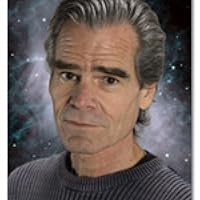
Jim Show Me the Picture is a collection of work by photographer Jim Marshall, who created iconic images of rock 'n' roll stars, jazz greats, and civil rights leaders.
This career-spanning volume showcases hundreds of photographs evoking the sights and sounds of the 1960s and 1970s.
Marshall photographed noteworthy musicians like Bob Dylan, Jimi Hendrix, John Coltrane, and Janis Joplin, as well as figures throughout history—from civil rights leaders to ordinary folks in New York, San Francisco, and the American South.
• Marked-up proof sheets offer insight into Marshall's process • In-depth essays from his contemporaries tell a compelling story about this larger-than-life man • Marshall's legacy is the subject of a documentary feature film Show Me the The Story of Jim Marshall
From intimate portraits and heady crowd scenes to haunting street shots, Marshall's work had the power to look into the soul of an individual and capture the mood of an entire generation.
This gorgeous collection is a fitting tribute to a true legend and a must-have for devoted Jim Marshall fans and newcomers alike.
• The perfect gift for rock ‘n' roll and jazz lovers, photography buffs, music history devotees, and fans of Jim Marshall • A deluxe, beautiful volume to display on the coffee table • Great for fans of The Love, Rock, and Revolution by Joel Selvin, Jim Jazz Festival by Amelia Davis and Tony Nourmand, and The Road to Woodstock by Michael Lang
At the 1969 Woodstock Festival, Jim Marshall is seen wearing several Leica cameras hanging around his neck. It’s an indelible image of the artist in his element. In the 1979 movie “Apocalypse Now,” Dennis Hopper portrays a crazed American photojournalist who has multiple cameras dangling from his neck. Hopper said he modeled aspects of this character on Jim Marshall. There is a riveting photo of Hopper in the book staring directly into Marshall’s camera lens while he is standing backstage next to Brian Jones, Nico, and Judy Collins at the 1967 Monterey Pop Festival. This is just one of the countless iconic images Marshall shot during his lifetime. Hopper’s depiction of a crazed cocaine-fueled photographer (inspired by Marshall) might be an exaggeration; however, in 1983, Marshall was screaming obscenities and waving a gun at his neighbors in San Francisco while high on cocaine and alcohol. He was later arrested and sentenced to five years’ probation for a weapons violation. Marshall had famously once said: “I love cars, guns, and cameras. Cars and guns have got me into trouble. Cameras haven’t.”
The 1983 incident was a fall from grace for Marshall during his long and impressive career. His life is wonderfully chronicled in “Jim Marshall: Show Me The Picture.” His passion for photography began at an early age. He was a photojournalist who only used natural lighting. Wandering about the city, he would find fascinating images to document: people at a lunch counter, little kids sitting on a bench, a lone soldier at a pinball machine, nightclub singers. Finding these “hero shots” was what motivated Marshall. As Michael Zagaris recalls: “Jim was really curious, he was inquisitive, and more than wanting to just shoot it, you could tell he wanted to be in it. He wanted to jump in it and experience it.”
While in San Francisco from 1959 to 1962, Marshall established what would become lifelong relationships with John Coltrane, Miles Davis, and other artists. He moved to New York’s Greenwich Village in 1962 to expand his reputation and acquired assignments from national publications and major record labels. He befriended Judy Collins, Joan Baez and the up-and-coming Bob Dylan. He returned to San Francisco at a pivotal moment. A musical renaissance was emerging and he was there to capture key moments of the Summer of Love, auditorium shows and festivals. He became close friends with Johnny Cash. “Whenever anyone asks me how I got the photographs I did, why I was often the only photographer present or got such unique access, I reply simply, 'Trust.’” Marshall’s compassion for social justice was also a driving force, photographing freedom marches and all aspects of life, from the fortunate to the unfortunate.
I met Jim three times: once in the early seventies at a photo lab, forty years later at a book signing where he was talking about his book “TRUST,” and weeks afterward at a San Francisco art gallery where his photos were on display. I noticed him seated alone and came over to say hello and sat beside him. He gave me a guarded “What the fuck do you want?” look before relaxing once he realized I was only there to express appreciation for his work and to talk about art. This last encounter was shortly before his death.
Within this book are many intimate and poignant recollections by Michelle Margetts, Amelia Davis, and others who knew Jim Marshall well. I did not. However, from my brief encounters, I did glean a sense of who he was and the love he had for his art. Jim Marshall was an exemplary photographer who not only was technically skilled but had a unique instinct for gaining access and knowing when to aim and shoot to document quintessential moments. I highly recommend this book. It’s a real treasure.
What an incredible story of photographer, Jim Marshall. So much more than a music photographer (civil rights, photojournalist).
Some of the most very best candid intimate images from the 1960s and 1970s and after reading this book, you get an understanding of the mad genius of the man and his character.
This book is about photographer Jim Marshall, told by several people who were very close to him. For example, Amelia Davis was his personal assistant. She met Marshall in 1998 and worked with him until the time of his death in 2010. The book provides insight into some of his most iconic photographs and explains his close relationships with his subjects. These relationships allowed him the personal access that made his work stand out from other photographers of the same genre and time. Marshall refused to be relegated to the photography pit for the first few songs at the beginning of a concert. It also hits on some of his personal life, warts and all. As a photography enthusiast I love books like this, with a behind the scenes look at a photographer and their work.