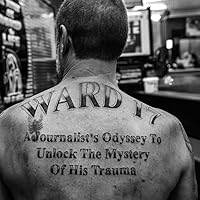
Психолог Эдвард Тик рассказывает про посттравматическое расстройство у участников войн, пытается найти его причины и способы с ним работать, и в ходе своих изысканий приходит к тому, что это сложное явление про идентичность – не про психику или здоровье, а в первую очередь про душу целиком, что бы этим ни называть. Много про историю и архетипы войн в массовом сознании, а также традиционные практики отношения к воинам у разных народов мира, которые Тик в итоге применяет для своих пациентов. Выглядит местами почти эзотерикой, но ничего слишком мистического.
Читал, чтобы знать и быть готовым.
Цитаты:
«Richard Gabriel writes, “In every war since World War I, more American soldiers have become psychiatric casualties than were killed . . . . We have reached a point where almost everyone exposed to combat will, within a comparatively short period of time, be killed, wounded, or driven mad”.»
«During hostilities, the United States suffered 148 combat deaths, 235 other deaths, and 467 wounded. As of more than a decade later, the Veterans Administration had recognized a total of 262,586 veterans disabled due to Gulf War duties and 10,617 dead of combat-related injuries and illnesses since. That raises the casualty rate of American forces in the Gulf War to the rather substantial figure of 30.8 percent.»
«And our culture, which craves various forms of getting high, exacerbates the problem by encouraging stories that glorify war in order to gain a vicarious thrill. the compulsive storytelling reinforces our strange cultural ambivalence about war—we can get high on war stories while shunning war’ s reality and failing its victims.»
«- Though young people in the military may hunger to become warriors, in most cases they become soldiers instead. Warrior and soldier are different roles, different archetypes. The role of soldier be the modern remnant of the warrior archetype, in that it is mass produced, wired with technology, and given no honest sense of transcendent purpose or lifelong usefulness.
It is a twisted version of warriorhood that comes from an immature psyche still trying to prove itself in a world it fears. It is characterized, as Robert Moore summarizes, by lack of control of aggression, insensitivity to relatedness, desire for vengeance, enjoyment of carnage and cruelty, scorn toward the vulnerable, hostility toward the feminine and everything soft, and compulsive and workaholic tendencies.»
«Art trusted no one and was numb to all feelings but “staying on red alert.” He had to distance himself from everyone or he’d let his guard down. He startled at every loud sound and could not sleep—or when he did, he had nightmares of combat. And he was plagued with survivor’s guilt. “I shouldn’t be here. I should be dead a thousand times, the things I’ve been through. That’s why I’m just waitin’ for it. Death is chasing me. It’ll catch up to me. Nobody could survive what I did and still be alive»
«Post-traumatic stress disorder is a constellation of fixated experience, delayed growth, devastated character, interrupted initiation, and unsupported recovery. Many veterans who cannot get on with life are boy-men stuck in the psychic war zone, lost in an incomplete and horrific rite of passage.»
«It seems that survivors cannot find peace unless they make peace with the legions of dead with whom they have any relationship—as relative, friend, comrade in arms, former enemy, or even as their killer. Relations with the missing and the dead, and with death itself, are at the core of the soul wound we call post-traumatic stress disorder.»
«After a year of performing imaginal exhumations, Ray finally began to feel, for time, that he had the right to live a full life. His form of reconciliation with the dead was to make it his duty to carry forward their words, names, and memories. Not able to escape what he had seen, he accepted the responsibility to bear witness to it.»