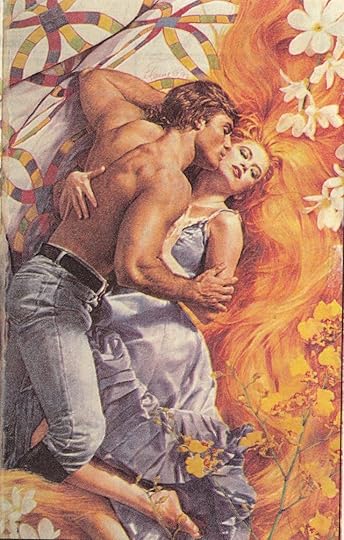
Normally, Cynthia Wright is a no-brainer for me. She writes well-researched, historical romance, with deep, well-rounded, main characters, who are influenced by and influence the historical situations she places them in. She has a knack for including the historical stuff with a deft touch, which reveals her understanding of not only the events described, but the far-reaching implications. Having said that, I spent 50% of “In A Renegade’s Embrace” far from happy.
The heroine, Maddy, almost turned me off of the entire book, all by herself. She is supposed to be a prim and proper lady, who discovers her true, passionate nature in the ‘wild west.’ How she came off was judgmental and holier-than-thou, not to mention a stick-in-the-mud fun-killer, though. Maddy thinks poorly of every single person she meets in Deadwood, AZ, and, while I understand the author’s purpose (clash of cultures), Maddy doesn’t see a single good thing about anyone, except the Hero. Of course, he’s depicted as the only decent man she meets in Deadwood, but that’s partly because she thinks she’s too good to mingle with the common folk in town, let alone ‘ladies’ like Calamity Jane. This goes beyond culture shock and ignorance. Maddy is downright mean, hateful, arrogant, and narrow-minded. But, of course, Fox, the Hero, falls for her, because she’s gorgeous and a ‘real’ lady. Let me tell you something–‘real’ ladies don’t make people feel unwelcome, which was what Maddy did, when one of the older, eccentric women tries to make friends with her. Of course, it’s okay, because Maddy is so much better than everyone else that you can’t expect her to make friends with these low-class degenerates.
I didn’t like Fox, the Hero, much better. The whole guilt-ridden, self-destructive, self-loathing, woe-is-me, pity-party lasted way longer than it should have, leading to a very slow, dragging, frustrating read.
But, at 50% of the way through, Fox and Maddy visit the Lakota, and Ms. Wright’s talents begin to shine again. Although she paints an idyllic and idealized scene of the Native American way of life, it’s done with a sense of respect, which balances out the sentimentality nicely, and Maddy finally stops acting like a complete jerk. After that, I ripped through the remaining pages of the book in record time, experiencing the sense of wonder and interest, which I’ve come to expect from Ms. Wright’s works. There were still some points where I was unpleasantly reminded that this was not her best effort, however, including an awkward shoe-in of the nickname ‘Madness,’ which had never been mentioned before and was never mentioned again, and some editing errors, which I’m not used to seeing from Ms. Wright.
Altogether, this isn’t enough to put me off of Ms. Wright’s books–she’s written far more that I like than dislike–and I will not hesitate to read her other offerings, but this was a sad ‘miss’ for me.