

What do you think?

Under the Black Flag: The Romance and the Reality of Life Among the Pirates
"This is the most authoritative and highly literate account of these pernicious people that I have ever read." -- Patrick O'Brian
Pirates are so much a part of legend that it is easy to forget they actually existed. UNDER THE BLACK FLAG tells their story in a rollicking account of the golden age of piracy that is packed with history, anecdote, and above all adventure. Here are the true stories of such bloodthirsty legends as Blackbeard and Captain Kidd, Anne Bonny, and the fearsome Mary Read. And here are rousing descriptions of what ships pirates sailed, what punishments they exacted, what they really wore, and how they flourished--or perished. From the smoky havoc of shipboard battle to the loneliness of a fugitive's life at sea, this spellbinding narrative vividly brings the brutal world of pirates to life.
Pirates are so much a part of legend that it is easy to forget they actually existed. UNDER THE BLACK FLAG tells their story in a rollicking account of the golden age of piracy that is packed with history, anecdote, and above all adventure. Here are the true stories of such bloodthirsty legends as Blackbeard and Captain Kidd, Anne Bonny, and the fearsome Mary Read. And here are rousing descriptions of what ships pirates sailed, what punishments they exacted, what they really wore, and how they flourished--or perished. From the smoky havoc of shipboard battle to the loneliness of a fugitive's life at sea, this spellbinding narrative vividly brings the brutal world of pirates to life.
320 pages, Paperback
First published January 1, 1995
About the author
David Cordingly
33 books108 followersDavid Cordingly is an English naval historian with a special interest in pirates. He held the position of Keeper of Pictures and Head of Exhibitions at the National Maritime Museum in Greenwich, England for twelve years.
David Cordingly organised several exhibitions at the National Maritime Museum, including Captain James Cook, Navigator and The Mutiny on the Bounty. One of these exhibitions was Pirates: Fact and Fiction, which became a critical and popular success, followed by a book of the same title, authored by Cordingly and John Falconer. Cordingly explored the subject further in his book Under the Black Flag: The Romance and the Reality of Life Among the Pirates. This was followed by Heroines and Harlots: Women at Sea in the Great Age of Sail (published in the U.S. under the title Women Sailors and Sailors' Women: An Untold Maritime History), expanding on a subject Cordingly had touched upon in Under the Black Flag in a chapter entitled "Women Pirates and Pirates' Women".
In 2002, Cordingly wrote an introduction to the republication of Captain Charles Johnson's 1724 book A General History of the Pyrates.
The Billy Ruffian: His Majesty's Ship Bellerophon and the Downfall of Napoleon, published in 2003, was longlisted for the 2003 Wolfson History Prize. It tells the story of an English warship, HMS Bellerophon, which played an important part in many battles and held captive the defeated Napoleon following the Battle of Waterloo.
Cordingly appears on the Pirates of the Caribbean: The Curse of the Black Pearl DVD bonus features in a section called "Below Deck", a virtual tour of a pirate ship. This consists of several documentary shorts, hosted by Cordingly, comparing piracy fact and fiction along the same lines as Under the Black Flag.
Cordingly resides with his wife and family in Brighton, Sussex.
David Cordingly organised several exhibitions at the National Maritime Museum, including Captain James Cook, Navigator and The Mutiny on the Bounty. One of these exhibitions was Pirates: Fact and Fiction, which became a critical and popular success, followed by a book of the same title, authored by Cordingly and John Falconer. Cordingly explored the subject further in his book Under the Black Flag: The Romance and the Reality of Life Among the Pirates. This was followed by Heroines and Harlots: Women at Sea in the Great Age of Sail (published in the U.S. under the title Women Sailors and Sailors' Women: An Untold Maritime History), expanding on a subject Cordingly had touched upon in Under the Black Flag in a chapter entitled "Women Pirates and Pirates' Women".
In 2002, Cordingly wrote an introduction to the republication of Captain Charles Johnson's 1724 book A General History of the Pyrates.
The Billy Ruffian: His Majesty's Ship Bellerophon and the Downfall of Napoleon, published in 2003, was longlisted for the 2003 Wolfson History Prize. It tells the story of an English warship, HMS Bellerophon, which played an important part in many battles and held captive the defeated Napoleon following the Battle of Waterloo.
Cordingly appears on the Pirates of the Caribbean: The Curse of the Black Pearl DVD bonus features in a section called "Below Deck", a virtual tour of a pirate ship. This consists of several documentary shorts, hosted by Cordingly, comparing piracy fact and fiction along the same lines as Under the Black Flag.
Cordingly resides with his wife and family in Brighton, Sussex.
Ratings & Reviews
Friends & Following
Create a free account to discover what your friends think of this book!
Community Reviews
Displaying 1 - 30 of 952 reviews

September 19, 2019
Under pirate flags, the buccaneers of the late 17th and early 18th century raided many a ship and took many a cargo, and committed more than a few acts of murder and torture along the way. Yet pirates have, arguably, the most positive public image among all criminals. How can this be? David Cordingly, who organized many maritime-history exhibits for Great Britain's National Maritime Museum in Greenwich, England, seeks an answer to that question in his book Under the Black Flag.
As Cordingly explains it, the existence of rich and not-terribly-well-protected stores of treasure in the New World, coupled with competition among European nations for territory and hegemony in the Caribbean, made for an ideal environment for piracy from 1650 to 1725 – “the Golden Age of Piracy.” The frequent naval wars fought by Great Britain, France, Spain, Holland, and other nations meant that, when those wars were over, there were plenty of skilled but out-of-work sailors who might find a new job opportunity on a pirate ship.
Many of the stories of pirate raids recounted by Cordingly were already somewhat familiar to me. Having travelled in Panama, I knew the story of Sir Henry Morgan’s January 28, 1671, raid on Panama City, “the principal treasure port on the Pacific coast of Central America for the gold and silver which was brought by ship from Peru” (p. 51). Indeed, it is a story that is still retold to this day, with sadness, by the people of Panama.
Morgan’s well-planned raid successfully took Panama City, even if the city council’s president, Don Juan Pérez de Guzmán, had managed to get most of the treasure out of the city before it fell. Morgan reported to Jamaica’s governor, Sir Thomas Modyford, that “Thus was consumed the famous and ancient city of Panama, the greatest mart for silver and gold in the whole world”; but no doubt he left out of his report the fact that “The inhabitants [of Panama City] were savagely tortured to reveal where they had hidden their money” (p. 52). Cordingly is conscientious in reminding his readers that real-life pirates were routinely cruel and brutal in making sure that they got the money they were seeking.
One of the paradoxes of life among the pirates is that a seaman could get a better shake, in terms of respect for his rights, as a member of a pirate crew than as a sailor in the British Royal Navy. A certain kind of rough democracy seems to have prevailed among many pirate crews; if a man could do the work, he’d be respected for it, and factors like a man’s cultural or socioeconomic background might not matter as much. Pirate captains even drew up formal articles, as chronicled in the 1724 book A General History of the Pyrates:
“III. No person to game at cards or dice for money.” [Really?]
"VII. To desert the ship or their quarters in battle, was punished with death or marooning.
"IX. No man to talk of breaking up their way of living, till each had shared £1,000. If in order to this, any man should lose a limb, or become a cripple in their service, he was to have 800 dollars, out of the public stock, and for lesser hurts, proportionately.” (pp. 99-100)
Cordingly also chronicles how the pirate economy had a formative effect on the life and culture of many Caribbean communities, as in the case of Port Royal, Jamaica. In the period between 1650 and 1670, “The governors of the island actively encouraged [pirates] to use Port Royal as a base, hoping that the presence of heavily armed ships would discourage the Spanish and French from attempting to capture the island”; consequently, “During the 1660s the pirates had a field day” (p. 143), as Port Royal became home to countless bars, taverns, brothels, and other businesses that served the pirates. Yet Morgan’s 1671 raid on Panama City, described above, caused the British government to recall both Morgan and Modyford, and to distance itself from piracy; henceforth, “Port Royal became notorious not as a pirate haven but as a place where pirates were hanged” (p. 145).
By the early 18th century, the nations of Europe were no longer willing to wink at piracy as long as a pirate was on one’s own side. The potentially greater profits of peacetime economies demanded an end to the depredations of these seagoing outlaws, and therefore the end of the age of piracy came quickly – as shown in the case of Edward Teach, or “Blackbeard,” who was killed by an expedition led by Lieutenant Robert Maynard at Ocracoke Island, North Carolina, in 1718.
Cordingly captures well the drama of that moment, as well as the ways in which Blackbeard has hung on in popular culture – from the 1798 play Blackbeard, or The Captive Princess, to the 1952 film Blackbeard the Pirate with Raoul Walsh, to contemporary Outer Banks tourism: “As for the village of Ocracoke in North Carolina, the story of Blackbeard has proved a useful tourist attraction. Visitors to the island will find an inn called Blackbeard’s Lodge, a pirate souvenir shop called Teach’s Hole, and the Jolly Roger Pub” (p. 201). On the basis of many summertime visits to Ocracoke Village, I can tell you that Cordingly speaks true.
A thoughtful afterword, “The Romance of Piracy,” points out that pirates, then as now, were hardened criminals capable of great cruelty toward their victims; consider, for example, the treatment that contemporary merchant captains and crews have received from Somali pirates off the Horn of Africa. Therefore, Cordingly writes, “it is surprising that [piracy] should have acquired a comparatively glamorous image” (p. 242).
Cordingly suggests that the reason behind that paradox is that pirates represent a way for people of the modern world to engage in symbolic rebellion against the drabness and routine of modern life: “The pirates escaped from the laws and regulations which govern most of us. They were rebels against authority, free spirits who made up their own rules. They left behind the grey world of rainswept streets and headed for the sun. We imagine them sprawled on sandy beaches with a bottle of rum in one hand and a lovely woman by their side, and a sleek black schooner moored offshore waiting to carry them to distant and exotic islands” (p. 243).
Cordingly published Under the Black Flag in 1995, eight years before the premiere of Pirates of the Caribbean: The Curse of the Black Pearl (2003). As the five films in the Pirates of the Caribbean series have grossed $4.5 billion worldwide, it seems clear that Cordingly is correct in his closing verdict regarding the “romance” of piracy. Indeed, he anticipated most of the elements of the screenplays for these films, years before they were written:
The fact is that we want to believe in the world of the pirates as it has been portrayed in the adventure stories, the plays, and the films over the years. We want the myths, the treasure maps, the buried treasure, the walking the plank, the resolute pirate captains with their cutlasses and earrings, and the seamen with their wooden legs and parrots. We prefer to forget the barbaric tortures and the hangings, and the desperate plight of men shipwrecked on hostile coasts. For most of us, the pirates will always be romantic outlaws living far from civilization on some distant sunny shore. (p. 244)
Well-written and well-illustrated, Under the Black Flag is an authoritative history of the so-called “Golden Age” of piracy; and if the book doesn't have enough of a Captain Jack Sparrow quality for you, please keep in mind that, in the book’s subtitle, Cordingly promised to set forth the romance and the reality of life among the pirates.
As Cordingly explains it, the existence of rich and not-terribly-well-protected stores of treasure in the New World, coupled with competition among European nations for territory and hegemony in the Caribbean, made for an ideal environment for piracy from 1650 to 1725 – “the Golden Age of Piracy.” The frequent naval wars fought by Great Britain, France, Spain, Holland, and other nations meant that, when those wars were over, there were plenty of skilled but out-of-work sailors who might find a new job opportunity on a pirate ship.
Many of the stories of pirate raids recounted by Cordingly were already somewhat familiar to me. Having travelled in Panama, I knew the story of Sir Henry Morgan’s January 28, 1671, raid on Panama City, “the principal treasure port on the Pacific coast of Central America for the gold and silver which was brought by ship from Peru” (p. 51). Indeed, it is a story that is still retold to this day, with sadness, by the people of Panama.
Morgan’s well-planned raid successfully took Panama City, even if the city council’s president, Don Juan Pérez de Guzmán, had managed to get most of the treasure out of the city before it fell. Morgan reported to Jamaica’s governor, Sir Thomas Modyford, that “Thus was consumed the famous and ancient city of Panama, the greatest mart for silver and gold in the whole world”; but no doubt he left out of his report the fact that “The inhabitants [of Panama City] were savagely tortured to reveal where they had hidden their money” (p. 52). Cordingly is conscientious in reminding his readers that real-life pirates were routinely cruel and brutal in making sure that they got the money they were seeking.
One of the paradoxes of life among the pirates is that a seaman could get a better shake, in terms of respect for his rights, as a member of a pirate crew than as a sailor in the British Royal Navy. A certain kind of rough democracy seems to have prevailed among many pirate crews; if a man could do the work, he’d be respected for it, and factors like a man’s cultural or socioeconomic background might not matter as much. Pirate captains even drew up formal articles, as chronicled in the 1724 book A General History of the Pyrates:
“III. No person to game at cards or dice for money.” [Really?]
"VII. To desert the ship or their quarters in battle, was punished with death or marooning.
"IX. No man to talk of breaking up their way of living, till each had shared £1,000. If in order to this, any man should lose a limb, or become a cripple in their service, he was to have 800 dollars, out of the public stock, and for lesser hurts, proportionately.” (pp. 99-100)
Cordingly also chronicles how the pirate economy had a formative effect on the life and culture of many Caribbean communities, as in the case of Port Royal, Jamaica. In the period between 1650 and 1670, “The governors of the island actively encouraged [pirates] to use Port Royal as a base, hoping that the presence of heavily armed ships would discourage the Spanish and French from attempting to capture the island”; consequently, “During the 1660s the pirates had a field day” (p. 143), as Port Royal became home to countless bars, taverns, brothels, and other businesses that served the pirates. Yet Morgan’s 1671 raid on Panama City, described above, caused the British government to recall both Morgan and Modyford, and to distance itself from piracy; henceforth, “Port Royal became notorious not as a pirate haven but as a place where pirates were hanged” (p. 145).
By the early 18th century, the nations of Europe were no longer willing to wink at piracy as long as a pirate was on one’s own side. The potentially greater profits of peacetime economies demanded an end to the depredations of these seagoing outlaws, and therefore the end of the age of piracy came quickly – as shown in the case of Edward Teach, or “Blackbeard,” who was killed by an expedition led by Lieutenant Robert Maynard at Ocracoke Island, North Carolina, in 1718.
Cordingly captures well the drama of that moment, as well as the ways in which Blackbeard has hung on in popular culture – from the 1798 play Blackbeard, or The Captive Princess, to the 1952 film Blackbeard the Pirate with Raoul Walsh, to contemporary Outer Banks tourism: “As for the village of Ocracoke in North Carolina, the story of Blackbeard has proved a useful tourist attraction. Visitors to the island will find an inn called Blackbeard’s Lodge, a pirate souvenir shop called Teach’s Hole, and the Jolly Roger Pub” (p. 201). On the basis of many summertime visits to Ocracoke Village, I can tell you that Cordingly speaks true.
A thoughtful afterword, “The Romance of Piracy,” points out that pirates, then as now, were hardened criminals capable of great cruelty toward their victims; consider, for example, the treatment that contemporary merchant captains and crews have received from Somali pirates off the Horn of Africa. Therefore, Cordingly writes, “it is surprising that [piracy] should have acquired a comparatively glamorous image” (p. 242).
Cordingly suggests that the reason behind that paradox is that pirates represent a way for people of the modern world to engage in symbolic rebellion against the drabness and routine of modern life: “The pirates escaped from the laws and regulations which govern most of us. They were rebels against authority, free spirits who made up their own rules. They left behind the grey world of rainswept streets and headed for the sun. We imagine them sprawled on sandy beaches with a bottle of rum in one hand and a lovely woman by their side, and a sleek black schooner moored offshore waiting to carry them to distant and exotic islands” (p. 243).
Cordingly published Under the Black Flag in 1995, eight years before the premiere of Pirates of the Caribbean: The Curse of the Black Pearl (2003). As the five films in the Pirates of the Caribbean series have grossed $4.5 billion worldwide, it seems clear that Cordingly is correct in his closing verdict regarding the “romance” of piracy. Indeed, he anticipated most of the elements of the screenplays for these films, years before they were written:
The fact is that we want to believe in the world of the pirates as it has been portrayed in the adventure stories, the plays, and the films over the years. We want the myths, the treasure maps, the buried treasure, the walking the plank, the resolute pirate captains with their cutlasses and earrings, and the seamen with their wooden legs and parrots. We prefer to forget the barbaric tortures and the hangings, and the desperate plight of men shipwrecked on hostile coasts. For most of us, the pirates will always be romantic outlaws living far from civilization on some distant sunny shore. (p. 244)
Well-written and well-illustrated, Under the Black Flag is an authoritative history of the so-called “Golden Age” of piracy; and if the book doesn't have enough of a Captain Jack Sparrow quality for you, please keep in mind that, in the book’s subtitle, Cordingly promised to set forth the romance and the reality of life among the pirates.

July 27, 2013
Not that Under The Black Flag is really a bad book, I still hated it. I know that many readers will love it, but there were certain elements here that really annoyed me, and distracted from the fact that it’s detailed and well-researched.
For the most part I just plain found it very boring. This is for a few reasons, but the largest one is that it fails to really immerse you. It’s honest, well-rounded and as I said detailed, however there’s a lack of heart in there that withholds the opportunity to make you feel strongly about the pirates or really anyone else. By the end of it I didn’t find myself really liking pirates, being outraged by them, or anything. I didn’t find them particularly interesting in any way. They just were. Even the brutalities of their actions and demises read so matter-of-factly that I couldn’t get very absorbed. Not that I ever really welcome a bias, I do highly appreciate it when books really incorporate the author’s personality, and I’m left wondering if the author himself even really cares. It was like an otherwise skillfully prepared meal lacking in flavor. For such an exciting subject, this is especially disappointing.
I think the author really was trying to keep things as exciting as they should be, but given the lack of enthusiasm it falls flat. (“It’s not that I’m lazy, it’s that I just don’t care,” comes to mind.) One other particular annoyance contributing to this for me was his assumption that the reader will have a somewhat intimate knowledge of 18th century boats. There is a chapter covering this, but it really didn’t have enough detail to sustain me through the rest of the book with a firm enough understanding to appreciate many of its passages, and as it was he didn’t make me at all interested. To include even more detail would have been incredibly tedious. This ends up creating a lose-lose situation.
Another thing I noticed was that the book tends to be disjointed and repetitive in places, even to the point where it feels like you must have read this section already. It’s really confusing the first time you encounter it, and you have to check the page again to make sure you haven’t accidentally gone back. The author tends to break off in the middle of a story only to finish it in another chapter, and this adds to the sense of tedium that I felt. I hate to admit that I ended up skimming pretty quickly over these parts. Battles sometimes return to the foreground a time or two, and you really don’t need to learn all over again what happened. And you don’t much feel like finishing something you already left 50 pages ago, especially since it was so lacking in energy the first time around. It creates a real sense of disorganization, and I just can’t see a method to the madness.
The detail works against the book here, and instead of being remotely insightful it ends up being just too confused and drawn out. The knowledge gained here thus feels completely pointless, not very new or sensational, and though no time learning is wasted, this came about as close as you can get.
For the most part I just plain found it very boring. This is for a few reasons, but the largest one is that it fails to really immerse you. It’s honest, well-rounded and as I said detailed, however there’s a lack of heart in there that withholds the opportunity to make you feel strongly about the pirates or really anyone else. By the end of it I didn’t find myself really liking pirates, being outraged by them, or anything. I didn’t find them particularly interesting in any way. They just were. Even the brutalities of their actions and demises read so matter-of-factly that I couldn’t get very absorbed. Not that I ever really welcome a bias, I do highly appreciate it when books really incorporate the author’s personality, and I’m left wondering if the author himself even really cares. It was like an otherwise skillfully prepared meal lacking in flavor. For such an exciting subject, this is especially disappointing.
I think the author really was trying to keep things as exciting as they should be, but given the lack of enthusiasm it falls flat. (“It’s not that I’m lazy, it’s that I just don’t care,” comes to mind.) One other particular annoyance contributing to this for me was his assumption that the reader will have a somewhat intimate knowledge of 18th century boats. There is a chapter covering this, but it really didn’t have enough detail to sustain me through the rest of the book with a firm enough understanding to appreciate many of its passages, and as it was he didn’t make me at all interested. To include even more detail would have been incredibly tedious. This ends up creating a lose-lose situation.
Another thing I noticed was that the book tends to be disjointed and repetitive in places, even to the point where it feels like you must have read this section already. It’s really confusing the first time you encounter it, and you have to check the page again to make sure you haven’t accidentally gone back. The author tends to break off in the middle of a story only to finish it in another chapter, and this adds to the sense of tedium that I felt. I hate to admit that I ended up skimming pretty quickly over these parts. Battles sometimes return to the foreground a time or two, and you really don’t need to learn all over again what happened. And you don’t much feel like finishing something you already left 50 pages ago, especially since it was so lacking in energy the first time around. It creates a real sense of disorganization, and I just can’t see a method to the madness.
The detail works against the book here, and instead of being remotely insightful it ends up being just too confused and drawn out. The knowledge gained here thus feels completely pointless, not very new or sensational, and though no time learning is wasted, this came about as close as you can get.

October 4, 2017
Like a lot of nonfiction, this book tried to cover a lot of material while also attempting to keep the reader engaged. It held my attention most of the time and it did allow me to realize there are pirate books I need to read, Treasure Island being the most notable.

February 5, 2020
Pirates have played a dynamic part of American lore and fascination since their heyday in the 17th century, and their appeal has been dramatized to this day in a swirl of myth, half-truths, and fantasy in order to create both a terror of the seas and an anti-hero alike. Nautical mastermind and historian David Cordingly brings the reader a history of the Golden Age of Piracy, complete with its erroneous misconceptions, as well as insight on the atrocities that were actually performed by these sea rovers and their pursuers. The history discussed involves the exploits of such famous men as Edward Teach (better known by his nom de guerre, “Blackbeard”), Henry Morgan, and William “Captain” Kidd.
Cordingly does not downplay the role of women either, as a whole chapter is devoted to their lawbreaking participants as well—including the Irish lass Grace O’Malley, and the former Chinese prostitute turned fleet commander “Mrs. Cheng.” Apart from being a respectable page turner as well as having detailed and well researched concise biographies, the book does have several faults that come about. While it is an interesting and unique approach in bringing modern depictions of pirates through their film and theater portrayals, Cordingly unfortunately puts too much emphasis on this, which comes off as an unnecessary and forced sideshow for an already captivating account:
The men who became pirate leaders were not the clean-cut heroes portrayed by Errol Flynn and Douglas Fairbanks, Sr., in the movies, nor were they the jovial rogues of Gilbert and Sullivan’s The Pirates of Penzance. They were tough and ruthless men capable of savage cruelty and murder. They were elected by the votes of the crew and could be replaced as captain if they failed to satisfy the majority of the men under their command. They were expected to be bold and decisive in action, and skilled in navigation and seamanship.
It may prove to the reader that these tangents should have been more appropriate for a separate appendix, or pieced into the closing afterward subtlety. As previously mentioned, Cordingly easily keeps the reader’s attention throughout, and does a magnificent job in dispelling falsities and uncovering some of the more factual tendencies of piracy in general with discussions on torture, marooning, trials, weapons, engagements, rank and sharing of loot—just to name a few. Overall, while he misses on creating an epic chronicle on the history of piracy as a whole, Cordingly indeed sticks to and follows his title accordingly in separating the myths, legends, facts and realities of pirates in their Golden Age. Illustrations are provided, with six distinct maps, and four rather unique appendices.
Cordingly does not downplay the role of women either, as a whole chapter is devoted to their lawbreaking participants as well—including the Irish lass Grace O’Malley, and the former Chinese prostitute turned fleet commander “Mrs. Cheng.” Apart from being a respectable page turner as well as having detailed and well researched concise biographies, the book does have several faults that come about. While it is an interesting and unique approach in bringing modern depictions of pirates through their film and theater portrayals, Cordingly unfortunately puts too much emphasis on this, which comes off as an unnecessary and forced sideshow for an already captivating account:
The men who became pirate leaders were not the clean-cut heroes portrayed by Errol Flynn and Douglas Fairbanks, Sr., in the movies, nor were they the jovial rogues of Gilbert and Sullivan’s The Pirates of Penzance. They were tough and ruthless men capable of savage cruelty and murder. They were elected by the votes of the crew and could be replaced as captain if they failed to satisfy the majority of the men under their command. They were expected to be bold and decisive in action, and skilled in navigation and seamanship.
It may prove to the reader that these tangents should have been more appropriate for a separate appendix, or pieced into the closing afterward subtlety. As previously mentioned, Cordingly easily keeps the reader’s attention throughout, and does a magnificent job in dispelling falsities and uncovering some of the more factual tendencies of piracy in general with discussions on torture, marooning, trials, weapons, engagements, rank and sharing of loot—just to name a few. Overall, while he misses on creating an epic chronicle on the history of piracy as a whole, Cordingly indeed sticks to and follows his title accordingly in separating the myths, legends, facts and realities of pirates in their Golden Age. Illustrations are provided, with six distinct maps, and four rather unique appendices.
December 27, 2007
I am a Pirates of the Caribbean fan. An obsessive fan, even. And so, because every obsession of mine eventually reaches a point where I feel compelled to do research, my Pirates fascination led me to this book.
This is a fine resource for anyone interested in the history of piracy. I enjoyed the book immensely. It has information on the Golden Age of piracy, famous pirates, and a comparison of fictional pirates with real ones. The author also explores the origins of various pirate movie standbys and other little details that made the period come alive.
This is a fine resource for anyone interested in the history of piracy. I enjoyed the book immensely. It has information on the Golden Age of piracy, famous pirates, and a comparison of fictional pirates with real ones. The author also explores the origins of various pirate movie standbys and other little details that made the period come alive.

Did Not Finish
June 1, 2026i usually don't add books that i abandon this early on but i have to tell you about the craziest phrase i've ever read in my life, which appeared in the introduction. its lead-in is basically "historical pirates seem really cool in movies and tv shows but they don't deserve their romantic appeal" and then he hits us with this: "piracy, like rape, depended on the use of force or the threat of force." piracy, like WHAT???? how did rape get here?!?!? MOST CRIMES are NON-CONSENSUAL, what are you TALKING about. also, that is a miserable definition of rape! i don't think you know enough about rape to make this casual simile! join my piracy gender theory seminar to learn more!
anyway then the rest of the book was boring. the first chapter was about who became pirates, demographically speaking, and the answer was sailors. ok.
anyway then the rest of the book was boring. the first chapter was about who became pirates, demographically speaking, and the answer was sailors. ok.

April 1, 2015
The editor of this book should be keelhauled. This is one of the most disjointed history books I have ever read. There is lack of narrative flow, one topic changed into another suddenly I felt like reading somebody's Wikipedia's search on pirate life copypasted into a book.
Sure, there are lots of fascinating information, but the fascination dies quickly often as well.
I also don't like the author giving a big chunk of the book about FICTIONAL pirates. Who cares? I thought the book - seen from the title - is about the reality of life of pirates. Brief mentions for the sake of comparisons are fine but I really don't need the whole story of Errol Flynn and his movies, or some plays about Peter Pan in lengthy details.
I recommend The Republic of Pirates: Being the True and Surprising Story of the Caribbean Pirates and the Man Who Brought Them Down for a much better read about the real life pirates.
Sure, there are lots of fascinating information, but the fascination dies quickly often as well.
I also don't like the author giving a big chunk of the book about FICTIONAL pirates. Who cares? I thought the book - seen from the title - is about the reality of life of pirates. Brief mentions for the sake of comparisons are fine but I really don't need the whole story of Errol Flynn and his movies, or some plays about Peter Pan in lengthy details.
I recommend The Republic of Pirates: Being the True and Surprising Story of the Caribbean Pirates and the Man Who Brought Them Down for a much better read about the real life pirates.

July 21, 2026
This was a long but interesting account of pirates throughout history, even up to the modern day. It’s hard to imagine people being so used and numb to violence as often happened in older times, but it was unfortunately very common. I agree with the author on how Hollywood has glamorized and romanticized pirates, when in reality you would want to stay as far away from them as possible! While the stories were fascinating, I felt that the audiobook narrator was a bit dry. Some sound effects, background noise, and more excited reading could have made this close to 5 stars.

April 14, 2025
“The real world of the pirates was often closer to some of today’s horror movies than anything which appeared in contemporary books or plays.” (p. 128)
Accessible, thorough, accurate, and well-written; this is probably the best introduction to pirate history. It tears down myths, such as those about pirates burying treasure or making people walk planks. It provides incredible information, such as the fact that one of the greatest pirates of all time was an Asian woman (Mrs. Cheng), and the fact that pirates instituted an early form of medical insurance, setting out the amount of money that would be paid for different injuries (e.g., losing a foot). Then there is detailed coverage of notable events, such as Blackbeard’s death.
“It is not surprising to find that local legend has it that when Blackbeard’s body was thrown overboard, the headless corpse swam around the sloop several times.” (p. 198)
Another notable event was when two women pirates, Mary Read and Anne Bonny, were sentenced to death until they both revealed simultaneously that they were pregnant. In this book, you also get the very interesting backstories of these two women pirates. Some of the most fascinating information in the book, however, is about the codes and rules that pirates instituted on their ships, which operated under a form of democracy. There is also a great deal of information about pirate demographics (e.g., most were in their 20s), about pirate partying (they would sometimes spend 3,000 pieces of eight in a night), about pirate executions (they were often hung to death), and about how they forced some people from ships they attacked to join them if they had certain skills (e.g., carpentry).
One warning: there is a lot of coverage of torture. Pirates regularly used it to get people to reveal where their valuables were hidden, or simply because they were cruel; hence, the quote that starts this review.
“He would cut open the stomach of his victim, extract one end of his guts, nail it to a post and then force the wretched man to dance to his death by beating his backside with a burning log.” (p. 132)
Accessible, thorough, accurate, and well-written; this is probably the best introduction to pirate history. It tears down myths, such as those about pirates burying treasure or making people walk planks. It provides incredible information, such as the fact that one of the greatest pirates of all time was an Asian woman (Mrs. Cheng), and the fact that pirates instituted an early form of medical insurance, setting out the amount of money that would be paid for different injuries (e.g., losing a foot). Then there is detailed coverage of notable events, such as Blackbeard’s death.
“It is not surprising to find that local legend has it that when Blackbeard’s body was thrown overboard, the headless corpse swam around the sloop several times.” (p. 198)
Another notable event was when two women pirates, Mary Read and Anne Bonny, were sentenced to death until they both revealed simultaneously that they were pregnant. In this book, you also get the very interesting backstories of these two women pirates. Some of the most fascinating information in the book, however, is about the codes and rules that pirates instituted on their ships, which operated under a form of democracy. There is also a great deal of information about pirate demographics (e.g., most were in their 20s), about pirate partying (they would sometimes spend 3,000 pieces of eight in a night), about pirate executions (they were often hung to death), and about how they forced some people from ships they attacked to join them if they had certain skills (e.g., carpentry).
One warning: there is a lot of coverage of torture. Pirates regularly used it to get people to reveal where their valuables were hidden, or simply because they were cruel; hence, the quote that starts this review.
“He would cut open the stomach of his victim, extract one end of his guts, nail it to a post and then force the wretched man to dance to his death by beating his backside with a burning log.” (p. 132)

July 4, 2008
For centuries, people have been drawn to stories of adventure on the high seas and peg-legged pirates in search of buried treasure. In his comprehensive pirate book (focused mainly on 18th century piracy in the Americas and the Caribbean), Cordingly covers everything from women pirates to pirate ships and weapons. Not for the faint of heart, this text exposes some of the hard truths behind piracy: consequences for captives, punishmens for arrested pirates, the hardships of life at sea.
This book's revelations may surprise you; Cordingly frequently analyzes the books, movies, and plays that helped shape our romantic ideas of piracy. These portions are probably the most interesting sections of the book because at some point in every chapter the reader is nearly drown in a tsunami of facts and dates, making it periodically read more like a text book. While some may be rivited by endless discussion of ship types and repetitive trial transcripts, I appreciated the research, but found it to become rather repetitive.
Still, I learned a lot while reading this book and would recommend it to the avid pirate fan. However, if you are looking for an exciting tale of piracy and are not overly hung up on getting every detail historically accurate, you may be better off picking up a copy of "Treasure Island" or "Robinson Crusoe" instead - you will find that sometimes the romance is even more entertaining than the reality.
This book's revelations may surprise you; Cordingly frequently analyzes the books, movies, and plays that helped shape our romantic ideas of piracy. These portions are probably the most interesting sections of the book because at some point in every chapter the reader is nearly drown in a tsunami of facts and dates, making it periodically read more like a text book. While some may be rivited by endless discussion of ship types and repetitive trial transcripts, I appreciated the research, but found it to become rather repetitive.
Still, I learned a lot while reading this book and would recommend it to the avid pirate fan. However, if you are looking for an exciting tale of piracy and are not overly hung up on getting every detail historically accurate, you may be better off picking up a copy of "Treasure Island" or "Robinson Crusoe" instead - you will find that sometimes the romance is even more entertaining than the reality.

March 14, 2014
Engagingly written, thoroughly researched and with plenty of endnotes, this turned out to be exactly what I was looking for in an overview of piracy in the 17th and 18th centuries. It's organized both chronologically and topically and has a lot of interesting stories. Cordingly's bibliography led me to such works as Captain Charles Johnson's extremely influential (and contemporary) account A General History of the Pyrates, the works of Peter Earle, and Nicholas Rodger's writings about the Royal Navy, so I'm indebted to him for that. Cordingly compares the pirates of fiction with the pirates of reality, and this is the weakest part of the book, particularly where he attempts rather awkwardly to explain why we're all so fascinated with the romance of piracy. Since he mostly confines this to the introduction and afterword, it was easy to ignore. It's a fast read, and fun as well as informative.
January 1, 2008
I'm reading alot of reviews that claim this is more scholarly than entertaining. Rubbish. Only if you have the attention span of a goldfish will you not enjoy this captivating account of the golden age of piracy. Not only does the author stay true to history, but he covers the origins of romanticized pirate life and how much of it is actually reflected by reality. This is a most amazing work by a most amazing expert on pirates.

January 1, 2012
A must read for any initiate to maritime or pirate history. Cordingly is an eminent authority in pirates and buccaneers, but his pedagogue does not prevent him from creating a precise, fun, and understandable book to the beginner. Even those who’ve already enjoyed numerous works would still find some new information, or new sources, in this work.
If you’ve ever wondered whether pirates really had a parrot keening for doubloons on their shoulder, or what the difference between corsairs, privateers, pirates, and buccaneers is, then this is the book for you. It will answer all your questions and more. It’s very rarely dry and always informative.
This book is appropriate for ages 13 and up. I will say that the romance of pirates will fade away, and the true brutality of the outlaws may be a bit much for more sensitive younger readers. Still I would recommend this for middle-schoolers that show interest in the subject, as well as all adults.
If you’ve ever wondered whether pirates really had a parrot keening for doubloons on their shoulder, or what the difference between corsairs, privateers, pirates, and buccaneers is, then this is the book for you. It will answer all your questions and more. It’s very rarely dry and always informative.
This book is appropriate for ages 13 and up. I will say that the romance of pirates will fade away, and the true brutality of the outlaws may be a bit much for more sensitive younger readers. Still I would recommend this for middle-schoolers that show interest in the subject, as well as all adults.
November 24, 2020
"Arrrrrr."
Pirates weren't just rapacious psychopaths given over to fits of whimsical violence, they were people, too. Cordingly's excellent volume attends to the romanticized view of pirates and tries to sweep away some of the myth so we can peer at the dirty-crotched reality. He does so in a thematic manner, so while he keeps to somewhat of a chronological history there is some jumping-around. The themes range from female pirates to marooning and torture, what exactly pirates did and the usual mechanisms by which they attacked and robbed others. Some myths are torn down (nobody "walked the plank") and new findings are discussed (there were gay pirates!) and while the former might make no sense and the latter plenty of sense, he doesn't dwell too long on them. A few individuals are discussed, like Henry Morgan and Blackbeard, and our cultural representations of pirates tend to intrude into his discussions, but overall it's a nice head-clearing work.
Pirates weren't just rapacious psychopaths given over to fits of whimsical violence, they were people, too. Cordingly's excellent volume attends to the romanticized view of pirates and tries to sweep away some of the myth so we can peer at the dirty-crotched reality. He does so in a thematic manner, so while he keeps to somewhat of a chronological history there is some jumping-around. The themes range from female pirates to marooning and torture, what exactly pirates did and the usual mechanisms by which they attacked and robbed others. Some myths are torn down (nobody "walked the plank") and new findings are discussed (there were gay pirates!) and while the former might make no sense and the latter plenty of sense, he doesn't dwell too long on them. A few individuals are discussed, like Henry Morgan and Blackbeard, and our cultural representations of pirates tend to intrude into his discussions, but overall it's a nice head-clearing work.

October 4, 2017
Lettura molto interessante e particolarmente scorrevole per chi, come me, è quasi completamente a digiuno di pirateria (va be' a parte Black Sails). Cordingly offre una panoramica generale della storia della pirateria e delle sue pratiche più comuni procendendo per macrotemi. L'unico problema secondo me è che il tema è davvero troppo ampio per essere affrontato esaurientemente in un saggio così breve, penso che l'autore avrebbe dovuto restringere il campo della sua trattazione almeno cronologicamente e/o geograficamente, infatti spesso vengono inseriti episodi riguardanti la pirateria dell'estremo oriente o scandinava che però non sono particolarmente contestualizzati in quanto il libro si concentra prevalentemente su quella esistente nelle Americhe intorno al XVIII secolo. Inoltre questo procedere per ordine tematico fa sì che le vicende di molti dei pirati citati vengano spezzate e riprese in capitoli differenti senza che però, per un lettore inesperto, sia molto agevole ricordarsi nomi, date e fatti (infatti a fine lettura posso dire di ricordarmi solo delle figure apparse in Black Sails - Vane, Barbanera, Calico Jack, etc. - e dei nomi già noti come il capitano Kidd o Morgan.
Sicuramente approfondirò l'argomento perché mi sto appassionando.
Sicuramente approfondirò l'argomento perché mi sto appassionando.

May 25, 2020
Purtroppo la modalità di esposizione degli eventi non mi ha permesso di lasciarmi andare, né mi ha aiutata a mantenere vivo l'interesse per quello che, tutto sommato, è un argomento affascinante.
L'autore dimostra a più riprese di conoscere approfonditamente la materia, ma io non ho potuto fare a meno di sentirmi come a una lezione un po' noiosa: mi sono distratta non so quante volte, perdevo il filo e mi deconcentravo. Insomma, non ha funzionato. Non ha aiutato la struttura del libro, che non mi è piaciuta (perché nello stesso capitolo ci sono tipologie di navi pirata e pirateria nel cinema??? e soprattutto, perché i riferimenti al cinema, ma anche alla letteratura o a qualsiasi altra forma d'arte si fermano agli anni '40? perché uno dei primi capitoli parla di tesori e monete, e poi uno degli ultimi di bottini e tesori sepolti? e così via). Tuttavia, non mi sento di bocciarlo totalmente, anche perché un bel po' di cose le ho imparate.
L'autore dimostra a più riprese di conoscere approfonditamente la materia, ma io non ho potuto fare a meno di sentirmi come a una lezione un po' noiosa: mi sono distratta non so quante volte, perdevo il filo e mi deconcentravo. Insomma, non ha funzionato. Non ha aiutato la struttura del libro, che non mi è piaciuta (perché nello stesso capitolo ci sono tipologie di navi pirata e pirateria nel cinema??? e soprattutto, perché i riferimenti al cinema, ma anche alla letteratura o a qualsiasi altra forma d'arte si fermano agli anni '40? perché uno dei primi capitoli parla di tesori e monete, e poi uno degli ultimi di bottini e tesori sepolti? e così via). Tuttavia, non mi sento di bocciarlo totalmente, anche perché un bel po' di cose le ho imparate.

March 10, 2016
I liked this. It is the 2nd nonfiction pirate book I've read within a few days of each other. I found most of this fascinating. The history of pirating was well researched and presented in an interesting way. There was some repetition, but that didn't bug me so much because I was enjoying most of it.
The West Indies was the place not to be if you wanted to avoid pirates. I also like how the author included modern day pirates into this book.
I did the audio and I thought the narrator did a great job. That always helps when tons of new info is part of the book.
The West Indies was the place not to be if you wanted to avoid pirates. I also like how the author included modern day pirates into this book.
I did the audio and I thought the narrator did a great job. That always helps when tons of new info is part of the book.

June 25, 2023
This was really good! I learn a lot about the pirates of the 17th and 18th centuries. I love history, so it's cool to learn the nitty gritty details of how pirates really were.

June 21, 2026
Centered on the Golden Age of Piracy, 1650-1725, "Under the Black Flag: The Romance and the Reality of Life Among the Pirates" (1996) is a well-researched and smart account of the lives and actions of pirates and pirate hunters and their impact on today's culture. Cordingly does a good job keeping the narrative interesting and light enough in naval jargon for a layman to appreciate that it should be fun for any reader with interest.
Nonfiction books for a casual reader are in a tough spot because they need to be authentic and accurate but at the same time have to carry enough narrative flourish to keep the reader vested. I'm always looking for nonfiction books that read like fictions, and if one is smartly paced and laid out in a story that flows from one sequence to the next, it usually fits the bill. "Under the Black Flag" accomplishes that mission with an appreciated brevity; this book packs thousands of pages of drama into a 250-page book that doesn't dwell too long on any one topic before moving to the next. It seems like Cordingly knows that if a reader is more interested in something he brings up here, the reader will find a way to learn more (see Cordingtly's own "Pirate Hunter of the Caribbean," about Woodes Rogers, my review #783).
One comment I'll make is that "Under the Black Flag" is a little dated, just with regard to the pop culture fact vs fiction points that the book makes. Written in 1996, not too long a time ago, but please understand that means it was written before some modern pirate media narratives, specifically the "Pirates of the Caribbean" movie franchise and the "Black Sails" TV series, entered the entertainment lexicon for fans of pirate stories after this book was written.
The format and chapter sequence in the book make sense, not strictly holding to chronological tellings of events and characters but instead with larger themes for the era as a whole and how those events and characters played into them. All the well-known pirates get their due star treatment.
A special note here for the portion given to the end of the pirate era. Cordingly asks and answers a question I had not really thought about before: what steps were taken by the western world to end these scoundrels' terrible grip on the high seas?
Verdict: A smart and concise history of the Golden Age of Piracy.
Jeff's Rating: 3 / 5 (Good)
movie rating if made into a movie: PG-13
Nonfiction books for a casual reader are in a tough spot because they need to be authentic and accurate but at the same time have to carry enough narrative flourish to keep the reader vested. I'm always looking for nonfiction books that read like fictions, and if one is smartly paced and laid out in a story that flows from one sequence to the next, it usually fits the bill. "Under the Black Flag" accomplishes that mission with an appreciated brevity; this book packs thousands of pages of drama into a 250-page book that doesn't dwell too long on any one topic before moving to the next. It seems like Cordingly knows that if a reader is more interested in something he brings up here, the reader will find a way to learn more (see Cordingtly's own "Pirate Hunter of the Caribbean," about Woodes Rogers, my review #783).
One comment I'll make is that "Under the Black Flag" is a little dated, just with regard to the pop culture fact vs fiction points that the book makes. Written in 1996, not too long a time ago, but please understand that means it was written before some modern pirate media narratives, specifically the "Pirates of the Caribbean" movie franchise and the "Black Sails" TV series, entered the entertainment lexicon for fans of pirate stories after this book was written.
The format and chapter sequence in the book make sense, not strictly holding to chronological tellings of events and characters but instead with larger themes for the era as a whole and how those events and characters played into them. All the well-known pirates get their due star treatment.
A special note here for the portion given to the end of the pirate era. Cordingly asks and answers a question I had not really thought about before: what steps were taken by the western world to end these scoundrels' terrible grip on the high seas?
Verdict: A smart and concise history of the Golden Age of Piracy.
Jeff's Rating: 3 / 5 (Good)
movie rating if made into a movie: PG-13
December 20, 2018
A book examining the pirates of the Spanish Main, and how they did not much resemble their fictional counterparts.
The book traces how the image of piracy entered popular culture. Like so much stuff, it was Lord Byron. Then we get Robert Louis Stevenson, and up to the Disney movies. The author makes a point of saying that pirates weren't as good looking as Errol Flynn. I have news for him. The vast majority of movie stars aren't as good looking as Errol Flynn.
The section on real pirates was pretty good, including biographies of some famous real life pirates. Most of them came to a bad end.
A good popular history.
The book traces how the image of piracy entered popular culture. Like so much stuff, it was Lord Byron. Then we get Robert Louis Stevenson, and up to the Disney movies. The author makes a point of saying that pirates weren't as good looking as Errol Flynn. I have news for him. The vast majority of movie stars aren't as good looking as Errol Flynn.
The section on real pirates was pretty good, including biographies of some famous real life pirates. Most of them came to a bad end.
A good popular history.

August 19, 2008
I feel slightly bad about giving it only two stars, I liked it fine, it had some good stuff in it, but it's soemthing irritating about a book that is fluffed up to be a book when it just should have been a good long article. There are repetitions, stretchings and digressions...I guess the author was under editorial pressure to fill pages. Kindof a shame. Totally decent writing,intereseting subject, just too fluffed up.

August 6, 2024
Критерии оценки нон-фикшена:
Книга на очень многообещающую тематику, которой попался не очень опытный писатель.
Для меня нонфики прежде всего — это интересные запоминающиеся факты, в меру серьезные, в меру забавные. И чтобы читать или слушать их по своему желанию от автора требуется следовать структуре повествования. Здесь же ее практически нет. Глава может начаться историей о различиях в пиратских суднах и закончиться личной драмой отдельно взятого пирата.
Вообще автор запихнул сюда нереальное количество жизнеописаний разных пиратов, и где-то после четвертой уже нет сил двигаться дальше. Потому что вроде как книга задумывалась как исследование исторических документов по истории пиратства в целом, но вот ты снова читаешь про Одного Известного Человека. Это нереально портит все впечатления от хороших глав.
Мне понравились главы про женщин-пираток (опять же спасибо автору, что вписывал их с точки зрения окружающих мужчин… это же так важно…), изображение пиратства в искусстве и мифов вокруг этих шаек-леек. Остальное — можно переварить, но с трудом. Очень часто кусок главы кажется супер увлекательным, а потом бум! из куста выползает очередная биография очередного пирата.
Советовать бы никому не стала, дочитываешь уже просто из последних сил. Причем в книге есть очень интересные мысли про популярность образа, который держится в строю даже в нынешнее время, но они хаотично разбросаны и часто даже дублируют друг друга.
Единственный плюс книги — хочется почитать что-нибудь нормальное о пиратах и взяться за романы Дефо, Лондона и Стивенсона.
Книга на очень многообещающую тематику, которой попался не очень опытный писатель.
Для меня нонфики прежде всего — это интересные запоминающиеся факты, в меру серьезные, в меру забавные. И чтобы читать или слушать их по своему желанию от автора требуется следовать структуре повествования. Здесь же ее практически нет. Глава может начаться историей о различиях в пиратских суднах и закончиться личной драмой отдельно взятого пирата.
Вообще автор запихнул сюда нереальное количество жизнеописаний разных пиратов, и где-то после четвертой уже нет сил двигаться дальше. Потому что вроде как книга задумывалась как исследование исторических документов по истории пиратства в целом, но вот ты снова читаешь про Одного Известного Человека. Это нереально портит все впечатления от хороших глав.
Мне понравились главы про женщин-пираток (опять же спасибо автору, что вписывал их с точки зрения окружающих мужчин… это же так важно…), изображение пиратства в искусстве и мифов вокруг этих шаек-леек. Остальное — можно переварить, но с трудом. Очень часто кусок главы кажется супер увлекательным, а потом бум! из куста выползает очередная биография очередного пирата.
Советовать бы никому не стала, дочитываешь уже просто из последних сил. Причем в книге есть очень интересные мысли про популярность образа, который держится в строю даже в нынешнее время, но они хаотично разбросаны и часто даже дублируют друг друга.
Единственный плюс книги — хочется почитать что-нибудь нормальное о пиратах и взяться за романы Дефо, Лондона и Стивенсона.

March 18, 2021
The blurb says this book is rousing. False. A book about pirates should be rousing, unfortunately this book reads like a term paper. I don't really fault the author for that. Cordingly (I really wish his first name was Alex or Allen so I could refer to him as A. Cordingly) is a naval historian and maritime museum curator, and this book was born from a very poplar exhibition. He's obviously an expert in his field, and needed an editor who was an expert in their field.
If the book were organized differently (maybe by individual pirates rather than loosely connected themes) it could've eliminated a lot of repetition. The most interesting parts of the book focused more on the anthropological aspects (lifestyle, social organization, etc.), and he would've had a winner had that been the majority of the book. All the references to pirates in literature and popular culture were extraneous, although he does say in the introduction that the book was meant to contrast real pirates with their fictional image, so it does deliver on its promise at least.
If the book were organized differently (maybe by individual pirates rather than loosely connected themes) it could've eliminated a lot of repetition. The most interesting parts of the book focused more on the anthropological aspects (lifestyle, social organization, etc.), and he would've had a winner had that been the majority of the book. All the references to pirates in literature and popular culture were extraneous, although he does say in the introduction that the book was meant to contrast real pirates with their fictional image, so it does deliver on its promise at least.

February 10, 2014
Not a bad book if you want to know about Anglo-American pirates in the 1600s and 1700s (no surprise given the author is British). Otherwise it is quite limited. You won't see the Barbary pirates explained. Nor much on piracy in Roman times. Jean Bart is mentioned once and Jean Lafitte not at all. To be fair the book is more about the Pirates we (as in English speaking people) love best, and so it works best when discussing certain famous figures such as Morgan and Kidd. So perhaps it is best Cordingly did not dig much deeper.
Strangest part of the book? His discussion of why women like pirates. According to him it is the attraction of flawed but powerful men. It reads like he has a lot of painful experience in this regard!
Strangest part of the book? His discussion of why women like pirates. According to him it is the attraction of flawed but powerful men. It reads like he has a lot of painful experience in this regard!

January 2, 2022
Mostly engaging narrative history peppered with occasional deathly-dull catalogues of trivia. I’m sure someone out there is grateful for the half a chapter illuminating the differences between sloops, schooners etc. but it’s not me.

September 25, 2023
Тази вече ми допадна много. Много добре балансира между приключението и действителността в златната ера на пиратството, което я прави едновремено информативно и развлекателно четиво. Има и глави за пиратските литература и кино, както и информация за доста нехудожествени произведения по въпроса.
Смятам, че ако искате да се запознаете със съдбите на Калико Джак, Бартоломео Робъртс, Адмирал Морган, Капитан Кид, Черната Брада и останалите образи, кръстосвали моретата в търсене на плячка – това е правилната книга.
Нито натоварва, нито захаросва, има правилната терминология и определено ще ви се прииска да тръгнете да търсите заровено съкровище из карибските морета или по бреговете на Африка.
Смятам, че ако искате да се запознаете със съдбите на Калико Джак, Бартоломео Робъртс, Адмирал Морган, Капитан Кид, Черната Брада и останалите образи, кръстосвали моретата в търсене на плячка – това е правилната книга.
Нито натоварва, нито захаросва, има правилната терминология и определено ще ви се прииска да тръгнете да търсите заровено съкровище из карибските морета или по бреговете на Африка.

April 21, 2025
Arrrrrr

February 26, 2016
Dr. Cordingly is one of the world's most recognized authorities on historic piracy... so, great book!
Some interesting factoids:
-----------------------
* Captain Morgan sued publishers of a tell-all book, written by a former buccaneer portraying him as a bloodthirsty murderer.
* Ching Shih, China's female pirate, commandeered a confederation of 50,000 ships - larger than most countries’ navies.
* Black Beard raided Charlestown, and had it under siege for 5 days. He then marooned his own men on an island to keep the booty himself.
* Two men were rich, well-educated noblemen who turned to piracy : Sir Francis Varney and Henry Mainwaring
* Captain Kidd is responsible for the "buried treasure" myths associated with pirates. Incredulously, he never even intended to become one.
* Pirate Will Duell was hanged in 1740, but the autopsy surgeon discovered him still breathing. In 2 hours he was sitting upright... and freed by authorities.
* Piracy was the direct result of conquistador plundering. Between 1596-1600 alone, Spain shipped in $774 million of indigenous gold
* Panama was a pirate haven in the 1600's, inhabited mostly by black slaves
* About 4% of pirates were married, and many brought significant others aboard.
* Laws aboard pirate ships were democratic. Captains were elected by their crew.
* On-board robbery was punished by slicing off ears/nose, or desertion on an island to starve
* London's execution dock near the Tower saw pirate hangings for 400 years
* Speeches of convicted pirates were printed, published and sold very well days after the execution
* Many pirates were defiant as they were hanged. "Better to die free on the seas than be chained by the state" was the pirate creed.
* Non-violent ship seizure was preferred. If a merchant ship surrendered to pirates peacefully, the latter would stave off all violence and even reward the crew.
* Ship carpenters were forced to join pirate brigades, as all ships faced rotting and worm infestation.
* Pirates reached their peak in 1720, with 2000 roaming the seas. Three years later, that number was halved.
* King George I pardoned all pirates in 1717 with a proclamation so successful, 300 pirates voluntarily surrendered in Jamaica alone.
* British navy squadrons converted many defeated pirate vessels into warships
* "The horrors of the slave trade are well-known, but what is not so well-known is that white seamen died in the same proportion as black slaves. One white in three died in his first 4 months in Africa."
* Pirates were captured via word of mouth. With thousands of inlets along American, African, and Caribbean coasts, news of hide-outs would spread amongst ships or small craft plying trade. A colony governor or East India/Royal African Company agent reported this to the crown, and a warship was dispatched.
Some interesting factoids:
-----------------------
* Captain Morgan sued publishers of a tell-all book, written by a former buccaneer portraying him as a bloodthirsty murderer.
* Ching Shih, China's female pirate, commandeered a confederation of 50,000 ships - larger than most countries’ navies.
* Black Beard raided Charlestown, and had it under siege for 5 days. He then marooned his own men on an island to keep the booty himself.
* Two men were rich, well-educated noblemen who turned to piracy : Sir Francis Varney and Henry Mainwaring
* Captain Kidd is responsible for the "buried treasure" myths associated with pirates. Incredulously, he never even intended to become one.
* Pirate Will Duell was hanged in 1740, but the autopsy surgeon discovered him still breathing. In 2 hours he was sitting upright... and freed by authorities.
* Piracy was the direct result of conquistador plundering. Between 1596-1600 alone, Spain shipped in $774 million of indigenous gold
* Panama was a pirate haven in the 1600's, inhabited mostly by black slaves
* About 4% of pirates were married, and many brought significant others aboard.
* Laws aboard pirate ships were democratic. Captains were elected by their crew.
* On-board robbery was punished by slicing off ears/nose, or desertion on an island to starve
* London's execution dock near the Tower saw pirate hangings for 400 years
* Speeches of convicted pirates were printed, published and sold very well days after the execution
* Many pirates were defiant as they were hanged. "Better to die free on the seas than be chained by the state" was the pirate creed.
* Non-violent ship seizure was preferred. If a merchant ship surrendered to pirates peacefully, the latter would stave off all violence and even reward the crew.
* Ship carpenters were forced to join pirate brigades, as all ships faced rotting and worm infestation.
* Pirates reached their peak in 1720, with 2000 roaming the seas. Three years later, that number was halved.
* King George I pardoned all pirates in 1717 with a proclamation so successful, 300 pirates voluntarily surrendered in Jamaica alone.
* British navy squadrons converted many defeated pirate vessels into warships
* "The horrors of the slave trade are well-known, but what is not so well-known is that white seamen died in the same proportion as black slaves. One white in three died in his first 4 months in Africa."
* Pirates were captured via word of mouth. With thousands of inlets along American, African, and Caribbean coasts, news of hide-outs would spread amongst ships or small craft plying trade. A colony governor or East India/Royal African Company agent reported this to the crown, and a warship was dispatched.

November 18, 2008
Thanks to Treasure Island and Peter Pan when someone mentions "pirate" a certain swashbuckling image is conjured up, perhaps Errol Flynn rescuing some handsome maiden. Unfortunately most of that mythology has little basis in fact. Walking the plank, for example has no historical basis according to David Cordingly in Under the Black Flag: The Romance and Reality of Life Among the Pirates. Pirates rarely had the time; anyone who resisted was hacked to pieces and thrown overboard. Extreme violence was common. Chinese pirates, in particular, had a reputation for cruelty, but survivors of pirate attacks in the Caribbean reported little chivalry on the part of their captors. Pirates have existed for centuries. There are numerous reports of Greek and Roman pirates and in South American ports today it is not uncommon for slow merchant vessels with containers to be boarded by crew from fast small river boats who seem to know precisely which containers contain the most salable merchandise, break into them, take what they want and are long gone. The crews of today's ships are so small, and the vessels so large, and the risks so great that usually little resistance is offered. (See John McPhee's Looking for a Ship for a contemporary account.) Countries at war would issue " of marque" that authorized ship captains and their crews to prey on the enemy's shipping/ In theory, anything taken was supposed to be turned over to the issuing sovereign who then returned a share to captain and crew. It could be very profitable for an enterprising captain sovereign who then returned a share to captain and crew. It could be very profitable for an enterprising captain. Pirates were about 90% ex-seamen, most coming from ships that had been attacked. They elected their own captains who could be deposed if they were not daring or decisive enough to suit the crew. None of them was particularly humane and could honestly be called "lazy" by nature, given to bouts of heavy drinking. The crew often was racially mixed but blacks were given the hardest and most menial jobs and slaves were stolen and sold with the rest of the booty. One interesting tidbit from Cordingly's most interesting book is the derivation of the dollar sign. Pieces-of-eight, or pesos, had twin towers representing the pillars of Hercules stamped on them. At one time pesos were the most common currency in the Americas and the twin towers soon evolved into $

February 27, 2018
This was a very comprehensive look at the history of piracy as contrasted with the legends of pirates portrayed in literature and film. Cordingly obviously did his research and included information on many of the famous and not so famous pirates of history including Blackbeard, Captain Kidd, Henry Morgan, etc. He also included information on the female pirates Mary Read and Anne Bonney which was quite fascinating and on probably the most notorious pirate operating in the China seas, Mrs. Cheng, whose fleets of junks ruled the South China seas in the early nineteenth century. "The sheer numbers involved in some of Cheng's attacks make the activities of the pirates in the West Indies pale into insignificance...her forces went into action with several hundred vessels and up to two thousand pirates!" I was also surprised to learn that one of the most successful pirates operating in the West Indies was Bartholomew Roberts (Black Bart) who was infinitely more successful than Blackbeard or Captain Kidd but who has not received as much recognition.
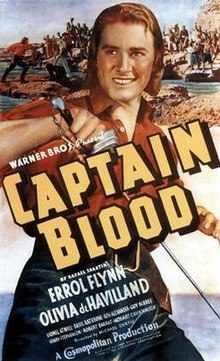
The book contains information on everything related to piracy including their ships, flags, methods of fighting, marooning, imprisonment, executions, and on and on. Some of this was rather tedious and repetitious and was to me a drawback to the overall book. I found myself skimming some of the more tedious descriptions. I did find interesting the information presented on pirate literature including Robert Louis Stevenson's Treasure Island, works by Daniel Defoe, and Rafael Sabatini. Many of Sabatini's novels were made into successful films including Captain Blood, The Sea Hawk, and The Black Swan.
Overall, only a mild recommendation for this one but it would probably be of interest to anyone wanting to learn more about the history of piracy.
The book contains information on everything related to piracy including their ships, flags, methods of fighting, marooning, imprisonment, executions, and on and on. Some of this was rather tedious and repetitious and was to me a drawback to the overall book. I found myself skimming some of the more tedious descriptions. I did find interesting the information presented on pirate literature including Robert Louis Stevenson's Treasure Island, works by Daniel Defoe, and Rafael Sabatini. Many of Sabatini's novels were made into successful films including Captain Blood, The Sea Hawk, and The Black Swan.
Overall, only a mild recommendation for this one but it would probably be of interest to anyone wanting to learn more about the history of piracy.
Displaying 1 - 30 of 952 reviews