A Paris, pendant les dix derniers Jours de la Commune. Dans les rues de la ville bombardée où se dressent des barricades, le mal rôde. Des jeunes femmes disparaissent, enlevées par un personnage aussi pervers que repoussant. Parmi elles, Caroline, la bien-aimée du sergent Nicolas Bellec qui combat dans les rangs des Communards. Antoine Roques, promu au rang de " commissaire " de police par la Commune, enquête sur l'affaire. Mû par le sens du devoir, il se lance à la recherche de la jeune femme, bravant les obus, les incendies, les exécutions sommaires... Et tandis que Paris brûle, Caroline, séquestrée, puis " oubliée " dans une cave parmi les immeubles effondrés, lutte pour sa survie. C'est une course contre la montre qui s'engage, alors que la Commune est en pleine agonie.
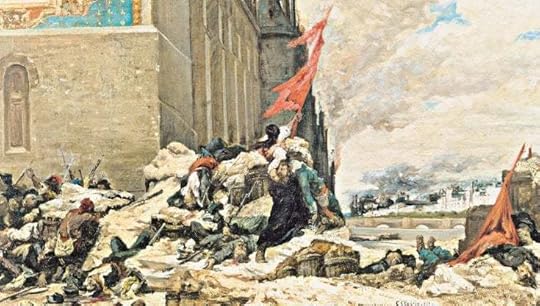
Georges Clairin: L’incendio alle Tuileries (1871, Museo d'Orsay).
È il terzo libro che leggo scritto da questo romanziere francese che viene da Bordeaux, dove tuttora vive e insegna, e mi sono piaciuti tutti. Ha una preferenza per immergere le sue storie noir nel passato: nel secondo dopoguerra il primo che ho letto, Dopo la guerra, storia di vendette e regolamenti di conti con ex collaborazionisti rimasti al loro posto di comando anche nella Quarta Repubblica, con la guerra d’Algeria che comincia ad assorbire soldati. [Per inciso, il tema della vendetta ritorna anche nel contemporaneo Scambiare i lupi per cani.]
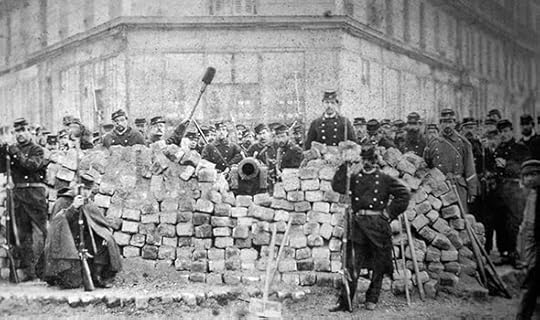
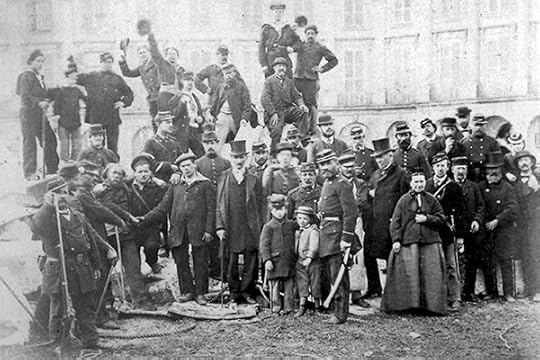
Barricata all'angolo di Boulevard Voltaire e Richard-Lenoir.
Qui siamo addirittura proiettati indietro di un secolo e mezzo: Parigi, 1871, gli ultimi giorni della comune di Parigi, la cosiddetta “settimana di sangue”. È piuttosto chiaro per chi batte il cuore di Le Corre: il narratore racconta in terza persona gli ultimi giorni dei comunardi, i “rossi”, come il colore della loro bandiera, che sventolavano contro il tricolore (in mezzo a loro anche qualche vera camicia rossa, alcuni garibaldini arrivati dall’Italia a dare man forte e appoggiare la rivoluzionaria Comune parigina), rossa come il colore del sangue che fu versato in quantità industriale: l’esercito francese, i cosiddetti versagliesi, che avevano collocato a Versailles la loro base politica e militare, bombardarono la loro capitale come se fosse una città nemica. Vengono da sud a rioccuparla, distruggendo tutto quello che trovano per strada, uccidendo e giustiziando tutti quelli che incontrano, non solo i combattenti a difesa della Comune, ma anche donne vecchi e bambini: fucilati sul posto, le donne spesso prima stuprate, da antica e diffusa pratica, passati alla baianetta. Ventimila morti sono stati calcolati.
Maximilien Luce: Una strada di Parigi nel maggio 1871 (1903-1905, Museo d'Orsay).
A nord sono invece accampati i prussiani. E quindi la capitale francese è stretta tra due fuochi, fratelli di sangue da una parte, “crucchi” dall’altra.
Giorno per giorno, ora per ora, cannonata per cannonata, crollo per crollo, granate schegge detriti pallottole ferite, ospedali improvvisati, morti, Le Corre racconta tutto, l’assedio, la difesa, l’occupazione, la rappresaglia. Sceglie una manciata di personaggi e se li porta dietro, lasciandone qua e là qualcuno per strada quando un proiettile o una scheggia lo raggiunge e finisce. Tre soldati della Comune, un’infermiera volontaria, l’unica donna, un serial killer, il suo aiutante, un rilegatore nominato commissario di polizia, e un vero ispettore di polizia che lo aiuta nell’indagine.
Quello che è successo, quello che Le Corre racconta, quello che la storia ha tramandato, è talmente violento e sanguinoso che i delitti del ‘mostro’ di turno finiscono quasi per sbiadire, per confondersi nella carneficina generale, nella mattanza collettiva. Henri Pujols, l’orco della storia, rapisce adolescenti, che porta da un fotografo connivente - le foto pornografiche sono alla moda, e con la pace si spera torneranno gli affari – dove vengono fotografate spogliate, spesso con l’orco che approfitta sessualmente della giovane vittima stordita col laudano, per poi rivenderle a un trafficante di prostitute (miglior cliente un ufficiale prussiano).
Le Corre sfoggia una cura del dettaglio, del racconto particolareggiato, ogni singola esplosione, ogni danno causato dalle bombe, crollo, distruzione, macerie, detriti, schegge, polvere, fumo, il fuoco e le fiamme, i colpi in arrivo su varie superfici, inclusi ovviamente i corpi umani, le barricate, i sampietrini, i pezzi d’artiglieria, le mitragliatrici, le pistole a ripetizione mentre i fucili sono a carica singola, le baionette, gli arredi devastati, bruciati, salvati, le amputazioni, le ferite, le medicazioni, la fame e la sete, l’assenza di sonno e il crollo per eccesso di stanchezza. In certi momenti sembrava di essere dentro l’assedio di Stalingrado. E certo colpisce che tale violenza senza scrupoli fosse scatenata in una guerra civile.
A un incrocio Nicolas si ferma e guarda verso ovest. Parigi, divorata dal ferro e dal fuoco, getta sul cielo basso una luce rossastra, come un fiato di sangue. Caroline gli stringe la spalla. “Torneremo” dice. “Torneremo”.
PS I morti, i poveri morti hanno grandi dolori scrive Baudelaire nel suo capolavoro I fiori del male.
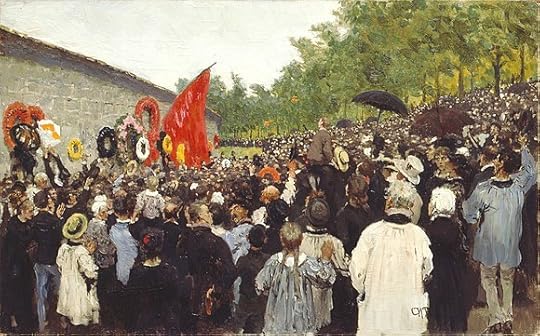
Il'ja Efimovič Repin: Commemorazione della Comune di Parigi.
Συγχωρήστε μου τον απρόσμενα προσωπικό τόνο, αλλά θα ήθελα ξεκινώντας αυτό το κριτικό σημείωμα να εκμυστηρευτώ δύο πράγματα: πρώτον, και ντρέπομαι ειλικρινά που το γράφω, μέχρι πολύ πρόσφατα γνώριζα ελάχιστα πράγματα για την Κομμούνα του Παρισιού, και δεύτερον, αντιπαθώ αυτό που ονομάζεται «ιστορικό μυθιστόρημα» σχεδόν σαν εκφυλισμό του αγαπημένου μου είδους. Για να εξηγούμαι, αναφέρομαι σε εκείνο το ιστορικό μυθιστόρημα που το αναγνωστικό κοινό διαβάζοντάς το πιστεύει ότι μαθαίνει Ιστορία και συχνά το αναζητά γιατί «δεν ξέρω για αυτή την περίοδο, αλλά δεν έχω χρόνο να διαβάσω κάποιο ιστορικό σύγγραμμα».
Έτσι, όταν αρχίσαμε να συζητάμε στα Marginalia το αφιέρωμα στα 150 χρόνια της Κομμούνας, από τη μια σκέφτηκα ότι επιτέλους θα μάθαινα περισσότερα για αυτή, από την άλλη με άγχωσε το γεγονός ότι η όποια συνεισφορά μου στο αφιέρωμα θα αφορούσε υποχρεωτικά κάποιο λογοτεχνικό έργο που εκ των πραγμάτων θα κινούνταν στον χώρο του ιστορικού μυθιστορήματος, πράγμα που με έκανε αρκετά απρόθυμο.
Κάπου εκεί έπεσε η πρόταση για ένα πρόσφατο (2019) μυθιστόρημα του Γάλλου Ερβέ Λε Κορ, αρκετά δημοφιλούς στη χώρα του όπως διαπίστωσα εκ των υστέρων, που είχε εκδοθεί στα ελληνικά από τις Εκδόσεις του Εικοστού Πρώτου. Το «Στον ίσκιο της πυρκαγιάς» διαδραματιζόταν στο Παρίσι τις τελευταίες δέκα μέρες της Κομμούνας πριν την αιματηρή καταστολή της, αλλά χαρακτηριζόταν στο εξώφυλλο της έκδοσης ως «νουάρ μυθιστόρημα», πράγμα που μου κίνησε το ενδιαφέρον, καθώς αυτό σήμαινε ότι τουλάχιστον δεν αυτοσυστηνόταν ως «ιστορικό».
Αποφάσισα λοιπόν να το ξεκινήσω, αρκετά επιφυλακτικός και για έναν επιπρόσθετο λόγο: από τα ελάχιστα που είχα υπόψη μου για την Κομμούνα ήξερα ότι οι τελευταίες μέρες της δεν οδήγησαν απλώς σε μια πικρή ήττα, αλλά σε ένα πραγματικό σφαγείο, και ήμουν σίγουρος ότι οι σελίδες του βιβλίου για όποιον/α έβλεπε με συμπάθεια και θαυμασμό τους Κομμουνάρους και τις Κομμουνάρες θα ήταν ένας Γολγοθάς, κατάσπαρτος με τραγική ειρωνεία και θλίψη. Δεν διαψεύστηκα, αλλά τελικά η σκληρότητα και η ωμότητα στο βιβλίο δεν βρίσκονται μόνο στις στρατιωτικές συγκρούσεις.
Από το πρώτο κιόλας κεφάλαιο συνειδητοποιούμε ότι ο Λε Κορ δεν ενδιαφέρεται να γράψει «ιστορικό μυθιστόρημα», αλλά σκέτο «μυθιστόρημα»· μας πετάει στο βράδυ της 18ης Μαΐου, κάπου στα τείχη του Παρισιού, χωρίς να μας δίνει ευθέως καμία ιστορική πληροφορία, χωρίς να επιλέγει κανέναν από τους επώνυμους πρωταγωνιστές των γεγονότων για ήρωά του, χωρίς να γράφει ένα χρονικό. Παρακολουθούμε μόνο όσα μπορούν να δουν οι χαρακτήρες στους οποίους επιλέγει να εστιάζει σε κάθε κεφάλαιο: ο Νικολά, με τους δυο συντρόφους του, τον νεαρό Αντριάν και τον Κόκκινο, Κομμουνάροι υπερασπιστές της πόλης κι οι τρεις τους· η Καρολίν, η αγαπημένη του Νικολά· ο Αντουάν Ροκ, πρώην βιβλιοδέτης και νυν επίτροπος για την ασφάλεια (ένα είδος αστυνομικού της Κομμούνας δηλαδή)· αλλά και ο κτηνώδης Πουζόλ, ο Κλοβίς ο αμαξάς, ο φωτογράφος Γκαντιέ, σκοτεινά και διεστραμμένα άτομα που διαπράττουν αποκρουστικά σεξουαλικά εγκλήματα ακόμη κι εκείνες τις κρίσιμες ημέρες, απάγοντας, βιάζοντας, φωτογραφίζοντας και πουλώντας ανήλικα κορίτσια.
Αυτά τα εγκλήματα θα αποτελέσουν και τον συνδετικό ιστό ανάμεσα σε όλα αυτά τα πρόσωπα, δικαιώνοντας σε μεγάλο βαθμό και τον νουάρ χαρακτήρα του μυθιστορήματος· καθώς ο Αντουάν Ροκ αναλαμβάνει την υπόθεση, η Καρολίν θα είναι το τελευταίο θύμα της συμμορίας και ο Ροκ θα αποδυθεί σε έναν αγώνα με τον χρόνο, πρώτα για να βρει τη συμμορία και έπειτα την εγκλωβισμένη Καρολίν. Κι όλα αυτά, ενώ, μέσα από τα μάτια και τις απεγνωσμένες προσπάθειες του Νικολά και των συντρόφων του, βλέπουμε τις άμυνες και τα οδοφράγματα των Κομμουνάρων να καταρρέουν μπροστά στον υπέρτερο αριθμητικά και καλύτερα εξοπλισμένο στρατό των Βερσαλλιωτών (του γαλλικού αστικού κράτους δηλαδή) και τη σφαγή να ξεδιπλώνεται.
Ταυτόχρονα, ο Λε Κορ έχει την ευκαιρία να παρουσιάσει, πάντα θραυσματικά, πάντα εντός αφηγηματικού πλαισίου και μέσα από ένα πλήθος μικρών επεισοδίων, διαλόγων και περιστατικών, την κατάσταση στο Παρίσι τόσο εκείνων των ημερών όσο και του προηγούμενου διαστήματος, φωτίζοντας ένα μεγάλο φάσμα απόψεων, στάσεων, συμπεριφορών, φόβων και ελπίδων, όχι μόνο των Κομμουνάρων, αλλά και των Παριζιάνων που έχουν μείνει στην πόλη και κρατούν ουδέτερη ή και εχθρική στάση απέναντι στην Κομμούνα, περιμένοντας την έλευση του γαλλικού στρατού. Πρόκειται δηλαδή, μαζί με την πορεία των κεντρικών του ηρώων, αυτό που μπορεί και πρέπει να κάνει ένα μυθιστόρημα που διαδραματίζεται σε ένα ορισμένο ιστορικό πλαίσιο: να μιλήσει για όλα αυτά που δεν χωράνε στην επίσημη, στη «μεγάλη» Ιστορία, στα στεγνά χρονολόγια και στις αφαιρέσεις των σχημάτων «αίτια – αφορμές – αποτελέσματα», για όσα τελικά βρίσκονται «στον ίσκιο της πυρκαγιάς».
Και σ’ αυτό ακριβώς ο Λε Κορ, αν εξαιρέσουμε κάποιους διαλόγους με περιεχόμενο και ύφος τόσο προχωρημένο που σε κάνουν να αναρωτιέσαι για τον ρεαλισμό τους, παίρνει άριστα. Η ατμόσφαιρα που δημιουργεί είναι πραγματικά εντυπωσιακά αληθοφανής, ασφυκτική, δύσοσμη και αποπνικτική από τη μια, αλλά και επαναστατική, συντροφική και ηρωική από την άλλη. Οι σκηνές και οι χώροι που περιγράφει έχουν τόση ζωντάνια που θαρρείς ότι μεταφέρεσαι στο Παρίσι του 1871 και ταυτόχρονα έχουν τόσο θάνατο που εύχεσαι να μην είχες μεταφερθεί ποτέ εκεί. Γιατί το μυθιστόρημα του Λε Κορ είναι σκληρό. Πολύ σκ��ηρό. Σπάνια βιβλίο μου έχει δημιουργήσει τόσες φορές την ανάγκη να το διαβάζω λίγο-λίγο για να παίρνω μια ανάσα από όσα ωμά περιγράφονται στις σελίδες του.
Και δεν είναι μόνο η -συμπιεσμένη χρονικά- σκληρότητα των στρατιωτικών συγκρούσεων (σκεφτείτε ότι μέσα σε μια βδομάδα συμπυκνώνεται μια ήττα ανάλογη με τη σταδιακή ήττα του ισπανικού ή του ελληνικού εμφυλίου, με τελείως ανάλογες αγριότητες εις βάρος των ηττημένων), αλλά κι αυτή των -κατά βάση σεξουαλικών- εγκλημάτων που, όπως αναφέρθηκε, αποτελούν τον βασικό άξονα της πλοκής και προηγούνται ελαφρώς χρονικά από τη σφαγή που θα ακολουθήσει στους δρόμους της πόλης. Δεν είναι δύσκολο να σκεφτούμε ότι ουσιαστικά τα εγκλήματα αυτά προοικονομούν και καθρεφτίζουν ταυτόχρονα αυτά που θα επακολουθήσουν, λειτουργώντας έτσι σε δύο επίπεδα: ένα αλληγορικό, όπου οι γυναίκες που πέφτουν θύματα της συμμορίας, και κυρίως η Καρολίν, συμβολίζουν τον γαλλικό λαό, και ιδιαίτερα το Παρίσι, και ένα φιλοσοφικό-πολιτικό όπου καλούμαστε να αναλογιστούμε σε τι διαφέρουν από πωρωμένους εγκληματίες οι ένστολοι εισβολείς του Παρισιού.
Μέσα σε όλη αυτή τη μαυρίλα όμως, ο Λε Κορ, παρότι δεν διστάζει να καταδείξει λάθη και αδυναμίες των Κομμουνάρων, βρίσκει αρκετές φορές την ευκαιρία να εξάρει όλα εκείνα τα στοιχεία του αγώνα τους που συγκινούν ακόμη: άδολη συντροφικότητα, αλληλεγγύη που επέμενε στις πιο δύσκολες και αναπάντεχες στιγμές, ώριμη αποφασιστικότητα, αίσθηση του καθήκοντος, πίστη σε έναν καλύτερο κόσμο, αλλά και στο ότι η θυσία τους δεν θα πήγαινε χαμένη, μένοντας παρακαταθήκη για τις επόμενες γενιές επαναστατών. Αυτό το τελευταίο φαίνεται να εντυπωσιάζει περισσότερο από όλα τον Λε Κορ, αφού επανέρχεται ξανά και ξανά στα λόγια των Κομμουνάρων, χωρίς να ακούγεται ούτε μια φορά σαν παρηγοριά στον άρρωστο.
Το «Στον ίσκιο της πυρκαγιάς» είναι ένα βιβλίο που σου αφήνει πολύ έντονες εντυπώσεις, με χαρακτήρες ζωντανούς και αξέχαστους, με σκηνές και εικόνες ανεξίτηλες. Όλα αυτά είναι δοσμένα με μια γλώσσα χυμώδη και πλούσια, η οποία ευτύχησε να έχει ως μεταφραστή της στα ελληνικά τον Γιάννη Καυκιά που έδωσε μια πραγματικά ρέουσα μετάφραση, στην οποία αξιοποίησε μεταξύ άλλων και τη μαύρη κληρονομιά του λεξιλογίου του ελληνικού εμφυλίου (ομολογώ ότι κυριολεκτικά ανατρίχιασα τη στιγμή που ακούγεται εναντίον αιχμαλώτων Κομμουνάρων από κάποιο παράθυρο ένα «Κατσαπλιάδες!»). Ίσως όμως το πιο όμορφο στοιχείο του βιβλίου είναι ότι σε κάνει να αγαπήσεις αυτούς του ωραίους τρελούς του 1871 χωρίς να ξεπέφτει ποτέ σε προπαγάνδα.
Κι όπως λέει στο τέλος κάποιος από αυτούς κοιτώντας το Παρίσι: «Θα ξαναρθούμε».
The first page drew me in. The writer knows how to make a tableaux that is both realistic and cinematic simultaneously. It starts in war between the prols and the govt, in Paris 1871.Blood and death fill the pages, but I don’t have a weak stomach. However, I may not be the right reader for this. I’m at page 100 and I’m just exhausted. It’s me, this reader, who is over-stimulated by all this bedlam and pandemonium all the time. Sure, there were a few breaks from the holy unruly mess that was this poorly organized and seat-of-your-pants armed conflict, but then they would focus on, for example, a man who gets off seeing grisly murders and assaults of women, children, and frankly any human being. I could only take a few pages of him. A villain needs to be interesting to keep me, not just vile. J’abandonne.
I do not doubt this author’s abilities—it is evident that he can write well, and weave a story. It’s just not for me.
I so appreciate Europa for sending me a beautiful finished copy for review. I’m sorry I couldn’t finish it.
C'est un très curieux mélange de roman historique et thriller policier, qui se déroule durant les derniers jours de la Commune de Paris, la "Semaine sanglante" du 21 au 28 mai 1871. En bref : lorsque les obus et les troupes de l'armée de Versailles détruisent les barricades et les immeubles, en massacrant les défenseurs de la Commune, un ouvrier relieur récemment nommé agent de la Sûreté de la Commune, cherche à retrouver et sauver une demoiselle en détresse, une belle jeune ambulancière enlevée par des criminels monstrueux pour son commerce d'esclaves sexuelles. Pendant ce temps, son mari, sergent de la Garde nationale, se bat avec héroisme contre les Versaillais, d'une barricade à autre, dans une tentative futile de sauver la Commune. Les scènes d'enlèvement, de brutalité et d'humiliation de l’ambulancière et beaucoup d'autres jeunes filles sont à couper le souffle, mais peu probables dans ces jours de panique et de lutte, quand ni les plus horribles malfaiteurs n'auront ni le temps ni l'occasion pour continuer leurs routines diaboliques. En revanche, les vraies souffrances des gardes nationaux et des civils victimes de l’assaut sont décrites de manière frappante. Le Colle fait sentir au lecteur la peur, la douleur et l'excitation, frissonner dans la boue humide, glisser dans les flaques de sang et sentir la poudre à canon, les poutres qui brule, et la pourriture des nombreux cadavres. En cela, la description sensuelle, il est brillant.
Une fresque historique au cœur de la commune de Paris, narrée dans un style journalistique qui fourmille de détails. Bruit du canon, gavroches et mort jsont au rendez-vous. Quant à l’intrigue censée tirée le roman, elle se révèle être des plus plates sans réel suspense. On a même du mal à y croire, tellement les héros sont portés par de beaux et émouvants sentiments qui tranchent avec le côté sombre de leur environnement. Roman carton-pâte, au final, manquant de saveur.
Ersilia F. - per RFS . Ho sempre apprezzato i romanzi storici che narrano un particolare frammento della storia dell’umanità. E Le Corre descrive, con una prosa ardua e in alcuni punti abbastanza ostica, la cosiddetta “settimana di sangue” della Comune di Parigi, dal 21 al 28 maggio 1871.
Da un lato Versailles che assedia e cannoneggia la città e dall’altro gli stessi francesi impegnati a mantenere le barricate ben salde.
Al centro Parigi, vera protagonista assoluta del libro, con le sue ombre e le sue luci, i boulevard malfamati e le strade con gli ospedali da campo di fortuna. Una città spezzata così come lo sono i suoi abitanti.
Le vicende iniziano tre giorni prima della fatidica settimana, raccontando ogni giorno un protagonista diverso, tutti cambiati nel loro essere per ciò che succede.
I due personaggi principali, Caroline e Nicolas, sono impegnati con tutte le loro forze a rimanere in vita per potersi un giorno ritrovare. Ciò che fa riflettere è la capacità degli esseri umani dì sopportare la sofferenza. Vi è la speranza di una Parigi egualitaria e dove le diversità possano essere abbattute. Ma è un sogno utopico o sarà realizzabile?
I personaggi sono ben definiti e vividi, anche quelli secondari, contraddistinti da un’umanità compassionevole ma allo stesso tempo brutale, come se ci fosse una dualità in tutto il romanzo, il bene contrapposto al male.
Con una scrittura colta, appassionante, l’autore ci offre un affresco di vite illuse, disperate e una pagina del passato tragica, arricchita con un tocco di mistery.
All’inizio ho fatto fatica a entrare in sintonia con la storia procedendo a rilento, trovando le pagine iniziali complicate e piene di informazioni. Ma una volta saputo apprezzare lo stile ricercato dell’autore, ho concluso il libro con una curiosità enorme perché ero troppo impaziente di conoscere che fine avrebbe fatto ogni personaggio, nonostante conoscessi già la vicenda storica.
Un romanzo che consiglio a chi vuole sapere cosa è in grado di fare l’uomo per inseguire i propri sogni.
Tengo opiniones un poco encontradas con este libro. Bajo las llamas es que es más una novela histórica centrada en la Comuna de París que una novela policial, lo cual, no está mal salvo por el hecho de que me dio la sensación de que todo giraba en torno a la comuna, es decir, los personajes estaban ahí para demostrar como actuaban los miembros de esta revuelta, y nada más. Quizá por eso he sentido que todos personajes eran como pequeños actores que podían ir y volver según las necesidades históricas del momento. A pesar de toda lo trágico de la situación no he podido conectar con ninguno de ellos, no al menos de un modo tan profundo que sintiera cierta preocupación por su salud o su supervivencia. Considerando que hay una guerra por medio, con muertos en cada esquina esa falta de empatía con lo que leía lo dice todo. Eso sí, elemento positivo, ahora sé muy bien qué pasó en París por aquella época, y cuales son los ideales políticos del escritor. Opinión completa
In The Shadow Of The Fire by Hervé Le Corre had been a highly anticipated novel for me. I’ve always had an interest in French history and culture which perhaps partly stems from being born on Bastille Day. I spent two memorable years living in Paris at the turn of the millennium. So I do have familiarity with the city and its geograpical layout and relished looking forward to a novel set in the past where I might recognise references to its arrondissements, boulevards and rues. In France it was awarded winner of the French Voices Prize.
The author Hervé Le Corre is a teacher based in Bordeaux. I first encountered his name from a recommendation to read his novel Talking With Ghosts by a local crime fiction reading group. This was a contemporary police procedural which was released in the UK by MacLehose Press. This was followed by After The War set in 1950s Bordeaux which I have not yet read.
150 years after the Paris Commune, Herve Le Corre strongly evokes the memories, the passion and the bloodshed of this seminal event in European history. The story focuses on eleven days as the Commune is eventually suppressed by the national French Army culminating with La semaine sanglante ("The Bloody Week") beginning on 21 May 1871.
Reading historical novels can be a daunting prospect if linguistically the reader is unfamiliar with unfamiliar older words used but there were no such issues with this book. Translated by Tina Kover, who has translated Antoine Compagnon’s A Summer With Montaigne and Negar Djavadi’s award winning Disoriental, the translation is very clear and the language is captivating. The descriptions of Paris are rich with very detailed descriptions of the appearance and behaviours of the characters and the city landscapes. Not only does the novel succeed in realistically capturing the appearance of the era but it also appears to accurately portray the various mindsets and predudices of that time.
The Communards created the first proletarian dictatorship in the world and within the city its population is initially boisterous with most of the proletariat in good spirits. Over two months they had begun to establish policies that tended toward a progressive system of social democracy, including the separation of church and state, become self-policing, the remission of rent during the siege, the abolition of child labour, and the right of employees to take over an enterprise deserted by its owner. This story is largely told from the perspective of those supportive of the Commune. Three months of seige during winter and famine are challenging but the greatest fear and later realisation was that the French Government forces wouid regroup and advance following their evacuation to nearby Versailles.
Le Corre brings us a large cast of fictionalised and well developed characters. Principal to the story are long term friends Nicholas and Joseph (known as Red) with the younger Adrien. They are 3 soldiers of the 105th Federated Battalion of the Commune. Nicholas has just been promoted to Sargeant and the three are fully signed up to protect the city from the ' Versaillais' who are the Government forces based in Versailles.
We also meet Caroline who is in a relationship with Nicholas. She is a seemstress who has volunteered at a first aid station in the city working for the dedicated Doctor Fortaine. He ominously predicts "we've proclaimed a republic of words that will soon become a republic of the dead." She works diligently despite the horrors she sees with hopes of being with Nicholas once the conflict has ended.
We encounter less virtuous characters such as Monsieur Charles Gantier who takes suggestive photos of young females and aspires to be the photographer to capture history as the Commune is defeated. Then there is the sinister Henri Pujols, a former government soldier who abandoned the war against the Prussians but has developed a bloodthirsty taste. The mysterious Clovis coach driver for Pujols is more of an enigma who talks little of his background.
In the Shadow of the Fire is a literary historical fiction but it is also a sociological drama and a crime fiction thriller. Former bookbinder Antoine Roques had been appointed a policeman by the Commune authorities just one month earlier. When a triple murder by a disfigured killer leads to the discovery that young females are disappearing, he starts to investigate. Progress is slow as he talks to reluctant witnesses with split loyalties. He is lead onto the trail of Clovis and Pujols initially with some enthusiasm while his senior Inspector Loubert appears keen to do some real police work again.
It becomes increasingly clear that Paris is deeply divided with most of the bourgeois enthusiastically but often silently awaiting a return to normality. The braver ones decry the "government of beggars, led by nobodies.. paradise for lowlifes and prostitutes."
They are not the only ones unhappy. While the Commune appears good for the workers, it is a different matter for criminals whose usual activities have been impacted by the separations within the city and closure of more lucrative markets. They have "no desire to be caught up between the bullet of a mitrailleuse and the point of a bayonet."
As you can imagine there are many grisly deaths and injuries inflicted throughout the novel. It’s revealing that initially the soldiers try to persevere the bodies of the companions but later they are unable to do so as the bodies of the dead outnumber the living as Paris burns. With each progressive day the situation for each of the key protagonists becomes direr and the body count rises further. The questions that will keep the reader gripped to the end are whether Nicholas and his friends will survive the impending Versaillais forces and continue to fight or try to stay alive, whether Pujols be brought to justice by Roques or escape to Prussian occupied territory and if anyone will ever see their loved ones again. Around them those residents who have been suppressed by the Commune become more outspoken and outwardly hostile towards the Federates who become like game to be picked off one by one. The kindness or hostility of strangers will be critical to each of their survival while former colleagues are shown to become enemies.
Much dispair is visualised through the pages, but a ray of hope also remains, particularly that some of the ideals of the Commune might remain even as its bricks and mortar is being destroyed. Certainly they have shown the whole world that the old guard can be overthrown. There is plenty of moral considerations as to whether it was the Commune that produces upright and wise men - and could it change all men - or whether it is that type of man who produced the Commune.
In The Shadow Of The Fire clocks in at just over 500 pages but is fascinating and highly emotive read. It should in time become recognised as one of the key literary fiction novels based on this brief but turbulent period. At times it can be very descriptive, other times tense and there are plenty of fast moving chases, escapes and gun battles. Yet at its heart there is a human story about the endeavours of the key characters and the motivations behind their actions, whether through kindness, ideology or self interest. I read the book in 4 days and like all best stories its words will enthral, excite and move you.
Une envie de polar historique ? Foncez, vous ne pourrez qu’apprécier ce magnifique roman noir. Nous voici revenu au temps de la Commune de Paris, cette période insurrectionnelle de l’histoire de France qui n’aura duré que deux mois et dont la dernière semaine est appelée et vous comprendrez pourquoi en lisant le livre « la semaine sanglante ». La trame de fond est posée et nous allons se dérouler le destin de nombreux personnages en ces temps troubles, qui auront tous une belle envergure, les bons comme les méchants. Pour le côté « romance » nous auront le couple que forme Nicolas Bellec qui combat avec les communards et sa bien-aimée Caroline qui de couturière passera à infirmière. Le côté polar sera assuré par Antoine Roques citoyen relieur de son métier, il se verra promu par le peuple aux fonctions de « commissaire » de police et débutera une enquête sur la disparition mystérieuse de très jeunes femmes. Quand au côté thriller, je vous laisse découvrir le personnage crée par Hervé le Corre et qui ne manque pas de saveur sans compter tous les autres camarades rencontrés au fil du roman qui nous donnent un aperçu de ce que pouvait être la vie à cette période. J’ai passé un excellent moment de lecture très dépaysant et qui à la fois a su trouver une résonance dans une moindre mesure dans notre mouvement des gilets jaunes de ces dernières semaines. On dit que l’histoire est un éternel recommencement alors mieux vaut la connaître un peu. L’écriture est vive et incisive, une belle façon de décrire les us et coutumes, les anciens métiers ou encore un langage à la fois désuet et tirer de la campagne. Une vision de Paris qui fait réfléchir avec tous ces noms de rues que nous connaissons et qui prennent vie d’une façon différente. Un très beau roman à découvrir pour les amoureux de paris et de son histoire. Le tout en privilégiant la petite histoire dans la grande. Bonne lecture.
I see why this book won so many awards. And why it was compared to Les Misérables.
With a large cast of characters, this story is set within the seven day, "semaine sanglante" in which the Versaillesais army besieged and took back Paris from the people (the Communards). Main storylines/characters: a porn photographer and the human sex trafficker who partners with him, Communard and his nurse girlfriend, and a Citizen police officer. Young girls are going missing, and the Citizen police officer is trying to investigate. When the nurse goes missing, the Citizen police officer and Communard boyfriend independently go searching for her, as the Versaillesais are breaching the Paris gates.
The moment when the boyfriend tells his brothers in arms that he is going to find Caroline made me cry. This was a bloody, yet ultimately hopeful book.
For readers who don't know Paris, it would be helpful to look up a map of the Paris arrondissements. I knew some of the areas they mentioned in the 7th because I've lived there, but I was confused at the beginning when Nicolas referenced specific Portes. It was helpful for me to google a map to get my geographic bearing.
Content warnings: rape, sexual violence, lots of blood
A wholly engrossing, cinematic tale of brilliance from Monsieur Le Corre. Gripping from start to finish. This will have fans of this riveting fictional retelling of a specific history of the Paris Commune entertained in an almost ground level view of the fight. It will keep crime fans entertained in their own twisted ways. It will have even a bit of romance to sweep you through the book. I was throughly surprised by every element used to perfection and it’s easy to see why such a renowned publisher as Europa took it on.
This book was an exhausting experience, but I couldn't stop reading it. Although I knew the outcome of the Paris Commune I wanted to know the outcome for the characters. The book follows several characters in the last days of the Commune with the focus on Caroline, a young woman who is kidnapped off the street to be drugged and posed for "lewd" photos. Her bravery and determination are amazing as is that of the police and her lover who are trying to save her. There is so much death, gore, blood, cruelty, dirt, and madness it is hard to take in. Not for the faint of heart.
May 18th 1871 the last days of the Paris Commune have begun. There is an air of resignation as the forces of retribution line up outside the city but also one of defiance. The Communards are resolute but within the chaos there’s a darkness. Young girls are being snatched from the streets and vanishing. Nicholas, a soldier, and Antoine, a delegated police officer, set off to find the girls as Paris descend into chaos and barbarism. A stunning story.
What a harrowing account of the last few days of the Paris Commune - heartbreaking, with many descriptions of death and dying and suffering. Fascinating details, and quite clear-eyed that neither side were angelic (although of course the sympathies lie broadly with the Communards)
Novela negra , oscura como ninguna otra que haya leído , la trama discurre en una guerra en Francia que no he podido localizar (a ver si me podéis ayudar) solo se que los bandos se llaman Rojos y Marselléses unos a otros , pues bien en medio de esta guerra empiezan a desaparecer mujeres jovenes (que a mí modo de ver , el autor descubre demasiado pronto el porqué) . En fin que los protagonistas , una de las chicas y el investigador viven vivencias muy duras , aparte de la guerra que aumenta el dramatismo. Trama muy bien hilada de fácil lectura que te engancha desde el principio ( aunque por minisectores de la novela se hace un pelín pesada) no es lo que predomina . De ahí que la recomiende sin duda. 6/10
Si le récit met du temps à nous plonger dans l’histoire; l’ambiance générale du roman ainsi que le contexte social et politique dans lesquels s’inscrit l’intrigue sont à mon sens, captivants. J’ai énormément reconnu mon intérêt pour ce roman dans son inscription historique au sein de la Commune de Paris. L’intrigue, malgré son cheminement logique - pouvant être considéré captivant par les adeptes du Polar - et sympathique ne représente pas pour moi les 3 étoiles attribuées à cette lecture.
Ainsi, il est vrai que je ne considère pas avoir apprécié le roman pour son histoire, ni son récit, mais bel et bien pour son ambiance générale transcrite avec justesse.
Πολύ ωραίο ιστορικό μυθιστόρημα που αποδίδει με όμορφο τρόπο τις τελευταίες μέρες της Παρισινης Κομμούνας στο μικροεπιπεδο της καθημερινότητας διάφορων ανθρωπών/υπερασπιστών της, καθώς ο θάνατος κυριεύει. Το νουάρ στοιχείο υπάρχει αλλά δε ναι αυτό που δίνει τον ρυθμό.
Thriller histórico, entendido como tal, una novela de asesinato e intriga desarrollada en un contexto histórico, el de la Comuna de Paris. Esa inocente utopía que se desarrolló en Paris del 18 de marzo al 28 de mayo de 1871. La novela desarrolla mucho más la situación en la Comuna y de varios de sus personajes que la intriga de los asesinatos. La novela se desarrolla en la fase final de la vida de la Comuna, donde ya los versalleses bombardean sin piedad Paris y emprenden el ataque final para conquistar los últimos bastiones de resistencia. Entre medias, la novela trata de sus gentes, de lo que sienten, de la idea por la que luchan la igualdad y la fraternidad, sin amos ni patrones. Un movimiento anárquico muy inocente defendido con todo su corazón y por el que son capaces de dar la vida. No toca de frente la carnicería que supuso la conquista de París por los Versalleses, ni la crueldad que tuvieron con los insurrectos, murieron entre 20000 y 30000 personas, no había prisioneros y se ejecutaba igual a adultos que a niños, algunos eran enterrados vivos. La saña de la clase pudiente contra el lumpen fue brutal. Recomiendo la visión de una película para lograr comprender mejor la situación: La Comuna, París 1871 de Peter Walkins. Una original película donde sus 345 minutos no se hacen pesados (la original superaba las 5 horas de metraje). Entre medias de esta batalla por las calles de París se desarrolla el thriller, donde un cruel asesino va raptando jovencitas para sus fines comerciales. Desde mi punto de vista, la mezcla de ambos nunca llega a engranarse bien, quizás porque, como digo, el autor le dedica más interés a la historia de la Comuna. El thriller está bien, pero va terminando poco a poco, como el rosario de la aurora. La ausencia de planificación y disciplina en las gentes de la Comuna, frente a las disciplinadas tropas de Thiers, dan la clave de la pérdida de la batalla. Algo así ocurrió en la guerra civil española.
Old-fashioned in the worst ways. Wants us to ponder humankind’s innate capacity for violence while delighting in the gruesome details; lots of cardboard characters, jingoism, and heteronormative claptrap. To make a filmic comparison, I was expecting perhaps an Apocalypse Now-type take, and while there’s hints of that, it’s mostly Pearl Harbor.
While the writing style is straightforward and frequently elegant, the novel fails to satisfy either as historical fiction or “literary” thriller. Don’t expect too many thrills and don’t expect to learn anything new about the Communards other than on what streets things happened.
The sex-trafficked, damsel in distress suspense plot is such a worn out old trope at this point that it’s offensive not only from the standpoint of gender equality but for being utterly devoid of literary imagination. All the rapey details are disproportionately lengthy - and gratuitous: nothing is done with them to make a point, for example, about how patriarchal thinking links war and the exploitation of women and workers.
Also what a lame title. I should’ve known.
This entire review has been hidden because of spoilers.
Ιστορικό νουάρ που διαδραματίζεται στο φλεγόμενο Παρίσι του 1871, στη διάρκεια της Παρισινης Κομμούνας. Βρισκόμαστε στα τέλη Μάιου, οι Εθνοφυλακες της Κομμούνας υπερασπίζονται με αυτοθυσία το σύντομο δημοκρατικό τους εγχείρημα, την έφοδο στον ουρανό, αλλά η κατάσταση έχει πια ζορισει , αφού φαίνεται ότι η αντεπίθεση των υπερασπιστων του παλιου καθεστωτος, των Βερσαλλιωτων, είναι πολύ περισσότερο ισχυρή ώστε να την αντιμετωπίσουν. Σε ένα Παρίσι που κυριολεκτικά εχει παρει φωτιά, οβίδες και σφαίρες σφυρίζουν πάνω από τα βουλεβαρτα, χαλάσματα παντού, η προοπτική της ζωής, της ελευθερίας αποκτούν ένα ιδιαίτερο νόημα. Είναι η εποχή των πιο υψηλών ιδανικών και των πιο ποταπων ενστίκτων, οι ήρωες κινούνται από την μια άκρη στην άλλη άκρη του φάσματος, από το ελπιδοφόρο όνειρο στην απόλυτη απόγνωση. Η ατμόσφαιρα της πόλης, η αίσθηση του ζόφου της, είναι το κύριο χαρακτηριστικό του βιβλίου, σαν να βάζει τον αναγνώστη στην άκρη ενος οδοφράγματος να νιώθει να μεταιωρειται μεταξύ παράλογου και ουσιαστικού, ζωής και θανάτου.