

What do you think?

Library of America #188
Collected Stories and Other Writings
John Cheever’s stories rank among the finest achievements of twentieth-century short fiction. Ensnared by the trappings of affluence, adrift in the emptiness of American prosperity, his characters find themselves in the midst of dramas that, however comic, pose profound questions about conformity and class, pleasure and propriety, and the conduct and meaning of an individual life. At the same time, the stories reveal their author to be a master whose prose is at once precise and sensuous, in which a shrewd eye for social detail is paired with a lyric sensitivity to the world at large. “The constants that I look for,” he wrote in the preface to The Stories of John Cheever, “are a love of light and a determination to trace some moral chain of being.”
Cheever’s superlative gifts as a storyteller are evident even in his first published work, “Expelled” (1930), which appeared in The New Republic when he was only 18: “I felt that I was hearing for the first time the voice of a new generation,” said Malcolm Cowley, then an editor at the magazine.
Moving to Manhattan from his native Massachusetts, Cheever began publishing stories in The New Yorker in the 1930s, establishing a crucial if sometimes contentious relationship that would last for much of his career. His debut collection, The Way Some People Live (1943), was a book that he effectively disowned, regarding it as apprentice work; the best stories in the volume, as selected by editor Blake Bailey, are here restored to print for the first time, offering—along with seven other stories that Cheever never collected—an intriguing glimpse into his early development.
By the late 1940s Cheever had come into his own as a writer, achieving a breakthrough in 1947 with the Kafkaesque tale “The Enormous Radio.” It was soon followed by works of startling fluency and power, such as the unsettling “Torch Song,” with its suggestion of menace and the uncanny, as well as the searing, beautiful treatment of fraternal conflict, “Goodbye, My Brother.”
Finally, when Cheever and his family moved to Westchester County in the 1950s, he began writing about the disappointments of postwar suburbia in such definitive classics as “The Sorrows of Gin,” “The Five-Forty-Eight,” “The Country Husband,” and “The Swimmer.”
This volume, published to coincide with Blake Bailey’s groundbreaking biography, is the largest collection of Cheever’s stories ever published, and celebrates his indelible achievement by gathering the complete Stories of John Cheever (1978), as well as seven stories from The Way Some People Live and seven additional stories first published in periodicals between 1930 and 1953. Also included are several short essays on writers and writing, including a previously unpublished speech on Saul Bellow.
Blake Bailey, volume editor, is the author of A Tragic Honesty: The Life and Work of Richard Yates. His biography of John Cheever won the National Book Critics Circle Award.
Cheever’s superlative gifts as a storyteller are evident even in his first published work, “Expelled” (1930), which appeared in The New Republic when he was only 18: “I felt that I was hearing for the first time the voice of a new generation,” said Malcolm Cowley, then an editor at the magazine.
Moving to Manhattan from his native Massachusetts, Cheever began publishing stories in The New Yorker in the 1930s, establishing a crucial if sometimes contentious relationship that would last for much of his career. His debut collection, The Way Some People Live (1943), was a book that he effectively disowned, regarding it as apprentice work; the best stories in the volume, as selected by editor Blake Bailey, are here restored to print for the first time, offering—along with seven other stories that Cheever never collected—an intriguing glimpse into his early development.
By the late 1940s Cheever had come into his own as a writer, achieving a breakthrough in 1947 with the Kafkaesque tale “The Enormous Radio.” It was soon followed by works of startling fluency and power, such as the unsettling “Torch Song,” with its suggestion of menace and the uncanny, as well as the searing, beautiful treatment of fraternal conflict, “Goodbye, My Brother.”
Finally, when Cheever and his family moved to Westchester County in the 1950s, he began writing about the disappointments of postwar suburbia in such definitive classics as “The Sorrows of Gin,” “The Five-Forty-Eight,” “The Country Husband,” and “The Swimmer.”
This volume, published to coincide with Blake Bailey’s groundbreaking biography, is the largest collection of Cheever’s stories ever published, and celebrates his indelible achievement by gathering the complete Stories of John Cheever (1978), as well as seven stories from The Way Some People Live and seven additional stories first published in periodicals between 1930 and 1953. Also included are several short essays on writers and writing, including a previously unpublished speech on Saul Bellow.
Blake Bailey, volume editor, is the author of A Tragic Honesty: The Life and Work of Richard Yates. His biography of John Cheever won the National Book Critics Circle Award.
1040 pages, Hardcover
Published March 5, 2009
About the author
John Cheever
275 books1,119 followersJohn Cheever was an American novelist and short story writer, sometimes called "the Chekhov of the suburbs" or "the Ovid of Ossining." His fiction is mostly set in the Upper East Side of Manhattan, the suburbs of Westchester, New York, and old New England villages based on various South Shore towns around Quincy, Massachusetts, where he was born.
His main themes include the duality of human nature: sometimes dramatized as the disparity between a character's decorous social persona and inner corruption, and sometimes as a conflict between two characters (often brothers) who embody the salient aspects of both--light and dark, flesh and spirit. Many of his works also express a nostalgia for a vanishing way of life, characterized by abiding cultural traditions and a profound sense of community, as opposed to the alienating nomadism of modern suburbia.
His main themes include the duality of human nature: sometimes dramatized as the disparity between a character's decorous social persona and inner corruption, and sometimes as a conflict between two characters (often brothers) who embody the salient aspects of both--light and dark, flesh and spirit. Many of his works also express a nostalgia for a vanishing way of life, characterized by abiding cultural traditions and a profound sense of community, as opposed to the alienating nomadism of modern suburbia.
Ratings & Reviews
Friends & Following
Create a free account to discover what your friends think of this book!
Community Reviews
Displaying 1 - 30 of 47 reviews

November 27, 2020
“Children drown, beautiful women are mangled in automobile accidents, cruise ships founder, and men die lingering deaths in mines and submarines, but you will find none of this in my accounts. In the last chapter the ship comes home to port, the children are saved, the miners will be rescued. Is this an infirmity of the genteel or a conviction that there are discernible moral truths?” From “The Jewels Of The Cabots", written in 1972, the last story of this magnificent collection.
These are the words of the protagonist and we’re likely to think that they might be Cheever’s too. But if we’ve come this far in the book we know by now that only the part about the moral conviction is true. There’s no infirmity in this man’s writing although he is undoubtedly of the genteel kind of a bygone era. In his stories people do perish, accidents do happen and the happy ending is not a given.
Great writers are profoundly immersed in their time and place and Cheever is no exception. On the contrary; he is so much of his time and place that it’s for a good reason that he’s called “the Chekhov of the suburbs”. He says so himself: “I am, after all, one of perhaps ten American writers who are known as the American Chekhov; but then I have been described as the Budd Schulberg of New England.”
His fiction is mostly set in the Upper East Side of Manhattan, the New York suburbs and the state of Massachusetts. This is the America of the 50s and 60s. Prosperous, gleaming, thriving, awash in Technicolor, rejoicing in its WW2 victory. The rewards, even if they don’t apply to all its people, apply to the social class Cheever belongs, of which he’s a keen observer. The members of this middle to upper-middle class live in well-appointed, brightly lit houses with tended lawns, have well-paid jobs, travel abroad, gather in country clubs, around dining tables and swimming pools where the banquets are lavish and the drinks are flowing. The women’s jewelry is shining (even if it’s faux), the cars are huge and shine too (even if they’re of the mass-market kind). The children are healthy, the housewives are caring, summer houses and boats are readily available. The rest of the world is gawking. America is the Promised Land, the Dream, the place to be.
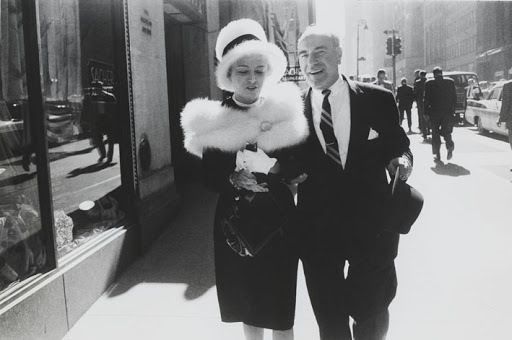

Why then the men and women who inhabit this land are not content, satisfied, serene? Why does this sensitive writer detect the restlessness, the flinch of fear, the frozen smile, the haunted look of anxiety, the fleeting gesture of insecurity everywhere he looks? Well , as it turns out people then, now and forever carry their own personal heaven and hell no matter where or when they live.
These stories are love letters to a land of plenty as much as they are cries of futility and despair. Despite the wealth, the dogged insistence in abiding by the rules of civility, the strong sense of decorum, the potential to make life as pleasant and virtuous as can be, Eden keeps slipping away.
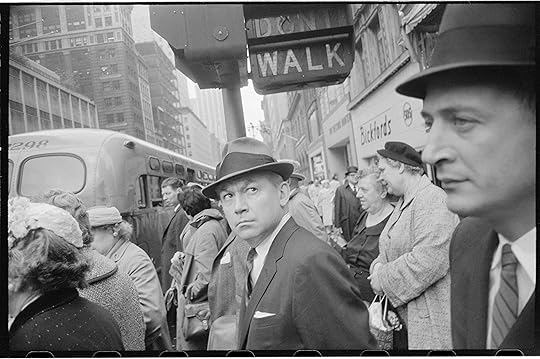
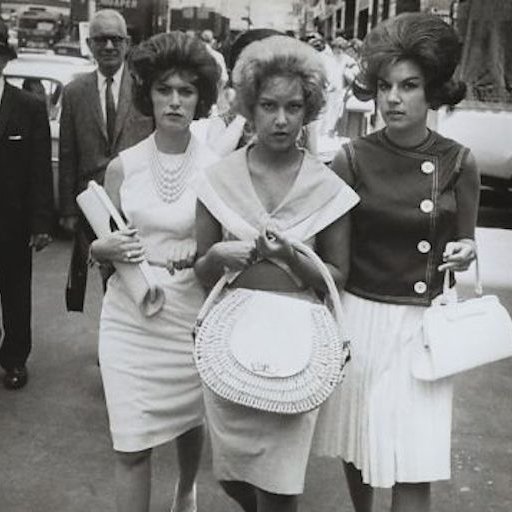
“I stand, figuratively, with one wet foot on Plymouth Rock, looking with some delicacy, not into a formidable and challenging wilderness but onto a half-finished civilization embracing glass towers, oil derricks, suburban continents, and abandoned movie houses and wondering why, in this most prosperous, equitable, and accomplished world –where even the cleaning women practice the Chopin preludes in their spare time- everyone should seem to be disappointed.” “The Death Of Justina” 1960
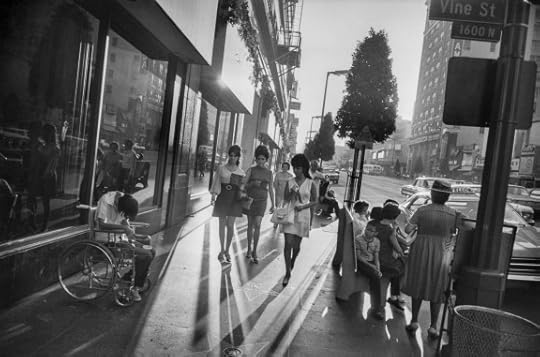
They are American stories even when they take place abroad (in Italy mostly, where Cheever and his family spent a couple of years). However, the search for meaning, beauty and reason and the longing for something that may never was, nor will it ever be, is universal. “Fifty per cent of the people in the world are homesick all the time. But I don’t suppose you’re old enough to understand. When you’re in one place and long to be in another, it isn’t as simple as taking a boat. You don’t really long for another country. You long for something in yourself that you don’t have, or haven’t been able to find.” “The Bella Lingua” 1958
They are soaked in Martinis, Manhattans, champagne and Old-Fashioneds, same as they are soaked in light, all kinds of light. Cheever is obsessed with it. His words again: “The constants that I look for in this sometimes dated paraphernalia are a love of light and a determination to trace some moral chain of being.”
They have killer opening sentences… “It was one of those rainy late afternoons when the toy department of Woolworth’s on Fifth Avenue is full of women who appear to have been taken in adultery and who are now shopping for a present to carry home to their youngest child.” “The Geometry of Love” 1966
…and their endings are thresholds to the life that is to follow and we will never know of. “It had begun to blow outside, and the house creaked gently, like a hull when the wind takes up the sail. The room with the people in it looked enduring and secure, although in the morning they would all be gone.” “The Day The Pig Fell Into The Well” 1954
More often than not something sinister is lurking in the corner and when it makes its appearance it rarely fails to be the cause of ruin. When it does fail, our relief is almost supernatural. “The touchstone of their euphoria remained potent, and while Larry gave up the fire track he could still be seen at the communion rail, the fifty-yard line, the 8:03, and the Chamber Music Club, and through the prudence and shrewdness of Helen’s broker they got richer and richer and richer and lived happily, happily, happily, happily.” “The Worm In The Apple” 1957
There’s humor and just a hint of mockery here and there, that is never nothing less than elegant. “I would not want to be one of those writers who begin each morning exclaiming:
“O Gogol, O Chekhov, O Thackeray and Dickens, what would you have made of a bomb shelter ornamented with four plaster-of-Paris ducks, a birdbath, and three composition gnomes with long beards, and red mobcaps?” “The Brigadier And The Golf Widow” 1961
Most of all, there’s love of life, and compassion, and almost childish wonder as to why this same life doesn’t turn out to be as fair as it was promised in the brightly-colored nurseries and playgrounds of affluent suburbs, in spite of the best intentions of all those involved in the solemn vow.
This book kept me wonderful company for a good part of this wretched year. It was deliberately savored ever so slowly in order to prolong the pleasure. I’ll now miss the sight of it on the bedside table but it will forever hold a special place in my heart as only the best books do.
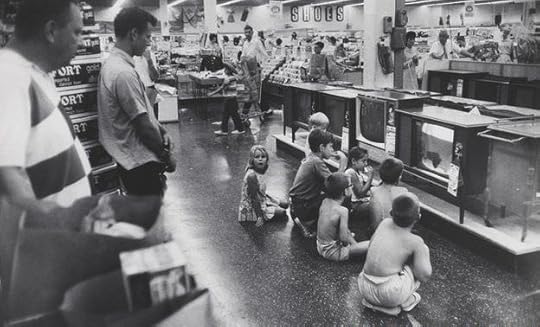
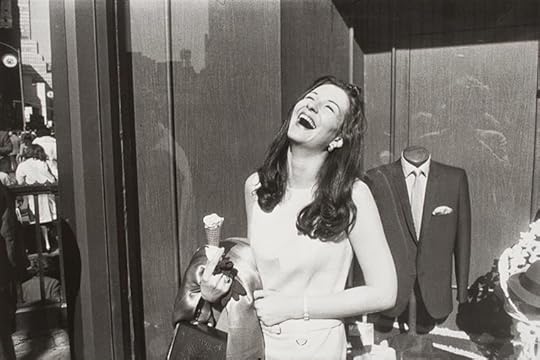
All photographs are by Garry Winogrand, American street photographer.
Garry Winogrand
The Street Philosophy of Garry Winogrand
And here's a link to his most famous story "The Swimmer":
https://loa-shared.s3.amazonaws.com/s...
These are the words of the protagonist and we’re likely to think that they might be Cheever’s too. But if we’ve come this far in the book we know by now that only the part about the moral conviction is true. There’s no infirmity in this man’s writing although he is undoubtedly of the genteel kind of a bygone era. In his stories people do perish, accidents do happen and the happy ending is not a given.
Great writers are profoundly immersed in their time and place and Cheever is no exception. On the contrary; he is so much of his time and place that it’s for a good reason that he’s called “the Chekhov of the suburbs”. He says so himself: “I am, after all, one of perhaps ten American writers who are known as the American Chekhov; but then I have been described as the Budd Schulberg of New England.”
His fiction is mostly set in the Upper East Side of Manhattan, the New York suburbs and the state of Massachusetts. This is the America of the 50s and 60s. Prosperous, gleaming, thriving, awash in Technicolor, rejoicing in its WW2 victory. The rewards, even if they don’t apply to all its people, apply to the social class Cheever belongs, of which he’s a keen observer. The members of this middle to upper-middle class live in well-appointed, brightly lit houses with tended lawns, have well-paid jobs, travel abroad, gather in country clubs, around dining tables and swimming pools where the banquets are lavish and the drinks are flowing. The women’s jewelry is shining (even if it’s faux), the cars are huge and shine too (even if they’re of the mass-market kind). The children are healthy, the housewives are caring, summer houses and boats are readily available. The rest of the world is gawking. America is the Promised Land, the Dream, the place to be.
Why then the men and women who inhabit this land are not content, satisfied, serene? Why does this sensitive writer detect the restlessness, the flinch of fear, the frozen smile, the haunted look of anxiety, the fleeting gesture of insecurity everywhere he looks? Well , as it turns out people then, now and forever carry their own personal heaven and hell no matter where or when they live.
These stories are love letters to a land of plenty as much as they are cries of futility and despair. Despite the wealth, the dogged insistence in abiding by the rules of civility, the strong sense of decorum, the potential to make life as pleasant and virtuous as can be, Eden keeps slipping away.
“I stand, figuratively, with one wet foot on Plymouth Rock, looking with some delicacy, not into a formidable and challenging wilderness but onto a half-finished civilization embracing glass towers, oil derricks, suburban continents, and abandoned movie houses and wondering why, in this most prosperous, equitable, and accomplished world –where even the cleaning women practice the Chopin preludes in their spare time- everyone should seem to be disappointed.” “The Death Of Justina” 1960
They are American stories even when they take place abroad (in Italy mostly, where Cheever and his family spent a couple of years). However, the search for meaning, beauty and reason and the longing for something that may never was, nor will it ever be, is universal. “Fifty per cent of the people in the world are homesick all the time. But I don’t suppose you’re old enough to understand. When you’re in one place and long to be in another, it isn’t as simple as taking a boat. You don’t really long for another country. You long for something in yourself that you don’t have, or haven’t been able to find.” “The Bella Lingua” 1958
They are soaked in Martinis, Manhattans, champagne and Old-Fashioneds, same as they are soaked in light, all kinds of light. Cheever is obsessed with it. His words again: “The constants that I look for in this sometimes dated paraphernalia are a love of light and a determination to trace some moral chain of being.”
They have killer opening sentences… “It was one of those rainy late afternoons when the toy department of Woolworth’s on Fifth Avenue is full of women who appear to have been taken in adultery and who are now shopping for a present to carry home to their youngest child.” “The Geometry of Love” 1966
…and their endings are thresholds to the life that is to follow and we will never know of. “It had begun to blow outside, and the house creaked gently, like a hull when the wind takes up the sail. The room with the people in it looked enduring and secure, although in the morning they would all be gone.” “The Day The Pig Fell Into The Well” 1954
More often than not something sinister is lurking in the corner and when it makes its appearance it rarely fails to be the cause of ruin. When it does fail, our relief is almost supernatural. “The touchstone of their euphoria remained potent, and while Larry gave up the fire track he could still be seen at the communion rail, the fifty-yard line, the 8:03, and the Chamber Music Club, and through the prudence and shrewdness of Helen’s broker they got richer and richer and richer and lived happily, happily, happily, happily.” “The Worm In The Apple” 1957
There’s humor and just a hint of mockery here and there, that is never nothing less than elegant. “I would not want to be one of those writers who begin each morning exclaiming:
“O Gogol, O Chekhov, O Thackeray and Dickens, what would you have made of a bomb shelter ornamented with four plaster-of-Paris ducks, a birdbath, and three composition gnomes with long beards, and red mobcaps?” “The Brigadier And The Golf Widow” 1961
Most of all, there’s love of life, and compassion, and almost childish wonder as to why this same life doesn’t turn out to be as fair as it was promised in the brightly-colored nurseries and playgrounds of affluent suburbs, in spite of the best intentions of all those involved in the solemn vow.
This book kept me wonderful company for a good part of this wretched year. It was deliberately savored ever so slowly in order to prolong the pleasure. I’ll now miss the sight of it on the bedside table but it will forever hold a special place in my heart as only the best books do.
All photographs are by Garry Winogrand, American street photographer.
Garry Winogrand
The Street Philosophy of Garry Winogrand
And here's a link to his most famous story "The Swimmer":
https://loa-shared.s3.amazonaws.com/s...

March 18, 2011
I have been reading this book for 18 months. This isn't the kind of book you just grab and set down and read from cover to cover just like I wouldn't think most people would grab the collected works of Shakespeare and read it one brilliant play after brilliant play. I have enjoyed having Cheever by my bedside always available when I needed a break from my other reading endeavors. Cheever is one of those writers that equally encourages me to write and at the same time convinces me that I have no business writing. Not all of these stories are home runs, thank goodness, I was relieved to discover he is mortal with red blood and black ink, but his strike outs were so few that certainly he would have had an alarmingly high on base percentage if writing were rewarded, like baseball, with bases.
I wanted to also make mention that these Library of America editions truly do add to the reading experience with Bible thin paper and sewn bindings. These are books that are meant to be read time and time again and by multiple generations. I own many of them and will steadily work my way through the best they have to offer.
I wanted to also make mention that these Library of America editions truly do add to the reading experience with Bible thin paper and sewn bindings. These are books that are meant to be read time and time again and by multiple generations. I own many of them and will steadily work my way through the best they have to offer.

October 24, 2016
By chance, because a friend recommended it, I watch the film 'The Swimmer. ' It destroyed me for some odd reason. It is then that I picked up "Collected Stories and Other Writings by Cheever, who was a writer I never even bothered thinking - due to me that he seemed to be a writer in a very boring time in U.S. literary contemporary history. Boy was I wrong. He's an incredible writer, and his short stories are like knife stabs in an opened wound. The first story I read was "The Swimmer," because I wanted to find out the difference between film and written text. The story is wonderful, yet very different from the film. This could be the text book class in studying the nature of movie making and short story narrative. By the way, the film is excellent, but so is the short story which is equally great, but different. After that I spent the last four or so weeks going over this book by just pointing my finger somewhere in the text, and using that technique I managed to read that story. I bought other books by Cheever after reading this book, because I want to go back to them and sort of study how he does his magic. So, in that sense, one of my favorite library books ever.

October 23, 2025
“Oh, what can you do with a man like that? What can you do? How can you dissuade his eye in a crowd from seeking out the cheek with acne, the infirm hand: how can you teach him to respond to the inestimable greatness of the race, the harsh surface beauty of life; how can you put his finger for him on the obdurate truths before which fear and horror are powerless? The sea that morning was iridescent and dark. My wife and my sister were swimming—Diana and Helen—and I saw their uncovered heads, black and gold in the dark water. I saw them come out and saw that they were naked, unshy, beautiful, and full of grace, and I watched the naked women walk out of the sea.” — Goodbye, My Brother
It was Francine Prose who first sent me to John Cheever. She had quoted these lines from Goodbye, My Brother in her book Reading Like a Writer, and I was immediately intrigued. The tensions of a family reunion have just simmered over, the difficult brother — scapegoat for everyone’s quiet grievances — has left again, and the narrator, hardly perfect himself, rises above his own smallness to deliver these final lines. There was something calm and complete about the way Cheever ended that story.
Then I read the story itself — and to be honest, I didn’t love it. The plot felt scattered, the characters hard to like. I remember wondering if Cheever’s reputation was built more on nostalgia than substance. But I’d already bought the book, so I kept going.
The next story, “The Enormous Radio”, changed everything. It crackled to life like the valves of an old set— and suddenly I could hear what all the fuss was about. A couple buys a radio that tunes into their neighbors private lives, and the suburbs start to hum with hidden longing and sorrow. It was eerie and tender, absurd and amoral all at once. I felt that quiet tingling behind my ears — this stuff was getting good.
From there, Cheever slowly got under my skin. His stories aren’t always neat or satisfying; they meander, sometimes maddeningly so. But almost every one contains a flash of something luminous — a sentence or image that stops you cold: “It is a night where kings in golden suits ride elephants over the mountains.”
Of the 61 stories in this collection, these are the ones that stayed with me:
• The Swimmer — A man decides to swim home through his neighbors pools, a strange journey that turns haunting.
• The Eight-Forty-Eight — A woman meets her former lover on a morning train, then things get charged and dangerous.
• The Chaste Clarissa — A kind woman learns that purity offers no armor against the world.
• The Brigadier and the Golf Widow — A lonely man and woman find solace in each other, but it costs them both.
• O Youth and Beauty! — A middle-aged man tries to outrun time and finds it’s faster.
• The Season for Divorce — A couple watches their marriage come apart.
• Torch Song — A lifelong friendship darkens and deepens into something deathly.
• Reunion — A young man meets his father for drinks and loses him again before the check arrives.
Cheever’s world is one of lawns and commuter trains, of parties where the laughter goes on just a little too long. But beneath the polite surface lies something unsettling. Even though the stories sometimes drift, the beautiful prose redeems them, reminding us that even a quiet suburban afternoon, a conversation on a train, or the flicker of a past memory can hold something true about who we are.
It was Francine Prose who first sent me to John Cheever. She had quoted these lines from Goodbye, My Brother in her book Reading Like a Writer, and I was immediately intrigued. The tensions of a family reunion have just simmered over, the difficult brother — scapegoat for everyone’s quiet grievances — has left again, and the narrator, hardly perfect himself, rises above his own smallness to deliver these final lines. There was something calm and complete about the way Cheever ended that story.
Then I read the story itself — and to be honest, I didn’t love it. The plot felt scattered, the characters hard to like. I remember wondering if Cheever’s reputation was built more on nostalgia than substance. But I’d already bought the book, so I kept going.
The next story, “The Enormous Radio”, changed everything. It crackled to life like the valves of an old set— and suddenly I could hear what all the fuss was about. A couple buys a radio that tunes into their neighbors private lives, and the suburbs start to hum with hidden longing and sorrow. It was eerie and tender, absurd and amoral all at once. I felt that quiet tingling behind my ears — this stuff was getting good.
From there, Cheever slowly got under my skin. His stories aren’t always neat or satisfying; they meander, sometimes maddeningly so. But almost every one contains a flash of something luminous — a sentence or image that stops you cold: “It is a night where kings in golden suits ride elephants over the mountains.”
Of the 61 stories in this collection, these are the ones that stayed with me:
• The Swimmer — A man decides to swim home through his neighbors pools, a strange journey that turns haunting.
• The Eight-Forty-Eight — A woman meets her former lover on a morning train, then things get charged and dangerous.
• The Chaste Clarissa — A kind woman learns that purity offers no armor against the world.
• The Brigadier and the Golf Widow — A lonely man and woman find solace in each other, but it costs them both.
• O Youth and Beauty! — A middle-aged man tries to outrun time and finds it’s faster.
• The Season for Divorce — A couple watches their marriage come apart.
• Torch Song — A lifelong friendship darkens and deepens into something deathly.
• Reunion — A young man meets his father for drinks and loses him again before the check arrives.
Cheever’s world is one of lawns and commuter trains, of parties where the laughter goes on just a little too long. But beneath the polite surface lies something unsettling. Even though the stories sometimes drift, the beautiful prose redeems them, reminding us that even a quiet suburban afternoon, a conversation on a train, or the flicker of a past memory can hold something true about who we are.

October 10, 2009
Grab this collection, get a blanket and someone you care about, then hurry to find a pristine park in the Northeast where you can read aloud. The result will be astonishingly weighty and strangely refreshing.

March 3, 2022
I don't know if it's me or if it's the book but this just didn't float my boat.
Something about it just bored me and rubbed me the wrong way, i'm not even sure what it was, the WASPy characters? The general vibe of the thing? The 1950's subdued-ness of it all?
I can't put my finger on it.
I'm sure this actually does have literary merit but i just couldn't click with it.
Something about it just bored me and rubbed me the wrong way, i'm not even sure what it was, the WASPy characters? The general vibe of the thing? The 1950's subdued-ness of it all?
I can't put my finger on it.
I'm sure this actually does have literary merit but i just couldn't click with it.

October 20, 2020
It took me quite a while to finish this book and I was reading a borrowed edition from a friend, who recommended it to me as "something lengthy but able to keep your interest going". I dived into it with relatively low expectations and I was quickly taken aback by the writing style and cleverness that are apparent throughout most of the book. It can easily be read during the summer at the beach, with some good wine or iced coffee by your side.
The only reason I'm giving it 4 stars instead of 5 is the fact that some stories, especially two toward the end, seemed to drag in a while or, ironically, seemed too short at the same time. I cannot fully explain it, but I had the feeling I couldn't connect to some elements and characters of few of the stories.
But, overall, I greatly enjoyed it, much more than I thought I would. A sure recommendation for short stories lovers.
The only reason I'm giving it 4 stars instead of 5 is the fact that some stories, especially two toward the end, seemed to drag in a while or, ironically, seemed too short at the same time. I cannot fully explain it, but I had the feeling I couldn't connect to some elements and characters of few of the stories.
But, overall, I greatly enjoyed it, much more than I thought I would. A sure recommendation for short stories lovers.

August 12, 2011
A great writer and especially enjoyable for readers who relish the droll humor and understatement employed by British writers. I feel British just writing this. I highly recommend 'The Enormous Radio' --- thought to be one of his finest. If you love Evelyn Waugh (the master of wry) and current writer Alan Bennett you'll find this collection to be exceptional.

December 23, 2009
I first read Cheever in my teens and 20s and enjoyed the writing but didn't relate to the characters. Now that I'm a suburban dad in my late 40s, I (sadly, at times) relate more to Cheever's disaffected characters.
June 13, 2011
Don't be mad at Cheever cause he's so damn good. Just get better already.

December 22, 2019
This is the sort of book one need to OWN so the stories can be enjoyed slowly. I couldn’t renew it from the library any more, so only made my way through ~ 1/3.

June 27, 2025
This collection of Cheever’s short stories gave me a panoramic view of the work of this master of the genre. I was underwhelmed despite the tall shadow he casts on American literature. His fictional playpen is rather restricted, I thought. Let me try and draw it below:
New York in the 1920s-40s, of city and suburban life, of apartments and country homes, of hard-working, unfulfilled, misogynistic men and desperate housewives, of single-income families who had all the comforts of life, including domestic servants, of neighbourhood parties where affairs between married couples sprang up; lots of alcohol, rude children and siblings, commuter trains for the well-off, and “locals” for those down on the social scale. Cheever invents a suburb called Shady Hill with characters who appear and reappear in stories set in that neighbourhood. I guess, because most of these pieces were published in the New Yorker, Cheever was writing for the magazine’s demographic and reader base – denizens of suburbs like Shady Hill who read the latest Cheever short story in their favourite magazine on the commuter train into work and felt validated.
Cheever’s stories seem written to fit a certain page or word count, so there is a lot of overwriting - brilliant though the prose may be - to fit the quota. The economy of the short story as we know it today, where every word has to count, seems lost, as Cheever and his characters digress into philosophizing and ruminating, adding superfluous word count, and dealing with irrelevancies that do not move the story forward. There are sometimes a lot of characters in a story to keep track of, something not recommended for short stories, but Cheever sprinkles them around boldly.
I read the most recommended stories in the collection and have listed them below. When I dove into the others, I realized why they did not warrant a mention – they were hard to get through and reminded me of the difficulty the journeyman writer has of coming up with original material to a regular schedule – the imagination does not work that way, and there is bound to be a lot of chaff among the wheat. Unrecommended stories, like “The Housebreaker of Shady Hill” and “The Death of Justina,” were chaff to me.
“The Country Husband” and “The Swimmer” best portray the doomed suburban, middle-aged, white, male breadwinner. “The Sorrows of Gin” and “The Five Forty-Eight” reveal the power imbalance between men and women, especially if the woman is an employee of the man.
“The Enormous Radio” and “Torch Song” had a touch of the macabre, and they left the narrow confines of Shady Hill. And for a harsh indictment of rich, dysfunctional families, read the semi-autobiographical “Goodbye My Brother.”
Two sections at the back are meritworthy:
1. A collection of essays on topics such as: the craft of writing (however, it too ended up as another digressionary rumination); how he came to write “Goodbye My Brother”; his family’s move from the city to the suburbs; and tributes to Scott Fitzgerald and Anton Chekov.
2. A short biography and timeline of Cheever’s life. Similar to his characters, he liked alcohol, lots of it, was bisexual, and went into various sanitariums at different times to dry out, until cancer took him at age 70. He lived on the margins (taking the “locals”) when trying to make a living as a magazine writer. However, he was able to hobnob with the literary luminaries of the day through his lifelong association with Yaddo, the artist colony in Saratoga Springs, New York. One of his anecdotes is how he would wear the only suit he had, take the elevator down to the basement, remove his clothes and write his stories in the buff, then put his clothes back on at the end of the day and return home – a full day’s work done, and his suit was preserved from wear and tear.
A book like this is best digested in small bites, because the sameness of character, setting, and situation can get monotonous. However, for those, particularly those middle-aged men who think they are hitting a brick wall, this is the book to make them feel that they are not alone – the characters in these stories could be their fathers and grandfathers of another time, and they too suffered the angst of irrelevance.
New York in the 1920s-40s, of city and suburban life, of apartments and country homes, of hard-working, unfulfilled, misogynistic men and desperate housewives, of single-income families who had all the comforts of life, including domestic servants, of neighbourhood parties where affairs between married couples sprang up; lots of alcohol, rude children and siblings, commuter trains for the well-off, and “locals” for those down on the social scale. Cheever invents a suburb called Shady Hill with characters who appear and reappear in stories set in that neighbourhood. I guess, because most of these pieces were published in the New Yorker, Cheever was writing for the magazine’s demographic and reader base – denizens of suburbs like Shady Hill who read the latest Cheever short story in their favourite magazine on the commuter train into work and felt validated.
Cheever’s stories seem written to fit a certain page or word count, so there is a lot of overwriting - brilliant though the prose may be - to fit the quota. The economy of the short story as we know it today, where every word has to count, seems lost, as Cheever and his characters digress into philosophizing and ruminating, adding superfluous word count, and dealing with irrelevancies that do not move the story forward. There are sometimes a lot of characters in a story to keep track of, something not recommended for short stories, but Cheever sprinkles them around boldly.
I read the most recommended stories in the collection and have listed them below. When I dove into the others, I realized why they did not warrant a mention – they were hard to get through and reminded me of the difficulty the journeyman writer has of coming up with original material to a regular schedule – the imagination does not work that way, and there is bound to be a lot of chaff among the wheat. Unrecommended stories, like “The Housebreaker of Shady Hill” and “The Death of Justina,” were chaff to me.
“The Country Husband” and “The Swimmer” best portray the doomed suburban, middle-aged, white, male breadwinner. “The Sorrows of Gin” and “The Five Forty-Eight” reveal the power imbalance between men and women, especially if the woman is an employee of the man.
“The Enormous Radio” and “Torch Song” had a touch of the macabre, and they left the narrow confines of Shady Hill. And for a harsh indictment of rich, dysfunctional families, read the semi-autobiographical “Goodbye My Brother.”
Two sections at the back are meritworthy:
1. A collection of essays on topics such as: the craft of writing (however, it too ended up as another digressionary rumination); how he came to write “Goodbye My Brother”; his family’s move from the city to the suburbs; and tributes to Scott Fitzgerald and Anton Chekov.
2. A short biography and timeline of Cheever’s life. Similar to his characters, he liked alcohol, lots of it, was bisexual, and went into various sanitariums at different times to dry out, until cancer took him at age 70. He lived on the margins (taking the “locals”) when trying to make a living as a magazine writer. However, he was able to hobnob with the literary luminaries of the day through his lifelong association with Yaddo, the artist colony in Saratoga Springs, New York. One of his anecdotes is how he would wear the only suit he had, take the elevator down to the basement, remove his clothes and write his stories in the buff, then put his clothes back on at the end of the day and return home – a full day’s work done, and his suit was preserved from wear and tear.
A book like this is best digested in small bites, because the sameness of character, setting, and situation can get monotonous. However, for those, particularly those middle-aged men who think they are hitting a brick wall, this is the book to make them feel that they are not alone – the characters in these stories could be their fathers and grandfathers of another time, and they too suffered the angst of irrelevance.

October 9, 2023
The first fiction writer I ran the table on (all his prose, not his poetry) was John Updike, some 50 books in all. Updike said that he was influenced by John Cheever, and he mentioned Cheever in his seven massive collected volumes of book reviews and essays. So I knew I'd be getting to Cheever sooner or later. That took me longer than expected, but I finally read his two Wapshot novels, and now this 1,000-page LOA story collection. Like Updike, Cheever's stories have been called "domestic fiction," referring to the fact that so much of the work takes place in some sort of family (or "couples") setting for better or worse.
Cheever was born within a month of my father, certainly of a different social class and from a different region (New England vs. Chicago), so with Cheever I could in some sense be seeing the country and the world through Dad's generational eyes. It is fitting that the cover of this volume features the author standing in front of a suburban commuter train station; many, many of the stories involve protagonists riding the rails into the city and back. (Dad and his siblings also rode the Chicago-area commuter trains). In contrast, Updike's work, a generation later, was more likely to feature driving (for example Harry "Rabbit" Angstrom hopping in his car and heading down toward Florida, his car radio playing rock n' roll).
I would call John Cheever's work "dark humor," and that not in any way a criticism. It is a talent to find humor in any situation, but further, one of his specialties was to create situations that no one else might have thought of. I hadn't previously encountered much fictional interaction between tenants in apartment blocks and the elevator operators or other staff. In a number of his suburban stories he features folks swimming sans bathing suits.
Not unlike Updike, Cheever's stories are set in two (or more) different geographical locales, and the stories could have been written by different authors. That is excepting that almost all of the stories, regardless of location, have that deadpan delivery that says to the reader, "what're you giggling at; this is what really happened?"
'Cheever: Collected Stories' opens a door to a generation now an increasingly distant memory. And as both Cheever and Updike have intimated, one can learn as much or even more history from the fiction of an era as from that era's history texts.
Cheever was born within a month of my father, certainly of a different social class and from a different region (New England vs. Chicago), so with Cheever I could in some sense be seeing the country and the world through Dad's generational eyes. It is fitting that the cover of this volume features the author standing in front of a suburban commuter train station; many, many of the stories involve protagonists riding the rails into the city and back. (Dad and his siblings also rode the Chicago-area commuter trains). In contrast, Updike's work, a generation later, was more likely to feature driving (for example Harry "Rabbit" Angstrom hopping in his car and heading down toward Florida, his car radio playing rock n' roll).
I would call John Cheever's work "dark humor," and that not in any way a criticism. It is a talent to find humor in any situation, but further, one of his specialties was to create situations that no one else might have thought of. I hadn't previously encountered much fictional interaction between tenants in apartment blocks and the elevator operators or other staff. In a number of his suburban stories he features folks swimming sans bathing suits.
Not unlike Updike, Cheever's stories are set in two (or more) different geographical locales, and the stories could have been written by different authors. That is excepting that almost all of the stories, regardless of location, have that deadpan delivery that says to the reader, "what're you giggling at; this is what really happened?"
'Cheever: Collected Stories' opens a door to a generation now an increasingly distant memory. And as both Cheever and Updike have intimated, one can learn as much or even more history from the fiction of an era as from that era's history texts.

March 19, 2022
As with the other book by John Cheever that I read, I only got this book to read one story in it, "the season of divorce." If you look at my review of his other collection of short stories, you'll see what I think about John Cheever and his writing.
It seems to me that John Cheever had a strange life, and strange friends. His ideas of a home life, and a married life, with children, seem weird. It could be the difference between class, culture, and the time that this was written, but I think it's more than that.
As to the "season of divorce," it's about a married couple who are struggling a bit, because the husband doesn't make much money.
They have a strange routine with their children, where the children eat dinner early and are bathed and go to bed, and then the husband and wife have dinner at the dining table with candles and china. Though they eat dishes such as corned beef hash.
One of their neighbors is a doctor who is married to a woman about 15 years older than him. The doctor falls in love with the protagonist's wife. And the wife, in a session in the middle of the night, confesses to her husband how unhappy she is, and why shouldn't she go away? But I guess they end up staying together. Strange.
By the way, John Cheever was bisexual, but hated that aspect of himself, so he was probably very unhappy.
It seems to me that John Cheever had a strange life, and strange friends. His ideas of a home life, and a married life, with children, seem weird. It could be the difference between class, culture, and the time that this was written, but I think it's more than that.
As to the "season of divorce," it's about a married couple who are struggling a bit, because the husband doesn't make much money.
They have a strange routine with their children, where the children eat dinner early and are bathed and go to bed, and then the husband and wife have dinner at the dining table with candles and china. Though they eat dishes such as corned beef hash.
One of their neighbors is a doctor who is married to a woman about 15 years older than him. The doctor falls in love with the protagonist's wife. And the wife, in a session in the middle of the night, confesses to her husband how unhappy she is, and why shouldn't she go away? But I guess they end up staying together. Strange.
By the way, John Cheever was bisexual, but hated that aspect of himself, so he was probably very unhappy.
April 5, 2025
I picked this volume up four or five years back thinking Cheever was someone I should read so that I could feel "well-read". But I hate short stories. With the exception of Alice Munro, (who I read only because she'd received the Noble and so I figured there had to be something there), I have never enjoyed the format, be it Fitzgerald or Chekhov. But OMG... I love reading, I appreciate writing, the way an author can keep you going for just one more paragraph, once more page, the way a talented writer can make you stop in your tracks and re-read a simple sentence because the words were chosen carefully and toss out a universal truth that can make you pause, think, laugh or choke up. So now I understand why John Cheever is a name I have heard for years and why he is still mentioned today. His work presents little sideways glance at life, at family, neighborhood, state and country that are instantly recognizable-- but not in the way you've noticed before he mentioned it. I picked up the volume thinking that this will just hold me until I decide which novel or history or biography I'd clamp onto next. Yet his work is so delightful that I had read 1004 pages without once thinking of what I was going to read next. And that, believe me, is about as grand a tribute I can give an author.
September 25, 2022
Cheever was a remarkable man. He never graduated from high school (he was expelled from Thayer Academy), never attended college, and his family was harshly affected by both the Great Depression and alcoholism, including Cheever's. His first short story, "Expelled," appeared in the National Review when he was 18, and Cheever went on to become one of the most published story writers in The New Yorker (along with John O'Hara and John Updike). Describing himself as a lonely man, Cheevers stayed married - in a sometimes chilly marriage - until his death, but he took many other lovers, both male and female. His talent was innate. This particular volume collects the 60 or so stories released as a collection in 1978, which solidified his reputation, won the Pulitzer Prize, and put money in his pocket. The LOA volume includes an additional 20 essays and stories. Cheever also wrote 5 novels, one of which won the National Book Award. His story is compelling. I recommend Scott Donaldson's bio of Cheever, though the later bio by Blake Bailey gets more attention and is probably worth a read (though I've read it has a "forest and trees" problem).
I came to Cheever late in my own life. Thank goodness.
I came to Cheever late in my own life. Thank goodness.
January 31, 2022
Cheever evokes a sort of lost utopia of mid-twentieth century suburban life--and then shows its seams and flaws. His stories envelop the reader in silky, evocative prose about seemingly familiar, ubiquitous people (neighbors), and having lulled the reader into a sense of security, peel away layers until the truth is revealed. Some have an almost magical-realist twist, and many are morality tales of a sort. But all are entertaining and thought-provoking.
"The Swimmer" is a story that will stay with me all the days of my life; I have no end of praise for its magical qualities. But others, like "The Enormous Radio" for example, are almost as stunning.
Cheever is that person at a party who whispers something to you and then disappears in the crowd. But he has left you with some arcane knowledge that you can never forget.
"The Swimmer" is a story that will stay with me all the days of my life; I have no end of praise for its magical qualities. But others, like "The Enormous Radio" for example, are almost as stunning.
Cheever is that person at a party who whispers something to you and then disappears in the crowd. But he has left you with some arcane knowledge that you can never forget.

November 8, 2022
I grabbed this collection to read the story The Swimmer (made into a 1968 film starring Burt Lancaster in the eponymous role) after two separate friends recommended either the film or the story, and it was well worth it! Having not read much Cheever, I flipped through the book, picking out a half dozen or so stories to read and enjoyed most of them. The Five Forty Eight and The Enormous Radio were especially good. If it weren't overdue back to the library, I'd keep it on my nightstand a little while longer and try some more stories, but instead I think I'll graduate to a Cheever novel and read Falconer soon.

October 23, 2021
Old fashioned, for sure, yet still some of the consistently freshest prose in American letters. No one seems more alive on the page than John Cheever. If you read him, chances are you will never feel as alive in your own life as you will over the course of his 1000+ pages worth of short stories, where miraculous sentences flow from miraculous sentences. "A page of good prose remains invincible" and nowhere else does this ring more true than here.

December 6, 2023
There were some absolutely brilliant stories in this collection. “The Music Teacher,” “A Vision of the World,” and “The Swimmer” in particular.
On the other hand, there were also a lot of OK stories. Probably to be expected. I described this to a friend as exactly the sorts of stories that you would expect from an author who spent most of his career writing for the New Yorker. Lots of observant social commentary and biting satire.
On the other hand, there were also a lot of OK stories. Probably to be expected. I described this to a friend as exactly the sorts of stories that you would expect from an author who spent most of his career writing for the New Yorker. Lots of observant social commentary and biting satire.

April 10, 2022
Niche dark short stories. I read them all but came for The Swimmer. White, upper middle-class problems in Connecticut suburbs within commuting distance to The City. Many first published in The New Yorker. They are good but it does remind the reader how important representation can be!

June 3, 2023
What an opus!

November 24, 2015
I read 20 of Cheever's short stories (many more are included in this volume, along with several interesting biographical essays). Most of them are set in Manhattan or the Westchester town of Shady Hill, the author's standing for Ossining, where he and his family moved in the mid-1950s. Many of the stories are similar, featuring less-than-ideal marriages, infidelity, strained family relationships, heavy drinking, and financial or professional failures. Many characters are wearing masks, pretending everything is peachy keen for the neighbors. While I sympathized with some of them, because Cheever does not delve too deeply into their heads, I did not empathize with them. That said, I appreciated the portrait of a particular time, place, and way of life, and there were a few stories that stood out for their humor or sense of redemption, including "The Day the Pig Fell in the Well" and "The Angel of the Bridge."

September 14, 2011
Obviously, Cheever is one of the most celebrated American short story writers of the 20th century. Until now, though I'm familiar with many of his stories, I had never read the complete collected.
Like all short story writers this side of Joyce and Chekhov, Cheever is inconsistent, but his 20 or so good short stories are really, really good. Thematically, he goes to the booze-work-suburbia well a bit too many times, but if you're looking for middle-class, mid-century realism, he's your man. Richard Yates is probably his only real competition.
Like all short story writers this side of Joyce and Chekhov, Cheever is inconsistent, but his 20 or so good short stories are really, really good. Thematically, he goes to the booze-work-suburbia well a bit too many times, but if you're looking for middle-class, mid-century realism, he's your man. Richard Yates is probably his only real competition.

August 16, 2016
Re-read, 04/2018 (LOA version)- Cheever stands, in my estimation, alongside Raymond Carver as the best writer of short stories in America. The brilliance and beauty of this collection are infinite.
This book is a treasure trove of great stories. Despite Cheever's feeling that his earlier work was not his best, I actually found a lot of the later stories to be much more awkward and disjointed. Regardless, there is a wealth of fantastic material here.
This book is a treasure trove of great stories. Despite Cheever's feeling that his earlier work was not his best, I actually found a lot of the later stories to be much more awkward and disjointed. Regardless, there is a wealth of fantastic material here.

September 12, 2009
I'll be honest, this was a LONG book. I had no idea just how many short stories Cheever had written and it took me more than a month to get through them all. I love his writing, but the themes are all the same so my best advice would be to get this book, and then read one story at a time over the course of, say, a year. Front to back was tough. No regrets, however!

February 3, 2010
color-me-closeminded, but I can't find any real depth in the seemingly endless stream of stories revealing nothing but mild angst, all of which appears to stem from a life surrounded by heavily inebriated new englanders.

May 5, 2014
2½ stars. I gave up on this at page 386 (of over 1000 pgs) - I just wasn't enjoying most of these short stories. They were well-written but the people and the life portrayed just depressed me.

November 21, 2015
This is a revisit of John Cheever. I have read many of his stories in collected anthologies.
Some of my favorites in this book: The Enormous Radio; Christmas is a Sad Season for the Poor; The Swimmer
Some of my favorites in this book: The Enormous Radio; Christmas is a Sad Season for the Poor; The Swimmer
May 19, 2009
A master at work. The very first story in the collection, "Goodbye, My Brother," is worth the price of admission.
Displaying 1 - 30 of 47 reviews