

What do you think?
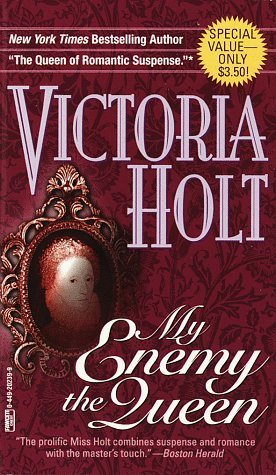
My Enemy, the Queen
It was Lettice who married the Earl of Leicester, whom Elizabeth I loved. And it was Lettice who was the mother of the Queen's beloved Earl of Essex. That young earl would one day break the Queen's heart.
It was always Lettice, the constant spoiler in the triangle of love surrounding Elizabeth...
It was always Lettice, the constant spoiler in the triangle of love surrounding Elizabeth...
444 pages, Mass Market Paperback
First published January 1, 1978
About the author
Victoria Holt
384 books1,414 followersLibrarian Note: There is more than one author in the GoodReads database with this name. See this thread for more information.
Eleanor Alice Burford, Mrs. George Percival Hibbert was a British author of about 200 historical novels, most of them under the pen name Jean Plaidy which had sold 14 million copies by the time of her death. She chose to use various names because of the differences in subject matter between her books; the best-known, apart from Plaidy, are Victoria Holt (56 million) and Philippa Carr (3 million). Lesser known were the novels Hibbert published under her maiden name Eleanor Burford, or the pseudonyms of Elbur Ford, Kathleen Kellow and Ellalice Tate. Many of her readers under one penname never suspected her other identities.
-Wikipedia
Eleanor Alice Burford, Mrs. George Percival Hibbert was a British author of about 200 historical novels, most of them under the pen name Jean Plaidy which had sold 14 million copies by the time of her death. She chose to use various names because of the differences in subject matter between her books; the best-known, apart from Plaidy, are Victoria Holt (56 million) and Philippa Carr (3 million). Lesser known were the novels Hibbert published under her maiden name Eleanor Burford, or the pseudonyms of Elbur Ford, Kathleen Kellow and Ellalice Tate. Many of her readers under one penname never suspected her other identities.
-Wikipedia
Ratings & Reviews
Friends & Following
Create a free account to discover what your friends think of this book!
Community Reviews
Displaying 1 - 30 of 128 reviews

August 20, 2008
The court of Elizabeth I from another viewpoint. Interesting read, I was fascinated to learn more about Lettice Knowles. From previous books I have read about the period, I had heard Lettice's name occasionally, and knew there was some speculation about whether or not Henry VIII fathered her mother during his affair with Mary Boleyn. We'll never know.
All in all an enjoyable read - not the greatest in the historical fiction genre, but worthwhile to learn more about the secondary players in the times of Elizabeth I.
All in all an enjoyable read - not the greatest in the historical fiction genre, but worthwhile to learn more about the secondary players in the times of Elizabeth I.
November 8, 2010
Lettice Devereaux tells the tragic story of Elizabeth I and her love for two men - the Earl of Leicester and the Earl of Essex. One must move past the persona Lettice projects to see the essence of this tale. Lettice's life revolves around court and the Queen who is her cousin. A vain woman who prides herself in her beauty, she falls in love with the queen's favorite, the Earl of Leicester, a womanizing and most ambitious man. He is handsome, charismatic, and devilishly capable of extracting himself from the queen's anger. The queen loves him madly but she loves England more and cannot bear to share her crown with anyone, let alone the Earl of Leicester whose ambition is to become king. Elizabeth adores her people and is, in turn, adored by them. Whenever she goes on progress she stops to talk with them. However, she expects those at court to dance to her smallest whim. Lettice plots to ensnare the Earl and finally marries him in spite of his colorful reputation and the queen's love. For this, the queen abolishes her from court while keeping the Earl by her side. As the Earl ages, he decides to bring Lettice's son, the Earl of Essex, to court. When Leicester dies, the Earl of Essex becomes the queen's favorite but he lacks the maturity and political acumen of Leicester which lead to his downfall. Quotes at the beginning of each chapter give the reader a capsule of what is to occur within. I truly enjoyed this book once I was able to put aside the personality of Lettice who outlives most of the key characters. If you like historical fiction you will enjoy My Enemy the Queen as much as I did.

May 28, 2013
Most people familiar with the Tudors will know that Elizabeth was in love with Robert Dudley, earl of Leicester, her whole life and died with his last letter close. Most will also know that Anne Boleyn was her mother, and it was her cousin, Lettice Knollys, the daughter of Anne Boleyn's niece, who 'stole' married this great love of hers. I've always been endeared by Elizabeth's forbidden love with Leicester and so by proxy, was never a fan of the star of this book -- no other than Lettice Knollys.
Robert Dudley had his eye on the crown for years, but even when his wife died and he was free to marry Elizabeth, for the security of her throne and the peace of her realm, she had to spurn him and broke her own heart in doing so. It was Lettice, essentially a younger version of Elizabeth with the same dark eyes and red hair, who he found solace in, and it was Lettice who he married in secret when it became clear that Elizabeth would not. The queen forgave him but she never did, her Boleyn cousin. In the background of the main story of romance, jealousy, ambition and fruitless seduction are the politics of Elizabeth's reign unto nearly her death, a couple of years after she had to order the execution of Robert Dudley's son, a favorite who she adored like something between son and lover.
"My Enemy, the Queen" is thrilling and suspenseful in a way no other Tudor novel is. It explores an uncharted topic -- the rivalry between Elizabeth and her beautiful Boleyn cousin -- but also a romance and a historical profile (Lettice Knollys) that novelists favoring Elizabeth I so love to malign. While highly enjoyable and highly recommended, "My Enemy the Queen" had its faults, including an awkward lovemaking scene which made very little sense to me -- falling into a closet that is conveniently in the ballroom, really? -- and a poor ending for Robert and Lettice. While these two share enjoyable romantic moments, he is portrayed as (spoiler) trying to poison Lettice, holding true to propaganda of his day which was, well, plainly propaganda -- lies. That was disappointing. He is also portrayed as, for the most part, pursuing Lettice as a second choice, when, as much as I hate to admit it, it is likely that he felt some affection for her given that he risked his royal favor to marry a woman Elizabeth was notorious for disliking.
"My Enemy" was one of Victoria Holt's (aka Jean Plaidy) last novels, and was a great way to close out a brilliant career. The writing style is a bit more modern, different in that sense from a lot of her older pieces, but in exploring psychological factors and building dramatic and full-blooded plot, she holds true to her usual style, which is timeless genius.
Robert Dudley had his eye on the crown for years, but even when his wife died and he was free to marry Elizabeth, for the security of her throne and the peace of her realm, she had to spurn him and broke her own heart in doing so. It was Lettice, essentially a younger version of Elizabeth with the same dark eyes and red hair, who he found solace in, and it was Lettice who he married in secret when it became clear that Elizabeth would not. The queen forgave him but she never did, her Boleyn cousin. In the background of the main story of romance, jealousy, ambition and fruitless seduction are the politics of Elizabeth's reign unto nearly her death, a couple of years after she had to order the execution of Robert Dudley's son, a favorite who she adored like something between son and lover.
"My Enemy, the Queen" is thrilling and suspenseful in a way no other Tudor novel is. It explores an uncharted topic -- the rivalry between Elizabeth and her beautiful Boleyn cousin -- but also a romance and a historical profile (Lettice Knollys) that novelists favoring Elizabeth I so love to malign. While highly enjoyable and highly recommended, "My Enemy the Queen" had its faults, including an awkward lovemaking scene which made very little sense to me -- falling into a closet that is conveniently in the ballroom, really? -- and a poor ending for Robert and Lettice. While these two share enjoyable romantic moments, he is portrayed as (spoiler) trying to poison Lettice, holding true to propaganda of his day which was, well, plainly propaganda -- lies. That was disappointing. He is also portrayed as, for the most part, pursuing Lettice as a second choice, when, as much as I hate to admit it, it is likely that he felt some affection for her given that he risked his royal favor to marry a woman Elizabeth was notorious for disliking.
"My Enemy" was one of Victoria Holt's (aka Jean Plaidy) last novels, and was a great way to close out a brilliant career. The writing style is a bit more modern, different in that sense from a lot of her older pieces, but in exploring psychological factors and building dramatic and full-blooded plot, she holds true to her usual style, which is timeless genius.

February 11, 2019
Lettice Knollys, cousin to Queen Elizabeth I, becomes Elizabeth's rival throughout her life. Vying with each other when young over who is the most beautiful and sought after, Lettice , a young widow, angers Elizabeth by marrying Elizabeth's favorite, Robert Dudley. As Elizabeth constantly demanded his presence at court, Lettice becomes more and more resentful. Following Dudley's death, Lettice marries again, but concentrates her efforts on promoting her son from her first marriage, Robert, Earl of Essex. Although he becomes one of Elizabeth's favorites as she ages, he has none of Dudley's common sense and finds himself pitted against Elizabeth, who cannot forgive him. Lettice ends up outliving not only Elizabeth, but all of her children, but believes her life was lived futilely as she and Elizabeth never reconciled.
I would like to rate this book higher, and it did have its moments. However, I found it extremely repetitive and Lettice somewhat annoying, as portrayed. I felt the author did not give the reader enough credit for understanding Lettice and Elizabeth's personalities and emotions and had to keep drumming it into the story over and over.
I would like to rate this book higher, and it did have its moments. However, I found it extremely repetitive and Lettice somewhat annoying, as portrayed. I felt the author did not give the reader enough credit for understanding Lettice and Elizabeth's personalities and emotions and had to keep drumming it into the story over and over.

March 19, 2008
Just arrived from Finland through BM.
The first part of this book was just about the love affair between Lettice, Elizabeth I and Earl of Leicester, nothing else. After Leicester's death then the plot became quite interesting with the characters of Earl of Essex, Francis Bacon and Raleigh.
The first part of this book was just about the love affair between Lettice, Elizabeth I and Earl of Leicester, nothing else. After Leicester's death then the plot became quite interesting with the characters of Earl of Essex, Francis Bacon and Raleigh.

June 6, 2017
Una novela que trata sobre la vida de Lettice Knoyles, quien fue prima lejana de Elizabeth I, la "Reina Virgen", cuyas vidas estuvieron entrelazadas por dos hombres: Robert Duddley Conde de Leicester y Robert Devereux, Conde de Essex.
La novela está escrita por Eleanor Alice Burford quien escribió muchos dramas de corte histórico,romandico,góticos bajo varios seudónimos: como Phillipa Carr novelas románticas, de corte gótico y de misterio, como Jean Plaidy escribió la mayoría de sus dramas históricos basados en los personajes de la corona inglesa o francesa. Por eso me llamó la atención que bajo el nombre de Victoria Holt con el cual escribió muchos dramas góticos románticos (y que en este género es mi autora favorita), escribiera esta historia basada en un personaje que si bien no fue princesa ni reina, estuvo relacionado con la nobleza inglesa y con Elizabeth I por parentesco y por otros motivos, lo que hace esta historia interesante porque a través de este drama histórico viajamos por toda la época dorada del reinado de Elizabeth I, también llamada la Reina Virgen o la Reina Blanca. Lettice Knoyles (Condesa de Essex) formó parte de la historia de la corona inglesa sobre todo a traves de su familia, su amante y su hijo.
Mi reseña completa aquí.
http://perezosa69.blogspot.cl/2017/06...
La novela está escrita por Eleanor Alice Burford quien escribió muchos dramas de corte histórico,romandico,góticos bajo varios seudónimos: como Phillipa Carr novelas románticas, de corte gótico y de misterio, como Jean Plaidy escribió la mayoría de sus dramas históricos basados en los personajes de la corona inglesa o francesa. Por eso me llamó la atención que bajo el nombre de Victoria Holt con el cual escribió muchos dramas góticos románticos (y que en este género es mi autora favorita), escribiera esta historia basada en un personaje que si bien no fue princesa ni reina, estuvo relacionado con la nobleza inglesa y con Elizabeth I por parentesco y por otros motivos, lo que hace esta historia interesante porque a través de este drama histórico viajamos por toda la época dorada del reinado de Elizabeth I, también llamada la Reina Virgen o la Reina Blanca. Lettice Knoyles (Condesa de Essex) formó parte de la historia de la corona inglesa sobre todo a traves de su familia, su amante y su hijo.
Mi reseña completa aquí.
http://perezosa69.blogspot.cl/2017/06...

November 4, 2021
شاید ده سال پیش خونده باشمش اما اینقدر قشنگ بود که هیچوقت یادم نمیره.
داستان عشق الیزابت و رابرت دادلی و رقیبی از میان ندیمههای الیزابت که اوضاع بین ملکه و رابرت رو به هم میریزه.
یه عاشقانه زیبا در دل دربار الیزابت و لایههای عمیق رابطه الیزابت و رابرت دادلی
داستان عشق الیزابت و رابرت دادلی و رقیبی از میان ندیمههای الیزابت که اوضاع بین ملکه و رابرت رو به هم میریزه.
یه عاشقانه زیبا در دل دربار الیزابت و لایههای عمیق رابطه الیزابت و رابرت دادلی
June 2, 2008
This is my favorite historical novel ever! I had just recently traveled through England, and Holt talks about all the amazing places that I had just seen the ruins of. It is a must to anyone who has traveled through London and the surrounding countryside. I had read so many different accounts of the Earl of Leichester and the Queen, and this was absolutely the most engrossing.

May 19, 2022
Polski tytuł "Mój wróg, królowa"
Całkiem przyjemna lektura, choć bardzo jednostajna, bez porywów. W taki sposób mogłyby być pisane podręczniki historii.
Lettice Knollys znana jest głównie z tego, że została małżonką hrabiego Leicestera, ukochanego królowej Elżbiety I, Roberta Dudleya. A stało się to bez wiedzy i zgody władczyni. Te kobiety rywalizowały przez długie lata. Dudley był jednym z najbardziej zaufanych królowej, był jej namiętnością od lat dziecięcych. Jednak duma i nie wiadomo skąd płynące obawy przed małżeństwem nie pozwoliły Elżbiecie na poślubienie go. Jak mówi przysłowie, sam pies nie zje i drugiemu nie da. Tak więc królowa, mimo że odmówiła zaślubin z Leicesterem, oczekiwała, że pozostanie on jej wierny i nawet nie spojrzy na inną kobietę. Chodziły plotki na temat dziwnej śmierci pierwszej żony hrabiego. A druga została poślubiona w tajemnicy, w obawie przed gniewem królowej.
Śmierć Leicestera pogrążyła obie kobiety w żałobie, ale w najmniejszym stopniu nie doszło do ich pojednania. Kiedy ukochany syn Letycji został wprowadzony na dwór, momentalnie zawładnął sercem Elżbiety, jak niegdyś jego ojczym. Młody, przystojny, uroczy i śmiały. Zbyt śmiały i bezczelny, co doprowadziło do jego zguby. Został zgładzony z rozkazu królowej. I znów przepaść między Letycją i Elżbietą się pogłębiła...
Dwie kobiety, dwóch mężczyzn, których one kochały najbardziej w życiu. I dwie tragedie o historycznych konsekwencjach.
Całkiem przyjemna lektura, choć bardzo jednostajna, bez porywów. W taki sposób mogłyby być pisane podręczniki historii.
Lettice Knollys znana jest głównie z tego, że została małżonką hrabiego Leicestera, ukochanego królowej Elżbiety I, Roberta Dudleya. A stało się to bez wiedzy i zgody władczyni. Te kobiety rywalizowały przez długie lata. Dudley był jednym z najbardziej zaufanych królowej, był jej namiętnością od lat dziecięcych. Jednak duma i nie wiadomo skąd płynące obawy przed małżeństwem nie pozwoliły Elżbiecie na poślubienie go. Jak mówi przysłowie, sam pies nie zje i drugiemu nie da. Tak więc królowa, mimo że odmówiła zaślubin z Leicesterem, oczekiwała, że pozostanie on jej wierny i nawet nie spojrzy na inną kobietę. Chodziły plotki na temat dziwnej śmierci pierwszej żony hrabiego. A druga została poślubiona w tajemnicy, w obawie przed gniewem królowej.
Śmierć Leicestera pogrążyła obie kobiety w żałobie, ale w najmniejszym stopniu nie doszło do ich pojednania. Kiedy ukochany syn Letycji został wprowadzony na dwór, momentalnie zawładnął sercem Elżbiety, jak niegdyś jego ojczym. Młody, przystojny, uroczy i śmiały. Zbyt śmiały i bezczelny, co doprowadziło do jego zguby. Został zgładzony z rozkazu królowej. I znów przepaść między Letycją i Elżbietą się pogłębiła...
Dwie kobiety, dwóch mężczyzn, których one kochały najbardziej w życiu. I dwie tragedie o historycznych konsekwencjach.
September 14, 2024
The repetition got to me and made me worry that the author assumed I have memory issues (which, in all fairness, is not a totally wrong assumption) but all in all it's the history of Lettice Knollys, Robert Dudley and Elizabeth I. Learning about Tudors is an enjoyable passtime and this story was the same: an enjoyable way to pass the time.

January 9, 2025
So much drama. Mayhem. Blood and tears. The writing is not the best, but I’m here for it.

January 31, 2014
UGH!!!!
I hated this book.
I hated these characters.
I am glad everyone is dead now.

I feel so icky now, and jittery and slightly depressed. Why did I do this to myself?
What we have here is an account from Lettice, Countess of Leicester on her life serving the queen, falling in love with the Queen's favorite beau and their strange three legged relationship that followed.
I don't know who I hated more, vain and evil Queen Elizabeth or vain, evil, and selfish Lettice. OR vain and evil Leicester, or vain, evil, selfish, and stupid Essex. All of them were the worst people on earth.
I know part of this is my complete and utter lack of understanding for the time period and the whole monarchy situation. I just don't understand why any grown, successful adult would want to suck on the queen's big toe like a child. How humiliating. I wouldn't do it. I wouldn't let her pinch or slap me or control my life and who I sleep with because she might give me a piece of jewelry or a plot of land.
I found the entire situation disgusting and unfair and it just goes against everything I've ever been taught which is to treat each other kindly and to work hard to get what you deserve. I know that's a slightly naive way to think, but I can't imagine being surrounded by such vipers all the time. I'm sure I would have been one of those people who never visited court.
It just made me feel awful, to think that people really lived in those sad situations and were so completely ruled by someone else. It felt like a form of slavery.
It didn't help that I felt so disconnected from the characters. Lettice originally reminded me of Scarlet, arrogant and pretty and feeling entitled to things, but the similarities ended there. While I was able to relate to Scarlet on a personal level, I never managed that with Lettice. She really didn't have too many thoughts in her head at all. Except to steal Leicester from the Queen. Wow, what a goal there Lettice.
Scarlet at least was fighting for survival at one point and was driven to be successful at others. She had a personality outside being pretty and ineffectual.
Even the Queen, as much as I disliked her, was more of an interesting character.
The main reason I think I hated this story was because Lettice was unbelievably stupid in her assumption that she "stole" Leicester from the Queen. She didn't. She might have married him, might have slept with him, but she was in no way his favorite. She was an after thought, a convenience since he couldn't marry the one he really wanted. Lettice never saw it that way and it drove me crazy that she was so blind.
Anyway, I feel like I've ranted enough. And maybe this book deserves 3 stars because it was a well written and historically accurate account of Queen Elizabeth's reign, but the lack of good characterization was a serious drawback for me.
I hated this book.
I hated these characters.
I am glad everyone is dead now.

I feel so icky now, and jittery and slightly depressed. Why did I do this to myself?
What we have here is an account from Lettice, Countess of Leicester on her life serving the queen, falling in love with the Queen's favorite beau and their strange three legged relationship that followed.
I don't know who I hated more, vain and evil Queen Elizabeth or vain, evil, and selfish Lettice. OR vain and evil Leicester, or vain, evil, selfish, and stupid Essex. All of them were the worst people on earth.
I know part of this is my complete and utter lack of understanding for the time period and the whole monarchy situation. I just don't understand why any grown, successful adult would want to suck on the queen's big toe like a child. How humiliating. I wouldn't do it. I wouldn't let her pinch or slap me or control my life and who I sleep with because she might give me a piece of jewelry or a plot of land.
I found the entire situation disgusting and unfair and it just goes against everything I've ever been taught which is to treat each other kindly and to work hard to get what you deserve. I know that's a slightly naive way to think, but I can't imagine being surrounded by such vipers all the time. I'm sure I would have been one of those people who never visited court.
It just made me feel awful, to think that people really lived in those sad situations and were so completely ruled by someone else. It felt like a form of slavery.
It didn't help that I felt so disconnected from the characters. Lettice originally reminded me of Scarlet, arrogant and pretty and feeling entitled to things, but the similarities ended there. While I was able to relate to Scarlet on a personal level, I never managed that with Lettice. She really didn't have too many thoughts in her head at all. Except to steal Leicester from the Queen. Wow, what a goal there Lettice.
Scarlet at least was fighting for survival at one point and was driven to be successful at others. She had a personality outside being pretty and ineffectual.
Even the Queen, as much as I disliked her, was more of an interesting character.
The main reason I think I hated this story was because Lettice was unbelievably stupid in her assumption that she "stole" Leicester from the Queen. She didn't. She might have married him, might have slept with him, but she was in no way his favorite. She was an after thought, a convenience since he couldn't marry the one he really wanted. Lettice never saw it that way and it drove me crazy that she was so blind.
Anyway, I feel like I've ranted enough. And maybe this book deserves 3 stars because it was a well written and historically accurate account of Queen Elizabeth's reign, but the lack of good characterization was a serious drawback for me.

May 1, 2021
Three's a crowd
First book I have read under the pen name of Victoria Holt aka Jean Plaidy and was a bit disappointed. As other reviews have mentioned there is much repetition that dragged the story on that was quite unnecessary. Beyond that I thought the story was intriguing but definitely didn't like Lettice at all until near the very end of her life. She was a selfish and cold hearted woman and she even had me feel some sympathy for Queen Elizabeth, which is hard to do.
First book I have read under the pen name of Victoria Holt aka Jean Plaidy and was a bit disappointed. As other reviews have mentioned there is much repetition that dragged the story on that was quite unnecessary. Beyond that I thought the story was intriguing but definitely didn't like Lettice at all until near the very end of her life. She was a selfish and cold hearted woman and she even had me feel some sympathy for Queen Elizabeth, which is hard to do.

May 7, 2008
"The Other Boleyn Girl" should be this good. Victoria Holt could tell a story and make it fascinating with nary a ripped bodice in sight.
I didn't believe Lettice Knollys actually existed until I came across a reference to her in a scholarly work. She was the granddaughter of Henry VIII and Mary Boleyn, the second wife of the Earl of Leicester and the mother of the Earl of Essex.
If you can find this book, read it.
I didn't believe Lettice Knollys actually existed until I came across a reference to her in a scholarly work. She was the granddaughter of Henry VIII and Mary Boleyn, the second wife of the Earl of Leicester and the mother of the Earl of Essex.
If you can find this book, read it.

Read
July 24, 2010Slow going, unfortunately. Lettice is neither likable nor entertainingly bitchy. Hoping things will pick up.
Update: finally picked this one up and finished it. On the whole, I liked it, but I never really warmed to Lettice, especially in her behavior to Robert Dudley. This did whet my appetite for reading Margaret George's new novel about Elizabeth, though.
Update: finally picked this one up and finished it. On the whole, I liked it, but I never really warmed to Lettice, especially in her behavior to Robert Dudley. This did whet my appetite for reading Margaret George's new novel about Elizabeth, though.

November 6, 2007
I read so many Victoria Holt books that I don't remember much about them individually. But this one did stick with me. It was a great read and I really enjoy historical fiction especially about the old royal families.

December 11, 2011
This is the book that sparked a life long fascination with history in general, and the Tudor period in particular. I read it for the first time when I was 11, and read it about 5 more times that year. I've read it more times than I can count, and yet, it never loses it's charm.

December 4, 2012
Books written by Victoria Holt are so cheesy, but sometimes that's exactly what you need. I've read a loooot of her books when I was 14/15 years old..that was the last time I've read them. I absolutely loved them at the time. I'm thinking of reading one of her books just for the old times sake! =)

June 26, 2008
Loved it! So detailed, and she tells the history beautifully and describes Queen Elizabeth in a way few writers do.

May 27, 2011
I've probably read this book at least 10 times--and I love it every time I read it.
April 15, 2026
Anyone who is an enemy of Elizabeth I is a friend of mine, right? Wrong. Lettice is sooo unlikable it’s hard to stomach. She’s such a pick-me, and is so obsessed with her supposedly celebrated sensuality that the rest of her meager personality disappears. Plus she disgustingly seems to have no issue becoming the (at least) third member of Robert’s harem, next to the Queen herself…She subordinates everything, including being a good mother, to this all-consuming desire for Leicester.
This is Victoria Holt outside of her element. It’s all romance, no intrigue. It’s racier than what I’ve come to expect from her, which was disappointing and a bit of a shock. But Leicester is so archetypical of her beloved toxic heroes that it appears she couldn’t resist. (Bc he was real!) Perhaps this book is more typical of one of her other pen names.
She is somewhat limited by the historicity required of the genre. While she certainly did her research, the characters just don’t seem as fleshed out as in her other books, maybe because she was reactant to take too many liberties with historical figures.
Overall, it was a good introduction to the love triangle…square…tetrahedron…that surrounded Elizabeth, and it explored the irresistible theme of Elizabeth’s fierce jealousy of her own crown. I’m not a huge fan of the Mary Queen of Scots movie (bc i am such a fan of Mary Queen of Scots herself), but this book, like that movie, really did a good job of showing Elizabeth’s impossible choice between love/marriage and protecting her own power. Mary, and Victoria for that matter, took the opposite course than did Elizabeth—Victoria more successfully than Mary. But a Queen is never a King, unless she be both King and Queen. In the practical order, Elizabeth was right to protect her throne, even from Leicester (who knows if he really loved her or just the throne—the eternal question that every reality tv star must now ask themselves about their suitors). It’s unfair, but female monarchs are disproportionately disadvantaged in the realm of sovereignty, as in all power struggles. Elizabeth’s feminism was rooted in realism—by recognizing that reality and choosing her agency over her heart, her succession, the Tudor legacy…
I’m starting to sound like a supporter of Elizabeth!
Which is really a testament to just how unlikable Lettice is. In the end, Lettice’s possession of Robert’s heart is just as tenuous as Elizabeth’s. Marriage is cheap in divorce-era England, and Robert’s farce with Douglass should’ve been a red flag that his marriage to her was not a litmus test of his devotion. He already broke his vows; he’s not capable of making real vows (ofc they write off the whole thing as a lie from Douglass; who knows).
Additionally, and this is really the takeaway of the book: Robert is just like Elizabeth in that his ambition is the reigning force of his life. Lettice is secondary to this ambition, just as Leicester was secondary to Elizabeth’s ambition. Their marriage was not the picture perfect picnic the affair promised it would be, because Leicester’s ambition (and therefore, the Queen) was always there. But Lettice is no pure lover herself: indeed, her infatuation with Robert is half vanity in securing the hottest man at court. And she ends up cheating on him. So all three of them let their pride rule their affections.
I wish I had been interested enough to more than skim the last third of the book, dealing with Robert Deveraux, Earl of Essex. Like with Mary Stewart, Elizabeth tried to coopt Lettice’s son too—there’s a lot to unpack there: jealousy, the unmoored maternal instinct of an unmarried childless queen, succession crises, thwarted authority, Lettice and E constantly stealing beloved ppl from each other…but I was bored of E & L by then. Their rivalry was so rarely explored in person after L & R’s marriage that I just lost interest. Whereas Leicester managed to thread the needle, it seems Essex went too far in his presumption of the Queen’s affection, which led him to the Tower and then the scaffold. These relationships with the Queen are all one-sided, and she is a tyrant.
Ultimately, this is a story about three vain, preening people whose loves are conditioned by their social ambitions, and who in turn use affairs (and marriages) to bolster their inflated egos. One of them just happens to be the Queen, further complicating matters.
As a side note, I really cannot believe how Elizabeth led Robert Dudley on for so many years. And he wasn’t the only one. The farce with the “Frog Prince” of France was painfully hilarious. Yes, she was playing 4D chess geopolitically, but she was also just addicted to flirting. Which was all the more delectable bc nothing could ever happen; she had already made an exclusive vow of loyalty to her crown.
I’ll keep reading Victoria Holt forever and ever bc she’s so fun to read, and even more fun to review. But maybe I’ll stick to the Gothic romance-mysteries.
This is Victoria Holt outside of her element. It’s all romance, no intrigue. It’s racier than what I’ve come to expect from her, which was disappointing and a bit of a shock. But Leicester is so archetypical of her beloved toxic heroes that it appears she couldn’t resist. (Bc he was real!) Perhaps this book is more typical of one of her other pen names.
She is somewhat limited by the historicity required of the genre. While she certainly did her research, the characters just don’t seem as fleshed out as in her other books, maybe because she was reactant to take too many liberties with historical figures.
Overall, it was a good introduction to the love triangle…square…tetrahedron…that surrounded Elizabeth, and it explored the irresistible theme of Elizabeth’s fierce jealousy of her own crown. I’m not a huge fan of the Mary Queen of Scots movie (bc i am such a fan of Mary Queen of Scots herself), but this book, like that movie, really did a good job of showing Elizabeth’s impossible choice between love/marriage and protecting her own power. Mary, and Victoria for that matter, took the opposite course than did Elizabeth—Victoria more successfully than Mary. But a Queen is never a King, unless she be both King and Queen. In the practical order, Elizabeth was right to protect her throne, even from Leicester (who knows if he really loved her or just the throne—the eternal question that every reality tv star must now ask themselves about their suitors). It’s unfair, but female monarchs are disproportionately disadvantaged in the realm of sovereignty, as in all power struggles. Elizabeth’s feminism was rooted in realism—by recognizing that reality and choosing her agency over her heart, her succession, the Tudor legacy…
I’m starting to sound like a supporter of Elizabeth!
Which is really a testament to just how unlikable Lettice is. In the end, Lettice’s possession of Robert’s heart is just as tenuous as Elizabeth’s. Marriage is cheap in divorce-era England, and Robert’s farce with Douglass should’ve been a red flag that his marriage to her was not a litmus test of his devotion. He already broke his vows; he’s not capable of making real vows (ofc they write off the whole thing as a lie from Douglass; who knows).
Additionally, and this is really the takeaway of the book: Robert is just like Elizabeth in that his ambition is the reigning force of his life. Lettice is secondary to this ambition, just as Leicester was secondary to Elizabeth’s ambition. Their marriage was not the picture perfect picnic the affair promised it would be, because Leicester’s ambition (and therefore, the Queen) was always there. But Lettice is no pure lover herself: indeed, her infatuation with Robert is half vanity in securing the hottest man at court. And she ends up cheating on him. So all three of them let their pride rule their affections.
I wish I had been interested enough to more than skim the last third of the book, dealing with Robert Deveraux, Earl of Essex. Like with Mary Stewart, Elizabeth tried to coopt Lettice’s son too—there’s a lot to unpack there: jealousy, the unmoored maternal instinct of an unmarried childless queen, succession crises, thwarted authority, Lettice and E constantly stealing beloved ppl from each other…but I was bored of E & L by then. Their rivalry was so rarely explored in person after L & R’s marriage that I just lost interest. Whereas Leicester managed to thread the needle, it seems Essex went too far in his presumption of the Queen’s affection, which led him to the Tower and then the scaffold. These relationships with the Queen are all one-sided, and she is a tyrant.
Ultimately, this is a story about three vain, preening people whose loves are conditioned by their social ambitions, and who in turn use affairs (and marriages) to bolster their inflated egos. One of them just happens to be the Queen, further complicating matters.
As a side note, I really cannot believe how Elizabeth led Robert Dudley on for so many years. And he wasn’t the only one. The farce with the “Frog Prince” of France was painfully hilarious. Yes, she was playing 4D chess geopolitically, but she was also just addicted to flirting. Which was all the more delectable bc nothing could ever happen; she had already made an exclusive vow of loyalty to her crown.
I’ll keep reading Victoria Holt forever and ever bc she’s so fun to read, and even more fun to review. But maybe I’ll stick to the Gothic romance-mysteries.
This entire review has been hidden because of spoilers.

September 11, 2023
I must start off by saying that I am heavily biased in favor of Elizabeth with this story. I find the queen to be so compelling and brilliant that, even with her flaws, I can't bring myself to empathize with anyone in opposition with her. That is purely my fault and not the author's because Holt did a great job building up the character of Lettice Knollys as a (in my mind) conceited, vain, and determined rival. While I can't sympathize with this character even a little bit, it was interesting being in her perspective during some of England's most historical events.
From the beginning, Lettice is setup in opposition to Elizabeth. Elizabeth is intelligent and curious and advanced in her studies while Lettice would rather play outside. Elizabeth's upbringing was fraught with danger while Lettice grew up in a happy, average family. It is thanks to Elizabeth that the Knollys rise, and while Lettice's parents are grateful for the distinction, Lettice sees it as her right due to her being a pretty, young girl. This was a time period when a woman's looks could advance her status, so it makes sense that Lettice fixates on her physical appearance. This started getting annoying, however. Reading over and over again how Lettice always looks so young and so pretty and how men are drawn to her because of it while those men are only drawn to the queen because she has a crown made the character seem insipid. Yes, Elizabeth is queen and could theoretically marry any of her subjects, but she's also genuinely clever and vivacious. Readers don't get a sense that Lettice has much of a personality beyond her looks.
The only other trait that Lettice seems to have beside being vain is wanting what she can't have and that is Robert Dudley, Earl of Leicester. If Elizabeth wasn't enamored with Robert, Lettice probably would not have given him a second look. As time passes and Robert's and Lettice's marriage deteriorates, she is surprised that Elizabeth actually loves Robert for all of his faults while Lettice can't forgive him. She also doesn't seem to grasp the fact that Robert is fascinated by Elizabeth's mind as much as her crown, as she thinks Elizabeth would be nothing if she weren't queen. She can't forgive the fact that she isn't allowed back at court even though she knew very well that she would incur the queen's wrath by marrying the favorite of the court. In fact, she seems to do things only to set herself up in opposition to Elizabeth and then seem shocked when they don't work out. While she wins small battles here and there, we all know Elizabeth won the war.
Occasionally, Lettice appreciates Elizabeth's brilliance and nuances. She recognizes that the royal court is the place to be, and she's bitter about being excluded from it. What I had never realized is how Lettice's family was integral to a lot of major historical beats: the incarceration of Queen Mary of Scots, her husband also being involved in her son the Earl of Essex's attempted coup, the failed subjugation of Ireland, the unconventional affairs with many of Elizabeth's favorites, and more. Lettice's life was long and fascinating, but it came at a great price. She heard everything second or thirdhand, but I can't sympathize with her, as she knew what she was doing. She never once sympathizes with Elizabeth's situation unless it's to make herself look superior. Then again, she's a real person. She doesn't have to.
Some readers will love this insight into the slighted Lettice. For myself, I cannot get over the fact that this woman thinks she's a worthy opponent to Elizabeth in any real sense. Yes, she married Robert Dudley, but I personally think Robert saw Lettice as a means to an end, as well as Elizabeth while also caring for them both in his own way. When it comes to her person, Lettice is blind, but I am overly harsh because I am Team Elizabeth until the end.
From the beginning, Lettice is setup in opposition to Elizabeth. Elizabeth is intelligent and curious and advanced in her studies while Lettice would rather play outside. Elizabeth's upbringing was fraught with danger while Lettice grew up in a happy, average family. It is thanks to Elizabeth that the Knollys rise, and while Lettice's parents are grateful for the distinction, Lettice sees it as her right due to her being a pretty, young girl. This was a time period when a woman's looks could advance her status, so it makes sense that Lettice fixates on her physical appearance. This started getting annoying, however. Reading over and over again how Lettice always looks so young and so pretty and how men are drawn to her because of it while those men are only drawn to the queen because she has a crown made the character seem insipid. Yes, Elizabeth is queen and could theoretically marry any of her subjects, but she's also genuinely clever and vivacious. Readers don't get a sense that Lettice has much of a personality beyond her looks.
The only other trait that Lettice seems to have beside being vain is wanting what she can't have and that is Robert Dudley, Earl of Leicester. If Elizabeth wasn't enamored with Robert, Lettice probably would not have given him a second look. As time passes and Robert's and Lettice's marriage deteriorates, she is surprised that Elizabeth actually loves Robert for all of his faults while Lettice can't forgive him. She also doesn't seem to grasp the fact that Robert is fascinated by Elizabeth's mind as much as her crown, as she thinks Elizabeth would be nothing if she weren't queen. She can't forgive the fact that she isn't allowed back at court even though she knew very well that she would incur the queen's wrath by marrying the favorite of the court. In fact, she seems to do things only to set herself up in opposition to Elizabeth and then seem shocked when they don't work out. While she wins small battles here and there, we all know Elizabeth won the war.
Occasionally, Lettice appreciates Elizabeth's brilliance and nuances. She recognizes that the royal court is the place to be, and she's bitter about being excluded from it. What I had never realized is how Lettice's family was integral to a lot of major historical beats: the incarceration of Queen Mary of Scots, her husband also being involved in her son the Earl of Essex's attempted coup, the failed subjugation of Ireland, the unconventional affairs with many of Elizabeth's favorites, and more. Lettice's life was long and fascinating, but it came at a great price. She heard everything second or thirdhand, but I can't sympathize with her, as she knew what she was doing. She never once sympathizes with Elizabeth's situation unless it's to make herself look superior. Then again, she's a real person. She doesn't have to.
Some readers will love this insight into the slighted Lettice. For myself, I cannot get over the fact that this woman thinks she's a worthy opponent to Elizabeth in any real sense. Yes, she married Robert Dudley, but I personally think Robert saw Lettice as a means to an end, as well as Elizabeth while also caring for them both in his own way. When it comes to her person, Lettice is blind, but I am overly harsh because I am Team Elizabeth until the end.

March 25, 2025
I read this book when I was a teenager and I remember liking it a lot even if the historical elements probably didn’t mean that much to me back then, I simply read it for the love triangle between the Queen, Leicester and Lettice Knollys.
I was happy to realize that the book is still a good read after all these years and this time around, with more knowledge about this era in history it made me enjoy it even more.
I recently read a biography about the courtier Philip Sidney that was so dull that I afterwards couldn’t understand why he was worth writing about, but in this book he was portrayed with more nuance and I got better knowledge about him as a person, as well as other historical figures which makes the reader interested in learning more about this era, something which the Sidney Philips biography failed to do.
So even if this is a novel that mainly focuses on the complicated love story between the three main characters which happens to be set in a historical environment and not always completely accurate, it still manages to raise curiosity about this time and the people that lived during the reign of Elizabeth I in a better way than a lot of history books.
The fact that this novel is based on true events adds a depth to the story that I really like, and which must have taken quite some research, and I appreciate that it was written from Lettice’s POV which is a different and interesting take on events that are pretty well-known and have been written about before but not from this angle. It feels like a different but good choice to have the events told from the least famous person in a love triangle that impacted all participants for the rest of their lives.
I was happy to realize that the book is still a good read after all these years and this time around, with more knowledge about this era in history it made me enjoy it even more.
I recently read a biography about the courtier Philip Sidney that was so dull that I afterwards couldn’t understand why he was worth writing about, but in this book he was portrayed with more nuance and I got better knowledge about him as a person, as well as other historical figures which makes the reader interested in learning more about this era, something which the Sidney Philips biography failed to do.
So even if this is a novel that mainly focuses on the complicated love story between the three main characters which happens to be set in a historical environment and not always completely accurate, it still manages to raise curiosity about this time and the people that lived during the reign of Elizabeth I in a better way than a lot of history books.
The fact that this novel is based on true events adds a depth to the story that I really like, and which must have taken quite some research, and I appreciate that it was written from Lettice’s POV which is a different and interesting take on events that are pretty well-known and have been written about before but not from this angle. It feels like a different but good choice to have the events told from the least famous person in a love triangle that impacted all participants for the rest of their lives.
January 11, 2020
I'm fascinated by these historical tales, and I enjoy novels like this that make the stories more memorable and fill in the blanks from the author's imagination. I'm glad I read it, because all of these fascinating people and these strange lives are more memorable with this inventive layer over the information I can get from basic references and historical accounts. I've read several in-depth historical accounts and fiction accounts of this time and place, and I'm always glad to add another one. Lettice Knollys was a new perspective and her family was fascinatingly connected to many people I've read about before.
The author does an excellent job of filling in the characters' personalities and motivations to tell a story that makes sense - not an easy thing to do with choices and events that can be difficult for a modern person to understand. I think the characters are well and richly imagined but they didn't come to life for me. There was also too much exposition versus letting the characters show themselves, and all that explanation was often repetitive.
The author does an excellent job of filling in the characters' personalities and motivations to tell a story that makes sense - not an easy thing to do with choices and events that can be difficult for a modern person to understand. I think the characters are well and richly imagined but they didn't come to life for me. There was also too much exposition versus letting the characters show themselves, and all that explanation was often repetitive.

October 13, 2025
This book, written in 1978 was one of those things literally stumbled upon ( pun intended) in my early life and I credit it as the beginning of my life as a Tudorphile cumulating in my papers in Elizabeth 1 during my first Masters.
Looking at it now, I am amazed at the bibliography which for its time is extant for historical fiction. Well written from the point of view of Leticia- known as Lettice, cousin to the Queen and rival of hers for most of her life. Wife of Robert Earl of Leicester and mother of another of the Queen's favorites Robert Earl of Essex, this book looks at Elizabeth and her time from a rival "enemy" point of view.
As historically accurate as it presents it could also be a lesson in "mean girls"101. Lettice is once a favored Lady in the Queen's Circle until she is"favored" by Leicester and then they became enemies. That alone would capture a girl like me when I first heard about"things like that". Reading it again at 69 it is still a captivating story that although read a number of times was well worth reading again. Highly Recommended 5/5
Looking at it now, I am amazed at the bibliography which for its time is extant for historical fiction. Well written from the point of view of Leticia- known as Lettice, cousin to the Queen and rival of hers for most of her life. Wife of Robert Earl of Leicester and mother of another of the Queen's favorites Robert Earl of Essex, this book looks at Elizabeth and her time from a rival "enemy" point of view.
As historically accurate as it presents it could also be a lesson in "mean girls"101. Lettice is once a favored Lady in the Queen's Circle until she is"favored" by Leicester and then they became enemies. That alone would capture a girl like me when I first heard about"things like that". Reading it again at 69 it is still a captivating story that although read a number of times was well worth reading again. Highly Recommended 5/5

November 15, 2017
It is well known that Robert Dudley and Elizabeth I had an intense love affair that last decades. The stormy relationship was definitely well known and widely commented through the years, and here in this book their story is told through the eyes of someone close to both of them.... Lettice, Elizabeth's cousin and Robert's second wife.
I don't think Lettice is an easy character, nor is she that likable, especially when she has a tendency to want to gloat to Elizabeth....which is always such a dangerous move given her temperament towards people who 'threaten' to take away from those she loves.
In the first half we see the intense love triangle between Lettice, Robert and Elizabeth, the second half focuses on Lettice, Robert (Lettice's son) and Elizabeth. The book definitely provides another view of what life may have been like in Elizabeth's court, especially from someone who is so close and interacted with a variety of well known historical characters.
I don't think Lettice is an easy character, nor is she that likable, especially when she has a tendency to want to gloat to Elizabeth....which is always such a dangerous move given her temperament towards people who 'threaten' to take away from those she loves.
In the first half we see the intense love triangle between Lettice, Robert and Elizabeth, the second half focuses on Lettice, Robert (Lettice's son) and Elizabeth. The book definitely provides another view of what life may have been like in Elizabeth's court, especially from someone who is so close and interacted with a variety of well known historical characters.
December 18, 2018
This book was hard to put down. I love reading about characters during this time period.
Queen Elizabeth 1 was and is and interesting person. She had some characteristics of her father Henry VIII and some of her mother Anne Boleyn. She had her father's temper and her mother's susceptibility to good looking men. She had her favorites, of course and she used them to the best of her ability. She was the Queen and she expected loyalty, praise, compliments on her looks and she kept herself at arms length to the thought of any marriage. Robert Dudley (Leicester was her favorite thru all his ups and downs). No matter what he did, she eventually would forgive him. Even when he secretly married Lettice Knollys.
This book tells of the triangle of love surrounding Elizabeth, her court and the people in her inner circle.
Recommend this book to those of you who find the Tudor era interesting.
Queen Elizabeth 1 was and is and interesting person. She had some characteristics of her father Henry VIII and some of her mother Anne Boleyn. She had her father's temper and her mother's susceptibility to good looking men. She had her favorites, of course and she used them to the best of her ability. She was the Queen and she expected loyalty, praise, compliments on her looks and she kept herself at arms length to the thought of any marriage. Robert Dudley (Leicester was her favorite thru all his ups and downs). No matter what he did, she eventually would forgive him. Even when he secretly married Lettice Knollys.
This book tells of the triangle of love surrounding Elizabeth, her court and the people in her inner circle.
Recommend this book to those of you who find the Tudor era interesting.

February 18, 2019
Kuningattaren varjossa -romaanissa Victoria Holt kuvaa elämää 1500-luvun Englannin hovissa, kuningatar Elisabet I:n hallituskautena. Minäkertojana toimii kuningattaren hovinainen ja sukulainen Lettice Knollys, joka kilpailee hänen kanssaan Robertin, Leicesterin jaarlin, suosiosta.
Vaikka olen useimmiten viihtynyt Victoria Holtin nimellä kirjoitettujen romaanien parissa, Kuningattaren varjossa ei erityisemmib sytyttänyt. Vaikka tällä kertaa juoni pohjautuu todellisiin historiallisiin tapahtumiin ja henkilöihin, joten niistä puuttuu se sama kaavamaisuus, joka leimaa Holtin tuotantoa. Ei tämä silti mikään kirjallisuuden mestariteos ole, sillä kaikki henkilöhahmot tuntuivat jäävän etäisiksi ja tapahtumia käytiin läpi selostavalla otteella, joka ei juurikaan jättänyt mahdollisuutta henkilöhahmojen tunteisiin eläytymiselle.
Vaikka olen useimmiten viihtynyt Victoria Holtin nimellä kirjoitettujen romaanien parissa, Kuningattaren varjossa ei erityisemmib sytyttänyt. Vaikka tällä kertaa juoni pohjautuu todellisiin historiallisiin tapahtumiin ja henkilöihin, joten niistä puuttuu se sama kaavamaisuus, joka leimaa Holtin tuotantoa. Ei tämä silti mikään kirjallisuuden mestariteos ole, sillä kaikki henkilöhahmot tuntuivat jäävän etäisiksi ja tapahtumia käytiin läpi selostavalla otteella, joka ei juurikaan jättänyt mahdollisuutta henkilöhahmojen tunteisiin eläytymiselle.

June 30, 2019
Queen Elizabeth 1st cousin, Lettice, feels as though there is a rivalry between them. She is triumphant when she marries the Earl of Leicester. But has she really won, or will she be beset by tragedy after tragedy?
This is a fictional telling of something that actually happened. Lettice was the queen's cousin and did marry the earl. She was banished from the court for marrying the man Elizabeth loved. And it was a tragedy from start to finish.
Told from Lettice's point of view, it was difficult to get past her personality. She lusts for the earl when she is married and has an affair with him. Once she marries him, it isn't long before she isn't satisfied, and she turns her attention elsewhere.
It is difficult to tell how much is conjecture and how much is plausible. Still, it was an interesting read.
This is a fictional telling of something that actually happened. Lettice was the queen's cousin and did marry the earl. She was banished from the court for marrying the man Elizabeth loved. And it was a tragedy from start to finish.
Told from Lettice's point of view, it was difficult to get past her personality. She lusts for the earl when she is married and has an affair with him. Once she marries him, it isn't long before she isn't satisfied, and she turns her attention elsewhere.
It is difficult to tell how much is conjecture and how much is plausible. Still, it was an interesting read.

July 4, 2018
The historical novels of Jean Plaidy (another one of her pen names was Victoria Holt) are always enjoyable vacation reads, informed by primary sources and filled with period details, engaging dialogue and memorable characters. My Enemy of the Queen examines the rivalry between Queen Elizabeth I and her Boleyn cousin Lettice Knollys as they were both attracted to Robert Dudley, Earl of Leicester. None of the major characters are especially likable - Robert Dudley is portrayed as charismatic but dangerous, Elizabeth I is vain and self centered and Lettice is impulsive and governed by her passions. The novel is nevertheless a page turner as especially enjoyable for readers who have also read Margaret George's recent novel about Elizabeth and Lettice.
Displaying 1 - 30 of 128 reviews