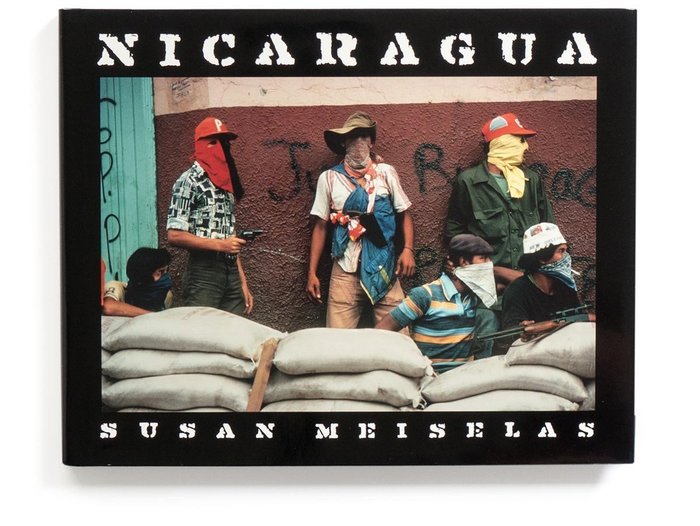
The jaguar is a big cat that is found only in Latin America, and it is as beautiful as it is dangerous. Such realities no doubt influenced novelist Salman Rushdie to give his 1987 memoir of a 1986 visit to wartime Nicaragua the title The Jaguar Smile: A Nicaraguan Journey. But the title also refers to a specific limerick that captures, for Rushdie, the paradoxical qualities of life in Nicaragua at the time he visited the country. We’ll get to the limerick a bit later, I promise.
For now, let it suffice to say that the Indian-born Rushdie has made a name for himself writing novels in which the real and the unreal (or surreal, or magically real) collide as surely as East and West meet. Originally, he was known simply for the excellence of his novels; Midnight’s Children not only won a Booker Prize in 1981 but has twice been declared the greatest Booker Prize honouree of all time!
But then Rushdie became part of the news, for a story that brought his name to people who wouldn’t have known Midnight’s Children from a midnight clearance event at Nordstrom Rack. His novel The Satanic Verses (1988) included a portrayal of the Muslim prophet Muhammad that some readers found irreverent; in response, the Ayatollah Khomeini declared a fatwa against Rushdie, and the Islamist government of Iran placed a $3 million bounty on Rushdie’s head.
The author went into hiding, and whatever sense of relative safety may have accompanied Rushdie’s gradual emergence from high-security seclusion was shattered when a would-be assassin stabbed Rushdie at a Chautauqua Institution event in western New York State. Rushdie lost an eye and suffered other injuries, but survived.
What all of this adds up to, for me, is that Salman Rushdie is an author who has always told the truth, as he sees it, and has always stood up for the underdog. Perhaps it is for that reason that he was drawn to the Sandinista revolutionaries in Nicaragua in the mid-1980’s.
Seven years before Rushdie’s 1986 visit, the Sandinistas had accomplished the seemingly impossible in successfully overthrowing the dictator Anastasio Somoza, who had ruled Nicaragua through terror and tyranny since 1967. But the far-left leanings of the FSLN (the 𝘍𝘳𝘦𝘯𝘵𝘦 𝘚𝘢𝘯𝘥𝘪𝘯𝘪𝘴𝘵𝘢 𝘥𝘦 𝘓𝘪𝘣𝘦𝘳𝘢𝘤𝘪𝘰́𝘯 𝘕𝘢𝘤𝘪𝘰𝘯𝘢𝘭 or Sandinista National Liberation Front) drew the disapproving attention of the Reagan Administration, who funded anti-communist “contra” rebels in a civil war against the Sandinista government, whilst allowing rumours of a possible U.S. military invasion to percolate throughout Central America. It was, to say the least, a tense and dangerous time in the region.
Rushdie’s impressions of wartime Nicaragua are vivid; and readers of novels like Midnight’s Children or The Satanic Verses may remark how his general thematic points are grounded in well-observed details of everyday life. At one point, for instance, Rushdie states that “There was a shortage of beans in Managua. (Imagine Italy running out of pasta.) Some days it was hard to get corn to make tortillas. Inflation was close to 500%, and prices had gone crazy. It could cost you six head of cattle to get your truck serviced” (p. 25).
Rushdie engages the difficult politics of the time, and offers this explanation for the growing friendship that he sees between the Sandinistas and the U.S.S.R.:
The New York Times, in a leader article, had just called the Sandinistas “Stalinists.” Stephen Kinzer, the paper’s man in Managua, had belatedly filed a report (without visiting the scene) on the most recent Contra atrocity, the mining of a road in northern Jinotega province, near Bocay. The mine had blown up a bus and killed thirty-two civilians, including several schoolchildren. Kinzer’s report suggested that the FSLN could have planted the mine itself, in a bid to gain international sympathy.
Pressure, and a phone call to Moscow. My enemy’s enemy becomes, eventually, my friend. (p. 25)
Rushdie’s attitude toward the Sandinistas is nuanced but unmistakably sympathetic. On the one hand, he disapproves strongly of the Sandinistas shutting down the La Prensa newspaper that has opposed Sandinista policies, stating that “I remained convinced that the FSLN’s policy of censorship was misconceived and dangerous” (p. 53). When a Sandinista official tells Rushdie that freedom of the press is something “cosmetic”, one can sense how dismayed Rushdie is at hearing such words.
And yet, on the other hand, Rushdie looks at Sandinista leaders like Daniel Ortega and asks himself, “Were these dictators in the making? Emphatically, no. They struck me as men of integrity and great pragmatism, with an astonishing lack of bitterness toward their opponents, past and present” (p. 52). And Rushdie’s attitude toward the Sandinista government of Nicaragua takes a turn that startles him:
For the first time in my life, I realized with surprise, I had come across a government I could support…because I wanted its efforts (at survival, at building the nation, and at transforming it) to succeed. It was a disorienting realization. I had spent my entire life as a writer in opposition, and had indeed conceived the writer’s role as including the function of antagonist to the state. I felt distinctly peculiar about being on the same side as the people in charge, but I couldn't avoid the truth: if I had been a Nicaraguan writer, I would have felt obliged to get behind the Frente Sandinista, and push. (p. 53)
And yet Rushdie is not simply carrying the water for the Sandinistas, or for the Soviets who are only too happy to cultivate the friendship of the Sandinista government. At one point, Rushdie engages in a public literary conversation with two Eastern European writers (one Soviet, one Bulgarian); both of the East European writers support Soviet censorship and dismiss Soviet dissident authors and works like Solzhenitsyn and The Gulag Archipelago. After the talk, Rushdie has a disheartening conversation with a Nicaraguan translator who helped facilitate the talk:
Later, one of the interpreters asked me a breathtaking question: “What’s a labour camp?”
“What’s a labour camp?” I echoed, disbelievingly.
“Oh, I can see what you’re trying to say it is,” she said. “Something like a concentration camp. But are you really saying they have such things in the Soviet Union?”
“Um,” I stumbled, “well, yes.”
“But how can it be?” she asked in obvious distress. “The U.S.S.R. is so helpful in Third World countries. How can it be doing things like this?” (p. 77).
From this conversation, Rushdie concludes that “There is a kind of innocence abroad in Nicaragua. One of the problems with the romance of the word ‘revolution’ is that it can carry with it a sort of blanket approval of all self-professed revolutionary movements.” And Rushdie recalls how “I wondered if Nicaragua’s ghosts would permit the living to make…distinctions” between legitimate and fraudulent “revolutionary” movements. “On the one hand, the romance of the dead; on the other, the great American fist. It could turn into quite a trap” (pp. 77-78).
I was glad to see that, during his visit, Rushdie left Managua and made a visit to the town of Bluefields on Nicaragua’s Caribbean coast – getting a chance, in the process, to experience Nicaragua’s cultural diversity. “In Bluefields, it was often difficult to remember I was still in Nicaragua. The west coast was racially homogeneous, but here, as well as mestizos, there were Creoles, three different Amerindian tribes, and even a small community of Garifonos [Garifuna]” (p. 96).
Yet while “The culture of Bluefields felt distinctly West Indian” (p. 96), Rushdie finds that the problems of war and revolution are just as apparent in Bluefields as in Managua. A development-agency worker from the U.S. shows Rushdie a computer shot and destroyed during a Contra attack on a supply boat, causing Rushdie to reflect that “the Contra are assassinating machines now” (p. 101).
And a poem written on a blackboard at the back of a Bluefields office room reminds Rushdie of the hyperpoliticized nature of the Nicaraguan society of that time:
LA REVOLUCIÓN
Se lleva en el corazón
para morir por ella,
y no en los labios
para vivir de ella…
After providing a helpful translation – “The revolution/is carried in the heart,/that it may be died for,/and not on the lips/that it may be lived by” – Rushdie reflects somberly that “Death was here, too. Death, the close friend. It was your child, your mother, your self. It was the invisible object that blotted out the world” (p. 107).
The Jaguar Smile takes its title from a limerick that Rushdie posts as a sort of epigram at the beginning of the book:
There was a young girl of Nic’ragua
Who smiled as she rode on a jaguar.
They returned from the ride
With the young girl inside
And the smile on the face of the jaguar.
(Pro tip: When reciting this limerick, pronounce “Nicaragua” and “jaguar” in the British rather than the U.S. manner. An Explanatory Pronunciation Endnote at the end of this review will go into more detail on this matter.)
Near the end of his Nicaraguan journey, Rushdie tells us, he had a nightmare about the jaguar of the limerick; and when he woke from his jaguar nightmare, he reflected that “the limerick, when applied to contemporary Nicaragua, was capable of both a conservative and a radical reading”. To wit:
If the young girl was taken to be the revolution, seven years old, fresh, still full of the idealism of youth, then the jaguar was geopolitics, or the United States; after all, an attempt to create a free country where there had been, for half a century, a colonized “back yard,” was indeed to ride a jaguar. That was the “leftist” interpretation; but what if the young girl were Nicaragua itself, and the jaguar was the revolution? Eh? What about that? (p. 129)
I read The Jaguar Smile on a visit to Nicaragua. Upon crossing the border from Costa Rica, I found that one of the first things I saw was a statue of Augusto César Sandino – the Nicaraguan revolutionary who led a rebellion against the U.S. occupation of Nicaragua from 1927 to 1933, and for whom the Sandinista party is named. Next to the Sandino statue was a large red-and-black FSLN flag, flapping in the breeze, its outer edges torn. Having lost power in 1990, the FSLN regained control of Nicaragua in the mid-2000’s; and Daniel Ortega, the young revolutionary firebrand of the 1980’s, is president once again, in his 80’s. There is widespread concern that Nicaragua is yet another country where movement toward democracy has been halted.
Yet the violence of the 1980’s is long over, and the visitor to Nicaragua can enjoy, in peace, the warmth and hospitality of the Nicaraguan people, along with delightful activities like boating on Lake Nicaragua (the birding on the lake is magnificent) and touring the gorgeous cathedrals and churches of Granada. There’s a nice little restaurant on the beach, at Playa la Virgen, where you can try the country’s strong and salty queso seco cheese; and for best results, mix your queso seco with the rice and beans that are a staple of every Nicaraguan meal.
From my brief visit to Nicaragua, I got a sense of Nicaragua as a land of both paradox and promise; and Salman Rushdie seems to have felt the same way about the country back in 1986, when he visited war-torn Nicaragua and gathered the impressions that eventually took shape as The Jaguar Smile.
Explanatory Pronunciation Endnote: When reciting the limerick that gives The Jaguar Smile its title, please note that Americans and Britons pronounce “Nicaragua” and “jaguar” differently. In the U.S., “Nicaragua” is pronounced “nick-uh-rogg-wuh,” and “jaguar” is pronounced “jagg-wahr” (except, perhaps, in parts of North Florida, where some fans of the NFL’s Jacksonville Jaguars call them the “Jagg-wires”.
In Great Britain, by contrast, “Nicaragua” is pronounced “neek-uh-ragg-you-were”, and “jaguar” – whether one is referring to the big cat of Latin America, or to the fine British motorcar – is “jagg-you-were”. There! Now you can enjoy the limerick as Salman Rushdie no doubt originally heard it. I suppose my work here is done.