Jump to ratings and reviews
Rate this book

The Aunts' House

Rate this book
Sydney, 1942.

Recently orphaned, Angel Martin moves into a boarding house populated by an assortment of eccentric and colourful characters. She's befriended by the gregarious Winifred Varnham - a vision in exotic fabrics - and the numerically gifted Barnaby Grange. But not everyone is kind and her scrimping landlady, Missus Potts, is only the beginning of Angel's troubles. Angel refuses to accept her fate. She is determined to forge a sense of belonging despite rejection from her two maiden aunts, Clara and Elsa, who blame Angel's mother for their brother's death. Her Sunday visits to the aunts house by the Bay expand her world in ways she couldn't have imagined.

Elizabeth Stead brings her classic subversive wit and personal insight to this nostalgic portrait of wartime Sydney. In Angel Martin, she has created a singular and irrepressible character. A true original.

288 pages, Paperback

First published April 2, 2019

8 people are currently reading
94 people want to read

About the author

Elizabeth Stead

9 books7 followers
Elizabeth Stead is Sydney-born and is the niece of acclaimed Australian novelist Christina Stead. From childhood, Elizabeth was greatly inspired by her grandfather, David George Stead, pioneer naturalist, conservationist and storyteller. Elizabeth has published short fiction, and her two previous novels, The Fishcastle and The Different World of Fin Starling, have been published by Penguin.

Ratings & Reviews

What do you think?
Rate this book

Friends & Following

Create a free account to discover what your friends think of this book!

Community Reviews

5 stars
18 (18%)
4 stars
40 (40%)
3 stars
33 (33%)
2 stars
6 (6%)
1 star
2 (2%)
Displaying 1 - 19 of 19 reviews
Profile Image for Cass Moriarty.
Author 2 books191 followers
April 5, 2019
The Aunts’ House (UQP 2019) by Elizabeth Stead is a curious, quirky, strange and wonderful story set in Sydney in 1942 and featuring the feisty and clever eleven-year-old Angel Martin, recently orphaned and sent to live in a boarding house full of eccentric characters and headed by the mean (in both senses of the word) landlady Missus Potts. Angel has a pair of aunts that live in a house by the sea, but the two elderly women disown her and refuse to allow her inside the gates of their aging home, and so the young girl embarks on a quest to persuade her aunts to love her, beguiling the boarding house guests and others she meets along the way. She often skips school (especially after the incident of the wandering hands of the headmaster) and prefers to ride the trams, wander the art gallery, or play where she most feels at home – in the green space of the bush gully or beside the ocean she has named Mariana. She feels she learns more from her experiences and her adventures than she could possibly learn from school – she reads books, she listens to music, she sits cross-legged for hours to appreciate a single painting. She befriends the numerically gifted Barnaby Grange, who spends his days calculating maths equations and rarely speaks in words, and the flamboyant Winifred Varnham, who dresses in exotic fashions and opens Angel’s eyes to a whole new world view.
Angel is one of those characters in literature that will stay with you. She is wild and untamed – her hair a tangled mess, her feet bare, tough and dirty, her one dress threadbare and worn, her arms and legs scratched and pricked by brambles. Although this story is not told in the first person, we nevertheless see it very much from Angel’s perspective; we are inside her head which is crowded with music and colours, we are privy to her private thoughts about those she loves and those she despises, and about the people whose love she is determined to win. We experience her many sorrows (the death of her mother, the disregard and humiliation at the hands of others) and her small triumphs (the friendships she cultivates, the kindnesses of others, the joy of riding the Sunday trams, the satisfaction of besting a foe). And we delight in her sharp and cutting wit and her cheeky sense of humour. The place and time of wartime Sydney is evocative of the deprivation and restrictions of the era. Stead produces phrases and sentences that are wistful, playful, poignant, telling and sometimes abstract or strange, frequently offering a truthful or honest take on the world that is deceptively simple but flinty and wounding. There is much talk of madness in this book – Angel’s mother died in the sanitarium – and people are always telling Angel she is ‘not right in the head’. But it is this wonderful otherness, this almost magical way of thinking, that is so seductive and engaging. Angel is a girl with a troubled past and a difficult present, but she is so alive, so compelling, so fascinated by life and all it potentially has to offer, that she is eager to rush headlong into her future, resolutely indomitable in her passion to fight for what she wants rather than merely accept her lot in life. And along the way, this book explores what it means to be part of a family, and how we might build a family from those we choose rather than merely from those to whom we are related.
Profile Image for Rebecca Bowyer.
Author 4 books207 followers
April 7, 2019
Author Elizabeth Stead has conjured an ensemble of quirky, lovable characters that would make Charles Dickens envious.

Angel is frequently accused of being not right in the head; ladies on the tram whisper ‘autism’. The beauty of this book is that Angel’s mental state is never given a definitive label. The story also makes it’s quite clear that madness is relative.

Missus Potts’ boarding house lives in the shadow of the local sanatorium where Angel’s mother died and Winifred Varnham’s sister is being treated. And yet at times the boarding house and the aunts’ house both feel like mad houses.

It begs the question – where does quirkiness end and mental illness begin? Who’s to say what is ‘normal’ anyway?

The likeness to Dickens’ style is quite conscious, with more than half a dozen references to him throughout the novel. Fewer than twenty pages pages in, just as I was beginning to think to myself, “I haven’t met characters quite this wonderfully colourful since Mr Micawber in David Copperfield”, I read this:

Angel Martin had a favourite writer at that time. It was Mister Charles Dickens and he would have loved Persia Potts. In fact, she thought Charles Dickens would have loved the whole bloody thing – the boarding house and its madness and milk carts slipping down the surface of Duffy Street, never mind the season. He would have loved it all.


Dickens had an amusing habit of sending troublesome characters to Australia at the end of his 19th century novels. I often wondered what happened to them and their descendants. Thanks to Stead’s wonderful new novel, now I feel like I know!

This is a really fun, beautifully written story with characters that will stay with you for a long time.

Profile Image for Catsalive.
2,624 reviews40 followers
October 12, 2021
A strange & quirky child is Angel Martin, not particularly likeable, but interesting. She's a tough little nut & very determined to get what she wants, which seems to be a family, whether they want her or not. A dark, grief-filled tale in parts with some flashes of sombre humour, perhaps ending on a note of hope, but it left me a bit cold.
Profile Image for Marti.
2,462 reviews17 followers
April 4, 2023
Angel Martin is "an adaptive reader and guardian of books."

About dinner: "Terrible times frightful triple-squared."
135 reviews1 follower
March 7, 2020
I found this a book to really get into. We have an orphan called Angel (anything but) who talks to herself (me too) and sees things in colour. She is a misfit in Sydney 1942 living in a boarding house with other challenged people. Angel may be shunned but she is smart and determined and has a quest to make her aunts love her as she is able to love them back. Many side trips here in the story make it so much fun and I fell in love with this little experienced 9-12 year old. I like the flow of the text and the characters. I hope you all enjoy this lovely read.
311 reviews3 followers
May 8, 2022
Quite a strange book. I found it somewhat tedious. It was brought together by the final 2 pages.
The blurb mentions being true to one’s convictions and this is bourn out.
I give this 3.75.
Profile Image for Jessica Maree.
637 reviews9 followers
May 11, 2019
http://jessjustreads.com

Literary fiction novel The Aunt’s House is a quirky, charming tale of family, legacy and identity. Sydney author Elizabeth Stead brings warmth and wit to the novel, and a three-dimensional protagonist who readers have no choice but to adore.

The novel is set in 1942, and eleven-year-old Angel Martin is an orphan and the newest addition to a boarding house run by Missus Potts. Her father died many years earlier, and her mother has just passed away whilst living in a sanatorium. Angel is unwanted by her paternal aunts because they believe her mother was responsible for their brother’s death years earlier.

The novel was a bit of a slow start for me, the direction of the story a little unclear and my faith in the story wavering. But, over time, I grew to love little Angel and her resilient personality. The book is written from Angel’s perspective, but in third person, and so we learn to love her voice. It’s a bit stream of conscious, but also really hopeful and glass-half-full. She’s quite a quirky, strange girl and so her narration reflects that throughout the book.

There are moments of humour peppered throughout the story, amidst moments of darkness. A few of the men in the boarding house either try, or succeed, to sexually abuse Angel. She doesn’t seem to dwell on the assault much and pushes it out of her mind, and perhaps this is her method of avoiding and ignoring what happened so that she doesn’t have to confront the events.

“Angel liked to think B and K truly loved each other — she wanted them to love each other and she wanted them to be married and have lots of babies. But perhaps the whole thing might have been just a dream and nothing happened at all. It might just have been hearts on fire at first sight between stops.”

Mental illness is a strong theme throughout the book. Angel’s mother was living in a sanatorium when she died, and a lot of people in Angel’s life think she’s inherited her mother’s mental instability. Angel does what she wants, when she wants, and people find her tough and hard to manage.

Another strong theme is family and companionship. Angel forms friendships with numerous people in town and their bonds strengthen over the course of the novel. In the boarding house, she strikes up a friendship with the insightful Barnaby Grange, and the interesting and eccentric Winifred Warnham. She also regularly takes the tram to see her Aunts, who do not want her in their home. But Angel is determined and loveable, and soon, a connection is formed.

“She tried to remember what her father looked like before the accident but her remembrance was more a smell. Not a tram smell. Sunday was a tram smell, the electric smell of wood and rails and hot cables. No, the smell of her father she remembered was motorcycle racing fuel and the sight of it in leaked black patches on the backyard grass.”

The Aunt’s House is about the complexities of humans, and the importance of not passing judgment onto others. The characters in the book are all very unique, but they’re a clever and fun bunch of characters and I thoroughly enjoyed reading about them all.

I’d recommend this to readers of adult fiction and lovers of literary works. This is incredibly character-driven, and so perfect for fans of complex and dimensional fiction.

Thank you to the publisher for mailing me a review copy in exchange for an honest review.
Profile Image for Rhonda.
483 reviews3 followers
February 20, 2023
Annoying from beginning to end. Big social issues are taken on, poverty, a dysfunctional family, child abuse, madness but all through the eyes of a damaged child in a tone that is mind numbingly twee, and one which also instructs us what to think of each character. The characters are colourful but in the end fail as they are neither fully developed nor entirely believable. There are a number of instances where the behaviour and attitude of some changes dramatically with no clear reason especially that of Aunt Clara towards Angel, and similarly Mrs Potts, in whose boarding house Angel lives and works (11 yrs old) who is presented as truly dreadful for most of the book. There is too much repetition - to the music in the main character, Angel's, head, to the bad food served by Mrs Potts, the cloying sweetness of Aunt Elsa and how special and wonderful Angel is. The concluding chapters tie things up too quickly and too neatly via an action by Angel that albeit understandable and convenient is not one that left me at all where I think the author planned as it seemed chosen more for shock value and as the only way out of the hole the plot had ended up in. I read this to the end only because it was written by Christina Steads' neice, so I was prepared to trust things would improve.
Profile Image for Anne Forrest.
98 reviews
October 10, 2020
This was a quirky read that had moments of humour & moments of extreme darkness.
I loved Angel's determination to make her way in a world in which she was considered to be "not normal". A world in which she was rejected by those she sought out to love her, and abused by others she trusted. Her determination pays off as she forms friendships with some very unique characters & finds happiness & a home.
Profile Image for C.J. Hill.
Author 8 books17 followers
July 3, 2023
This was a lovely story about an orphan who pursues her aunts' attention and affection with determination until they relent and allow her into their lives. It shows the resilience of children and the sadness that shadows so many lives and stops people from looking forward instead of back. Well worth a read.
Profile Image for Leonie Recz.
394 reviews2 followers
October 17, 2020
This book I picked up at the library on “Australian writers “table. Totally quirky characters and a very unpredictable storyline. It took me all the way through enchanted to disturbed but kept me intrigued. Such a clever/ unexpected ending left me with hope.
15 reviews
February 19, 2023
I must have missed something reading this tedious book. Another book club choice, maybe other members of the club will explain what I missed. The last few pages made it slightly interesting.
64 reviews
June 3, 2023
I’m not sure if I enjoyed this book or not 🤷‍♀️ although I did finish it so that must mean something.
Profile Image for Cynthia.
409 reviews5 followers
June 17, 2019
A story with a cast of unique characters. Angel Martin is a very determined soul, who was very comfortable about the way she interpreted her world. It is a story about family, mental illness, determination and resilience. It was quirky, sad and hopeful.
Profile Image for Frances.
56 reviews6 followers
June 7, 2020
Popsugar Reading Challenge 2020 - A Book with a Three Word Title.
Profile Image for steph.
315 reviews7 followers
April 26, 2025
To begin with I quite enjoyed this book but by the end it felt like it didn't quite go anywhere or hit quite as hard as I'd hoped.

In The Aunt's House, Stead explores themes of mental illness, family dynamics, sexual abuse and poverty. While the story was realistically told from Angel's perspective, there just wasn't enough substance to sustain the book to the end.
Profile Image for Lisa.
3,784 reviews491 followers
April 17, 2019
Elizabeth Stead (b. 1932) is the author of six novels: The Fishcastle (Penguin, 2000); The Different World of Fin Starling (Penguin, 2003); The Book of Tides (2005); The Gospel of Gods and Crocodiles (UQP, 2007) The Sparrows of Edward Street (UQP, 2011) - and her latest novel The Aunt's House (2019). This is the blurb:
Recently orphaned, Angel Martin moves into a boarding house populated by an assortment of eccentric and colourful characters. She's befriended by the gregarious Winifred Varnham - a vision in exotic fabrics - and the numerically gifted Barnaby Grange. But not everyone is kind and her scrimping landlady, Missus Potts, is only the beginning of Angel's troubles. Angel refuses to accept her fate. She is determined to forge a sense of belonging despite rejection from her two maiden aunts, Clara and Elsa, who blame Angel's mother for their brother's death. Her Sunday visits to the aunts house by the Bay expand her world in ways she couldn't have imagined.

Elizabeth Stead brings her classic subversive wit and personal insight to this nostalgic portrait of wartime Sydney. In Angel Martin, she has created a singular and irrepressible character. A true original.
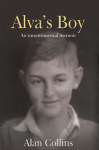
Set in 1942, the novel begins with eleven-year-old Angel adjusting to a new life as an unwanted addition to a boarding house run by the parsimonious Missus Potts. Her mother has just died, and her paternal aunts don't want her because they believe her mother was responsible for their brother's death in a car accident. Although Stead's book is fiction, the poignant plight of this unwanted child reminded me of Alva's Boy, an Unsentimental Memoir by Alan Collins'. This memoir, recalling Collins' wretched childhood in Sydney in about the same era, is the remarkable personal story on which his novels were based. (See my review.) Knowing that during these years there were indeed unwanted, unloved and horribly neglected children who were so ill-fed and ill-clothed, made The Aunt's House seem even more vivid...

Like Alan Collins, Elizabeth Stead uses humour to lighten the mood, and both books feature childhood escapades as well. But the quirky narration of The Aunt's House is entirely different: written in third person but from Angel's perspective, it shows us a scatty child who thinks, speaks and acts in strange ways. People say that she is not quite right in the head, and the proximity of the Sanatorium where her mother died means that people often talk about madness, as they did in those days when mental illness was less well understood. The other characters in the boarding house are also eccentric, and Angel is befriended both by the savant Barnaby Grange who sees the world in numbers, and by the flamboyant Winifred Varnham who dresses in exotic robes and wears a chopstick in her hair. Part of the value of The Aunt's House is that like the famous One Flew over the Cuckoo's Nest, it encourages readers to think about the folly of labelling people and to consider instead the fluctuating borders between eccentricity and mental illness.

And in Stead's story, Angel's odd behaviour is protective, to some extent. She is able to earn a little money when she's finished her onerous chores, and she uses it to travel Sydney's trams and to visit her aunts even though she is not made welcome. She doesn't take no for an answer, because despite the overt hostility of these aunts, (one more so than the other) Angel remains optimistic. She doesn't know what it's like to have a family but she believes fervently that she can create one. And because she hasn't learned the aloof behaviour that's common on public transport, she chatters away and makes friends with the amused conductors and other people that she comes across.

To read the rest of my review please visit https://anzlitlovers.com/2019/04/17/t...
Displaying 1 - 19 of 19 reviews

Can't find what you're looking for?

Get help and learn more about the design.