

What do you think?

Poems of Heaven and Hell from Ancient Mesopotamia
In this volume N.K. Sandars, well known for her version of The Epic of Gilgamesh, has translated five poems dating from the height of Babylonian civilization in the second millennium B.C. They include The Babylonian Creation, which was recited at the New Year festival in honour of the god Marduk and his conquest of Tiamat, goddess of watery chaos; Inanna's Journey to Hell, in which the goddess of fertility descends into a gloomy waste-land of devils and darkness; and Adapa: the Man, a story of man's fall from grace, not through arrogant disobedience, but through blind obedience.
The cover, designed by Germano Facetti, shows a relief of Assurbanipal in the British Museum (photograph by Michael Holford).
The cover, designed by Germano Facetti, shows a relief of Assurbanipal in the British Museum (photograph by Michael Holford).
192 pages, Paperback
First published January 1, 1971
About the author
Anonymous
3,454 followersBooks can be attributed to "Anonymous" for several reasons:
* They are officially published under that name
* They are traditional stories not attributed to a specific author
* They are religious texts not generally attributed to a specific author
Books whose authorship is merely uncertain should be attributed to Unknown.
See also: Anonymous
* They are officially published under that name
* They are traditional stories not attributed to a specific author
* They are religious texts not generally attributed to a specific author
Books whose authorship is merely uncertain should be attributed to Unknown.
See also: Anonymous
Ratings & Reviews
Friends & Following
Create a free account to discover what your friends think of this book!
Community Reviews
Displaying 1 - 20 of 20 reviews

January 20, 2025
I had no idea what was going on here in large swathes, but with its detailed, generous introductions to each text a really fascinating look at how this hugely important obliterated civilisation had similar mythologies to its more historically successful neighbours in Greece and Palestine and the ways in which it extremely didn't.

April 22, 2026
There are many stages to reading mythology. A first, childish stage takes them at face value, demanding to hear them again and again. A next, teenager stage refuses them and discards them as childish "myths" in the pajorative sense, as in a lie. But when one grows up and has kids of one's own, you get to the next stage, which once again appreciates them. When the children grasp at you for wisdom and entertainment; where better to start than your cultural inheritances. As they're re-told from a place of more life experience, they flower open on multiple levels simultaneously. Long gone is the credulity/incredulity binary; the dialectic allows us to see both beyond the myth and deeper within it.
For every culture tells stories, and all stories are a product of their time. We use the raw materials around us to construct our world, and this is no less true in the narrative realm than in the physical. To get hung up on the gods inexplicably having wives is to betray your severe inability to interpret maturely. The gods have bodies and wives because men have bodies and wives. The gods fight because men fight. Embedded in this creation myth is a reversal of the usual biblical narrative: violence eventually settling down into order, as opposed to paradise lost; even our hero Marduk rests before building the world out of the body of the slain Tiamat, rather than after.
Even if we totally disagree with the implicit assumptions buried in these myths, we can and should embrace them for their artistic elegance. The first lines of any creation myth almost always send shivers down your spine. How does one begin the beginning? There were no gods, but also there were gods. This is no contradiction, this is the unfathomableness of the beginning, and thank god the mists of time prevent our minds from being shattered upon the impossible black rock of it all.
One of the main lessons of this creation myth is that creation is both a nonsensical and a verbal thing. New things can be invented out of thin air. Names can suddenly bring things into being. The first person to call a stick a stick, as opposed to a branch, as opposed to a tree, must have wielded far more than just a new vocabulary: he also had an arsenal of clubs. Thus, war and words are the only two options we ever have. The Babylonians understood this when they began their narrative with the older, quieter gods being annoyed at the louder, newer, more chaotic gods. This is perhaps the primordial conflict: order vs chaos, static vs dynamic, tradition versus rebellion. The Old Gods meet up and sit down to talk it over, not because they have bodies or furniture or mouths, but because the only two options are Words or War.
I kept thinking of the deathly sick Jordan Peterson while reading this. He, for better or for worse, was the impetus for my own intellectual awakening, and I'd dare say I've far surpassed him. He made a move incomprehensible to me back in 2017: he read the Bible the same way that we read the Babylonian Creation Myth. There is something vaguely immoral about this, given that the Biblical text insists upon a continuity of storyline and an absolute rejection of the Babylonian starting assumptions. Of course, Peterson's equivocation challenges our usual privileging of the Biblical text over the Babylonian, but this text feels different in kind. It feels much more explicitly allegorical and makes no attempt at all toward history. It practically begs you to read it from a more zoomed out, less literal place.
Rather than having gods killing each other, Genesis has men killing each other. Men kill each other every day, which has a different resonance than gods killing each other, though they too kill each other every day. The gods we make make or unmake us in turn, just as our relationships to real flesh and blood people do. To scoff at the language of the ancients is to announce our own ignorance, not our superiority. Every time and place uses the language of its time, just as we do. We are no better than them simply because we happen to be above ground.
In many ways we are far worse. We are basically incapable of writing compelling prose or poetry, being so stuck up our own asses with meta-self-awareness. "If I start with this, how will my reader react?" As opposed to the organic stories of yore, our stories are curated laboratory chimeras. They used to have fringe prophets and seers and poets who could see to the rim of experience and report back; we put those people in institutions and wonder why our stories suck, why we have endless reboots and franchises. It's not because people are money hungry, it's much more because people are unaware of what good stories sound like.
Of course, on a technical level, these two main stories aren't "impressive" as we now render things in our algorithmized hellscape. But they are impressive in how they don't give a fuck. There are a solid 2 or 3 pages of repetition per story, and it's dutifully printed, just as it was dutifully recited by those who originally composed and continued the stories. Furthermore, though you can read the vanquishing of Tiamat by Marduk as the conquering of Matriarchy by Patriarchy, the much more interesting interpretation is that it's also the principle of natural selection as applied to stories. Stories built on sand will fall apart in the sands of time. Like Tiamat, the mouth which consumes too much gets indegestion, bloats, stretches to bursting, and is torn open with an arrow from the god-hero Marduk. The good stories will last, and the bad ones will die the death they so rightfully deserve.
--
But even after death, there's a special place in hell for the Holy. The journey of Inanna to Hell is the other side of the coin, a tale of life into death instead of death into life. As I've observed before, the scant details provided paint a much scarier image than the in-depth pages of word-painting that modern writers weigh us down with. Instead, we have the repetition and predictableness of a rite; rather than making it tedious, like modern repetition (tiktoks, reels, or shorts on infinite loop), the premodern repetition unfurls like a scroll. All the things Inanna is decked out in one by one get stripped from her, until she is naked and eventually impaled on a pole. She has faith in her redeemer, though, a man who intercedes on her part before the powerful. All but one reject his pleas, and the one who does speaks with an eloquence emphasized by its originality compared with the other responses.
This story includes beautiful and shocking parallels to Christ (descending into hell, being killed on a pole, mentions of the bread of life, interceding, resurrection from the dead, the replacement sacrifice of a Good Shepherd, etc.). The rest of the story is the loud lamentations of the unjust dragging of the Good Shepherd down to hell to stand in for Inanna. He is turned into a snake (became sin for our sake), he is lamented (as in Lent), he is a mirror which challenges the bravery of Inanna going to hell; if the price was an innocent man's suffering, was it really bravery? It invokes Ivan's dilemma in Brothers Karamazov. It invokes the beautiful-because-inverted dilemma of Christ dying for us "while we were still enemies."
I genuinely wonder what new myths we'll pass on to our children, since we've nearly forgotten all the old ones, and our ersatz-myths pale in comparison. We've lost something, something that doesn't have a word, doesn't have a name, isn't a god, otherwise it would never have been lost in the first place, but rather would have kept on creating...
For every culture tells stories, and all stories are a product of their time. We use the raw materials around us to construct our world, and this is no less true in the narrative realm than in the physical. To get hung up on the gods inexplicably having wives is to betray your severe inability to interpret maturely. The gods have bodies and wives because men have bodies and wives. The gods fight because men fight. Embedded in this creation myth is a reversal of the usual biblical narrative: violence eventually settling down into order, as opposed to paradise lost; even our hero Marduk rests before building the world out of the body of the slain Tiamat, rather than after.
Even if we totally disagree with the implicit assumptions buried in these myths, we can and should embrace them for their artistic elegance. The first lines of any creation myth almost always send shivers down your spine. How does one begin the beginning? There were no gods, but also there were gods. This is no contradiction, this is the unfathomableness of the beginning, and thank god the mists of time prevent our minds from being shattered upon the impossible black rock of it all.
One of the main lessons of this creation myth is that creation is both a nonsensical and a verbal thing. New things can be invented out of thin air. Names can suddenly bring things into being. The first person to call a stick a stick, as opposed to a branch, as opposed to a tree, must have wielded far more than just a new vocabulary: he also had an arsenal of clubs. Thus, war and words are the only two options we ever have. The Babylonians understood this when they began their narrative with the older, quieter gods being annoyed at the louder, newer, more chaotic gods. This is perhaps the primordial conflict: order vs chaos, static vs dynamic, tradition versus rebellion. The Old Gods meet up and sit down to talk it over, not because they have bodies or furniture or mouths, but because the only two options are Words or War.
I kept thinking of the deathly sick Jordan Peterson while reading this. He, for better or for worse, was the impetus for my own intellectual awakening, and I'd dare say I've far surpassed him. He made a move incomprehensible to me back in 2017: he read the Bible the same way that we read the Babylonian Creation Myth. There is something vaguely immoral about this, given that the Biblical text insists upon a continuity of storyline and an absolute rejection of the Babylonian starting assumptions. Of course, Peterson's equivocation challenges our usual privileging of the Biblical text over the Babylonian, but this text feels different in kind. It feels much more explicitly allegorical and makes no attempt at all toward history. It practically begs you to read it from a more zoomed out, less literal place.
Rather than having gods killing each other, Genesis has men killing each other. Men kill each other every day, which has a different resonance than gods killing each other, though they too kill each other every day. The gods we make make or unmake us in turn, just as our relationships to real flesh and blood people do. To scoff at the language of the ancients is to announce our own ignorance, not our superiority. Every time and place uses the language of its time, just as we do. We are no better than them simply because we happen to be above ground.
In many ways we are far worse. We are basically incapable of writing compelling prose or poetry, being so stuck up our own asses with meta-self-awareness. "If I start with this, how will my reader react?" As opposed to the organic stories of yore, our stories are curated laboratory chimeras. They used to have fringe prophets and seers and poets who could see to the rim of experience and report back; we put those people in institutions and wonder why our stories suck, why we have endless reboots and franchises. It's not because people are money hungry, it's much more because people are unaware of what good stories sound like.
Of course, on a technical level, these two main stories aren't "impressive" as we now render things in our algorithmized hellscape. But they are impressive in how they don't give a fuck. There are a solid 2 or 3 pages of repetition per story, and it's dutifully printed, just as it was dutifully recited by those who originally composed and continued the stories. Furthermore, though you can read the vanquishing of Tiamat by Marduk as the conquering of Matriarchy by Patriarchy, the much more interesting interpretation is that it's also the principle of natural selection as applied to stories. Stories built on sand will fall apart in the sands of time. Like Tiamat, the mouth which consumes too much gets indegestion, bloats, stretches to bursting, and is torn open with an arrow from the god-hero Marduk. The good stories will last, and the bad ones will die the death they so rightfully deserve.
--
But even after death, there's a special place in hell for the Holy. The journey of Inanna to Hell is the other side of the coin, a tale of life into death instead of death into life. As I've observed before, the scant details provided paint a much scarier image than the in-depth pages of word-painting that modern writers weigh us down with. Instead, we have the repetition and predictableness of a rite; rather than making it tedious, like modern repetition (tiktoks, reels, or shorts on infinite loop), the premodern repetition unfurls like a scroll. All the things Inanna is decked out in one by one get stripped from her, until she is naked and eventually impaled on a pole. She has faith in her redeemer, though, a man who intercedes on her part before the powerful. All but one reject his pleas, and the one who does speaks with an eloquence emphasized by its originality compared with the other responses.
This story includes beautiful and shocking parallels to Christ (descending into hell, being killed on a pole, mentions of the bread of life, interceding, resurrection from the dead, the replacement sacrifice of a Good Shepherd, etc.). The rest of the story is the loud lamentations of the unjust dragging of the Good Shepherd down to hell to stand in for Inanna. He is turned into a snake (became sin for our sake), he is lamented (as in Lent), he is a mirror which challenges the bravery of Inanna going to hell; if the price was an innocent man's suffering, was it really bravery? It invokes Ivan's dilemma in Brothers Karamazov. It invokes the beautiful-because-inverted dilemma of Christ dying for us "while we were still enemies."
I genuinely wonder what new myths we'll pass on to our children, since we've nearly forgotten all the old ones, and our ersatz-myths pale in comparison. We've lost something, something that doesn't have a word, doesn't have a name, isn't a god, otherwise it would never have been lost in the first place, but rather would have kept on creating...

September 26, 2019
Haven't had much exposure to mythology this old that isn't Greek/Roman. Interesting.
September 2, 2026
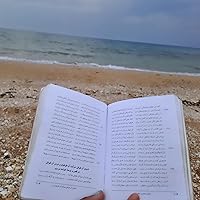
از بابت اینکه سرودهای کهن را در کتاب به تمامی آورده بود جذاب بود، اما احساس میکنم در ترجمه کمی نارسایی وجود داشت.

September 30, 2016
3.5 stars

May 27, 2018
Translated by N. K. Sandars, Poems of Heaven and Hell from Ancient Mesopotamia collects mythemes present in every culture: a creation myth ("Enuma Elish"), a descent into Hell (Inanna's) and a tale about the first man (Adapa) that explains mankind's irrevocable mortality.
"Enuma Elish", the most detailed and complex poem in the book, tells of the creation of the world and subsequent civil strife among the elder gods over who will rule it, essentially combining the patricidal cycles of Greek mythology with the tale of the defeat of Tiamat (the Babylonian Typhon) and her monstrous spawn. This is essentially the Babylonian retelling of an old Sumerian creation myth, with Marduk stealing the spotlight from the elder Sumerian gods and being hailed awesome in a lengthy conclusion in which he is bestowed 50 different names and titles. I particularly liked the detail that mankind is molded from the blood of a treacherous rebel god.
"Inanna's Descent Into Hell" is a straightforward narrative in which Inanna travels to the underworld (her precise motivation is up for grabs) and is felled by her sister, Queen Ereshkigal; Inanna's subsequent resurrection betrays the natural laws of hell and so he consort Dumuzid is kidnapped in her place. The following exchange signals the beginning of seasons fertile and infertile unto the world - much like Hades' kidnapping of Persephone and her tricky parole.
The final surviving poem, that of Adapa the first man, is brief and provides an ironic explanation for mankind's mortality: destined to death not because man disobeyed the gods, but precisely because he obeyed them. So far from all I've read that's a first in mythology and betrays how cruel a view the ancient Sumerians had of the world.
"Enuma Elish", the most detailed and complex poem in the book, tells of the creation of the world and subsequent civil strife among the elder gods over who will rule it, essentially combining the patricidal cycles of Greek mythology with the tale of the defeat of Tiamat (the Babylonian Typhon) and her monstrous spawn. This is essentially the Babylonian retelling of an old Sumerian creation myth, with Marduk stealing the spotlight from the elder Sumerian gods and being hailed awesome in a lengthy conclusion in which he is bestowed 50 different names and titles. I particularly liked the detail that mankind is molded from the blood of a treacherous rebel god.
"Inanna's Descent Into Hell" is a straightforward narrative in which Inanna travels to the underworld (her precise motivation is up for grabs) and is felled by her sister, Queen Ereshkigal; Inanna's subsequent resurrection betrays the natural laws of hell and so he consort Dumuzid is kidnapped in her place. The following exchange signals the beginning of seasons fertile and infertile unto the world - much like Hades' kidnapping of Persephone and her tricky parole.
The final surviving poem, that of Adapa the first man, is brief and provides an ironic explanation for mankind's mortality: destined to death not because man disobeyed the gods, but precisely because he obeyed them. So far from all I've read that's a first in mythology and betrays how cruel a view the ancient Sumerians had of the world.

March 2, 2016
Excellent translation of Babylonian poetry, including the Enuma elish and Inanna's descent into the underworld. I think it's probably not quite literal and accurate, so I wouldn't take it as the authoritative version; it's more like one of those Bible translations that aims for readability and modern idiom over textual faithfulness. But still: it's a beautiful gateway to the fragmented wealth of Mesopotamian literature.
Would've given it five stars except there are so many introductions and forewords and so on that tell you exactly what you're about to read in far more detail than you'd find in the poems themselves. You could put all that in annotations and it would be just fine. Like, geez, guy, get out of your own way and let me read.
Would've given it five stars except there are so many introductions and forewords and so on that tell you exactly what you're about to read in far more detail than you'd find in the poems themselves. You could put all that in annotations and it would be just fine. Like, geez, guy, get out of your own way and let me read.

September 6, 2019
منظومهی آفرینش بابلی کهنترین اثر روایی منظوم دربارهی کیهان شناخت و آفرینش جهان خدایان و جهان مادی است. این منظومه از سه هزار سال پیش به دست ما رسیده و شرح میدهد که چگونه جهان آفریده شده، خدایان فرا رسیدند و آسمان و زمین را شکل دادند و بالاخره انسان را آفریدند. شرح ماجراهای شگفتآور بهشت و دوزخ به روایت سومریها و بابلیها در زمرهی ادبیات باستانی فرهنگ بشری است.
فهرست:
اشاره
سپاسنامه
دیباچهای بر منظومهی آفرینش بابلی
منظومهی آفرینش بابلی
یادداشتی بر دوزخ سومریان
منظومهی دوزخ سومری
دیباچهای بر سفر اینانا به دوزخ
سفر اینانا به دوزخ
دیباچهای بر آداپا: انسان
آداپا: انسان
یادداشتی بر نیایش ایزدان شب
نیایش ایزدان شب
فهرست مشروح نامها
فهرست اعلام
فهرست:
اشاره
سپاسنامه
دیباچهای بر منظومهی آفرینش بابلی
منظومهی آفرینش بابلی
یادداشتی بر دوزخ سومریان
منظومهی دوزخ سومری
دیباچهای بر سفر اینانا به دوزخ
سفر اینانا به دوزخ
دیباچهای بر آداپا: انسان
آداپا: انسان
یادداشتی بر نیایش ایزدان شب
نیایش ایزدان شب
فهرست مشروح نامها
فهرست اعلام

February 1, 2018
the main creation story is sometimes entertaining, but pretty silly, and seems like just a political sort of work that puts babylon, the city, and one choice patron god, at the top of everything... maybe i'm missing incredibly elaborate stuff in it that makes it a transcendent work of art, of course... but the story of inanna is just fascinating! it's a must-read, if you've any interest in these sorts of t'ings

January 1, 2023
Great collection and helpful references for further reading

January 29, 2026
Man måste läsa denna bok fler gånger för att helt kunna uppskatta den. Introduktionerna till berättelserna i boken var mer intressanta att läsa än själva berättelserna. Bravo!
June 17, 2017
A large part of the page count for this book is commentary by the translator, much of which is helpful even if it does necessarily include a bit of speculation. For me, the poetry itself (the longest one is the Enuma Elish / Babylonian creation account) provides interesting background for what various people in the Old Testament would have believed (e.g. Abraham and his family when they lived in “Ur of the Chaldees”).

June 22, 2014
If you are thinking of reading the Creation Myths of Mesopotamia I would recommend the Alexander Heidel edition rather than this one. Though N K Sandars is among the best of Assyriological authorities and makes a fine translation here, as we'll her introduction, the Heidel version guides the reader through the fragments and pre-archaic verse in detailed section by section commentary. Though I do appreciate Sandars intent of making a complete, uninterrupted, epic poem that is told by the original authors rather than herself.

Read
July 28, 2011Really excellent introduction - though not an easy read - to Akkadian and Sumerian answers to the larger questions of life and death: essential background to understanding something of how the Old Testament was put together, all the mythological elements seem to be there. Nancy Sandars has a finely tuned poetical feel for what these dusty old texts actually mean - and how they continue to affect us today, even if, critically, we've never read or even heard of them.

October 3, 2015
Though thousands of years separate from the modern day and translated into a very different language from the original, there is still a raw poetry and lyricism in the words. These are not the (relatively) more refined passages of Gilgamesh but something with a different purpose. These were written with purpose, even if we're not precisely sure what those uses were. A quick read but a definite must for fans of the period.

October 9, 2016
Three major poems and some shorter pieces from ancient Mesopotamia wedged in between copious introductory and explanatory notes. Enuma elish, Inanna's Descent to the Underwold and the story of Adapa are the three main stories.
Please read the full review here.
Please read the full review here.
September 13, 2010
So far, a good translation of the Babylonian creation myth.
November 16, 2011
The poems themselves are brilliant, I did skim over a lot of the introductions to each one but will be useful for reference at some point!

July 25, 2012
As with its Egyptian cousin, this is a foundation stone for understanding one of the world's earliest historical cultures. I enjoyed it.
Displaying 1 - 20 of 20 reviews