

What do you think?

Sitayana
Countless retellings, translations, and reworkings of the Ramayana's captivating story exist-but none are as vivid, ingenious and powerful as Amit Majmudar's Sitayana.
Majmudar tells the story of one of the world's most popular epics through multiple perspectives, presented in rapid sequence-from Hanuman and Ravana, down to even the squirrel helping Rama's army build the bridge.
However, above all, Majmudar focuses on the fierce resistance of Sita, letting us hear her voice as we have never heard it before.
Majmudar tells the story of one of the world's most popular epics through multiple perspectives, presented in rapid sequence-from Hanuman and Ravana, down to even the squirrel helping Rama's army build the bridge.
However, above all, Majmudar focuses on the fierce resistance of Sita, letting us hear her voice as we have never heard it before.
256 pages, Paperback
Published January 24, 2019
About the author
Amit Majmudar
34 books110 followersAmit Majmudar is the author of The Abundance, Partitions, chosen by Kirkus Reviews as one of the best debut novels of 2011 and by Booklist as one of the year’s ten best works of historical fiction. His poetry has been published in The New Yorker, The Atlantic, and Best American Poetry 2011. A radiologist, he lives in Columbus, Ohio.
Ratings & Reviews
Friends & Following
Create a free account to discover what your friends think of this book!
Community Reviews
Displaying 1 - 25 of 25 reviews

July 26, 2020
This book tells the timeless story of the Ramayana from multiple perspectives, keeping the tale faithful, yet relevant and poignant for our time.

April 3, 2019
I just finished reading this incredible retelling of the Ramayana and had to share. I was terribly disappointed in The Forest of Enchantments and wasn't sure if it was because the Ramayana isn't my favourite epic or whether it was because the book was a let down. The Sitayana on the other hand is a glorious reimagining of the story from multiple perspectives, rich, vibrant and deliciously told. Modernized language, idiom and devices appear without taking away the epicness of the story. A raft of characters comes to life. Most of all, it depicts Sita as strong without stressing on her power to silently endure as her key strength. I felt such a sense of delight in the way the book has been crafted that I don't want to say more, hoping I have said just enough to intrigue others into reading it!

February 27, 2019
Sitayana is a very refreshing take on The Ramayana. This book is not Rama's or Sita's alone. It belongs to every loving being that helped in the epic. The story is told from multiple perspectives that makes reading it joyous.
If you are a connoisseur of the Indian epics, you will find another book to love in the Sitayana. Even if not, Sitayana is a book well written and steadfast in its telling that its words transform into life-like magnificence while you read.
For the entire review, visit Frost At Midnite.
If you are a connoisseur of the Indian epics, you will find another book to love in the Sitayana. Even if not, Sitayana is a book well written and steadfast in its telling that its words transform into life-like magnificence while you read.
For the entire review, visit Frost At Midnite.

June 27, 2019
My slow reading month is fruitful and I can't thank @nooshanusha enough for helping me find this gem. I stumbled on her book review and I'm always on the look out for different story telling methods to the same old mythologies. 'Sitayana' is a brilliant re-telling of Ramayana. .
.
Synopsis: The book only begins from the abduction of Sita by Ravana and goes back and through to how it all began. If you are new to the world of Ramayana, you might need to read the original version first. (I have suggestions for that too.)
.
India has it's share of epics and mythologies. Most of us grew up listening to our grandparents giving us rich and detailed versions of them. With hand gestures and props to make them even more interesting. This one took me back to my childhood days. It's absolutely brilliant and may not digest well with people who are not open to a new version. A version where it was unjust to expect of Sita to prove her loyalty to god like Rama. For no fault of hers. Resonates with a lot of things that happen today. An absolute must if you are open minded to new ideas and multiple versions.
.
.
Synopsis: The book only begins from the abduction of Sita by Ravana and goes back and through to how it all began. If you are new to the world of Ramayana, you might need to read the original version first. (I have suggestions for that too.)
.
India has it's share of epics and mythologies. Most of us grew up listening to our grandparents giving us rich and detailed versions of them. With hand gestures and props to make them even more interesting. This one took me back to my childhood days. It's absolutely brilliant and may not digest well with people who are not open to a new version. A version where it was unjust to expect of Sita to prove her loyalty to god like Rama. For no fault of hers. Resonates with a lot of things that happen today. An absolute must if you are open minded to new ideas and multiple versions.
.

July 22, 2019
Same old story. Mediocre writing.

March 2, 2019
Ancient epics, Mythological stories are the soul of India. No Matter which part you born in you have heard these stories in your child hood. The beauty of these stories lies in the fact that there is no one authoritative version; it is retold in countless different and evolving interpretations. From poems and plays to comic books, movies, and novels, there are almost as many versions of the Ramayana as there are Indians.
Sitayana, the first book I read of Amit Majumdar is a refreshing take on a story that has been told a countless times. There are a numerous takes on Ramayana in recent times few good few not so good.
Sitayana tells the story of Ramayana from the perspectives of not only Sita but different other characters, from Hanuman to Mandodari, Lakshman and even the tiny squirrels helping to make the bridge. For me, Author’s unique way of Narration is the strength of the book but at the same time it is the weakness of the book. Strength as it is refreshing change to hear the myriad voices stating how they had viewed the events that occurred and weakness as it break in the flow of the narrative.
The language used by author brings out the delicate nature of the characters and the tantalizing environment comes out brilliantly in the same way. It is fascinating how Author has managed to convey emotions of various characters with invigorating anecdotes and the analogies. If you are a connoisseur of the Indian epics, you will find another book to love in the Sitayana.
Rating : 3.5 Stars
Book Courtesy : Vivek Tejuja
Sitayana, the first book I read of Amit Majumdar is a refreshing take on a story that has been told a countless times. There are a numerous takes on Ramayana in recent times few good few not so good.
Sitayana tells the story of Ramayana from the perspectives of not only Sita but different other characters, from Hanuman to Mandodari, Lakshman and even the tiny squirrels helping to make the bridge. For me, Author’s unique way of Narration is the strength of the book but at the same time it is the weakness of the book. Strength as it is refreshing change to hear the myriad voices stating how they had viewed the events that occurred and weakness as it break in the flow of the narrative.
The language used by author brings out the delicate nature of the characters and the tantalizing environment comes out brilliantly in the same way. It is fascinating how Author has managed to convey emotions of various characters with invigorating anecdotes and the analogies. If you are a connoisseur of the Indian epics, you will find another book to love in the Sitayana.
Rating : 3.5 Stars
Book Courtesy : Vivek Tejuja

July 17, 2020
I bought this for a perspective different from Valmiki's but without the drama. Unfortunately, there's nothing in this book that was worth it. It's not even Sitayana. Sitayana should have been Sita's progress. But this book goes by chapters where every chapter is dedicated to one character in the epic who speaks from their point of view - Sita, Mandodari, Hanuman, Jamabavan, Sugreeva, Lakshman, the squirrel, Nala & Neel, etc. I finished the book because I can't digest leaving a book in between.

March 2, 2019
There have been a lot of retelling of Ramayana over the years. Off late, in the Indian writing space, there has been a spurt of it. Most recent being The Forest of Enchantments by Chitra Banerjee Divakaruni. In that book, it is mentioned that Sita has written Sitayana. And lo and behold, another retelling of Ramayana came one month later in my hands, titled Sitayana, written by Amit Majmudar.
I must confess that initially, the speed at which the events jumped across was mildly disconcerting. But by the time the third chapter started, the narrative gets used to and one starts enjoying the jump cut trips.
The book starts off with a chapter written from Sita’s POV, with her first person narration and then goes on to first person narration from the other myriad characters’ POV. Through this, almost the entire Ramayana is covered in an interesting, non-linear format. I was specially impressed with Kumbakharna, Mandodari and Jambhavan’s narration. There were a few nuggets of information which I garnered from their chapters which hadn’t occurred to me from my earlier readings of The Ramayana.
One very interesting departure from the traditional story of Ramayana was the treatment of Sita’s lineage. The lesser known story was given a clever spin to give more teeth to the events leading to the Agni Pariksha episode. A moralistic reader might take offense to the spin given by the author, I for one, really loved this take.
The only grouse I had with the book was the omission of the Parashuram chapter in its entirety. While the author cleverly tries to give a justification for the same, I for one was looking forward to reading it,
In the traditional story format of The Ramayana, Hanuman’s deeds and heroics come in the last quarter of the book. Sundarakanda being one of the most revered chapters of Ramayana wherein, almost exclusively, Hanuman is the hero. In this book, by the virtue of using a non linear format, Hanuman is nearly omnipresent throughout the book. His deeds and heroics are equally spread across the entire book. Due to this chief reason, the book is not a sad story written from Sita’s point of view.
Sita, as a character has one of the most grief stricken shades in her life. Very few characters would have gone through such pathos which she has had to endure in her life. This book diligently covers most of her trials and tribulations without making the reader feeling a pity for her, instead the reader looks at her life with more pride and heroism than normally one would. In this regard the book really stands out and receives my recommendation. Having said that, I wouldn’t recommend this to be an introductory book for a first time reader of Ramayana.
I must confess that initially, the speed at which the events jumped across was mildly disconcerting. But by the time the third chapter started, the narrative gets used to and one starts enjoying the jump cut trips.
The book starts off with a chapter written from Sita’s POV, with her first person narration and then goes on to first person narration from the other myriad characters’ POV. Through this, almost the entire Ramayana is covered in an interesting, non-linear format. I was specially impressed with Kumbakharna, Mandodari and Jambhavan’s narration. There were a few nuggets of information which I garnered from their chapters which hadn’t occurred to me from my earlier readings of The Ramayana.
One very interesting departure from the traditional story of Ramayana was the treatment of Sita’s lineage. The lesser known story was given a clever spin to give more teeth to the events leading to the Agni Pariksha episode. A moralistic reader might take offense to the spin given by the author, I for one, really loved this take.
The only grouse I had with the book was the omission of the Parashuram chapter in its entirety. While the author cleverly tries to give a justification for the same, I for one was looking forward to reading it,
In the traditional story format of The Ramayana, Hanuman’s deeds and heroics come in the last quarter of the book. Sundarakanda being one of the most revered chapters of Ramayana wherein, almost exclusively, Hanuman is the hero. In this book, by the virtue of using a non linear format, Hanuman is nearly omnipresent throughout the book. His deeds and heroics are equally spread across the entire book. Due to this chief reason, the book is not a sad story written from Sita’s point of view.
Sita, as a character has one of the most grief stricken shades in her life. Very few characters would have gone through such pathos which she has had to endure in her life. This book diligently covers most of her trials and tribulations without making the reader feeling a pity for her, instead the reader looks at her life with more pride and heroism than normally one would. In this regard the book really stands out and receives my recommendation. Having said that, I wouldn’t recommend this to be an introductory book for a first time reader of Ramayana.

May 31, 2019
Well!! This is my second book on Ramayana, which is not written from the perspectives of Lord Rama but from the point of view of Sita. In February, I have read The Forest Of Enchantments By Chitra Divakaruni and again this month I read about Sita and this time it was written by a Male author.
.
.
So in this book every character from Ramayana got their chance to evolve their own POV about the war between Rama and Raavan. Not only Sita but Hanuman, Mandodari, Indrajit, Vibhishan, Lakshman, Nala and Nila, Vali, The squirrel that helped Rama and the vanara sena to build the famous bridge towards Lanka, Shurpanakha, Jambavan, Sanjeevani (yes, you are right, that herb which helped Lakshman to regain his life from that venomous arrow), Sugriva, Kumbhakarna (Here you will get to know how he achieved the blessings of six months he will stay awake and six months he will go for sound sleep) , Lord Indra, Ravana, Valmiki, Lav and Kush.
.
.
It’s always known to us that Sita has invariably portrayed the character of Love, chastity and anguished and smitten by her fatal fortune. She was exiled, disallowed by her own husband lord Rama. The Author has compiled her grievances in a very linguistic language. Apart from Sita, you will get to know Shurpanakha’s annoyance towards her own brother Ravana, her lustrous motives for Rama. How Mandodari reacted when she got to know her mighty husband Ravan has kidnapped Sita. Hanuman and his chastity and faultlessness regard towards Sita Maa and Lord Rama.
.
.
Though if you want to know more about Ramayana, then don’t go beyond this book. However, if you have already read so many retellings and translations of Ramayana, then go for it. You will get to know all those characters of The Ramayana and entity of their point of views. Thanks @Penguin India for sending me this book to read.
Ratings : 4/5⭐️
.
.
So in this book every character from Ramayana got their chance to evolve their own POV about the war between Rama and Raavan. Not only Sita but Hanuman, Mandodari, Indrajit, Vibhishan, Lakshman, Nala and Nila, Vali, The squirrel that helped Rama and the vanara sena to build the famous bridge towards Lanka, Shurpanakha, Jambavan, Sanjeevani (yes, you are right, that herb which helped Lakshman to regain his life from that venomous arrow), Sugriva, Kumbhakarna (Here you will get to know how he achieved the blessings of six months he will stay awake and six months he will go for sound sleep) , Lord Indra, Ravana, Valmiki, Lav and Kush.
.
.
It’s always known to us that Sita has invariably portrayed the character of Love, chastity and anguished and smitten by her fatal fortune. She was exiled, disallowed by her own husband lord Rama. The Author has compiled her grievances in a very linguistic language. Apart from Sita, you will get to know Shurpanakha’s annoyance towards her own brother Ravana, her lustrous motives for Rama. How Mandodari reacted when she got to know her mighty husband Ravan has kidnapped Sita. Hanuman and his chastity and faultlessness regard towards Sita Maa and Lord Rama.
.
.
Though if you want to know more about Ramayana, then don’t go beyond this book. However, if you have already read so many retellings and translations of Ramayana, then go for it. You will get to know all those characters of The Ramayana and entity of their point of views. Thanks @Penguin India for sending me this book to read.
Ratings : 4/5⭐️
March 2, 2019
When you are born in india, your childhood would be filled with stories from mythology like Ramayana and Mahabharat. For long time many authors have tried to retell these story from different point of views.
Sitayana is a similar effort where author Amit Majumdar tries to tell Ramayan from point of view of different characters such as Sita, Hanuman, Ravan, Bibhisan, Indrajit etc.
It mostly covers the story from the time Ram, Lakshman and Sita go to Dandakaranya for Vanvas to Sita's abduction by Ravan and his eventual killing by Ram.
Though the story is well known, by telling the story from different perspectives, Amit has given a different flavor to it. You feel for all characters, no matter which side they are from. When you read versions of Ravan, Indrajit, Bibhishan, you get to understand why they did what they did. Also, characters are portrayed realistically.
The language is very simple and easy to read. He has kept the narration interesting. Pages go by and they don't feel laborious to read. Many times the narration has a poetic feel. This may be because the author has mostly written poems in past.
In past I had read different versions of Mahabharat, but had never read a different take on Ramayan. So, I liked the book.
One problem I have with this book is regarding it's name. When you see the name Sitayana, you feel the book is Sita's perspective on Ramayan. But in the book, the story moves through narrations by different people. So, that way name is a little misleading.
Overall, it's a good book. Doesn't try to come up with any radical theme or opinion, says the good old Ramayan story with different style of story telling, keeps the narrative interesting and gives reader a good time.
I would recommend the book.
Sitayana is a similar effort where author Amit Majumdar tries to tell Ramayan from point of view of different characters such as Sita, Hanuman, Ravan, Bibhisan, Indrajit etc.
It mostly covers the story from the time Ram, Lakshman and Sita go to Dandakaranya for Vanvas to Sita's abduction by Ravan and his eventual killing by Ram.
Though the story is well known, by telling the story from different perspectives, Amit has given a different flavor to it. You feel for all characters, no matter which side they are from. When you read versions of Ravan, Indrajit, Bibhishan, you get to understand why they did what they did. Also, characters are portrayed realistically.
The language is very simple and easy to read. He has kept the narration interesting. Pages go by and they don't feel laborious to read. Many times the narration has a poetic feel. This may be because the author has mostly written poems in past.
In past I had read different versions of Mahabharat, but had never read a different take on Ramayan. So, I liked the book.
One problem I have with this book is regarding it's name. When you see the name Sitayana, you feel the book is Sita's perspective on Ramayan. But in the book, the story moves through narrations by different people. So, that way name is a little misleading.
Overall, it's a good book. Doesn't try to come up with any radical theme or opinion, says the good old Ramayan story with different style of story telling, keeps the narrative interesting and gives reader a good time.
I would recommend the book.
March 2, 2019
Think of India and its ancient epics/stories for a few seconds. If your brain did not pick up Ramayana and Mahabharata in those few seconds, please stop reading right here and feel free to go back to what you were doing. Both these epics are inseparable from India. And, any kid that grew up in 1980 or earlier would not have slept in the night at least a day without hearing stories from these great epics (today's life is different, parents are busy and the kids have their own preference for stories). How many retellings for these epics. Did the story ever change? No. But, what makes every retelling unique. There could be multiple reasons, but the one that comes on top of my mind is the author's imagination. Come, let us go further and see how yet another retelling of the great epic Ramayana by Amit Majmudar looks and feels like.
Firstly, who is playing the leading role in Ramayana? Rama obviously. Isn't it? Amit has taken a diversion here to name his book as Sitayana (though this is not the only book out there under this name - K.R.Srinivasa Iyengar named his book as Sitayana). I have listened to discourses on Ramayana and there are many of them suggesting that Valmiki gave many names to this epic including Sitayana, Sita Charitam etc., but finally settled down with Ramayana. In fact, this whole epic is centered and weaved around Sita, and so Sitayana is very much correct and acceptable. We must appreciate the author for choosing this name.
Next, Ramayana is usually a sequential story (Mahabharata is little different where there is a story inside a story inside a story... and so on). Every time you hear that from elders, or you take a book and read, the story is not going to change, but can bring different perspectives. That's exactly where the author has scored points. Many appreciations are due to the other for conceiving the retelling like this. It is the same epic, but as you read, you hear it directly from the ones that are part of the epic itself.
Have we ever known from our earlier hearings on how naughty Sita was? Or, have we ever read about what she was fed, what she was taught and was capable of and so on? Possibly no. When you hear directly from Sita when the book starts with her, you are more than interested and inspired to read it. There is enough humour in each and every chapter - the secret whisperings between Sita and Urmila during the swayamwara is just a hint of what is waiting for you throughout your read. The dialogue between Mandodari and Sita gives many deeper perspectives of both the positive and negative aspects, which we never have come across before. The belief that Mandodari has on her husband comes out very strong in the author's words.
Usually, the interactions that we know between Hanuman and Sita are pretty rudimentary. But, when you read those chapters where they interact it is much more - what's in their heart - a lucid conversation. You will have to make sure that you are secluded and in a separate room when you are reading the happenings in Ravana's court when Hanuman was caught and enquired there. Such a great wit with which this was written that you will laugh like anything. Vibishan, usually known to be a silent, smart and polite character and Indrajit, Ravana's son known to be strong, gets their due in this great book. Nowhere else will you see the in-depth depictions of these two, sidelined but powerful characters. The writings on these two are filled with lot of inner meanings rather than a usual just-for-a-novel like bare sentences.
Shurpanakha, Jambavan and Kumbhakarna all get their chance to talk in this great book. Ravana's own words establish what this great epic is meant for - everyone is born with both human and rakshasa character, and it is the great mix that does the magic. Indra and Valmiki also become part of this retelling which adds great value to the book itself. If the author has dedicated a chapter for what a squirrel and the mount Sanjeevini that play small role in this great epic, then the author needs no further praise (read this in a positive way)! And, there is a bit of ice age too when the squirrel takes the stone and thinks that it is a walnut :-)
The language that is used is elegant - not very simple, but definitely not very complicated; but, apt enough to carry the deeper and inner meanings of the conversations between different characters and what's in their mind in a unique way. The anecdotes and the analogies used throughout the writing exemplifies the efforts that the author has put. The exquisite nature of the characters and the environment comes out brilliantly in the same way. This one is not just a simple retelling. It is much more than that. Kudos to Amit Majmudar for having such an exceptional imagination to depict the always-known-and-heard-several-times Ramayana!
Firstly, who is playing the leading role in Ramayana? Rama obviously. Isn't it? Amit has taken a diversion here to name his book as Sitayana (though this is not the only book out there under this name - K.R.Srinivasa Iyengar named his book as Sitayana). I have listened to discourses on Ramayana and there are many of them suggesting that Valmiki gave many names to this epic including Sitayana, Sita Charitam etc., but finally settled down with Ramayana. In fact, this whole epic is centered and weaved around Sita, and so Sitayana is very much correct and acceptable. We must appreciate the author for choosing this name.
Next, Ramayana is usually a sequential story (Mahabharata is little different where there is a story inside a story inside a story... and so on). Every time you hear that from elders, or you take a book and read, the story is not going to change, but can bring different perspectives. That's exactly where the author has scored points. Many appreciations are due to the other for conceiving the retelling like this. It is the same epic, but as you read, you hear it directly from the ones that are part of the epic itself.
Have we ever known from our earlier hearings on how naughty Sita was? Or, have we ever read about what she was fed, what she was taught and was capable of and so on? Possibly no. When you hear directly from Sita when the book starts with her, you are more than interested and inspired to read it. There is enough humour in each and every chapter - the secret whisperings between Sita and Urmila during the swayamwara is just a hint of what is waiting for you throughout your read. The dialogue between Mandodari and Sita gives many deeper perspectives of both the positive and negative aspects, which we never have come across before. The belief that Mandodari has on her husband comes out very strong in the author's words.
Usually, the interactions that we know between Hanuman and Sita are pretty rudimentary. But, when you read those chapters where they interact it is much more - what's in their heart - a lucid conversation. You will have to make sure that you are secluded and in a separate room when you are reading the happenings in Ravana's court when Hanuman was caught and enquired there. Such a great wit with which this was written that you will laugh like anything. Vibishan, usually known to be a silent, smart and polite character and Indrajit, Ravana's son known to be strong, gets their due in this great book. Nowhere else will you see the in-depth depictions of these two, sidelined but powerful characters. The writings on these two are filled with lot of inner meanings rather than a usual just-for-a-novel like bare sentences.
Shurpanakha, Jambavan and Kumbhakarna all get their chance to talk in this great book. Ravana's own words establish what this great epic is meant for - everyone is born with both human and rakshasa character, and it is the great mix that does the magic. Indra and Valmiki also become part of this retelling which adds great value to the book itself. If the author has dedicated a chapter for what a squirrel and the mount Sanjeevini that play small role in this great epic, then the author needs no further praise (read this in a positive way)! And, there is a bit of ice age too when the squirrel takes the stone and thinks that it is a walnut :-)
The language that is used is elegant - not very simple, but definitely not very complicated; but, apt enough to carry the deeper and inner meanings of the conversations between different characters and what's in their mind in a unique way. The anecdotes and the analogies used throughout the writing exemplifies the efforts that the author has put. The exquisite nature of the characters and the environment comes out brilliantly in the same way. This one is not just a simple retelling. It is much more than that. Kudos to Amit Majmudar for having such an exceptional imagination to depict the always-known-and-heard-several-times Ramayana!

May 15, 2026
Sitayana had a very interesting writing style—told through multiple points of view, written in modern language, and portraying the characters in an intensely human way. Despite my mixed feelings about that approach, the narration itself kept me deeply intrigued because of how bold and unapologetic it was. The book wasn’t afraid to discuss uncommon perspectives and uncomfortable themes, which made it stand out from many other retellings.
What I struggled with most was the extreme humanization of the characters. But at the same time, I think that is also the core beauty of this retelling. It reflects the mindset of modern society—that even the central figures of the Ramayana, who are revered as incarnations of gods, are not spared from human judgment, cruelty, and emotional turmoil. Once portrayed as human, they become vulnerable to emotions, flaws, and societal expectations in a way that feels painfully familiar.
I may not have personally enjoyed that level of “humanness,” but I grudgingly appreciate the purpose behind it. Overall, this was a fast-paced, passionate, and unique retelling that expanded beyond just Rama and his adventures, giving voice and complexity to many other characters in the story.
What I struggled with most was the extreme humanization of the characters. But at the same time, I think that is also the core beauty of this retelling. It reflects the mindset of modern society—that even the central figures of the Ramayana, who are revered as incarnations of gods, are not spared from human judgment, cruelty, and emotional turmoil. Once portrayed as human, they become vulnerable to emotions, flaws, and societal expectations in a way that feels painfully familiar.
I may not have personally enjoyed that level of “humanness,” but I grudgingly appreciate the purpose behind it. Overall, this was a fast-paced, passionate, and unique retelling that expanded beyond just Rama and his adventures, giving voice and complexity to many other characters in the story.
January 6, 2021
The moment i started reading it, i am hooked!
The writing style, the narration is very good...bringing a smile at times, a smirk some other times. Its not about interpretation of Ramayana! It is about the way each character feels and speaks of themselves and others.
I feel not much of gravitas need to be assigned to the writing. The characters speak for themselves and about others within the confines of Valmiki Ramayana.
Continuing...the thoughts of various personalities all within the well known narrative makes it less appealing to me! Nothing new...no new perspective. The narrative loses its focus when other characters speak about themselves...it's Sitayana and I would have preferred to hear more of her and about her! Since it's confirmatory in narration it loses it appeal to those who seek perspective. It may appeal to those for light reading.
The writing style, the narration is very good...bringing a smile at times, a smirk some other times. Its not about interpretation of Ramayana! It is about the way each character feels and speaks of themselves and others.
I feel not much of gravitas need to be assigned to the writing. The characters speak for themselves and about others within the confines of Valmiki Ramayana.
Continuing...the thoughts of various personalities all within the well known narrative makes it less appealing to me! Nothing new...no new perspective. The narrative loses its focus when other characters speak about themselves...it's Sitayana and I would have preferred to hear more of her and about her! Since it's confirmatory in narration it loses it appeal to those who seek perspective. It may appeal to those for light reading.
June 15, 2019
“Sitayana”this was the first time I ever saw some author using Sita’s name as the book title instead of the same old cliche Ram/ Ramayana. This is what caught my attention & made me buy this book.
Although as the name suggests, this is not entirely Sita’s point of view. You will find multiple characters expressing their stories at different parts. This is what makes this book stand out from the crowd. Keeping the old mythology in check, this book has very well depicted how the important characters of the Ramayana would have felt during their most important part in the story.
Read the entire review here - https://oldwisemonkeys.wordpress.com/...
Although as the name suggests, this is not entirely Sita’s point of view. You will find multiple characters expressing their stories at different parts. This is what makes this book stand out from the crowd. Keeping the old mythology in check, this book has very well depicted how the important characters of the Ramayana would have felt during their most important part in the story.
Read the entire review here - https://oldwisemonkeys.wordpress.com/...

February 24, 2019
Everyone loves to fantasize about mythology. Our childhoods (at least mine) have been filled with the stories of valour - be it Rama or Krishna, Ramayan or Mahabharata or the innumerable mythical gods of India. Grandparents told these stories with a pinch of their own imagination and creativity.
This then is Amit Majmudar's effort at retelling an epic with another character as the protagonist.
He succeeds to an extent, but I found it a bit of a let down due to some amazing works by other writers such as Anand Neelakantan.
The detailed review can be read here - Book Review: Sitayana
This then is Amit Majmudar's effort at retelling an epic with another character as the protagonist.
He succeeds to an extent, but I found it a bit of a let down due to some amazing works by other writers such as Anand Neelakantan.
The detailed review can be read here - Book Review: Sitayana
May 23, 2024
Sitayana is a picturesque lyrical retelling of the epic Ramayana from the perspectives of the different characters - Sita, Hanuman, Laxman, even Raavan, Mandodari, Indrajit and Valmiki among the many.
The continuity of the storyline is very well maintained while largely navigating the story linearly, save for some parts that seem omitted or adjusted to fit the creative discretion of the author and skillfully so.
US based novelist & author Amit Majmudar delves into the strength and integrity during the times of crisis of the characters and is a feel good read!
The continuity of the storyline is very well maintained while largely navigating the story linearly, save for some parts that seem omitted or adjusted to fit the creative discretion of the author and skillfully so.
US based novelist & author Amit Majmudar delves into the strength and integrity during the times of crisis of the characters and is a feel good read!
June 1, 2020
This book is a beautiful Ramayana, and, I want to say, it is the best I've read. Sita's voice is fierce and powerful, and Amit Majmudar's talent covers her all the way to the Sanjeevani plant. Love this book, and you will too!

October 16, 2020
Yet another attempt of the Leftists' anti-Hindu narrative and the same discourse that if you can not defeat truth, create delusion around it—a shallow understanding of Ramayana and motivated propaganda, nothing more.

March 4, 2023
Amit Majumdar tells the story of Ramayana starting from the Ashoka Vatika where Sita has been imprisoned by Ravana. And then he brings a tale that is ingenious and powerful and speaks vibrantly through its numerous characters.

February 28, 2019
#Sitayana strikes a chord, not because it has a non-traditional world-view of a story well known, but because it captures the essence of Ramayana and places that before us without any pretence or rectitude. My review:
https://antorjatikbangali.wordpress.c...
https://antorjatikbangali.wordpress.c...

October 22, 2019
Lovely read !
November 30, 2020
What a brilliant narration of characters from their point of view, it kept me hooked from the start and made me sob at the end.

January 16, 2023
Sitayana is a book written from different angles of the multiple characters in the Indian epic ‘Ramayana’, but majorly revolves around Sita and her attitude towards the various events in her voice. Well it’s nice to read a re-telling of an epic, as always…. Since most of my readings revolve around mythology, I now feel a should grab a handful of books just telling the details of Indian epics… but anyways the story was pretty vibrant and had me stressed till the end, even though I knew the flow of the story and its ending. Living in an Indian household, you are fairly exposed to the holy epics, but Majumdar did great with the writing, simple yet modern in language and giving the slight tinge of strength that holds in Sita .. the after effects of the events on Luv- Kush, the squirrel’s tale .. something was off, unnecessary for.eg. the tale of Sita, being the daughter of Ravana, which is absolutely rubbish, and is not a true tale.
But apart from few, I ended the book on a good note or rather on the hero that Sita was and still is in the hearts of many
But apart from few, I ended the book on a good note or rather on the hero that Sita was and still is in the hearts of many

October 30, 2020
The Ramayana has never been a favourite epic of mine although I have read quite a few versions of it. The fact that Rama required his wife to go through the Agni Pariksha and then still abandoned her after she gloriously passed the test, has always been a sore point for me. But when I saw Amit Majmudar's version of this epic, at my hair salon no less! I prevailed upon the hairdresser to lend it to me. Sitayana is very different with varying points of view from the many characters in it. This was very unique and gave me such a distinctly divergent impression. From the main stars, Rama, Sita, Lakshman, Hanuman and Ravana to Nala & Nila, Jatayu's brother and a little squirrel. Each contributed to Sita's tale as a whole and I enjoyed it very much. Right until the end which always leaves me feeling annoyed! But this book is something I will definitely recommend.
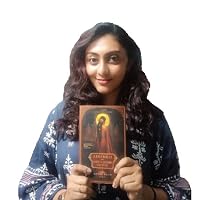
July 31, 2019
A light read with multiple perspectives. A quick and easy read.
Displaying 1 - 25 of 25 reviews