Jump to ratings and reviews
Rate this book

Mademoiselle Samedi soir

Rate this book
Les jumeaux Nouschka et Nicolas Tremblay vivent avec leur grand-père dans un minuscule appartement du boulevard Saint-Laurent. Seule descendance du légendaire Étienne Tremblay, célèbre pour ses truculentes chansons sur la classe ouvrière et sa réputation de bon vivant, frère et soeur sont désespérément immoraux et d’un charme irrésistible. Élevés sous les projecteurs, les inséparables n’ont jamais pu se résoudre à céder à l’ordinaire.

À la veille de leur vingtième anniversaire, leurs pulsions autodestructrices finissent par les rattraper quand Nouschka accepte le rôle de reine de beauté au défilé de la Saint-Jean-Baptiste. L’attention des médias se braque de nouveau sur eux pour exposer leurs failles. Bien que Nouschka tente de s’émanciper et de s’éloigner de sa famille, elle demeure une Tremblay et, lorsque le malheur frappe, c’est vers les siens qu’elle revient.

Avec sa baguette magique, Heather O’Neill, marraine des esseulés et des amoureux transis, enchante le récit de cette famille éclatée qui se déchire pour mieux se recoller, et qui s’aime fort sous le ciel de Montréal.

Traduit de l’anglais par Dominique Fortier.

488 pages, Paperback

First published April 24, 2014

186 people are currently reading
7234 people want to read

About the author

Heather O'Neill

74 books2,630 followers
Heather O'Neill was born in Montreal and attended McGill University.

She published her debut novel, Lullabies for Little Criminals, in 2006. The novel won the Canada Reads competition (2007) and was awarded the Hugh Maclennan Award (2007). It was nominated for eight other awards included the Orange Prize, the Governor General's Award and the IMPAC Dublin Literary Prize. It was an international bestseller.

Her books The Girl Who Was Saturday Night (2014) and Daydreams of Angels (2015) were both shortlisted for the Giller Prize.

Her third novel The Lonely Hearts Hotel will be published in February 2017.

Her credits also include a screenplay, a book of poetry, and contributions to The New York Times Magazine, This American Life, The Globe and Mail, Elle Magazine, The Walrus and Rookie Magazine.

Ratings & Reviews

What do you think?
Rate this book

Friends & Following

Create a free account to discover what your friends think of this book!

Community Reviews

5 stars
1,724 (27%)
4 stars
2,442 (38%)
3 stars
1,593 (25%)
2 stars
423 (6%)
1 star
132 (2%)
Displaying 1 - 30 of 731 reviews
Profile Image for karen.
4,012 reviews172k followers
July 13, 2018
i just loved this book.

it's taken me a while to sit down and write a review for this, because my love for it is difficult to put into words, it's just something inescapable, familial. it's definitely not a book for everyone. her writing style is something i can see being off-putting to some readers, but it just works for me - all that crowded poetic prose coming in just shy of being overworked. it seethes.

she also writes amazing characters.in this one, we have nicholas and nouschka tremblay - a nineteen-year-old brother-and-sister set of twins who grew up in the shadow of their larger-than-life father étienne - a québécois legend of surreal folk songs who used them as props throughout their childhood and absorbed them into his legend - they are, to him, byproducts of his persona. étienne had always been a presence in their lives, as in the lives and hearts of all citizens of quebec, but always fleeting, always just passing through, using them to bolster his career, scripting cute things for them to say on talk shows and then going off on a bender and ending up in jail, further fostering his affable outlaw appeal. their teenage mother left them when they were babies, they were raised by their grandfather, and they have always clung to each other - at nineteen, still sharing a bed, casual with their nudity and their involvement in each others' love lives. their relationship is claustrophobic, unhealthy, but also lovely, despite my inherent fear of twins.

they have grown up feral, unmonitored, emotionally stunted under the loving scrutiny of strangers who remember them as cute little children and they have stagnated into this peter pan existence where they haven't bothered to assume adult responsibilities, even though nicholas has a son whose life he wants to be a part of, despite not having the emotional or financial wherewithal to properly support him. having not had parental role models themselves, they are rudderless - drifting and stumbling - hapless at some of the most basic life skills, which is simultaneously sad and endearing:

I spent fifteen minutes trying to comb my hair and make it look straight. Hopeless. It was far too in love with the wind. If I had a mother, I would know how to fix my hair.

they are both innocent and cynical, wary of the spotlight, but living their lives on their own terms, which is naturally compelling and inviting of notice.

You could tell that she was a bit star-struck. We looked down on people that were star-struck. We couldn't help it. How could we not look down on people when they were looking up at us?

étienne's fame has not given him or his children any wealth - despite his continued status as a beloved symbol of the province, his dissolute lifestyle has caused his career to decline, and now he is just a shambling figure, a slovenly poet still desperate for adulation and not above using his children to reclaim that status.

the meat of the story involves étienne's last-ditch attempt at cultural relevance draped over the backdrop of quebec's separatist movement, which in turn mirrors nouschka's smaller-scale attempt to separate from nicholas; to stop sacrificing herself for his needs and make a life all her own. it does not go according to plan, but at least it is gorgeously written; a fantastic story and also an unconditional love letter to quebec, in sickness and in health.

the closest stylistic comparison i can make is to francesca lia block. it's that kind of surface-glitz shimmer romanticizing the squalor and a situation that to an outsider, seems unlivable. it's a little less manic than block, but it's in the same ballpark, and i very naturally respond to this style. plus, there are both a ton of cats and a ton of untranslated french in this book, which allows me to sink right in as though into comfortable quicksand.

i had to wait so long after Lullabies for Little Criminals for this book to exist, and i am thrilled to report that this one is just as good and probably even better because of a maturing of her writing, and a broadening of themes.

that was all gush and ramble, but i told you it would be hard for me to articulate. i just know i love.

come to my blog!
Profile Image for Gabrielle (Reading Rampage).
1,182 reviews1,754 followers
May 14, 2021
“You should beware of motherless children. They will eat you alive. You will never be loved by anyone the way that you will be loved by a motherless child."

And I have now read all of Heather O’Neill’s catalogue. If you read this Heather, please, write some more!

Lost children, cats, books, sex and a city that’s both beautiful and a little trashy; those are the hallmarks of O’Neill’s stories, and she knows exactly how to play with those elements to tell you about her eccentric characters’ lives. Nicolas and Nouschka Tremblay, the twin children of Étienne Tremblay, a has-been folk singer, have always lived on St-Laurent Boulevard, at the edge of Montreal’s red light district. Their father included them as part of his act when they were children, and the aura of celebrity and glamour has followed them into early adulthood: they still behave like children, even if fortune and success are not really a part of their lives (“We just thought of old age as some sort of clown routine.”). They also feel like no one can know them like they know each other, but that fusional bond starts to erode when Nouschka not only decides to go back to school, but also gets a boyfriend who wants to make a life with her.

It's easy to get annoyed with hopelessly naïve characters like Nouschka, (and arrogant, selfish ones like Nicolas) but O’Neill’s magic trick is that despite living in squalor and dealing with some rather terrible personal tragedies, her heroes never lose a certain innocent kindness, a capacity to wonder at the magic of small, ordinary beauties, so see poetry in salvaged furniture and canned spaghetti. They don’t get angry or resentful, which feels almost like a miracle and makes their bleak lives feel luminous. The twins realizing that what they are is not charming, but damaged by their childhood, which everyone else glamorizes, is what I imagine every child-star must face sooner or later. While Raphaël is not exactly a great guy, my heart broke for him – because not only is he alone to carry his damage, but no one but Nouschka even sees it for what it is. It is a special kind of loneliness to drag everywhere all by yourself. And Loulou's devotion made me smile: Québecois grandparents are very special indeed.

Given the setting and the unfolding of the 1995 separatist referendum in the background of this story, the book is surprisingly apolitical. If you are not from here, you may not know how fraught language policies can be in Quebec, and how messy they can get in Montreal. It is already unusual for an English writer to capture a French separatist frame of mind the way O’Neill did, but it is also very skilful to express her characters’ views without judgment or political subtext. I get the feeling that she may think it is not her battle to fight, and therefore not really for her to comment on.

I do wonder what a book like this means to people who don’t know Montreal intimately. I imagine some references, and therefore some of the colours on O’Neill’s brush are lost to people who have never wandered down St-Laurent Boulevard, who don't know the feeling of "it's so cold I forget what warm feels like", who find the omnipresence of rotisserie chicken joints weird or haven't tried every diner in the city to find THE poutine that tastes the most like their first – but that should not stop you from picking up this book. The magical, glittering prose alone should take you in, especially if you love books as dearly as Ms. O’Neill obviously does:


“One of the reasons that I wanted to study literature was because it exposed everything. Writers looked for secrets that had never been mined. Every writer has to invent their own magical language, in order to describe the indescribable. They might seem to be writing in French, English, or Spanish, but really they were writing in the language of butterflies, crows, and hanged men.”

“Every time that you read a book, it is like depositing money in the bank. You spend every weekend reading a pile of books this big, I swear to you that you are going to be a rich man."


In so many ways, I feel like O’Neill speaks directly to me about her very imperfect but very real characters who were never given a roadmap to help them figure out the world, her candid and unconventional ideas about sex, love and beauty and the wonderful way she sees my city.

Sad, gorgeous, dirty and magical – like all her work!
Profile Image for Anna Bunce.
299 reviews12 followers
October 31, 2014
You know the manic pixie dream girl trope? Well this book didn't just have the manic pixie dream girl, but a manic pixie dream twin brother, manic pixie dream grandfather, manic pixie dream father, manic pixie dream lover and quite frankly it just got exhausting.

The book seemed like a parody of itself, everything that happened and everyone was so big, dramatic, and sudden. It edged on romanticizing poverty. While Healther O'Neill's style was different and refreshing (although it did take me a while to fall into the rhythm of it) I just found myself so put off by the extreme-ness of all the characters and events that I don't think I would have finished it had I not already paid $30 for the book.

I'd recommend it if you love interesting descriptive writing but the story in and of itself just left me frustrated.
64 reviews
July 5, 2014
NOTE: If I could give a half-star, this would be a 2.5 star rating. Because of certain factors, I am bumping the rating up to 3 stars, because a 2 rating feels a little low.

First, let me say that I love a good figure of speech. Give me an unusual simile or metaphor that I would never have considered but is absolutely perfect, and I'm in heaven. And O'Neill has some amazing similes, ones that are truly inspired and make me smile. I loved them.

My problems with this book begin with the way O'Neill crams several of these beautiful and extended figures of speech into the same paragraph, an avalanche of visuals that drowns the reader and smothers their effectiveness. And too many of these insightful observations don't feel as though they belong in the mouth of the first-person narrator - a huge chunk of them feel like authorial intrusion instead. I came away with the impression that the author was trying to assert her cleverness and her writing skills in a classroom assignment, at times, and it jarred.

The plot itself interested me, initially, though in the end, it all felt anticlimactic. There was enough foreshadowing that I expected a much bigger tragic event, and a different one, than what actually took place, and the two characters that most interested me felt underused and underexplored, though they were not, in fact, minor characters. Unfortunately, I felt no real emotional connection with the main character, and I confess I was disappointed by the whole book. I went into it assuming I would love it, but that never happened.

O'Neill is a good writer. She can craft a fantastic sentence and a memorable and unique simile. But her sentences tend either to repeat their structure exactly - a style I'm certain was intentional but was overused, in my opinion - or feel disconnected from each other in a bizarre kind of Dick-and-Jane-book way.

I'm sure some people will adore this book, and it will probably be critically well-received, but unfortunately, it didn't work for me. (Though I did copy a few of her sentences into my book of literary quotations, so that's a few points in the book's favour and the reason I bumped my rating from 2 to 3 stars.)
Profile Image for Oriana.
Author 2 books3,830 followers
June 21, 2014
I am so behind on reviews, it's becoming embarrassing.

It's hard because I loved this book SO MUCH, so I don't want to just dash off some quickie thing, but the fact remains that I don't have time to envision and execute a review that's as wonderful as this book deserves. So here's what we're going to do, in three steps:

First you're going to read karen's review, which says lots of the things I would have said anyway, but in a brillianter way.

Second I'm going to do a very short summarizing.

This is a deliriously fun and disturbing book about twins Nicolas and Nouschka Tremblay, children of Étienne, a famous (and famously dissolute) drunken mess of a superstar folk singer. The twins' teenage mother left them when they were babies, and Étienne couldn't really be bothered to deal with his children, except for when he was using them as adorable props in his stage shows. So they've been raised by their grandfather, a strange and terribly loving but losing-it old codger.

The twins, now in their early 20s, are manic and self-obsessed and thrillingly irresponsible; but while Nicholas' solipsism is beginning to loom large enough to mirror that of their awful father's, Nouschka is trying, in her semi-unhinged way, to wrench herself out of this arrested-development path and into some sort of respectable life. Of course, whenever she makes the tiniest smidge of headway, all the maniacs she's known her whole life are there hovering on the fringes, with their glowing eyes and feral glee, poised to drag her right back down.

If I made this sound depressing, it kind of is? But it's also kind of the wildest, most delicious ride. These characters are immorally thrilling and off-the-wall delightful, and also Heather O'Neill's writing is just delectable, filled with tiltedly electrifying descriptions and the most playfully exciting language. Which brings us to...

...Third I'm going to do a quick list of one of her terrific recurring stylistic flourishes, which is that all throughout this novel are all these cats and dogs and birds, each of whom is described with a deft little bizarre metaphor. I knew as I was reading that I loved these so so much, so I underlined all of them, and now I will present a selection for you to lap right up, soft as milk.

* In the afternoon I saw him in the grocery store with a white Pomeranian that had a face like a chewed-up toothbrush. The dog was trembling with excitement, wanting to hop up, like he was waiting to add a detail to your anecdote.
* It was Johann, a black cat with perpetual bed-head. He looked like a splotch of ink that was appearing through a pocket in a shirt.
* Outside the store, a robin hopped by. It looked like a fat man with a red scarf tucked into his waistcoat. It looked like it knew what it was doing with its life.
* A cat stepped onto the table. It looked like an accordion falling open.
* He had a pit bull that was carrying a doll in its mouth. The dog had a face like a fist. It would put the doll down for a moment and bark like someone trying to plunge a toilet.
* A fat white cat walked down the side of the fridge like wax dripping down the side of a candle.
* The maple leaves were coming down like girls jumping out of hotel windows with their dresses on fire. [Yes, I know maple leaves aren't animals. Hush.]

Please go get this book, yeah?
Profile Image for Ruthie.
653 reviews4 followers
November 18, 2014
There are two compelling reasons to read this book. First is the story - a rather disturbing, wild tale of the twin children of a fallen Quebecois singing star. The children have been abandoned by both parents and although they live with their grandfather, they are rather feral, disturbingly emotionally dependent and self-destructive. The story takes place in the St. Laurent neighborhood and the latest separation referendum is the backdrop and a catalyst. It was hard to watch these characters continually make horrible decisions, it was hard to turn away. O'Neill weaves the perspective of the "YES" side of the referendum voters into her story, interesting to me as an anglophone ex-Montrealer who was living in Toronto at the time! The connection and the charisma of the twins is both their salvation and their possible downfall, and the reader watches as they try to save each other and themselves.

The second reason to read this book is the writing. There are sentences in this book that are so stunningly beautiful and insightful and truthful that they are almost a distraction. Other reviewers have quoted quite a few, and so I won't repeat them, but this book should be used as a textbook for every creative writing course ever taught going forward. There are phrases that are so powerful they could be their own chapters; they crystalize situations, emotions, lives...they are brilliant.
Profile Image for Jennifer Brown.
1 review2 followers
April 24, 2014
My friend won this book on Facebook, and gave it to me to read. I made a Goodreads account just so I could write this pre review (I'm excited that I got the book before it came out). I have never read Heather O'Neill's work before, but now I will go straight to Lullabies for Little Criminals.
This book blew me away! The writing style was absolutely beautiful, full of wonderful metaphors about love and a grungy city. My parents are from Montreal, and it is amazing to see how the culture from that city is represented in this book. It's fun to finally understand a separatist point of view. O'Neill paints a beautiful story of two twins who are products of their environment. The characters are insane, and I love them!! The book had me with it's intro on Montreal's history, all the way to the perfect ending. I cannot stress how important and wonderful the way Heather O'Neill writes, she makes you see the world in a whole different way. When this book comes out May 6th in Canada, I suggest you all run to get it. I'm currently running to the book store to catch up on her last book.
Profile Image for Vicki.
96 reviews14 followers
July 23, 2015
It bothers me that the girl on the cover is a blonde when Nouschka has black hair. I suppose in the scheme of things, this is unimportant, but I thought about it more than once. So you could say, there were a few times when it preoccupied my mind. Which is not not important. Hm.

The other thing is, the hailstorm of similes. Like an outbreak. Like an invasion. Like a cat feverishly clawing away at a scratching post. Like an ambitious tribe of fire ants taking over a picnic. Like a circus with too many clowns. (Why do they hire so many clowns? Most people don’t even like clowns. One to three clowns is enough. No one goes to a circus for clowns. Clowns are frill. Elephants and Gumby-like, fearless gymnasts and egomaniacs taming lions are the main event. Stay on the sidelines, Clowns.)
But it’s hard getting really huffy about it because O’Neill’s ridiculously good at it. She sickens herself with it. Like a dog (hmmm Similieypotosis is contagious…) that sees a toppled over garbage can and can’t resist ravaging it because, damn it, when’s the next time it’ll happen again? The vomit later is worth it.
I’m imagining how the conversation would go with her editor. “What about cutting this bit about a sweater looking like a patchwork of endangered teddy bears...?” (pause) “Chop off my right arm, why don’t you?” The truth is, I think we’d all feel the pain of that. There’s an exuberance to the free-wheeling figurative language that would be sad to dampen. Who wants to be the person who tells a kid Santa doesn’t exist?

O’Neill’s got a way with words, and it seems natural and compulsive. I can appreciate a writer who’s brimming with clever ideas and can’t help but let it all spill out. From a broader perspective, it’s a bit much, it comes off too strong, too eager (please somebody silence the voices in this woman’s head). But dammit, I love that endangered teddy bear line. And I love thinking about the end of a relationship like it’s “the thick juice at the bottom of a pitcher of concentrated mix.” I feel insatiable about it. I’m that dog who eats until it’s sick.

What should’ve happened is, the characters and the plot should’ve balanced out the writing style, and I don’t think it went over like that. I made a note early on: “I find the father a bit too thinly characterized. Predictable features of a famous person. Not nuanced enough.”
And to this description of Nicolas… “It was very important for Nicolas to always be infuriated by someone. It allowed him to externalize some of the hatred that he felt toward himself.”
...I noted: “Heavy-handed. Too much ‘explaining’ going on.” I mean, what is that last sentence. It sounds like it’s ripped from the pages of a therapist’s notebook. I always wish I had a better word for this but “subtlety” is lacking.
And, really, come one, the plot is silly. Which I guess is the by-product of a story with not-a-one sensible person in it, but actually, I think Nouschka had one too many moments of clarity (see sentence ripped from the pages of a therapist’s notebook) for me to believe she’d do some of the shit she does. A self-aware crazy person is an oxymoron. It felt like there was a divide between Narrator Nouschka and character-in-the-story Nouschka and it messed with my understanding of character motivations. Which then made the plot seem ridiculous. But none of this deters me from moving on to Lullabies for Little Criminals. I think I like O’Neill.
Profile Image for Krista.
1,469 reviews857 followers
August 26, 2016

We were all descended from orphans in Quebec. Before I'd dropped out of high school, I remembered reading about how ships full of girls were sent from Paris to New France to marry the inhabitants. They stepped off the boat with puke on their dresses and stood on the docks, waiting to be chosen.

They were pregnant before they even had a chance to unpack their bags. They didn't want this. They didn't want to populate this horrible land that was snow and rocks and skinny wolves. They spoke to their children through gritted teeth. This is where the Quebec accent came from. The nation crawled out from between their legs.
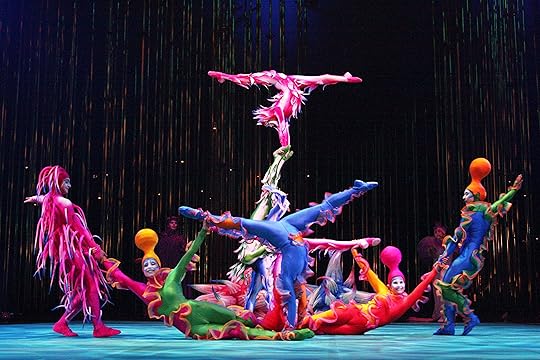

The province of Quebec hardly needed the federal government to recognise it as a distinct nation within Canada in 2006: their minority population makes outsized contributions in arts, culture, sports and whatever category Just For Laughs Gags falls under. In so many areas, the Québécois are simply better than us in the ROC (Rest Of Canada), all while resisting the forces that would try to assimilate them into the dominant (North) American culture that encircles them.


descriptiondescriptiondescription


Even so, despite kowtowing from the feds and an outlandish annual sum of transfer payments from the national coffers, Quebec is still threatening to separate, and as they held their provincial election this year, for the first time, the ROC was grumbling that it might be time to let them go (and fortunately, the separatist party was defeated at the polls). The last time that Quebec held a referendum on sovereignty, in 1995, Anglos from all over Canada descended on La Belle Province and waved their "My Canada Includes Quebec" placards and danced in the streets as separation was turned down in a 51% to 49% vote. The Girl Who Was Saturday Night is set in this time frame -- the months leading up to and after the 1995 vote -- and told from the point of view of diehard separatists who were decidedly not dancing in the streets at the results.

As the book begins, we meet Noushcka and Nicolas, the 19-year-old twin children of a folk singer, Étienne Tremblay, who had been the voice of an earlier failed referendum in 1980. As a legend in Quebec, Étienne soaked up the limelight, even trotting out his young children to shout separatist slogans or read patriotic poetry during televised variety shows. Focussed on his own celebrity, Étienne left the twins to be raised in a squalid Montreal apartment by his aged father, Loulou. Still recognised on the street as the famous kids with the more famous Dad, and saddled with the psychological stress of having been abandoned by their mother and rejected by their father (except when opportune for his career), Noushcka and Nicolas are hard-partying, emotionally stunted, high school dropouts who still sleep together in the same twin bed and are casual in front of each other with sex and nudity. As the referendum approaches and Étienne pops back into their lives, Noushcka takes steps to separate from her brother, determined to not fall into the traps that seem fated for the whole Tremblay family. Along the way, there are many cultural touchstones that place the story firmly in Quebec -- including motorcycle gangs controlling the drug trade, poutine made with St-Hubert gravy mix, non-ironic male figure skating, and the Anglo-Franco/urban-rural divides -- and it was all very interesting, but none of this is what The Girl Who Was Saturday Night is really about: it's about the language (according to this article ), and that's an interesting concept for a book written by an Anglo Montrealer, from the point of view of a French Montrealer, presumably presented in English as the tacitly acknowledged translation of (most of) her French thoughts (and other than some unfamiliar curses, the French wasn't beyond me).

In an interview, O'Neill said:

I started out as a poet and that impulse sort of moved into prose. Now I don’t know if I could go back. But I think of my novels as poems. I see each sentence as a kind of haiku.

And that statement makes a lot of sense of this book: The language is extremely poetic and there are so many similes, often more than one per paragraph, that I suppose it will have the power to either annoy or charm a reader. Want to read a novel composed of haikus? Some examples:

Pigeons sat on the sign, crammed together like a group of teenagers making trouble on a bench. The noise they made sounded like a marble rolling across the floor all day, every day.

There were always these beautiful moments at the end of a relationship. Like the thick juice at the bottom of a pitcher of concentrated mix. Like the sky at sunset. They made parting so painful.

The stars in the sky were like candles on the birthday cake of a thousand-year-old man. Somewhere in the night there were bears and raccoons with jars stuck on their heads. Like astronauts lost in space.

And the book is filled with innumerable scenes involving roses (which might foreshadow a later funeral where the casket is covered with roses?) and feral cats who slink in and out of the action:

A beige cat came down the stairs like caramel seeping out of a Caramilk bar.

A cat peeped in the window. It had one white paw. One night it had decided to dip it into the reflection of the moon in a fountain to see what would happen.

And in many cases, the metaphorical tips over into the surreal:

We sped down the highway. Someone out there had opened a pie and blackbirds had flown out and filled the air.

The trees on the wallpaper had grown taller and many, many more blossoms had opened up on their branches. The drummer boy on the sheets had grown up. He was a tall, handsome teenager with a bayonet in his hand. The birds in the painting had migrated. They were now in the bathroom on the windowsill.

Overall, the plot worked for me but the language tricks went a little far -- and I am certainly capable of being charmed by language tricks in books like The Enchanted, Come Thou Tortoise and O'Neill's own Lullabies for Little Criminals (that wowed me and broke my heart in equal measure). I would be fascinated to know how this book is received by people outside of Canada or anyone who didn't live through the 1995 referendum; how important will it be to have breathed that sigh of relief?
Profile Image for Ellis.
1,216 reviews167 followers
November 20, 2014
I've been nibbling on this for almost two weeks, long enough the B asked me why it was taking so long for me to read it - was it awful or what? No, in fact it was so freaking good I just couldn't bear to read more than a few pages at a time so I could make it last longer. Basically, O'Neill has now done for dysfunctional families, abusive marriage, and possible schizophrenia in this book what she did for child prostitution & heroin use in Lullabies for Little Criminals; written about it a breathtakingly beautiful way that makes you wish you were these people & you got to live through all the same terrible, wonderful things they do. It's impossible to read more than two or three lines in this without being struck dead by how audaciously brilliant her writing is.

Here's some stuff I left all over Kelly's social media:

"Nicolas had a sort of genius for recognizing ulterior motives. It was the sort of quality that you would probably want to live without."

"There was a scent called Five Minutes Before It Rains. If you put it on your neck, whoever kissed you would cry."

"All Etienne needed was for the whole room to declare their undying love for him & he was fine."

Here's some stuff Kelly's been texting me:

"How could you compare what you wanted with what you had? The shock of it might make you old immediately."

"I was not going to define myself by the traits that men found adorable in me."

Heather O'Neill is too much! On one hand I want her to write a book once a year just so I don't have to linger in literary purgatory without her, but on the other hand I think I'd mentally overload on her genius if she did.
Profile Image for Niki.
1,018 reviews166 followers
September 19, 2018
2 stars. Bland. Vaguely forgettable. Disappointing after having read The Lonely Hearts Hotel by the same author.

Nouschka was an idiot, so it was hard to relate to her, or cheer for her, or even care about her enough to want her to be happy or make a right decision for once. And, unfortunately, she's our POV character, and the one we follow through the story. Her and her stupid decisions.

Nick may have been reckless and way out of line at times, but at least he was interesting. Too bad that wasn't something he shared with his sister.

I liked the cultural knowledge I gained from this, but I frankly didn't get much of that, even.

There were a lot of similes in this that I enjoyed, but I can't find a particular one I liked (and I don't care enough to keep looking), so I'll paraphrase it slightly:

There was a man in a mascot suit, who had taken off the mascot head and put it beside him. The tiger head and the man stared straight ahead, as if they had been fighting and not speaking to each other now.

But, most of the time, I was too bored to continue reading this. What a disappointment.
Profile Image for alittlelifeofmel.
933 reviews403 followers
March 28, 2021
I have noticed a lot in my life lately that I have gotten harsher with my ratings. I rarely give 5 stars anymore and 3 stars has become my absolute norm. However, I was still a little bit convinced the books were at fault. However, this book has shown me that no, it's me. I liked this book more than Heather O'Neill's debut, Lullabies for Little Criminals, but this gets a lower rating than that book.

I love her books because they are set in my city and they are familiar to me. I recognize the locations, the street names, etc. I just feel comfort from her writing and her setting. But wow there was not a lot going on in this book. That was the point, as it just follows the lives of these two twins, but I expected more based on the blurb suggesting a traumatic event. And there is only but it's in the last 60 pages of the book. So overall, I was underwhelmed but still enjoyed it!
Profile Image for Aaron.
140 reviews13 followers
May 29, 2014
Nothing I can say will do justice to this book. It was absolutely fantastic. At the first third I was excited and started thinking of Heather O'Neill as the female Canadian equivalent of Bukowski. And then I read the second third. And then the last. And I realized, O'Neill is better than that. All Bukowski could do was give you a portrait of someone NOT to be. The Girl Who Was Saturday Night is the hand that reaches into that pit and helps you pull yourself out; it'll take some strength, and you'll get mud all over your favorite shirt, but you'll come out of it for the better.

The Girl Who Was Saturday Night is written in a hardscrabble, poetic voice that makes heavy use of literary devices. It gives a narrative that paints Montreal and Quebec's countryside as unique universe against all others. Some parts of this book are hard to swallow, but I couldn't help but eventually admire the compromising, but realistic voice of Nouschka Tremblay.

ON THE USAGE OF SIMILE: A few reviewers have been criticizing this novel for its usage of simile. Yes, there are a fair few, but you don't drown in them and O'Neill's similes are actually good. Secondly, for a novel that is framed in political emancipation, stresses themes of independence and fear of the unknown/responsibility the usage of simile is absolutely fitting for the narrator. It manifests itself in Nouschka's speech as her way of seeing the world. When she tries to envision the direction of her life or taking responsibility for herself it feels like comparing apples to oranges. There's no other way for her to convey it than by comparing the absurd to the realistic.

Oh, and cats. But I enjoyed that. In fact, I had to move several cats away from my car before I went to night school the other day. This is in part because metro Vancouver is filled with rats, not mice.

What you get is a book that is smart, mature and well developed. Not to mention utterly intriguing and heartfelt. This has been one of the best novels I've read this year and doubtlessly one of the best pieces of Canadian lit I have ever read.

Personal note: I always wanted to find a book that could fit the lyrics to one of my favorite songs.

Eating snow flakes with plastic forks
And a paper plate of course, you think of everything
Short love with a long divorce
And a couple of kids of course

They don't mean anything
Live in trailers with no class
Goddamn I hope I can pass high school (means nothing)
Taking heartache with hard work
Goddamn I am such a jerk, I can't do anything

And I shout that you're all fakes
And you should have seen the look on your face
And I guess that's what it takes
When comparing your bellyaches
And it's been a long time

Which agrees with this watch of mine
And I guess that I miss you, and I'm sorry
if I dissed you
Profile Image for Will Ansbacher.
358 reviews101 followers
May 15, 2021
Three things you should know. The sentences are short. The short sentences could be edgy if the writing wasn’t so flat. The sentences are a bit flat the way the similes are a bit adolescent. Like saying you’d done something “a million times that week.” Yes, I know that’s an exaggeration not a simile but whatever. Also, there is a lot about what clothes everyone wore, and there are a lot of cats. I don’t know why.

By the halfway point, nothing much had happened. But there were some bits that were inspired if not actually brilliant so I carried on. I tried to see the artless prose as how Nouschka, the narrator, might write. (Her ambition was to be a writer so maybe this was her first attempt).

Nouschka and Nicolas are 19-year-old twins. They’re the children of the famous Québécois singer Etienne Tremblay. They live with their grandfather because Etienne doesn’t care about them and their mother left them. They’re both looking for love in all the wrong places and act up like they were much younger. Though you have to admire their ability to just get on with life.

Nicolas engineers a meeting with their mother which I didn’t find very convincing. He is in trouble with the law a lot.
Nouschka is smitten with Raphaël, gets married and becomes pregnant.
Raphaël was a talented figure skater whose father is an arsehole. Raphaël has a secret that could be seen coming a million miles away, as could his suicide. Nouschka’s lack of reaction is a bit unconvincing too, given that she was right there when it happened, but then she kind of knew it would happen.

Nouschka’s pregnancy seems to last for literally years but maybe that is just the pacing.
In the last chapter, after the baby is born, Nouschka says “But the funny thing was that I was getting an unbelievable amount of stuff done”.
Yes, I would say that is a bit surprising for a single mom in her situation, so that bald statement could have used a bit of fleshing out.
But anyway, although she misses Raphaël, the story ends happily because there is a reconciliation with her mother and an old boyfriend.

It is set in 1995, during the time of the Quebec referendum to separate. But the characters seem apolitical despite being firmly in the “oui” camp, so the politics sit a bit awkwardly within the story, as if shoehorned in to give Saturday Night some edge. But what it really needed was some black humour.
This entire review has been hidden because of spoilers.
Profile Image for Elizabeth Cooke.
6 reviews
August 8, 2015
Unfortunately this book is one of the hardest and worst I've read. It was incredibly slow, boring and tried far too hard to be 'edgy'. I found the writing style verging on arrogant as it tried so hard to be kooky and "interesting" when it fact it just came across as annoying and wasteful.
The plot is so weak and it takes SO LONG for anything to happen, and you don't really care about any of the characters.
I trudged away with the book for as long as I could bear... and even then it wasn't worth it. I tried to be open minded and kept longing for it to get better, and it just fell flat.
I jumped to the end and the plot was now down right silly.
In conclusion I feel this book has nothing going for it and I'd rather read, well most other things.
Sorry - clearly there is a following for this cult book and maybe you'll love it... or hate it.
Profile Image for Barry.
52 reviews12 followers
January 29, 2015
I loved her first novel, 'Lullabies for Little Criminals,' and am thrilled to say that TGWWSN ups the ante yet again! I love her use of metaphor, the vivid images that she creates with the stringing together of three or four seemingly ambiguous words that hit the bullseye each and every time. Each chapter has the image of a cat on its first page, and her delightful images of these felines was a quirk that I came to look forward to! I fell in love with Nouschka and Nicholas, even found myself warming to Raphael. The city of Montreal plays large in the novel as well, and I have to say that O'Neill reminded me during those moments when Montreal was cast front and centre, of the late Moredcai Richler. This one ranks in my Top five for the year thus far!
Profile Image for Noémie Courtois.
269 reviews1 follower
March 22, 2019
Aaaah j’aurais aimé donner plus à ce livre parce que j’adore Heather O’Neill, mais je n’ai vraiment pas accroché. Pourtant le style est toujours aussi bon, aussi coloré, mais je n’arriverais pas à m’attacher aux personnages...
Profile Image for Natalie (CuriousReader).
516 reviews483 followers
April 27, 2017
I was really looking forward to reading Heather O'Neill's books but I have to say I'm a little surprised this book is 'an international bestseller', what book were people reading? I must have missed something. This book isn't entirely without it's strengths, I actually liked basically all of the themes that the book explores. There's the political situation between Canada and Quebec that is central to basically all of the character's lives, if not central it's at least very much a backdrop for all these characters lives, the frustration and confusion they are feeling, much of the distress within the community as a whole and the social problems in this part of the world is linked to the political context and uncertainty. There's the way twins relationships are constructed both from the outside by other people and towards eachother, how identity links with it and to be ones own - I guess the themes of identity and figuring out one's life isn't necessarily anything to do with the fact that Nicholas and Nouschka are twins although it brings an interesting side to the coming-of-age story. I also liked to see a take on the relationship between media and people, like where the limits are to privacy and public things, what's sacred what's not, what it's like to have everything you are and have be publicly scrutinized, judged, and hailed or criticized. All of the things are in the book, and are interesting concepts and ideas O'Neill deals with, but it's the execution I had a problem with.

So for me this book was about 30% plot and 70% similes and metaphors. Literally this book was drowning in all of the metaphors, the words "like" and "as if" was so numerous I'm really wondering how this could get past editors and get published. Is this supposed to be fancy writing? I'm all for experimental or beautiful over the top writing, but this was just clunky and clumsy and sometimes outright awful. Just a few examples: "It was like being picked out as a favourite by a psycopath who went by the name Mr. Mom in prison", "He was like a hungry person eating", "a robin hopped by. It looked like a fat man with a red scarf tucked into his waistcoat. It looked like it knew what it was doing with its life", "He just thought this road was going to lie down in front of him as he drove. Just like it was his bitch.". Someone might think these metaphors are unique, edgy, worth praising but to me the majority of the metaphors were nonsensical, useless, and basically there to prove a point, like a 'look what I can do' sort of thing. It wasn't just the metaphors that was a problem for me with the writing. I didn't much care for her writing on a general level but also the characters lacked a real spirit for me. At times towards the last section of the book, I felt like I cared more about what happened to these characters than they did. Which is a unique experience for me, usually it's that I don't care at all that's the problem. But in this case I wanted to care, I just felt like it was a bit pointless since there was no blood in these characters, like they were the costumes of real people but the actual people were not in the costumes - just lackluster.

I guess that's all I really had to say. It's easy to read, at times it's pretty good in the actual story (plot) and there are moments of gold in the writing but overall pretty disappointing.
Profile Image for Laura.
83 reviews30 followers
September 27, 2018
This is the third book I've read by Heather O'Neil. There are a handful of authors that I feel a profound connection to and she, I can happily say, is one of them. It's hard to explain but how I feel reading these authors' work (or sometimes it's just one book of an author's collection,) is mostly peaceful and familiar with little jolts of electricity. The works have similarly struck me with their beautiful imagery that I relate to, and feelings that I've had some of the same thoughts and ways of seeing the world (though it is much more beautifully written in the books than I would express, of course.)
I feel lucky that I felt that way as I'm making my way through Heather's writing.

This passage which expresses something I have felt, and have read and seen ample artistic representations of, brought me to tears. A message I had thought to have long understood and had been ingrained and might have considered stale coming from another source, made me feel raw and left wondering if I had really felt the truth of this idea before:

"When you are born and put into your crib, the whole world sticks their heads over the top of the bars. They give you a name and they have all sorts of different ideas about you. These are all just strange fairy tales. When they tell you what you could be as an adult, they might as well be telling you stories about knaves and cats that wear boots.

But your task is to become something much more unique and surprising than anyone your parents could imagine you to be. You have to know that the life you have is completely yours."

I think coming across these connections is a reason why so many of us read.
Profile Image for Juniper.
1,039 reviews388 followers
April 4, 2015
3.5-stars, really.

oui ou non? ce est une question facile avec pas de réponses faciles. yes or no? it is a simple question with no easy answers. this premise seems to be the heart of the novel for me.

o'neill weaves the politics of the 1995 quebec referendum into this novel. the referendum, for those unfamiliar, asked citizens in quebec if they should remain as a part of canada, or become an independent state? in english, the ballot read: "Do you agree that Quebec should become sovereign after having made a formal offer to Canada for a new economic and political partnership within the scope of the bill respecting the future of Quebec and of the agreement signed on June 12, 1995?" voters could reply 'yes' or 'no'. 93.52% of the 5,087,009 registered Quebecers voted in the referendum, a higher turnout than any provincial or federal election in Canada's history. the 'no' side won 50.5% of the vote. quebec stayed. this was a big deal in the province and in the country. separatists are stll working and hoping in quebec.

the yes/no question of independence is important to the main character in o'neill's book - nouschka. nouschka and her twin brother nicolas are a disaster. abandoned by their 14yo (!!) mother and with a washed-up 1970s terrible singer of a singing star father, the twins were put with their uncle loulou to be raised. loulou is a sweet man, but seems wholly incapable in the role of parent. the twins were essentially left to their own devices - when not being trotted out on stage to boost their father's career. it made for a tumultuous and aimless existence. now as 19yos (20, by story's end) both nouschka and nicolas are floundering terribly. nouschka is determined to return to school. she dreams of being a writer. but she is so tethered to her brother that it is nearly impossible for her to imagine living apart from him. it's a weird co-dependency, unhealthy in many ways, but completely understandable.

o'neill's writing is sharp - there is a very vivid quality to this novel, and i felt many parts of the story very viscerally. these kids are young and reckless and from the very beginning you just know this is headed nowhere good. but you hope... please just let things be okay. i feel that this is a very ambitious and creative book. but.... (i am so sorry.... i really wish there wasn't a 'but' here!) for as many insightful, painful and wonderful moments there were in the story, there is a morass of metaphors and similes. some of them were great. most were... overdone. i haven't yet counted them, but a search of the word 'like' brings up pages and pages of results on my e-reader.

a curiosity in the story: the incredible overabundance of cats. so. many. cats. (and i feel the need to know whether similes or cats would win in the count?) they slip in and out of scenes. when asked about the cats, o'neill had this to say:
"I wrote one scene and this cat just struts by and the cat has so much personality. The cat knew the score and was kind of above all this and was commenting on it a little bit," she says. "I was like, 'I'm going to have these cats all over the place.' And then I wondered if people were even going to notice that I've put a lot of cats in here."
murakami is into cats too -- but i have still not read him. (I KNOW!) but i felt like i was being constantly reminded to read him every time a cat popped into o'neill's story.

overall there is much to like, or even love in this novel. it is gritty and alive. it's clever and bold. for me, though, the similes were just too much, and that took away from the read, which is why i haven't rated the book any higher. it will be interesting to see if the book sticks with me over the next few days. sometimes that happens and i end up feeling stronger or even more impressed with a bit of distance. it would be nice if that happens.

the girl who was saturday night has been longlisted for the 2015 women's prize for fiction, which is pretty exciting as it's the only canadian book in contention. i hope it goes to the shortlist (announced april 13th), and i wouldn't be unhappy at all if it wins. i have read 8/20 of the longlisted books so far and this has been one of the better reads.

Profile Image for Angela Auclair.
8 reviews12 followers
July 13, 2014
I finished this book a week ago and I am still thinking about it. I think having grown up in Quebec, so many pieces of this story resonate with me. The fact that the book started with a reference to Petula Clark, yes, the singer, who made friends with my mother over our pet goose in rural Quebec while pregnant with me, had me thinking that this book was going somewhere special. And it did.
I could smell the apartment they lived in. I know the bikers O'Neill describes. The relationship between Nouschka and Adam I had, just in reverse. The Petula Clark references...we lived beside a Quebec impresario growing up and had terrible, precocious performing twins who also lived on my street. Hell, Rene Simard lived 10 minutes away...I began to wonder at one point how Heather O'Neill so perfectly crafted this story out of my crazy childhood memories.
This story will easily be enjoyed by someone not raised in French Quebec. Heather O'Neill does an excellent job in her descriptions, allowing those not raised with the conflict that lives here on the day to day, to gain an insight into the chasm that exists between the English and French communities but that is only a part of the story. I will say, though, that as someone raised in a family where some regarded Westmount as a magical place...I loved that part of this story.
I walk away from the book appreciating the romantic hope of the ending, but there is a lot to be said for the loss, uncertainty and sadness that reverberates through the book. It feels very real.
Walk through Montreal from the 1970's to the mid 1990's with this book. You will not be left wanting.
Profile Image for HarperCollins Canada.
86 reviews180 followers
March 8, 2015
Since reading Lullabies For Little Criminals in 2007, I have been a huge fan of Heather O’Neill. But if you look at my list of favourite novels (including both of her novels, plus The Enchanted and Extremely Loud and Incredibly Close, to name a few) this is no surprise. I love metaphors. I love similes. The higher a book is on my list of favourites, the more likely it is that there are pages dog-eared and quotes underlined.

While reading The Girl Who Was Saturday Night on Toronto transit, I found myself attempting to type my favourite lines into my phone in one hand, holding the book in the other while keeping my arm wrapped tightly around a pole to ensure I didn’t fall down. I am not a graceful person, and this was—both fortunately and unfortunately—a regular occurrence, because the strength of O’Neill’s novels are not just her outrageously charming, down-and-out-yet-impeccably-hopeful protagonists (though you will love Baby and Nouschka), but also in her writing.

Read Kaitlyn's full review of The Girl Who Was Saturday Night on The Savvy Reader
Profile Image for MAPS - Booktube.
1,201 reviews403 followers
Read
October 3, 2024
C’est une histoire sans début et sans fin.
Une histoire qui suit la vie de Noushka.
Il n’y a pas vraiment de ligne directrice. On se promène entre sa vie actuelle, sa relation avec son frère, son père et l’absence de relation avec sa mère. C’est un mélange entre des moments qu’elle a vécu enfant, et ce qu’elle vie aujourd’hui. Sa relation avec les hommes en général aussi.

C’est un roman qui raconte le petit rien du quotidien. Ce n’est pas un roman avec plein d’action et de rebondissements. C’est un roman introspectif et plutôt lent. Je ne crois pas que j’aurais pu le terminer à le lire avec mes yeux. Il y avait une belle ambiance en audio, malgré la grande lenteur de l’ouvrage et celle en particulier de certains passages.

J’ai beaucoup aimé le comédien qui incarne Nicholas, le frère de Noushka.
Profile Image for Vikki VanSickle.
Author 20 books239 followers
June 4, 2014
I admit I am one of few people who have not yet read Lullabies for Little Criminals, but I will be seeking it out shortly after finishing this. I came to this book with no preconceived notions of O'Neill as a writer, only that people love her work. I am now one of those people who love her work. Noushka's world is so vibrant and visceral- I found myself simultaneously horrified and charmed by her circumstances. She is a narrator to cheer for, a young woman who wants to break free of her lifestyle but in no way condemns those around her. The book is ultimately hopeful but not in a saccharine way. O'Neill paints such a fascinating portrait of Montreal and Quebecois culture- I'm not sure anyone else does it better. She has some fantastic literary imagery- I could read a whole book of Noushka's cat descriptions alone.
Profile Image for etherealacademia.
189 reviews442 followers
December 25, 2022
i read this in like one sitting. books don’t usually make me cry but this one did
Profile Image for Kara Babcock.
2,112 reviews1,593 followers
September 26, 2015
Normally when I love a book, I inhale it, reading it so quickly that it’s gone before I realize how much I should cherish this unique experience of reading it for the first time. It took me a little longer than normal to read The Girl Who Was Saturday Night, enough that I started to savour it. Each brief, cleverly-named chapter was a small episode in the life of Nouschka Tremblay. And it was perfect, for I did indeed love this book.

I loved Heather O’Neill’s first novel, Lullabies for Little Criminals . I read it the summer I first joined Goodreads, and it was my second favourite book of the year. Now The Girl Who Was Saturday Night will be joining it on my favourites shelf, and I wouldn’t be surprised if it makes an appearance on this year’s best 10 books. Because Heather O’Neill has done it again: she’s bottled lightning twice.

Whereas Baby, the protagonist from Lullabies for Little Criminals, was just on the cusp of adolescence, Nouschka is just on the cusp of adulthood. Nineteen turning twenty, she should be independent or nearly so. But she is anchored to this small, impoverished, impersonal yet intimate Montréal street through her twin brother and her grandfather. Her identity is boxed in by the tabloids and documentarians who recall the days she spent appearing on TV with her chansonnier father, Étienne. Her need to make a connection lands her with the most outrageous husband and a marriage that is properly bizarre for fiction but likely accurate for real life.

It’s this way that O’Neill captures the bizarre layers of our life almost photorealistically that appeals to me. She depicts the struggles that Nouschka faces, but unlike many novelists, she does not glamourize or even dwell on them. There’s a latent current of humour running throughout the book (so many cats, so much Anglo-bashing!), but there are also moments of quiet seriousness. O’Neill neither makes light of Nouschka’s troubles nor exaggerates them; they simply are, and it’s the people and circumstances in her life that are absurd by comparison.

Many of the characters in this book are also studies in how to write a sympathetic but unlikable character. Nouschka herself arguably falls into this category (though I like her!). Raphael is the prime example. He has a tragic quality; I can see why Nouschka was drawn to him. She’s smart enough to realize that she can’t actually fix him, and that she has to leave him at some point—but she’s also enough in love with him to go along with his craziness just slightly more than another person might. Ultimately, O’Neill uses Nouschka to do what most people refuse to do: interact with the person suffering from a serious mental illness instead of trying to interact with their condition.

These issues of identity, and identity politics, suffuse the novel. The story takes place during the second Québec referendum (1995), and Nouschka gives us a very Québécois perspective on something that many Canadians will only be familiar with through the lens of news media. Though The Girl Who Was Saturday Night is “CanLit” that ended up being shortlisted for the Scotiabank Giller Prize, it certainly feels less like a Canadian novel and more like a Québécois novel (not that I have much experience with those). Despite the novel being in English, it’s implied that the characters speak and think primarily in French. By playing with the language in this twisted way, O’Neill gets to have some fun meditating on the different ways French- and English-speaking Canadians think and act.

O’Neill just depicts everything with such a beautiful sensitivity. She doesn’t sugar-coat things, but she also puts that sympathetic light on people like Nicolas and Nouschka and even Raphael, who might otherwise seem like jerks and assholes for the way they act. You want things to work out for these people. I agreed with Loulou when he tried to stop Nouschka from marrying Raphael, and I knew it wouldn’t work out well—but I couldn’t stop myself from hoping that maybe I would be wrong, maybe something would work out. In the end what happens is what happens so often in real life—something stupid and tragic and irrevocable, but also something you have no choice but to move on from and keep on living afterwards. Unlike a story, life does not always end after tragedy—and it’s that weird, anticlimactic part of life that O’Neill captures here. Whether it’s the day after the province voted “Non” or the day after something else, life goes on … just always different from before.

In the end the story is nothing super special. It’s the consummate storytelling skill that transforms The Girl Who Was Saturday Night into something far more sublime and amazing. I can understand how some could feel that O’Neill overdoes the similes or the asides (but you ain’t seen nothing if you think this is overdone). For me, though, the prose is a perfect alchemical mix of description that leads to introspection. This is a quiet novel, a slow novel, and a wonderful novel. If I didn’t already own it, I’d want to take it home with me and put it on my shelf. Considered altogether, it’s just a lovely package of story and character and craft: the exhilaration of anguish and terrible foreboding of joy.

Creative Commons BY-NC License
Profile Image for Siena.
302 reviews
January 23, 2022
I fell in love with Lullabies for Little criminals a few years ago which remains one of my favourite books of all time. So I was really looking forward to reading more of Heather O’Neill’s books! I love how she portrays Montreal in her books, I love recognizing the areas where the characters interact. While this story was still intricate and immersive, I didn’t fall in love with the characters enough…I kept disagreeing with Nouschka’s decisions (even tho that was probably the main goal here) so it kind of fell flat for me
Profile Image for Ryan Schwartz.
106 reviews5 followers
December 27, 2022
4.5. Anything Heather O’Neill writes I know I’m going to love. This book was charming and sad just as they always are. The only reason I can’t justify giving it 5 stars is because it didn’t affect me the way the lonely hearts hotel and when we lost our heads did. Her descriptions of Montreal make it seem as though the setting is another character in the book. I was spreading out reading her books so that I could prolong the enjoyment and I’m sad to have finished all of them now.
Profile Image for Sue.
37 reviews14 followers
August 30, 2024
This book was perfection for me.

Drama, humour (oh so much humour), joy, sadness - all the feels. I never wanted it to end.
Displaying 1 - 30 of 731 reviews

Can't find what you're looking for?

Get help and learn more about the design.