Jump to ratings and reviews
Rate this book

Cage of Souls

Rate this book
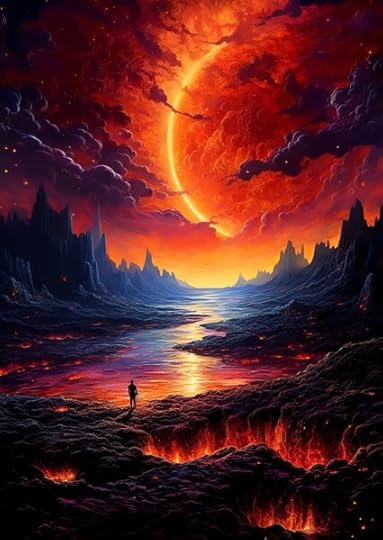
The sun is bloated, diseased, dying perhaps. Beneath its baneful light, Shadrapar, last of all cities, harbours fewer than 100,000 human souls. Built on the ruins of countless civilisations, Shadrapar is a museum, an asylum, a prison on a world that is ever more alien to humanity. Bearing witness to the desperate struggle for existence between life old and new is Stefan rebel, outlaw, survivor. This is his testament, an account of the journey that took him into the blazing desolation of the western deserts and into the labyrinths and caverns of the underworld. He will meet with monsters and mutants. The question is, which one of them will inherit this Earth?

Humanity clings to life on a dying Earth.

Epic, far-future science fiction from an award-winning author.

624 pages, Paperback

First published April 4, 2019

2158 people are currently reading
15090 people want to read

About the author

Adrian Tchaikovsky

191 books17.4k followers
ADRIAN TCHAIKOVSKY was born in Lincolnshire and studied zoology and psychology at Reading, before practising law in Leeds. He is a keen live role-player and occasional amateur actor and is trained in stage-fighting. His literary influences include Gene Wolfe, Mervyn Peake, China Miéville, Mary Gently, Steven Erikson, Naomi Novak, Scott Lynch and Alan Campbell.

Ratings & Reviews

What do you think?
Rate this book

Friends & Following

Create a free account to discover what your friends think of this book!

Community Reviews

5 stars
5,030 (40%)
4 stars
4,727 (37%)
3 stars
2,121 (16%)
2 stars
512 (4%)
1 star
123 (<1%)
Displaying 1 - 30 of 1,207 reviews
Profile Image for Justine.
1,419 reviews380 followers
September 22, 2022
4.5 stars

This book is hard to describe, much less define. Incredibly dense, every page packed with ideas, imagination, and extraordinarily literate prose. I'm continually impressed with how different the narrative voice is in every piece Tchaikovsky writes.

Written in the style of a literary memoir, Cage of Souls narrates the tale of Stefan Advani. Advani styles himself an academic, and his survival of a harsh prison, a dangerous jungle, and an unforgiving city is achieved more through the generous application of luck than from any particular skill. But as it's his story, Advani automatically assumes the role of unlikely hero, even if a lot of that happens because he is in the right place, or absent from the wrong place, at the optimum time.

The dying earth setting, the society, the environments, are all incredibly imagined and elucidated. As long and as dense as this book is, it still manages to convey the idea that there is much more to be discovered than is ever revealed in its pages.

This is not going to be to everyone's taste as it is one of those books where a lot happens but it isn't necessarily what I would call an action oriented tale. If you read a few pages you will get an excellent sense of the style and moderate pacing used throughout. For myself, I thought it was extremely good, and definitely merited a very solid 4.5 star rating.
Profile Image for carol. .
1,755 reviews9,980 followers
Want to read
December 4, 2022
This, then, is where I think I close at last my weary eyes, lay hand upon my brow and reflect on how it is I came to this place. Many times I had occasion to peruse and linger over the written word with Nataliya, but never had one tome taken so much energy. I knew as my superior in determination and speed she had far surpassed me though we had started on this journey together. Still, I was secretly delighted when she too faltered and stepped away from the book, unable to continue.

***********
And there, my friends, is where I leave Cage of Souls, not at all guiltily, and not at all unhappily. One day, perhaps, I may return. Tchaikovsky left numerous bread crumbs hinting at enticing science fiction-y tidbits: web-spinners in the forests, a literally dying sun, apocalyptical climate change, and mental powers. Alas, then, that at page 171, or only 25%, I had only hints of any of those things. What I did have is 171 interminable pages of approaching and then staying in a floating prison from the first-person perspective of the narrator. Who, perhaps not coincidentally, is more than a bit of an ass, although as he describes the group initially:

"Convicts all, bound for a final exile, and your narrator one of them. There are extenuating circumstances."

It quickly becomes apparent that if not unreliable, our narrator is at the very least vain and hesitant to expose any of the qualities in himself that he considers weak. He is the essence of Victorian man, measuring all others against self in terms of breeding, character, economic status and so forth:

"Peter Drachmar had one quality that annoyed me from the very moment we met and persisted throughout our acquaintance. Sitting across from him, I knew myself to be his superior in education, in breeding, in understanding and in knowledge. Peter, on the other hand, had an unrefined, pragmatic intelligence that gave him the edge with people and with chess. He was beating me five games to nothing."

In other words, he's a challenging person to hang with, and that only grows more true as time passes and we listen to the gerbil wheel of his thoughts--because it is mostly thoughts.

"That’s the reason for this place. People who come here are forgotten instantly. They pass from the mind of the city. This is the oubliette, the cage of souls. The whole city knew my name once.”

Honestly, it's almost as if Tchaikovsky got into Stefan Advani's head and on the gerbil wheel so long that he forgot about plotting. It's very well written in a style that very much reminds me of old-timey literature (I'd say nineteenth century, but I'm sure someone would correct me). The section I read might be a Heart of Darkness parallel (although I'll note that was a novella), but since I haven't read the original, I really couldn't say. But I mention this kind of thing so that you know that if you are the kind of person that loves that old-school lit crossed with vague science fiction, perhaps along the lines of Connie Willis' Doomsday Book, this might be enjoyable. As it was, it was heavy for me. Grim, depressing, vivid; there is no doubt this came alive in my mind, and there is no doubt that Advani was not yet a heroic figure when I stopped. Kind of like descending the fungus-covered halls in Annihilation: I was 100% in the atmosphere of the book and kudos for that, author! But I'll be shelving you. Until Natailya and I brave the darkness again.
Profile Image for Phrynne.
4,031 reviews2,726 followers
February 28, 2022
Written in the form of an imaginary memoir, Cage of Souls introduces us to Stefan Advani, an academic and a fairly ordinary man, not a hero by any means. The author quickly introduces us to Stefan's world - the planet in its dying stages, horribly polluted, with a fading sun and the population reduced to just one city, Shadrapur.

In the course of the book Advani tells of different parts of his life, sometimes in his present time and sometimes in his past. We see his life spent in Shradrapur, in prison, in the jungle and in the underground city and we discover that he has only survived most of this by sheer good luck. His education proves to be a great asset in a world where many people cannot even read and his interest in ecology saves him in strange ways several times.

This is a long book but I found it intriguing and did not take long to finish it. This was helped by the fact that it never became dry and that the author has a wonderful sense of humour. I found myself reading the good bits out to anyone who happened to be around. I also thought that the ending was beyond brilliant and totally unexpected (at least by me).

Another great book from this wonderful author - and I still have loads more to read.
Profile Image for André Oliveira.
172 reviews60 followers
April 28, 2019
2.5*

Right in the middle.

oh my god, finally! Is this a bad book? I wouldn't say so.

This book was one of my anticipated books of 2019 and I am disappointed.
After reading Children of Time (one of my favourites) and Dogs of War, I was really looking forward to read this book. I even pre-ordered it.

Let's talk about the plot and the overall story (no spoilers, obviously).
The idea for this story is so interesting: The sun is dying and humans are living in the last known city, Shadrapar. We start the book by being introduced to our main character, Stefen Advani, and he is being taken to the Island in the middle of a jungle where he will be a prisoner for life. We soon find out that the whole jungle and the surrounding swamps are full of weird monsters. But, is the Island more secure than its surroundings?

The idea of this book seems really engaging and it was for a few pages. At a certain point, I started asking myself: what is the point of this story? I like slow paced books and slow character developments, but I need to be engaged with the story as well.
Overall, it was a mess. It started really strong and I was so invested in what was happening with the main character. My excitement was fading and fading the more I was reading until I reached the point I was bored. There are so many interesting ideas introduced to this story and I was like "Ohhh, this is interesting. I hope the author uses this to do something, whatever it is" and guess what? .... NOPE. So many ideas thrown away, I can't even! The story goes in so many unexpected directions but the problem is that those unexpected directions are not engaging what so ever.

Let's talk about the main character. This story is told in first person and sometimes the main character speaks directly to us, which I love! At the beginning of the book, I wanted to know everything, every detail about him. After the first section of the book, I started losing interest in him: for me, he was one of those characters who just see things happening around him and nothing happens directly to him. Don't get me wrong: he has his moments, but not as much as I wanted. There are a lot more characters in this story, some are interesting, others are just dismissed throughout the book, which pissed me off.

I want to say, though, that the writing style is beautiful and I think this is a really well-written book. I truly felt like I was on the Island which is always a plus for me.

This story could have been so much more. Looking back and removing the boring and unnecessary parts, I think this book could have been an excellent book.


-----------------------------------
OMG

I preordered this book because ... hmmm ... I couldn't wait!!

AND BOOOOM

cageofsouls

It arrived! From what I can gather, it just comes out in April 4th 2019.

ASFQOQWIEMNISAYOWPH
Profile Image for Gabi.
729 reviews163 followers
May 16, 2021
May 2021: read for the third time. Again as audiobook with the perfect performance of David Thorpe - and again I'm in love with it.

-----------------------------------------------

Aug 2020: read for the second time. This time I listened to the audiobook which I enjoyed a lot. I am as fascinated by this terrific story as I was the first time. And since my memory is simply horrible, I didn't remember who's to live and who's to die. Therefore the final showdown was as nail biting as the first time. (at least one good thing about a bad memory)

------------------------------------------------

I hereby declare Adrian Tchaikovsky as (one of?) my favourite contemporary SF author.

There was so much I loved in this narration from the end of civilisation (at least what humans define as civilisation).

The story is told in first person as journal entries and the narrator tears down the fourth wall. With this the reader is more involved into the going-ons while the tone of the entries feels a bit like the musings of a Victorian writer and therefore adds a rather pleasant whiff of Steampunk.

The timeline of the entries switches between the narrative now and events that led to the current situation, thus giving more insight in the state of human civilisation in the one leftover city when the sun burns out.

The buildup is slow, dedicated to details which, though not all important to the plot, make for a worldbuilding that is simultanously palpable and believable. Readers who like a bit more action might get bored by the slow burning of the story, yet I was all there for it. It never meanders, but it leaves things unspoken and unexplored. We have to think for ourselves at times.

Stefan Advani is a brilliant main character. He is not better than others, he is not braver than others, he is not some chosen one. As he describes it himself, he just had the luck that there were some Stefan-shaped holes when the goings got tough. A normal human being who's flawed and cowardly at times. This was such a relief to read after too many 'hero'types I had to endure in my last reads.
The 'heroes' are rather the sidecharacters that group around him. All of them described in a relatable and sympathetic manner.

One of Tchaikovsky's strengths is his take on evolution and again he shines with this in Cage of Souls. The descriptions of the fauna in this faraway future were masterfully done. I could have stayed there in the swamp a lot longer (well … as observer that is … other than that it sounds too dangerous).

And not to forget: this is a standalone! Authors who bring their ideas across without needing several 600+ pages volumes are most welcome on my reading shelves.

Cage of Souls was a through and through satisfying read for me. Now I really have to have a look at Tchaikovsky's Fantasy novels.
Profile Image for Lindsay.
1,405 reviews265 followers
May 12, 2019
This author's take on the dying Earth makes for a beautifully written and wildly inventive story that owes much to what has gone before including the Viriconium books, the works of Jack Vance, Gene Wolfe and even a touch of Michael Moorcock.

Stefan Advani is a scholar with a rich history in the city of Shadrapur, the last city. The Sun is dying and the Earth has grown strange with forgotten technology, inscrutable super-intelligences and rampant evolution. We pick up Stefan's story after he's been sentenced to prison on the Island, a floating prison in the middle of an immense and dangerous swamp. The Island is, if anything, more dangerous; ruled with an iron fist by an insanely authoritarian Marshal and a cast of Wardens and the Island's Governor, all with their own agendas. And that's not to mention the other prisoners, many of whom are just as dangerous. Stefan manages to navigate the Island with a mix of his wits, charm and dumb luck, picking up both allies and enemies along the way.

The dying Earth is a venerable science fictional setting, most notably inhabited by British science fiction writers who have often used it as a metaphor for the state of England as the last remnant of a much larger Empire with a seemingly endless history. That's fully on show here and with this author's characteristic writing flare and more imagination on most pages than other authors use for entire books.

There are so many unforgettable elements in this, from the Macathars to the web-children, the Transforming Man and the last ecologist Trethowan, the brutal Marshal and the terrifying Gaki. Too much to do this justice in a short review. This took me relatively ages to read. It's large, and at times harrowing, but the sheer density of ideas here made it a little hard to digest, although ultimately I thought it was worthwhile.

I have a lot of thoughts on what it all means, but they're all very spoilery and I'll discuss them elsewhere.
Profile Image for Bradley.
Author 9 books4,866 followers
May 7, 2021
I picked this up fully expecting a wonderful Tchaikovsky. I've never gone wrong with him when it comes to his SF. The fantasy, well, is kinda so-so for me, but the SF is usually bang-on.

This novel, however, started with a fun bang, slowly turned into a slightly interesting prison tale at the far end of time, and then just started reminding me of Senlin Ascends with a bit of Moorcock and even A. Reynolds thrown into the mix, and even some Dostoyevsky.

The END was pretty awesome. All the little random journeys and the almost meaningless plots and experiences of everyday living, the good and all the bad, the other bad, and the worse are entertaining enough on the whole, but I'll admit that it was kinda rough to care when I JUST DIDN'T KNOW WHERE THE HELL THIS WAS GOING.

BUT. When we got to the certain big scenes near the end and the whole reason for this long accounting came clear, let alone the huge surprises, it all comes together in the end, redeeming the book.

Redeeming? Well, there's even a point in the novel when the NARRATOR asks US what the hell the plot is, so it's not like it's a complete surprise. It IS relatively plotless. BUT, it is all pretty funny and cruel and even a bit fantastic when we see it in perspective. Grand perspective. :)

But in retrospect? If the "journey" had been cut down by a third and/or we had a slightly better clue as to what we might have expected by the end, I probably would have raved about this book. :)
Profile Image for Andrei(Drusca).
343 reviews98 followers
April 14, 2024
The book is full of complex and fascinating characters with a captivating plot. The worldbuilding was one of the most interesting parts of the beautifully meticulously detailed book. The author created a fascinating atmosphere that keeps you captive. Although I had some problems with the pace of the book, the world was so fascinating that I couldn't put the book down
Profile Image for Allison Hurd.
Author 4 books944 followers
May 9, 2021
This was a three star read until the last third. This 600+ page book should have been a short story in my opinion.

CONTENT WARNING:

Things that made me keep going:

-Tone. Tchaikovsky has a very wry, British-humor sensibility and that's always appealing

-The concepts. He seems fascinated with evolution and the idea of the Last Man, and this plays with those in an initially interesting way. The setting was certainly ripe for good stories.

-The audio-narrator. Just about the perfect reader I think.

Things that made this bloated like a decaying whale and about as appetizing:

-Grimdark. We spend about a solid third of this book just dealing in torture porn. Like my friend Beth said, the characters are like videogame characters where the hurt happens and stops instantly. We don't deal at all with the reality of the punishment inflicted. It's just background like dripping stones or rough hewn huts. Except that it's rape and beatings and starvation.

-The narrative structure. We go back and forth from the present to the past in a way that makes you think the past will enlighten the present and help us get more out of the story. But this hope is as useless as the dying sun over their "widow of cities." It's just a back story for a character who isn't actually instrumental in any way to the story.

-Ham-fisted. The thoughts on environmentalism are so blunt you could deal it to high schoolers. And also don't follow? The world is dying but maybe not for another million years? That's uh...not a scope humans work in. Call me when it's tomorrow.

-The magic. Oh yes, there's magic. Oh, no, we don't know why or how or what to do with it. In fact, many of the goodies in this scifi trail mix reminded me of the epic The Many-Colored Land in how random and unformed they are.

I could go on, but really this was an idea for a short story and what felt like all the prep work an author would do in their mind for that story, but written out. I don't think this one worked like so many of his other books.
Profile Image for Duncan Swann.
573 reviews
January 25, 2019
Awesome. Basically an epic Dungeons and Dragons scenario about climate change in the extreme far future? I would also describe it as China Mieville but without the big wanky words.
Profile Image for Trish.
2,388 reviews3,744 followers
May 9, 2021
This was … difficult to get through. If you need an image, think of an explorer making his or her way through dense jungle.

The spirit of man was crushed by the distance between the stars.

Like all men, stars die eventually. Our sun is such a star. And its time has almost come.

Stefan Advani is in prison, on an island off of Shadropar, the last city on Earth. We‘re in the far future and the sun has gone red and bloated.
Stefan is a somewhat unreliable narrator, certainly no hero, but stuff … just happens to him.
He‘s written texts, tried to start a revolution, ended up on the island together with murderers and other dregs of what is left of society and, there, he‘s come to read texts of scholars who have wandered the Earth‘s lethal parts.
Sometimes, he ventures out into the wild himself, meeting river monsters, gigantic insects, snakes and other weird fauna and flora on top of impossible underground places.

Through Stefan‘s eyes, we see ancient tech that is futuristic or contemporary to us readers. We also bear witness to Stefan learning mind control/manipulation that he can use as a weapon. And we learn what happened to different offshoots of humanity that tried different ways to survive.

Weird mythologies, people purposefully changing their DNA to have physical deficiencies as a beauty statement, prolonged life spans, humanoid offshoots of our species and a nature that certainly has had enough of the pest that almost made it go extinct. That is the planet here. And it was very interesting to see. However, there was not enough exploration of exactly that if you ask me.

As hoped, there is a point to all of it - the mind control, the prison, Stefan‘s history and what he learned from other prisoners or earlier acquaintances. And that revelation was quite cool. However, it took far too long to get there. Yes, there were some nice musings on what humans have done to the natural world, on human psychology - but it was too few and far in between for my taste.

Moreover, this wasn‘t really a SF book. Yes, the story takes place in the future and there is futuristic tech therefore. However, it didn‘t feel like a SF story. Not at all. And simply name-dropping this or that tech doesn‘t make anything SF.
Thus, thanks also to the writing style that had the narrator (Stefan) jump back and forth along his own timeline, it was more as if we were reading the journal of an adventurer (and not a very good one *lol* as Stefan is neither a fighter nor a leader and usually just has no other option than to go along with whatever is happening around him). So it‘s a weird sort of adventure story.

The writing style was rather good and the voice Tchaikovsky used was once again one he had never used before (I can‘t stop marvelling at that). Nevertheless, that was sadly not enough to make up for the weaknesses of the book. Not bad, but too much unused potential (or, rather, potential drowned in babbling even if it was self-conscious) so I debated whether to give this 3 or 4 stars as it lands smack in the middle. However, since this is my second-least-favorite book by this author right now, I couldn‘t bring myself to round up.
Profile Image for Kitty G Books.
1,684 reviews2,973 followers
July 1, 2019
This one was a weird read for me because it's standalone fantasy and often I find I enjoy series more. However, I picked this up as it's by Tchaikovsky who is one of my favourite authors, and I am very glad to have read it even though this particular book isn't my favourite by him. This story actually reminded me a little bit, at different times, of a fantasy of manners story, and also of the Tower of Babel series by Josiah Bancroft. I have to admit that I liked the Babel series more than this, but some of the ideas and the tone of writing in this reminded me at times of the odd unique-ness of that series too.

This story starts in a dying Earth far in the future where there is just one city left called Shadrapur. We follow a young man called Stefan Advani as he recounts his life and the troubles that Shadrapur has been going through. He's a fairly average character in terms of his adventures and it kind of seems that life happens to him and he is just being swept along for the journey. He's not a particularly likeable character or unlikeable, but he's also not someone who I think sticks in my memory. He's just the voice to tell the story of this dying world.

There is a prison island which features largely in the story and where there is jungle and overgrown landscape there are also odd creatures and beings. I have to say whenever the prisoners explored the island I was fascinated and many of the scenes which took place out there were the most interesting to me.

There is also a fair amount of politics being discussed in this title by Stefan and he shows us that when the world is dying and people are trying to survive ruthlessness, brutality and strength are tested. Many scenes on the island are gruelling and hard, and much of Stefan's account dwells back on to his better days in Shadrapur when he worked and had friends and a mission.

Overall, there are some fascinating ideas and some really good moments, and I think it does look at a planet in crisis, but I personally preferred the tone in some of Tchaikovsky's other titles and Children of Time remains on top for a planet-on-the-brink story by him (at least in my mind). 3*s for this one.
Profile Image for Phil.
2,431 reviews236 followers
September 27, 2022
A very moody, melancholy read by Tchaikovsky; perhaps a better title would have been The End of the World Blues. Cage of Souls take the form of an accounting-- a testament-- of the life of the narrator, Stefan Advani, born and raised in the last city left on Earth. Civilizations have come and gone, war has ravaged the planet, and humanity's own actions have degraded the planet to no small extent. The last city, Shadrapar, only has a population of about 100,000, and sits on the coast next to a dead sea. When it rains there (maybe 3 times a year), it leaves a plastic-like coating on everything; the remaining farmers have learned to cover the crops with tarps before it rains! The sun is bloated, diseased, dying, perhaps; it seems the end is nigh.

In fits and starts, with many interesting diversions along the way, we learn the life of Stefan, from birth until the testament ends. Tchaikovsky is a master of world building and he might have outdone himself here. Relics of prior civilizations sustain the last city; no one makes new things any more, they just try to keep the last few things working. Humanity has basically given up, just playing kick the can down the road until the end. Did I mention that this was a melancholy read?

I will not recount the plot here other than say it covers the trials and tribulations of Stefan, starting basically during his college days but mostly focused on his time in the last prison- the Island. People who get shipped to the island never come back and indeed, it is a nasty, brutish place, lead by a sadistic Marshal and a cadre of wardens to keep the prisoners in their place. Once securely ensconced in jail, Stefan really starts the tale, with interludes to his past to flesh out the story.

You probably have to be in the right mood to really enjoy this. Cage of Souls is bleak, with occasional caustic references to human civilization, politics, elites (the richest adorn their prodigy with showy birth defects to demonstrate their wealth; Veblen would be proud) and the general hopelessness of it all. Amid this dire landscape we have occasional sparks of optimism; Stefan and some college pals write a book hoping to save the world, but the end result is a nightmare.

This is quite a departure from Tchaikovsky's 'normal' works. No exciting space opera or fantasy here, but, basically the End of the World Blues. It is a fascinating world, and people do their best to get by as always, this is a homage to hopelessness. Well written as usual, but over all, 3 downer starts. This was a buddy read with Samuel, Carol and Nataliya-- thanks!!
Profile Image for Cathy .
1,928 reviews294 followers
May 4, 2021
Gorgeous cover. Everything I read by Tchaikovsky so far was very good. And it‘s amazing, how different Tchaikovsky sounds in this book compared to some of his other offerings. In a good way. Just not my way.

In the first few pages it felt as if I had stumbled into something written by Joseph Conrad. With a not very likable MC, who thought too highly of his own intelligence, status and education. And a few pages later, when we reached The Island, I had to think of Papillon by Henri Charriere.

When I picked up this book, I thought I was getting apocalyptic SF. And there were brief glimpses...

”The morning sun was rising from behind the trees like a bloated red mushroom. The mists that hung about the jungle were the colour of blood. I have heard that the sun is dying by degrees, swelling up with some illness and parching the land into the lifeless deserts you find to the west of the city.”

What shall I call this? Period-drama fantasy with a pinch of SF? I dragged myself until the middle of the book, until I was ready to admit that this was not working for me. It‘s not horrible, Tchaikovsky can write. It’s just not the least bit what I expected or wanted. I am not a fan of ponderous exposition, cruelty or prison settings. Perhaps I should look more closely at book blurbs and tags again.

There were elements that I found interesting enough to not abandon the book completely. Instead I skimmed very, very heavily. I obviously missed a lot, but I picked up some very inventive details. The last 10% of the book I read a little more carefully and actually liked. I can understand why some of my reading buddies loved this book. It was just not my kettle of fish swamp monster.
Profile Image for K.J. Charles.
Author 65 books12.1k followers
Read
September 20, 2021
Novel set on a hellish, dying Earth where humanity has dwindled to one awful city and its even worse prison colony. Needless to say, the people of the city are venal, shortsighted, selfish, and only interested in their own pleasure/advancement/enrichment despite the looming catastrophe facing them. In other words, people haven't changed.

Story switches between the horribly brutal prison and the narrator's past life. We do see loyalty and love and friendship--none of which our narrator really deserve because as noted by himself he's fairly shallow and kind of a crappy person--but mostly it's a fairly grinding story of the effort to survive and pretend that bad things aren't happening.

Impressive sweep and terrific world building but I didn't quite feel it had a strong narrative drive--it was more 'series of things that happen', and I put it down with a vague feeling that it hadn't really come to a conclusion in the way this author's books normally do. None of which stopped me reading, but it didn't quite feel as satisfying as, say, Children of Time.
Profile Image for Lata.
4,922 reviews254 followers
May 28, 2019
Adrian Tchaikovsky's Cage of Souls reminded me strongly of a 19th century exploration and adventure story from its opening pages. What was actually within its pages was a bleak and rather horrifying far future on earth, where humans live in the city of Shadrapur. It's a very long time from now, and Shadrapur is built upon countless other cities. The humans of Shadrapur have lost so much knowledge over the ages; many cannot read, and are confounded by what technology they do have; also, Shadrapur seems like an almost police state.
This far future earth's environment is seriously messed up; the city is beside a desert, which is next to a dead ocean. Also, the sun is dying.
Main character Stefan Advani is on his way to an island prison at the story's open, for some crime yet to be revealed to the reader. The island prison is located within a jungle some days away by river from Shadrapur. There are a variety of terrifying creatures living in the river; the journey there, though frightening, is actually pleasant compared to the prison and its tyrannical Marshall, who kills without warning to enforce his control over the prisoners. Stefan quickly makes the acquaintance of an interesting set of individuals from Shadrapur in the cells, sent to the prison for a variety of crimes, including for political reasons.
The prison is, of course, horrible, and Stefan gets himself into trouble with the Marshall and with various wardens, and is only kept alive by the prison's Governor because Stefan can read, and can therefore translate the writings of a vanished explorer, Trethowen.
Tchaikovsky's story moves along well, and though things just seem to keep getting worse and worse for Stefan, I found the prison, where most of the story's action takes place, oddly fascinating. And the strangeness of the creatures living in the jungle, coupled with a constant sense of dread.
Stefan gradually reveals his past, both as a student at school, then later his time with a small group of friends that the government deems revolutionary, and finally, his stint in Shadrapur's Underworld, before being captured and sent to prison. The Underworld is amazing, and with its factions and ideologies, the exploratory missions people went on, moving downwards through the detritus of earlier peoples, and the truly scary creatures living down through the many layers could fill a whole book on its own.

Though this isn't connected to his other stories, I found it impossible not to imagine, like a few others, that this earth was the earth left behind by the generation ship of Children of Time.
Though a long book, this was a terrific read with so much happening in it, and really interesting setting and characters. I really enjoyed this book.
Profile Image for David.
763 reviews183 followers
January 19, 2025
Tchaikovsky's largely startling dystopian fantasy (boasting one of the most gorgeous book covers I've ever seen) is - almost - a perfect piece of work. The fact that it comes so close to being flawless makes its one (considerable) drawback all the more frustrating. 

The author, here, is working on a large canvas (600 pages) but, paradoxically, the story and its complications are not all that complicated. 

Set way, way, way the f--k in the future, 'COS' shows us the world on its last legs. In the entire world, there is only one remaining city (Shadrapar) - referred to by one character as having:
"... no purpose, no function. It exists for itself only, its own downward spiral to oblivion. It exists only to imprison the minds of those who dwell within it..."
It's a place "ruled by old men with horrible wives."

Still, it's the last city on Earth. So, though it may not be much, for our protagonist and narrator Stefan Advani, it's home - a home that Stefan is ripped from, ending up a political prisoner in the one existing prison; the one that appears to be From Hell. Once sent there, confinement is a permanent reality of pain and squalor... and then you die. 

Escape is... almost... impossible.

Stefan has his own all-too-human flaws:
Sometimes it seems my life has been no more than lighting fuses and running away.
but (though he happens upon some feisty dissidents) he's very nearly the only one in a very large, motley group of characters who is relatable. 

So far, this all sounds really dreary, doesn't it? Well, yeah, it's a bleak story. But, on the 'plus' side, Tchaikovsky is so thorough in his depiction of the multi-faceted prison (to say nothing of his portraits of all types of characters and demonic forces) that you've little choice but to be swept up in it all. 

He also periodically shines in the humor department:
"You disappoint me. You're crippling yourself with these companions. A thug, a whore and a menial. Honestly, Stefan, you have to move in better circles."
The problem in the narrative comes a little later. 

'COS' has 5 major settings: the city, the prison, the sea, the jungle and The Underworld. I've given the book 4/5 stars because the first 4 settings are successfully brought to life, and then some. Tchaikovsky's imagination is overflowing, seemingly inexhaustible, and darkly luxuriant (hell, there are sea monsters on vivid display and everything!). 

But then... there's The Underworld. In all honesty, to me that entire (and long) section came off as a blur of army factions battling more or less non-stop. There's an endless description of things like:
A new force was pushing its way through, indeed shooting its way through, cutting down the panicked Outriders even as the Underworlders picked them off from behind. As the Outrider discipline finally collapsed in its entirety, a squad of twenty Angels forced its way into the cavern  and began swift advance...
and
There was a sudden outbreak of firing at the far end of the cavern and Arves saw a further mass of Outriders flooding in. These were not the ousted remnants of the previous force but new, fresh fighters.
These onslaughts and skirmishes just go on and on and on through this part of the book. 
If you saw Peter Jackson's film of 'The Lord of the Rings: The Two Towers', you might recall that seemingly *endless* sequence involving what I remember as an interminable tracking shot of an entire forest. An. Entire. Forest. Yikes! ... The Underworld section is like that. A real brake-slam in the narrative flow. The average battle scene can be arresting on-screen but in a clump they're a slog on the page (unless you bend in that direction).   

That irksome caveat aside (and if you can overlook it), this is a captivating apocalyptic vision.
Profile Image for Eva.
207 reviews137 followers
August 24, 2020
Brilliant! How in the world did this not win the Hugo and Nebula last year?! It has everything you could possibly want in a novel, even great literary merit. I think I've found a new writer whose entire oeuvre I'm going to read.

This story takes place in a dark and distant future in which the Earth is so messed up that only a single city remains, surrounded by fecund jungle teeming with new (and often intelligent) life forms. The story is told a bit in the style of a Dickens novel by a scholar who's been sentenced to life on a floating prison in the midst of the jungle, and he tells us almost his entire life story in non-chronological order. He's an odd protagonist who mostly just sort of muddles through life, and who has many flaws he openly confesses. This humble honesty, coupled with mostly good intentions and a cheerful, unflagging spirit that remains with him even through great suffering and various troubles, make him very relatable and likable despite of those flaws. The eccentric characters around him, though, are truly intriguing and unique, and will surely stay with me for a long time, teasing me with their many mysteries (which sometimes remain mysterious, this is not the type of all-knowing book that will give you all the answers and explanations).

Everything about this story and world is utterly fascinating and I don't want to spoil your fun of discovery by describing it too much. Just read it yourself!

This book will definitely remain one of my all-time favorites and I can't wait to read more by this author.
Profile Image for Renee Godding.
855 reviews978 followers
October 31, 2022
4.5/5 stars, rounded up

One of my favourite reads of 2019/2020 that more than holds up upon rereading. Although the plot itself may more of a 4-star, the characters, setting, writing and the experience as a whole are a confident 5-star one for me.
I combined the audiobook and physical book this time round and I highly recommend it. The audiobook is top notch with a phenomenal narrator that brings each of the characters distinct personalities to life to enhance the story even more.
Tchaikovsky’s already had a place as one of my favourite sci-fi authors, but his fantasy work is just as great and twice as underrated.
Profile Image for Ivan.
511 reviews324 followers
December 6, 2023
The best book I read this year

My first acquaintance with Tchaikovsky and he certainly knows how to make an impression. Cage of souls reminds me of China Mievile's New Crobuzone series crossed with Susanna Clarke's Johnathan Strange and Mr. Norrell. From former it gets approach to worldbuilding and tone with lot of strangeness, body horror and dystopian setting all localized in a single city and prison island. As for latter, Johnathan Strange and Mr. Norrell is best example of "No story, only vibes" approach and likewise Cage of souls has lot of smaller events, lot of character backstories and big culmination only near the end. With Clarke's book it also shares similar type of narration and our protagonist sounds more like Victorian scholar which is in sharp contrast with bleak world he is in and the two mix just perfectly. It's like adding a pinch of salt to cookies/sweet pastries, contradictory tones serves to enhance the flavor
Profile Image for aPriL does feral sometimes .
2,198 reviews541 followers
May 28, 2021
‘Cage of Souls’ by Adrian Tchaikovsky is a brilliant work of science fiction world-building! It takes place in the future near the end of the life of Earth’s sun (maybe a billion more years or less left) and only small isolated pockets of the human race exist (only one major city, Shadrapar, is left, with about 100,000 people).

Whether people are from the wealthy and powerful upper-classes or if they are surviving as members in the gangs of the Underground, it is mostly a scavenger economy. Almost no one knows how to replace or fix the high-tech technology developed in the past. A lot of the tech developed from millennia ago that is failing is beginning to seem like magic, especially communications. Technological innovation is being undertaken solely by the few secretive crackpots and unstable geniuses still walking about. Reading and writing is disappearing as a skill of the masses - only academics and some of the wealthy still can read and write.

Global warming and radiation levels are at the upper scales of tolerability for human life. Life has become cheap. Political power and wealth is a deadly game of mostly aggressive men and some women. The only future is that of each individual’s lifespan since the human race as a whole is beyond hope of survival, having fallen to levels of unsustainability. People appear to repress their better natures of wanting to help each other generally except for a few progressive political types attending the Academy and for regressive working-class unions upholding the principles of communism. Friendships are undertaken cautiously since it's a dog-eat-dog society. Anyone who dares express any opinion of innovation or evolution still being possible to save humanity is not welcome in Shadrapar. Shadrapar is a city of decadent elites, more interested in partying on and maintaining the status quo, and the people who sustain them. Anyone of any class who displeases the narcissistic elites are immediately arrested by a security group called The Angels (because of equipment they wear) and sent to a prison upriver from Shadrapar.

The prison is a floating island which floats because of machines. No one knows how the machines work, but they have one prisoner (only one!) who understands enough how to maintain them. The island is surrounded by a marshy jungle. There are fearful and deadly creatures everywhere in the river and the marsh. No one attempts to explore the river or marsh except in some mining boats manned by prisoners under guard by wardens. The prisoners exist to mine chemicals from the waters of the marsh, which are shipped to Shadrapar. The prison is run by a man called The Marshal, but there is an elite called The Governor who is nominally in charge. The Marshal is a homicidal psychopath. The Governor is waiting to be forgiven for whatever sin he committed which caused him to be sent to the prison supposedly as its manager. He doesn’t care about the prisoners or the prison, only about his own interests in astronomy and a famous book written by a scientist about animals, called a bestiary, which he can’t read because it's in a language taught in the past.

The narrator, Stefan Advani, has been sent to the prison in the opening chapters of the novel. Since he is a non-athletic, non-heroic young academic, he is scared to death! His crime is that he belonged to an intellectual group interested in telepathic evolution. He had no idea belonging to the group of intellectuals would get him imprisoned! He had had to go Underground for awhile, which he describes in later parts of his memoir. He gets quite an education in discovery of what is left of humanity! And so do we, gentle reader.

As usual with an AT novel, he takes his time in exploring briefly a lot of extrapolated social and technological niches and byways, cultural history, and social customs in his books. These sociology explorations are never info dumps imho, but are shown to readers during the telling of the story. Given AT’s apparent preferences in what to write about in every book I’ve read by him, I am not surprised his main character and narrator in this novel is a social historian! But readers who want more action and continuous focus on a goal might be frustrated by an AT novel, full stop. Also, he tends to invent characters with a lot of blind spots and faults for which they pay dearly - you know, like people in real life.

AT seems to find tremendous satisfaction in the creation of societies populated by evolved and DNA-manipulated creatures of all sorts, and then next to drive the story through conflicts the creatures have in competing for resources. The creatures, whether human, or experimental humans, or animals, all tend to be shortsighted and self-involved no matter how much they are physically evolved, all more interested in their personal survival or interests than noble political pursuits, again, as I mentioned earlier, like in real life. Heroics are an accident, usually, but it happens. So a Tchaikovsky novel is more of a combined travelogue/memoir and a historical document written by characters billions of years in the future looking at their society with a perhaps slightly negative sociological point of view. Not everyone will like his speculative works of science fiction, but maybe fans of H.G. Wells would enjoy a Tchaikovsky novel the best. I really enjoyed this book!
Profile Image for Dawn F.
556 reviews99 followers
May 9, 2021
I started out being interested in this. There were so many great ideas introduced to us, and I was curious to see where it would go.

Then it just went downhill. None of the interesting things went anywhere. Why was he translating those texts? Who was the mysterious woman and why was she mysterious and why did she hold such power over people? What was the point of Faith? There are loads more, but that would be spoilerish to mention.

Our main character has some kind of mental power, but apart from hearing about it a couple of times we never see it demonstrated or hear of it again.

And god, SO MUCH EXPOSITION.

I felt like this was written by 12 year old Adrian who just made things up along the way because they were cool.

It makes me so frustrated that nothing really went anywhere and nothing was explained when there was so much potential.

Not to mention that the MC is a snobbish, boring coward and I truly didn't care about his well being. Which brings me to an actual peeve I have with this book, the causal, off-handed way murder and torture just happened every day on the prison island but is never dealt with. I'm not sensitive to violence or brutality, but it pisses me off when it's not taken seriously or dealt with, and here everyone's attitude is just to shrug and no one really cares like it doesn't actually affect anyone. Oops, someone got shot next to me, ah well, I'll make a funny quip! For me, the light tone of this book just completely clashed with the grim prison life depicted. Gah! Not a fan of this.
Profile Image for Hank.
1,040 reviews110 followers
April 22, 2021
I am growing increasingly fond of Tchaikovsky's stories. This one is one of those that I consider the world as the main character. I shudder to think what Tchaikovsky would be like without being able to write down all of his ideas, Cage of Souls has enough for 3 or 4 novels. Unlike Sanderson, Tchaikovsky does not explain everything in detail, he throws a ton of elements out and then explores the ones he wants.

We have and other truly weird things.

I can't tell if this was meant as a dystopia or not, the tone throughout was very un-doomsday like although the world is very dystopic. Even the cruelty of the prison was told in a light hearted way.

Some of the drawbacks for me were the somewhat goal-less progression of the story. I never felt like it was building to some conclusion, rather it was just a meander through an interesting world, which is fine, but usually not what I am looking for. One of the monsters in the book, as my son would say, was a bit overpowered and if you considered it too carefully, might have spoiled the ending.

Great world exploding with stuff that you want to know more about with some characters around to help explore it. Solid 4 stars
Profile Image for Dean.
538 reviews135 followers
August 3, 2021
WOW!!!
Really a good novel, a cutting-edge science-fiction thriller by the master itself...
"Cage of Souls" describes a living hell similar to "Papillon" by Henri Charriere...
A conclave populated by monsters (humans and not humans alike) and prisoners!!!

The prisoners need to overcome the hostile surroundings on the island.
Also, they must defend themselves against other prisoners and the psychopathic wardens…
Think of a blending of "Shutter Island" by Dennis Lehane and "Alien 3" and you will not go wrong!!!

I really loved it, and the ending blew me away!!!
This is science-fiction at his best!!!
Full recommendation...

Dean;)
Profile Image for L.L. MacRae.
Author 12 books518 followers
April 15, 2024
I admire Tchaikovsky’s limitless creativity. He is one of my favourite authors (Children of Time is one of my favourite books of all time) but he writes such varied tales that there are always going to be a few you will click with more than others

This one I didn’t click with as much. While I was intrigued by the setting, characters, and prose (and it’s a sort of character study/slice-of-life style that I typically really enjoy) the narrative delivery is not one of my favourites: the character tells us what has happened from an indeterminate future date.

The "chronicling of events" is not something I tend to like, as I feel so many stakes are robbed (clearly our MC survives because they’re telling us all of this), and it almost lessens the character narrator’s personality.

I found my enjoyment waning then spiking back, then waning again, and it took me entirely too long to read :(

There are flashback sections as well, set some time before present events. Again, a flashback with this narrative style is a sort of double-whammy of something I’m not the biggest fan of, which is probably why I found it a bit of a struggle at times.

Overall, this was an interesting take on an apocalypse of a far future society, so there are technological marvels and yet so much has been lost. The concepts are of course a particular strength - so much creativity throughout, that I would have loved to explore more. (Why is the society the way it is, what the creatures are, what happened to the tech etc.)

There’s a flavour of horror and terror throughout, with both known and unknown fears, but not a huge amount of hope. Most of the brevity comes from our MC, Stefan, which balances the darker parts. Stefan also brings a lot of luck to the table, which is very much needed!

An interesting read but not my jam
Profile Image for Emiliya Bozhilova.
1,912 reviews381 followers
December 27, 2023
Чайковски е онази стара като света порода разказвачи, които присядат край огъня, и неусетно разиграват раждането и смъртта на цели населени с приключения светове пред притихналата публика, която не смее да си поеме дъх.


В света на умиращото червено слънце е останал един единствен град - вдовицата на всички градове - Шадрапар. Заобиколен от пясъчни пустини, джунгли с немислими и неизвестни форми на живот и отровени океани, той е подслонил последните останки от човечеството. Технологиите са избледняващ спомен. Човечеството си е все така самодоволно, капсулирано, късогледо и обсебено от властта над себеподобните си. Дори изпраща полит��чески неудобните си жители и погребва тайните си на Острова - плаваща затворническа колония сред джунглата със свои особени порядки.

Там се озовава и главният герой с неясната идея някак да оцелее без да се набива на очи. Което, разбира се, дава точно обратните резултати в затворената екосистема на Острова, както го е подвело и в Шадрапар. Изобилието от характери и съдби се съревновава само с това на заобикалящата джунгла. Има дори...съветски космонавт! Всяка една история е поднесена пъстро и търпеливо, макар героите да са до голяма степен “стандартни”. А наоколо обикалят видове, които са пратили на боклука сметките на Дарвин за темпа на еволюцията.

Светът на умиращата Земя е поднесен със замах, и с много лично отношение по въпроса за екологията, трупането на знания и ползата от тях, необходимата посока на прогреса и вечно изненадващата човешка и нечовешка природа. Това е от невероятните истории, които звучат плащещо достоверно и засмукват читателя до самия край. Чест прави на автора, че не пуска бога от машината да вършее из сюжета и не се насочва към ясно предначертан финал. И едно от немалките достойнства - историята е самостоятелна, а не част от поредица, макар да има терен за продължения или предистории.

4,5⭐️
Profile Image for Kayli.
19 reviews
July 1, 2019
Cage of souls is a dark and hypnotic sci-fi story with a strong eco message. It is set on a future and failing Earth, which is suffering as the sun is dying. The world building is fantastic, depicting an ecology outside of the last remaining city that has evolved in terrifying and threatening ways. The city itself is populated by people who remain within its walls, having given up on the natural world and are too preoccupied with status, materialism and exhausting the last of the Earth's resources. The story is driven by its characterisation and we follow the account of Stefan Advani, who is on his way to prison for hapless reasons. The story unfolds from there and is full of twists that kept me engaged until the last page. Really enjoyed it. Big fan of Tchaikovsky's other novel, Children of Time. I will be reading the sequel soon!
Profile Image for Pranav Prabhu.
208 reviews77 followers
November 17, 2024
Cage of Souls is like those elaborate dreams you have where insanely weird stuff keeps happening, strange new stories make up a semi-coherent plot, and when you wake up, you think, what the hell did I just witness, but you thoroughly enjoy the experience anyway.

This book has a machine island, post-human intelligence, transhumanism, swamp people, cybernetic humans, perfect robots, body horror monstrosities, spaceships, a dying sun, a Russian from 1972, mental murder magic, insect gods, death swords, and so much more. Each of these ideas could have been a book on its own but put it all together and you get Cage of Souls. It reads like a post-civilization far-future mythology.
Profile Image for SAM.
279 reviews5 followers
July 1, 2019
I consider this a very apt book just as the temperature of the earth increases year on year and that I read most of this during the 'Sahara Bubble', which scorched many parts of Europe this past week. I am grateful for the UK's weather system as it was subjected to just one day of 30 degree heat this past Saturday whilst parts of France reached a terrifying 45. Cage of Souls is set an unspecified amount of time in the earths future when most of the population has been wiped out. The cause is never fully explained with only a few vague references to the past but clearly climate change was the catalyst. The sun is also on the decline with no clear time frame of how long it has.

Shadrapar is civilsations last remaining city with a 100,000 occupants surrounded by uninhabitable deserts, jungle and freakish monsters. Nature has reclaimed Earth and the humans are playing piggy in the middle holding onto the last vestiges of humankind. Despite the frailty of the world there's still a government who send people to prison. Dubbed 'The Island' it is home to a couple of thousand law breakers with no hope of ever leaving. It's a rank sounding place surrounded by creature infested waters and a dangerous jungle. Stefan Advani is our main protagonist sent to 'The Island' to live out his last days in Hell. He meets many bizarre and violent characters and gradually recounts his story of how he ended up in prison.

This is a damn good book. It's well written with prose full of philosophical thoughts and environmental descriptions that will delay any treks into the Amazon; it is a brutal future depicted to us by the author. Shadrapar reminded me of Ankh Morpork from the Discword series with its corruption and claustrophobic setting. The pacing is bang on with parts alternating between the prison and Stefan's time in Shadrapur. They're also a few references to the past, which is a nice touch. The last third isn't as strong as what came before but the ending was just so fitting i couldn't help but smile when i realised where the story was going. Absolute class.
Displaying 1 - 30 of 1,207 reviews

Can't find what you're looking for?

Get help and learn more about the design.