

What do you think?

The American Canon: Literary Genius from Emerson to Le Guin
Our foremost literary critic celebrates the American pantheon of great writers from Emerson and Whitman to Hurston and Ellison, to Ursula K. LeGuin, Philip Roth, and Thomas Pynchon.Harold Bloom is our greatest living student of literature, "a colossus among critics" (The New York Times) and a "master entertainer" (Newsweek). Over the course of a remarkable career spanning more than half a century, in such best-selling books as The Western Canon and The Invention of the Human, he transformed the way we look at the masterworks of western literature. Now, in the first collection devoted to his illuminating writings specifically on American literature, Bloom reflects on the surprising ways American writers have influenced each other across more than two centuries. The American Canon gathers five decades of Bloom's essays, occasional pieces, and introductions as well as excerpts from several of his books, weaving them together into an unrivalled tour of the great American bookshelf. Always a champion of aesthetic power, Bloom tells the story of our national literature in terms of artistic struggle against powerful predecessors and the American thirst for selfhood. All of the visionary American writers who have long preoccupied Bloom--Emerson and Whitman, Hawthorne and Melville, and Dickinson, Faulkner, Crane, Frost, Stevens, and Bishop--are here, along with Hemingway, James, O'Connor, Ellison, Hurston, LeGuin, Ashbery and many others. Bloom's enthusiasm for these American geniuses is contagious, and he reminds us how these writers have shaped our sense of who we are, and how they can summon us to be yet better versions of ourselves.
500 pages, Kindle Edition
First published January 1, 2019
About the author
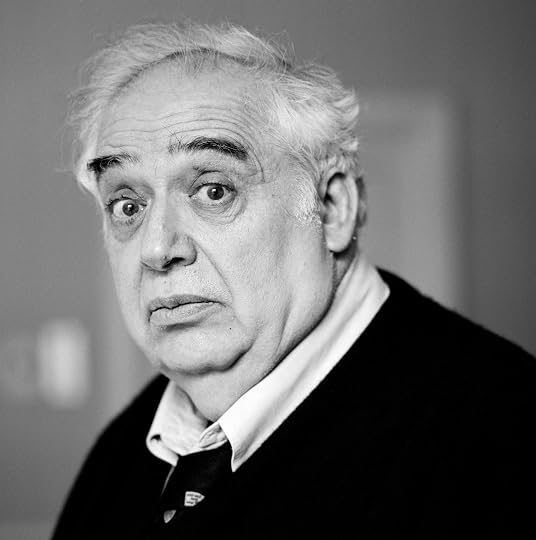
Harold Bloom
1,664 books2,206 followersHarold Bloom was an American literary critic and the Sterling Professor of Humanities at Yale University. In 2017, Bloom was called "probably the most famous literary critic in the English-speaking world." After publishing his first book in 1959, Bloom wrote more than 50 books, including over 40 books of literary criticism, several books discussing religion, and one novel. He edited hundreds of anthologies concerning numerous literary and philosophical figures for the Chelsea House publishing firm. Bloom's books have been translated into more than 40 languages. He was elected to the American Philosophical Society in 1995.
Bloom was a defender of the traditional Western canon at a time when literature departments were focusing on what he derided as the "school of resentment" (multiculturalists, feminists, Marxists, and others). He was educated at Yale University, the University of Cambridge, and Cornell University.
Bloom was a defender of the traditional Western canon at a time when literature departments were focusing on what he derided as the "school of resentment" (multiculturalists, feminists, Marxists, and others). He was educated at Yale University, the University of Cambridge, and Cornell University.
Ratings & Reviews
Friends & Following
Create a free account to discover what your friends think of this book!
Community Reviews
Displaying 1 - 15 of 15 reviews
March 6, 2020
I enjoy Bloom's enthusiasm even if a lot of what he says doesn't make much sense.

May 29, 2023
Picking an author off the top of your head and seeing what Harold Bloom thinks of them is always tempting, but it isn't always the best way of reading him. This is because he is at his best when he is talking about what reading does. And like his other opinions, the crucial question of what reading does changes over time for him too: he has said that its ultimate aim is to heal psychic wounds, presumably by finding your own situation expressed and explained by someone else, thereby granting some form of reconciliation or acceptance; but later in life Bloom says reading can't heal; it certainly can't solve social ills, but rather its main purpose is to raise awareness (in its broadest and subtlest sense). Not a bad aim, but not quite enough to convince both parties to fund education.
Reading Bloom when he's in a good mood and discussing a topic he's interested in is like having a conversation about books with one of the best readers of all time (and by best I mean, with his speed of reading and his memory, it's just not bloody fair! I don't mean his thoughts about books are the best, or that viewing books in that way even makes sense). You get to hear what someone thinks about a book he's read hundreds of times; he is really smart despite what you may think of him and ffs you don't have to agree with his taste; and his whole way of thinking is comparative: one book is inevitably going to bring up other books and other topics, both good and bad, and that's a way of thinking that always felt natural to me. A book's "good"ness is based off of how much it is does, how much it provokes thought and comparison. I used to talk about bands in this way with my friends. There's something un-academic and straightforward in talking about what you like & why. Having a lot of experience with the art being discussed is never a bad thing.
This book however, first & foremost, is a compilation—that is, it is essays taken from books or intros he's done in the past and edited into the current volume with the purview of American lit. For someone who has combed the library stacks for the Chelsea House editions for which Bloom has written intros on almost every writer conceivable, many of the passages here will not be new. It has been shrewdly edited by Mr Mikics, and his introduction shows him to be a man who gets Bloom. I imagine the Yale legend had one more book under contract when he died, and this served as a good way to fill it out. Mikics included authors that would address the acusations against Bloom for his racism & sexism—we find black authors like Zora Neale Hurston, Toni Morrison, Ralph Ellison, Jay Wright and James Baldwin. There are plenty of female authors too, most notable Ursula K. Leguin, who recieves a glowing passage here by Bloom. He finds her to be the best fantasy writer of all time, better than Tolkien, and this goes against the common gripe about him that he never considered sci-fi and other forms of lit.
All that is fair enough but one is sure to be disappointed in certain descriptions. We go to criticism on a certain author to discuss that author's books and subject matter and anything else that is relevant. Too often Bloom slips into his Anxiety of Influence mode where, of the 5 pages dedicated to a major writer, 4.5 of them are about how said author is a blend or modification or evasion of another author. The AoI trope is a good one, but it isn't helpful to see a writer only in terms of his precursors, esp. in the highly exoteric way Bloom does it. I imagine, and he had said as much, that he was called upon, or paid, to write quick summaries of a writer and this is what came out. Meaning, he wasn't quite prepared to say give a definitive summary of someone who many academicians have devoted their entire career into studying. It makes sense why it happens, but it doesn't help. Kierkegaard, Thomas Hardy, and most notably for me, the Bible, unfortunately fall into this category.
This book is most useful simply for the list of writers. If one were to read only the writers on the list, one would have a really good sense of America, I believe. Our history is here, imaginative and social, and while many popular or contemporary writers are missing you'd have a lifetime's worth of quality lit plus some really cool comparisons, such as the line he traces from Moby Dick to Invisible Man and Blood Meridian. The diversity of thought, as well as all other distinctions, is undoubtedly represented, but if you want the best of Bloom you'll have to look elsewhere.
Reading Bloom when he's in a good mood and discussing a topic he's interested in is like having a conversation about books with one of the best readers of all time (and by best I mean, with his speed of reading and his memory, it's just not bloody fair! I don't mean his thoughts about books are the best, or that viewing books in that way even makes sense). You get to hear what someone thinks about a book he's read hundreds of times; he is really smart despite what you may think of him and ffs you don't have to agree with his taste; and his whole way of thinking is comparative: one book is inevitably going to bring up other books and other topics, both good and bad, and that's a way of thinking that always felt natural to me. A book's "good"ness is based off of how much it is does, how much it provokes thought and comparison. I used to talk about bands in this way with my friends. There's something un-academic and straightforward in talking about what you like & why. Having a lot of experience with the art being discussed is never a bad thing.
This book however, first & foremost, is a compilation—that is, it is essays taken from books or intros he's done in the past and edited into the current volume with the purview of American lit. For someone who has combed the library stacks for the Chelsea House editions for which Bloom has written intros on almost every writer conceivable, many of the passages here will not be new. It has been shrewdly edited by Mr Mikics, and his introduction shows him to be a man who gets Bloom. I imagine the Yale legend had one more book under contract when he died, and this served as a good way to fill it out. Mikics included authors that would address the acusations against Bloom for his racism & sexism—we find black authors like Zora Neale Hurston, Toni Morrison, Ralph Ellison, Jay Wright and James Baldwin. There are plenty of female authors too, most notable Ursula K. Leguin, who recieves a glowing passage here by Bloom. He finds her to be the best fantasy writer of all time, better than Tolkien, and this goes against the common gripe about him that he never considered sci-fi and other forms of lit.
All that is fair enough but one is sure to be disappointed in certain descriptions. We go to criticism on a certain author to discuss that author's books and subject matter and anything else that is relevant. Too often Bloom slips into his Anxiety of Influence mode where, of the 5 pages dedicated to a major writer, 4.5 of them are about how said author is a blend or modification or evasion of another author. The AoI trope is a good one, but it isn't helpful to see a writer only in terms of his precursors, esp. in the highly exoteric way Bloom does it. I imagine, and he had said as much, that he was called upon, or paid, to write quick summaries of a writer and this is what came out. Meaning, he wasn't quite prepared to say give a definitive summary of someone who many academicians have devoted their entire career into studying. It makes sense why it happens, but it doesn't help. Kierkegaard, Thomas Hardy, and most notably for me, the Bible, unfortunately fall into this category.
This book is most useful simply for the list of writers. If one were to read only the writers on the list, one would have a really good sense of America, I believe. Our history is here, imaginative and social, and while many popular or contemporary writers are missing you'd have a lifetime's worth of quality lit plus some really cool comparisons, such as the line he traces from Moby Dick to Invisible Man and Blood Meridian. The diversity of thought, as well as all other distinctions, is undoubtedly represented, but if you want the best of Bloom you'll have to look elsewhere.

December 7, 2019
'The American Canon' is both more and less than promised. Bloom wrote untold numbers of critical reviews of American authors, and so no one volume can hope to provide more than a snippet of those writings. Bloom, and editor David Mikics, have chosen whom to review and whom to include in the book. Bloom, as the foremost lit. critic of our time, will inevitably have his favorites, not just what authors deserve membership in the American canon, but which pieces deserve praise.
Having read roughly 40% of the authors represented in the book, almost all prose writers, I could at least to a certain extent compare notes with Bloom. Problem is, the format of the chapters are such that in many cases only a couple of works are even discussed. So the chapters by no means pretend to give the reader Bloom's opinion of the broad range of a writer's work. The chapter on Eudora Welty does not mention 'Delta Wedding,' or any of her other novels.
There are many instances where Bloom and I disagree on the "canonical' quality of a given author's work, for example Hemingway's 'The Sun Also Rises' (Bloom) vs. 'A Farewell to Arms' (me). Bloom doesn't mention Carson McCullers' 'A Member of the Wedding,' to me her second best book. 'Soldiers' Pay' struck me as one of Faulkner's best but goes unmentioned in the chapter on this author.
But such differences are to be expected.
Bloom does seem to enjoy violence in his literature as evidenced by considerable space given to violent works in general, and in particular his high praise for 'Blood Meridian,' mentioned time and again throughout the collection, not just in the chapter on Cormac McCarthy. He goes so far as to declare that the killing represented on virtually every page of that novel is "not gratuitous." I agree with Bloom that one of the main characters, perhaps the main character in the book, is the landscape, which McCarthy describes in unmatched, painterly (to use an Updikean term), even moving detail.
On the other hand, I appreciated knowing which authors Bloom felt were, or were not, deserving of canonical status, e.g., Roth not Updike (I knew this before opening this volume). But where are Wallace Stegner, Sarah Orne Jewett, E.L. Doctorow? Either edited out of the volume for space, or not considered worthy.
Bloom also provides readers with considerable analysis and rationale for his designation of an author and his or her books as "permanent" or canonical, but it seemed to me that he did this unevenly, sometimes applying a phrase or two, sometimes going into quite some depth to explain himself.
David Mikics has taken on a daunting task winnowing down a massive body of critical work into a little more than 400 pages. It was worth the read, and I do recommmend the book. Be aware that such a collection should be seen as a beginning of a great literary journey not the last word.
Having read roughly 40% of the authors represented in the book, almost all prose writers, I could at least to a certain extent compare notes with Bloom. Problem is, the format of the chapters are such that in many cases only a couple of works are even discussed. So the chapters by no means pretend to give the reader Bloom's opinion of the broad range of a writer's work. The chapter on Eudora Welty does not mention 'Delta Wedding,' or any of her other novels.
There are many instances where Bloom and I disagree on the "canonical' quality of a given author's work, for example Hemingway's 'The Sun Also Rises' (Bloom) vs. 'A Farewell to Arms' (me). Bloom doesn't mention Carson McCullers' 'A Member of the Wedding,' to me her second best book. 'Soldiers' Pay' struck me as one of Faulkner's best but goes unmentioned in the chapter on this author.
But such differences are to be expected.
Bloom does seem to enjoy violence in his literature as evidenced by considerable space given to violent works in general, and in particular his high praise for 'Blood Meridian,' mentioned time and again throughout the collection, not just in the chapter on Cormac McCarthy. He goes so far as to declare that the killing represented on virtually every page of that novel is "not gratuitous." I agree with Bloom that one of the main characters, perhaps the main character in the book, is the landscape, which McCarthy describes in unmatched, painterly (to use an Updikean term), even moving detail.
On the other hand, I appreciated knowing which authors Bloom felt were, or were not, deserving of canonical status, e.g., Roth not Updike (I knew this before opening this volume). But where are Wallace Stegner, Sarah Orne Jewett, E.L. Doctorow? Either edited out of the volume for space, or not considered worthy.
Bloom also provides readers with considerable analysis and rationale for his designation of an author and his or her books as "permanent" or canonical, but it seemed to me that he did this unevenly, sometimes applying a phrase or two, sometimes going into quite some depth to explain himself.
David Mikics has taken on a daunting task winnowing down a massive body of critical work into a little more than 400 pages. It was worth the read, and I do recommmend the book. Be aware that such a collection should be seen as a beginning of a great literary journey not the last word.

May 11, 2020
A collection of masterful essays on the most consequential American authors.

March 27, 2020
I enjoyed much about the book, a wide-ranging survey of most of the great American authors, beginning with the beatified Emerson. Bloom traced the influence of Emerson, of Hawthorne, of Twain and Henry James, well into the 20th Century. He declined to find much of influence or value in Poe, a judgment with which I vehemently disagree (Poe created enduring motifs whole cloth from a tortured imagination - that he was a mediocre poet does not make him less of an imaginative one). He did not give Baldwin his due, seemingly pigeonholing him as the fruit of the intersection of his race and his sexuality, an irony considering how Bloom and his reputation struggled mightily in the twilight of his life from the inroads of the silly dogmas of intersectionality. He certainly played favorites, and any scholar of American literature is going to have varied opinions of Hart Crane and Mark Twain and a variety of authors whom Bloom mentioned little or not at all. Bloom is a fine scholar of European literature but notably managed to keep discussion of European antecedents - aside of course from Shakespeare and Dostoevsky- to a minimum. On the whole an impressive achievement, an exhortation of sorts, perhaps a benediction, from an aging (and now dead) Bloom to continue to cherish a literary and poetic tradition that is uniquely American.

May 9, 2020
22. The American Canon by Harold Bloom. Whether or not you agree with Bloom’s criticisms of what he asserts are our leading American writers, you can hardly deny the power of his intellect, sensibility and transparency of communication. The essays on Whitman and Dickinson are outstanding. Whitman is undeniably our greatest genius as a poet, if not as a thinker. Dickinson, however, is credited with a brilliant intellect veiled with a unique style whose minimalism can disguise the philosophical import of her thinking. Bloom, using many of her poems as examples, reveals her rebellious nature and the gleeful pleasure she took in her self-knowledge of her mastery. Unfortunately, the men of letters that she sought as mentors were ones who recognized her as a double agent and deliberately cut her off at the knees. Literary society was not ready for a woman who exhibited self-confidence demonstrated by these poems. Ultimately, Dickinson took refuge in seclusion, showing her work to a few acolytes such as her sister-in-law who took the responsibility after Dickinson’s death to champion her work. One contemplates the satisfaction Dickinson would take in today’s acclimation of her talent. Bloom’s erudite summation serves as recrimination to her own era. Bloom reveres Emerson as the lynch pin of American literature: not its greatest poet, but its exemplary essayist. Bloom’s focus on Emerson requires one to take a harder look at the Sage of Concord, accepted as a dominant figure like George Washington, unassailable on their pedestals. Bloom’s list does not merely focus on writers he likes, but includes those that made an impact, sometimes underserved like Poe whom he rightly eviscerates. He also recognizes the unfortunate comedian in Twain who let that demon loose to ruin the conclusion to the splendid Huckleberry Finn. Twain’s prediliction for broad humor often undercut his cynical irony . He achieved wide popularity, but often that over-shadowed the seriousness of purpose in Huck Finn, his major work. Bloom’s take on Huck is contrary to the common view by Hemingway and Salinger, two writers clearly under Twain’s influence in their coming-of-age novels .Forging on, I found the essay on Wharton carefully focused on her strengths and best work. Occasionally, Bloom chooses obscure examples instead of what is clearly a writer’s masterful and well-known piece. Except for Miniver Cheever, I’m not that familiar with the work of Edwin Arlington Robinson, but I soon will be having ordered his collected poems. The examples Bloom uses charmed me especially lines from Luke Havengal. Bloom skids through Dreiser neglecting what I find intriguing: how awkward a wordsman Dreiser was but he had a knack for choosing contemporary topics: prostitution, murder—you could envision him today as a talented screen writer. In Cather, he doesn’t mention my favorite The Song of the Lark. Instead veering from his tendency to choose the neglected, he highlights the overly familiar My Antonia. Frost and Williams get a rather perfunctory treatment, but he is ravished by Stevens who I have always suspected of word infatuation and possibly saying nothing while putting on a vivid sideshow. A telling essay on Eugene O’Neill correctly convicts him of lacking rhetorical complexity and zeros in on the fact that the plays embody one subject: O’Neill himself, but that is what provides their power—the authors vision of the doomed family. Bloom dismisses Fitzgerald as a minor talent as do It. His estimation of Faulkner matches my own in considering As I Lay Dying his major work, though he overlooks my second favorite The Hamlet in favor of Light in August which I would rank third. In any event, Bloom appreciates Faulkner’s immense gift, not just for epics, but for humor. Hart Crane’s notable command of language receives a bow as do his nods to mentors like Melville and Shelley. There’s a current rejection of enhanced vocabulary: Crane’s detractors favor unadorned speech and ignore Crane’s masterly use of lyric and the epic reach of poems like The Bridge. Crane is a priest of diction, images flowing sensuously as the great river itself. “My word I poured,” he says in The Broken Tower and one recognizes the experience of being overtaken. Bloom credits Crane as having”the spiritual conviction of Dante.”unseals her earth/and lifts love in its shower.” Bloom identifies the native lyricism of Hemingway’s prose as well as his early poetry which Stevens insisted was his real métier. In his short stories, Hemingway joins the panorama of the greats: Turgenev, Maupassant, Joyce, Chekhov None of his novels approach the stories eminence thought The Sun Also Rises is a contender. A highly interesting essay on Tennessee Williams finds Bloom ranking him as one of America’s top dramatists “the most articulate and adequate” he says situating Williams above O’Neill, Wilder, Albee and Kushner and crediting his major works as Cat on a Hot Tin Roof, The Glass Menagerie and A Streetcar Named Desire. Bloom evaluates James Baldwin’s essays over his fiction citing the sermon-like Go Tell It On the Mountain and The Fire Next Time. Flannery O’Connor is revered as the most original story writer since Hemingway. A Good Man is Hard to Find remains one of O’Connor’s masterpieces. Her other memorable stories include Everything That Rises Must Converge and my own favorite, second to Good Man, Revelation. Bloom also mentions favorably the novel The Violent Bear it Away, though I don’t think longer fiction was ever her métier. Of modern poets, James Merrill rates high marks as he ought along with the flawed visionary Merwin and Ashbery whom Bloom identifies as the heir of Whitman. I am further pleased to note that Bloom agrees with my view that Song of Solomon is Toni Morrison’s fictional apex. However, that Bloom includes Roth on his list and not Bellow mystifies me Surely nothing of Roth’s narcissistic fiction approaches the level of Bellow’s Humboldt’s Gift—the first real argument I have with Bloom’s selection. I won’t argue about Cormac McCarthy. Bloom correctly focuses on Blood Meridian, though I would give equal billing to the dystophian The Road—which may have been written after Bloom composed this essay. Bloom admires DeLillo’s chilly narratives more than I do and I put Pynchon in a similar category. But overall, one can’t deny the importance of The American Canon and Bloom’s astute and erudite take on our literary traditions.

January 11, 2021
Harold Bloom's writing on almost every subject always fascinated me, so I was highly interested in this latest, the first I'd read since his death. However, this isn't new work, it's more on a Bloom anthology, pieces culled from other books and works Prof. Bloom had previously published. Nevertheless, if someone wished to know more of his thought, perhaps prompted to do so in light of his demise, this is an easy starting point.

March 3, 2020
Bloom, as usual, obfuscates to educate.
Read
October 15, 2021This book is challenging to read; not so much as an intellectual challenge, but as an aesthetic one. Bloom's erudition is a mixture of classicism, Romanticism and Gnosticism. So, his inferences regarding the philosophic intent of his canonical writers go beyond what anyone can humanly bear. As Bloom says in Genius [comparing literary to divine inspiration], the canonical is what cannot be touched by human hands, because its origin is divine. As we perceive it, it destroys us. Analogously, as Bloom explains, the Gnostics saw creation as the annihilation and absorption of the Creator. The world, therefore, is kenoma or wasteland. This bleak void is what compels originality, truly seen. We cannot want to see Creation, God and humanity as these writers do--and yet somehow, we cannot evade the vision. They are heresiarchs or prophets; like Shakespeare, they go beyond us to become us. I admire the erudition and persistence, represented in this anthology of criticism collected over fifty years. The clarity is stimulating. But I still need to step back and take in a broader view; one that admits the possibility of an interpretation that swerves from Bloom's cosmic catastrophe and becomes something that exists within the frame and pulse of a personal experience of the American literary imagination.

December 16, 2019
Don't take "canon" too seriously. This is a walk through, not an argument for who does and doesn't belong in some "before you die" list or musts. Except for Thoreau and Emerson, this is all fiction, drama, and poetry. Only Le Guin falls into science fiction and fantasy. You won't find mystery writers or anything Western except McCarthy. Except for Nabokov, I think all these folks are US born.
Although the contents list authors, each chapter mostly focuses on a particular work. The poems are quoted extensively, enough to give a sense of an author's style. Running through chapters is Bloom's "influence" of Emerson and Whitman, which recalls his early book Anxiety of Influence.
Only a couple authors -- Robert Hayden, A R Ammons, and Jay Wright were unfamiliar to me. Some of the authors
Anyone looking for their favorites will start saying, where's Updike? Cheever? Singer? Wallace? Kinnell? Miller? Bradbury? Or some other worthy. They reside patiently on library or home shelves and you are not precluded from reading them instead or too.
Although the contents list authors, each chapter mostly focuses on a particular work. The poems are quoted extensively, enough to give a sense of an author's style. Running through chapters is Bloom's "influence" of Emerson and Whitman, which recalls his early book Anxiety of Influence.
Only a couple authors -- Robert Hayden, A R Ammons, and Jay Wright were unfamiliar to me. Some of the authors
Anyone looking for their favorites will start saying, where's Updike? Cheever? Singer? Wallace? Kinnell? Miller? Bradbury? Or some other worthy. They reside patiently on library or home shelves and you are not precluded from reading them instead or too.

November 21, 2020
I enjoyed snippets of what is written. A large part of being a good essayist is not losing your audience. You, yourself, know what you are saying, but do your readers know? Even if the target audience is very educated it doesn’t excuse overly pretentious nonsensical digressions. There are many instances when I realized I had no idea what was being conveyed. I have 16 years of postgraduate education, and if I’m struggling to find the overarching trajectory of where the author’s idea is going I can imagine many other readers are experiencing the same thing.

November 8, 2024
I know better than to turn to Harold Bloom for literary criticism, but for some reason, every couple years, I try again. He's the one critic everyone knows, but I'm convinced that no one actually reads him. They just say they do. Not because he's too challenging to understand, but because he doesn't have anything particularly interesting or insightful to say. When he's right, others have said it better.
If you wanted to use this book's table of contents to get a list of American authors you should read, then it might provide some value in your literary journey. But that's about it.
If you wanted to use this book's table of contents to get a list of American authors you should read, then it might provide some value in your literary journey. But that's about it.
February 18, 2026
An up and down read. Lots of difficult to follow some of the vocabulary unnecessarily dense(learned?). I have mixed feeling about literary criticism--our need to find patterns forces us to look at stories and patterns of a theme across time rather than a self-contained work. Sometimes the stories themselves get lost in the search for patterns. But no work stands alone and finally, allusions are fun to make.

March 19, 2020
Utterly dull!!!

October 18, 2025
Decent analysis of many great American writers. That being said, I am amazed that Bloom was married to a woman rather than someone of the same likely bedroom proclivities.
Displaying 1 - 15 of 15 reviews