One of the things that Harold Pinter does really well is leaving the story to the reader's imagination. In my experience reading his work, it has always centered around the theme of infidelity (maybe because HP was known for his open affairs with other women while he was married to his first wife?)
This is the third play I've read from him (the others being The Lover and The Collection) and the only thing that makes me not like them at times is the subject matter.
What makes Pinters plays so great, is that he leaves amazing "pauses" that give you something to think about. His plays are most significant for what they don't say, verbally - but rather, for what we know isn't being said at all.
You, the reader, will not always be told what the characters are thinking but you will feel what they are feeling and you will understand the complexity of things that aren't being said and how difficult some things are to talk about.
This play, in particular, is about Andy (who is dying), his wife Bel, his two sons, and their daughter Brigitte.
Andy rehashes with his wife their mutual affair with a woman named Maria, who he insists on having at his deathbed, although Bel does not want her there.
His sons are heartless about their father's dying and cycle their way around their estrangement from him by talking about who he was and how they knew him.
"Be careful of Silvio, he gets violent sometimes." Fred warns.
Later: "Did you go to Silvio's memorial today?" Fred asks.
"Yes, I did," Jake says, "Everybody was there...Did you know him?"
"Like a father," Fred finishes.
Jake and Fred are inconsiderate to the world around them and are oftentimes referred to by their father as, "sponging parasitical pair of ponces." This does not, however, leave Andy un-criticized. In fact, most of the play he is speaking sarcastically to and with his wife and is mocked by his sons in other scenes.
Vincent Canby wrote in the NYTimes that Jake and Fred are "articulate slobs."
"They amuse themselves with drink and by spinning rude vaudeville routines about the unloving, penny-pinching mediocrity they call Dad only in derision." (Canby)
While Andy is not a bad man, his dysfunctional family chooses not to consider him as either good nor bad. They know that he is a "good" man, in the fundamental societal meaning of the word. He spent his life as a devoted public servant who worked diligently and never intentionally caused harm to anyone - but does his family love him?
"And still we call him Dad."
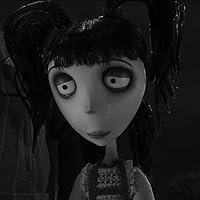
The daughter, Brigitte, is only visible to the audience, and speaks in poems about the world being blanketed only by moonlight. I only learned later, when trying to decipher the meaning to this play, that Brigitte is dead.
Brigitte is rarely spoken of and only once is there a "flashback" scene of her (still, it is never openly mentioned that she is dead) where she tells her older brothers that she wants to be a Physiotherapist and help heal people in pain, she even assists her older brother, Fred, with a tremendous neck pain. She is seen as the only sympathetic and forgiving member of the family, "the confused ghost of a 17-year-old...who now creeps around the house trying not to wake her parents" (Canby)
Despite the crude, distasteful comments that Andy makes towards Bel, who remains serene and saintlike, she is not ignorant to her husband and the "lustful, lascivious life" that he led. And even though there is a clear tension between the two, the play is not full of confrontation - exactly the opposite, in fact. The vitriol and insults are given in a sarcastic, heartfelt way that the reader knows is full of scorn and unsaid anger.
Brigitte's role is never fully established, nor is her message, which makes me uncomfortable. This is something that Pinter does often, ambiguity, and it is always frustrating to everyone, whether you like it or not.
Moonlight is not a forthright announcement of family dysfunction, but a view of how real dysfunctional families live. Pinter writes through "insinuation, not plot." (Wolf, Variety)
While this is not the best of Pinter's plays, if you are a fan of theatre, of his work, or of disassembling everything you read, than I do recommend it. It is very short and I finished the play in under a half an hour.
Note: This play has the distinguishment of coining the phrase, All will be well. And all manner of things shall be well.