Better known for writing in a variety of other genres, James Agee always thought of himself as essentially a poet. Winner of the Yale Younger Poets competition in 1934 for Permit Me Voyage , Agee was, in the words of editor Andrew Hudgins, "as restless in his poetry as he was later in his prose, exhibiting a variety . . . that we expect from the protean mind that excelled in so many different kinds of writing." Ranging from intense religious sonnets to lyrics for musical comedy, Agee?s verse takes us into the heart of his unique genius, what Robert Fitzgerald called his "sense of being . . . a raging awareness of the sensory field in depth and in detail."
About the American Poets Project Elegantly designed in compact editions, printed on acid-free paper, and textually authoritative, the American Poets Project makes available the full range of the American poetic accomplishment, selected and introduced by today’s most discerning poets and critics.
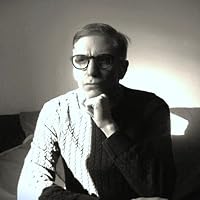
This author, journalist, poet, screenwriter in the 1940s most influenced films in the United States. His autobiographical work won a Pulitzer Prize.
Life Born at Highland Avenue and 15th Street (renamed James Agee Street in 1999) to Hugh James Agee and Laura Whitman Tyler. When Agee was six years of age in 1915, his father died in an automobile accident. From the age of seven, he and his younger sister, Emma, were educated in boarding schools. The most influential of these was located near his mother's summer cottage two miles from Sewanee, Tennessee. Saint Andrews School for Mountain Boys was run by Episcopal monks affiliated with the Order of the Holy Cross, and it was there that Agee's lifelong friendship with an Episcopal priest, Father James Harold Flye, began in 1919. As Agee's close friend and spiritual confidant, Flye was the recipient of many of Agee's most revealing letters.
Agee went to Knoxville High School for the 1924–1925 school year, then travelled with Father Flye to Europe. On their return, Agee moved to boarding school in New Hampshire, entering the class of 1928 at Phillips Exeter Academy. There, he was president of The Lantern Club and editor of the Monthly where his first short stories, plays, poetry and articles were published. Agee was admitted to Harvard University's class of 1932. He was editor-in-chief of the Harvard Advocate.
In 1951 in Santa Barbara, Agee, a hard drinker and chain-smoker, suffered the first two in a series of heart attacks, which ultimately claimed his life four years later at the age of 45. He was buried on a farm he owned at Hillsdale, New York.
Career After graduation, he wrote for Fortune and Time magazines, although he is better known for his later film criticism in The Nation. In 1934, he published his only volume of poetry, Permit Me Voyage.
In the summer of 1936, Agee spent eight weeks on assignment for Fortune with photographer Walker Evans living among sharecroppers in Alabama. Agee turned the material into a book entitled, Let Us Now Praise Famous Men (1941). It sold only 600 copies before being remaindered.
In 1942, Agee became the film critic for Time and, at one point, reviewed up to six films per week. Together, he and friend Whittaker Chambers ran "the back of the book" for Time. He left to become film critic for The Nation. In 1948, however, he quit both magazines to become a freelance writer. One of his assignments was a well-received article for Life Magazine about the great silent movie comedians, Charles Chaplin, Buster Keaton, Harold Lloyd and Harry Langdon, which has been credited for reviving Keaton's career. As a freelance in the 1950s, he continued to write magazine articles while working on movie scripts, often with photographer Helen Levitt.
Agee was an ardent champion of Charlie Chaplin's then extremely unpopular film Monsieur Verdoux (1947), which has since become a film classic. He was also a great admirer of Laurence Olivier's Henry V and Hamlet, especially Henry V, for which he actually published three separate reviews, all of which have been printed in the collection Agee on Film.
Legacy Let Us Now Praise Famous Men, ignored on its original publication in 1941, has been placed among the greatest literary works of the 20th Century by the New York School of Journalism and the New York Public Library.
I did not give this five stars because I was expecting a lot more when it comes to poetry by Agee. Being a huge fan of his beautiful and often very poetic prose I was expecting poetry that blew me away but a lot of it was somewhat underwhelming to me. That being said there are definitely some absolute gems in here.
The primary themes of his poetry collection Permit Me Voyage are of God, human sin, and pain. I see the poetry collection as an educated and idealistic young man that is deeply aware of the pain and sin in the world, longing for God. He talks very boldly and honestly of every pain of earth, from the death of infants to people in power exploiting the vulnerable, and his answer to all the questions that these awful things evoke is best summed up in the words from his poem "Dedication:" "God hear us God spare us God have mercy upon us" In his collection, through a powerful, often contemptuous, voice reminiscent of the righteous anger of the minor prophets, he asks all the questions that an observant human soul might ask of pain and sin and shows that he holds the answer to be God in His mercy. And in this collection he formally requests God to take him into the arms of His mercy while admitting that he too like the rest of humanity is human and will fail. The final poem in that collection is a beautiful love poem to God and it uses a brilliant phrase from the great poet Hart Crane in the poem "Voyages:" "permit me voyage, love, into your hands." While Hart Crane wrote that to his sailor lover Emil Opffer, Agee is writing it to capital "L" Love, itself. Agee writes it as a request for God who is Love itself to take him into His hands. By using the language of Hart Crane he is invoking the same kind of frantic desire that Voyages expresses but instead of for another human it is a desire for God.
His poetry is often relatively hard to understand but very lyrical. He writes a lot of Sonnets and is evidently well read in both English and American poetry. He has a wide range, some of the poems are brutal and some are just hilarious. He clearly writes with a mind for emotion often working to evoke emotion in the reader too whether sensual longing, wrath, or plain silliness. I feel like Agee is best in his more prose-like poetry where he is free to write with his loose and relentless writing style but that is not to say that he is not a skilled sonnet writer. I just feel like he expresses ideas and paints pictures much more vividly when he is more free of meter.
The book itself is an absolute treasure and I am very thankful to have such a complete collection of James Agee's poetry with the thoughtful intro essay by the editor Andrew Hudgins. You likely will be able to appreciate this book most if you are already a fan of Agee, a spiritual person, and a lover of the poetic tradition.
Death never swoops us round with sudden black. No Gothic grin greets our affrighted groans. Our flesh alone cries out, upon his rack, Of snapping cartilage and splintering bones. Secret and happy as a summer dawn Blooms and releases its reluctant light Full blown along the dusk, our souls are drawn Beneath the vast and unrelenting night.
Even now, a serpent swells my living skull: Its thirsty tongue, struck barbed through my brain, Sucks all the cherished beauty dry and dull As dust: and faint and failing is the pain. I murdered joy, that your love might abide: A precious skeleton lies at my side.
Ick. They should not have published this book of (mostly awful) poetry. Agee like a fair number of poets before him chooses God and sex and death as his central themes. But he is an awful poet. Plus many of these poems were written before he was even 25 and thus are written without much firsthand knowledge about any of these topics.
Agee is clearly a talented poet. His technical skills are quite extraordinary, as are his outspoken political and social sentiments. He wrote for another age, the twentieth century caught in the grip of explosive nationalism, expanding communism, and an America that had yet to come to terms that it was not living according to its ideals. He is ferociously pessimistic about humanity as a result...it is easy to see where this comes from. The clearest indication of his bleak outlook can be seen throughout his "Sonnets": "So it begins, Adam is in his earth Tempted, and fallen, and his doom made sure Oh, in the very instant of his birth: Whose deathly nature must all things endure." (40)
"Dedication" is a wonderful piece of literature. In it Agee summarizes the particular elements of humanity and culture. It is a thought provoking and singular work. The ending two paragraphs of the prose/poem/prayer deserve specific citation: "Not one among us has seen you, nor shall in our living time, and may never. We fumble all blind on the blind dark, even who would know you and who believe your name. Our very faith and our desire, which are our whole and only way in truth, they delude us always, and ever will, into false and previous visions, and into wrong attributions. Little as we know beyond the sill of death do we know your nature: and the best of our knowledge is but a faith, the shade and shape of a dream, and all pretense.
Nevertheless have mercy upon us O great Lord God: for as there is some mercy, and the imaginations of nobleness, even in this your creature, surely, surely there is mercy in you and honor and sweet might: and a way to hear, and a way to see, and wisdom, and careful love. Have mercy upon us therefore, O deep God of the void, spare this race in this your earth still in our free choice: who will turn to you, and again fail you, and once more turn as ever we have done. And make the eyes of our hearts, and the voice of our hearts in speech, honest and lovely within the fences of our nature, and a little clear." (15)
There are multiple, scathing critiques of American society. None is more damning than "Period Pieces from the Mid-Thirties" and all provoke a wounded pride in the American reader. He changes language with the narrator of the poems in this series - all brilliantly and shockingly awful. Perhaps the most shocking of the bunch, written in 1945 about America's new place in the world, reads as follows: "O my poor country I have so much hated, How can I hate you now your doom is near? How still revile a soul so desolated, Or hold your hideous sickness else but dear? Ruthless in force but not so ruthless quite To use it wholly in the last thin chance History affords, against enternal night; Kindly, but so roared round by circumstance Of greed, self-love, self-righteousness, the shattered World groans its anguished last against your ear, And you are merely petulant and flattered; Incurable through pity, love guilt, fear: A dying grandmother, babbling of a ball: Taker her just so, Death; leter her enjoy it all." (125)
My favorite poem, too long to quote here, is "Ann Garner." It is the story of a woman, who buries her child, and essentially comes to see her dead child in the natural surroundings of the world around the child's grave, ultimately passing away into that nature herself. This poem is the definition of terrible beauty.
Permit Me Voyage is a masterpiece of literature. It is a wonderful yearning of a poem, draped in religious language and finery, and serves as the best summary of this volume. "Take these who will as may be: I Am careless now of what they fail: My heart and mind discharted lie And surely as the nerved nail
Appoints all quarters on the north So now it designates him forth My sovereign God my princely soul Whereon my flesh is priestly stole:
Whence forth shall my heart and mind To God through soul entirely bow, Therein such strong increase to find In truth as is my fate to know:
Small though that be great God I know I know in this gigantic day What God is ruined and I know How labors with Godhead this day:
How from the porches of our sky The crested glory is declined: And hear with what translated cry The stridden soul is over shined:
And how this world of wildness through True poets shall walk who herald you: Of whom God grant me of your grace To be, that shall preserve this race.
From “orgiastic inkfest” to sibylline censure of nationalism and social ills, Agee’s poetry runs the gamut from maudlin to magnificent.
“. . . [T]he Writer, on new paper, after bleeding Out his brains about the Time That’s Out Of Joint, Reduced all language to the ultra-special pleading Of the Period’s ineffable Point!” —“Draft Lyrics for ‘Candide’”
James Agee always considered his true vocation to be poetry, and it's difficult to think of another writer whose work lends itself so readily to painterly interpretation. In 2009, DeLoss McGraw, a visual artist who often finds inspiration in the thematics and imagery of authors, had a show at Nashville's Main Library as part of the centennial celebration of Agee's birth, focusing on Agee's essay "Knoxville: The Summer of 1915" and two additional poems. Surely many denizens of that city, and others, have been re-drawn, so to speak, to Andew Hudgins' selection of Agee's verse for the Library of America. How the loss-obsessed Agee would have loved his interpreter's first name, who says the exhibit was his attempt to recreate on canvas "the gentle sway of Agee's verse."
And now a new copy has arrived, inscribed by the editor. For more about the highly and rightfully lauded Hudgins, please see my review here of AMERICAN RENDERING: http://www.goodreads.com/review/show/..., originally published in BOOKPAGE, 2010. Likewise a brief item about POETS ON PROZAC, in which Hudgins and Chase Twichell, recently a winner of the Kingsley Tufts Award, are singled out: http://www.goodreads.com/review/show/.... "Sayonara to Marijuana" indeed!
I like James Agee best for his compelling social commentary on the inequities of rich and poor. Although all his work is beautiful, my favorite is this little poem:
Temperance Note: and Weather Prophecy
Watch well The Poor in this late hour Before the wretched wonder stop: Who march among a thundershower And never touch a drop.
I am once again teaching Let Us Now Praise Famous Men this semester and so I thought I'd get back to Agee's poetry. Whether I read his rambling, yet inspired prose or his poetry, I find that the images he creates through his masterful execution of the English language are breathtaking and I find myself reading certain lines over and over again. There is no one like him.
Most of these poems were strange, forgettable affairs. There were only two I really liked... You would think someone capable of writing such beautiful prose would be able to write beautiful poems. Apparently not.