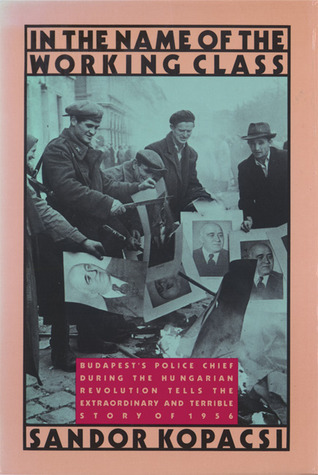
Sandor Kopacsi was Budapest’s chief of police when the Hungarian Revolution erupted on October 23, 1956. In a dramatic shift of allegiance, Kopacsi–once a Communist true believer–refused to obey orders to disperse demonstrators demanding liberalization of the regime and withdrawal of Russian troops from Hungary. Arrested several weeks later for his role in the uprising and ultimately convicted, Kopacsi survived to write this extraordinary memoir, the only blow-by-blow insider’s account of the first armed challenge to Soviet domination of Eastern Europe. The result is a riveting, eloquent and unique account of Hungary's heroic bid for freedom written by a man who witnessed and participated in the revolution.
Guido Crepax (born Crepas, 1933-2003) was an Italian illustrator and comics author, considered one of the most influential cartoonists of the second half of the 20th century. He is notably remembered for his sophisticated black and white art, as well as his dreamlike storylines, often involving a significative dose of erotism. Crepax was born and raised in Milan, the son of famed cellist Gilberto Crepas. He graduated in Architecture in 1958, then started a successful career in illustration, mostly for advertisement and record covers. Crepax began making comics in the middle of the 60's, particularly for the Italian magazine 'Linus'. He is best known for the Valentina series of stories. Originally introduced as a side character in the sci-fi story The Curve of Lesmo (1965), Valentina is a fictional photographer from Milan. She is a cultured strong woman, with sophisticated art and fashion tastes, left-wing political ideals and a marked sexual curiosity. Valentina quickly became a staple of European counterculture of the late 60s and early 70s. The series run for thirty years, until 1995, with the titular character aging in real time. Over the decades Crepax created other female characters, such as Belinda, Anita, Bianca, Giulietta, usually used as protagonists of erotic comics. His other works include a number of comic book adaptations of erotic novels, like Emmanuelle, Justine, Venus in Furs, Story of O, as well as horror classics Dracula, Frankenstein, Dr. Jekyll and Mr. Hyde.
L'ultimo capodanno prima del covid l'ho passato a Budapest. Città bellissima, ma non ho capito l'odio ungherese per il passato comunista, essendo passati ormai così tanti anni. Dopo aver letto questo libro ho capito molto, molto di più. Non so se Kopácsi sia un narratore naturale o abbia avuto l'aiuto di qualche ghost writer, ma la storia è appassionante. Sua moglie, Ibolya, è una spalla eccellente, l'eroina femminile in un mondo di uomini. Il libro racconta dell'ascesa del figlio di un operaio che si unì alla resistenza contro l'occupazione nazista, entrò poi nel partito comunista ungherese e, dopo una breve carriera in polizia, diventò questore di Budapest. Tutto va bene finché i sovietici non decidono il contrario: invadono la nazione, dichiarano gli ex-eroi traditori, uccidono e arrestano. Kopácsi sopravvive ed esce di prigione grazie all'amnistia generale decretata da Nikita Chruščëv, ma viene ancora ostracizzato, tanto che alla fine preferisce emigrare in Canada, dove vive la figlia. Il suo libro-testimonianza è uno dei memoir più importanti sulla storia dell'Ungheria.
This entire review has been hidden because of spoilers.
This book gives a great insight into the Hungarian Revolution. It was a bit hard to follow but the first hand experience from the author made it very interesting despite the writing style.
It was nice to flesh out my understanding and add colour to an episode of history that makes a brief appearance in every 20th century European history. It turns out the Hungarian revolution of 1956 was a lot more harrowing and a had a lot more going on than I realised before.
What’s incredible to me when reading these history books is the horrors of the Soviet communist system. How many horrible actions and perversions of truth were sanctioned in the name of socialism and revolution. Equally as crazy to me is how the brave souls who stood against these, also acted in the name of communism and socialism. How even when being condemned to death they didn’t repudiate the base idea of socialism, just the Soviet variant. It really highlights how intoxicating ideology can be. Boggles my brain.
I don’t think visions of the future or political programs should be shoehorned into individual ideologies or have to argue they are the true version of whatever ideal they espouse. Instead I think they should be celebrated for their fluidity, the moral weight of their character and their ability to improve the lives of the people they affect. What was beautiful about imre nagys position was his defence of the intrinsic dignity of Hungarian life and criticism of a political system that degraded the moral fabric of the society it acted upon. He asserted that socialist morality couldn’t exist without humanism, id argue the use of the word socialist is mute, morality can’t exist without humanism. You don’t need to hold a fixed ideological position to recognise this.
This review went a bit wild wow, tangent alert. This book is maybe a bit dry in its writing but I learnt a lot about an interesting episode of history, and it got my brain thinking about the power of ideology and highlighted once again the terror of the Soviet system.
943.9052/KOP - well written and first-hand account of the Revolution of 1956 by the man who was Budapest's chief of police at the time - intelligent, relatively objective - a good read
Incredible revelation of the Soviet mentality. Sad, Sad, Sad.
Excellent book gives you a great insight into the Hungarian Revolution and the time around 1955. It is not easy to follow sometime but is a great reading!