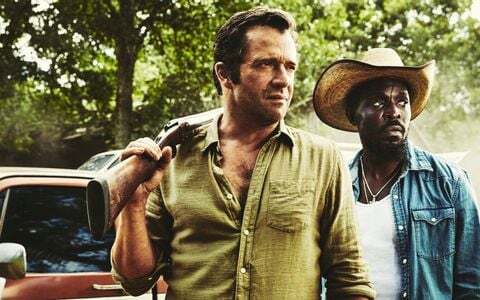
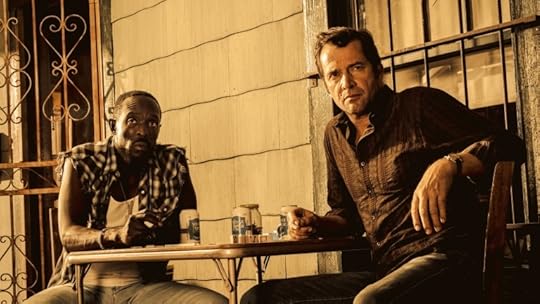
Sometimes it happens with me. I’m reading a book, often two, even enjoying both, and I come across a book I’d read long ago and--zap!--I’m in reread mode. Hence my reintroduction to Mucho Mojo. Not that the rereading wasn’t in order. It’s next in line to be adapted for the TV series on the Sundance Channel, and it had always been my favorite Hap and Leonard anyway. Reason enough. So this reading just happened ahead of schedule. But, even though it was second entry in the series, Mucho Mojo was my first exposure to both the East Texas duo and their creator, and the first of anything, particularly a positive experience, often magnifies in your memory. I started this book wondering if it was as good as I remembered. Turns out it was better.
The first in the series, Savage Season, was intended to be a one-off, so there were other characters to service. Subsequent novels are a search for new facets within your now-familiar heroes. But a true sequel, four years later yet, allowed Lansdale the leisure to dive deeper in every conceivable way. It’s all there: story, character, atmosphere, philosophy, romance, friendship, prejudice, action--and much more.
The setup is perfect. It allows us to step right into their lives. Leonard inherits a house from a recently deceased uncle, and with Hap at his side, they discover a child’s skeleton. Hap--white, straight, Liberal--wants to call the police immediately. Leonard--black, homosexual, Republican--knows what will follow: a sensational crime in the poor, black section of town; blame Uncle Chester and close the case. But Hap has concerns that Uncle Chester might just be guilty, and Leonard knows for a certainty that such a thought is impossible. The best friends confront conflicting impulses without cliché, and still have each other’s back while working their way through what turns out to be a more far-reaching and appalling series of crimes.
This novel is dense--in a good way. Dense usually means having to wade through unending tangents or excessive wordage to, hopefully, discover the good stuff. In Mucho Mojo, density represents substance. From beginning to end, you are in East Texas with the boys, and will regret having to leave when the novel ends.