

What do you think?

نوتردام النيل
ولدت سكولاستيك موكاسونجا عام 1956 في رواندا لعائلة تنتمي لعرق التوتسي. في عام 1960 انتقلت عائلتها إلى منطقة غير آمنة من رواندا، وفي عام 1973 طردت من المدرسة وتم نفيها إلى بوروندي. استقرت في فرنسا عام 1992، وفي عام 1994 (عام التطهير العرقي للتوتسي من قِبَل الهوتو، حيث قتل أكثر من مليون شخص في مئة يوم) علمت أن سبعة وعشرين شخصا من عائلتها كانوا قد ذُبحوا، من بينهم أمها
تدور أحداث الرواية في ليسيه "نوتردام النيل" التي تطل على البحيرة والمنبع المفترض للنهر وتطفو فوق قمة صخرية ارتفاعها 2500 متر "أقرب ما تكون من السماء" كما تحب أن تذكر الأم الرئيسة. وهذه المدرسة الداخلية الكاثوليكية للبنات تشكل النخبة النسوية الجديدة لرواندا؛ ففيها نجد فخر ذرية الدبلوماسيين والشخصيات الشهيرة والعسكريين من ذوي النفوذ، وحيث الغالب الأعم منهم من الهوتو، وبعضهم توتسي.
عبر هذا السياق قدمت سكولاستيك موكاسونجا كتابة وصفية على نحو دقيق، شعرية ولاذعة في آن، تستنطق من خلال عالم الليسيه توترات بلد في حالة معاناة
قامت الكاتبة بتعرية كل المجتمع: الأم الرئيسة بصرامتها وقسوتها؛ القس المقيم الذي يستغل سلطته؛ والمدرسون سواء الفرنسيون أو البلجيك الذين يغضون الطرف عن أي شيء حتى لو كان قتلا أو إبادة لتظل العلاقات السياسية على ما يرام
فازت الرواية بجائزة "رينودو" وهي أحد أرفع الجوائز الأدبية في فرنسا
تدور أحداث الرواية في ليسيه "نوتردام النيل" التي تطل على البحيرة والمنبع المفترض للنهر وتطفو فوق قمة صخرية ارتفاعها 2500 متر "أقرب ما تكون من السماء" كما تحب أن تذكر الأم الرئيسة. وهذه المدرسة الداخلية الكاثوليكية للبنات تشكل النخبة النسوية الجديدة لرواندا؛ ففيها نجد فخر ذرية الدبلوماسيين والشخصيات الشهيرة والعسكريين من ذوي النفوذ، وحيث الغالب الأعم منهم من الهوتو، وبعضهم توتسي.
عبر هذا السياق قدمت سكولاستيك موكاسونجا كتابة وصفية على نحو دقيق، شعرية ولاذعة في آن، تستنطق من خلال عالم الليسيه توترات بلد في حالة معاناة
قامت الكاتبة بتعرية كل المجتمع: الأم الرئيسة بصرامتها وقسوتها؛ القس المقيم الذي يستغل سلطته؛ والمدرسون سواء الفرنسيون أو البلجيك الذين يغضون الطرف عن أي شيء حتى لو كان قتلا أو إبادة لتظل العلاقات السياسية على ما يرام
فازت الرواية بجائزة "رينودو" وهي أحد أرفع الجوائز الأدبية في فرنسا
228 pages, Paperback
First published January 1, 2012
About the author
Scholastique Mukasonga
22 books383 followersBorn in Rwanda in 1956, Scholastique Mukasonga experienced from childhood the violence and humiliation of the ethnic conflicts that shook her country. In 1960, her family was displaced into the under-developed Nyamata. In 1973, she was forced to leave the school of social assistance in Butare and flee to Burundi. She settled in France in 1992. The genocide of the Tutsi swept through Rwanda 2 years later. Mukasonga learned that 27 of her family members had been massacred. Twelve years later, Gallimard published her autobiographical account Inyenzi ou les Cafards, which marked Mukasonga's entry into literature. Her first novel, Notre-Dame du Nil, won the Ahamadou Kourouma prize and the Renaudot prize in 2012.
(from http://www.citylights.com/info/?fa=ev...)
(from http://www.citylights.com/info/?fa=ev...)
Ratings & Reviews
Friends & Following
Create a free account to discover what your friends think of this book!
Community Reviews
Displaying 1 - 30 of 536 reviews

November 15, 2021
Update: Shortlisted for 2022 Republic Of Consciousness prize for Small Presses
Shortlisted for The Warwick Prize for Women in Translation 2021
Translated by: Melanie L. Mauthner
"Rwanda is the land of Death. You remember what they used to tell us in catechism: God roams the world, all day long, but every evening He returns home to Rwanda. Well, while God was traveling, Death took his place, and when He returned, She slammed the door in his face. Death established her reign over our poor Rwanda. She has a plan: she’s determined to see it through to the end. I’ll return when the sunshine of life beams over our Rwanda once more. I hope I’ll see you there again.”
I’ve been postponing this review because I was hoping to write something more detailed but I seem to lack the time. I am 7 reviews behind and I do not expect life to get less busy in the near future.
Our lady of the Nile was my introduction to Rwanda’s history and it was a perfect place to start. The novel is set in a high school for Rwandan girls before the famous genocide of the Tutsi. However, tensions between the Huti and the Tutsi are always present in the pages of this book and lead to a dramatic ending. In addition to that conflict, other themes explored are the traditional roles of women in the society, the grandeur of white people living in Rwanda and the dirty way the colonizers manipulated the relationship between the two tribes to suit their needs.
"Now I’m certain there’s a monster lurking inside every human being: I don’t know who awoke him in Rwanda."
Each chapter had a character as its focus and it felt like a collection of stories with common elements. I felt the characters were realistic and well-rounded and the plot was interesting and informative. A novel that is worth reading and its shortlisting for The Warwick Prize for Women in Translation 2021 is well deserved.
Shortlisted for The Warwick Prize for Women in Translation 2021
Translated by: Melanie L. Mauthner
"Rwanda is the land of Death. You remember what they used to tell us in catechism: God roams the world, all day long, but every evening He returns home to Rwanda. Well, while God was traveling, Death took his place, and when He returned, She slammed the door in his face. Death established her reign over our poor Rwanda. She has a plan: she’s determined to see it through to the end. I’ll return when the sunshine of life beams over our Rwanda once more. I hope I’ll see you there again.”
I’ve been postponing this review because I was hoping to write something more detailed but I seem to lack the time. I am 7 reviews behind and I do not expect life to get less busy in the near future.
Our lady of the Nile was my introduction to Rwanda’s history and it was a perfect place to start. The novel is set in a high school for Rwandan girls before the famous genocide of the Tutsi. However, tensions between the Huti and the Tutsi are always present in the pages of this book and lead to a dramatic ending. In addition to that conflict, other themes explored are the traditional roles of women in the society, the grandeur of white people living in Rwanda and the dirty way the colonizers manipulated the relationship between the two tribes to suit their needs.
"Now I’m certain there’s a monster lurking inside every human being: I don’t know who awoke him in Rwanda."
Each chapter had a character as its focus and it felt like a collection of stories with common elements. I felt the characters were realistic and well-rounded and the plot was interesting and informative. A novel that is worth reading and its shortlisting for The Warwick Prize for Women in Translation 2021 is well deserved.

March 23, 2023
The lycée of Our Lady of the Nile is located high, twenty-five hundred meters above sea level. It focuses on training and educating the future female elite of Rwanda. The school offers Christian education that suits the female elite of a country that underwent "a social revolution, freeing it from the injustices of a feudal system." Most of the girls in the lycée belong to the ethnic majority, that is the Hutu. They tend to think of themselves as 'real Rwandans.'
However, Tutsi girls are also allowed to study in this prestigious institution. The quota constitutes two Tutsi for twenty pupils. Despite the evident disbalance, coexistence between the majority and the minority seems possible. It is fragile and vulnerable yet workable, at least in the beginning. In the first chapters, the Tutsi girls, albeit they have to cope with certain injustices and verbal aggression, can hope for a normal future in this country.
As the story unfolds, the mood darkens and non-tolerance becomes more manifest. As violent tendencies, that precursor of the incipient mass crimes, increase, so does the intensity of the narration. The ominous tension becomes nearly palpable.
The novel looks into the time that preceded the Rwandan genocide against the Tutsi. Knowing what the future holds makes the narrated episodes sharper and more acute. Mundane, such as lessons in Math, Religion, Health and Hygiene, History, Geography, Physics, French, English, and Kinyarwanda, is much like the upper layer beneath which destructive energy is amassing, threatening to reach a dangerous level.
The author does an excellent job combining the personal stories of the young girls from the lycée and the universal message that goes far beyond Rwanda's realities. The word "cockroaches" comes up several times. This is how some girls in the school see their fellow pupils who are not from the majority of people. We may assume that this is how their parents regard Tutsi. What happens in and around the school follows a well-known sad pattern. The perpetrator blames the victim and claims that they are the real victim. Truth and justice are being repeatedly subverted.
Under certain circumstances, people stop holding themselves to account and start doing hideous things or condoning such things. One day, teachers from the lycée find themselves unable to lend a helping hand to their pupils who are in trouble.
To understand these events we must look back and take into account the post-colonial legacy. One of the characters notes, "History meant Europe, and Geography, Africa." But Africa also has its own complicated history, closely interconnected with geography, to be sure, that cannot be pushed aside, cannot simply be brushed under the carpet. The novel provides a few glimpses into what the European colonizers were doing to local peoples over the decades.
To say the very least, they contributed to creating the dividing lines between different groups of people living in Rwanda. They used contradictions between the locals to practice the old principle 'divide and rule.' The existing fragmentation played into their hands.
The novel never states this explicitly, the responsibility of the former white colonizers can, however, be read between the lines.
Our Lady of the Nile is not a literary masterpiece, with some of its characters lacking depth, but it delivers and encourages the reader to learn more about that dark period. I also liked that the exact year when the story takes place was not mentioned. Thus, the concept of time loses its power in the face of tragedy that is about to play out.
However, Tutsi girls are also allowed to study in this prestigious institution. The quota constitutes two Tutsi for twenty pupils. Despite the evident disbalance, coexistence between the majority and the minority seems possible. It is fragile and vulnerable yet workable, at least in the beginning. In the first chapters, the Tutsi girls, albeit they have to cope with certain injustices and verbal aggression, can hope for a normal future in this country.
As the story unfolds, the mood darkens and non-tolerance becomes more manifest. As violent tendencies, that precursor of the incipient mass crimes, increase, so does the intensity of the narration. The ominous tension becomes nearly palpable.
The novel looks into the time that preceded the Rwandan genocide against the Tutsi. Knowing what the future holds makes the narrated episodes sharper and more acute. Mundane, such as lessons in Math, Religion, Health and Hygiene, History, Geography, Physics, French, English, and Kinyarwanda, is much like the upper layer beneath which destructive energy is amassing, threatening to reach a dangerous level.
The author does an excellent job combining the personal stories of the young girls from the lycée and the universal message that goes far beyond Rwanda's realities. The word "cockroaches" comes up several times. This is how some girls in the school see their fellow pupils who are not from the majority of people. We may assume that this is how their parents regard Tutsi. What happens in and around the school follows a well-known sad pattern. The perpetrator blames the victim and claims that they are the real victim. Truth and justice are being repeatedly subverted.
Under certain circumstances, people stop holding themselves to account and start doing hideous things or condoning such things. One day, teachers from the lycée find themselves unable to lend a helping hand to their pupils who are in trouble.
To understand these events we must look back and take into account the post-colonial legacy. One of the characters notes, "History meant Europe, and Geography, Africa." But Africa also has its own complicated history, closely interconnected with geography, to be sure, that cannot be pushed aside, cannot simply be brushed under the carpet. The novel provides a few glimpses into what the European colonizers were doing to local peoples over the decades.
To say the very least, they contributed to creating the dividing lines between different groups of people living in Rwanda. They used contradictions between the locals to practice the old principle 'divide and rule.' The existing fragmentation played into their hands.
The novel never states this explicitly, the responsibility of the former white colonizers can, however, be read between the lines.
Our Lady of the Nile is not a literary masterpiece, with some of its characters lacking depth, but it delivers and encourages the reader to learn more about that dark period. I also liked that the exact year when the story takes place was not mentioned. Thus, the concept of time loses its power in the face of tragedy that is about to play out.

March 1, 2022
There are few modern tragedies as horrific as the 1994 Rwandan genocide. The standard North Atlantic perspective tends to focus on the brutal events themselves and the lack of humanitarian intervention by global powers. Our Lady of the Nile, Melanie Mauthner's translation of Notre-Dame du Nil by Scholastique Mukasonga, focuses instead on the Rwandans and is set at an all-girls boarding school in the 1970s. The setting allows Mukasonga to create a microcosm of Rwandan society - a mix of Tutsi, Hutus, and Europeans - at the rough midpoint between Rwandan independence and the genocide. The evil stain of colonialism colors much of the story and the thinking of the Rwandans themselves. The Othering between the Tutsi and Hutus, inherited from the Belgians, is more than nascent. This isn't a perfect book, as the schoolgirls feel more like types than fully realized characters, but Mukasonga's depiction of the Rwandan mindset is nuanced and powerful.

October 22, 2021
Skilfully subverting conventional girls’ school stories, Scholastique Mukasonga’s Our Lady of The Nile foreshadows the 1994 Rwandan genocide. Mukasonga’s setting’s a convent school, Our Lady of the Nile, perched way up in the hills, its position’s a concrete reminder of its equally elevated social status. Catering for the daughters of the Rwandan elite, the convent school aims to prepare them for "glittering futures" as wives of the rich and powerful. Once the school’s intake was dominated by Rwandan Tutsis, the minority group singled out by Rwanda’s Belgian colonisers as somehow ethnically superior to the majority Hutu population. But it’s the 1970s, Rwanda’s a republic, and a series of brutal pograms have displaced the cattle-rearing Tutsi, now the Hutu – the people of the hoe – are firmly in the ascendent. Despite this a scattering of Tutsi girls are still allowed to enrol at the boarding-school, although their lives there are far from easy.
In Mukasonga’s episodic narrative, the declining, poorly-run school’s a Rwanda in miniature, her characters representing significant aspects of its fragmented, patriarchal society and troubled politics. Through the experiences of a group of older pupils, from the Tutsis Veronica and Virginia to the Hutu Gloriosa, a virulently prejudiced, queen bee, Mukasonga charts Rwanda’s complicated history. She exposes the violent legacy of colonialism; the hypocrisy and misogyny of its Catholic church; and the delusional, irresponsible attitudes of its former colonisers. Gloriosa’s a particularly chilling figure because she’s so obviously a stand-in for the ruling generation who’ll be instrumental in future genocide.
Mukasonga's drawing from her own life here, before she fled Rwanda eventually settling in France, but her approach is distanced, often oblique, at times admirably subtle and restrained. She makes few concessions to readers unfamiliar with Rwanda’s past. Despite originally publishing this in France, there’s no sense Mukasonga’s pre-packaged or simplified anything for a European audience - a reminder, perhaps, that this is Europe’s history too, the traumatic, bloody outcome of years of colonialist intervention. I thought Mukasonga’s style was a little unbalanced at first but, after the slightly ironic opening followed by some rather dry exposition, it evened out and I found myself unexpectedly gripped. There’s an atmosphere of menace hanging over this as it gradually builds towards its terrifying climax but it’s not unrelentingly downbeat - mainly because Mukasonga's an excellent storyteller. She deftly blends elements of tragedy with the absurd or satirical, and she's careful to feature a handful of sympathetically-drawn characters to root for.
Archipelago Books edition, ably translated by Melanie Mauthner.
In Mukasonga’s episodic narrative, the declining, poorly-run school’s a Rwanda in miniature, her characters representing significant aspects of its fragmented, patriarchal society and troubled politics. Through the experiences of a group of older pupils, from the Tutsis Veronica and Virginia to the Hutu Gloriosa, a virulently prejudiced, queen bee, Mukasonga charts Rwanda’s complicated history. She exposes the violent legacy of colonialism; the hypocrisy and misogyny of its Catholic church; and the delusional, irresponsible attitudes of its former colonisers. Gloriosa’s a particularly chilling figure because she’s so obviously a stand-in for the ruling generation who’ll be instrumental in future genocide.
Mukasonga's drawing from her own life here, before she fled Rwanda eventually settling in France, but her approach is distanced, often oblique, at times admirably subtle and restrained. She makes few concessions to readers unfamiliar with Rwanda’s past. Despite originally publishing this in France, there’s no sense Mukasonga’s pre-packaged or simplified anything for a European audience - a reminder, perhaps, that this is Europe’s history too, the traumatic, bloody outcome of years of colonialist intervention. I thought Mukasonga’s style was a little unbalanced at first but, after the slightly ironic opening followed by some rather dry exposition, it evened out and I found myself unexpectedly gripped. There’s an atmosphere of menace hanging over this as it gradually builds towards its terrifying climax but it’s not unrelentingly downbeat - mainly because Mukasonga's an excellent storyteller. She deftly blends elements of tragedy with the absurd or satirical, and she's careful to feature a handful of sympathetically-drawn characters to root for.
Archipelago Books edition, ably translated by Melanie Mauthner.

June 19, 2024
A haunting, harrowing, lovely novel. I will not even try to do it justice. Set at a Catholic boarding school in Rwanda sometime around 1980, a deep sense of place and history gives the book a quiet magic; a groundedness that by turns softens and heightens the undercurrent of violence pulling the story forward. What begins as a coming-of-age slowly comes into focus as a chilling political allegory.
The kind of book that takes half as long to read as you think it will, and yet somehow seems to encompass twice as much as a book its length should be able to.
The kind of book that takes half as long to read as you think it will, and yet somehow seems to encompass twice as much as a book its length should be able to.

November 4, 2021
O genocídio de Ruanda, ocorrido em 1994, é um dos episódios mais tristes e brutais sobre os que já li. Cerca de 1 milhão de pessoas foram mortas em apenas 100 dias. Além disso, ter visitado o país em 2019 me permitiu ver de perto como esse acontecimento está marcado profundamente na sociedade, ao mesmo tempo que Ruanda vem demonstrado um forte exemplo de reestruturação social e econômica no continente africano.
Scholastique Mukasonga é ruandesa de origem Tutsi e, apesar de ter conseguido fugir e sobreviver ao genocídio, perdeu diversos membros da sua família. Em “Nossa Senhora do Nilo, Mukasonga se distancia do centro dos acontecimentos de 1994 e nos leva a um liceu católico de meninas, situada nos altos das montanhas da bacia do Nilo. Estamos anos antes ao massacre, mas já conseguimos enxergar no próprio microcosmo da escola como a segregação de etnias foi sendo construída no seio da sociedade ruandesa.
O liceu adota um sistema de cotas, em que 10% das vagas são separadas para as alunas da etnia Tutsi, a qual foi vítima dos crimes e das perseguições que culminaram no genocídio. As meninas, que vivem em uma sociedade machista e patriarcal, devem se submeter a rígidas regras impostas pelas freiras que controlam a instituição. As garotas Tutsis ainda sofrem com a crescente discriminação e desprezo das suas colegas.
A igreja é retratada de mãos atadas - e às vezes até apoiando o regime dos Hutus - em uma situação de extrema injustiça. A preocupação era muito mais de tentar catolicizar os ruandesas, tornando abomináveis qualquer culto às antigas tradições, do que proteger quem necessitava. Também é possível notar a inércia dos antigos colonizadores, representados pelos professores da instituição, diante do perigo que parte de suas alunas enfrentava. É um reflexo do comportamento dos países desenvolvidos no início da década de 90.
Vale pontuar que o livro não é focado apenas em acontecimentos. A autora se dedica a apresentar ao leitor características da sociedade ruandesa daquela época. Uma ótima introdução ao cenário que culminou na guerra civil e no genocídio de 10% da população ruandesa.
Nota: 9/10
Leia mais resenhas em https://www.instagram.com/book.ster/
Scholastique Mukasonga é ruandesa de origem Tutsi e, apesar de ter conseguido fugir e sobreviver ao genocídio, perdeu diversos membros da sua família. Em “Nossa Senhora do Nilo, Mukasonga se distancia do centro dos acontecimentos de 1994 e nos leva a um liceu católico de meninas, situada nos altos das montanhas da bacia do Nilo. Estamos anos antes ao massacre, mas já conseguimos enxergar no próprio microcosmo da escola como a segregação de etnias foi sendo construída no seio da sociedade ruandesa.
O liceu adota um sistema de cotas, em que 10% das vagas são separadas para as alunas da etnia Tutsi, a qual foi vítima dos crimes e das perseguições que culminaram no genocídio. As meninas, que vivem em uma sociedade machista e patriarcal, devem se submeter a rígidas regras impostas pelas freiras que controlam a instituição. As garotas Tutsis ainda sofrem com a crescente discriminação e desprezo das suas colegas.
A igreja é retratada de mãos atadas - e às vezes até apoiando o regime dos Hutus - em uma situação de extrema injustiça. A preocupação era muito mais de tentar catolicizar os ruandesas, tornando abomináveis qualquer culto às antigas tradições, do que proteger quem necessitava. Também é possível notar a inércia dos antigos colonizadores, representados pelos professores da instituição, diante do perigo que parte de suas alunas enfrentava. É um reflexo do comportamento dos países desenvolvidos no início da década de 90.
Vale pontuar que o livro não é focado apenas em acontecimentos. A autora se dedica a apresentar ao leitor características da sociedade ruandesa daquela época. Uma ótima introdução ao cenário que culminou na guerra civil e no genocídio de 10% da população ruandesa.
Nota: 9/10
Leia mais resenhas em https://www.instagram.com/book.ster/

February 23, 2022
Shortlisted for the Republic of Consciousness Prize 2022
Another intriguing choice from the Republic of Consciousness list, which may just be my favourite, though it is the most conventional book on the list in form. Mukasonga is a Rwandan Tutsi who has lived in France since 1992. The setting is an elite girls' school in the hills of Rwanda, near one of the sources of the Nile, in the late 70s.
The story is told by an omniscient narrator, and the main characters are Virginia and Veronica, two of the few Tutsi pupils allowed to attend the school, and Gloriosa, a militant Hutu political activist whose scheming and deception brings about the violent conclusion, which foreshadows the 1994 genocide. The gradual transition from a simple rites of passage story into an allegory of the wider conflict is cleverly handled.
Highly recommended.
Another intriguing choice from the Republic of Consciousness list, which may just be my favourite, though it is the most conventional book on the list in form. Mukasonga is a Rwandan Tutsi who has lived in France since 1992. The setting is an elite girls' school in the hills of Rwanda, near one of the sources of the Nile, in the late 70s.
The story is told by an omniscient narrator, and the main characters are Virginia and Veronica, two of the few Tutsi pupils allowed to attend the school, and Gloriosa, a militant Hutu political activist whose scheming and deception brings about the violent conclusion, which foreshadows the 1994 genocide. The gradual transition from a simple rites of passage story into an allegory of the wider conflict is cleverly handled.
Highly recommended.

December 6, 2022
God roams the world, all day long, but every evening He returns home to Rwanda. Well, while God was traveling, Death took his place, and when He returned, She slammed the door in his face. Death established her reign over our poor Rwanda. She has a plan: she’s determined to see it through to the end. I’ll return when the sunshine of life beams over our Rwanda once more. I hope I’ll see you there again.
Set inside an “elite” Catholic all-girls school on the hills of Scholastique Mukasonga’s native Rwanda in the 1970s, this novel recounts ordinary and not so ordinary lives of its students, foreshadowing a senseless genocide which took place some years later.
Although the subject matter of this novel is very dark, there is a surprisingly light feeling. The narrator’s tone is both serious and humorous. There is a slightly nonlinear narrative, where each chapter reads as a vignette, a sketch or a short story. There are stories of social and racial stereotyping, colonial trauma, abuse as well as coming of age, friendship, memories of childhood, dreams of youth.
Rather than fully realized individuals, the characters are portrayed as types of individuals. Although it is something I tend to dislike in literature, this kind of abstract characterization works very well in this fable-like novel. Even the characters’ adopted names - Virginia, Veronica, Gloriosa, Immaculée, Modesta - are very allusive or even allegorical.
It is also a story that, unfortunately, repeats itself throughout history and even now when you are reading this sentence. Can we humans do any better?
I feel very grateful as this novel offered me an insightful introduction into Rwanda’s history and culture. A thought-provoking and inspiring read. I look forward to reading more of Scholastique Mukasonga’s œuvre.
4/5
Set inside an “elite” Catholic all-girls school on the hills of Scholastique Mukasonga’s native Rwanda in the 1970s, this novel recounts ordinary and not so ordinary lives of its students, foreshadowing a senseless genocide which took place some years later.
Although the subject matter of this novel is very dark, there is a surprisingly light feeling. The narrator’s tone is both serious and humorous. There is a slightly nonlinear narrative, where each chapter reads as a vignette, a sketch or a short story. There are stories of social and racial stereotyping, colonial trauma, abuse as well as coming of age, friendship, memories of childhood, dreams of youth.
Rather than fully realized individuals, the characters are portrayed as types of individuals. Although it is something I tend to dislike in literature, this kind of abstract characterization works very well in this fable-like novel. Even the characters’ adopted names - Virginia, Veronica, Gloriosa, Immaculée, Modesta - are very allusive or even allegorical.
It is also a story that, unfortunately, repeats itself throughout history and even now when you are reading this sentence. Can we humans do any better?
I feel very grateful as this novel offered me an insightful introduction into Rwanda’s history and culture. A thought-provoking and inspiring read. I look forward to reading more of Scholastique Mukasonga’s œuvre.
4/5

February 14, 2016
A story of a Catholic girls school in the mountains of Rwanda, set apart from society but not protected from the racial tensions that lead up to the genocide. The conflicts between Tutsi and Hutu have always existed, and at the time this novel is set, the Belgian government has attempted to mandate mixing by requiring a certain percentage of Tutsi girls to be at the school. But they are not treated the same, at least not by the others.
Other issues are raised, such as the idealization of the Tutsi female by white men, confusing expectations of morality between men and women, and how far rising tensions go.
This novel is also a great example of the difference of a novel set in a country written about people living in that country by a person from that country. Thanks to Rima for the recommendation! Next for Rwanda I'm reading We Wish to Inform You That Tomorrow We Will Be Killed with Our Families, so I'm expecting it to only go downhill from here.
This book was discussed it on Episode 053 of the Reading Envy podcast.
Other issues are raised, such as the idealization of the Tutsi female by white men, confusing expectations of morality between men and women, and how far rising tensions go.
This novel is also a great example of the difference of a novel set in a country written about people living in that country by a person from that country. Thanks to Rima for the recommendation! Next for Rwanda I'm reading We Wish to Inform You That Tomorrow We Will Be Killed with Our Families, so I'm expecting it to only go downhill from here.
This book was discussed it on Episode 053 of the Reading Envy podcast.

August 7, 2014
There is no better lycee than Our Lady of the Nile.
Nor is there any higher...."We're so close to heaven,"
whispers Mother Superior....
The school year coincides with the rainy season, so
the lycee is often wrapped in clouds. Sometimes, not
often, the sun peaks through and you can see as far
as the big lake, that shiny blue puddle down in the
valley.
It's a girls' lycee. The boys stay down in the capital.
The reason for building the lycee so high up was to
protect the girls, by keeping them far away from the
temptations and evils of the big city. Good marriages
await these young lycee ladies, you see. And they must
be virgins when they wed - or at least not get pregnant
beforehand. Staying a virgin is better, for marriage
is a serious business. (loc 21)
And so the novel begins (well this is not the precise beginning, but very close). We are introduced to the setting, a girls' school, a high school, to prepare Rwandan girls from elite families for thier future. It is the 1970s in a very young country and the future for most is thought to be marriage to important men, men important to the country's future.
This school is located close to the head of the Nile and near to that site is the Madonna for whom the school is named, Our Lady of the Nile, but Our Lady of the Nile was black; her face was black, her hands were black, her feet were black. Our Lady of the Nile was a black woman, an African woman, a Rwandan woman - and indeed, why not? (loc 60)
In an understated fashion that serves to underscore the simmering hatred that will erupt in an all too real fashion in later years, Mukasonga creates a world where there are classes of Rwandans within the school. Through the words of Gloriosa, a Hutu student, we learn
Two Tutsi for twenty pupils is the quota, and
because of that I know some real Rwandan girls of the
majority people, the people of the hoe, friends of
mine, who didn't get a place in high school. As my
father likes to tell me, we'll really have to get
rid of these quotas one day, it's a Belgian thing.
(loc 285)
Along with this struggle within the African community, there is the cultural struggle to be expected in a new nation caught between influences -- the pull of the European vs the call of the African. The history of the missions vs the call of old ways.
There is so much here in this quiet novel (quiet until the final chapters at least). I found this to be very interesting, providing insights into what came later in the horrific killings. It confirms my wish to read more African fiction.
A copy of this book was provided by the publisher through NetGalley in return for an honest review.
Nor is there any higher...."We're so close to heaven,"
whispers Mother Superior....
The school year coincides with the rainy season, so
the lycee is often wrapped in clouds. Sometimes, not
often, the sun peaks through and you can see as far
as the big lake, that shiny blue puddle down in the
valley.
It's a girls' lycee. The boys stay down in the capital.
The reason for building the lycee so high up was to
protect the girls, by keeping them far away from the
temptations and evils of the big city. Good marriages
await these young lycee ladies, you see. And they must
be virgins when they wed - or at least not get pregnant
beforehand. Staying a virgin is better, for marriage
is a serious business. (loc 21)
And so the novel begins (well this is not the precise beginning, but very close). We are introduced to the setting, a girls' school, a high school, to prepare Rwandan girls from elite families for thier future. It is the 1970s in a very young country and the future for most is thought to be marriage to important men, men important to the country's future.
This school is located close to the head of the Nile and near to that site is the Madonna for whom the school is named, Our Lady of the Nile, but Our Lady of the Nile was black; her face was black, her hands were black, her feet were black. Our Lady of the Nile was a black woman, an African woman, a Rwandan woman - and indeed, why not? (loc 60)
In an understated fashion that serves to underscore the simmering hatred that will erupt in an all too real fashion in later years, Mukasonga creates a world where there are classes of Rwandans within the school. Through the words of Gloriosa, a Hutu student, we learn
Two Tutsi for twenty pupils is the quota, and
because of that I know some real Rwandan girls of the
majority people, the people of the hoe, friends of
mine, who didn't get a place in high school. As my
father likes to tell me, we'll really have to get
rid of these quotas one day, it's a Belgian thing.
(loc 285)
Along with this struggle within the African community, there is the cultural struggle to be expected in a new nation caught between influences -- the pull of the European vs the call of the African. The history of the missions vs the call of old ways.
There is so much here in this quiet novel (quiet until the final chapters at least). I found this to be very interesting, providing insights into what came later in the horrific killings. It confirms my wish to read more African fiction.
A copy of this book was provided by the publisher through NetGalley in return for an honest review.

January 19, 2016
Bringing a surprisingly light touch to the material, Mukasonga investigates the disasters of Rwandan history, building from the colonial period and culminating in the internal strife of genocide in 1994, in the microcosm of an all-girls Catholic school in the 80s. And so ominous political undercurrents are just one thread running beneath a web of other stories -- misplaced veneration of old colonial powers, Rwandan folklore lurking at the fringes of official Christianity, gorillas in the mountains, and even a fantastic tangent on Isis (not ISIS!) worship by perhaps crazed white ex-colonials. Isis tangents are generally to be encouraged, I think, as are folkloric impulses, and the strange religious tensions between the school's namesake black-painted Virgin Mary at the head of the Nile and the old-believers in spirits and rituals are a great backdrop. None of this can ever really explain the perhaps incomprehensible factors that eventually brought about genocide, and Mukasonga doesn't really try to get at a complete picture -- by limiting the the scope to a single school and handful of teenage characters, she's able to keep that thread as a fable on the manipulation of power, but it still leaves me less fully informed than aware of how little I actually know about African history. Regardless, this is a fantastic, funny, intriguing, discomfiting entry point into that conversation.

February 12, 2022
Shortlisted for the 2022 Republic of Consciousness Prize
We’ll soon have a new statue of Our Lady of the Nile, and she’ll be a real Rwandan woman, with the face of the majority people, a Hutu Virgin we’ll be proud of.
Our Lady of the Nile was translated by Melanie L. Mauthner from Scholastique Mukasonga's 2012 original Notre-Dame du Nil, her first novel after two works of non-fiction and a story-collection. It won the 2012 Prix Renaudot (a prize announced the same day as the Prix Goncourt, and which I believe prepares a reserve winner in case the Goncourt chooses the same book.)
The translation was published in 2014 in the US by Archipelego Books and was shortlisted for the Dublin literary prize in 2016. In the UK it was published in 2021 by the small independent press Daunt Publishing, in their Daunt Books Original series (which included the brilliant Winter in Sokcho) and it was Shortlisted for the 2021 Warwick Prize for Women in Translation.
Our Lady of the Nile is set in a boarding school for daughters of the elite in Rwanda in the 1970s:
There is no better lycée than Our Lady of the Nile. Nor is there any higher. Twenty-five hundred meters, the white teachers proudly proclaim. “Two thousand four hundred ninety-three meters,” points out Sister Lydwine, our geography teacher. “We’re so close to heaven,” whispers Mother Superior, clasping her hands together.
The school year coincides with the rainy season, so the lycée is often wrapped in clouds. Sometimes, not often, the sun peaks through and you can see as far as the big lake, that shiny blue puddle down in the valley.
It’s a girls’ lycée. The boys stay down in the capital. The reason for building the lycée so high up was to protect the girls, by keeping them far away from the temptations and evils of the big city. Good marriages await these young lycée ladies, you see. And they must be virgins when they wed – or at least not get pregnant beforehand. Staying a virgin is better, for marriage is a serious business. The lycée’s boarders are daughters of ministers, high- ranking army officers, businessmen, and rich merchants. Their daughters’ weddings are the stuff of politics, and the girls are proud of this – they know what they’re worth. Gone are the days when beauty was all that mattered. Their families will receive far more than cattle or the traditional jugs of beer for their dowry, they’ll get suitcases stuffed full of banknotes, or a healthy account with the Banque Belgolaise in Nairobi or Brussels. Thanks to their daughters, these families will grow wealthy, the power of their clans will be strengthened, and the influence of their lineage will spread far and wide. The young ladies of Our Lady of the Nile know just how much they are worth.
The lycée is very close to the Nile, to its source, in fact. To get there, you follow a rocky trail along the ridgeline. It leads to a flat parking area for the few tourist Land Rovers venturing that far. A sign reads: source of the nile ➙ 200 m. A steep path brings you to a heap of rocks where the rivulet spurts between two stones. The water pools in a cement basin, then dribbles over in a thin cascade and along a little channel, before disappearing down the grassy hillside into the tree ferns of the valley. To the right, a pyramid has been erected, bearing the inscription: source of the nile. cock mission, 1924. It’s not a very tall pyramid: the girls from the lycée can easily touch the broken tip – they say it brings good luck. Yet it’s not the pyramid that draws them to the source. They’re not here to explore; they’re on a pilgrimage. The statue of Our Lady of the Nile looms among the large rocks overhanging the spring. It’s not quite a grotto, although a sheet-metal shelter protects her from the elements. our lady of the nile, 1953, reads the engraved pedestal. It was Monsignor the Vicar Apostolic who decided to erect the statue, in order to consecrate the Nile to the Virgin Mary, despite the King of Belgium persuading the Sovereign Pontiff to consecrate the whole country to Christ the King.
The author has said in an interview in The White Review that the setting is a fictional microcosm of Rwanda in the 1960-1970s, but also based on her own experience and wider societal events:
The novel takes a typical coming-of-age Catholic boarding-school story, complete with petty jealousies, teachers with an unhealthy interest in their charges, arcane rules, sexual-awakening and a villainous alpha-character, and gives it a twist with both the infusion of traditional Rwandan culture and beliefs as well as the allegory of the wider societical ethnic divisions and violence.
The country is many years post-independence but the legacy of colonialism remains strong, particularly at the school, and indeed the highlight of the school year is a rumoured visit from the Belgian queen. French is the school's only approved language (although the girls are bemused when one Belgian teacher uses Flemish), with Kinyarwanda strictly confined to the lessons in that subject, and Swahili banned altogether as a pagan tongue. There are only two Rwandan teachers, the Kinyarwanda teacher, naturally and Sister Lydwine who taught History and Geography. But she made a clear distinction between the two subjects; History meant Europe, and Geography, Africa.
This dual identity runs through the novel, even to the names of the characters. As one of the key characters, Virginia, one of two Tutsi girls in a class of 20 predominantly Hutu pupils introduces herself:
My name is Virginia, my real name is Mutamuriza.
The school is in theory integrated but in practice divided along ethnic lines, with the quota of 2 Tutsi girls out of 20 applied strictly in each class, although opinions differ on whether this is a cap or a floor. Gloriosa, daughter of a senior politician and fervent believer in Hutu Power certainly sees it as the former:
'Two Tutsi for twenty pupils is the quota, and because of that I know some real Rwandan girls of the majority people, the people of the hoe, friends of mine, who didn't get a place in high school. As my father likes to tell me, we'll really have to get rid of these quotas one day, it's a Belgian thing!'
But even this divide is a legacy of colonialism:
There were two races in Rwanda. The whites had said so; they were the ones who had discovered it. They’d written about it in their books. Experts came from miles around and measured all the skulls. Their conclusions were irrefutable. Two races: Hutu and Tutsi also known as Bantu and Hamite. The third race wasn’t even worth mentioning. (The third race a reference to the Batwa)
This is best encapsulated in the eccentric figure of Monsieur de Fontenaille, a decadent former coffee planter (actually based on a real figure who Mukasonga encounted in Burundi) who believes so fervently in the now discredited Hamitic theory (a theory used by the Hutu Power movement to justify expelling the Tutsi back to their ancestral lands) that he worships, literally, Virginia and the other Tutsi girl Veronica as the descendents of ancient Candace Queens.
The novel's plot, and violent ending, ultimately hinges on the statue of the Lady of the Nile. The Lady is black, and strongly appreciated as such by all of the Rwandans, but this was achieved by painting over a statue of a white figure. Gloriosa comes to identify the figure's appearance as a deliberate nod to the Tutsi who previously ruled the country, it's straight and long nose in particular, and is determined to modify the statue's appearance as part of her campaign in favour of the majority people, the people of the hoe.
When her plans go astray she blames it on the hidden presence in the mountains of Inyenzi guerrilas still left over from the 1963 Bugesera Invasion, which prompts violent reprisals, including at the school, by young Hutu militants.
The Inyenzi term is also an important one; originally a non-perjorative terms for the Tutsi rebels (and used by themselves), but the word means cockroaches in Kinyarwanda and became to be used as a term of abuse for all Tutsi people and indeed in the novel Gloriosa uses both terms depending on context. This also was the origin of the name of the author's first, non-fiction, book Inyenzi ou les cafards, translated by Jordan Stump as Cockroaches.
The novel also has an interesting semi-hopeful ending of sorts with the existing regime (including
overthrown by an internal coup (essentially based on the 1973 Rwandan coup), potentially ushering in a slightly better era for the Tutsi people. Although Virginia is unconvinced and makes plans to flee the country, and the modern reader is well aware that the true horror of the 1994 Rwandan genocide is yet to come.
A novel that is deceptively simple on the page, but powerful in its historical resonance and exploration of the complex issues behind those awful events.
We’ll soon have a new statue of Our Lady of the Nile, and she’ll be a real Rwandan woman, with the face of the majority people, a Hutu Virgin we’ll be proud of.
Our Lady of the Nile was translated by Melanie L. Mauthner from Scholastique Mukasonga's 2012 original Notre-Dame du Nil, her first novel after two works of non-fiction and a story-collection. It won the 2012 Prix Renaudot (a prize announced the same day as the Prix Goncourt, and which I believe prepares a reserve winner in case the Goncourt chooses the same book.)
The translation was published in 2014 in the US by Archipelego Books and was shortlisted for the Dublin literary prize in 2016. In the UK it was published in 2021 by the small independent press Daunt Publishing, in their Daunt Books Original series (which included the brilliant Winter in Sokcho) and it was Shortlisted for the 2021 Warwick Prize for Women in Translation.
Daunt Books Publishing is an independent publisher based in London. Founded in 2010, we grew out of Daunt Books, an independent chain of bookshops in London and the South-East. We publish the finest and most exciting new writing in English and in translation, whether that’s literary fiction – novels and short stories – or narrative non-fiction including essays and memoir. We also publish modern classics, reviving authors who have been overlooked and publishing them in bold editions with introductions from the best contemporary writers.
In 2020 we launched Daunt Books Originals, an imprint for bold and inventive new writing in English and in translation.
Our Lady of the Nile is set in a boarding school for daughters of the elite in Rwanda in the 1970s:
There is no better lycée than Our Lady of the Nile. Nor is there any higher. Twenty-five hundred meters, the white teachers proudly proclaim. “Two thousand four hundred ninety-three meters,” points out Sister Lydwine, our geography teacher. “We’re so close to heaven,” whispers Mother Superior, clasping her hands together.
The school year coincides with the rainy season, so the lycée is often wrapped in clouds. Sometimes, not often, the sun peaks through and you can see as far as the big lake, that shiny blue puddle down in the valley.
It’s a girls’ lycée. The boys stay down in the capital. The reason for building the lycée so high up was to protect the girls, by keeping them far away from the temptations and evils of the big city. Good marriages await these young lycée ladies, you see. And they must be virgins when they wed – or at least not get pregnant beforehand. Staying a virgin is better, for marriage is a serious business. The lycée’s boarders are daughters of ministers, high- ranking army officers, businessmen, and rich merchants. Their daughters’ weddings are the stuff of politics, and the girls are proud of this – they know what they’re worth. Gone are the days when beauty was all that mattered. Their families will receive far more than cattle or the traditional jugs of beer for their dowry, they’ll get suitcases stuffed full of banknotes, or a healthy account with the Banque Belgolaise in Nairobi or Brussels. Thanks to their daughters, these families will grow wealthy, the power of their clans will be strengthened, and the influence of their lineage will spread far and wide. The young ladies of Our Lady of the Nile know just how much they are worth.
The lycée is very close to the Nile, to its source, in fact. To get there, you follow a rocky trail along the ridgeline. It leads to a flat parking area for the few tourist Land Rovers venturing that far. A sign reads: source of the nile ➙ 200 m. A steep path brings you to a heap of rocks where the rivulet spurts between two stones. The water pools in a cement basin, then dribbles over in a thin cascade and along a little channel, before disappearing down the grassy hillside into the tree ferns of the valley. To the right, a pyramid has been erected, bearing the inscription: source of the nile. cock mission, 1924. It’s not a very tall pyramid: the girls from the lycée can easily touch the broken tip – they say it brings good luck. Yet it’s not the pyramid that draws them to the source. They’re not here to explore; they’re on a pilgrimage. The statue of Our Lady of the Nile looms among the large rocks overhanging the spring. It’s not quite a grotto, although a sheet-metal shelter protects her from the elements. our lady of the nile, 1953, reads the engraved pedestal. It was Monsignor the Vicar Apostolic who decided to erect the statue, in order to consecrate the Nile to the Virgin Mary, despite the King of Belgium persuading the Sovereign Pontiff to consecrate the whole country to Christ the King.
The author has said in an interview in The White Review that the setting is a fictional microcosm of Rwanda in the 1960-1970s, but also based on her own experience and wider societal events:
In 1973, when I was seventeen, Tutsi ‘intellectuals’, civil servants and students were expelled from their institutions. I had to go into exile and take refuge across the border in Burundi. At the time, I was only familiar with my village in Nyamata, my high school, Notre-Dame de Cîteaux in Kigali, and the social-work school in Butare. My memories of Notre-Dame de Cîteaux, which was supposed to train the country’s female elite, were the starting point for Our Lady of the Nile.
I wanted to take advantage of this new genre to rid myself of the poison that had ruined my adolescence, by inventing characters to whom I could lend some of my story. But I transposed them to an imaginary school, a microcosm of Rwanda in the 1960s and 1970s, when the country instituted a regime of ethnic apartheid and extended a Belgian colonial system that entrusted education exclusively to Catholic missionaries. (Belgium ruled the former German colony of Ruanda-Urundi under a 1922 mandate from the League of Nations.) This mass Christianisation profoundly uprooted Rwandan culture, causing the demonisation of ancient beliefs and the ostracisation of their guardians as sorcerers.
This is what I wanted to describe through the conflicts, hopes, illusions and despairs of the young girls in my novel, sequestered in their high school at an altitude of 2,500 metres during the rainy season that corresponds to a school year. I had no idea that I was obeying the old rules of seventeenth-century French tragedy – unity of place, unity of time.
The novel takes a typical coming-of-age Catholic boarding-school story, complete with petty jealousies, teachers with an unhealthy interest in their charges, arcane rules, sexual-awakening and a villainous alpha-character, and gives it a twist with both the infusion of traditional Rwandan culture and beliefs as well as the allegory of the wider societical ethnic divisions and violence.
The country is many years post-independence but the legacy of colonialism remains strong, particularly at the school, and indeed the highlight of the school year is a rumoured visit from the Belgian queen. French is the school's only approved language (although the girls are bemused when one Belgian teacher uses Flemish), with Kinyarwanda strictly confined to the lessons in that subject, and Swahili banned altogether as a pagan tongue. There are only two Rwandan teachers, the Kinyarwanda teacher, naturally and Sister Lydwine who taught History and Geography. But she made a clear distinction between the two subjects; History meant Europe, and Geography, Africa.
This dual identity runs through the novel, even to the names of the characters. As one of the key characters, Virginia, one of two Tutsi girls in a class of 20 predominantly Hutu pupils introduces herself:
My name is Virginia, my real name is Mutamuriza.
The school is in theory integrated but in practice divided along ethnic lines, with the quota of 2 Tutsi girls out of 20 applied strictly in each class, although opinions differ on whether this is a cap or a floor. Gloriosa, daughter of a senior politician and fervent believer in Hutu Power certainly sees it as the former:
'Two Tutsi for twenty pupils is the quota, and because of that I know some real Rwandan girls of the majority people, the people of the hoe, friends of mine, who didn't get a place in high school. As my father likes to tell me, we'll really have to get rid of these quotas one day, it's a Belgian thing!'
But even this divide is a legacy of colonialism:
There were two races in Rwanda. The whites had said so; they were the ones who had discovered it. They’d written about it in their books. Experts came from miles around and measured all the skulls. Their conclusions were irrefutable. Two races: Hutu and Tutsi also known as Bantu and Hamite. The third race wasn’t even worth mentioning. (The third race a reference to the Batwa)
This is best encapsulated in the eccentric figure of Monsieur de Fontenaille, a decadent former coffee planter (actually based on a real figure who Mukasonga encounted in Burundi) who believes so fervently in the now discredited Hamitic theory (a theory used by the Hutu Power movement to justify expelling the Tutsi back to their ancestral lands) that he worships, literally, Virginia and the other Tutsi girl Veronica as the descendents of ancient Candace Queens.
The novel's plot, and violent ending, ultimately hinges on the statue of the Lady of the Nile. The Lady is black, and strongly appreciated as such by all of the Rwandans, but this was achieved by painting over a statue of a white figure. Gloriosa comes to identify the figure's appearance as a deliberate nod to the Tutsi who previously ruled the country, it's straight and long nose in particular, and is determined to modify the statue's appearance as part of her campaign in favour of the majority people, the people of the hoe.
When her plans go astray she blames it on the hidden presence in the mountains of Inyenzi guerrilas still left over from the 1963 Bugesera Invasion, which prompts violent reprisals, including at the school, by young Hutu militants.
The Inyenzi term is also an important one; originally a non-perjorative terms for the Tutsi rebels (and used by themselves), but the word means cockroaches in Kinyarwanda and became to be used as a term of abuse for all Tutsi people and indeed in the novel Gloriosa uses both terms depending on context. This also was the origin of the name of the author's first, non-fiction, book Inyenzi ou les cafards, translated by Jordan Stump as Cockroaches.
The novel also has an interesting semi-hopeful ending of sorts with the existing regime (including
overthrown by an internal coup (essentially based on the 1973 Rwandan coup), potentially ushering in a slightly better era for the Tutsi people. Although Virginia is unconvinced and makes plans to flee the country, and the modern reader is well aware that the true horror of the 1994 Rwandan genocide is yet to come.
A novel that is deceptively simple on the page, but powerful in its historical resonance and exploration of the complex issues behind those awful events.

February 20, 2022
This book has now been shortlisted for the 2022 Republic of Consciousness Prize. Even its longlisting was while in line with the letter of the aims of the prize, was not I think in line with their spirit of rewarding UK and Irish small presses taking risks on publishing innovative literature.
The book was published in the UK in 2021 by Daunt Books Press – who as far as I know are part of Daunt Books (a successful, profitable and cash rich chain of independent bookstores owned by the current manager of Waterstones in the UK and Barnes and Noble in the US). It was published under their Daunt Originals imprint (which seems to be a classic case of misbranding) as it was previously published in the same English translation by the not-for-profit Archipelago Books in the US as far back as 2014 (and for some time available on their website for free in electronic copy including as far as I can tell to UK readers), having been shortlisted in 2016 for one of the world’s richest literary prizes – the Dublin Literary Award (and as a result being available - and still available - in the UK library system in its original publication).
But (non) eligibility aside this is an excellent book
It is one that has been reviewed very widely – in the press and on Goodreads - in the original French, in its English translation and then a third time on its re-publication in the UK.
The book is in essence a harrowing account of the insidious effects of (particularly Belgian) colonialism in Rwanda, including the way in which the Western powers first established the opposing Hutu and Tsutsi ethic groups (as well as the underpinnings of the theory of Hamites) written in the form of a satire of an all girls school (think “Mallory Towers”) which mirrors developments in Rwandan society in the late 1960s and early 1970s up to and including the 1973 coup, as well as satirising Western views encapsulated in “Gorillas in the Mist”.
More detail is in this comprehensive review
https://www.goodreads.com/review/show...
Recommended
The book was published in the UK in 2021 by Daunt Books Press – who as far as I know are part of Daunt Books (a successful, profitable and cash rich chain of independent bookstores owned by the current manager of Waterstones in the UK and Barnes and Noble in the US). It was published under their Daunt Originals imprint (which seems to be a classic case of misbranding) as it was previously published in the same English translation by the not-for-profit Archipelago Books in the US as far back as 2014 (and for some time available on their website for free in electronic copy including as far as I can tell to UK readers), having been shortlisted in 2016 for one of the world’s richest literary prizes – the Dublin Literary Award (and as a result being available - and still available - in the UK library system in its original publication).
But (non) eligibility aside this is an excellent book
It is one that has been reviewed very widely – in the press and on Goodreads - in the original French, in its English translation and then a third time on its re-publication in the UK.
The book is in essence a harrowing account of the insidious effects of (particularly Belgian) colonialism in Rwanda, including the way in which the Western powers first established the opposing Hutu and Tsutsi ethic groups (as well as the underpinnings of the theory of Hamites) written in the form of a satire of an all girls school (think “Mallory Towers”) which mirrors developments in Rwandan society in the late 1960s and early 1970s up to and including the 1973 coup, as well as satirising Western views encapsulated in “Gorillas in the Mist”.
More detail is in this comprehensive review
https://www.goodreads.com/review/show...
Recommended

October 17, 2021
Now I'm certain there's a monster lurking inside every human being. I don't know who awoke him in Rwanda.
This starts quietly with an almost panoramic view of an 'elite' Christian girls school run by nuns in the heights of Rwanda - and gradually builds to a crescendo of violence that prefigures and stands in for the Government-sponsored programme of genocide that took place in the country after the end of this book.
Mukasonga's voice is sardonic as she recounts the absurdities upon which colonialism is built - but it's also light-touch though unerring on how internecine hatred is created, fed, exploited, groomed and can explode in a conflagration. The likening of Tutsis to Jews is a significant simile in a post-Holocaust world, and the layering of sexualised aggression (rape threats and actual assault) highlights the additional menaces aimed at women in addition to the killings that characterise massacre.
Amidst all this, this book is also gesturing back to traditional Western school stories: there are the petty jealousies and friendships, the breaking of rules and running battles against teachers - though here the presence of French Father Herménégilde with his furtive sexual exploitations of the girls in his power is especially barbed.
Each chapter has almost a self-contained feel as it explores different aspects of life at the school and there's an acute sense of Rwandan life both inside and outside the school that speaks to the craftedness of the book. Internalised racism and colourism is rife with extensive use of whitening creams and adulation of blondeness. And for all their 'elite' status, these girls are being groomed not for independence but to add worth to their commoditisation as objects of transfer between fathers and husbands.
Short, sharp, intelligent, sardonic and with personal feeling made subordinate to the shape of the story being told, this is acute and politically astute.

April 29, 2020
A few years ago, while reading William Golding's
Lord of the Flies
, I was so furious at the author. While showing the inherent evil that is present even in a civilized society, how is it that the characters who are depicted are only little boys. What about little girls? What about the children who do not adhere to the gender norms? I know that I am not flawless and while addressing human beings, I often talk about the binaries while we do not have just night and day (Did you notice what I did there?) but a myriad possibilities that are even now unexplored. In the following lines from Lord of the Flies, we can easily substitute "Ralph" and "Piggy" with "R" and "P" and I do not think it will alter the course of story at all:
"And in the middle of them, with filthy body, matted hair, and unwiped nose, Ralph wept for the end of innocence, the darkness of man's heart, and the fall through the air of the true, wise friend called Piggy."
In Romeo and Juliet, when Romeo says, "What’s in a name? That which we call a rose/By any other word would smell as sweet.", although I cannot seem to accept Romeo for who he is, this is something I definitely agree with. Names are constructs, just like gender and a lot of other things. And just because something has been a part of our 'civilization' so to say, it does not imply that it cannot be challenged and be done away with.
The French-Rwandan author, Scholastique Mukasonga, perhaps, will always have a special place in my heart because she fulfilled my desire that was left wanting for something else from Lord of the Flies. Our Lady of the Nile is mostly set in a lycée of elite girls of Rwanda who are to shoulder the responsibilities of their future husbands (who will be/are shouldering the responsibilities of a country, which they are not doing a pretty good work with). I do not feel like talking about this book because I do not want to give anything away. Thus, I am only going to urge you to read this book. However, it would be very dishonest of me if I do not talk about something which took the pleasure of reading away from me. There were instances in Our Lady of the Nile when I was not being a good reader and my thoughts were wandering on the banks of a mighty river. But I think this experience can be overlooked as I could not connect with some of the ramblings by the characters. I suppose if Africa, instead of Europe, would have colonised India, things would have been very different while reading this novel.
Also on Instagram.
"And in the middle of them, with filthy body, matted hair, and unwiped nose, Ralph wept for the end of innocence, the darkness of man's heart, and the fall through the air of the true, wise friend called Piggy."
In Romeo and Juliet, when Romeo says, "What’s in a name? That which we call a rose/By any other word would smell as sweet.", although I cannot seem to accept Romeo for who he is, this is something I definitely agree with. Names are constructs, just like gender and a lot of other things. And just because something has been a part of our 'civilization' so to say, it does not imply that it cannot be challenged and be done away with.
The French-Rwandan author, Scholastique Mukasonga, perhaps, will always have a special place in my heart because she fulfilled my desire that was left wanting for something else from Lord of the Flies. Our Lady of the Nile is mostly set in a lycée of elite girls of Rwanda who are to shoulder the responsibilities of their future husbands (who will be/are shouldering the responsibilities of a country, which they are not doing a pretty good work with). I do not feel like talking about this book because I do not want to give anything away. Thus, I am only going to urge you to read this book. However, it would be very dishonest of me if I do not talk about something which took the pleasure of reading away from me. There were instances in Our Lady of the Nile when I was not being a good reader and my thoughts were wandering on the banks of a mighty river. But I think this experience can be overlooked as I could not connect with some of the ramblings by the characters. I suppose if Africa, instead of Europe, would have colonised India, things would have been very different while reading this novel.
Also on Instagram.

August 19, 2022
Схоластик Мукасонга списатељица је из Руанде, која је због етничких тензија пребегла 1992. године у Француску, где и сада живи. Тема ове њене књиге јесте нетрпељивост између народа Хуту и Тутси, која је резултирала геноцидом првих над другима 1994. године, приказана кроз изоловани микрокосмос једне девојачке школе.
Наиме, “Notre-Dame du Nil” (то јест „Богородица од Нила“) је школа за девојчице, која се налази у брдима Руанде, одвојена од града и у овој елитној школи, у којој предају и белци из Европе, образује се „будућа женска елита“ земље – ученице су „помешане“, али ипак их је већина Хуту, док за Тутси постоји тачно одређени број који може да похађа школу. Радња је смештена у године непосредно по стицању независности Руанде (отприлике крај шездесетих/почетак седамдесетих година ХХ века). Девојчице на први поглед функционишу сасвим уобичајено за тинејџерски период, али како време одмиче, продубиће се нетрпељивост, која ће прерасти и у отворено непријатељство и мржњу према Тутси девојчицама, све до стрепње за физички опстанак. У позадини се одвијају и неки „већи“ догађаји, али то је тек одјек, цртица и за нас који о тим догађајима не знамо ништа, није много информативно. Ликови девојчица и њихових наставника нису значајније продубљени, већ више функционишу као типови које је Мукасонга желела да нам представи. Провукла је и поједине магичне елементе, као и елементе из руандског фолклора, па и са те стране књига може бити занимљива.
На крају, иако ми је углавном било занимљиво, недостајао ми је контекст, шира слика друштвених превирања, тако да и даље нисам докучио шта је то узрок толике мржње (осим колонијалне окупације). А можда за одговор на то питање ипак треба наћи неку публицистичку или историјску књигу...
Наиме, “Notre-Dame du Nil” (то јест „Богородица од Нила“) је школа за девојчице, која се налази у брдима Руанде, одвојена од града и у овој елитној школи, у којој предају и белци из Европе, образује се „будућа женска елита“ земље – ученице су „помешане“, али ипак их је већина Хуту, док за Тутси постоји тачно одређени број који може да похађа школу. Радња је смештена у године непосредно по стицању независности Руанде (отприлике крај шездесетих/почетак седамдесетих година ХХ века). Девојчице на први поглед функционишу сасвим уобичајено за тинејџерски период, али како време одмиче, продубиће се нетрпељивост, која ће прерасти и у отворено непријатељство и мржњу према Тутси девојчицама, све до стрепње за физички опстанак. У позадини се одвијају и неки „већи“ догађаји, али то је тек одјек, цртица и за нас који о тим догађајима не знамо ништа, није много информативно. Ликови девојчица и њихових наставника нису значајније продубљени, већ више функционишу као типови које је Мукасонга желела да нам представи. Провукла је и поједине магичне елементе, као и елементе из руандског фолклора, па и са те стране књига може бити занимљива.
На крају, иако ми је углавном било занимљиво, недостајао ми је контекст, шира слика друштвених превирања, тако да и даље нисам докучио шта је то узрок толике мржње (осим колонијалне окупације). А можда за одговор на то питање ипак треба наћи неку публицистичку или историјску књигу...

January 1, 2025
ça commence comme un roman de pensionnat, un roman de lycée, de rivalités, de tensions et de jalousies, sauf que les rivalités sont politiques, les tensions ethniques et les jalousies germes de violences qui ont déjà eu lieu et qui s'apprêtent à prendre des proportions inouïes. ça se passe au Rwanda en 1972, c'est une histoire qui ressemble à celle de l'autrice, elle-même lycéenne dans un internat très proche de celui du texte à l'époque. c'est déchirant parce que de part en part, les deux visages du roman demeurent, aussi rugissants l'un que l'autre. l'adolescence de ces filles, leur impulsivité, leur colère, leur envie, leur émerveillement, leur mélange de frivolité et de gravité, leurs espoirs parfois contenus, parfois un peu naïfs, leurs illusions et la façon dont déjà la vie s'attaque à les fissurer... et de l'autre le génocide qui couve, le sang qui a déjà coulé, les mots comme des sanctions, ce qui a déjà commencé et dont on sait que le pouvoir colonial, qui a survécu sans encombre à l'indépendance, le favorise et le favorisera encore, du moins ne fera rien pour le désamorcer. c'est très très fort, ça remplit d'humilité, et ça hante, longtemps

August 23, 2019
Our Lady of the Nile by Scholastique Mukasonga, translated from the French by Melanie Mauthner, uses the backdrop of a girls’ school in Rwanda to underscore the seeds of the Rwandan genocide.
Our Lady of the Nile is a high school for daughters of elite, politically prominent Rwandan families. The school is situated on a mountain top, surrounded by a brick wall, an iron gate, and armed guards who patrol the perimeter. The ostensible purpose of the setting is to preserve the girls in a state of physical and moral purity to retain their eligibility for suitable marriages. The girls are admitted to the school according to a quota of Hutus vs. Tutsis—two Tutsis for every twenty Hutus.
The school is a microcosm of Rwandan society. The girls play out on a small scale the larger conflicts plaguing their society. The two sides bicker and feud. The dominant Hutus spread malicious rumors about the Tutsis by engaging in othering and denigrating and dehumanizing their perceived enemies. Gloriosa, the daughter of a prominent Hutu, fuels the simmering hatred and distrust with lies and innuendos. The Tutsis, represented by Veronica and Virginia, become increasingly isolated and fearful until the final crescendo when the atrocities and slaughter occur.
Through these young girls, Mukasonga highlights some fairly common behaviors among a people. The majority don’t go to the extreme of fabricating lies or spreading vicious rumors about their opponents. But they allow themselves to be manipulated by leaders who have the loudest voices and who seem to have the upper hand politically. They suspend disbelief and swallow whatever lies they are told to gain acceptance by the dominant group. Meanwhile, external forces who can educate the girls on the values of inclusivity and non-discrimination squander the opportunity by fidgeting on the sidelines and allowing the tensions to escalate.
When Gloriosa damages a statue of the Virgin Mary and fabricates a lie that Tutsis destroyed the statue and that they plan to attack the school, she sets a series of events in motion. These include the imprisonment and torture of an innocent Tutsi; the involvement of the military to ‘protect’ the school; a purge of the Tutsis; violence to people and property; and the rape and murder of Tutsi girls and their sympathizers. When confronted by her friend that everything she has set in motion is based on lies, Gloriosa replies, “It’s not lies, its politics.” So, there you have it. Once again, truth is being sacrificed to political expediency.
Mukasonga has written a compelling novel illustrating some of the forces that culminate with the Rwandan genocide. She weaves several elements in this short novel: the impact of colonialism; Rwandan folklore and superstitions; indigenous traditions hovering on the outskirts of Christianity; internalized racism; hatred of the other; economic tensions; an abusive priest; a white man living his exotic fantasies in Africa; and political corruption. The picture is not all bleak, however. There is hope. Amid the horror, Mukasonga shows that there are those among the girls who know the truth and who risk their lives to save others.
On the surface, this is a novel about girls in a Catholic high school in Rwanda. But beneath the surface lies a whole world that explores one of the saddest chapters in human history.
Recommended.
My reviews are also available at www.tamaraaghajaffar.com
Our Lady of the Nile is a high school for daughters of elite, politically prominent Rwandan families. The school is situated on a mountain top, surrounded by a brick wall, an iron gate, and armed guards who patrol the perimeter. The ostensible purpose of the setting is to preserve the girls in a state of physical and moral purity to retain their eligibility for suitable marriages. The girls are admitted to the school according to a quota of Hutus vs. Tutsis—two Tutsis for every twenty Hutus.
The school is a microcosm of Rwandan society. The girls play out on a small scale the larger conflicts plaguing their society. The two sides bicker and feud. The dominant Hutus spread malicious rumors about the Tutsis by engaging in othering and denigrating and dehumanizing their perceived enemies. Gloriosa, the daughter of a prominent Hutu, fuels the simmering hatred and distrust with lies and innuendos. The Tutsis, represented by Veronica and Virginia, become increasingly isolated and fearful until the final crescendo when the atrocities and slaughter occur.
Through these young girls, Mukasonga highlights some fairly common behaviors among a people. The majority don’t go to the extreme of fabricating lies or spreading vicious rumors about their opponents. But they allow themselves to be manipulated by leaders who have the loudest voices and who seem to have the upper hand politically. They suspend disbelief and swallow whatever lies they are told to gain acceptance by the dominant group. Meanwhile, external forces who can educate the girls on the values of inclusivity and non-discrimination squander the opportunity by fidgeting on the sidelines and allowing the tensions to escalate.
When Gloriosa damages a statue of the Virgin Mary and fabricates a lie that Tutsis destroyed the statue and that they plan to attack the school, she sets a series of events in motion. These include the imprisonment and torture of an innocent Tutsi; the involvement of the military to ‘protect’ the school; a purge of the Tutsis; violence to people and property; and the rape and murder of Tutsi girls and their sympathizers. When confronted by her friend that everything she has set in motion is based on lies, Gloriosa replies, “It’s not lies, its politics.” So, there you have it. Once again, truth is being sacrificed to political expediency.
Mukasonga has written a compelling novel illustrating some of the forces that culminate with the Rwandan genocide. She weaves several elements in this short novel: the impact of colonialism; Rwandan folklore and superstitions; indigenous traditions hovering on the outskirts of Christianity; internalized racism; hatred of the other; economic tensions; an abusive priest; a white man living his exotic fantasies in Africa; and political corruption. The picture is not all bleak, however. There is hope. Amid the horror, Mukasonga shows that there are those among the girls who know the truth and who risk their lives to save others.
On the surface, this is a novel about girls in a Catholic high school in Rwanda. But beneath the surface lies a whole world that explores one of the saddest chapters in human history.
Recommended.
My reviews are also available at www.tamaraaghajaffar.com

August 15, 2021
Pubblicato nel 2012, Nostra Signora del Nilo è il quarto libro (l’unico tradotto in italiano) della scrittrice ruandese di etnia tutsi,Scholastique Mukasonga che vive in Francia dal 1973, dopo essere sfuggita all epersecuzioni.
” Ora ne sono certa, c'è un mostro che sonnecchia in ogni uomo:
in Ruanda non so chi l'ha svegliato.”
Siamo in Ruanda negli anni ’70.
Ubicato a 2500 metri di altitudine (”2493, corregge suor Lydwine, la professoressa di geografia.”), Nostra Signora del Nilo è un collegio cattolico dedicato alla Madonna del Nilo, la cui statua troneggia a pochi chilometri più su dove si trova proprio la sorgente del Nilo.
E’ una madonna ridipinta di nero un'africana, perché no, una ruandese. .
In alto, dunque per essere più esclusivo, questo liceo femminile, accoglie solo ragazze appartenenti alle famiglie hutu e quindi dell’etnia ruandese al potere.
Alla popolazione di etnia tutsi, sono concesse delle quote quindi si aprono i cancelli anche per uno sparuto gruppo di loro.
Le ragazze hutu sono, perlopiù, figlie di pezzi grossi: militari, politici oppure uomini di affari di alto livello.
Destinate a matrimoni di convenienza combinati a tavolino:
” Eravamo già buona merce perché siamo quasi tutte figlie di gente ricca e potente, figlie di genitori che sapranno negoziarci al prezzo più alto, e un diploma va ad aggiungere valore a quello che già abbiamo.”
Ribattezzate con nomi europei devono imparare a parlare solo in francese e a mangiare i cibi civilizzati che, molte tra loro, ingoiano a forza sognando i piatti della mamma.
Loro sono l’élite femminile.
” dovevano diventare un modello per tutte le donne del Ruanda: non solo buone mogli, buone madri, ma anche buone cittadine e buone cristiane, perché le due cose andavano insieme.”
Accanto a queste donne destinate a uomini di potere ci sono loro, le tutsi, le contadine che, giorno dopo giorno sono sempre meno tollerate.
I segni chiari di ciò che sta per accadere nel paese sono un copione già scritto che le ragazze hutu recitano egregiamente muovendosi indisturbate grazie all’ipocrisia degli ecclesiastici e l’indifferenza del corpo docente europeo.
Sono terribili prove tecniche di un genocidio: il mostro si è svegliato...
” Perché in Ruanda esistevano due razze. O tre.
L'avevano detto i bianchi, era stata una loro scoperta. L'avevano scritto nei libri. Alcuni scienziati erano venuti espressamente per questo, per misurare le loro teste. Ne avevano tratto conclusioni irrefutabili. Due razze: hutu/tutsi. Bantu/hamita. Della terza, non valeva nemmeno la pena parlare.”
★★★½
” Ora ne sono certa, c'è un mostro che sonnecchia in ogni uomo:
in Ruanda non so chi l'ha svegliato.”
Siamo in Ruanda negli anni ’70.
Ubicato a 2500 metri di altitudine (”2493, corregge suor Lydwine, la professoressa di geografia.”), Nostra Signora del Nilo è un collegio cattolico dedicato alla Madonna del Nilo, la cui statua troneggia a pochi chilometri più su dove si trova proprio la sorgente del Nilo.
E’ una madonna ridipinta di nero un'africana, perché no, una ruandese. .
In alto, dunque per essere più esclusivo, questo liceo femminile, accoglie solo ragazze appartenenti alle famiglie hutu e quindi dell’etnia ruandese al potere.
Alla popolazione di etnia tutsi, sono concesse delle quote quindi si aprono i cancelli anche per uno sparuto gruppo di loro.
Le ragazze hutu sono, perlopiù, figlie di pezzi grossi: militari, politici oppure uomini di affari di alto livello.
Destinate a matrimoni di convenienza combinati a tavolino:
” Eravamo già buona merce perché siamo quasi tutte figlie di gente ricca e potente, figlie di genitori che sapranno negoziarci al prezzo più alto, e un diploma va ad aggiungere valore a quello che già abbiamo.”
Ribattezzate con nomi europei devono imparare a parlare solo in francese e a mangiare i cibi civilizzati che, molte tra loro, ingoiano a forza sognando i piatti della mamma.
Loro sono l’élite femminile.
” dovevano diventare un modello per tutte le donne del Ruanda: non solo buone mogli, buone madri, ma anche buone cittadine e buone cristiane, perché le due cose andavano insieme.”
Accanto a queste donne destinate a uomini di potere ci sono loro, le tutsi, le contadine che, giorno dopo giorno sono sempre meno tollerate.
I segni chiari di ciò che sta per accadere nel paese sono un copione già scritto che le ragazze hutu recitano egregiamente muovendosi indisturbate grazie all’ipocrisia degli ecclesiastici e l’indifferenza del corpo docente europeo.
Sono terribili prove tecniche di un genocidio: il mostro si è svegliato...
” Perché in Ruanda esistevano due razze. O tre.
L'avevano detto i bianchi, era stata una loro scoperta. L'avevano scritto nei libri. Alcuni scienziati erano venuti espressamente per questo, per misurare le loro teste. Ne avevano tratto conclusioni irrefutabili. Due razze: hutu/tutsi. Bantu/hamita. Della terza, non valeva nemmeno la pena parlare.”
★★★½

September 13, 2014
I try really hard to keep up with what happens in the world, but sometimes it is difficult to understand what happens in a foreign county, a foreign culture and the horrific devastation of the genocide that occurred in Rwanda is no exception. Sure, I remember the news and yes I saw the movie Hotel Rwanda, but still it is just so difficult to comprehend. I wanted to read this book because I thought it would shed further light for me on happened there.
This is a small book that carries the seeds of the horrors yet to be in Rwanda. The story takes place at an elite, all girls’ boarding school . We can see through the daily lives of the girls in this school , the Hutus looking down on the Tutsi girls , the politics in and outside of the school . It's about organized religion , a black Madonna , an abusive priest , the native beliefs and superstitions and a witch doctor , a Tutsi girl elevated in the eyes of her family and neighbors because she was among the elite girls getting an education , and the beginnings of the horrific events.
I have to admit that I did not understand some of what happened in this story but then how can we possibly understand what ultimately happened in the Rwanda Genocide ? Perhaps that is what the author is trying to impart , just a little understanding of the horror that occurred there . She succeeds in doing so.
I'm sometimes a little bit leery of reading a book that has been translated because sometimes the language just doesn't flow in English as it might have in the original language . That is not the case with this book which was originally published in French on 2012 and won several literary prizes. I would recommend this.
Thanks to Steerforth Press and NetGalley for the opportunity to read this story .
This is a small book that carries the seeds of the horrors yet to be in Rwanda. The story takes place at an elite, all girls’ boarding school . We can see through the daily lives of the girls in this school , the Hutus looking down on the Tutsi girls , the politics in and outside of the school . It's about organized religion , a black Madonna , an abusive priest , the native beliefs and superstitions and a witch doctor , a Tutsi girl elevated in the eyes of her family and neighbors because she was among the elite girls getting an education , and the beginnings of the horrific events.
I have to admit that I did not understand some of what happened in this story but then how can we possibly understand what ultimately happened in the Rwanda Genocide ? Perhaps that is what the author is trying to impart , just a little understanding of the horror that occurred there . She succeeds in doing so.
I'm sometimes a little bit leery of reading a book that has been translated because sometimes the language just doesn't flow in English as it might have in the original language . That is not the case with this book which was originally published in French on 2012 and won several literary prizes. I would recommend this.
Thanks to Steerforth Press and NetGalley for the opportunity to read this story .

March 6, 2023
3.5 stars
This was such a difficult read, for me, on several levels. It’s taken me a week of thinking how I’d approach this and I still don’t know how to; fully expecting to flounder, and afraid that I may be wrong in certain ways.
It’s a story set in Rwanda in the 1970s, years before the 1994 genocide but clearly brings the environment of discrimination and othering of the Tutsi community there that culminated in the horrors that occurred. The histories of Rwanda and Burundi, the latter being where I was born, are too intertwined for this not to have been affecting in the way it was. I still don’t trust myself to give this book the review I think it deserves and may come back to this. I can’t imagine the amount of courage and openness it required to write this, especially as parts of this book did happen in the writer’s life, and in the kind of culture in these two countries where discretion and secrecy are valued to the degree they are. I wish I had enjoyed the story itself more, but still a brave piece of work.
This was such a difficult read, for me, on several levels. It’s taken me a week of thinking how I’d approach this and I still don’t know how to; fully expecting to flounder, and afraid that I may be wrong in certain ways.
It’s a story set in Rwanda in the 1970s, years before the 1994 genocide but clearly brings the environment of discrimination and othering of the Tutsi community there that culminated in the horrors that occurred. The histories of Rwanda and Burundi, the latter being where I was born, are too intertwined for this not to have been affecting in the way it was. I still don’t trust myself to give this book the review I think it deserves and may come back to this. I can’t imagine the amount of courage and openness it required to write this, especially as parts of this book did happen in the writer’s life, and in the kind of culture in these two countries where discretion and secrecy are valued to the degree they are. I wish I had enjoyed the story itself more, but still a brave piece of work.
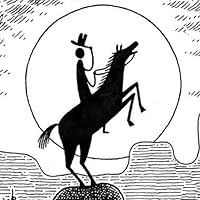
March 14, 2022
Mean Girls, Madonnas and Queens of Rwanda
Review of the Daunt Books (UK) paperback edition (March 2021) reprinted from the earlier Archipelago Books (USA) edition (2014) as translated by Melanie Mauthner from the French language original Notre-Dame du Nil (March 2012)

Poster for the French language film adaptation of "Our Lady of the Nile" (2020) by dir. Atiq Rahimi.
It is 1973* in Rwanda, and events in the Our Lady of the Nile elite girls' school are a microcosm of the tensions between the now post-Rwandan Revolution-ruling Hutu tribal majority and the previous monarchy-based ruling Tutsi tribal minority. The school's senior class Hutu faction is led by head 'mean girl' Gloriosa with her acolytes and her main targets are the quota-based minority of Tutsi, esp. Veronica and Virginia, two girls also in the senior class.
Author Mukasonga structures her tale in what can seem to be a series of short stories, each of them themed around a single girl or a single event. These provide a gradual entry into the world of the elite school where the future leaders in the upper classes are receiving their education in the confines of a sheltered world which is still controlled by the former Belgian and French colonialist whites.
This seems at first an innocent world of girls coming of age and pilgrimages to the school's namesake statue, a black Madonna in the hillside jungle. It is rapidly revealed as having much darker underpinnings, incl. abuse at the hands of the school's priest Father Herménégilde, an obsessive local French artist Monsieur de Fontenaille with fantasies of the past ruling African queens going back to the time of the Egyptians, the underage marriage of girls to foreign dignitaries and an ever-tightening circle of bullying and persecution which is rapidly closing in on Veronica and Virginia.
This was a masterful novel which drew on the author's own background from when she was targeted by her school's Hutu classmates before escaping to Burundi in 1973 and finally to France where she has written memoirs, short stories and this, her first novel. See more on Scholastique Mukasonga's background at a 2020 interview at the White Review.
I read Our Lady of the Nile due to it being longlisted for the 2022 Republic of Consciousness Prize. The shortlist is to be announced March 26, 2022. The winner is expected to be announced April/May 2022. I am a supporter of the prize through the Republic of Consciousness Book of the Month (BotM) club. Subscriptions to the BotM support the annual Republic of Consciousness Prize for small independent publishers.
Trivia and Links
Our Lady of the Nile was adapted as the same titled French language film Notre-Dame de Nil (2020) by director Atiq Rahimi, and an English subtitled trailer can be viewed on YouTube here.
The information page for the earlier 2014 English language edition from Archipelago Books has a considerable number of related interview and article links which you can see here (see under Extras).
The book has an unnamed off-the-page character described as "the white woman who wants to save gorillas" who is presumably based on the real-life primatologist Dian Fossey.
History and Links
* The Daunt Books synopsis incorrectly states that the book takes place "15 years before the 1994 genocide", when it should say '21 years before'.
Some of the historical background to the Hutu and Tutsi conflict in Rwanda is referenced in Our Lady of the Nile and can be understood in context.
For further reading on the history prior to the book's timeframe see the Wikipedia entry for the Rwandan Revolution (1959-61).
For further reading on the history concurrent to the book's timeframe see the Wikipedia entry for the Rwandan coup d'état (1973).
For further reading on the history after the book's timeframe see the Wikipedia entries for the Rwandan Civil War (1990-94) and the Rwandan Genocide (1994).
Review of the Daunt Books (UK) paperback edition (March 2021) reprinted from the earlier Archipelago Books (USA) edition (2014) as translated by Melanie Mauthner from the French language original Notre-Dame du Nil (March 2012)
Poster for the French language film adaptation of "Our Lady of the Nile" (2020) by dir. Atiq Rahimi.
It is 1973* in Rwanda, and events in the Our Lady of the Nile elite girls' school are a microcosm of the tensions between the now post-Rwandan Revolution-ruling Hutu tribal majority and the previous monarchy-based ruling Tutsi tribal minority. The school's senior class Hutu faction is led by head 'mean girl' Gloriosa with her acolytes and her main targets are the quota-based minority of Tutsi, esp. Veronica and Virginia, two girls also in the senior class.
Author Mukasonga structures her tale in what can seem to be a series of short stories, each of them themed around a single girl or a single event. These provide a gradual entry into the world of the elite school where the future leaders in the upper classes are receiving their education in the confines of a sheltered world which is still controlled by the former Belgian and French colonialist whites.
This seems at first an innocent world of girls coming of age and pilgrimages to the school's namesake statue, a black Madonna in the hillside jungle. It is rapidly revealed as having much darker underpinnings, incl. abuse at the hands of the school's priest Father Herménégilde, an obsessive local French artist Monsieur de Fontenaille with fantasies of the past ruling African queens going back to the time of the Egyptians, the underage marriage of girls to foreign dignitaries and an ever-tightening circle of bullying and persecution which is rapidly closing in on Veronica and Virginia.
This was a masterful novel which drew on the author's own background from when she was targeted by her school's Hutu classmates before escaping to Burundi in 1973 and finally to France where she has written memoirs, short stories and this, her first novel. See more on Scholastique Mukasonga's background at a 2020 interview at the White Review.
I read Our Lady of the Nile due to it being longlisted for the 2022 Republic of Consciousness Prize. The shortlist is to be announced March 26, 2022. The winner is expected to be announced April/May 2022. I am a supporter of the prize through the Republic of Consciousness Book of the Month (BotM) club. Subscriptions to the BotM support the annual Republic of Consciousness Prize for small independent publishers.
Trivia and Links
Our Lady of the Nile was adapted as the same titled French language film Notre-Dame de Nil (2020) by director Atiq Rahimi, and an English subtitled trailer can be viewed on YouTube here.
The information page for the earlier 2014 English language edition from Archipelago Books has a considerable number of related interview and article links which you can see here (see under Extras).
The book has an unnamed off-the-page character described as "the white woman who wants to save gorillas" who is presumably based on the real-life primatologist Dian Fossey.
History and Links
* The Daunt Books synopsis incorrectly states that the book takes place "15 years before the 1994 genocide", when it should say '21 years before'.
Some of the historical background to the Hutu and Tutsi conflict in Rwanda is referenced in Our Lady of the Nile and can be understood in context.
For further reading on the history prior to the book's timeframe see the Wikipedia entry for the Rwandan Revolution (1959-61).
For further reading on the history concurrent to the book's timeframe see the Wikipedia entry for the Rwandan coup d'état (1973).
For further reading on the history after the book's timeframe see the Wikipedia entries for the Rwandan Civil War (1990-94) and the Rwandan Genocide (1994).
July 24, 2020
Ciekawe spojrzenie na genezę ludobójstwa w Rwandzie. Historia kilku dziewcząt z prestiżowego żeńskiego liceum w Rwandzie, osadzona w latach 70., pokazuje, jak kropla drąży skałę, jak jad sączony przez lata do umysłów i serc prędzej czy później będzie musiał wypłynąć. I jak to, co słyszymy w domu, w szkole czy w kościele kształtuje nasze postrzeganie świata i innych ludzi, zwłaszcza kiedy przyjmujemy to wszystko bezkrytycznie. Jest w tej książce sporo humoru i groteski, ale biorąc pod uwagę kontekst te czasem nieco przerysowane sytuacje są jednocześnie dość przerażające i u mnie wywoływały nierzadko gęsią skórkę. Myślę, że to powieść dla czytelników, którzy już mają jakieś pojęcie o rwandyjskim ludobójstwie, pokazuje bowiem, jak ten długoletni proces siania ziarna nienawiści doprowadził do rzezi z 1994 roku. Bardzo polecam, dobrze się czyta, a postać Gloriosy jest doskonała w swojej potworności. Wzdrygam się na samą myśl o niej.

April 1, 2022
Probably the gentlest possible narrative of the events leading up to the Rwandan genocide. Think Picnic at the Hanging Rock, but with goddess Isis, ancient magic, and gorillas in the background. 3,5 stars, rounded up for the unusual presentation and dreamy writing style.

April 18, 2022
High in the mountains above Kigali, just 2km from the source of the great River Nile, sits a Catholic boarding school for girls. The girls who come here to study are the future elite of Rwanda, expected to become wives of government MPs and the like. Most of the students are of the Hutu majority, but a small quota of Tutsi students are grateful for their places and thankful for the opportunity to receive an international education from the foreign teachers. It's the 1970s and Rwanda is settling into its independence, while still in some respects leaning on its former colonial ties. Although the genocide of the early 90s is some way off, tensions are already beyond simmering. It is largely up to the nuns of the lycée and the fairly ineffectual Father Herménégilde, to try to keep a lid on it.
Amongst the senior girls there are a few key figures. Gloriosa, daughter of an important ruling party member, whose personality and attitude live up to her name. Modesta, also aptly named, who seems to be constantly teetering on an edge created by her biracial ancestry. The two Vs, Virginia and Veronica, beautiful Tutsi girls always trying to stay under the radar but constantly in the spotlight just for being who they are. Immaculée is a thoroughly modern and easygoing girl, more interested in boys and fast cars than the race of her fellow students. One or two others round out the ensemble, and all receive attention as the story unfolds, but some characters are more carefully drawn than others.
In terms of structure, the chapters are like a series of vignettes, although there is something of a story arc running over the top. Seemingly inconsequential events throughout the story gradually build into a violent and confronting climax. Personally I would have preferred a stronger plotline to make up for the uneven characterisation, but overall it was still a good read. I learned a few things and was taken on a journey, which was all I was hoping for. I've added another of this author's novels to my TBR.
Amongst the senior girls there are a few key figures. Gloriosa, daughter of an important ruling party member, whose personality and attitude live up to her name. Modesta, also aptly named, who seems to be constantly teetering on an edge created by her biracial ancestry. The two Vs, Virginia and Veronica, beautiful Tutsi girls always trying to stay under the radar but constantly in the spotlight just for being who they are. Immaculée is a thoroughly modern and easygoing girl, more interested in boys and fast cars than the race of her fellow students. One or two others round out the ensemble, and all receive attention as the story unfolds, but some characters are more carefully drawn than others.
In terms of structure, the chapters are like a series of vignettes, although there is something of a story arc running over the top. Seemingly inconsequential events throughout the story gradually build into a violent and confronting climax. Personally I would have preferred a stronger plotline to make up for the uneven characterisation, but overall it was still a good read. I learned a few things and was taken on a journey, which was all I was hoping for. I've added another of this author's novels to my TBR.

November 7, 2021
To the outside world mention of Rwanda conjures up two associations: the terrible genocide of 1994 and, thanks to Hollywood, mountain gorillas, and the portrayal of conservationist, Dian Fossey by Sigourney Weaver. In a part of north London, supporters of Premier league football club Arsenal FC will also be aware of the sponsorship of the club by the Rwandan government using the slogan “visit Rwanda”.
Scholastique Mukasonga’s (first) novel about her native Rwanda is set in the 1970’s and predates the infamous genocide. Hers is a book rooted in personal tragedy after she lost thirty seven members of her family to the killings. Our Lady of the Nile is ostensibly a story of schooldays and adolescents learning to assert their personalities among their peer groups, and in youthful challenges to school authorities. In reality school shenanigans are secondary to a much deeper and far ranging examination of the cultural pressures within Rwanda and the clash of different ideologies. Like many commentators, academics and international agencies Mukasonga gives her perspective on the underlying causes of the internecine fighting that decimated the country.
The rivalry and bloodshed between different ethnic group, within a country, is clearly not unique. In the African continent, the Ndebele minority and Shona majority in Zimbabwe had a rivalry that stretched back over one hundred years, a division that was evident at the time of Independence; in Nigeria conflict between the Igbo and Hause led to the Biafran war. In Rwanda the hostility between the Tutsi and the Hutus is the most extreme example of genocide. Colonial governance (initially the Germans, and then the Belgians from 1919) undoubtedly created conditions in which the bitterness and resentment spiralled out of control. Scholastique Mukasonga subtlely picks out key moments when the native population was directly manipulated and the conditions were put in place for the horribly combustible outcome that reached its nadir in the 1990’s.
This book is a compelling recent history lesson about a country whose written histories are of suspect accuracy, written at a time (early c. 21st), when to speak too openly carries ongoing risks.
A variety of (sometimes competing) explanations from academics and historians trying to explain the causes of the Rwandan genocide
• The (minority) Tutsi and the Hutu were two ethnically identifiable, different, groups whose inability to co-exist, led to the killings
• The Tutsi were a ‘ruling’ class, and the Hutu were a ‘lower’ class.
• The Tutsi were specifically targeted by the Hutu in retaliation for the death (assassination?) of the Hutu President
• The Tutsi and the Hutu were ‘created’ as separate identifiable ethnic groups by the occupying colonialists for the insidious purpose of controlling the country more effectively.
• The Belgians, ahead of Independence, switched their patronage and discrimination away from the Tutsi, to the Hutu. From 1923 under a league of Nations mandate, the Belgians had commenced removing powers from the king (Musinga); the royal family was seen as a brake on the development of the country under colonial rule.
Some, all, or none of the above general summaries may be correct (I am very conscious to write this several thousand miles away, and having never visited Rwanda).
The historical angles coming out of Our Lady of The Nile
1. Pre colonisation, Monarchy .
Rwanda existed well before the arrival of Europeans. Scholastique Mukasonga introduces key characters Kagabo the healer and Rubanga the witch doctor (umwiru). The native Kinyawanda language is also referenced. Linkage to a time of monarchs, a royalty, strong queens, are essential to understanding Rwanda. A time before the Tutsi/Hutu delineations.
• Virginia Mutamuriza says that she has been sent by a queen from long ago. She has seen the Queens Umuzimu (ghost). Rubanga talks about the Queens burial, the Umuzimu, the Secret of Karinga; the Drum of the kings
• The death of Veronica Tumurinde is compared to Queen Kanjogera, Queen mother 1895-1931; a strong and influential woman. Women were in positions of great influence historically, and the Catholic Lycee, Our Lady of the Nile, did not come close to producing the strong women of the past.
2. Racial stereotyping 1.
In Monsieur de Fontanaille Scholastique Mukasonga creates a character, a Belgian coffee planter, whose construction of ethnic separateness is ultimately a justification for, and defence of, white supremacism. Veronica is his Isis/Cleopatra. Egypt temples have been built in his compound. Fontanaille is a defender and advocate of the “Tutsi”. Tutsis ‘are not negros’, a stance he talks about in terms of migration from the north of Africa, and promotes his outright racial ignorance that the paler skins indicated some sort of supremacy. The labelling of this group as Tutsi takes in a variety of other (now fully discredited) theories that include the movement south of the (white) copts and the (white) Romans.
The southern migration is aligned with the Kingdom of Kush (from c. 40 BC to c. 10 BC). Fontanaille asserts that Virginia is his Queen Candace, and that she originated in Meroe the capital (78)
The statue that sits at the source of the Nile was a monument built in 1953. This looks back to the late c.19th and the racial theories promulgated by John Hanning Speke
3. Racial stereotyping 2.
The creepy Father Hermenegilde, based at the Catholic school refers to 1957 Bahutu manifesto “which he helped to craft” (it was actually drafted by nine Rwandan intellectuals and was a political document that called for Hutu ethnic and political solidarity, as well as the political disfranchisement of the Tutsi people).
The rewriting of history is furthered by Father Pintard who asserts that ‘its all in the bible about the Tutsis’.
“the Belgians and the bishops believed in the Hutus, and only the Hutus”. In this view of history, the migratory peoples heading south were Falashas, a derogatory term for “wandering Jews”. Hermenegilde and Pintard throw in racial sources that includes Noah; Moses and the Queen of Sheba. The hametic theory. This is the group that then supposedly became the governing class- or Tutsis. In the first chapter the Hamite origin/migration theories are snidely mocked by Gloriosa when she sees Veronica trace the Nile north into the sea at Egypt- Gloriosa says she must be checking where her (Tutsi)ancestors came from
4. Tutsi and Hutu
The blurring of the lines between the two categorisations is a key, recurring, theme in Our Lady of the Nile.
• Gloriosa, a “Hutu”, is described as “she of the hoe” and she talks proudly of “the people of the hoe” getting rid of 900 years of the Hametic past. Scholastique Mukasonga doesn’t let the reader assume that physical work and the Tutsi/Hutu labels can be applied for an easy explanation. “Tutsi” Virginia on her school vacation is expressly wielding her own hoe. (137)
• Goretti, is a “Ruhengeri” girl from a military family. The regions and geography are important dividing lines. She and Gloriosa are both “Hutu”. They fall out significantly and are on opposing sides. At the finale Goretti is described as “the real Hutu”. This is not based on a murderous attitude towards “Tutsis”.
• Modesta is a ‘mixture’ of Hutu and Tutsi. Her father had tried to de-Tutsify himself through his marriages (93), This was not unusual occurrence known as “kwitutura”. Basic social mobility, both upwards and downwards.
5. Post genocide, contemporary Rwanda . It’s not just Arsenal football club who are connected to Rwanda (the President of Rwanda is a regular tweeter offering opinions on the manager and the team- he feels entitled to do so as a consequence of the Rwandan government’s investment in a team of millionaires).
A brief section in the book focuses on Dian Fossey (under the name Madame de Decker). “a white woman who lives in the colony, and controls access”. Goretti is angered by the assumption that (1) the whites invented the gorillas (2) creation myths of descent from the gorillas. Is this all that Rwanda means to foreigners?
In summary this is a complicated book which reads very differently after a revisit, and some basic online research into Rwanda. It is absolutely fascinating and thought provoking. So many questions remain unanswered in my mind.
I had one seemingly simple question that I couldn’t fathom, and that’s the story of Gakere, the bookkeeper who absconded with the cash to pay the monthly wages; he didn’t make it across borders into Barundi. Who is he, what does he signify? He’s not described as “Tutsi” or “Hutu”. I’d be very interested to know
Scholastique Mukasonga’s (first) novel about her native Rwanda is set in the 1970’s and predates the infamous genocide. Hers is a book rooted in personal tragedy after she lost thirty seven members of her family to the killings. Our Lady of the Nile is ostensibly a story of schooldays and adolescents learning to assert their personalities among their peer groups, and in youthful challenges to school authorities. In reality school shenanigans are secondary to a much deeper and far ranging examination of the cultural pressures within Rwanda and the clash of different ideologies. Like many commentators, academics and international agencies Mukasonga gives her perspective on the underlying causes of the internecine fighting that decimated the country.
The rivalry and bloodshed between different ethnic group, within a country, is clearly not unique. In the African continent, the Ndebele minority and Shona majority in Zimbabwe had a rivalry that stretched back over one hundred years, a division that was evident at the time of Independence; in Nigeria conflict between the Igbo and Hause led to the Biafran war. In Rwanda the hostility between the Tutsi and the Hutus is the most extreme example of genocide. Colonial governance (initially the Germans, and then the Belgians from 1919) undoubtedly created conditions in which the bitterness and resentment spiralled out of control. Scholastique Mukasonga subtlely picks out key moments when the native population was directly manipulated and the conditions were put in place for the horribly combustible outcome that reached its nadir in the 1990’s.
This book is a compelling recent history lesson about a country whose written histories are of suspect accuracy, written at a time (early c. 21st), when to speak too openly carries ongoing risks.
A variety of (sometimes competing) explanations from academics and historians trying to explain the causes of the Rwandan genocide
• The (minority) Tutsi and the Hutu were two ethnically identifiable, different, groups whose inability to co-exist, led to the killings
• The Tutsi were a ‘ruling’ class, and the Hutu were a ‘lower’ class.
• The Tutsi were specifically targeted by the Hutu in retaliation for the death (assassination?) of the Hutu President
• The Tutsi and the Hutu were ‘created’ as separate identifiable ethnic groups by the occupying colonialists for the insidious purpose of controlling the country more effectively.
• The Belgians, ahead of Independence, switched their patronage and discrimination away from the Tutsi, to the Hutu. From 1923 under a league of Nations mandate, the Belgians had commenced removing powers from the king (Musinga); the royal family was seen as a brake on the development of the country under colonial rule.
Some, all, or none of the above general summaries may be correct (I am very conscious to write this several thousand miles away, and having never visited Rwanda).
The historical angles coming out of Our Lady of The Nile
1. Pre colonisation, Monarchy .
Rwanda existed well before the arrival of Europeans. Scholastique Mukasonga introduces key characters Kagabo the healer and Rubanga the witch doctor (umwiru). The native Kinyawanda language is also referenced. Linkage to a time of monarchs, a royalty, strong queens, are essential to understanding Rwanda. A time before the Tutsi/Hutu delineations.
• Virginia Mutamuriza says that she has been sent by a queen from long ago. She has seen the Queens Umuzimu (ghost). Rubanga talks about the Queens burial, the Umuzimu, the Secret of Karinga; the Drum of the kings
• The death of Veronica Tumurinde is compared to Queen Kanjogera, Queen mother 1895-1931; a strong and influential woman. Women were in positions of great influence historically, and the Catholic Lycee, Our Lady of the Nile, did not come close to producing the strong women of the past.
2. Racial stereotyping 1.
In Monsieur de Fontanaille Scholastique Mukasonga creates a character, a Belgian coffee planter, whose construction of ethnic separateness is ultimately a justification for, and defence of, white supremacism. Veronica is his Isis/Cleopatra. Egypt temples have been built in his compound. Fontanaille is a defender and advocate of the “Tutsi”. Tutsis ‘are not negros’, a stance he talks about in terms of migration from the north of Africa, and promotes his outright racial ignorance that the paler skins indicated some sort of supremacy. The labelling of this group as Tutsi takes in a variety of other (now fully discredited) theories that include the movement south of the (white) copts and the (white) Romans.
The southern migration is aligned with the Kingdom of Kush (from c. 40 BC to c. 10 BC). Fontanaille asserts that Virginia is his Queen Candace, and that she originated in Meroe the capital (78)
The statue that sits at the source of the Nile was a monument built in 1953. This looks back to the late c.19th and the racial theories promulgated by John Hanning Speke
3. Racial stereotyping 2.
The creepy Father Hermenegilde, based at the Catholic school refers to 1957 Bahutu manifesto “which he helped to craft” (it was actually drafted by nine Rwandan intellectuals and was a political document that called for Hutu ethnic and political solidarity, as well as the political disfranchisement of the Tutsi people).
The rewriting of history is furthered by Father Pintard who asserts that ‘its all in the bible about the Tutsis’.
“the Belgians and the bishops believed in the Hutus, and only the Hutus”. In this view of history, the migratory peoples heading south were Falashas, a derogatory term for “wandering Jews”. Hermenegilde and Pintard throw in racial sources that includes Noah; Moses and the Queen of Sheba. The hametic theory. This is the group that then supposedly became the governing class- or Tutsis. In the first chapter the Hamite origin/migration theories are snidely mocked by Gloriosa when she sees Veronica trace the Nile north into the sea at Egypt- Gloriosa says she must be checking where her (Tutsi)ancestors came from
4. Tutsi and Hutu
The blurring of the lines between the two categorisations is a key, recurring, theme in Our Lady of the Nile.
• Gloriosa, a “Hutu”, is described as “she of the hoe” and she talks proudly of “the people of the hoe” getting rid of 900 years of the Hametic past. Scholastique Mukasonga doesn’t let the reader assume that physical work and the Tutsi/Hutu labels can be applied for an easy explanation. “Tutsi” Virginia on her school vacation is expressly wielding her own hoe. (137)
• Goretti, is a “Ruhengeri” girl from a military family. The regions and geography are important dividing lines. She and Gloriosa are both “Hutu”. They fall out significantly and are on opposing sides. At the finale Goretti is described as “the real Hutu”. This is not based on a murderous attitude towards “Tutsis”.
• Modesta is a ‘mixture’ of Hutu and Tutsi. Her father had tried to de-Tutsify himself through his marriages (93), This was not unusual occurrence known as “kwitutura”. Basic social mobility, both upwards and downwards.
5. Post genocide, contemporary Rwanda . It’s not just Arsenal football club who are connected to Rwanda (the President of Rwanda is a regular tweeter offering opinions on the manager and the team- he feels entitled to do so as a consequence of the Rwandan government’s investment in a team of millionaires).
A brief section in the book focuses on Dian Fossey (under the name Madame de Decker). “a white woman who lives in the colony, and controls access”. Goretti is angered by the assumption that (1) the whites invented the gorillas (2) creation myths of descent from the gorillas. Is this all that Rwanda means to foreigners?
In summary this is a complicated book which reads very differently after a revisit, and some basic online research into Rwanda. It is absolutely fascinating and thought provoking. So many questions remain unanswered in my mind.
I had one seemingly simple question that I couldn’t fathom, and that’s the story of Gakere, the bookkeeper who absconded with the cash to pay the monthly wages; he didn’t make it across borders into Barundi. Who is he, what does he signify? He’s not described as “Tutsi” or “Hutu”. I’d be very interested to know

August 24, 2021
"The rain tells me she’s leaving, making way for the dusty season, as she should. She also tells me that down there, in Rwanda, the season of men has changed. But she tells me, too, not to trust it: those who believe in quiet times, the lightning will catch them. They’ll be struck, and they’ll perish."
It's frightening how easily & aptly the Rawandan Hutu-Tutsi divide can be mapped onto the Indian Hindu-Muslim divide. Almost similar demographic shares, long history of colonial favouritism, an ever-present rancour stoked for gain. It's not hard to imagine that an event like the Rawandan genocide could happen here with perhaps comparable set of triggers, there's certainly a rhetoric of hate brazenly being espoused.
This was my first Mukasonga & it is set 15 years before the genocide that she herself escaped, having settled in France in 1992, but in which 37 of her family members perished. It's basically a loose set of self-contained, story-like, chapters following the final year students at a remote all-girls lycée, a playground of privilege and prestige, sort of mimicking the edgy condition of the country. Their quotidian scuffles and pity squabbles take an increasingly dark turn, a corrupted innocence at last coming to a violent head. While this is not stylistically inventive, the prose is more than adequate and I loved how local beliefs and stories were seamlessly woven.

January 1, 2023
Thanks, Marc, for mentioning the term backshadowing during a discussion of this book. I think that term nails what makes this book so powerful, having been witness to the Rwandan genocide & seeing this (fictional) look at Rwanda in a time prior to -- but not far from -- the genocide. What once might have passed as something minor or as teenage "mean girl" actions suddenly carries much more weight & danger when reading with the knowledge of impending, absolutely crushing, real events. It's not just internal strife either; there's a complete burn to the West for its apathy, its fetishization, its imperialism, its ignorance.... There's more too (including misogyny, religion, royalty, faith, duty, abuse, patriotism, & militarism), all done with a light touch, played out in miniature by the students in their daily life at the lycée. The juxtaposition absolutely cut me to the core.
Clever. Subtle. Devastating.
Absolutely recommended.
Clever. Subtle. Devastating.
Absolutely recommended.

April 12, 2022
What a fascinating read. The author's insights into the fabric of pre-genocide Rwanda heading down the path that would lead to the atrocities of 1994 was extremely insightful. The setting of the Our Lady of the Nile boarding school for girls served as a microcosm for a society on the edge. As we follow the senior class we meet Tutsi minorities Veronica and Virginia, as well as the daughters of influential Hutu businessmen, military leaders, and government ministers. The most vocal and controlling of these girls, Gloriosa, refers to herself with pride as a militant for the true Rwandan majority people.
It's clear that the girls are mimicking what they've been taught by their fathers and the influential "revolutionaries" they look up to; at the same time, they're fully aware of their own positions as pawns to be married off to influential older men. Meanwhile, the school is run mostly by white foreigners with a handful of Rwandan nationals, and the meddling of these white colonizers - which ranged from manipulative to plausibly naive - contributes to exacerbating the rift between the Hutu and Tutsi people.
The glimpse into the realities of a society barreling toward genocide was handled with the care and nuance it needed, while also not shying away from the horrors of the violence.
With all that being said, the storytelling was a bit stop-and-go. There were bursts of plot interspersed between big chunks of filler. That's the only thing that kept me from a 5 star rating.
It's clear that the girls are mimicking what they've been taught by their fathers and the influential "revolutionaries" they look up to; at the same time, they're fully aware of their own positions as pawns to be married off to influential older men. Meanwhile, the school is run mostly by white foreigners with a handful of Rwandan nationals, and the meddling of these white colonizers - which ranged from manipulative to plausibly naive - contributes to exacerbating the rift between the Hutu and Tutsi people.
The glimpse into the realities of a society barreling toward genocide was handled with the care and nuance it needed, while also not shying away from the horrors of the violence.
With all that being said, the storytelling was a bit stop-and-go. There were bursts of plot interspersed between big chunks of filler. That's the only thing that kept me from a 5 star rating.

March 19, 2021
É o segundo livro da Scholastique Mukasonga que leio (o primeiro, era autoficção, baseado em sua infância; este, é ficção). Dos dois, é meu preferido até agora e entrou, sem dúvida alguma, para a lista de melhores de 2021. Não teria descoberto a autora se não fosse meu desafio em janeiro de não repetir nacionalidade dos escritores, agora quero ler tudo que ela já publicou.
A primeira coisa que me fascina nesse livro é como a autora conseguiu transportar as dinâmicas históricas e políticas de Ruanda na década de 1970. A história do país é muito complexa, cheia de disputas internas e externas, que culminaram no massacre de 1994 - que é o máximo sobre Ruanda que eu sabia antes de ler os livros da Mukasonga. Faz tempo que não sinto vontade de escrever uma resenha sobre alguma leitura, mas dessa vez não consegui me controlar.
Há muitas tramas entrelaçadas, enquanto ela desenrola todos os conflitos étnicos de Ruanda ao falar sobre a dinâmica de adolescentes vivendo em um colégio interno. A cota para tutsis, as ligações com a Bélgica mesmo após a independência, o apagamento da cultura local em nome do cristianismo, como a sexualidade era explorada, o que se esperava das mulheres ruandesas... Enfim, são tantas camadas, só que elas não são expostas de forma escancarada, vão se desenhando conforme o livro ganha vida. As personagens vão se mostrando, aquilo que você achou que tinha sido deixado de lado ou era apenas um detalhe volta a ser amarrado lá no final. Não é um livro feliz, mas é um livro muito bom - tanto no quesito escrita quanto no mergulho histórico e cultural que ele proporciona.
É uma história extremamente política, como a outra obra de Scholastique, mas narrada, principalmente, pelo olhar das adolescentes. Como aquele núcleo escolar espelha o cosmo da política ruandesa. É uma leitura que vale muito a pena.
A primeira coisa que me fascina nesse livro é como a autora conseguiu transportar as dinâmicas históricas e políticas de Ruanda na década de 1970. A história do país é muito complexa, cheia de disputas internas e externas, que culminaram no massacre de 1994 - que é o máximo sobre Ruanda que eu sabia antes de ler os livros da Mukasonga. Faz tempo que não sinto vontade de escrever uma resenha sobre alguma leitura, mas dessa vez não consegui me controlar.
Há muitas tramas entrelaçadas, enquanto ela desenrola todos os conflitos étnicos de Ruanda ao falar sobre a dinâmica de adolescentes vivendo em um colégio interno. A cota para tutsis, as ligações com a Bélgica mesmo após a independência, o apagamento da cultura local em nome do cristianismo, como a sexualidade era explorada, o que se esperava das mulheres ruandesas... Enfim, são tantas camadas, só que elas não são expostas de forma escancarada, vão se desenhando conforme o livro ganha vida. As personagens vão se mostrando, aquilo que você achou que tinha sido deixado de lado ou era apenas um detalhe volta a ser amarrado lá no final. Não é um livro feliz, mas é um livro muito bom - tanto no quesito escrita quanto no mergulho histórico e cultural que ele proporciona.
É uma história extremamente política, como a outra obra de Scholastique, mas narrada, principalmente, pelo olhar das adolescentes. Como aquele núcleo escolar espelha o cosmo da política ruandesa. É uma leitura que vale muito a pena.
Displaying 1 - 30 of 536 reviews