Jump to ratings and reviews
Rate this book

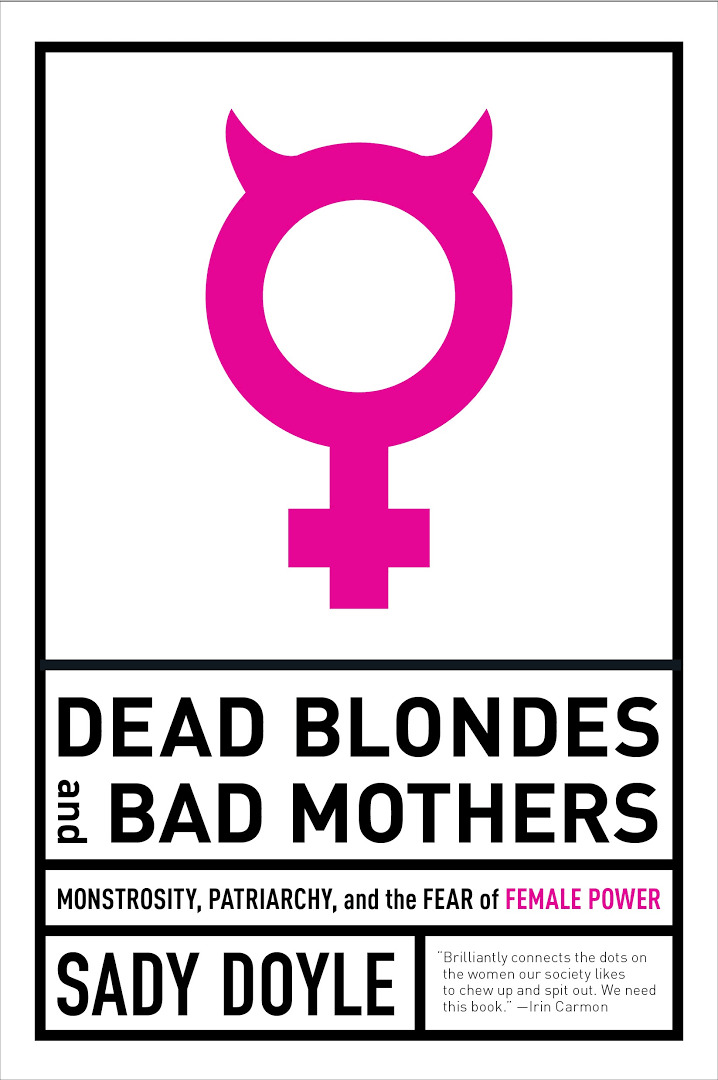
Dead Blondes and Bad Mothers

Rate this book
Kirkus Reviews Best Book of the Year

This “witty, engaging analysis” of female monsters in pop culture offers “provocative and incisive” commentary on society’s fear of female rage and power (Soraya Chemaly, author of Rage Becomes Her)


Women have always been seen as monsters. Men from Aristotle to Freud have insisted that women are freakish creatures, capable of immense destruction.

Maybe they are. And maybe that’s a good thing.

Sady Doyle, hailed as “smart, funny and fearless” by the Boston Globe, takes readers on a tour of the female dark side, from the biblical Lilith to Dracula’s Lucy Westenra, from the T-Rex in Jurassic Park to the teen witches of The Craft. She illuminates the women who have shaped our nightmares: Serial killer Ed Gein’s “domineering” mother Augusta; exorcism casualty Anneliese Michel, who starved herself to death to quell her demons; author Mary Shelley, who dreamed her dead child back to life.

These monsters embody patriarchal fear of women, and illustrate the violence with which men enforce traditionally feminine roles. They also speak to the primal threat of a woman who takes back her power. In a dark and dangerous world, Dead Blondes and Bad Mothers asks women to look to monsters for the ferocity we all need to survive.

“Some people take a scalpel to the heart of media culture; Sady Doyle brings a bone saw, a melon baller, and a machete.” —Andi Zeisler, author of We Were Feminists Once

272 pages, Kindle Edition

First published August 13, 2019

563 people are currently reading
14024 people want to read

About the author

Jude Ellison S. Doyle

38 books261 followers
Jude Ellison S. Doyle is an author, journalist, and comic book writer living in upstate New York.

Under his former pen name “Sady Doyle,” Jude founded the feminist blog Tiger Beatdown in 2008. He is the author of "Trainwreck: The Women We Love to Hate, Mock, and Fear... and Why" (Melville House 2016), which has been called "smart, funny and fearless" (Boston Globe), "compelling" and "persuasive" (New York Times Book Review). The Atlantic predicted that "Trainwreck will very likely join the feminist canon." Doyle’s second book, "Dead Blondes and Bad Mothers: Monstrosity, Patriarchy and the Fear of Female Power" (Melville House, 2019) was named a Best Non-Fiction Book of 2019 by Kirkus Reviews and was shortlisted for Starburst Magazine’s Brave New Words award. His first non-fiction book under his real name, "DILF: Did I Leave Feminism," will be published by Melville House in the fall of 2025.

In 2021, Jude published "Maw," a limited-series horror comic with artist A.L. Kaplan, for Boom! Studios. His follow-up, "The Neighbors" with artist Letizia Cadonici, was published in 2023, and was nominated for a 2024 GLAAD award for “Outstanding Comic.” Both are now available in collected edition, and Jude’s third series, "Be Not Afraid" with artist Lisandro Estherren, is forthcoming from Boom! Studios.

Ratings & Reviews

What do you think?
Rate this book

Friends & Following

Create a free account to discover what your friends think of this book!

Community Reviews

5 stars
2,351 (37%)
4 stars
2,496 (39%)
3 stars
1,183 (18%)
2 stars
225 (3%)
1 star
63 (<1%)
Displaying 1 - 30 of 762 reviews
Profile Image for Sarinys.
466 reviews173 followers
October 12, 2021
Un grosso pregio del libro è la sua leggibilità: è scritto in modo particolarmente scorrevole per un saggio e si legge in fretta. Come prodotto editoriale è molto curato, cosa che dovrebbe essere standard ma purtroppo non va sempre così.

Anche se alla fine mi è piaciuto, ho delle perplessità sul rigore dell’approccio di Jude Ellison Sady Doyle. Ci sono dei passaggi in cui salta alle conclusioni, proponendo sue idee e proiezioni come fatti. Un esempio: parlando della madre del serial killer Ed Gein, dice di come la donna, Augusta, un giorno avesse assistito a un episodio di violenza in cui un vicino di casa aveva ucciso un animale per cattiveria, davanti alla fidanzata urlante. Doyle scrive: “Augusta vide l’uomo che urlava contro la donna, vide la donna non riuscire a proteggere quella piccola creatura indifesa, una creatura che amava molto, dall’uomo con cui viveva. Quella vista schiuse in lei qualcosa di terribile, un pozzo di dolore che la consumò fino alla fine. Ebbe un altro ictus e morì qualche giorno dopo”. Mi sembra che scritto in questo modo, Doyle sostenga che sia stata la visione della scena a uccidere Augusta, qualcosa che Doyle non può in nessuna maniera verificare, ma che ci racconta come un fatto. Cosa ne sa lei del pozzo di dolore che consuma Augusta fino alla fine e di cosa lo possa aprire e chiudere?

Il libro è tutto pieno di queste cose. Accorati appelli che partono da uno spunto tetro, da una storia vera molto violenta e poi la drammatizzano per ottenere l’effetto desiderato. Allo stesso modo, ho trovato una sorta di panico morale legato a gran parte della filmografia horror che cita. In alcuni casi, le critiche sono appropriate, ma spesso mi sembra che Doyle prenda un particolare per distorcerlo e stirarlo fino a ottenere qualcosa che calzi con le sue tesi, senza approfondire mai la sua conoscenza sul discorso.

Di base, parte dagli studi più noti di film critic femminista, infatti come spiega Doyle stessə si appoggia in larga parte al notissimo The Monstrous-Feminine: Film, Feminism, Psychoanalysis di Barbara Creed. Lo sto leggendo proprio ora e per adesso mi sembra un’altra cosa nel metodo, molto più rigoroso. Tra l’altro, non ho capito come mai l’editore italiano abbia deciso di intitolare così il libro di Doyle, il cui titolo originale era un altro (Dead Blondes and Bad Mothers: Monstrosity, Patriarchy and the Fear of Female Power). Se un giorno qualcuno si decidesse a tradurre l’opera di Creed si creerebbe un titolo doppione, pronto per i malintesi.

Di Dead Blondes, la parte più interessante per la ricerca è la guida alle fonti, che include molte cose che conoscevo già bene e altre che invece mi segnerò. Come lettura disimpegnata però è un buon libro, che comunque mi è piaciuto anche se ogni tanto mi faceva arrabbiare per il modo in cui si poneva.
Profile Image for Monica.
780 reviews690 followers
August 22, 2021
I feel bludgeoned. Sady Doyle takes aim at women in the narrative of women throughout the last 300 years. One doesn't have to look very deeply to see that women are a perceived as the root of evil since humans began walking the earth. Doyle examines the allegories in mainstream consciousness through popular culture and finds that lots of it portrays women in not just negative, but monstrous and diabolical. Doyle says that this is (as always) in service to the maintenance of the patriarchy. Demonizing women makes it less confusing to understand who should be in charge (aka patriarchy--preferably white).

I appreciated the premise which is that women in general are portrayed in books, and movies and other media as evil monsters, villains, or victims. We are rarely heroines, or even capable; we are either bad or helpless. And all these representations help cement a cultural narrative that encourages misogyny. I am a fan of Sady Doyle. I have read some of her essays in other anthologies and I find her to be really smart, articulate, and insightful. But I found the book to be both too much and not enough. Sledgehammered points. Actually, there was a dearth of examples to prove her points which led to over reliance upon the examples presented to demonstrate several points. The examples were overexamined and low and behold they upheld her overall premise exactly to the letter. Of course, there may be other ways to interpret some of the examples besides what Doyle put forth, but that may not support her premise so… In a word, unbalanced and bias. And if someone is not going to provide a full picture, frankly for me this effort seemed more appropriate for an essay rather than a full-length book. That is not to say that the subject is not important or that Doyle's examination is flawed. It is to say that I just didn't find the book particularly compelling or substantive. But there were lots of words that seemed to cover the slightly different nuanced points over and over again. The notion that this review is about how I felt about the book rather than a discussion of content says it all. Not to my tastes...

3.25 Stars

Read on kindle
Profile Image for Wick Welker.
Author 9 books695 followers
July 11, 2021
The apocalypse is female.

This book was pretty incredible and totally engaging. Doyle does a phenomenal job in both keeping the reader totally enthralled to argue a very specific point: marriage, culture, reproduction and female power have been in complete subjugation from the institution of western patriarchy. All women are subject to male violence at some point in their lives. Like a resource to be controlled, Doyle argues that reproduction does not empower women but is a power that men seek. Doyle cites a lot of pop culture stuff that I found to be fascinating. The creators of the slasher film Scream had not idea teenage girls would be their biggest demographic. Why? Because all women live in fear of male violence and slasher films are total vicarious catharsis. Doyle dovetails this with the female audience of true crime genre.

Jurassic Park, I had no idea, is about men trying to control female reproduction and exploit it. All dinosaurs on the island are engineered to be female so that only the scientists can control reproduction. Yet, the dinosaurs become gender fluid, reproduce in the wild and wreak maternal havoc on the island. The movie is actually a huge metaphor for men trying to control women and maintain the patriarchy power hierarchy. Women actually do have power, and what happens when they seek to exercise it? They are painted as monsters.

Women are constantly blamed for male violence. The Green River killer killed 40+ women and got life where a sex worker who killed 7 men in self defense got 6 executive death sentences. Ed Gein, who wore women’s skin as clothing, was a serial killer whose psychopathy is blamed on his mother which started the great horror movie trend of blaming women for their monster children: Jason, Carrie, Buffalo Bill and many more. If women do not fit the peg of patriarchy they are easily portrayed as monsters.

Patriarchy is the current power structure, despite great gains. A woman can all too easily become a cultural cast away or monster when she wants to do whatever she wants with reproduction, gender, motherhood, sex or employment. The patriarchy constantly puts checks on female power either through legislation or cultural zeitgeist.

This book was amazing. Highly recommend.
Profile Image for Becky.
1,644 reviews1,947 followers
February 28, 2020
I requested this book from my library when I saw a friend reading it (because honestly, who could resist that title??) and then impatiently waited the 13 weeks for it to be available. And I think the wait was totally worth it. I have been reading a lot more nonfiction books the last few years, on a variety of different topics including a fair bit of feminist work, but this was a very different beast (pardon the pun). This book examines how patriarchal norms have influenced culture and media, and... honestly, a lot of it made me feel ignorant as hell for not noticing the trends myself, especially since I'm a big fan of these genres, and some of the works referenced are ones that I've seen or read multiple times. I don't know if I'll be able to look at a lot of literature, pop culture, and cult classics the same way again. (In fact, it's already begun. My husband watched "Unabomber: In His Own Words" on Netflix the other day, and one of the people interviewed in the documentary was Peter Vronsky, and I was like "Oh shit, that's the dude who demonized Ed Gein's mother!" Hubs was understandably confused as to why I was ranting about a completely unrelated murderer's mom, but I kept a much closer eye out from that point on to see what Mr. "His Mama Made Him" Vronsky had to say about Mrs. Kaczynsky, you can bet that. Turns out... nada. He assigned his blame elsewhere.)

This is my future, folks. After reading this book, the world can never be the same. And I think I'm OK with that. So much of my reading lately has been the kind that teaches me something, helps me to better understand the world and different people's experiences in it, and politics and policies and biases and history, and just... so many things. I read to learn and grow and be a better human.

A lot of that reading is of the soul-crushingly hard to read variety, though. (My other TWO currently reading books are of that type. One of those I just started this morning before work and already highlighted 15 times and nearly had a rage aneurysm 18 pages in. Good times!) So reading THIS book was refreshing because, though it's serious in terms of analysis and subject matter and purpose, it doesn't feel so heavy and brutal (though at times it definitely does get dark as hell!). The way Doyle writes manages to mostly give this a lighter tone and feel, despite the often horrific situations described, without making light of them at all. I don't really know how to describe it, but it could have EASILY gone very dark and soul-crushy, and she managed to not let it. And that's commendable. It felt... conversational. Like a chat between friends, one of whom is like "Oh, let me tell you something about The Exorcist!" And then she proceeds to describe it, and in particular THAT SCENE, in disturbing new terms. Terms that are so obvious once called out, but ones that leave their friend reeling and shocked. (More shocked than the original scene left her, even. You know the one. Yes. THAT one.) Because, when you think about the connotations of how pubescent girls are viewed through the male lens, as though we are ineffable, strange creatures going through some mysterious transformation of body and mind, turning us into unrecognizable, untouchable, unfathomable, and worst, unmanageable OTHERs, it changes EVERYTHING. The "demon possession" is no longer an external thing that happens TO girls, it IS girls.

One criticism I have for this book (and there are only two) is that during her examination and analysis of literature and movies featuring women as either monsters or monstrous, she spoiled the plots of several movies and books that I've yet to experience, despite some of them being classics. I didn't really expect that to be what this book was, and it does somewhat annoy me when writers do this... because I feel like they should know, better than anyone, that every book (and movie) is new to every reader (and watcher) at some point, and there are bound to be readers of THEIR book that haven't read every book (or seen every movie) referenced within it. I would have liked a warning, maybe a head's up list of the books and movies discussed so I could at least enter into this knowingly and willingly, instead of it just being thrown at me.

Now, when I watch these movies or read these books (because I love horror and true crime and gothic classics, and still do intend to do so) I won't have the same experience as I would have otherwise. And partially, that's because I have a different experience every single time I read a book, because I am a slightly different person every day. I have more life under my belt, and more experience, and maybe a new perspective based on something I've read or seen or heard or whatever. And so, having read this, my experience reading any book going forward will be altered, now that my attention has been drawn to these issues... But it will also suffer knowing some of the influences and stories BEHIND the inspiration for the work(s), as well as the plot of some of them. And that's something I wish I didn't necessarily have going in. Oh well.

My other criticism is that I felt that Doyle got a bit hyperbolic occasionally, and even if it's justified (which I think it is in a lot of cases) I don't think that it was justified well enough in the text for that particular statement or conclusion. It's like "I make this statement, and based on everything else I've said before, you should just go with it." An example:
"True crime, like the slashers, require a dead girl."
No... they don't. That's a patently false statement that comes across as sensationalist. True crime just requires a crime, and someone to investigate it and provide the story a medium for retelling. Jeffrey Dahmer killed 17 men, and has nearly as many books written about him (based on my 10 seconds of Googling). I consider myself a feminist and I'm OK with taking a certain amount of liberty in interpretation of attitudes and social norms etc, but I also strive to be fair and as accurate as I can be with my arguably non-expert self when it comes to verifiable, objective fact.

That being said, I found the great majority of Doyle's arguments to be well-reasoned and persuasive. I highlighted the hell out of this book, and made a ton of notes (INCLUDING the entire bibliography and movie reference list, because I am just that kind of nerd.) There were a lot of sections that I found myself wishing that she'd analyzed this book or that movie. I really, REALLY want to know how she would view some of the characters, and OH MAN, I would love to see what she has to say about King's "feminist" book "Sleeping Beauties". I bet it would be a glorious takedown that would be magnificent to behold. Alas, I'll just have to imagine it in my mind and be satisfied with my own rant about it.

One thing that Doyle absolutely got right in HER feminist book that King absolutely got wrong in his is the fact that trans and non-binary people exist. I loved the inclusivity and acceptance of every kind of feminist, no matter what their body looks like or what their birth certificate says. I really appreciated that.

Anyway, for the most part I really loved this, and I wish that I could articulate effectively all the thoughts and impressions that I had while reading it, though we'd be here a long time if I did... but I won't. Instead, I'll leave you with this anecdote:

I started reading this on my mom's birthday (unintentionally, it just worked out like that because I was on a plane and needed something to read and this had jumped to the top of my list by being available FINALLY from the library) and when I took her out for lunch a few days later (We had to work and I took her on the weekend... I'm not a monster! Oh wait... Apparently I am. O_O) I told her that I was reading a book called "Dead Blondes and Bad Mothers" and she was like "Which one am I?" I laughed and said, "Well... you're not blonde... soooo...." Poor mom. She walked right into it.
Profile Image for Fedezux.
210 reviews228 followers
August 5, 2021
In realtà è più un 4.5, mi tocca toglierle qualche punto perché ogni tanto, a mio parere, Sady Doyle sfocia un po' nel rant.

A parte questo, è un saggio pazzesco.

Mi ha fatta riflettere tantissimo e dato una nuova prospettiva riguardo a storie che conosco da anni e anni.

Non mi sono trovata sempre d'accordo con l'autrice e penso di dover ancora riflettere con calma riguardo ad alcuni passaggi, ma questo titolo mi ha ispirata molto.

È stata una delle letture più attive che abbia mai fatto, ho cercato essays, post e approfondimenti vari su tanti argomenti.

Sono ancora qui che rimugino e cerco materiale.
Avrei voglia di parlare di questi argomenti anche coi muri, sento il bisogno fortissimo di confrontarmi con chiunque a riguardo.

Ho ragionato molto su "Giro di vite" di Henry James, che anni fa non avevo apprezzato, ma che ora riesco a vedere come una fonte inesauribile di spunti.
Ha ribaltato l'idea che avevo di diverse storie di cronaca e puntato la mia attenzione su particolari a cui da sola non avevo fatto caso.

Non sono riuscita a prendere ogni sua parola come oro colato, non mi è venuto spontaneo pensare "ha ragione!" di fronte ad ogni passaggio, ma non è quello che mi aspetto da un lavoro di saggistica.

Il saggio deve ampliare i miei orizzonti, offrirmi spunti e farmi pensare tantissimo.
Say Doyle in questo è riuscita alla grande.

Da leggere.
Profile Image for AMANDA.
94 reviews278 followers
December 27, 2022
As someone who loves horror, has an interest in women's history, and has a darker sense of humour, I fell in love with this book before I was even finished reading its introduction.

The book covers everything from odd true crime cases (and often how they go on to influence pop culture), The Exorcist and several other horror gems (like Dracula, The Craft, Carrie, and even Godzilla and Twin Peaks), witchcraft, menstruation, motherhood, female sexuality, etc. It's super informative - though not without some hyperbole that I chalk up to Sady Doyle being super fucking hype for this stuff - and it's written in a way that is both humourous and empowering, all while being genuinely thought-provoking.

I love anything relating to what Doyle refers to as 'female monstrosity', and if those words speak/mean anything to you at all as well, or catch your attention for whatever reason, this is definitely a book you should read.
Profile Image for metempsicoso.
436 reviews486 followers
September 12, 2021
La mostruosità della donna nel mito, nella letteratura gotica, nell’horror, nel true crime. Credo basti questa breve descrizione – molto approssimativa, me ne rendo conto – a evidenziare il difetto di questo saggio: troppo materiale da cui attingere e da analizzare.
Inevitabilmente, Doyle si è ritrovato a dover fare una cernita, puntando il faro dell’attenzione su questioni specifiche ed escludendone altre. E proprio questo, il principio con cui questa esclusione è stata attuata, invalida le fondamenta di questo saggio sbriciolandone la condizione di base necessaria a renderlo tale: non c’è rigore. Tutto è tratteggiato frettolosamente, citando ciò che serve a far quadrare i ragionamenti e le convinzioni dell’autore, per poi passare all’esempio successivo, preso da un altro campo e a volte poco coerente con quanto enunciato fino a quel momento. È un bel testo, scritto in modo molto godibile e scorrevole, ma allo stesso tempo mi è sembrato superficiale e furbo, un po’ opportunista.
Certo, su alcune questioni non c’è nulla da dire: che il patriarcato abbia minimizzato la donna, per secoli, riconducendola a modelli comportamentali asfissianti, è un dato assodato. Tuttavia, un’analisi di questo tipo – e intendo dire: così sommaria e poco approfondita – per certi versi ricade nel medesimo inganno del maschilismo: parlare di figlie, mogli e madri (ovvero delle varie declinazioni della donna “santificata”) ed escludere altre varianti di queste caselle fisse (tutte quelle riconducibili, se vogliamo, alla donna “puttana”) è perdersi, mi sembra, una buona fretta della mostruosità femminile. È come andare a cercare il nero nella massa bianca dimenticandosi che, laggiù, dove il candore finisce, da secoli esiste anche un fervente e convinto e coraggioso oscuro femminile. Che fine ha fatto, tutto ciò? Perché parlare solo di quando alle donne è stato imposta l’aura “mostruosa” e non di chi se l’è scelta? In entrambi i casi, alla radice di queste condizioni, c’è pur sempre il patriarcato.
Un esempio forse sciocco: nel libro si parla moltissimo di true crime, e di come, nei casi di assassini seriali, il mostro venga sempre ricercato in chi ha reso così spietato tale serial killer – spoiler: è sempre la madre. Mi sarebbe piaciuto, però, che l’analisi si spostasse anche sulle assassine seriali. Sono l’unico a trovare la figura delle infermiere “angeli della morte” estremamente intrigante? Mi sembra che, da un punto di vista femminista e all’interno di un’indagine sulla mostruosità, a riguardo ci sarebbe da dire moltissimo.
Insomma. Mi ha convinto fino ad un certo punto. Sarà che in alcuni punti la trattazione diventa quasi un discorso da pulpito populista, con idee pericolose quali “prendete la vostra mostruosità e date fuoco al mondo” – che sulla carta suona bene e mi vede concorde (è pur sempre il medesimo invito di James Baldwin e di tanti altri intellettuali del margine), ma che credo abbia bisogno di una riflessione un po’ più estesa, al di là della propaganda da bar, coinvolgendo tutta la mostruosità e soffermandosi un attimo su quali aspetti di essa vogliamo davvero scatenare sul mondo (ché suona molto come scoperchiare il vaso di Pandora, e riconduce, inevitabilmente, all’annosa questione del “può il patriarcato essere ribaltato con gli strumenti del patriarcato?).
Infine, proprio per dare spazio a questi momenti da micce in mano e molotov in giardino, io l’ho avvertito un po’ poco intersezionale – cosa che mi sembra un po’ un crimine dire ad alta voce, considerando che l’autore vive, in quanto uomo trans, in una condizione molto meno privilegiata della mia. È probabile che questa sensazione sia dovuta al mio essere un uomo cis e al maschilismo che stenta a morire (però a volte mi sembra che da me, femminista, ci si aspetti solo il silenzio e qualche cenno di assenso).

Mi restano comunque moltissimi spunti e nuovi (e vecchi) libri da indagare.
Profile Image for Kara Babcock.
2,110 reviews1,593 followers
December 8, 2020
Women are monsters, according to the patriarchy. That’s the thesis of Dead Blondes and Bad Mothers: Monstrosity, Patriarchy, and the Fear of Female Power, Sady Doyle’s follow-up to their 2016 Trainwreck: The Women We Love to Hate, Mock, and Fear... and Why . To elaborate a bit more, Doyle argues that the portrayal of women (and femininity) in our media and culture overlaps with our understanding of the monstrous, the Other, the unnatural or unholy, and in this way patriarchal structures encourage people of all genders to view “male” as normal and default and “female” as deviant. It’s one of those theses that seems obvious once you sit and think about it, if you’re of a feminist bent like myself, but what makes this book special is the consummate skill Doyle brings to synthesizing all these various real life and fictional portrayals of women-as-the-monster. The research and thought on display here is impressive.

Doyle divides the book into three parts: daughters, wives, and mothers. Each part has two or three chapters devoted to social structures or cultural constructs (puberty, virginity, seduction, marriage, birth, family, and bad mothers, respectively) that Doyle then analyzes through a feminist lens and through the intertextuality of horror and true crime. They reference historical materials from the nineteenth century as well as fictional works like Mary Shelley’s Frankenstein; they reference modern movies and TV shows. Thus spanning several centuries of culture, the book seeks to establish that these phenomena are not limited to any one time or place. They are inherent in the fabric of any patriarchy, this need to oppress women (and influence the behaviour of men) by portraying them as monstrous.

Why only 3 stars? Honestly, the book doesn’t live up to what I was expecting to find. That’s not a criticism: this is a good book. I just had a wildly inaccurate idea of what it would be in my head, something that didn’t involve such a detailed tour through the landscape of horror fiction—a genre that just isn’t something I tend to enjoy watching or thinking about. If you are a fan of horror and of horror criticism, you will like this book a lot more than I do, I hope; the subject matter that Doyle uses just doesn’t quite align with my interests, as interesting as their writing and ideas remain. I enjoyed this book and found it thought-provoking, but it doesn’t sing to me, much in the way that a book about math might teach someone else something but not stir the same type of love it will for me.

That was a long-winded way of saying “your mileage may vary,” I know!

But I needed to put that out there, because my other difficulty in this review is trying to decide what I’ve learned from this book versus what I already knew but just enjoyed hearing someone else say. By this I mean, everything in here basically makes sense to me. I’ve read other texts that examine the portrayal of women and women’s bodies as monstrous (Doyle cites Ginger Snaps, which is 19 years old at this point, oh wow, and is a horror movie I actually did enjoy). Now, Dead Blondes and Bad Mothers has a broader scope and deeper analysis than most of those texts, which tended either to be fiction or shorter articles. So I do think Doyle is making a valuable contribution to this field. It’s just tough for me to get excited about any of their particular ideas. One of the most significant feelings I have coming out of this book is a desire for some writing along these lines specifically about Supernatural, a fantasy/horror show which I absolutely adore but which I have to admit, when examined from a feminist lens, is problematic as all-get-out.

Here’s one specific piece of praise: Doyle articulates why TERFs are not actually feminists quite well. They point out that the long-held historical need to marginalize and demonize trans people (particularly trans women) serves the patriarchy’s agenda: “Though the hatred for trans and queer women is louder and more intense … it nevertheless stems from the same basic patriarchal need for control.” (This comes from a much longer section discussing trans people and their exclusion/othering.) Well said! TERFs claim that trans women are not, somehow, as “real” women as cis women are. Yet this need to control what defines a woman (and as the Virginia Woolf epigraph of this book explains, that is a nearly impossible task) stems itself from patriarchal ideas about sex and gender roles in our society, grounded firmly in the idea of male access and control over reproduction. (Editor’s note, Dec 2020: I have removed a sentence from this review that refers to Doyle as a cis woman while commenting on the book’s coverage of trans women. Doyle has since come out as non-binary.)

I think the best audience for this book would be people who have a bit more interest in horror or true crime stuff than I do. Don’t let this pronouncement dissuade you from reading this if you’re at all intrigued, mind you—but this is ultimately a book of feminist literary criticism grounded within an early 21st-century awareness of cultural commentary. It would make an excellent textbook for a university class analyzing the modern horror genre. And it is fit for general reading consumption too. It didn’t wow me quite as much as Trainwreck or, indeed, some of the other feminist writing I’ve read recently. But that’s ok! It still left me with lots to think about, and that alone is an excellent thing for a book to do.

Originally posted on Kara.Reviews, where you can easily browse all my reviews and subscribe to my newsletter.

Creative Commons BY-NC License
Profile Image for Lindsey.
182 reviews19 followers
July 4, 2019
If you feel like women are reaching a boiling point; if you question why we think about daughters, mothers, and wives the way we do; if you've always wondered where it all came from and where it might be heading..... read this book.

In her compulsively readable, feminist manifesto, Sady Doyle takes a sharp look at mythology, pop culture, and real women through a lens to see how patriarchy was, is, and always has been how we see women.

Completely fascinating (the couple pages of Jurassic Park alone have me rethinking some things) I loved how she took familiar movies and mythologies and tied them to real women and situations. It really is a book to dive back into again and again when you're tired of the bull**** and need to remember why the patriarchy sucks and how we can see it for what it really is.

Ending with a call to action, and a look at the most recent presidential election, I found myself feeling hopeful for the first time in a while... even though I know that will come crashing down the next time I read the news.
Profile Image for Leo.
4,984 reviews628 followers
January 12, 2023
4.5 stars. Really enjoyed this discussing with taking different movies and medias and other things and use it as a tool to discuss gender and such. Not quite a full five stars but close
Profile Image for Mara.
1,948 reviews4,321 followers
October 19, 2021
Sady Doyle has a real talent for I guess what could be call "gender studies" nonfiction - they pick an angle on how we perceive women across European & North American history and then weave together various cultural sources like folk tales, movies/TV, books, and news events to explore why we view women in that light. In this case, their lens is monster stories associated with women and how that ties to three major identities that we associate with womanhood (daughters, wives, & mothers). I think the thing that was missing from this for me was a more dedicated section on narratives of monstrousness towards women of color - they do this for trans women and does address obliquely Black and WOC in certain sections, but this seems like such an obvious section to include. Perhaps they didn't see a way to do it with the three part structure established? Either way, I wish it had been there, but besides that, this was a great integrative approach to this recurring trope in Western culture
Profile Image for Casey.
699 reviews57 followers
August 23, 2019
As much as I loved Doyle's last book, this one was a bit of a mixed bag for me. I think her analysis of culture casting women as monstrous is both valid and important, but in condensing her examples, I feel that she sometimes leaves out crucial details that don't support her case. For instance, she contrasts Aileen Wuornos's six death sentences to Gary Ridgway's life imprisonment but fails to mention a) Ridgway has 48 life sentences plus 480 years and b) he was spared the death penalty in exchange for identifying unknown victims. While Wuornos's sentence was lamentable, I don't think it's fair to compare their circumstances.
Profile Image for Marcus Kaye.
173 reviews5 followers
August 15, 2019
Holy shit this book was so good. Love horror? Love women? THEN HAVE I GOT A BOOK FOR YOU! Don’t? Then why are we even friends?
Profile Image for Leggendo cose belle.
327 reviews37 followers
August 12, 2023
4.5

Il mostruoso femminile è un saggio sulla mostruosità femminile che viaggia tra mito e letteratura, cronaca nera e cult movie per riconoscere il patriarcato e la primordiale paura che nutre nei confronti delle donne. Sady Doyle analizza le modalità in cui le donne sono state e sono demonizzate e traccia i contorni della gabbia entro cui la violenza maschile le costringe a entrare.

Questo è stato, senza dubbio, uno dei saggi più interessanti che io abbia mai letto. Non riuscivo a smettere di leggero per lo stile così semplice, accattivante e scorrevole.
Doyle è riuscita a scrivere un saggio capace di trattare delle tematiche più gettonate legate al femminismo attraverso esempi di donne realmente esistite o donne famose nel panorama cinematografico, nella letteratura e nella mitologia.

Gli esempi presentati sono geniali e rendono molto l'idea di ciò che vuol dire essere donna nella società e di come il patriarcato vede e tratta la donna da sempre.

Non voglio dilungarmi troppo perché non vorrei rischiare di rovinare la lettura a qualcun*.
Senza alcun dubbio, vi consiglio Il mostruoso femminile con tutto il cuore.
Un libro che va letto, che apre gli occhi.
Profile Image for Violino Viola.
263 reviews33 followers
November 29, 2024
Per secoli e secoli le donne sono state incasellate in vari modelli mostruosi, per sminuirle, disprezzarle, emarginarle, togliere dalle loro mani qualunque potere. In questo saggio si ribalta la visione e si rivendica quella mostruosità, che viene intesa come forza, una forza che ha sempre spaventato il potere maschile.
Tutta questa analisi viene fatta prendendo ad esempio film, libri, miti, cosa che ho trovato molto interessante, così come l'ampio spazio dato al cinema horror e al true crime.
Secondo me l'unica pecca è lo stile in cui è scritto questo libro, caratterizzato da un procedere a tratti disordinato e spesso un'interpretazione personale di chi scrive viene spacciata come un fatto oggettivo però senza il sostegno di prove, esempi eccetera.
Profile Image for Truly Austen.
312 reviews
July 16, 2022
idea interessante ma molti punti sono trattati con tantissima superficialità e l'autrice ha la fastidiosa abitudine di ignorare tutto ciò che non conferma la sua tesi, che insomma, in un saggio forse sarebbe meglio evitare.
in più abbondano le frasi fatte da femminismo basic confezionate apposta per essere condivise sui social che mi hanno fatto alzare gli occhi mille volte minimo.
Profile Image for Bonnie G..
1,819 reviews429 followers
April 23, 2023
(DNF at 78%)
It is hard to lose with me by attacking the patriarchy, but Sady Doyle somehow managed it. Things started well with loads of creepy historical stories about witches and demons and possession all comfortably attributable to fear of difficult women. (I don't know if that is what all of these stories really came down to, but they all certainly could reasonably have done.) Then though Doyle starts matching those stories to current day oppression of women, and that is where it all falls apart. Doyle's powers of attenuation are Olympic caliber. They can get you from poltergeists to troubling differentials in the amount of housework done by men and women in homes where both partners in heterosexual relationships work outside the home in two moves! There are some really interesting discussions. The part about Mary Shelley (and to some extent her mother, Mary Wollstonecraft) and the relationship between Shelley's experience birthing and losing three children and the story in Frankenstein was gripping, and changed my perspective on that book which is a favorite of mine. Her point, that Frankenstein is quite literally born dead, and then proceeds like a cross toddler seeking attention, even bad attention, is fascinating. I also liked the analysis of The Exorcist (though it fell down when it was expanded to the subject of real life exorcisms.) There are some great moments here buried under a mountain of nonsensical temper tantrums.

Nearly every essay here is all over the place. Things ARE because Doyle says they are. The text has the effect of making modern women seem like whiny pains in the asses. Do not compare my problems to those of women who were set aflame for speaking up -- it really takes the wind out of my sails. I respect her arguments about the right to choose, that men fear the power of fertility and insist on controlling it to contain that fear. Doyle keeps going though, furthering the discussion of men's fear of fertility in her chapters on how Jurassic Park and Godzilla movies demonstrate that fear by creating deadly monsters who can procreate individually. She opines further that these films illustrate how unsettled men are by the uselessness of men in this age where women (or as Doyle would say people of all genders) can have and raise children without men. These discussion are laughably absurd, but I did enjoy the Jeff Goldblum joke. And that is the thing, the book is often funny. Doyle is smart, has a sly sense of humor and is a good writer. But if you are going to create a philosophy there has to be some structure to it, and I don't think they know how a syllogism works. The endless 1+1= blood-and-pain-and-inequity- just-because approach to things is manipulative rather than persuasive. It is lazy and stupid, and they are clearly neither of those things.

One note: I find it fascinating that Doyle now identifies as transmasculine non-binary and is married to a cis-male. They appear to really truly hate men and to believe men are obsolete. This is not something I normally think about when reading feminist commentary, and I am uncomfortable giving voice to the ridiculous claims that feminists hate men, but this particular feminist who identifies as male really seems to, and I have to say it is weird they have bent logic to argue that the world has no use for them and further that they are sort of inherently vile.

Not worth my time, but certainly not a trial to read.
Profile Image for Laura Noggle.
697 reviews550 followers
November 8, 2021
Extremely interesting! Very much recommend to all women.

Kind of pop culture ish mixed with recent high profile cases of violence against women in fiction and reality. Reads like real life horror ...

Hard to say it was enjoyable, because it's the sad and scary reality, but Doyle delivers in snappy, fascinating tidbits that will add to your knowledge bank of environmental and situational awareness.

“Men fear women, even as they work to make women fear men, because, on the most basic level, male dominance is an illusion. For patriarchy to work, men have to control literally every facet of sex and family life—who has sex, with whom, and when and whether they get pregnant, who owns the child, and who care for it—and given the unruly nature of sex and birth, this control is perpetually slipping out of their grasp. Patriarchy is inherently unsustainable: It is not possible to control another human being at every moment of every day. It is not possible to control what (or who) women want. It is not possible to own a resource that is located inside someone else's body, which sex and reproduction always are. And if women realied how fragile male control is, everything might change.

So, by constructing this patriarchy, men make monsters: the twisted, slimy, devouring, mutating, massively powerful images of female desire and sexuality and motherhood that take place outside of patriarchy. Monsters are the children that aren't supposed to exist, the feral desires we've fought to repress and forget, the outsiders waiting at the edge of our social world to confront us, the primeval, female body, that gives and takes life without permission. Men's dread of this power has given rise to countless, bluntly anatomical nightmares: corrupting uteruses poisonous blood, women who have slimy, serpentine tails instead of vaginas, or snakelike, elastic jaws that swallow men whole, or 'castrated' women whose bodies are open wounds. A monster is a supposed-to-be-subjugated body that has become threatening and voracious– a woman who is, in the most basic sense, out of (men's) control.”
Profile Image for Giusy.
105 reviews9 followers
September 26, 2021
Ne "Il mostruoso femminile" Jude Ellison Sady Doyle parte da un chiaro assunto: le donne sono mostri. O meglio, è con questa connotazione che il patriarcato le ha sempre dipinte attraverso i secoli.
La ragione è più semplice di quel che sembra: riprendendo alcune delle istanze femministe, Doyle sostiene che, nella maggior parte dei casi, la misoginia altro non sia che terrore della donna. Una gabbia, del resto, ha pur sempre due funzioni: relegarvi all'interno la creatura che vi imprigioniamo e proteggerci dalla stessa.
È questo il punto di partenza per una disamina dettagliata dei modi in cui la donna è stata resa mostruosa, attraverso l'analisi di prodotti artistici e letterari.
Il libro è suddiviso in tre parti, riprendendo l'unica tripartizione di ruoli che chi detiene il potere ci ha riservato: figlie, mogli e madri.
Ogni sezione riproprone lo stesso schema: viene dapprima narrato un fatto di cronaca, per poi proseguire su come questo abbia influenzato i successivi prodotti culturali o sia stato rielaborato fino a diventarne uno.
Gli oggetti d'analisi sono talmente tanti (mi sento di dire, troppi) che l'autrice si è preoccupata di stilare un'appendice delle fonti utilizzate e analizzate. L'unica pecca, infatti, è che la carne al fuoco è davvero tanta, ma non a tutte le opere è stata riservata la medesima meticolosità di analisi: molte volte mi è capitato di perdermi nel marasma dei nomi citati e di dover tornare indietro e ricontrollare per assicurarmi di aver colto bene i riferimenti.
Nonostante ciò, la lettura è piacevole e semplice, perché lo stile di scrittura è scorrevole e mai monotono.
È un libro che ho praticamente divorato in preda all'estasi e che, nella sua conclusiva chiamata alle armi, mi ha fatto sentire fiera della mia mostruosità.
Profile Image for Carla Remy.
1,062 reviews117 followers
March 15, 2024
09/2023

I don't recall ever knowing about Ed Gein's mother Augusta Gein. I knew the graverobber and occasional killer Ed Gein was the influence for Psycho, the Texas Chainsaw Massacre and Silence of the Lambs. But I never read a book about him. All monster's have mothers, right? It was quite interesting, in this book, to discover more about the story.
Also, with the Gein situation, and most others in this book, they are sad cases of severe untreaated mental health problems. I wish I could say this was a thing of the past, but I don't think it is.
This book is very smart. I liked the part about Gothic Romances being books for women. I liked when it talks about Rebecca, puts that story with Gone Girl (which I've neither read nor seen the movie of but somehow know the whole plot of).
The Green River Killer didn't get the Death Penalty because he traded knowing the whereabouts of the remains of his 49 victims for a life sentence. The law did the trade for the victims families. I only know this because of a True Crime doc I watched.
Profile Image for Rosaria Battiloro.
430 reviews57 followers
April 8, 2021
Quando ho scoperto questo libro ho pensato fosse stato scritto appositamente per me, ed infatti... Ne "Il Mostruoso femminile" Sady Doyle ci illustra come la società patriarcale per sopravvivere e prosperare abbia trasformato, praticamente da sempre, la donna in qualcosa di "diverso", "Mostruoso", demonizzando (in senso letterale in questo caso) il suo intelletto, la sua ambizione, il suo desiderio sessuale, il suo diritto alla libertà. Si passa da Aristotele a L' Esorcista, dalla mitologia babilonese ai film slasher, passando per il true crime (sapete che le donne compongono la maggior parte di appassionate del genere?), praticamente un excursus attraverso i secoli e gli stereotipi mostruosi che sono stati incollati ai corpi delle donne. Alla fine c'è anche una corposa ed interessantissima bibliografia che comprende tanti film horror 💗
Consigliatissimo!
Profile Image for Tamara Agha-Jaffar.
Author 6 books281 followers
August 20, 2020
In Dead Blondes and Bad Mothers: Monstrosity, Patriarchy, and the Fear of Female Power, Sady Doyle examines the influence of patriarchy on culture and media; describes how patriarchal norms fuel attitudes toward women and women’s roles; and illustrates the way in which acts of violence against real women are intertwined with popular cultural depictions of women, with each feeding off one another and reinforcing one another. Doyle divides her feminist exploration into three parts: patriarchal strictures on daughters, wives, and mothers.

Doyle provides a historical perspective going all the way back to Aristotle and his claim that women are deviant males. She traces the concept through the ages and includes Freud’s contribution that women are traumatized because they don’t have a penis. Doyle argues the patriarchal projection of women as monsters, deficient, and deviant ultimately stems from fear of the power of women and their capacity to reproduce. Labeling women as monsters represents the extreme and violent lengths patriarchy is willing to go to punish women for daring to disrupt or undermine patriarchal control.

The real-life crimes Doyle describes are of women murdered, persecuted, tortured, dismembered, and flayed. The examples horrify. Some women suffered from mental illness; some were driven to madness; and some were murdered simply because they were strong, independent women who refused to cower down to their husbands. Her analysis of horror movies depicting pubescent girls was particularly insightful. She argues the male lens portrays young girls transitioning to womanhood as something other than human, as demonic, possessed by the devil, ineffable, and spewing all manner of filth from every orifice of their bodies. Her analysis of The Exorcist analyzes scenes from the movie in terms of cultural revulsion at menstruation and a girl’s sexual awakening.

In spite of some of the deeply alarming content, Doyle avoids saturating her book with doom and gloom. She lightens the tone by injecting humor and sarcasm where appropriate and is not averse to poking fun at herself. Her research is impressive, as is her ability to synthesize the experiences of real-life women with fictional portrayals in movies and books depicting woman as monster. The scope of her analysis is wide, stretching all the way from Shelley’s Frankenstein to Jurassic Park. She concludes with a call to action for all women to celebrate and embrace the monster within. An extensive resource guide, notes, and index are included at the end of the book.

Although prone to the occasional hyperbole, the work is highly recommended for its contribution to feminist scholarship. It will appeal to those interested in understanding how popular culture serves to reflect and reinforce patriarchal norms which are designed to oppress women and restrict their choices.

My book reviews are also available at www.tamaraaghajaffar.com
Profile Image for Vivian.
2,919 reviews483 followers
April 14, 2020
Solid Lilith Fare.

Doyle approaches the immense spread and pressure of patriarchy via popular media through the ages: myths to movies. This is an easy to grasp format that doesn't sacrifice while demonstrating how pervasive the concept of heterosexual male dominance has been and still is as given through the lens of storytelling from history--a narrative told by subsequent peoples--to mass hysteria, Salem witch trials, e.g., to horror film genre to literature and so on and so on . . .

Doyle's insights into Frankenstein were great, one of my favorite books. And I chuckled when Doyle discussed Oresteia trilogy because I was astounded by the subversion of the chthonic gods to the sky gods, aka submission of earth goddesses by the sky gods as seen in Athena's dialogue with the Furies in Eumenides. Athena sublimates them under her aegis. The real life horror stories outweigh the film versions, but it discusses the popularity of horror movies with young women.

Overall, recommended read.
My thanks to Becky, it was in her feed that I saw this book.


Profile Image for Booksinvasion.
287 reviews98 followers
October 3, 2021
"La verità era sempre stata il patriarcato. Era il progresso ad essere un fantasma."
Profile Image for Sarah.
343 reviews31 followers
January 21, 2020
Didn't really care for this. It wasn't what I expected.

There were some good quotes and I liked the idea, and the references to media.

The title says "female" but while some parts touch on being female, there's a lot of gender-essentialism. Gender is not only a social construct but a patriarchal tool, but here it is treated as though innate.

For the most part, a lot of the misogyny depicted here is the standard, traditional misogyny. There are some more recent methods of misogyny I thought would have tied in really well here but weren't mentioned.

A huge concern I had is that Doyle references Andrea Chu more than once, and Andrea Chu is extremely misogynist, and gender essentialist—a lot of her writing argues that biological sex determines your personality and that females are inherently submissive and "wanting to be filled." That is super gross and insulting. She also fetishizes woman/girlhood (the "touching at sleepovers" comment, hello?). Andrea Chu is not a viable source for anything but the use of gender politics to perpetuate misogyny. So I did not like that Doyle references them positively.

Again, some parts were decent. If Doyle hadn't been so gender essentialist it could have been better, and included the new liberal "woke" forms of misogyny (like what Andrea Chu perpetuates). But Doyle is a liberal feminist so she has to get those woke points.

I liked all the references to popular media and even went through the references to mark off some items I’d like to read or watch.

Favorite quotes from the book:

“Female monstrosity inspires terror because it really can end the world—or our current version of it, anyway. But our world is not the only one, or the best one, and in fact, the more time I spend with monsters, the more I think its destruction is overdue” (xxii)

“We would rather see girls stopped dead—stuck in a constant childhood that never decays—than let them grow into women who can pursue their desires” (30)

“But if the Final Girl is an exception to the female rule, she can’t be our avatar. Most of us, by definition, are not exceptional. It’s when we shift out focus to the margins, and all the non-Final, ordinary, disposable girls who are stripped and splayed and stabbed and ripped apart, that the next part of our story becomes clear” (34)

“Women are defined from the outside, in terms of how they seem to men, rather than from the inside, as thinking, feeling subjects. They are not fellow people, not even a different or worse variety of person, but simply the opposite of men, and hence, the opposite of human” (67)

“The ultimate violence patriarchy does to women is to make us believe we deserve what has been done to us—a loop forever closing, breaking us so that we will raise broken women” (216)
Profile Image for Yasmine.
6 reviews2 followers
January 22, 2023
Divorato avidamente - anche ma non solo - per i numerosi riferimenti a film horror e romanzi della tradizione gotica.

Temevo che l'analisi e la critica in particolare degli stessi (horror) mi avrebbero irrimediabilmente rovinato la loro visione. Mi spiego meglio: solitamente scelgo di guardare film di questo genere, soprattutto quelli di dubbio gusto, per puro escapismo (e credo di non essere la sola a farlo). In realtà mi sono dovuta ricredere perché grazie a questa lettura ho semplicemente acquisito degli strumenti in più per poterli decodificare.

Ulteriore nota di merito va al fatto che grazie a questo libro ho sconfitto la mia paura per i film riguardanti gli esorcismi (quello di Emily Rose ai tempi delle medie mi aveva traumatizzata) e ho finalmente recuperato l'OG.
Profile Image for Viola.
517 reviews79 followers
September 13, 2019
Tas bija lieliski! Pētījums,kurā tiek apskatīta " briesmīgo" (no patriarhāta perspektīvas) sieviešu loma vēsturē. Antropoloģija,vēsture, masu kultūra, literatūra, kino,true crime un daudzas citas nozares,kurās tiek parādītas sievietes. Briesmīgas,jo neiederīgas perfektajā modelī. Vai tā būtu zāļu sieva,vecmāte, karaliene vai amerikāņu mājsaimniece. Uzzināju,ka pastāv Red Pill sazvērestības teorija (sievietes pārņem varu pasaulē un iznīcina tradicionālo (lasi - patriarhālo) sabiedrības modeli. Tikpat interesanta teorija,kā tas,ka kaķi mēģina pārņemt varu pasaulē! Un tik pat ticama.
Profile Image for Chiara Santamaria.
Author 5 books1,263 followers
January 23, 2022
Un viaggio nella figura femminile vista attraverso film, leggende, fatti di cronaca e libri che ne hanno cementato e nutrito una visione feroce, pericolosa, violenta, da contenere con tutte le strutture patriarcali che ben conosciamo. Una lettura interessantissima.
Profile Image for nerzola.
258 reviews43 followers
August 17, 2021
Un mostro è un corpo che avrebbe dovuto essere sottomesso, ma che è diventato una smisurata minaccia: un mostro è una donna che si è sottratta al controllo dell'uomo.
Displaying 1 - 30 of 762 reviews

Can't find what you're looking for?

Get help and learn more about the design.