When Joe Harkness suffered a breakdown in 2013, he tried all the things his doctor medication helped, counselling was enlightening, and mindfulness grounded him. But nothing came close to nature, particularly birds. How had he never noticed such beauty before? Soon, every avian encounter took him one step closer to accepting who he is. The positive change in Joe's wellbeing was so profound that he started a blog to record his experience. Three years later he has become a spokesperson for the benefits of birdwatching, spreading the word everywhere from Radio 4 to Downing Street. In this groundbreaking book filled with practical advice, Joe explains the impact that birdwatching had on his life, and invites the reader to discover these extraordinary effects for themselves.
3.5 Could birds be the answer? Although this is set in the UK and the mental health statistics are grim, in the USA they are just as bad. So many people suffer from anxiety or depression, or both that something really needs to be done. Yet, while there are some effective medications, many don't have access to them or can't afford them. It is inexcusable.
The author, candidly honest, tells of the nightmare his life has become, struggling with mental illness, to the point where he tried to take his own life. As many do who have become utterly hopeless. Bird watching, literally saved his life. It provided time outside of mind, healing nature and a consistency to his days. As he saw and listed birds, some rare, some common he found his mental anguish lightening.
Maybe bird watching is not be for all, but finding something to immerse oneself in, may be helpful. I don't suffer from a mental obstacle but I do have some heavy duty physical ones, and have found that nature provides me with the piece of mind to deal with my difficulties. The other day I saw a cormorant on our river, sitting on the log and sunning himself. So peaceful!
Nature is amazing. It has a power that almost all other entities lack; Joe Harkness knows this first-hand as nature, and particularly his affinity with birds, has helped him navigate around all-consuming mental health issues such as OCD, depression and generalised anxiety disorder. After suffering a nervous breakdown in 2013 he was eager to try different coping strategies outside of what the doctor recommended. It was then he discovered his love of birdwatching. I must admit that I feel great joy from watching the huge numbers of birds, of all different species, potter around my garden, eating the nuts and seeds we leave out, and bathing or taking a drink in the three birdbath's we have around our property, so I can definitely see the way this would be helpful to calm people and relieve stress.
The healing power of nature and its ability to transform a persons wellbeing is well documented but has largely been ignored in favour of drugs and traditional therapy sessions. We all need less time in front of screens and to try to go back to nature as much as possible. The book begins with Harkness at rock bottom but slowly builds to an inspiring conclusion where he is in a much better place mentally. It is really the author's emotional ode of appreciation to the natural world for all it has carried him through in recent times. Bird Therapy approaches birdwatching in a youthful, invigorating manner and wipes away the old idea that twitchers are all elderly folks in pack-a-macs. Each chapter documents his journey towards being a bird watcher and at the close of each chapter, he imparts useful hints and tips for those who wish to join the twitching fraternity too.
Those who enjoy the natural world or are looking for different ways to increase mindfulness will appreciate Bird Therapy. This comes very warmly recommended. Many thanks to Unbound for an ARC.
Just as he was putting the twisted bed sheet around his neck, the front door opened and footsteps pounded up the stairs. A firm but kind voice persuaded him to pause and think again. He did. This act was the culmination of many years of depression and anxiety, but thankfully it was a turning point. He was given medical assistance and drugs and whilst they helped, they weren’t giving him the desire for life that he needed back. That happened on a walk across a field one day near North Walsham. A huge brown bird appeared over the trees in front of them. Without really knowing why he instinctively knew it was a buzzard. That one sighting, seeing that magnificent bird soaring free moved something in his subconscious mind. The road to recovery had fully begun.
This one buzzard reignited a dormant love of bird that he used to have as a child and brought back memories flooding back of happier times spent with his grandfather whose passion for the outdoors had rubbed of on him. Before he knew it he had begun watching birds, and the time spent outdoors had begun to make him feel better. He decided not to go down the twitcher route as he could see that the dash to find a rarity would add to his anxieties, he decided to start keeping a list and began a blog.
Little did he know where this would take him. His article touched a nerve and he began to be known for extolling the benefits of birdwatching, even ending up at Downing Street and on the radio and of course this book. The book is full of personal anecdotes showing how the recovery from mental health, even from the abyss that Joe stood at, is possible. This is a touching story of one man’s recovery. Given Joe’s anxiety, it is quite an accomplishment that he got the support to write this and then actually did it. His key to success was getting outside, taking the time to enjoy all that the natural world has to offer and letting it refresh and replenish his soul. I liked the pointers at the end of each chapter of practical things to do and this is another book like The Nature Fix and the Wild Remedy that provide evidence that the natural world is important for our mental health.
This book appealed to me on a number of levels, I have had a tough time with my health previously and I love going out birdwatching and experiencing nature so it was one I really wanted to take a look at.
I found the book to be an easy read and you don't get too bogged down in the scientific details, the author mentions a survey and the results from it every now and again but for me the passion he has for his subject is what makes the book one to read and even those who have never tried birdwatching can see how much that has helped him.
The author gives readers, help, advice, comfort and hope that there is a light at the end of the tunnel, so to speak, he doesn't ram his ideas down your neck like some books in this category tend to do, but instead he offers assistance and I really liked that about the book.
It is five stars from me for this one, I know how much getting out and focussing on other things, such as birds and mammals has helped me to regain focus on what is really important as I do have a habit of catastrophising when I am under stress and suffering from anxiety so for any others suffering from similar mental illnesses at times this is one to check out - very highly recommended!!
As we go through life, we all suffer the slings and arrows of outrageous fortune at some time or another. Loss of a loved one. Divorce. Illness. Unemployment. A domineering boss. Co-workers who steal credit for your ideas or work. Money problems. Bullying neighbors. Fear of what the future may bring. Social isolation. The list goes on and on. Although common, events such as these can trigger mental health challenges for anyone.
In fact, mental health issues affect one out of four people every year, as we’ve learned during the month of May, which has been observed as Mental Health Month in the United States since 1949. Yet, despite how common -- how shared -- mental health problems are, the subject still remains taboo. It’s rarely spoken of.
The most common mental health problems are depression and anxiety, which often show up together. As we learn in the book, Bird Therapy (Unbound, 2019), these two unwelcome guests, along with Obsessive Compulsive Disorder, eventually ended up causing Special Educational Needs Coordinator, Joe Harkness, to suffer an emotional breakdown that nearly drove him to suicide in 2013.
The opening paragraph of this book is difficult to read, especially for anyone who has been in a similar situation. But the honesty and vulnerability of the writing resonates deeply and keeps you reading, almost like following a delicate golden thread through a dark labyrinth and out into brilliant light again.
This somber beginning provides the context upon which Mr. Harkness builds his argument that being part of nature in some meaningful way is an essential element in an emotionally healthy life. In Mr. Harkness’s case, birds are his ticket to the outdoors, and birding is the elixir that saves him from his secret anguish. Mr. Harkness shares the (sometimes harsh) reality of his mental health struggles, but we learn how bird watching positively impacts his life, how it provides a special place to where he can escape the maelstrom of modern life, and how it increases his social connectedness by providing the opportunity to meet others with a similar passion for birds. We see how birding heals him.
Although I’m a lifelong birder, I was particularly interested to learn how birding develops mindfulness. Birding is a meditative practice that immediately appeals to all your senses -- listening to bird sounds and songs, looking at their plumage colors and patterns, observing their complex and often subtle behaviors, identifying their habits and habitats -- but weirdly, I’d not made this connection between birding and mindfulness before.
Nonetheless, even if you aren’t a bird watcher (Mr. Harkness didn’t start out a birder, either), you will be captivated by the story, and will find yourself becoming more aware of the birds around you -- their sounds and behaviors and relationships -- and noticing the positive impact that regular bird watching has on your mental health.
Writing this memoir was almost certainly therapeutic. The author is a careful observer and his thoughtful descriptions of his own mental state likely served as a valuable roadmap of his progress towards healing. The author’s lucid prose tracks his recovery, along with his setbacks, and provides encouragement to the reader to discover similar effects for themselves. To ensure that the main points are clear, there is a list of useful tips at the end of each chapter. By following the author’s journey back into the light, you can become conscious of common themes in your own inner conflicts and uncover unexpected connections with countless others who share these same struggles.
The author reaches out to others, too. Throughout the book, Mr. Harkness includes data and responses from an online survey that he conducted on his blog, and interweaves findings from published scientific studies revealing that birding (or even just getting out into nature) is correlated with improved mental health. This observation is not new: it was introduced and popularized by biologist, theorist, and author, Edward O. Wilson in his 1984 book, Biophilia, where he defined the Biophilia Hypothesis as “the urge to affiliate with other forms of life”. More recently, Richard Luov breathed new life into this idea by referring to it as “nature deficit disorder”.
But this book is more than a personal journal and more than just homework. In addition to advice and information for how to deal with mental health issues, it is candid and accessible and, at times, amusing. Fans of Richard Mabey’s popular book, Nature Cure, and Kate Bradbury’s lovely and often introspective The Bumblebee Flies Anyway, will find much to ponder in this memoir. The book also includes exquisitely beautiful pen-and-ink illustrations by artist, Jo Brown.
Although Mr. Harkness (and his birds) are British, mental health issues -- like birds -- respect no boundaries. Whether you enjoying bird watching or wildlife photography or just being in nature, this book provides a useful examination for how these quiet interests can bolster and support your mental and emotional wellbeing. Further, this uplifting and insightful book will provide inspiration and new ideas to mental health professionals and much-needed comfort and hope to everyone struggling with mental health issues.
NOTE: originally published on Forbes on 31 May 2019.
I thoroughly enjoyed this book! As a lover of birds and birdwatching and also someone that suffers from anxiety, this book was made for me! Joe Harkness spoke seamlessly about his journey with birdwatching and how it has helped his mental health. His stories of specific bird sightings were so detailed that I almost thought I had been there myself. I also suffer from chronic illness and am currently unable to go out birdwatching and so the stories and the details of the birds were even more lovely to read as I have a yearning to be out there seeing them. Mental health is so important and I have long thought of how vital nature and the outdoors is to my mental health. Joe looks into this really well and without too much data but using real opinions on the subject. I hope this book inspires more people to get out into nature and feel its calming ways.
I knocked half a star as I thought the book could have done with some more illustrations, especially for those reading the book that do not know birds that well but want to learn more.
Please note that I was given a digital copy of this book in exchange for an honest review.
In 2013, Joe Harkness was in such a bad place that he tied a twisted bedsheet to a roof beam and was about to hang himself before someone burst in and saved him. Although he’s continued to struggle with OCD and depression in the years since then, birdwatching has given him a new lease on life. Avoiding the hobby’s more obsessive, competitive aspects (like listing and twitching), he focuses on the benefits of outdoor exercise and mindfulness. He can be lyrical when describing his Norfolk patch and some of his most magical sightings, but his writing is too often weak: obvious, formulaic and inelegant, with lots of use of the passive voice. Although I don’t doubt that birding has helped him, his book is less convincing when he tries to extrapolate from a social media survey he sent out; a couple hundred self-reports hardly amounts to scientifically robust evidence. I wish he’d stuck to the anecdotal. (My husband helped crowdfund this book through Unbound. Lots of UK nature writers, as well as a couple of blogger friends, can also be spotted on the sponsor list.)
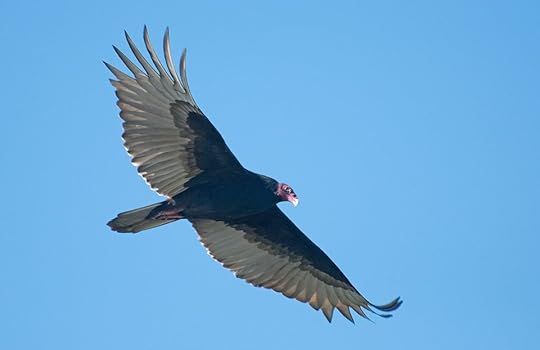
Slightly niche angle to the current nature and mental health Zeitgeist. I had the wonderful experience of reading this on holiday in Colombia, which was so on point because I love nature spotting in new countries, and I was spoilt in Colombia, and although most people seem to have endless joy on holidays, I often struggle with mental health on holidays. I was having a bad morning at the start of the holiday. I was in a funk I just couldn't get out of when a Turkey Vulture swooped over my head. Call it basic distraction. Call it bird Therapy but I was immediately snapped out of my funk looking at this huge raptor.
It turned out that Turkey Vultures are very common in Colombia. Particularly around bins etc. But the first sighting was still a great experience.
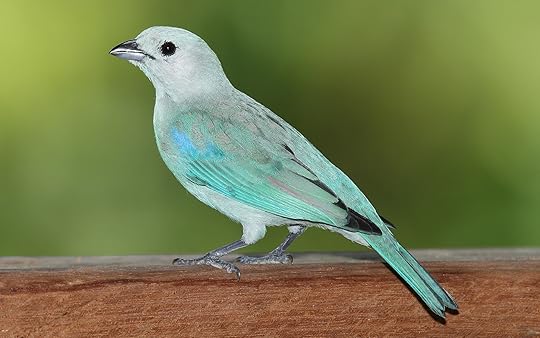
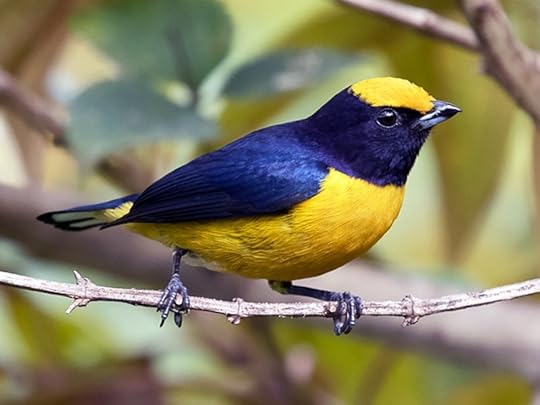
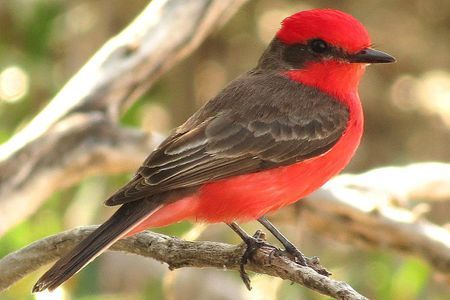
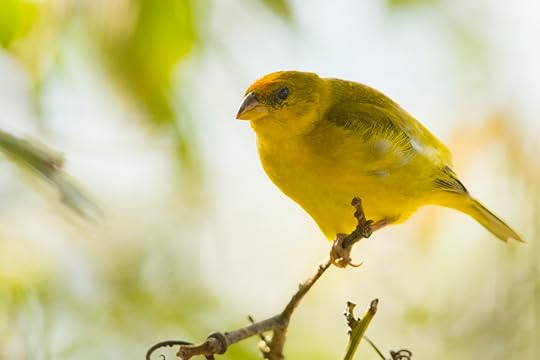
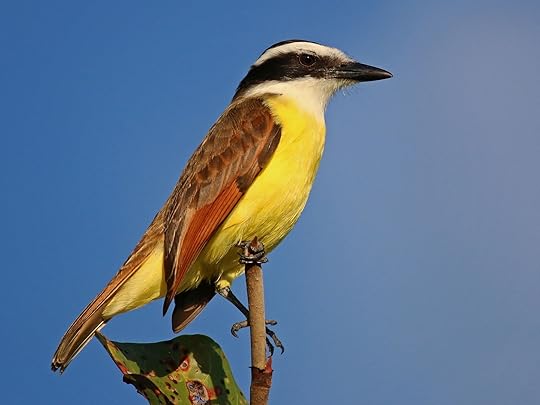
In the house we stayed in in Barichara, there was a water feature. And every day, the most colourful birds came down to bathe or perch on the trees. Blue-gray Tanagers, Yellow Orioles, Orange-bellied euphonias, Vermilion flycatchers, Yellow Finches, Great kiskadees, Red-crowned Woodpeckers, Crimson backed Tanagers. Spoilt!
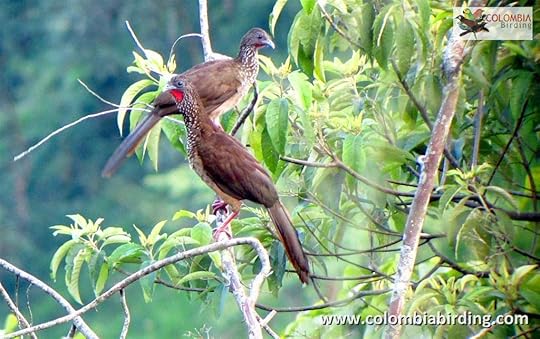
And one morning we were woken by a couple of courting Colombian Chacalacas which is the loudest racket I ever heard in nature.
And that was without leaving the house! So I won't continue listing, but it was a joy to read this book while also first-hand experiencing the most amazing bird therapy every day.
I thought towards the end the point was laboured with just slightly different views of the same idea. But overall, a good read and a great incentive.
Bird Therapy is a brilliant book that is full of help, comfort, reassurance, advice and hope. I have struggled with my mental health a lot over the last few years and one of the things that has helped me is interacting more with the natural world, and bird watching has been something that I have found very calming, reassuring and I believe has had a huge positive impact on my mental health.
Joe's writing really brings you in to his world and although it starts off dark, as it must to properly tell the journey, his way of communicating is filled with such detail that you can easily picture it for yourself and find yourself carried away on his journeys with him. I was not expecting to find so many things in the book that I related to so completely, some of which I had been describing to people just the week before reading. It brought me to tears a couple of times because of the connection I felt, not just with Joe but in also realising that there are more people who feel the same.
The inclusion of data from a survey Joe carried out personally and also weaving in studies from other fields shows that there is a common thread among more people that most probably realise. It also shows that even if you don't have as keen a love of birds as Joe does, you will find so many things within this book that will have a positive impact on your mental health and general well-being.
Bird Therapy is a very uplifting book that I would recommend to everyone, regardless of how much you currently interact with the natural world.
I picked the book to know more about birds so i can implement it while i am photographing birds. unfortunately It didnt meet my expectations. overall it felt like i am reading what i already know.
Book is more about how Bird watching helped author to come out of mental health issue than about birds.
If you are begineer to Birding, You might enjoy it.
I liked the book, But it didnt meet my expectations.
Uplifting, honest, funny and vulnerable - a brilliant book for anyone looking to fight off the anxiety of modern life through a closer connection to nature. Joe’s book is incredibly heartfelt and genuine - I felt his pains and joys throughout and couldn’t wait to get outside after I finished it. Love nature, guys - it’s one of the only reliable forms of contentment!
I didn't quite get this finished through Pigeonhole, but the bits that I managed to read, I really really enjoyed. I bought the e version as I want to enjoy it at a leisurely pace when I can focus my mind better.
I have been a birder for many decades and over the last few years, I have been hooked by bird photography. I have also had my struggles with my health, so the title of this book attracted me at once. Author Joe Harkness has endured bouts of depression as well as the stresses of the life of a teacher. I, too, have struggled with depression and the stress of teaching forced me to retire earlier than I had planned. The author gently explains how getting out birdwatching and into the fresh air, getting exercise and taking his mind off those stressors in his life literally has saved his life. Birdwatching and being out enjoying the natural environment has been to him more therapeutic than any medications or counselling could ever achieve. This book, although it is based on birdwatching in the UK, is applicable in any country. Only the bird species will be different. The author has included many practical hints at the end of each chapter. It is a timely publication in view of the enormous stressors the vast majority of people are experiencing these days. I highly recommend it. Note to self: get out birding more often.
Whether you enjoy birdwatching or just the idea of how nature and being outdoors can help your mental health this book is a must read. From Joes dark beginning, which is a hard read for anyone who has been in a similar situation, there is one thing that keeps you gripped to this book, the honesty, Joe has a beautiful way with words and as someone who also uses the great outdoors to help with my own mental health it hits home at times, like when I have the need to escape to my own special place when anxiety and stresses of work get on top of me, having read this makes me feel like I’m not alone. The extra information makes this book more than just a diary, Joe gives superb advice and information at the end of each chapter that is well worth reading. Since finishing this book I find myself taking more notice of the birds around me, and feel less annoyed at being woken up by the birdsong every morning. You will discover a new found love by the time you finish reading Bird Therapy.
This was a wonderful book that was an intriguing change of pace. Full of wonderful illustrations and interesting insights, it certainly left me with a strong desire to do some bird watching!
The book flows between three types of information perfectly, including the authors own story and experiences, describing wonderfully and emotively his own journey into bird watching, and how this has helped him.
This book also gorgeously describes his experiences around birds, how it felt to watch them for the first time, the different emotions and sensations of seeing the birds living their lives, and how each type of bird encouraged different feelings. The author describes these experiences so vividly that it gives the reader a kind of rush to picture these amazing creatures in the ways he portrays them. For myself, I have so many bird feeders in my gardens, and I love to watch the birds come and go. It’s a joy to watch them, peaceful, so I can completely understand the Authors views on this.
That being said, even without that experience for myself, having read the scenes the author has described so wonderfully, I would feel inclined to begin bird watching myself, and had I not already had the bird feeders I certainly would have been getting some ASAP.
That being said, what makes this book powerful as well as beautiful, is the authors use of academic writings to corroborate what he is saying. He doesn’t just throw out opinions on difficult topics, rather he has done his research and at each point makes reference to a variety of sources whom support what he says, quoting NHS and various others with relevant information in a way which is easy to digest and made all the more intriguing when found within such gorgeous imagery.
I would highly recommend this for anyone who enjoys watching the wildlife, or for anybody who has had or is having a difficult time with their personal mental health. Much of this is soothing to read, and otherwise informative and insightful in a way that makes personal reflection a relaxing thing to do.
An inspiring book that shows just what you can learn about yourself when you hit rock bottom. And with Joe, his discovery was the calming and restorative hobby of birdwatching and in this illuminating book he shares his journey and a wide range of practical tips of how you can also embrace the power of nature to help your mental health and wellbeing and to enjoy the little things that life can bring.
The story starts with the state of his mind at his lowest point and it doesn't make for pleasant reading - but it made him reach out for help and to try and find a way of distracting his mind and he recalls how much enjoyment being outdoors brought him as a young child so started to walk locally. And on these walks he began to notice the wildlife around him and how the joy of spotting a new bird gave him so much joy! It also made him much calmer - it gave his mind a chance to escape daily life and to notice different things.
He documents his experiences along his birdwatching journey - setting up bird feeders in the garden to take part in the RSPB Big Garden Birdwatch for example, and I was so pleased to read that he gives the birds that visit his garden names too! He has a coal tit that visits that he names 'Colin' - I have a robin that visits who I call 'Robbie'!! It's the little things in life that often give the greatest pleasures haha!
It was so fascinating to read the different parts of his journey - the lists he made, the amount he was learning about wildlife and himself, noticing the different patterns of bird behaviour through the seasons and as a keen birdwatcher myself I found myself nodding along in agreement with so much!
What comes across most though is his passion for the subject! The enjoyment it brings him is clear to see and he really does a great job of explaining how having this hobby gave him a new outlook on all that he faced in his life. The perfect read for those looking to improve their mental health and to find out more about birdwatching and how nature is such a great healer.
Bird Therapy by Joe Harkness is an open and honest look at Harkness' journey with debilitating mental health issues and his path towards healing. While medication and therapy did help, he found that nothing was more profound in his recovery than his connection with nature, in particular, the impact of birdwatching.
The healing power of nature is something that is well documented but often ignored in place of more traditional treatment. I admired that Harkness was able to share his powerful experience without taking away from the beneficial inclusion of both medication and therapy. Many times when I have read about more "natural" treatment ideas, pharmaceutical drugs, in particular, are often frowned upon.
As someone who takes medication for anxiety and also uses many other more "natural" options, I appreciate this open-minded approach. There isn't a one size fits all answer, and I was very impressed that Harkness was able to share his viewpoint without shunning other ones that can be very helpful in their own right.
Bird Therapy approaches birdwatching in a relatable and youthful manner and takes away the stereotypical idea that is is only for people in their "retirement" years. Harkness shares his journey with his reconnection with nature and how it helped his mindfulness practices, and his passion for the avian world is infectious.
Thank you to NetGalley and Unbound for an advanced copy of this book.
As a birder who has struggled with mental health issues, I have long known the therapeutic potential of going out into nature, especially to watch and listen to birds. There is lot to be said about the grounding power of that connection, and the author does a fine job of conveying his enthusiasm for that connection and how it has helped him over the years. But I did find a bit too much of the text to be mere anecdotal filler, a little too focused on his own personal experiences of going out and seeing various birds, and I often grew disinterested. As an American, it was even less relatable due to all the unfamiliar British species described, and even the familiar ones having different names like diver and goosander. And don't get me started on the ubiquitous use of "whilst" instead of "while." But only a wanker would really fault him for those cultural discrepancies, and the book was an enjoyable enough reminder of how important and easygoing my favorite pastime can be.
So yeah, regardless of whether you read this book or not, just get out there and find some birds, or even simply set up a feeder to casually check out through your window. It can really do wonders, especially these days, sheesh.
I LOVED this!!! I tandem read the ebook and audio book which I really enjoyed. As someone who is getting into birdwatching this book was inspiring and uplifting. The author also working in exactly the same educational setting was amazing to be able to sympathise and understand the emotions he faced on a daily basis, and something that I particularly related too. As someone who has also previously learnt and studied eco-therapy and the benefits of outdoor education, this book perfectly summarises why any outdoor hobby is good for us. The principles and foundations of this book are spot on, and I loved reading the descriptions of the birds and nature sites visited. The only thing that would have made this a 6 star read would be audio clips of birdsong being described in the audio book, and more illustrations of the birds in the physical copy/ebook. This was just what I was looking for and I am so glad I picked it up, will definitely be purchasing a physical copy for my shelves!
This is an interesting book that I stopped reading at about 50%. This book is part non-fiction and part memoir, about a man who is at emotional rock bottom (OCD, anxiety, depression, suicide attempts) who slowly starts to heal and feel whole because of bird-watching and spending time in nature. It's very similar to The Octopus Teacher on Netflix (a great film).
This type of narrative of an individual who becomes restored to himself and to the world because of spending time in wild spaces, whether it is with animals or just being in a wild environment, is really moving and powerful to me. What they get from time spent in nature is more than just improved functioning in daily life or improved performance at work, but often they grow to have a broader view of life, a care for animals and the environment, and a sense of connection to life.
As a city person, sadly, I've only had a few experiences with the kind of peace that the author describes, but I really wish I had more of a connection to nature and wild animals. I stopped reading at about 50% because the author was really delving into bird watching (hence the title), which I wasn't so interested in.
This is half memoir, half manifesto. The author, Joe Harkness, suffered a mental breakdown and credits discovering birdwatching as key to not only his recovery from acute mental illness, but to re-establishing his mental well-being, reconnecting with his sense of self, and what he wants from life.
Tales of Joe’s experiences of birdwatching are interwoven with insight from studies, surveys and other sources which illustrate how birdwatching aligns with much of the scientific literature on how to be happy: things like reconnecting with nature, physical exercise, mindfulness, learning, etc.
I listened to the audiobook in its entirety on a rainy afternoon on which I felt trapped in the house (although Joe believes there’s no bad weather for birdwatching ;) and it was a lovely tonic just to listen to.
I would recommend it for both those new to birdwatching, and experienced birdwatchers, as it leads experienced birdwatchers to reflect on why they birdwatch, and what kind of birdwatcher they want to be, as well as exploring some of the potential downsides of the hobby such as toxicity and competitive listing/twitching. It’s certainly made me keen to get out (on a dry day!) to just see and enjoy some birds :)
An interesting read and not my usual sort of book but when I saw it on The Pigeonhole I thought it sounded interesting. The book deals with mental health issues and how birdwatching has helped the author cope - having a hobby, being in the outdoors, having a purpose etc. It seems like a very honest account of his life and how this has helped and much of what he says makes sense and can be put in practice no matter what your mental health is like. Since reading it during lockdown I have been more aware of birdsong as think I can hear more now than I could previously - just need to learn which one is which. Thank you to The Pigeonhole for the chance to read this title in exchange for an honest review.
Really feel I’ve benefited from reading this book - thanks for putting in all the work of writing it, Joe! Particularly encouraging, as we approach autumn and winter in this Covid pandemic year, to have winter birds to look forward to. We live near a beautiful natural lake, so will be making this my winter patch! Also we have a treat coming up - a raptor experience in the Brecon Beacons, which our son and daughter in law treated us to. We have a lot of red kites here, and every now and then one flies over our garden, usually seen off by our resident corvids, who scramble on red alert from the rookeries in the tall trees on our close.
“... I had also started to recognise just how positive I felt when I was immersed in the world of birds. My worries seemed to fade into insignificance and when I was feeling stressed, if I counteracted it with some time outside, watching them, it drifted off like birds do, in a stiff breeze.”
I only realized bird-watching was a form of mindfulness and promoted both emotional and physical well-being to me when I needed it to do just that. This book was beautiful and Joe has many little pieces of wisdom and wonder to share about the quiet beauty and appreciation of even the sight of a single bird can bring us if only you take a moment to pause, look and listen.
Bird Therapy by Joe Harkness This was an interesting one. A non fiction read, at heart it's a book about the healing power of nature, the power of connecting with nature, so important in the everyday stress of modern life. It saved Joe Harkness, it's why he wrote the book. He covers many aspects of birdwatching and it's very interesting on the many facets of this hobby. But the important thing here is the overall philosophy behind the book. In many ways nature is our greatest resource of all and it's all out there free, right outside your door. Even if you live in a city or urban area there are nature reserves nearby usually, or at the very least, there is accessible green space. Even something as basic as looking at the sky, at the clouds, feeling the breeze on your skin, observing nature with mindfulness. It can be as simple as a bird feeder attached to your window, you don't even need a garden. Very quickly you recognise your bird visitors, even if you don't know their species but maybe you'll be intrigued enough to look them up and learn something more about them. It doesn't really matter how you start but what it does is gives you a gateway to the natural world. An insight into the life that is going on all around you, regardless of what is happening on the news, for example. All these things ground you, take you away from your everyday cares and worries allowing you to see the bigger picture, if you like and that's where the therapy side of it comes in. Nature is always there. Getting outside, whatever the weather, being active, just enjoying being alive really focussing on something other than your own life, your own cares and worries, it's a healing process in itself. The book itself is written in short, manageable sections, (important if, for example, you are depressed and unable to concentrate for long) with a list of practical tips at the end of each one to help you actually put some of it into action. There were some black and white illustrations which were nicely done but I felt it needed more, there are a fair amount of birds described and I needed accompanying pictures to help me. Joe also talks about the importance of life long learning, of keeping your brain active and engaged, of keeping your body active too. There was an interesting section too, towards the end, on the modern trappings, if you like, of birdwatching, the fancy tech and use of social media, the competitive elements, all of which have their place, of course, but can also bring with them added stresses and strains. All in all a book I'm glad I read which I'm sure will help many people.
A very fun book, thank you Dyl. My profession and hobby in one; it was neat to see a perspective on the positive mental health ramifications of bird watching. Makes me think about my own journey with this hobby where I’ve been caught up in submerging myself in nature, trying to spot as many new birds as possible, and bringing new technology into play. Sometimes, it’s best to go out and just sit with the birds, their habits, and their songs.