

What do you think?

Doppelgänger
Two elderly people, Artur and Isabella, meet and have a passionate sexual encounter on New Year’s Eve. Details of the lives of Artur, a retired Yugoslav army captain, and Isabella, a Holocaust survivor, are revealed through police dossiers. As they fight loneliness and aging, they take comfort in small things: for Artur, a collection of 274 hats; for Isabella, a family of garden gnomes who live in her apartment. Later, we meet the ill-fated Pupi, who dreamed of becoming a sculptor but instead became a chemist and then a spy. As Eileen Battersby wrote, “As he stands, in the zoo, gazing at a pair of rhinos, in a city most likely present-day Belgrade, this battered Everyman feels very alone: ‘I would like to tell someone, anyone, I’d like to tell someone: I buried Mother today.’” Pupi sets out to correct his family’s crimes by returning silverware to its original Jewish owners through the help of an unlikely friend, a pawnbroker. Described by Dasa Drndic as “my ugly little book,” Doppelgänger was her personal favorite.
160 pages, Paperback
First published January 1, 2002
About the author
Daša Drndić
25 books154 followersDaša Drndić (1946-2018) was a distinguished Croatian novelist, playwright and literary critic, author of radio plays and documentaries. She was born in Zagreb, and studied English language and literature at the University of Belgrade. Drndić worked as an editor, a professor of English, and as a TV programme editor in Belgrade. She obtained her doctorate at the University of Rijeka in Croatia, where she later taught. She is the author of thirteen novels including Leica Format (2003), Sonnenschein (2007), Trieste (2011) and Belladonna (2012). Her works have been translated into many languages, and Drndić has won the International Literary Award “Prozart" in 2014, awarded to a prominent author for their contribution towards the development of the literature on the Balkans. Her work has also been shortlisted for the Independent Foreign Fiction Prize and the inaugral EBRD Literature Prize.
Ratings & Reviews
Friends & Following
Create a free account to discover what your friends think of this book!
Community Reviews
Displaying 1 - 30 of 124 reviews

April 30, 2019
I was intrigued by this diptych of novellas, especially the first, "Artur and Isabella," which tells the story of an elderly couple connecting on New Year's Eve, 1999, but unfortunately, the narrative and setting (post-USSR Croatia, with echoes of the holocaust everywhere) is too often overwhelmed by the fundamental instability of the text. This especially afflicted the second novella, "Pupi," which has fascinating moments (a long list of bi-polar suicides stands out) but too often disappears into a morass of its own making. Drndić's capabilities are nearly infinite - the moments of lucidity soar.. I'm happy that I read this, but I rarely was happy to be reading it.

Read
March 2, 2021ok, this is not a cosy novel. There are two stories, which are linked together. That of Artur and Isabella, and that of Pupi. The first is short and deals with two elderly people who meet on New Years Eve, the narration gives us both their words and thoughts accompanied by police reports and newspaper articles concerning thm. Both Artur and Isabella wear adult nappies which is the first link with the second story.
Pupi is the narration of Printz , a man in late middle age who is the carer for his aged parents, continence is a problem for his ancient mother in particular which Pupi deals with in a businesslike way. It begins to dawn on you, as we read and share Pupi's head space, that he is not quite right, his thoughts spiral round and round, and so we only slowly get a sense of what is going on in his life and what is going on (or not going on) in his head, and what is going on around him and quite what what else links this story to the first one about Artur and Isabella.
It all, perhaps of course, goes back to the war , and there is a certain common ground between this book and Trieste. Wars officially ends on a day at a certain time, but the novel shows how far the shadow of a war is cast across the landscape even after the survivors are all dead . Printz is clearly making restitution, possibly not for the deeds of his family during the war, but for being among the winners and having gained through the misfortune of others.
I might well be in multiple minds about this book, stylistically, it is striking, but I am not quite certain as I eventually was with Trieste that the story and the way it is told are a perfect unity . It is obviously a powerful way to convey the experience of a non-neuro-typical mind, a mind which one might relate to the title, but I am not sure it it is fair, just, or reasonable to relate that mind to the socio-political and the cultural situation that it finds itself in, is this mind in question the product of its environment or is it incidental - a clever means for the author to be able to legitimately drip feed information to the reader and keep them in the dark?
Being in multiple minds is appropriate in the case of this book as both Printz and his father lead double lives and so presumably have to have multiple minds behind the multiplicity of faces they show the world, along the same lines, Printz's mother was an opera singer which reinforces the notion of having public masks to hide the private life.
It's not all grim, Printz's hog of a brother, Hertzog, with wife and dog & etc live in the neighbouring flat and are busy appropriating, not always subtly, such material wealth as they can. This is quite funny, in a bleak kind of way.
However if you are squeamish reading about people self-harming with scissors then this might be one to avoid.
Pupi is the narration of Printz , a man in late middle age who is the carer for his aged parents, continence is a problem for his ancient mother in particular which Pupi deals with in a businesslike way. It begins to dawn on you, as we read and share Pupi's head space, that he is not quite right, his thoughts spiral round and round, and so we only slowly get a sense of what is going on in his life and what is going on (or not going on) in his head, and what is going on around him and quite what what else links this story to the first one about Artur and Isabella.
It all, perhaps of course, goes back to the war , and there is a certain common ground between this book and Trieste. Wars officially ends on a day at a certain time, but the novel shows how far the shadow of a war is cast across the landscape even after the survivors are all dead . Printz is clearly making restitution, possibly not for the deeds of his family during the war, but for being among the winners and having gained through the misfortune of others.
I might well be in multiple minds about this book, stylistically, it is striking, but I am not quite certain as I eventually was with Trieste that the story and the way it is told are a perfect unity . It is obviously a powerful way to convey the experience of a non-neuro-typical mind, a mind which one might relate to the title, but I am not sure it it is fair, just, or reasonable to relate that mind to the socio-political and the cultural situation that it finds itself in, is this mind in question the product of its environment or is it incidental - a clever means for the author to be able to legitimately drip feed information to the reader and keep them in the dark?
Being in multiple minds is appropriate in the case of this book as both Printz and his father lead double lives and so presumably have to have multiple minds behind the multiplicity of faces they show the world, along the same lines, Printz's mother was an opera singer which reinforces the notion of having public masks to hide the private life.
It's not all grim, Printz's hog of a brother, Hertzog, with wife and dog & etc live in the neighbouring flat and are busy appropriating, not always subtly, such material wealth as they can. This is quite funny, in a bleak kind of way.
However if you are squeamish reading about people self-harming with scissors then this might be one to avoid.

November 21, 2018
Now shortlisted for the 2019 Republic of Consciousness Prize
This book is published by the UK small press Istros, from their website …
Daša Drndić – 1946 to 2018 – is a Croatian author, most famous for Sonnenschein (Trieste in English) and more recently Belladonna - which just won the Warwick Prize for Women in Translation having been shortlisted for the EBRD prize and the Oxford-Weidenfled Translation prize.
I have not read either book, but understand them to be dense and complex – with elements of Sebald, Thomas Bernhard and Mathias Enard, described as “collages” and “archival”, with a concentration on the issues of 20th Century European history, and particularly World War II, the Holocaust (both featuring harrowing lists of deportees) and Croatia.
From a recent Granta interview (https://granta.com/katharina-bielenbe... ) Drndić has a distinctive style which she expected to be reproduced by her translators.
The English translator of her books to date has been Celia Hawkesworth and the publisher MacLehose Press.
This book from what I can tell, retains the style and voice of the author – but is otherwise quite different to her two more epic novels – more of a part comic, part grotesque, part absurd combination of two short novellas.
From an interview in 2014 https://www.bookaholic.ro/interview-w... this book though is a sentimental favourite of the author’s – partly because it is seen as so different by others
I understand (from the FT) that Drndić gave this book to Susan (SD) Curtis – the founder of Istros - in recognition of her support for literature from the region described above.
And rather wonderfully the book has two translators – one for each of its two parts – Susan Curtis for “Artur and Isabella” and Celia Hawkesworth for “Pupi”.
The parts, are, appropriately for Drndić’s themes of examining the history of Yugoslavia and the role its establishment played in suppressing the history of its separate republics and the role of its inhabitants in abetting the Holocaust, are set respectively in: Croatia (a coastal resort) in two days as the Millenium ends; and (not actually named but clearly) Serbian Belgrade – ranging over many post War years.
“Artur and Isabella” is the part that Drndić describes herself in her comments on the book above – climaxing first in the aforementioned sexual encounter which could only appeal to gerentophiles and a hand-job which runs alphabetically through the horrors of Nazi-ism, and with a second climax of a double suicide.
Both characters have an obsession with collecting – Artur fine hats and Isabella, both chocolate balls (think Mozart balls from Salzburg) and a series of garden gnomes, one for each of her family lost in the holocaust. Their tale is interspersed with police surveillance reports.
“Pupi” is a longer and more rambling story – Printz, born immediately post War and twice-divorced, lives in Belgrade in the mid-1990s with his father – once a secret service agent, his mother having recently died. His younger, louder and bigger brother and his equally big and demanding family live next door and rather surreally start to merge their two flats and take increasing amounts of living space for themselves (I was not sure if this was an allusion to the Nazi policy of lebensraum or to the interactions between the ex-Yugoslav republics in the Balkan wars).
Printz rambles around Belgrade – speaking to himself, the rhinos in the local zoo, and anyone else who will listen (and a number of people who do not really want to) on a range of digressive topics – for example the film “The Night Porter”, funeral rites in different countrie, the French philosopher Althusser, the Hungarian physician Seemelweis.
Appropriately given the title of the book – a number of links come up between the two stories:
Printz’s experience of caring for his incontinent mother at the end of her life, is similar to the care Artur and Isabella carry out for themselves;
Printz and another character discuss various cakes, sweets and tarts named after famous people, which has some overlap with Isabella’s chocolate collection;
Printz and the character discuss the deaths of famous people, echoing a discussion between Isabella and Artur on famous epileptics; close to the book’s ending the narrator discusses a number of bizarre suicides;
More directly some of the silver that Printz’s family still own from the post war villa they occupied is traced to a family of which Isabella was believed the last survivor.
At one stage (in a kind of just reversal of the lists in Drndić’s more famous books) Printz lists famous people who died in the year of his birth – a list which of course includes a large number of executed Nazi’s.
Overall this was a fascinating novel – I feel that I have barely scratched the surface of what is there
This book is published by the UK small press Istros, from their website …
At Istros, we believe that high-quality literature can transcend national interests and speak to us with the common voice of human experience. Discovering contemporary voices and rediscovering forgotten ones, Istros Books works hard to bring you the best that European literature can offer. After a great deal of thinking about the areas of Europe we wanted to cover and the image we wanted to create, we came up with the name Istros Books. Istros is the old Greek and Thracian name for the lower Danube River, which winds its way down from its source in Germany and flows into the Czech Republic and Slovakia, and goes on to cross many of the countries of South-East Europe: Hungary, Croatia, Serbia, Bulgaria and Romania. Its watershed also extends to other neighbouring countries, with one of the main Danubian tributaries, the Sava, serving Slovenia and Bosnia/Herzegovina, while also feeding the waterways and lakes of Macedonia and Montenegro and Albania. These are the countries of focus for Istros Books, evoking the image of the Danube river flowing carelessly across the borders of Europe and encapsulating the ideal of the free-flow of knowledge and the cultural exchange that books promote
Daša Drndić – 1946 to 2018 – is a Croatian author, most famous for Sonnenschein (Trieste in English) and more recently Belladonna - which just won the Warwick Prize for Women in Translation having been shortlisted for the EBRD prize and the Oxford-Weidenfled Translation prize.
I have not read either book, but understand them to be dense and complex – with elements of Sebald, Thomas Bernhard and Mathias Enard, described as “collages” and “archival”, with a concentration on the issues of 20th Century European history, and particularly World War II, the Holocaust (both featuring harrowing lists of deportees) and Croatia.
From a recent Granta interview (https://granta.com/katharina-bielenbe... ) Drndić has a distinctive style which she expected to be reproduced by her translators.
She gave clear indications that the translation of her works into other languages should not stray from her intention, form or style. Dialogue is in italics, always. Inverted commas are reserved for irony, ridicule. Word order is carefully chosen, for stress, and should not be transposed. There should be few commas and even fewer semi-colons. ‘I evade semi-colons when I want my protagonists to speak in a breath – so, comma, comma, comma.’ She often talked about dialogue this way, as a breath. Sentences should not be broken up; she was not in the business of making things easier for the reader: ‘The rhythm and repetition are meant to irritate.’ She abhorred qualifiers which might ‘sweeten’ the text. Her language was not to be sweet, nor soft, nor ornamental, because her subjects were not sweet, and she rarely used ellipses, let alone exclamation marks. Everything should be said, not evaded, and the simpler, the more concise, the better: ‘I weigh words, I respect them, I work with them. Where there are repetitions, they are there for a purpose (rhythm and context).
The English translator of her books to date has been Celia Hawkesworth and the publisher MacLehose Press.
This book from what I can tell, retains the style and voice of the author – but is otherwise quite different to her two more epic novels – more of a part comic, part grotesque, part absurd combination of two short novellas.
From an interview in 2014 https://www.bookaholic.ro/interview-w... this book though is a sentimental favourite of the author’s – partly because it is seen as so different by others
Oh, there is one little book (we laugh). Yes, there is one little book that I love and nobody likes it. Well, let’s say that not many people like it. I don’t know why. Of course, it hasn’t been translated. There were good critiques of it, but it is, probably, a disturbing book. It’s called Doppelganger and it’s about two old people who meet on New Year’s Eve. Both are incontinent, they have diapers and, when the New Year’s Eve ends, they have manual sex through these diapers. But, in the background, you have the stories – one was a naval army officer from the Yugoslavian army and the woman was a Jew with some Austrian descendants and she came to live to Croatia – well, the country isn’t specified. While they’re meeting each other, you have, in the background, this police dossier story. It ends with their suicide. It’s grotesque, in a way. They told me it’s reminiscent of Beckett’s characters. These people, the police, the sex, it was all, probably, repulsive for readers. But it’s my favorite, I would really like to push it outside Croatia. Maybe just because not many people like it, as when you have a disabled child, I don’t know.
I understand (from the FT) that Drndić gave this book to Susan (SD) Curtis – the founder of Istros - in recognition of her support for literature from the region described above.
And rather wonderfully the book has two translators – one for each of its two parts – Susan Curtis for “Artur and Isabella” and Celia Hawkesworth for “Pupi”.
The parts, are, appropriately for Drndić’s themes of examining the history of Yugoslavia and the role its establishment played in suppressing the history of its separate republics and the role of its inhabitants in abetting the Holocaust, are set respectively in: Croatia (a coastal resort) in two days as the Millenium ends; and (not actually named but clearly) Serbian Belgrade – ranging over many post War years.
“Artur and Isabella” is the part that Drndić describes herself in her comments on the book above – climaxing first in the aforementioned sexual encounter which could only appeal to gerentophiles and a hand-job which runs alphabetically through the horrors of Nazi-ism, and with a second climax of a double suicide.
Both characters have an obsession with collecting – Artur fine hats and Isabella, both chocolate balls (think Mozart balls from Salzburg) and a series of garden gnomes, one for each of her family lost in the holocaust. Their tale is interspersed with police surveillance reports.
“Pupi” is a longer and more rambling story – Printz, born immediately post War and twice-divorced, lives in Belgrade in the mid-1990s with his father – once a secret service agent, his mother having recently died. His younger, louder and bigger brother and his equally big and demanding family live next door and rather surreally start to merge their two flats and take increasing amounts of living space for themselves (I was not sure if this was an allusion to the Nazi policy of lebensraum or to the interactions between the ex-Yugoslav republics in the Balkan wars).
Printz rambles around Belgrade – speaking to himself, the rhinos in the local zoo, and anyone else who will listen (and a number of people who do not really want to) on a range of digressive topics – for example the film “The Night Porter”, funeral rites in different countrie, the French philosopher Althusser, the Hungarian physician Seemelweis.
Appropriately given the title of the book – a number of links come up between the two stories:
Printz’s experience of caring for his incontinent mother at the end of her life, is similar to the care Artur and Isabella carry out for themselves;
Printz and another character discuss various cakes, sweets and tarts named after famous people, which has some overlap with Isabella’s chocolate collection;
Printz and the character discuss the deaths of famous people, echoing a discussion between Isabella and Artur on famous epileptics; close to the book’s ending the narrator discusses a number of bizarre suicides;
More directly some of the silver that Printz’s family still own from the post war villa they occupied is traced to a family of which Isabella was believed the last survivor.
At one stage (in a kind of just reversal of the lists in Drndić’s more famous books) Printz lists famous people who died in the year of his birth – a list which of course includes a large number of executed Nazi’s.
Overall this was a fascinating novel – I feel that I have barely scratched the surface of what is there

October 12, 2021
He and she will meet. They don’t know they’ll meet while they’re getting ready to step into the night, into the night of New Year’s Eve, bathed and old and dressed up and alone.
Este livro parece ter um código para o decifrar, e eu acho que não estou na posse de todos os algarismos que me dariam a chave para o compreender plenamente. Ainda assim, “Doppelgänger” é daqueles livros que se demarca dos demais pela originalidade da escrita, pela intensidade dos temas, pelas personagens excêntricas, pela forma como Dasa Drndic integra figuras e factos reais nestas duas histórias mirabolantes e me deixa cada vez mais curiosa com as obras desta autora croata já publicadas em português.
He is not alone. He has a father.
My father is old and sad. I’ll take him on a trip.
(...) But no, Printz is not yet alone. Printz’s dense solitude is just coming into being. Behind it there’s darkness.
My solitude is budding, says Printz, I feel my solitude is budding, I can see my solitude budding, that’s why I take deep breaths.
Printz takes deeps breaths on the ridge, watching the rhinos while his solitude swells.
“Doppelgänger” é composto por duas partes (Artur and Isabella & Pupi) e o que as liga é bastante ténue, mas o mesmo se pode dizer da interpretação do título, já que não há propriamente um sósia, mas “aquele que caminha ao lado”, que se expressa no texto por paralelismos e falsas identidades.
A crítica fala de Kafka, de Bernhardt e de Beckett para definir este livro, o que dá uma ideia do grau de absurdismo, mas Drndic nasceu logo após o fim da Segunda Guerra Mundial e assistiu ao desagregar da Jugoslávia através de outra guerra, por isso, é única e ousada a forma como cruza os temas do Holocausto, do conflito nos Balcãs, da espionagem, da geriatria e dos sem-abrigo.
In her closed hand Isabella holds Mr. Artur’s penis, she holds his penis and rubs. Up and down.
“A”
Abwehr
Down
Adolf
Up
Anschluss
Down
Appellplatz
Up
Arbeit macht frei
Down
Aktion
Up
Arier Rasse
Down
Aktion Erntefest
Aktion Reinhard
Ancschluss
Up
Auf gut deutsch
Antisemitismus
Auschwitz
(...) Done. A one-minute hand job, ten years of history, ten years of Isabella’s life.
Este livro parece ter um código para o decifrar, e eu acho que não estou na posse de todos os algarismos que me dariam a chave para o compreender plenamente. Ainda assim, “Doppelgänger” é daqueles livros que se demarca dos demais pela originalidade da escrita, pela intensidade dos temas, pelas personagens excêntricas, pela forma como Dasa Drndic integra figuras e factos reais nestas duas histórias mirabolantes e me deixa cada vez mais curiosa com as obras desta autora croata já publicadas em português.
He is not alone. He has a father.
My father is old and sad. I’ll take him on a trip.
(...) But no, Printz is not yet alone. Printz’s dense solitude is just coming into being. Behind it there’s darkness.
My solitude is budding, says Printz, I feel my solitude is budding, I can see my solitude budding, that’s why I take deep breaths.
Printz takes deeps breaths on the ridge, watching the rhinos while his solitude swells.
“Doppelgänger” é composto por duas partes (Artur and Isabella & Pupi) e o que as liga é bastante ténue, mas o mesmo se pode dizer da interpretação do título, já que não há propriamente um sósia, mas “aquele que caminha ao lado”, que se expressa no texto por paralelismos e falsas identidades.
A crítica fala de Kafka, de Bernhardt e de Beckett para definir este livro, o que dá uma ideia do grau de absurdismo, mas Drndic nasceu logo após o fim da Segunda Guerra Mundial e assistiu ao desagregar da Jugoslávia através de outra guerra, por isso, é única e ousada a forma como cruza os temas do Holocausto, do conflito nos Balcãs, da espionagem, da geriatria e dos sem-abrigo.
In her closed hand Isabella holds Mr. Artur’s penis, she holds his penis and rubs. Up and down.
“A”
Abwehr
Down
Adolf
Up
Anschluss
Down
Appellplatz
Up
Arbeit macht frei
Down
Aktion
Up
Arier Rasse
Down
Aktion Erntefest
Aktion Reinhard
Ancschluss
Up
Auf gut deutsch
Antisemitismus
Auschwitz
(...) Done. A one-minute hand job, ten years of history, ten years of Isabella’s life.

December 24, 2018
Shortlisted for the Republic of Consciousness Prize 2019
This short novel in two parts was my first book by the Croatian writer who died earlier this year, and I found it interesting and enjoyable. Unusually for such a short book, the two parts have different translators.
The first part, Artur and Isabella, is very short, just 35 pages. It tells of a brief relationship between two old people, and the indignities of their lives are described graphically. Both have complicated family stories, and Isabella is the last survivor of a Jewish family from Chemnitz (a.k.a. Karl Marx Stadt).
The longer second part, Pupi, is the story of an eccentric but learned vagrant who sleeps in a hideout in the zoo. His small pension is insufficient and he loses the flat he has shared with his dying parents because his father has sold it to his brother. The story of his gradual descent into madness is full of digressions about historical figures, which reminded me a little of Olga Tokarczuk's Flights. It gradually emerges that the two stories have common elements that explain the title.
I don't think I have captured what makes the book so interesting in this description, but I will certainly be reading more Drndic.
This short novel in two parts was my first book by the Croatian writer who died earlier this year, and I found it interesting and enjoyable. Unusually for such a short book, the two parts have different translators.
The first part, Artur and Isabella, is very short, just 35 pages. It tells of a brief relationship between two old people, and the indignities of their lives are described graphically. Both have complicated family stories, and Isabella is the last survivor of a Jewish family from Chemnitz (a.k.a. Karl Marx Stadt).
The longer second part, Pupi, is the story of an eccentric but learned vagrant who sleeps in a hideout in the zoo. His small pension is insufficient and he loses the flat he has shared with his dying parents because his father has sold it to his brother. The story of his gradual descent into madness is full of digressions about historical figures, which reminded me a little of Olga Tokarczuk's Flights. It gradually emerges that the two stories have common elements that explain the title.
I don't think I have captured what makes the book so interesting in this description, but I will certainly be reading more Drndic.

January 21, 2019
Maybe none of us has his own life. Is your life unconditionally yours?
This was my first experience of Daša Drndić. I don’t know whether those who have read others of her works would think this is a good place to start, but it is certainly a very interesting place to start. Doppelgänger consists, appropriately, of two short stories. Maybe more accurately, one short story and one novella. For a long time in the second of these, it is hard to identify the links that might connect them, but they do come along in the end. Eileen Battersby wrote of this work that it was a: boldly virtuosic novella in two parts, mirroring the realities of Croatia and Serbia, and that it sees Drndic delighting in Beckettian high art.
The two stories are, if truth be told, rather grim. In the first, shorter, story, two elderly people meet on New Year’s Eve 1999 and share a very unsexy sexual encounter (it’s hard to be sexy surrounded by talk of incontinence and adult nappies etc.). Mixed in with this, we learn their background and what brought them to be living in the same place. And the narrative in interspersed with police dossiers. From the jumble of information and narrative, a sad story emerges. It becomes even sadder as the story comes to a surprising end.
This sense of jumbled narrative only increases when the second story begins. Here, we learn about Printz (‘Pupi’) Dvorsky. This longer piece effectively charts Printz’s downfall, which I won’t describe in detail as that’s what you read the book for. Suffice to say rhinoceroses play an important part, as do grief and rejection. Printz has very limited human contact and spends a lot of time talking to himself. The narrative of the story is largely framed as though Printz is looking over the author’s shoulder and commenting as she writes:
The story is full of digressions and wanderings. Printz muses on the year of his birth (1946) and all the people who executed in that year. At one point, there’s a long list of receipts for expenditure in his home in that year. The reader might start to wonder why all these trivial details are listed. But then we discover they do actually make a point relevant to the story. I am not sure I got the reason for all the digressions. Maybe there isn’t a specific reason for some of them.
I don’t think it is possible to summarise everything that is going on in this book. It’s not just two stories about sad, old people. As Battersby suggests, there is commentary on Croatia and Serbia and it reaches back further in Yugoslavian history. When you are reading it, it does not feel dark and there is an absurd comic feel too much of the narrative. But, on reflection, when you look back at the whole book, you realise the author has, in fact, taken you to some very dark places and has shone a light into some of them in a way that makes you stop and think.
This was my first experience of Daša Drndić. I don’t know whether those who have read others of her works would think this is a good place to start, but it is certainly a very interesting place to start. Doppelgänger consists, appropriately, of two short stories. Maybe more accurately, one short story and one novella. For a long time in the second of these, it is hard to identify the links that might connect them, but they do come along in the end. Eileen Battersby wrote of this work that it was a: boldly virtuosic novella in two parts, mirroring the realities of Croatia and Serbia, and that it sees Drndic delighting in Beckettian high art.
The two stories are, if truth be told, rather grim. In the first, shorter, story, two elderly people meet on New Year’s Eve 1999 and share a very unsexy sexual encounter (it’s hard to be sexy surrounded by talk of incontinence and adult nappies etc.). Mixed in with this, we learn their background and what brought them to be living in the same place. And the narrative in interspersed with police dossiers. From the jumble of information and narrative, a sad story emerges. It becomes even sadder as the story comes to a surprising end.
This sense of jumbled narrative only increases when the second story begins. Here, we learn about Printz (‘Pupi’) Dvorsky. This longer piece effectively charts Printz’s downfall, which I won’t describe in detail as that’s what you read the book for. Suffice to say rhinoceroses play an important part, as do grief and rejection. Printz has very limited human contact and spends a lot of time talking to himself. The narrative of the story is largely framed as though Printz is looking over the author’s shoulder and commenting as she writes:
Small animals move into Printz's head. He looks after his little animals; feeds them and settles them to sleep. Sometimes they are alive and they move, sometimes they are like porcelain figures and stand still, stiff.
Like me. I sometimes stiffen on purpose.
All Printz's little animals are the same size regardless of what kind they are. So there is a grotesque disharmony in Printz's head.
What disharmony ? There's no disharmony.
Cats, small cats, big as dogs, small dogs. Small rhinos, as small as small birds, like snakes, lions, bugs.
Bugs ? What bugs ?
Cicadas.
The story is full of digressions and wanderings. Printz muses on the year of his birth (1946) and all the people who executed in that year. At one point, there’s a long list of receipts for expenditure in his home in that year. The reader might start to wonder why all these trivial details are listed. But then we discover they do actually make a point relevant to the story. I am not sure I got the reason for all the digressions. Maybe there isn’t a specific reason for some of them.
I don’t think it is possible to summarise everything that is going on in this book. It’s not just two stories about sad, old people. As Battersby suggests, there is commentary on Croatia and Serbia and it reaches back further in Yugoslavian history. When you are reading it, it does not feel dark and there is an absurd comic feel too much of the narrative. But, on reflection, when you look back at the whole book, you realise the author has, in fact, taken you to some very dark places and has shone a light into some of them in a way that makes you stop and think.

January 16, 2019
Now shortlisted for the 2019 Republic of Consciousness Prize
The judge's citation
Croatian writer Daša Drndić, who died in June 2018, was best known until recently in the English-speaking world for her 2007 novel, translated into English as Trieste (2012) by Ellen Elias-Bursać. But she achieved greater, and deserved, prominence, with the 2017 translation by Celia Hawkesworth of her 2012 novel, Belladonna (my review). Hawkesworth's translation won the 2018 Warwick Prize for Women in Translation Prize and was shortlisted for the 2018 EBRD Literature Prize and 2018 Oxford Weidenfeld Prize, although rather oddly overlooked for the Man Booker International (I suspect a late publication date in the MBI cycle may have been a factor).
2018 has seen two further translations appear, E.E.G., by Celia Hawkesworth from Drndić's 2016 original, her last novel, a book that features Andres Ban from Belladonna and is also in the style of Trieste, and this, an earlier (2002) and rather different work, Doppelgänger translated into English by Celia Hawkesworth and Susan Curtis.
Susan Curtis is the founding editor of Istros Books, who have published Doppelgänger (her other English language novels being published by Machelose Press), and this novel I believe was gifted to her by the author as a tribute to her work in promoting the literature of the region. As Istros explains:
Artur and Isabella has the eponymous and elderly pair briefly meet on 31 December 1999 in the small Croatian town where both live, and have a rather pitiful sexual encounter
HE and SHE will meet.
They don't know if yet, they don't know they'll neet while they're getting ready to step into the night, into the night of New Year's Eve, bathed and old and dressed up and alone, as they are preparing to walk the streets of this small town, a small town with many bakeries, an ugly small town.
It's New Year's Eve.
It's now they'll meet, now.
He's seventy nine and his name is Artur.
We learn in the story how each of them came to be living in the town, their family lives disrupted by the 2nd world war. Isabella's flat contains 36 gnomes, named after the 36 members of her extended family that died in Flossenburg, Auschwitz and Theresienstadt, and she has an obsession with chocolate balls from various central European confectioners, and their silver wrappers, also explained by her past. Artur has a similar obsession with Italy, hats and famous epileptics. And, in the background, the secret police are documenting their pasts - and their sudden subsequent demise.
Pupi is told from the perspective of Printz, aged 55 (Pupi his childhood nickname) living in Belgrade also in the late 20th century. It opens (and closes) with him observing rhinos at the city zoo, and he also frequents a nearby park. The following gives a feel for his rather scatalogical and bodily function focused thoughts:
This excellent essay cum review explains the set-up better than I can: http://www.publicbooks.org/the-righte...
As the novel progresses, the tone becomes increasingly bitter. Printz embarks on a rant against the Catholic Church that could have come straight from the pages of Thomas Bernhard, and Daša Drndić has confirmed the key role he played in her development as a writer. See e.g. this interview https://www.revistadepovestiri.ro/int...
Maybe none of us has his own life. Is your own life unconditionally yours.
A very strong novel, very different to Belladonna in style but ultimately equally powerful.
Work by Daša Drndić (1946 – 2018) since the mid 1990s (per Wikipedia)
Marija Częstohowska još uvijek roni suze ili Umiranje u Torontu (1997), translated into English as Dying in Toronto (2026) by Celia Hawkesworth
My review
Canzone di guerra (1998), translated into English as Canzone di Guerra (2022) by Celia Hawkesworth
My review
Totenwande (2000), as yet untranslated
Doppelgänger (2002), translated into English as Doppelgänger ( 2018) by Celia Hawkesworth and SD Curtis
My review
Shortlisted for 2019 Republic of Consciousness Prize
Leica Format (2003), translated into English as Leica Format (2015) by Celia Hawkesworth
My review
Sonnenschein (2007), translated into English as Trieste (2012) by Ellen Elias-Bursać
My review
Shortlisted for 2013 Independent Foreign Fiction Prize
April u Berlinu (2009), as yet untranslated
Belladonna (2012), translated into English as Belladonna 2017, by Celia Hawkesworth
My review
Winner 2018 Warwick Prize for Women in Translation Prize and shortlisted for the 2018 EBRD Literature Prize and 2018 Oxford Weidenfeld Prize
E.E.G (2016), translated into English as E.E.G. (2018), by Celia Hawkesworth
My review
The judge's citation
When Daša Drndić died at the age of seventy-one in June last year, we lost a writer of astounding force and fierce detail. In an interview published in the Paris Review in 2017, she said that 'art should shock, hurt, offend, intrigue, be a merciless critic of the merciless times'; Doppelgänger is two works – one short, one long – which live up to this brief, while also being unashamedly strange and comic.They do not know, because they are old and forgetful, they do not know that inside them crouch their Doppelgängers who whisper, while they piss themselves, while they breathe, slowly and spasmodically, while they tremble, while they eat chocolates. Their disgusted Doppelgängers threaten and summon them, call and shout, come on - join us.
Croatian writer Daša Drndić, who died in June 2018, was best known until recently in the English-speaking world for her 2007 novel, translated into English as Trieste (2012) by Ellen Elias-Bursać. But she achieved greater, and deserved, prominence, with the 2017 translation by Celia Hawkesworth of her 2012 novel, Belladonna (my review). Hawkesworth's translation won the 2018 Warwick Prize for Women in Translation Prize and was shortlisted for the 2018 EBRD Literature Prize and 2018 Oxford Weidenfeld Prize, although rather oddly overlooked for the Man Booker International (I suspect a late publication date in the MBI cycle may have been a factor).
2018 has seen two further translations appear, E.E.G., by Celia Hawkesworth from Drndić's 2016 original, her last novel, a book that features Andres Ban from Belladonna and is also in the style of Trieste, and this, an earlier (2002) and rather different work, Doppelgänger translated into English by Celia Hawkesworth and Susan Curtis.
Susan Curtis is the founding editor of Istros Books, who have published Doppelgänger (her other English language novels being published by Machelose Press), and this novel I believe was gifted to her by the author as a tribute to her work in promoting the literature of the region. As Istros explains:
Istros is the old Greek and Thracian name for the lower Danube River, which winds its way down from its source in Germany and flows into the Czech Republic and Slovakia, and goes on to cross many of the countries of South-East Europe: Hungary, Croatia, Serbia, Bulgaria and Romania. Its watershed also extends to other neighbouring countries, with one of the main Danubian tributaries, the Sava, serving Slovenia and Bosnia/Herzegovina, while also feeding the waterways and lakes of Macedonia and Montenegro and Albania. These are the countries of focus for Istros Books, evoking the image of the Danube river flowing carelessly across the borders of Europe and encapsulating the ideal of the free-flow of knowledge and the cultural exchange that books promote.Doppelgänger consists, at first sight, of two novellas, the 36-page Artur and Isabella, translated by Curtis, and the 115 page Pupi, by Hawkesworth, although as one reads a key link between the stories emerges. The prose style is somewhat different from Belladonna, simpler, lighter, more playful, although ultimately the content is equally dark.
Our mission is to shine a light on that ‘other ’ Europe and reveal its glories through the works of its best writers. We endeavour to find the best from a wealth of creativity and to offer it to a new audience of English speakers.
Artur and Isabella has the eponymous and elderly pair briefly meet on 31 December 1999 in the small Croatian town where both live, and have a rather pitiful sexual encounter
HE and SHE will meet.
They don't know if yet, they don't know they'll neet while they're getting ready to step into the night, into the night of New Year's Eve, bathed and old and dressed up and alone, as they are preparing to walk the streets of this small town, a small town with many bakeries, an ugly small town.
It's New Year's Eve.
It's now they'll meet, now.
He's seventy nine and his name is Artur.
We learn in the story how each of them came to be living in the town, their family lives disrupted by the 2nd world war. Isabella's flat contains 36 gnomes, named after the 36 members of her extended family that died in Flossenburg, Auschwitz and Theresienstadt, and she has an obsession with chocolate balls from various central European confectioners, and their silver wrappers, also explained by her past. Artur has a similar obsession with Italy, hats and famous epileptics. And, in the background, the secret police are documenting their pasts - and their sudden subsequent demise.
Pupi is told from the perspective of Printz, aged 55 (Pupi his childhood nickname) living in Belgrade also in the late 20th century. It opens (and closes) with him observing rhinos at the city zoo, and he also frequents a nearby park. The following gives a feel for his rather scatalogical and bodily function focused thoughts:
The biggest monument in the park is called the Monument to the Victor, which, after the recent wars in the former Yugoslavia sounds terrifying and wrong. Printz used to stand on the ramparts of the fortress watching the rivers merge.The story tells of his family, opening with the death of his mother, and later his father, as well as his dealings with his greedy sister-in-law, but also gives us his family background, from a Croatian family but in Serbia when the Balkan conflict erupts.
The confluence is murky and muddy now.
From the park you used to see sandy islands in the distance, white islands, now dark with the excrement of pigeons and river gulls.
Gulls eat trash and their shit is black.
In some parks there were trees with hanging branches, so that those parks looked like hanging gardens. There were hiding places. There was soft grass for couples in love. That was in his youth.
That was when Printz was young. I’m Printz.
Printz leaves the rise in the zoo. He goes in search of a hiding place.
The grass is wet and dirty, the grass in the park, the park is big and empty. It is still drizzling. Printz has expensive shoes.
Floresheim shoes, black, with perforations.
In those hiding places dead rats lie, stray dogs whelp, and stray cats have their young there too, there are a lot of strays in this city. In those hiding places animals and people store their inner waste, their intestinal waste, so those hiding places are messy and smelly.
I know, I tour them.
Printz comes to a hiding place behind the northern wall of the fortress. He bends down, peers in, scatters the rubbish with his foot, there are heaps of rubbish: condoms, plastic bags, bloody pads, shit- smeared pieces of toilet paper, sooty candles, crumpled matchboxes, small coins, old coins from his childhood.
I see the coins that fall out of lovers’ pockets (mine too, mine too, long ago), lovers rock up and down on the soft grass, the grass used to be soft, they rock on the clean grass, now it’s neglected.
Printz is not looking for anything.
I’m not looking for anything. I’m remembering.
This excellent essay cum review explains the set-up better than I can: http://www.publicbooks.org/the-righte...
As the novel progresses, the tone becomes increasingly bitter. Printz embarks on a rant against the Catholic Church that could have come straight from the pages of Thomas Bernhard, and Daša Drndić has confirmed the key role he played in her development as a writer. See e.g. this interview https://www.revistadepovestiri.ro/int...
Which writers changed radically or had a big influence on your writing? At the beginning?Printz is on a mission to discover the source of some inherited family silver, which only came into the family's possession after the war, and through that we learn of a crucial connection to Isabella from the first novella. As Printz concludes:
D.D.: I don ’t know when the beginning was, it was a long time ago (laughs). But what comes to mind immediately is Thomas Bernhard, because he gave me the courage, I saw that you can be angry, you don’t have to be polite, you can be nasty, you can criticize. And while reading him I was so happy that I had the right to be angry: with my country, with politics. Because during this old system I was just thinking now: you could talk softly against your country and the party at home. When you went abroad that was sort of forbidden. You weren’t supposed to criticize your country and also it was also preferable to drop by the embassy or the consulate and tell them you were there. And Bernhard said, when I read his first book translated into Serbian, it was „Frost” I think, some thirty years ago, then they discovered him in Croatia, so, when I first read him I thought: „This is wonderful, you can be angry, you can curse, you can really say what you think if you really know how to say it”. He’s one of my favorites. Not to mention some classics like Kafka or Musil.
Maybe none of us has his own life. Is your own life unconditionally yours.
A very strong novel, very different to Belladonna in style but ultimately equally powerful.
Work by Daša Drndić (1946 – 2018) since the mid 1990s (per Wikipedia)
Marija Częstohowska još uvijek roni suze ili Umiranje u Torontu (1997), translated into English as Dying in Toronto (2026) by Celia Hawkesworth
My review
Canzone di guerra (1998), translated into English as Canzone di Guerra (2022) by Celia Hawkesworth
My review
Totenwande (2000), as yet untranslated
Doppelgänger (2002), translated into English as Doppelgänger ( 2018) by Celia Hawkesworth and SD Curtis
My review
Shortlisted for 2019 Republic of Consciousness Prize
Leica Format (2003), translated into English as Leica Format (2015) by Celia Hawkesworth
My review
Sonnenschein (2007), translated into English as Trieste (2012) by Ellen Elias-Bursać
My review
Shortlisted for 2013 Independent Foreign Fiction Prize
April u Berlinu (2009), as yet untranslated
Belladonna (2012), translated into English as Belladonna 2017, by Celia Hawkesworth
My review
Winner 2018 Warwick Prize for Women in Translation Prize and shortlisted for the 2018 EBRD Literature Prize and 2018 Oxford Weidenfeld Prize
E.E.G (2016), translated into English as E.E.G. (2018), by Celia Hawkesworth
My review

July 30, 2022
Doppelgänger, by Daša Drndić. Translated by S.D. Curtis and Celia Hawkesworth.
Doppelgänger comprises two parts that, despite being - apparently - independent of each other, do share some more or less subtle connections, both plot-related and thematically. Daša Drndić is not playing around to please readers who seek comfort, so I might as well tell you that the book begins with an old man, Artur, shitting himself and that references to shit, piss, diapers and alike are manifold and particularly abundant in the first part, dedicated to Artur and Isabella. These two meet on New Year's day, 2000, and have some disgusting (albeit pretty funny) sexual intercourse. Isabella Fischer, a German woman native of Chemnitz, is the only survivor of a family of 37 Jews, all of them exterminated in WW2 concentration camps. She loves chocolates. Artur Biondi (aka Bondić) is a retired Yugoslav Navy officer who collects hats. The second, longest part is dedicated to Printz (Pupi) Dvorsky, a former Croatian chemist and spy who had a mental breakdown when meeting Suharto. He took care of his dying mother, an opera singer, and of his father - he too a chemist and spy -, and has suffered from neglect since childhood. His parents directed their love towards his younger and despicable brother Herzog, and Printz is constantly being screwed up by people because he's too kind (he gives everything to the poor) and sensitive. He is eventually trapped in a cage of madness, but still retains his kindness and cultivated thoughts.
I won't delve into the meaning of doppelgängers and the connections between the two stories. Technically Drndić is very good, for she mingles lists of objects, philosophical and historical passages, symbolism, first and third-person POVs, WW2 atrocities, the Balkan war and many other (beaten) concepts and still manages to pull it off with aplomb. It's a great piece of literature.
Doppelgänger comprises two parts that, despite being - apparently - independent of each other, do share some more or less subtle connections, both plot-related and thematically. Daša Drndić is not playing around to please readers who seek comfort, so I might as well tell you that the book begins with an old man, Artur, shitting himself and that references to shit, piss, diapers and alike are manifold and particularly abundant in the first part, dedicated to Artur and Isabella. These two meet on New Year's day, 2000, and have some disgusting (albeit pretty funny) sexual intercourse. Isabella Fischer, a German woman native of Chemnitz, is the only survivor of a family of 37 Jews, all of them exterminated in WW2 concentration camps. She loves chocolates. Artur Biondi (aka Bondić) is a retired Yugoslav Navy officer who collects hats. The second, longest part is dedicated to Printz (Pupi) Dvorsky, a former Croatian chemist and spy who had a mental breakdown when meeting Suharto. He took care of his dying mother, an opera singer, and of his father - he too a chemist and spy -, and has suffered from neglect since childhood. His parents directed their love towards his younger and despicable brother Herzog, and Printz is constantly being screwed up by people because he's too kind (he gives everything to the poor) and sensitive. He is eventually trapped in a cage of madness, but still retains his kindness and cultivated thoughts.
I won't delve into the meaning of doppelgängers and the connections between the two stories. Technically Drndić is very good, for she mingles lists of objects, philosophical and historical passages, symbolism, first and third-person POVs, WW2 atrocities, the Balkan war and many other (beaten) concepts and still manages to pull it off with aplomb. It's a great piece of literature.

Read
September 28, 2020Thank you to @istros_books for sending me a free copy of Doppelgänger by Daša Drndić to review! They have such an interesting array of translated literature from South Eastern Europe and the Balkans, so please do check them out if you're interested in broadening your reading horizons!
.
This is my first book by Drndić, and by any Croatian author in fact, and it's left me with a strong desire to read more of her work and learn more about the history of Croatia. The book is split into two stories, one rather short, Arturo and Isabella, and one much longer, Pupi. Arturo and Isabella is the more powerful of the two. The two eponymous central characters are 70-somethings who meet outside on New Year's Eve and enjoy a rather rogue-ish encounter. Their meeting is frequently disrupted by police reports, as they are both under surveillance by the police on account of their political pasts.
.
Pupi is a bit more meandering, as a now-vagrant man wanders through life trying to navigate his family troubles. Strange similarities with the first story begin to arise as the story progresses, hence the title. This is one of those books that would benefit from multiple readings to catch the nuances and coincidences you might have missed the first time around, especially if (like me) your knowledge of the historic and political context is not too hot.
.
I read a really interesting piece in Granta about Drndić's style, which she is very rigid about when it comes to the English translation! The first story is translated by S.D Curtis the second by Celia Hawkesworth, and both apparently emulate her style well. Drndić says her style is supposed to irritate the reader, and she doesn't want any changes made in translation to make it more palatable. Indeed, the rhythms and repetitions of her writing made me feel slightly panicked when I was reading it, like I was in the head of the anxious narrator, almost becoming them. It's quite unnerving and extremely impressive, especially given it's been reproduced in translation!
.
Overall I think it was a great introduction to Drndić's work, and I look forward to picking up more in the future!
.
This is my first book by Drndić, and by any Croatian author in fact, and it's left me with a strong desire to read more of her work and learn more about the history of Croatia. The book is split into two stories, one rather short, Arturo and Isabella, and one much longer, Pupi. Arturo and Isabella is the more powerful of the two. The two eponymous central characters are 70-somethings who meet outside on New Year's Eve and enjoy a rather rogue-ish encounter. Their meeting is frequently disrupted by police reports, as they are both under surveillance by the police on account of their political pasts.
.
Pupi is a bit more meandering, as a now-vagrant man wanders through life trying to navigate his family troubles. Strange similarities with the first story begin to arise as the story progresses, hence the title. This is one of those books that would benefit from multiple readings to catch the nuances and coincidences you might have missed the first time around, especially if (like me) your knowledge of the historic and political context is not too hot.
.
I read a really interesting piece in Granta about Drndić's style, which she is very rigid about when it comes to the English translation! The first story is translated by S.D Curtis the second by Celia Hawkesworth, and both apparently emulate her style well. Drndić says her style is supposed to irritate the reader, and she doesn't want any changes made in translation to make it more palatable. Indeed, the rhythms and repetitions of her writing made me feel slightly panicked when I was reading it, like I was in the head of the anxious narrator, almost becoming them. It's quite unnerving and extremely impressive, especially given it's been reproduced in translation!
.
Overall I think it was a great introduction to Drndić's work, and I look forward to picking up more in the future!

Read
February 8, 2025This will not be a linear review.
This novel is in two parts. The first is ARTUR AND ISABELLA. The second is PUPI. There was apparently a different translator for each part. The first part is in the past tense, the second in the present tense. I don't know if this is attributable to the author or the translator. The present tense can be annoying at times.
The book begins thusly: Oh. He shat himself. The He is Artur. He is a septuagenarian and wears an adult diaper. The diaper is not one-hundred percent effective. Four hours after midnight on New Year's, Artur is out walking and spots Isabella. He follows her and eventually catches up and introduces himself. Isabella is also a diaper-wearing septuagenarian and she is not affronted by Artur. Indeed, they walk on together and eventually stop, sit, and snake their hands inside each other's diapers. The author is not vague about what happens therein. This first part is a mere thirty-nine pages, and if you hope this elderly, passionate affair will continue to blossom you will be disappointed. What finally happens to these two characters - the why of it - is never fully explained.
But back to the excrement. It is not confined to the startling opening. In fact, there's enough of it that a reader will sense its importance. That said, shit, as an allegory, is rather obvious. But you have alternative choices. Artur fills his apartment with berets. Isabella fills hers with gnomes. Pupi, he of the second part, goes to the zoo and watches the rhinoceroses. They watch back. On one occasion, a rhinoceros couple repeatedly slam their heads into a steel door. On another occasion, Pupi does the same thing. Some allegories are less obvious than shit. Some editions of this book have a rhinoceros on the cover. Others have a gnome. Mine has a gnome. I think I'd rather a rhinoceros.
On the back cover of my edition, Claire Messud attempts to be helpful by saying this book is Beckettian as well as Bernhardian. That was, sadly, not universally helpful.
This is the second book I've read in just the last two months where the raison d'etre of the story is a character's struggle with the possession of items taken from Jews during the Holocaust. I won't name the other book here because that would spoil the plot. And maybe I'm spoiling this one. But it's Pupi who has the silverware here. He's fractured by the possession, long before he imitates the rhinos. Fractured, but not unaware. He knows what the initials on the knives and forks mean. And is smart enough to find out, to ultimately connect the two stories. He is a stand-in, a ghost. A doppelgänger.
This novel is in two parts. The first is ARTUR AND ISABELLA. The second is PUPI. There was apparently a different translator for each part. The first part is in the past tense, the second in the present tense. I don't know if this is attributable to the author or the translator. The present tense can be annoying at times.
The book begins thusly: Oh. He shat himself. The He is Artur. He is a septuagenarian and wears an adult diaper. The diaper is not one-hundred percent effective. Four hours after midnight on New Year's, Artur is out walking and spots Isabella. He follows her and eventually catches up and introduces himself. Isabella is also a diaper-wearing septuagenarian and she is not affronted by Artur. Indeed, they walk on together and eventually stop, sit, and snake their hands inside each other's diapers. The author is not vague about what happens therein. This first part is a mere thirty-nine pages, and if you hope this elderly, passionate affair will continue to blossom you will be disappointed. What finally happens to these two characters - the why of it - is never fully explained.
But back to the excrement. It is not confined to the startling opening. In fact, there's enough of it that a reader will sense its importance. That said, shit, as an allegory, is rather obvious. But you have alternative choices. Artur fills his apartment with berets. Isabella fills hers with gnomes. Pupi, he of the second part, goes to the zoo and watches the rhinoceroses. They watch back. On one occasion, a rhinoceros couple repeatedly slam their heads into a steel door. On another occasion, Pupi does the same thing. Some allegories are less obvious than shit. Some editions of this book have a rhinoceros on the cover. Others have a gnome. Mine has a gnome. I think I'd rather a rhinoceros.
On the back cover of my edition, Claire Messud attempts to be helpful by saying this book is Beckettian as well as Bernhardian. That was, sadly, not universally helpful.
This is the second book I've read in just the last two months where the raison d'etre of the story is a character's struggle with the possession of items taken from Jews during the Holocaust. I won't name the other book here because that would spoil the plot. And maybe I'm spoiling this one. But it's Pupi who has the silverware here. He's fractured by the possession, long before he imitates the rhinos. Fractured, but not unaware. He knows what the initials on the knives and forks mean. And is smart enough to find out, to ultimately connect the two stories. He is a stand-in, a ghost. A doppelgänger.

July 4, 2026
New author obsession unlocked

November 12, 2018
This quirky little book grows on you. My full review can be found here: https://roughghosts.com/2018/11/19/a-...

Read
September 1, 20263,5*
„[...] everyone imagines his homeland differently.“
Tekstas nelabai ilgas, bet yriausi per jį ilgokai ir gana sunkiai – panašiai, kaip sunkoka ištarti ir pačios autorės kroatišką pavardę. (Caro ;))
Nors jau buvau skaičiusi kitą jos knygą "Battle Song", vis dar jaučiuosi iki galo „neprisipratinusi“ autorės stiliaus. Bet kad skaitysiu ją toliau, tai tikrai.
Daša Drndić rašo fragmentiškai, kartais atrodo, kad ji tiesiog šaltai dokumentuoja tikrovę. Tikrai gali jausti jos kalbos kietumą (man bent taip jautėsi), be jokių paminkštinimų, noro įtikti skaitytojui ar gražbyliavimo. Bet gal kaip tik tai ir suteikė tekstui svorio, rimtumo, nors sveiko, ironiško humoro čia taip pat netrūko. Pagrindinės temos – Holokaustas, senatvė, vienatvė ir tėvynės paieškos.
„[...] everyone imagines his homeland differently.“
Tekstas nelabai ilgas, bet yriausi per jį ilgokai ir gana sunkiai – panašiai, kaip sunkoka ištarti ir pačios autorės kroatišką pavardę. (Caro ;))
Nors jau buvau skaičiusi kitą jos knygą "Battle Song", vis dar jaučiuosi iki galo „neprisipratinusi“ autorės stiliaus. Bet kad skaitysiu ją toliau, tai tikrai.
Daša Drndić rašo fragmentiškai, kartais atrodo, kad ji tiesiog šaltai dokumentuoja tikrovę. Tikrai gali jausti jos kalbos kietumą (man bent taip jautėsi), be jokių paminkštinimų, noro įtikti skaitytojui ar gražbyliavimo. Bet gal kaip tik tai ir suteikė tekstui svorio, rimtumo, nors sveiko, ironiško humoro čia taip pat netrūko. Pagrindinės temos – Holokaustas, senatvė, vienatvė ir tėvynės paieškos.

November 22, 2018
Something of a departure for Drndić yet still unmistakably hers. Doppelgänger is strange, funny, difficult and wise. In some ways it is more accessible than her larger tomes (all of which are breathtakingly great), but don't expect a breezy read.

July 7, 2019
Mj prvi susret s Dašom u čitateljskom smislu. U životu smo se susrele nekoliko puta jer mi je predavala na fakultetu, ali čisto sumnjam da sam ostavila nekakav upečatljiv dojam jer nisam bila baš aktivan i glasan student, uglavnom sam sjedila u zadnjim redovima, šutjela i hvatala bilješke. Vjerujem da postoji knjiga Daše Drndić koja bi mi se mogla svidjeti, ali ovo definitivno nije ta. No hard feelings. I dalje sam veliki fan nje kao osobe jer je zaista bila posebna i osebujna.

March 17, 2024
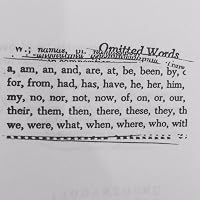
William Burroughs’s friend, the artist Brion Gysin, introduced him to a surrealist technique of writing known as the cut up method, in which printed works from various sources are literally cut up and randomly rearranged. Gysin used it in a work and noticed some of the final products were “emerging as quite coherent and meaningful prose.” Writing in the early 60s, Burroughs observed, “the cut up method brings to writers the collage which has been used by painters.” It was a method “for everyone,” one “anybody can make,” one that Burroughs most famously employed in writing Naked Lunch.
In Doppelgänger, Croatian writer Daša Drndić employs a modified cut up technique for large parts of the novel, taking her own work and, rather than moving words randomly, took sections and paragraphs to rearrange the story, separating them by dotted lines with a centered scissors symbol. When the first appear, they are confusing. Imagine taking parts of a narrative and randomly cutting it up and then reordering them, how that could lose one’s orientation. One extended passage near the end acts as the glue bringing a confirming order to the plot.
Drndić’s writing—at least what I have read—has consistent themes about memory; how it is hidden or forgotten, and how it creates whatever views of history we have about injustice, culture, and totalitarian societies. This time the story begins with an encounter of an elderly couple who meet at the turn of the 21st century before the modified cut up story of a former Yugoslavian spy and his family takes unexpected turns. The connection to the couple turns out to be both minor, and for the protagonist, revealing, although he is not aware of it. It is also a story about the tenuous connections of family bonds and relationships, one that will either linger with or frustrate the reader. With me it lingers, it connects. Drndić also uses her plots to teach about historical events and people, inserting her questions, observations, and views about them. This is endearing and motivates me to want to read more of her works, but I could understand how some readers might be put off.
Should this cryptic “review” intrigue, her writing might also do so as well. But if it sounds too pedantic and arcane, I doubt it would.
In Doppelgänger, Croatian writer Daša Drndić employs a modified cut up technique for large parts of the novel, taking her own work and, rather than moving words randomly, took sections and paragraphs to rearrange the story, separating them by dotted lines with a centered scissors symbol. When the first appear, they are confusing. Imagine taking parts of a narrative and randomly cutting it up and then reordering them, how that could lose one’s orientation. One extended passage near the end acts as the glue bringing a confirming order to the plot.
Drndić’s writing—at least what I have read—has consistent themes about memory; how it is hidden or forgotten, and how it creates whatever views of history we have about injustice, culture, and totalitarian societies. This time the story begins with an encounter of an elderly couple who meet at the turn of the 21st century before the modified cut up story of a former Yugoslavian spy and his family takes unexpected turns. The connection to the couple turns out to be both minor, and for the protagonist, revealing, although he is not aware of it. It is also a story about the tenuous connections of family bonds and relationships, one that will either linger with or frustrate the reader. With me it lingers, it connects. Drndić also uses her plots to teach about historical events and people, inserting her questions, observations, and views about them. This is endearing and motivates me to want to read more of her works, but I could understand how some readers might be put off.
Should this cryptic “review” intrigue, her writing might also do so as well. But if it sounds too pedantic and arcane, I doubt it would.
May 16, 2020
The first line of Doppelgänger begins "Oh. He shat himself", which perfectly sums up the intense and eccentric style of Daša Drndić’s two novellas. 'Artur and Isabella' involves two septuagenarians - a Yugoslavian naval captain and a Holocaust survivor - who have a surreal encounter on New Year's Eve. Whilst they engage in, possibly, the bleakest hand-job scene in literature their flats are searched by the police, and through those police dossiers intimate and tragic details of their two lives begin to be revealed. The second novella begins with Pupi, a middle-aged former spy, observing a pair of rhinos at the Belgrade zoo, trying to cope with the death of his parents. As a child of the wealthy Yugoslavian bourgeoise he feels increasingly distressed about growing up in the house of a murdered Jewish family: one of his many struggles which eventually precipitates a chilling breakdown. Drndić's rough and confrontational prose can be demanding and frustrating; her fragmentary, postmodern collage forms a complex metaphor for post-Soviet Croatia and Serbia. These novellas are heavy and uncomfortable, but in their examinations of fascism, inheritance and shifting borders, they confer weight to those human lives who become lost to the cruel violence of history.

August 27, 2023
I kept reading and I do not know why. It was a short book but I have no idea what I just read other than I understand Doppelgänger means a double walker or a shadow of yourself. One thing I will say, it was the only book I ever read that the characters talked about bathroom habits most literally. I will not give another second of my time to this review, time to move on.

August 21, 2026
Sensacional. Solo Beckett y Kafka lograron atmósferas y dinámicas entre personajes tan ácidamente humanas como las de Doppelgänger.

May 31, 2020
Much of the time I was reading Doppelganger I was questioning the aptness of mashing the two separate texts of which it's made together--at least until the ending of the second, much longer text, "Pupi," made it all clear. Bear with it, there is a connecting theme to the two texts and that connection is key to understanding what the novel as a whole is all about. And, while I'm not sure that the first section, "Artur and Isabella," was entirely necessary, I felt a wonderful sense of completeness and appropriateness when I came to the novel's beautifully written final scene. I demur to explicitly state the thematic link and to discuss it because it should be obvious to readers when they get there and such a description would work as a spoiler to someone who's yet to read the novel, so I'm just going to say that it's satisfying and well worth your time and leave it at that.
Reading through the reviews here I was surprised to see that several readers couldn't make it through "Pupi." This is a real shame since the novel kind of unfolds its raison d'etre in this section's denouement. I believe that the inability on some people's parts to read this second section is to the text's credit rather than detriment, however. Having a fairly close bipolar friend, I realized fairly early on in this second section that this disorder was being represented in a novel linguistic way in "Pupi." I can understand being impatient with the staccato diction and the constant use of non-sequitur, the text's repetitions and constant jumping around between random incongruities and life-or-death essentials, but I believe this was the novel's attempt to capture the kind of disassociation of a mind running too fast to plod through the kind of everyday reality to which most of us are able to ascribe. The artistic frisson of this technique, running through discussions of Althusser and Foucault, their lives and philosophies, in oversimplified sentences and constant self-derailed tangents of thought, was, in my opinion, a brilliant way to represent the cognitive storm of the condition--more an overload than a deficiency of thought, a form of self-defeating genius rather than a mental retardation or slowness as we used to say.
Perhaps because of having some small inkling of this because of my friend, I felt deeply for this character that so many here felt compelled to push away and abandon. Which is exactly how the world deals with brains that work differently, and this is another theme of Doppelganger, and is depicted in the text itself as Pupi's alienation grows and his mind spins ever faster around itself and away from the concreteness of our collective sense of objective reality. That's pretty remarkable: that the situation depicted in the novel becomes a perfect mirror reflecting the experience of being able to read it--or not.
Reading through the reviews here I was surprised to see that several readers couldn't make it through "Pupi." This is a real shame since the novel kind of unfolds its raison d'etre in this section's denouement. I believe that the inability on some people's parts to read this second section is to the text's credit rather than detriment, however. Having a fairly close bipolar friend, I realized fairly early on in this second section that this disorder was being represented in a novel linguistic way in "Pupi." I can understand being impatient with the staccato diction and the constant use of non-sequitur, the text's repetitions and constant jumping around between random incongruities and life-or-death essentials, but I believe this was the novel's attempt to capture the kind of disassociation of a mind running too fast to plod through the kind of everyday reality to which most of us are able to ascribe. The artistic frisson of this technique, running through discussions of Althusser and Foucault, their lives and philosophies, in oversimplified sentences and constant self-derailed tangents of thought, was, in my opinion, a brilliant way to represent the cognitive storm of the condition--more an overload than a deficiency of thought, a form of self-defeating genius rather than a mental retardation or slowness as we used to say.
Perhaps because of having some small inkling of this because of my friend, I felt deeply for this character that so many here felt compelled to push away and abandon. Which is exactly how the world deals with brains that work differently, and this is another theme of Doppelganger, and is depicted in the text itself as Pupi's alienation grows and his mind spins ever faster around itself and away from the concreteness of our collective sense of objective reality. That's pretty remarkable: that the situation depicted in the novel becomes a perfect mirror reflecting the experience of being able to read it--or not.

February 2, 2019
Another book on the Republic of Consciousness longlist that has so much packed into it that I know before typing a single word that I can’t do justice to it in a review. I’ll just jot down a few notes of mine and recommend checking reviews from other people!
- I have a strong liking for unconventional and surprising narrative techniques, and Doppelgänger fits that bill perfectly in the second story, where the main character, Printz, is somehow aware of the third-person narration going on and comments on in, his thoughts being presented in italics. A very short example:
“She is cheerful
she’s acting
she is kind
she’s not
her belly shakes when she walks and goes to the market every day.”
In my head, I imagined Printz whispering in response to the demands set by the narrator, and thought it worked very well.
- Drndić can be a demanding writer, and at least here (in what’s the first novel I’ve read by her) she at times goes into excrutiating detail when describing everyday mundane things. It’s an old trick in the book of (post)modernism, and while it may sometimes cause tediousness, her own view of it helped me understand where she’s coming from:
“Art is detail. I do not see the attention to detail as an act of masochism, but as the capacity to look, see, listen, and hear. Without detail—in literature, in painting, in music, et cetera—what do we get? A boring linear presentation of whatever, a skeleton, a simplified “story,” the obsession with the story is a story in itself, which is what unfortunately pacifies the public more and more today.” (The Paris Review)
Very interesting author with a distinctive, strong voice = adding her other translated work to my TBR.
- I have a strong liking for unconventional and surprising narrative techniques, and Doppelgänger fits that bill perfectly in the second story, where the main character, Printz, is somehow aware of the third-person narration going on and comments on in, his thoughts being presented in italics. A very short example:
“She is cheerful
she’s acting
she is kind
she’s not
her belly shakes when she walks and goes to the market every day.”
In my head, I imagined Printz whispering in response to the demands set by the narrator, and thought it worked very well.
- Drndić can be a demanding writer, and at least here (in what’s the first novel I’ve read by her) she at times goes into excrutiating detail when describing everyday mundane things. It’s an old trick in the book of (post)modernism, and while it may sometimes cause tediousness, her own view of it helped me understand where she’s coming from:
“Art is detail. I do not see the attention to detail as an act of masochism, but as the capacity to look, see, listen, and hear. Without detail—in literature, in painting, in music, et cetera—what do we get? A boring linear presentation of whatever, a skeleton, a simplified “story,” the obsession with the story is a story in itself, which is what unfortunately pacifies the public more and more today.” (The Paris Review)
Very interesting author with a distinctive, strong voice = adding her other translated work to my TBR.
March 29, 2020
Drndic is difficult reading but especially now. Maybe her books require us to be too much in our own heads. And right now and for the next months, all we want is distraction. Doppelganger is my favorite of the several Drndic books I've read this year. There is a scene involving two rhinos who desperately want to get back into their enclosure for the night. They are in a zoo. They keep charging the heavy steel door of their locked enclosure with their heads, destroying their horns, ripping their mouths and bleeding heavily. Finally they give up and collapse in the dust outside of the enclosure, side by side, bleeding. The scene is described so vividly that I will never be able to erase it from memory. Nor do I want to. There are so many passages in this book that grab hold of you in a grip that's too tight and painful. Reading Drndic is a little like coming face to face with essential truths that knock you back a little.
October 17, 2023
This is really not an easy book to read. I loved Trieste and Drndić uses many of the same techniques but, although I could see the intelligence behind it, I just couldn’t like it as much. The subject matter is bleak and the author’s utterly unafraid to tackle taboo areas. Its visceral, awkward, often actually revolting but because it’s talking of bodily functions and aging in an honest way, not because it is violent or morally transgressive (which really hits home how skewed we can be about what we accept in our literature/general culture). Amongst this there are multiple layers that feel very bound up in Balkan history and especially the disorienting effects of the end of communism and the wars that succeeded it. Undoubtedly a better book than my three star rating, and one that deserves more in depth analysis, but still not the type of book that I would want to read too often.

November 21, 2019
Fucking immense. Good god, read Daša Drndić

November 9, 2020
A sweet mixture between Kundera's melancholy, Beckett's witty dialogues, Hesse's despair; all covered in a strong Balkan post-war sadness.
March 6, 2020
DOPPELGÄNGER is the most experimental of the Drndić novels I've read [Belladonna, EEG]. It's comprised of two novellas, the first, a brief story of the park bench meeting of an elderly Holocaust survivor, Isabella, and a retired Yugoslav military man, Artur, on New Year's Eve. The second, much longer, much stranger, “Pupi,” is about the downward spiral of a man, Printz Dvorsky, haunted by past sins.The two stories find their connection in those past sins.
Drndić's prose in Doppelgänger is sharp, staccato, even more biting than in Belladonna or EEG. Her themes here, though, are classic Drndić: the sterility of the postmodern world, the way the past bleeds into the present, loneliness, the power and intrusiveness of the State.
In Drndić's other books, Belladonna and EEG, the Holocaust, the Bosnian genocide, and all the ethnic cleansings of our Brave New World are front and center. In Doppelgänger, they are ever-present – but just below the surface. In the memories of Isabella; in her collection of 36 garden gnomes, one for each of her relatives murdered in Flossenburg, Auschwitz and Theresienstadt. In the stolen silverware. In the dreams and imaginings and memories.
And the rhinos.
Drndić's prose in Doppelgänger is sharp, staccato, even more biting than in Belladonna or EEG. Her themes here, though, are classic Drndić: the sterility of the postmodern world, the way the past bleeds into the present, loneliness, the power and intrusiveness of the State.
In Drndić's other books, Belladonna and EEG, the Holocaust, the Bosnian genocide, and all the ethnic cleansings of our Brave New World are front and center. In Doppelgänger, they are ever-present – but just below the surface. In the memories of Isabella; in her collection of 36 garden gnomes, one for each of her relatives murdered in Flossenburg, Auschwitz and Theresienstadt. In the stolen silverware. In the dreams and imaginings and memories.
And the rhinos.
March 4, 2026
An (in my mind) needless reminder that Drndic was a far more flexible writer than the intentionally anti-novelistic form of her more widely acclaimed work has led some critiscism to suggest.
Here she writes Beckettian pathos staring down the horrors of war's aftermath head on, rather than obliquely as old Sam had it, and does it incredibly well.
This is a funny, disorienting and deeply sad book well worth your time.
For those who have read Sebald's Rings of Saturn, Doppelgänger reads like Drndic has captured the faint glow he speaks of as the soul of the herring; though beautiful, sundered of its flesh and forced to leave its shining body dimming, damp and lifeless.
For those who have read Sebald's passage about herrings, they will also know what comes next.
Here she writes Beckettian pathos staring down the horrors of war's aftermath head on, rather than obliquely as old Sam had it, and does it incredibly well.
This is a funny, disorienting and deeply sad book well worth your time.
For those who have read Sebald's Rings of Saturn, Doppelgänger reads like Drndic has captured the faint glow he speaks of as the soul of the herring; though beautiful, sundered of its flesh and forced to leave its shining body dimming, damp and lifeless.
For those who have read Sebald's passage about herrings, they will also know what comes next.

February 11, 2019
“Nothing is crucial to me, but I don’t realise that yet.”
Doppelgänger, by Daša Drndić, contains two stories that are subtlety interlinked. Each emanates an anguish exacerbated by the protagonists’ loneliness. These are not comfortable reads as they challenge the bland acceptance of society’s expectations of how the old and discarded should behave. There is a deep felt sadness that goes unanswered.
The first story, translated by S.D. Curtis, tells of a meeting between two septuagenarians. The characters are introduced with descriptions of the slow decay of their bodies. They wear adult nappies. Their skin is flaccid. They each live alone having once had families. Between sections that detail their histories are police dossiers. They are being surveilled.
In the early hours of New Year’s Day, Artur and Isabella are walking the quiet streets of their small town in Croatia. They are very different in their demeanour and habits but accept each other’s company. They engage in a sex act.
“We’re grown-ups, there’s no sense in equivocating. We should give it a try.”
While out, their flats are searched.
The second story, translated by Celia Hawkesworth, opens on a damp autumn day at a zoo in Belgrade. Printz is watching two neglected rhinos in their enclosure. It is a distressing scene to read. We learn that Printz’s mother died recently after a long illness, and that he helped care for her as her body failed. He is sleeping on a camp bed in his parents’ flat. His younger brother is waiting to inherit their many possessions.
Despite being raised by a wealthy family, Printz carries out acts of socialism. His parents valued their coveted things with which Printz is generous, perhaps attempting to bolster his self-worth. He accepts his ongoing descent in the eyes of society. He has a photographic memory, a wealth of knowledge, but lacks experience of feeling loved.
He remembers with fondness a childhood friend, Maristella, although their relationship emerges as tainted due to his behaviour. It calls into question how he was aware at five years old of the acts he performs on her.
The tale is a slow burner with a disturbing undercurrent. There is much for the reader to consider.
Both stories explore the legacy of Nazism and then Communism. Children cannot choose their parents yet are deeply affected by the inheritance of actions both before and after their birth. The writing has a haunted quality. Changing borders, geographic and familial, leave citizens unmoored.
Complex and at times elusive, the observations and actions so tautly and meticulously described can be unnerving. These are stories that ask the reader to step outside their comfort zone and confront a reality of historic dark deeds and their repercussions.
Doppelgänger, by Daša Drndić, contains two stories that are subtlety interlinked. Each emanates an anguish exacerbated by the protagonists’ loneliness. These are not comfortable reads as they challenge the bland acceptance of society’s expectations of how the old and discarded should behave. There is a deep felt sadness that goes unanswered.
The first story, translated by S.D. Curtis, tells of a meeting between two septuagenarians. The characters are introduced with descriptions of the slow decay of their bodies. They wear adult nappies. Their skin is flaccid. They each live alone having once had families. Between sections that detail their histories are police dossiers. They are being surveilled.
In the early hours of New Year’s Day, Artur and Isabella are walking the quiet streets of their small town in Croatia. They are very different in their demeanour and habits but accept each other’s company. They engage in a sex act.
“We’re grown-ups, there’s no sense in equivocating. We should give it a try.”
While out, their flats are searched.
The second story, translated by Celia Hawkesworth, opens on a damp autumn day at a zoo in Belgrade. Printz is watching two neglected rhinos in their enclosure. It is a distressing scene to read. We learn that Printz’s mother died recently after a long illness, and that he helped care for her as her body failed. He is sleeping on a camp bed in his parents’ flat. His younger brother is waiting to inherit their many possessions.
Despite being raised by a wealthy family, Printz carries out acts of socialism. His parents valued their coveted things with which Printz is generous, perhaps attempting to bolster his self-worth. He accepts his ongoing descent in the eyes of society. He has a photographic memory, a wealth of knowledge, but lacks experience of feeling loved.
He remembers with fondness a childhood friend, Maristella, although their relationship emerges as tainted due to his behaviour. It calls into question how he was aware at five years old of the acts he performs on her.
The tale is a slow burner with a disturbing undercurrent. There is much for the reader to consider.
Both stories explore the legacy of Nazism and then Communism. Children cannot choose their parents yet are deeply affected by the inheritance of actions both before and after their birth. The writing has a haunted quality. Changing borders, geographic and familial, leave citizens unmoored.
Complex and at times elusive, the observations and actions so tautly and meticulously described can be unnerving. These are stories that ask the reader to step outside their comfort zone and confront a reality of historic dark deeds and their repercussions.

January 26, 2022
Daša Drndić described Doppelgänger as her "ugly little book", but her personal favorite. Doppelgänger presents us with a slightly quirkier, more playful Drndić, relishing in the grotesque and mildly absurd (definitely laughed more in this than Leica Format). But it's still just as dark and misanthropic, with those details that are a punch to the gut (like those 36 gnomes....). As Parul Sehgal puts it in her NYT review of Drndić and Doppelgänger: "These are not books to be read but endured." Indeed.
“If we were able always o free ourselves by weeping from the misery that overcomes us, obscure illnesses and poetry would disappear. But some innate refusal, intensified by upbringing, or some defect in the function of our tear glands, condemns us to the torment of dry eyes.
Stop!
Consequently, we are all sick, each of us lacks a Sahara where we would be able to shout at the top of our voices, or the shores of a dark savage sea, with whose crazed sobs we could merge our own, still more furious.”
“If we were able always o free ourselves by weeping from the misery that overcomes us, obscure illnesses and poetry would disappear. But some innate refusal, intensified by upbringing, or some defect in the function of our tear glands, condemns us to the torment of dry eyes.
Stop!
Consequently, we are all sick, each of us lacks a Sahara where we would be able to shout at the top of our voices, or the shores of a dark savage sea, with whose crazed sobs we could merge our own, still more furious.”

January 16, 2020
This is my second Drndić novel, Belladonna was the first, and I am a fan. Both of these books and the next Drndić novel I’ll read, EEG: A Novel, are set in post war Eastern Europe and follow characters dealing with the aftermath of fascism and violence. Her books are heavy, dense, sad, and intelligent and challenging in important ways.
I strongly recommend this book and any other Daša Drndić book available.
I strongly recommend this book and any other Daša Drndić book available.
Displaying 1 - 30 of 124 reviews