Jump to ratings and reviews
Rate this book

উপন্যাস সমগ্র​

Rate this book
A collection of Bengali novels by Nabarun Bhattacharya.

527 pages, Hardcover

First published January 1, 2010

5 people are currently reading
57 people want to read

About the author

Nabarun Bhattacharya

32 books105 followers
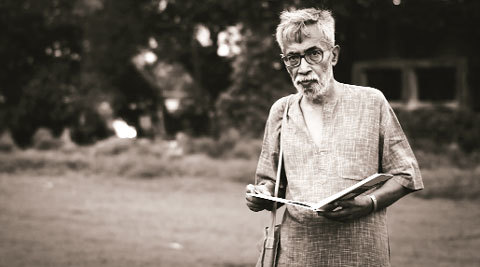
Nabarun Bhattacharya was an Indian Bengali writer deeply committed to a revolutionary and radical aesthetics. He was born at Baharampur (Berhampur), West Bengal. He was the only child of actor Bijon Bhattacharya and writer Mahashweta Devi.

He is most known for his anarchic novel, Herbert (1993), which was awarded the Sahitya Akademi Award, and adapted into a film by the same name in 2005.

Nabarun is renowned as a fiction writer, and justifiably so. But he wrote poems as well and Ei Mrityu Upotyoka Aaamaar Desh Na (This Valley of Death Is Not My Country) is arguably his most acclaimed collection of poems.

Nabarun over the years consistently contributed to various little magazines, which together constitute a promising alternative mode of literary culture in Bengal that challenges the influence of big capital. It is equally noteworthy that his writing style deconstructs the gentle middle class ethos of the Bengali society. Most of his characters belong to the lower strata of existence. His fictions reinvigorate the received Bengali language with forceful idioms and expressions from the margins, which might often bombard the chaste taste of a Tagorean upper and middle class, still very much under the spell of a 19th century Victorian sensibility.

Ratings & Reviews

What do you think?
Rate this book

Friends & Following

Create a free account to discover what your friends think of this book!

Community Reviews

5 stars
16 (59%)
4 stars
11 (40%)
3 stars
0 (0%)
2 stars
0 (0%)
1 star
0 (0%)
Displaying 1 - 3 of 3 reviews
Profile Image for Anirban Nanda.
Author 7 books40 followers
June 19, 2017
This is the complete collection of novels by the author. I have reviewed them separately and posted them to the corresponding book page. Unfortunately, all the novels do not have a separate page. I am including my review of the penultimate novel, that is Auto, in here.

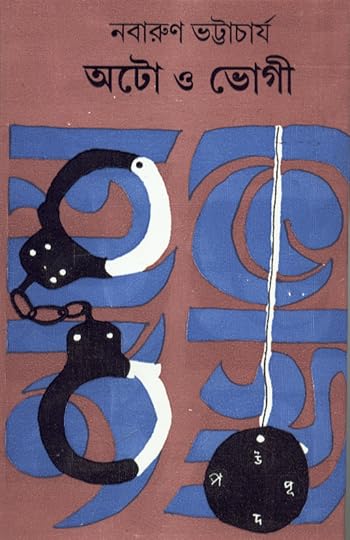
Auto was first published, in Bengali, in the 2003 annual issue of “Aajkal” . Then in 2007, it was published as a book along with another novella called Bhogi.

Auto is a story of an auto-driver who wanted to be a footballer. He liked to play in the striker but at times, whenever required he came up and defended his team. His father died suddenly and he had to look for jobs – football could not feed him. First he did stray jobs like working in a garage, driving rickshaw-van, carrying sand sacks. But later he engaged in driving business; the owner of the auto really loved him. Things were looking up for him but his mother too died untimely. Throughout the novella, the protagonist, that is, Chandan kept talking about his mother, accusing her of leaving him so early in his life to struggle in this cruel world, accusing himself that he should have taken more care of her.


But this is not a novella about nostalgic remembrance of the past, rather the immediate cruelty of the present. In the underbelly of Kolkata, the illegal business of country liquor is rather murky. In this business, we meet people who were always scared because no one knew when someone would be miffed and someone would die. While the writer creates these stereotyped images of the dark side of the city, the central event of the story is quite the opposite. A few robbers had attempted to rob a jewellery shop but couldn’t escape after the robbery. The crowd caught and started beating them up. After one point, they die of the beating and yet they kept beating. One of them, who might be working in some garage and missed all the fun, had just joined. He picked an iron rod and brought it down, full force, in between the legs of one of the...

Chandan witnessed all these and fell down on the street.  After that incident he became impotent in the bed. His wife, whom he loved the most after the death of his mother, left him and eloped with a young boy. While such an incident certainly evokes pity in the reader, the bigger picture evokes fear. The impatience, the rage that people of this time are harbouring can cripple a society. And this general theme always flows inside this obviously one-man story.

Image result for auto by nabarun bhattacharya

What was more shocking is the final act of cruelty of the protagonist that not only saved him from continuous humiliation but also pushed him to a life of a bottomless void.

In the introduction of the novel, Bhattacharya said,
“Knowing the trap of death is inevitable in this life, humans come to this living world and survive by enlisting their names in the tragedy of killing and getting killed. This is happening because some wishes never get fulfilled. And it worries me all the time. He knows that he is not getting freedom in any way. But he is reluctant to accept this.”

In an interview, Bhattacharya once said he had become a writer because he couldn't become a footballer. Somewhere in the frustration of Chandan's not being able to be a footballer, we see glimpses of him too. This novella is essentially a personal cry to find the voice of the modern time. And it has successfully achieved so.

Of all the novels of Nabarun Bhattacharya, this novella will come third in my list of favourites by him after Herbart and Toy City.   
Profile Image for Suman Das.
177 reviews12 followers
June 16, 2021
নবারুণ ভট্টাচার্যের বই পড়া একটা অভিজ্ঞতা।
6 reviews
March 22, 2022
নবারুণ ভট্টাচার্য্যর উপন্যাস পড়া একটা অদ্ভুত সুন্দর অভিজ্ঞতা।
Displaying 1 - 3 of 3 reviews

Can't find what you're looking for?

Get help and learn more about the design.