

What do you think?
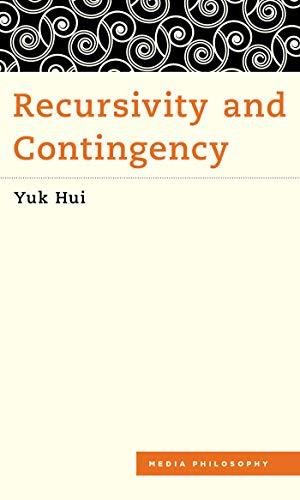
Recursivity and Contingency
This book employs recursivity and contingency as two principle concepts to investigate into the relation between nature and technology, machine and organism, system and freedom. It reconstructs a trajectory of thought from an Organic condition of thinking elaborated by Kant, passing by the philosophy of nature (Schelling and Hegel), to the 20th century Organicism (Bertalanffy, Needham, Whitehead, Wiener among others) and Organology (Bergson, Canguilhem, Simodnon, Stiegler), and questions the new condition of philosophizing in the time of algorithmic contingency, ecological and algorithmic catastrophes, which Heidegger calls the end of philosophy.
The book centres on the following speculative question: if in the philosophical tradition, the concept of contingency is always related to the laws of nature, then in what way can we understand contingency in related to technical systems? The book situates the concept of recursivity as a break from the Cartesian mechanism and the drive of system construction; it elaborates on the necessity of contingency in such epistemological rupture where nature ends and system emerges. In this development, we see how German idealism is precursor to cybernetics, and the Anthropocene and Noosphere (Teilhard de Chardin) point toward the realization of a gigantic cybernetic system, which lead us back to the question of freedom. It questions the concept of absolute contingency (Meillassoux) and proposes a cosmotechnical pluralism. Engaging with modern and contemporary European philosophy as well as Chinese thought through the mediation of Needham, this book refers to cybernetics, mathematics, artificial intelligence and inhumanism.
The book centres on the following speculative question: if in the philosophical tradition, the concept of contingency is always related to the laws of nature, then in what way can we understand contingency in related to technical systems? The book situates the concept of recursivity as a break from the Cartesian mechanism and the drive of system construction; it elaborates on the necessity of contingency in such epistemological rupture where nature ends and system emerges. In this development, we see how German idealism is precursor to cybernetics, and the Anthropocene and Noosphere (Teilhard de Chardin) point toward the realization of a gigantic cybernetic system, which lead us back to the question of freedom. It questions the concept of absolute contingency (Meillassoux) and proposes a cosmotechnical pluralism. Engaging with modern and contemporary European philosophy as well as Chinese thought through the mediation of Needham, this book refers to cybernetics, mathematics, artificial intelligence and inhumanism.
336 pages, Kindle Edition
Published January 28, 2019
About the author
Yuk Hui
29 books170 followersYuk Hui studied Computer Engineering and Philosophy at the University of Hong Kong and Goldsmiths College in London, with a focus on philosophy of technology. He currently teaches at the Bauhaus University in Weimar. Between 2012 and 2018 he taught at the institute of philosophy and art (IPK) and Institute of Culture and Aesthetics of Digital Media of the Leuphana University Lüneburg where he wrote his habilitation thesis. He is also a visiting professor at the China Academy of Art where he teaches a master class with Bernard Stiegler every spring. Since 2019 he is Visiting Associate Professor at the School of Creative Media of City University in Hong Kong. Previous to that, he was a research associate at the Institute for Culture and Aesthetics of Media (ICAM), postdoctoral researcher at the Institute for Research and Innovation of the Centre Pompidou in Paris and a visiting scientist at the Deutsche Telekom Laboratories in Berlin. He is initiator of the Research Network for Philosophy and Technology, an international network which facilitates researches and collaborations on philosophy and technology. Hui has published on philosophy of technology and media in periodicals such as Research in Phenomenology, Metaphilosophy, Parrhesia, Angelaki, Theory Culture and Society, Cahiers Simondon, Deleuze Studies, Intellectica, Krisis, Implications Philosophiques, Jahrbuch Technikphilosophie, Techné, Zeitschrift für Medienwissenschaft, Appareil, New Formations,Parallax, etc. He is editor (with Andreas Broeckmann) of 30 Years after Les Immatériaux: Art, Science and Theory (2015), and author of On the Existence of Digital Objects (prefaced by Bernard Stiegler, University of Minnesota Press, March 2016), The Question Concerning Technology in China. An Essay in Cosmotechnics (Urbanomic, December 2016), and Recursivity and Contingency (Rowman & Littlefield International, February 2019). His writings have been translated into a dozen languages.
Ratings & Reviews
Friends & Following
Create a free account to discover what your friends think of this book!
Community Reviews
Displaying 1 - 15 of 15 reviews

January 24, 2026
Primero lo malo: A veces da la sensación de que una gran amalgama de nombres y teorías dispares (desde la biología, la psicología o la cibernética a la lógica o la teoría estética) se amalgaman de forma caótica y se reducen movimientos enteros a cortas frases que explican el desarrollo de ramas enormes del conocimiento humano. Por un lado el planteamiento a ves parece caótico y la información tarda en ganar sentido, lo bueno: Cuando lo hace la lectura de la naturaleza a través del concepto de recursividad (que para mi tiene una importancia ligeramente mayor que el de contingencia en este libro) se convierte en una herramienta decisiva para analizar los avances de la filosofía de la segunda mitad del siglo XX a la luz de teorías previas que encajan a la perfección con estas a modo de linterna. Ilumina muy bien ciertos aspectos de la filosofía kantiana en relación a la técnica y la telelología y la recepción romántica de estas en relación a lo orgánico. Todo con recorridos que a veces resultan muy ilustrativos de aspectos del pensamiento que yo personalmente no había transitado mucho como la lógica o la cibernética, algunos que me interesan mucho ahora como la historia de la técnica (y la presencia siempre subterránea de Simondon en todo esto). Por ello me molestaron un poco los desarrollos generales y caóticos de aspectos que no controlo tanto e hicieron que me perdiera en un mundo teórico que, tal y como lo presenta Hui, es fascinante.

October 29, 2019
This work presents itself as a variegated philosophical collage of sorts, pulling from sources all over the place. In many ways, this is good, but in others it's quite frustrating. Following the author's train of thought is exasperatingly difficult through the almost complete lack of structure and organizational principle and often the writing is rather too "academically floral" for my tastes. Especially the sections on Hegel read as if the author has no clue what they're talking about — even if they actually might — because the writing is so unclear and shoddy. I was very excited for this book and it turned out to be quite a disappointment for me for these reasons, even though there were plenty of small things that I found noteworthy if not exactly very illuminating.

June 27, 2023
Me costó un huevo terminar este libro, pero valió muchísimo la pena.
El epílogo es esclarecedor: al principio, parece que este texto es un recorrido histórico-crítico sobre el problema. Primero, se explora la noción de organismo en Kant y la forma orgánica en Schelling —ya en este punto, no puedo dejar de pensar en una reivindicación del Timeo de Platón, con sus debidas modificaciones y complicaciones. Después, en otro árbol de pensamiento paralelo al anterior, la vía recursiva a la cual acude Hegel para explicar su filosofía del Concepto inspira a matemáticos como Gödel y Leibniz -de alguna forma que aún no comprendo porque no entiendo Leibniz- le da las herramientas a Norbert Wiener para fundar la Cibernética.
Esta última disciplina, a lo largo del pensamiento del s. XX, ganó una terrible reputación, pues se postuló como una que se proponía a formalizar/matematizar a los organismos —paralelo al proyecto de la Teoría general de los sistemas de von Bertalanffy—, promoviendo la idea de que se puede calcular y pronosticar todo fenómeno, esto bajo el presupuesto de que tanto la realidad como los sujetos funcionan de forma orgánica —esto es MUY fuerte.
Para hacer frente a esta versión apocalíptica de la Cibernética, de la cual ya denominaba Heidegger como “el fin de la Metafísica”, Hui se simpatiza con Canguilhem y Simondon, los cuales al intentar superar el conflicto entre el mecanicismo y el vitalismo, ofrecen un nueva teoría para fundar una tecnodiversidad. Los objetos técnicos, al no reducirse a su funcionalidad —por ejemplo, su eficiencia o finalidad—, también son parte constituyente de una historicidad, una génesis —en otras palabras, la realidad ya no se analiza conforme su estructura, sino conforme a su desarrollo o crecimiento en circunstancias particulares. Con esto, se afirma que cada técnica debe ser local: según la cosmovisión que se tiene, es la ontología y epistemología que constriñe al pensamiento técnico. Por eso, Hui hace un llamado a recurrir a cosmologías divergentes a la Occidental-tradicional, pues él mismo recurre a la tradición China, por ejemplo, como un intento por separarse de la “técnica Moderna” que concibe al mundo como un stock de existencias explotables. Por último, creo que el comentario de Lyotard y Meillassoux es un agregado para poner los pies en la tierra con autores más cercanos a nuestra actualidad; creo que es muy interesante diferenciarse tanto de los transhumanistas / aceleracionistas, así como de los neoluditas.
En fin, este libro determinó gran parte de mis gustos en filosofía. No sé si esta primera lectura fue una provechosa; hay muchos detalles de lo cuales no me acuerdo. Pero creo que justo ese es el motivo del libro, una enciclopedia que da el contexto suficiente para dar frente a los problemas actuales. Eso me alivia y me motiva: un texto que voy a visitar y revisitar muchísimas veces.
El epílogo es esclarecedor: al principio, parece que este texto es un recorrido histórico-crítico sobre el problema. Primero, se explora la noción de organismo en Kant y la forma orgánica en Schelling —ya en este punto, no puedo dejar de pensar en una reivindicación del Timeo de Platón, con sus debidas modificaciones y complicaciones. Después, en otro árbol de pensamiento paralelo al anterior, la vía recursiva a la cual acude Hegel para explicar su filosofía del Concepto inspira a matemáticos como Gödel y Leibniz -de alguna forma que aún no comprendo porque no entiendo Leibniz- le da las herramientas a Norbert Wiener para fundar la Cibernética.
Esta última disciplina, a lo largo del pensamiento del s. XX, ganó una terrible reputación, pues se postuló como una que se proponía a formalizar/matematizar a los organismos —paralelo al proyecto de la Teoría general de los sistemas de von Bertalanffy—, promoviendo la idea de que se puede calcular y pronosticar todo fenómeno, esto bajo el presupuesto de que tanto la realidad como los sujetos funcionan de forma orgánica —esto es MUY fuerte.
Para hacer frente a esta versión apocalíptica de la Cibernética, de la cual ya denominaba Heidegger como “el fin de la Metafísica”, Hui se simpatiza con Canguilhem y Simondon, los cuales al intentar superar el conflicto entre el mecanicismo y el vitalismo, ofrecen un nueva teoría para fundar una tecnodiversidad. Los objetos técnicos, al no reducirse a su funcionalidad —por ejemplo, su eficiencia o finalidad—, también son parte constituyente de una historicidad, una génesis —en otras palabras, la realidad ya no se analiza conforme su estructura, sino conforme a su desarrollo o crecimiento en circunstancias particulares. Con esto, se afirma que cada técnica debe ser local: según la cosmovisión que se tiene, es la ontología y epistemología que constriñe al pensamiento técnico. Por eso, Hui hace un llamado a recurrir a cosmologías divergentes a la Occidental-tradicional, pues él mismo recurre a la tradición China, por ejemplo, como un intento por separarse de la “técnica Moderna” que concibe al mundo como un stock de existencias explotables. Por último, creo que el comentario de Lyotard y Meillassoux es un agregado para poner los pies en la tierra con autores más cercanos a nuestra actualidad; creo que es muy interesante diferenciarse tanto de los transhumanistas / aceleracionistas, así como de los neoluditas.
En fin, este libro determinó gran parte de mis gustos en filosofía. No sé si esta primera lectura fue una provechosa; hay muchos detalles de lo cuales no me acuerdo. Pero creo que justo ese es el motivo del libro, una enciclopedia que da el contexto suficiente para dar frente a los problemas actuales. Eso me alivia y me motiva: un texto que voy a visitar y revisitar muchísimas veces.
January 26, 2021
No se sale sino mareado de la laberíntica y diversa cabeza del amigo Hui, que todavía espera ser ordenada y depilada.
December 7, 2021
Interesting one. Would recommend if you’re in any way interested in media theory, philosophy of technology, cybernetics, anthropology, or systems theory. Wouldn’t say it’s an especially novel conclusion he is trying to bring about, but the intellectual genealogy traced out from Kant to Lyotard and Stiegler is thought-provoking to say the least. Would really help if you had some background, especially with thinkers like Schelling, Bateson, Simondon, and Heidegger.

March 31, 2026
This is the third book of Hui's I've read, including On the Existence of Digital Objects and Machine and Sovereignty. Hui has a larger system he's working on that moves through each of his books. These include discussions of cosmotechnics, technological diversity, planetary thinking/computation, mechanistic/organic thinking and the condition of philosophy in an age of the algorithm.
Hui vacillates between supremely readable and difficult on the edge of incomprehensible. I'm a regular reader of philosophy, including Gilles Deleuze and Felix Guattari, Alfred North Whitehead, Friedrich Kittler, and Hui's advisor Bernard Steigler. There are some difficulties of reading Hui's work that seem to be due to his synthesis of such different schools of thought. There are difficulties that might be due to how and where you start reading him, as some connecting points are to be found in his other works. Some reviewers have said that he seems to be presenting a philosophical collage or bricolage. I don't think this is a fair criticism given his ambitions. He sometimes veers off into citing one thinker or another when he's struggling to clearly make transitions between topics. But he has clear reasons for reading the thinker's he's presenting and his overall vision is breathtaking — coming into focus once you reach a critical threshold of his concepts and works.
Anyone interested in technics, philosophy of technology, or media studies would be missing out if they did not confront Hui's work. He's the closest we have to someone who is adequately confronting the philosophical implications of digital technologies and their continuing impact on our thoughts and actions.
Hui vacillates between supremely readable and difficult on the edge of incomprehensible. I'm a regular reader of philosophy, including Gilles Deleuze and Felix Guattari, Alfred North Whitehead, Friedrich Kittler, and Hui's advisor Bernard Steigler. There are some difficulties of reading Hui's work that seem to be due to his synthesis of such different schools of thought. There are difficulties that might be due to how and where you start reading him, as some connecting points are to be found in his other works. Some reviewers have said that he seems to be presenting a philosophical collage or bricolage. I don't think this is a fair criticism given his ambitions. He sometimes veers off into citing one thinker or another when he's struggling to clearly make transitions between topics. But he has clear reasons for reading the thinker's he's presenting and his overall vision is breathtaking — coming into focus once you reach a critical threshold of his concepts and works.
Anyone interested in technics, philosophy of technology, or media studies would be missing out if they did not confront Hui's work. He's the closest we have to someone who is adequately confronting the philosophical implications of digital technologies and their continuing impact on our thoughts and actions.
April 4, 2026
Esperaba algo más del libro de Hui. La genealogía filosófica del organicismo a través del recorrido por el idealismo alemán, Bergson, Canghillem, la cibernética, Simondon y Stiegler es un desborde de erudición y convence. Pero el problema es que la organología que se anuncia en todo el libro, como pensamiento sintético y superación de la filosofía de la naturaleza y filosofía de la técnica, del organicismo biológico y del mecánico, no llega a desplegarse. Ni siquiera en el último capítulo, que es el más interesante del libro junto con la introducción, se pasa del mero programa anunciado pero no explicado. La idea de una organología pensada a partir de la idea de recursividad y contingencia, que parta de las nociones previamente pensadas por Hui, como las ideas de Tecnodiversidad y Cosmotécnica, es muy sugestiva pero no se llega a desarrollar en este texto. Pronto leeré sus textos posteriores

March 12, 2026
Lots of momentum, arrives at a really expanded and broader scope than where it starts. I love the way Yuk Hui aggressively analyses and expands his own points without staying static like some earlier European philosophers who just feel like they are going nowhere when you read them. He really pushes to new conclusions using so many references he turns it into something completely new by understanding them so completely. I think obviously he developed his voice a lot from his first book here On The Existence of Digital Objects which felt much more static and proved a more limited point because it spent a lot of time on reasoning and rationalising. I think he trusts his voice more here which is sick.

March 8, 2024
I mean, I guess.
There's great stuff here, especially early on! But it kinda starts drowning in its own noise by chapter 4.
There's just too many different things happening that are not particularly clear, even for someone who's read a lot of the texts that are used here. Philosophers are synthesized together in ways that weren't motivated. Some folks look oddly unrecognizable by the end.
Maybe I will come back to this and the later bits will make more sense after some reflection, but I don't know.
There's great stuff here, especially early on! But it kinda starts drowning in its own noise by chapter 4.
There's just too many different things happening that are not particularly clear, even for someone who's read a lot of the texts that are used here. Philosophers are synthesized together in ways that weren't motivated. Some folks look oddly unrecognizable by the end.
Maybe I will come back to this and the later bits will make more sense after some reflection, but I don't know.

Read
May 28, 2023lots of nice ideas here, good to see schelling discussed alongside simondon and canguilhem in the context of organicism but ultimately I'm not sure if the text succeeds in bringing it all together


March 6, 2026
A very good collection of reflections around feedback and iterations when it comes to the connection between humans and machines.

May 14, 2026
fico sem palavras pra esse book

May 16, 2026
Read:
- Preface
- Introduction §1-§3
- Preface
- Introduction §1-§3

November 18, 2025
Absolutely worth reading for the sections connecting German idealism and dialectics to cybernetics and systems theory. However, Hui's propensity (like many post-Heideggereans such as Stiegler) to attribute the dynamics of political economy to a mythical telos inherent to technology leaves much to be desired. "This is not merely ideological, since technology is not an ideology and critique of capital is fundamentally a critique of technology." Pg 233. As a result, Hui attempts to counter the Eurocentrism of Heidegger's view of technology with a "cosmotechnical" cultural pluralism that avoids the global universality of the capitalist world system and its reduction of everything to "standing reserve" indifferent to cultural particularity.
Displaying 1 - 15 of 15 reviews