In inland Southern California, near the desert and the Mexican border, Susan Straight, a white self-proclaimed book nerd, and Dwayne Sims, an African American basketball player, started dating in high school. After college, they married and drove to Amherst, Massachusetts, where Straight met her teacher and mentor, James Baldwin, who encouraged her to write. Once back in Riverside, at weekly driveway barbecues and fish fries with the large, close-knit Sims family, Straight―and eventually her three daughters―learned the stories of Dwayne’s ancestors. Some women escaped violence in post-slavery Tennessee, some escaped murder in Jim Crow Mississippi, and some fled abusive men. Straight’s mother-in-law, Alberta Sims, is the descendant at the heart of this memoir. Susan’s family, too, reflects the hardship and gumption of women pushing onward―from Switzerland, Wisconsin, Canada, and the Colorado Rockies to California.
A Pakistani word, biraderi, is one Straight uses to define a complex system of kinship and clan―those who become your family. She and Sims divorced after their third daughter was born, but he lives nearby and the family has remained close. Of her three girls, now grown and working in museums and the entertainment industry, Straight writes, “The daughters of our ancestors carry in their blood at least three continents. We are not about borders. We are about love and survival.” In the Country of Women is a valuable social history and a personal narrative that reads like a love song to America and indomitable women.
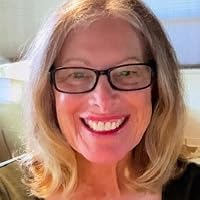
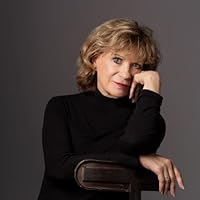
Susan Straight's newest novel is "Between Heaven and Here." It is the last in the Rio Seco Trilogy, which began with "A Million Nightingales" and "Take One Candle Light a Room." She has published eight novels, a novel for young readers and a children's book. She has also written essays and articles for numerous national publications, including The New York Times, Los Angeles Times, The Nation and Harper's Magazine, and is a frequent contributor to NPR and Salon.com.
Her story "Mines," first published in Zoetrope All Story, was included in Best American Short Stories 2003. She won a Lannan Literary Award in 2007. She won a 2008 Edgar Allan Poe Award for her short story "The Golden Gopher."
She is a Professor at the University of California, Riverside and lives in Riverside, California.
Last night I allowed each of my daughters to have a sleepover. It’s the first time I’ve had all three have a friend over at the same time, and the house was full of girls of assorted ages. All weekend I have girls in and out of the house, and I joke to my husband that our house is the Grand Central Station of the neighborhood. In light of our weekend open door policy, I find it appropriate that I chose to read a new memoir by gifted California novelist Susan Straight. She notes that the journeys of heroines are not documented as Odysseus, yet, in her family, the travels of strong women have created the backbone of their Riverside, California community. Wanting to leave a family history behind for her three daughters, Straight has penned her first memoir In the Country of Women.
Susan Straight is the product of a Swiss mother who arrived in California via Ontario and an father of Irish descent who came to California from the highest peaks of the Colorado Rockies. They both moved as west as possible to California, the land emblematic of the American Dream and forged an existence at the base of the San Bernardino mountains that reminded both of home. Straight was born in 1960 at that nexus in history where the women’s movement was not yet in full force and was told that she could be a teacher or a nurse or a secretary. Her father left the family three years later so Straight turned to books as her solace and was reading fluently by the age of three. With her mother having little money to make ends meet after marrying again and adding another son plus foster children to the family, Straight turned to books as her refuge. She would spend entire summers at the book mobile and community pool until she was old enough to venture around her working class community on her own.
Riverside was built up by African Americans, Mexican Americans, and Americans of all colors looking to flee from Jim Crow in search of a better life. Susan first met her future husband Dwayne Sims when he was fifteen and she fourteen, and he came to visit her outside the chainlink fence of her school. The teenagers found out that both worked entire weekends, Susan in her step father’s laundromat and at a movie theater and Dwayne assisting his uncles and brothers hauling wood for landscaping and other odd jobs. Even though Susan played tennis and Dwayne played basketball, it was this commitment to hard work that kept them away from the drugs and alcohol that so many of their friends succumbed to during the mid 1970s. With Susan’s dysfunctional family being unreliable, she naturally gravitated toward Dwayne’s house and became the first Caucasian regular at a home open to an entire extended family of aunts, uncles, cousins, and friends.
Dwayne Sims is the son of General II and Alberta Sims whose families made their way to California between 1900 and 1920. Dwayne’s maternal grandmother Daisy Carter began the open door policy as her sisters and each of her four daughters settled in a five block radius of her stately white home in Riverside. Daisy had migrated from Tennessee to Texas to California in search of a life where her children would be free from Jim Crow. After arriving in Riverside, family members of all shades followed. Her third daughter Alberta married General II Sims, whose mother Callie had fled Oklahoma after the state attempted to place her five children in orphanages following the death of her husband General Roscoe Conkling Sims I. Like her future in-law Daisy Carter, Callie Sims desired a better life for her children and ended up in Riverside. With five Sims children and their descendants and four Carter daughters and their descendants, Straight notes that in Riverside everyone was Dwayne’s cousin, the term becoming fluid as both grandmothers and then his mother and then Dwayne and Susan allowed any friend needing a bed to sleep at their home at night. As a result, generations of Sims and Carter descendants always ended up back at home.
Susan desired to pursue her own destiny. She learned from James Baldwin in Amherst, Massachusetts for two years as she pursued her MFA, and he encouraged her to keep writing. Dwayne and Susan married in 1983 although Susan was only allowed into the family after promising aunt Loretta Sims that she could cook soul food. After two years out east, family called Dwayne and Susan back to Riverside, a community where both believed to be the perfect place to raise their future children. After purchasing a White House reminiscent of both Daisy Carter’s and Alberta Sims’ homes that had both a garden and a yard, Susan and Dwayne believed that they had found the perfect place to start a family, near the San Bernardino mountains, the Santa Ana River, the Pacific Ocean, and hundreds of extended family members. After thirty five years as a writer and faculty member at the University of California-Riverside, Susan has researched the history of these women on both sides of the family and written this memoir as a gift to her daughters as they make their way as young women in the 21st century.
Today, all three of Susan and Dwayne’s daughters are making their way in the world. Gaila, Delphine, and Rosette caught the travel bug that brought their ancestors to California in the first place, and are all museum curators and travel the world. With many different types of blood flowing through their veins, the Sims girls have answered their grandmother Alberta’s promise and are set to conquer the world. Susan’s home has always been open and the girls know they can always return to her Riverside slice of paradise. While researching Straight’s literary career for this review, I discovered that we share a birthday. I find it more than coincidence that we both turned to reading as children and becoming family historians as adults, and I find in Straight one who writes of a sense of place in the world while she encourages her students and countless others to do the same; what a literary mentor to have. In this meticulously researched family history that shows how the word family continues to be redefined through each generation, Susan Straight has indeed left a precious gift for both her daughters and all who choose to read this memoir.
Readers wondering where the John Steinbecks of today are should look no further than Susan Straight. Author of nine novels and much short fiction, Straight was raised in Riverside, where she co-founded an MFA program for creative writing at the University of California Riverside and is a Distinguished Professor of Creating Writing. Published in 2019, In the Country of Women is her first work of non-fiction. Her memoir is abundant with beautiful writing and powerful stories, many of them addressed to her three daughters and telling of her family history and their father's African-American family history.
-- To my daughters:
They never tell us about the odysseys of women. They never say about a woman: "Her passage was worthy of Homer ... her voyage a mythic quest for new lands." Women don't get the Heroine's Journey.
Men are accorded the road and the sea and the asphalt. Men get The Iliad and The Odyssey. They get Joseph Campbell. They get The Thousand Faces of the Hero. They get "the epic novel," "the great American story," and Ken Burns documentaries.
But our women fought harder than men--they fought men! Men who claimed to love them, to protect them, to help them--men who trapped and tried to kill them. They fought for sons and daughters, they had the battalions of their sisters and mothers and aunts. Some bad-ass aunts. The women used their cunning and their bullets, the power of their ancestors and of the other women in the wagon or the truck with them. They survived passages that would have made a lot of men quit. Sometimes the men did quit. Sometimes the women quit the men--to stay alive.
-- Here in the land of tumbleweeds so immense and fiercely mobile, a windstorm in November sent so many skeletal balls of thorn blowing across the fields that the small house where my mother and I lived was buried in brown. It was a valley of granite boulders and turkey ranches. Tumbleweeds six and eight feet across packed in drifts around the windows, which were coated with dust from the famous Santa Ana winds. "It was like a snowstorm," my mother told me years later. "I couldn't even open the door."
-- That we could control death and violence by writing about it was transforming. I had seen drug deals, wildfires, a man who held a woman so tightly by her hair that her temple puckered. Sometimes I was terrified. There was the man waiting on the narrow dirt path on the way to school, who opened his coat, a clichéd pervert (who the hell wears an overcoat when it's 100 degrees?), but I'd read A Tree Grows In Brooklyn four times by then, and Francie's mother shoots the pervert (he's called the pervert) in the groin, so I just glanced at him (pale and gross and oddly just like the novel) and ran into the weeds, wishing I had Francie's mother or her gun.
The summer of 1970, the bookmobile arrived in far-flung neighborhoods like mine. No one wanted to accompany me, and I was thrilled. I walked alone through fields of wild oats, past the pepper trees under which older kids smoke marijuana and drank Coors and listened to Grand Funk Railroad and James Brown on transistor radios, across the railroad tracks, down into the steep arroyo where a green trickle of water was my creek, and up into the grocery store parking lot where for two hours inside the air-conditioned hum of a converted buis, I read about death. I found S.E. Hinton's The Outsiders, with desperate, joking, hardworking boys as close to my own neighborhood as anything I'd ever read, and then, shaken, walked back home as the branches of the pepper trees shivered with electric guitars and laughter. Tulsa, I whispered.
-- Fine as wine and just my kind. Bring your fine self over here. So fine you like to blind me when I saw you.
This is what she heard, again and again. Daisy's first husband is listed in one census document as Calvin Morris, but no one left here has ever said they actually saw him. Daisy's cousin Jesse Wall, who'd also been born in Sunflower County and brought to California, told me back in 2014, when he was eighty, "Oh, Daisy was fine. Back in Arkansas, that man told her over and over, 'You're so fine, some fool's gonna take you away from me, and I can't have that, so I might just have to kill you first.' He had the gun on the table by the bed, and he'd sit there with it in his hand at night. And Daisy had the baby, Mary Louise. She had to wait until one night when when he left and she could get away. She took the baby and went to Oklahoma to find Sweet Annie."
That was Daisy's aunt, Sweet Annie Tillman, legendary in her own right.
-- I went to Planned Parenthood the week I turned sixteen because I was terrified almost every day of my life. I went to Planned Parenthood because I was poor and prey, and girls had told me where the building was because they, too, were afraid of the same thing. We were certain we'd be raped at some point, and we didn't want to have babies because of that. We didn't want to have to marry our rapists.
-- My husband had become a mystery to me. He wanted more freedom to spend with his brothers and friends; he'd bought the Kawasaki, and a Ford Ranchero, which seemed another message as the back seat clearly couldn't hold three girls, the baby in a car seat. His mother was gone. She could not chase him home from the couch on Michael Street.
We had gotten married too young, he said; he wanted to learn to be independent, he said. Every time I heard that word, I imagined Herbie, the elf who wanted to be a dentist, in Rudolph the Red-Nosed Reindeer. I couldn't help it. I heard the word in four syllables--in-de-pen-dent--in Herbie's nasal pronunciation, and had to keep myself from laughing. "You gonna be a dentist?" I'd say, and Dwayne would shake his head.
In addition to the beauty of her prose, there are two other aspects of Susan Straight's writing that I draw inspiration from and both are present in In the Country of Women. As in John Steinbeck, Straight's characters desire, come together, get drunk, steal cars, throw punches, break up and struggle against authority (in no particular order). They're not concerned with being "nice." They're concerned with surviving in America. The other aspect that Straight demonstrates is that you don't have to go on expensive vacations to be a writer. You can bloom where you're planted, even if it's just above the poverty line in Riverside, and contribute to American literature.
Susan Straight is one of the best things ever to come out of California writing, author of nine remarkable novels including A Million Nightingales, Between Heaven and Here, The Gettin Place, and Highwire Moon, a finalist for the National Book Award. Most of them deal with her tough patch of emotional real estate, Riverside California, where she was born and continues to live, despite her prominence, her literary success, a full professorship in the UC Riverside English Department and frequent publication of her essays as well as short stories. But she always returns to that patch of earth which in her stories is called Rio Seco.
Almost thirty years since she burst onto the scene with a Milkweed National Fiction prize for Aquaboogie, a novel in stories which sent reviewers scrambling to ask "Is she white? Is the black?" in these interrelated stories about a black community, Straight has kept people scratching their heads as they look at this extremely pale white woman on the back of novels titled things like I Been In Sorrow's Kitchen and Licked Out All the Pots. Yet no one who has read them has doubted the ringing truths and understanding of the harsh lives being led by her characters of many ethnicities coming together in her novels of Rio Seco.
Now she has written a memoir, and it all falls together. The memoir is addressed to her three daughters, and tells the kitchen-table stories of the women whose struggles and flights have allowed those girls to come into being-- the black side and the white side--each woman's story a monumental tale of survival, beginning with a woman named Fine, born near Murfreesboro, Tennessee in 1876. Because these are tales of history, of flight and violence and erasure, and Straight is determined to give you the way women survived, with each other's help, and in what America.
It's a personal story, about being married to a black man, being taken in by his family, and the nature of that extended family, its history and story telling. She tells her own story, growing up int the 80s in Riverside, not without its own perils. She talks the way women talk--over the kitchen table, telling the truth now that you're old enough to hear it.
In my quote for the book, I said, "In the Country of Women is moving, fierce, and gorgeous. In a time of individualistic fragmentation and the tearing of the social fabric, Straight offers the contrary narrative, the essential need for community, its past and future, and celebrates her place in its weaving."
I found this a very interesting book, but feel it definitely was written for her family, not so much for the reading public. I am a genealogist and a reader, and I found myself having to push through not understanding who it was in the family being talked about. The myriad of folks were in and out of the stories way too much to keep track of. Consequently in the latter half of the book I just had to let the folks be interesting on the surface but I know I missed a lot by not remembering where and to whom the person belonged. I finally gave up before the end, not because it wasn't good but I was just tired of being lost.
Susan Straight is another one of my favorite authors. I have read all of her seven novels. This book is a memoir that almost reads like a novel.
She is a petite blonde whose novels feature an extended Black family in Rio Seco, CA (her fictional name for Riverside.) Many years ago when I read her first novel, I've Been in Sorrow's Kitchen and Licked Out All the Pots, I along with others wondered what gave her the right to explore so deeply the life of a Black single mother.
Soon we learned that Susan Straight married into a Black family. In the Country of Women tells how she met and fell in love with her husband, how she grew up relatively poor with a Swiss immigrant mother, how she learned to read at the age of three, and how she became a writer shortly after she learned to read.
When she met Dwayne Sims, she found a huge extended family who accepted her unconditionally (after making sure she could cook.) Dwayne's mother provided the warmth that Susan's own mother was too embittered by life to give to her daughter.
I have a special affinity for girls who grow up reading every book they can get their hands on and then go on to write their own. Though Susan Straight is a decade younger than I, as kids we read all the same books!
Once she became an in-law to the Sims family and once she took a writing class with James Baldwin at Amherst College, she determined to research the history of both her family and the Sims. She also had three daughters with Dwayne and wanted to give them particularly the stories of all the strong women who came from Europe and the American south to California. Women who overcame incredible hardships and did whatever was needed to provide for and protect their children.
Hence the title: In the Country of Women. It is a beautiful, deeply emotional yet somehow lighthearted memoir. It is a gift to the world in which she proclaims the triumphs for which most women are left unthanked and unrecognized.
Most of all, it is a tribute to family, to taking care of your own as well as welcoming in those who are uncared for. It is full of hope.
I read this when it first came out, but was recently reminded of it, when a dear friend dropped it off as a donation for my Little Free Library Shed.
What I remember specifically is that this memoir reads like a love letter to the author’s 3 daughters, Gaila, Delphine and Rosette Sims. Even as the book is about a generation of women from both the author’s and her husband, Dwayne Sim’s side of the family – she shows her gratitude for the lives they made possible – including hers, and her children.
The author does an honorable job of examining these historical lives, which in many ways feels like a complex, multiracial story. But mostly readers will appreciate that this memoir is about family, as much as it is about place and belonging.
As readers we are taken to the past, as much as we are visiting the present – and all, those people who mattered to the author. Straight’s voice through her writing feels soft, warm, honest, respectful, thoughtful and intelligent as she shares the complex reality of being a white woman who is also writing about people of color.
But even with her compelling voice, her chapters still feel a bit disjointed. As if we are traveling back and forth through time dealing with inconsequential issues like taking care of her daughters’ hair or describing her husband’s car, that he drove while in high school, that looked like a Batmobile. And, even if her writing is refreshing, the lack of logical order to the chapters is a bit off-putting.
Still, she does manage to cover some relevant issues like; the difficulties of being a woman, immigration, police brutality and the history of slavery. We just need to be patient about when and how these issues reach the reader.
In the early 1990's when I was a stay-at-home mother riding herd on four young kids I stumbled upon a remarkable novel called "I Been in Sorrow's Kitchen and Licked Out All the Pots" -- it was a revelation to me, a look into a different time and place and a whole different experience of childrearing. I loved it! And then when I discovered the author was a WHITE woman, writing about a black woman and her children, I drew back with a combination of surprise and suspicion: how could she possibly know enough to write a story that felt so viscerally real? Now that I have read the author's memoir I understand it all, and I want to celebrate all over again her mastery of words and her unending affection for her children and her big extended family. I could read Susan Straight forever! I wish she had lived next door to me during my own tumultuous years raising a family; I wish I had known her personally as I was trying to come to grips with the racial issues that pull so painfully at our country. What a writer! All I can say here is "Hurrah for a clear-eyed woman who writes beautiful prose!" She shares a marvelous family history that can help all sorts of people begin to understand each other. Now I'm off to hunt up her other novels and discover what else I've missed.
An extraordinary memoir about migration, forced and otherwise, about a place, Riverside, California, about race, black, white, and everything else, about the melting pot we each are individually, and as a clan, about family and families, about slavery, violence, love, poverty, the indomitable spirit of women, and so much more. It's an intense genealogy of the Sims and Straight families, and sometimes it's hard to keep the various people clear in one's mind, but it doesn't matter. I was born and raised in Los Angeles, and learned more about the history of my state in this book than from anything else. This is the first work by Straight that I've read, and now am eager to read her novels. Written as a love letter to her three daughters, with the goal of capturing all that they are, where they come from, what their lives have been about, where those lives come from. Heartfelt, clear-eyed, literary, and beautiful. The amount of historical research she's done is overwhelming in its scope and she puts it together seamlessly. It speaks to so much currently happening in this country. This isn't a book to speed through, it takes time. There's one thing Straight doesn't address, and I would have liked to know, but in her acknowledgements, she says the next book will be about it. A true accomplishment and highly recommended.
Get a notepad you are going to have to take notes through out this whole book. Straight writes like everyone is her family and knows everyone’s name and who their ancestors are. There were parts of this book I enjoyed and would have like to hear more about. The struggle individuals have faced. But these stories were short and bare minimum detail. Throughout the book straight will start one thought/stories get distracted and go in to another short story making quick points, completely switching topics and time periods, then finally jump back and finish the original thought. This is a common occurrence throughout the book. I personally felt like straight jumped around way to much I.e. time periods, families, and stories she was telling making this book extremely hard to follow. Striaght packed way to much information in one book making me lose interest because thoughts and stories were not completed. The book does not travel in a linear story line. Another inconsistency were parts of the book were written specifically for her daughters asking them questions and referring to each of them. That will just drop off in the middle of a chapter and she is writing for the reader and her interior monologue again. Honestly, I just feel this was a poorly structured book. It had great potential and fell so short for me.
I'm having a very difficult time reading lately and this is the only book that has really held my attention. The author's main literary influences are James Baldwin (her college mentor!!), Joan Didion and Toni Morrison so that's a pretty great well to pull from. The book is a memoir made up of non-linear essays - some of the essays are about her life as a poor white girl growing up in the hot southern inland of California, some essays are about her immigrant forebears, some essays are about the ancestors of her African American husband, some essays are about her three daughters, and all essays are about the gutsiness, bravery, and unsung bravery of women. Many of the essays are about race. There are some heavy things she discusses, but it didn't feel heavy to read.
In the Country of Women is a valuable social history and a personal narrative that reads like a love song to America and the nation's indomitable women, written by National Book Award finalist and Guggenheim Fellow Susan Straight.
I’d never heard of Susan Straight before seeing my friend Sara’s review of this book. Susan is a white award-winning novelist and essayist who studied with James Baldwin in the 1980’s. She married a black man and raised three black daughters as part of a huge extended clan in the Inland Empire of Southern California, in the same town where she grew up. She’s also spent years researching the history of the women in both her married family and her birth family. This book is a collection of essays about those histories and her own memories and experiences, many of them addressed to her daughters (who are the three kids on the cover).
And … wow. The essays are vivid and fascinating. They are woven together with awesome craft, tying experiences and events together across generations and 150 years of American history. They’re all beautiful and insightful. Some pieces are happy; some are dark; and some are downright scary. Susan and her ancestors have all faced women’s specific challenges: abusive males; the fear of rape and actual rape; getting tied to men by having their babies; finding oneself without a man but still with the need to feed and protect those babies, etc.
This book left me yearning for a large, close family like the one Susan married into, and missing the daughters I don’t have. The warmth, love, and ever-present support of the family she married into, mostly emotional but occasionally financial (no one falls through the cracks in that family, because there are no cracks; they are “hella biraderi” as Susan and her daughters proudly proclaim) is inspiring. (Biraderi is a Pakistani term describing/embracing extended clan.) The close relationship she has with her daughters, rooted (haha) in hours (& hours & hours) of doing their hair, made me miss my mother terribly (even though my mother wanted nothing to do with my fine curly hair and made me wear it short so she wouldn’t have to spend any time on it).
This book seems to me like it should have gotten more attention than it has. It’s an example of nearly perfect essay writing (think Joan Didion). It’s a lovely and moving capsule of and tribute to women’s history and black American history. And black American present: Susan’s fears for her daughters’ lives, and the lives of their cousins and uncles, are constant and unrelenting. This book captures what it’s like to be both black and white at the same time, because when the people Susan loves most in the world are black, so is she, because it’s her family that’s vulnerable, her family that might be harmed or irreparably broken, her family that she’s desperate to keep safe. It’s not a matter of recognizing her white privilege. It’s the sickening and helpless understanding that her whiteness doesn’t do diddly-squat for anyone else she cares about.
This book deserves a place in Black Lives Matter reading lists. It also deserves to be read for its author’s own non-political merits, because she’s a terrific writer, no matter what the topic.
Thank you, Sara, for posting a review that made me put a hold on this even when my library was closed for the pandemic.
Brilliant. This book made me want to move to Riverside, California and live next door to Susan Straight. The author’s teacher and mentor was James Baldwin, whose writing I absolutely adore. He taught her well.
This book goes so deep it’s hard to articulate how great it is. I have read almost all of Susan Straight’s fiction and this book helps you see where her stories come from. It made me want to reread all her books.
This was a wonderful read, at the intersection of so many things I love: sprawling multigenerational stories; history, especially women's history; mother and daughter stories; and stories with strong senses of place. Novelist Susan Straight, herself white, has three daughters by her African American ex-husband. This memoir is addressed to them—a woman empowering her daughters with their history, especially their female forebears' long, hard roads—odysseys—from places like the American South, the Swiss Alps, and the Colorado Rockies to Southern California.
Anchoring the book is Straight’s own odyssey, from scrappy book nerd to writer, wife, and single mother, all in Riverside, California, except for brief interludes for college. I love the parts when she is raising her girls (now in their twenties and thirties)—so much love, so many allusions and inside jokes, such interesting insight into mixed race families. Chapters about her daughters’ relatives are interspersed, and these stories are fascinating windows into history, frequently harrowing, including all manner of violence, from domestic to racially motivated. All of these women started poor, and poor women’s lives are hard—poor, black women’s lives especially. The threat to black lives extends to today, when Straight has family and neighbors who’ve been killed in police interactions.
Family, community, and storytelling are everything to Straight, and her writerly talent and deep empathy make this a joy to read. Highly recommended.
One of my favorite books this year! This memoir captivated and astonished me, both in its scope, spanning generations, yet its intimacy, too, as Straight takes us through the sprawl of her family's history that reflects the richness and pain and love and violence these women and men have endured and survived. Its examination of race is timely and timeless and urgent. Though clear-eyed and unflinching, there is also hope, something that I've valued in Straight's fiction, how she finds beauty and stillness in the rawest places. The perfect book club pick!
This is a series of stories/memories/letters to family as Straight honors the journeys, both physical and metaphorical, of the generations of women in her diverse family. The writing is lovely, as one would suspect from a student of James Baldwin, and it's alternately funny and poignant. Straight is primarily known for her fiction so I have to read some of it soon.
I love this memoir so much. I've long been a fan of Susan Straight's fiction, and, as often happens when I read a memoir by a writer I admire, I feel privileged to see inside the writer's life and mind with this work. I especially admire how Straight reveals the lives of women here, going back in her husband's family and her own. I love how she deals with the American story of race and racism from inside her lived experience as the white mother of biracial daughters, how she illuminates the warmth and good chaos of her house and neighborhood in Riverside, California, and, oh especially, how she bears witness to the generations: her own, as a young white girl brought into and embraced by her husband's extended family in the 1970's; the previous generations, including strong women who fled Tulsa, Oklahoma, after the 1921 Race Massacre there; and the next generation, as she describes her beautiful, capable daughters. It's a delight from start to finish, and struck me to the heart in oh-so-many places, on oh-so-many-levels. Highly recommend.
Ah, what a very beautiful book. It WAS slow, and, at times, easy to put down, I couldn’t really keep the relatives straight, and parts of this memoir felt repetitive, but its message of epic family, kinship, tradition, love, home, and strong women, along with the love of reading, story, and food results in my 5/5 star rating. Please do give the book a try when you have focused time to give it.
Susan Straight, a white author who has lived in Riverside, California for almost her whole life met her husband, Dwayne Sims, a black man, when she was 14 years old. Ms. Straight writes about meeting her future mother-in-law near that age, “and in the driveway Alberta held out her hand and said, ‘Come and make you a plate,’ and my life changed.”
Their story, along with that of their ancestors, “embodies the complicated, painful history of this country and its tremendous, hopeful diversity.” Viet Thanh Nguyen, author of the The Sympathizer goes on to say, “This is an enriching, inspiring, and moving account of how a writer chose her family and her destiny.”
I vacillated between 3 and 4 stars with this book. The book got quite in depth with the genealogies of both her family (Swiss and Canadian) and her ex-husband's family (African American) and it was impossible for me to keep all the ancestors straight (so I quit trying). The parts I found fascinating included the strength of the women (especially on her ex-husband's side), the radical differences between the two extended families, and the stories about the relationships between the author and her ex-husband's family. The author lived through her own hardships with such resilience and seemed to do an awesome job raising her three daughters. The book has left me with lots to think about.
This is my favorite book of this year. It is an amazing lyrical love story to the author's daughters and ancestors and friends. I will admit that I have always longed for kinship connection that some women have seem to found. This is a beautiful book. One to be cherished always and to share with other readers who love stories of strong women.
Wow, I haven't had such a dislike of a book I've read in a long time.
This book posits itself as a memoir/family history, so I was intrigued. I almost considered not reading it after absolutely struggling through the prologue, which was very "all women are sisters in facing oppression from men" which #1 doesn't feel useful for me (as a man) to read and isn't enjoyable either and #2 is very 2010s white liberal feminism. I looked at all the praise this book gets so skipped the rest of the intro and started on the actual book.
The one thing I will give Straight is her prose can be pretty beautiful at times, and given that the first part of the book is mostly about Straight's Swiss/Canadian/Euro-American family, it is pretty interesting. Even from the beginning though, Straight is telling stories of her ex-husband's family and claiming them as her own. Straight does have 3 daughters from this man and her life remains intertwined with his, but even in the best of circumstances I'm not sure if a writer has the authority to claim their ex-partner's family as their own ancestors. And, of course, Straight is white and her ex-husband (and subsequently his whole family) is Black. It just feels strange for her to be telling their stories, and not merely in a 'wow look at this incredibly family' way, but in a 'wow look at my incredible family'.
It gets worse though, because as the book goes on Straight barely talks about her birth family and almost exclusively writes about her ex-husband's family and her own relationship with her mixed daughters. She writes about being anxious around a large Black family, but how ultimately they accepted and loved her and she became one of them. She writes about how other mothers of mixed-race children did not take care of their hair, but of course she really was a great mother and did care about her daughters' hair. Which is great! Every mother of Black or mixed-race children should take the time and effort to take care of their daughter's hair. But when Straight writes "In our family, and in black communities at large like ours, the care and maintenance of your hair meant more than just barrettes and ponytails; your hair reflected our pride and care and love" it feels like she is calming Blackness (204). Also, 'you' in used in that quote because at times Straight switches into the second person, writing to her daughters, which is a bit jarring whenever it happens.
Straight also weirdly fetishizes mixed-race people. She's constantly writing about the melting pot of Riverside where she's lived most of her life, and how there is a blend of Black/white/Chicano/Cherokee/Irish/whatever and she's weirdly proud of her daughter marrying a Nigerian man with Cameroonian and Iranian friends. Obviously people should love and marry who they want, but it's just weird.
At one point she recalls sitting around with her future husband's family and they were talking about eating raccoon and possum and rabbit in the South. When one of the men acknowledge that she must think they're crazy for talking about eating all these rodents, she replies "'My father told me the worst thing he ever ate was grizzly bear'" to which one of the men replies "'Damn, who eats a bear?'" (238). It feels like some real Eminem shit.
Lastly, she has zero class analysis. She really relies on her parents' poverty (see above) and the fact that she is not like rich rich, but the fact that she owns her own house (which she now lives alone at) and is able to take her three daughters on trips constantly is just normal for her. I can't find the exact page, but at one point she bemoans the year she wasn't able to take her daughters on a trip to Europe because two of them were in college. Why she was able to become a community college professor and published author while her Black (ex)husband is stuck working the night shift as a correctional facilities officer is totally lost on her.
Obviously, this woman probably was a good mother to her daughters and clearly is in community with Black folks who do consider her family. No doubt about that. But this book drove me up the wall with how much it seemed to be her writing to the world "Hey look at me! I'm a bleach blond white lady with mixed daughters but I'm a good mom! And I am accepted by a large Black family! I'm special!" And on top of that, she is telling and claiming Black stories as her own, which just seems icky even if she is accepted as family.
2.5 ⭐️ I really wish Straight had provided a family tree at the beginning of this book. There were just so many family members and friends mentioned throughout the book and I couldn’t keep track of all the names and relations. I also had trouble getting to know her family members or care for them because there were too many and some of their stories were very short.
I usually don’t have a problem if a book jumps in time (sometimes that makes books more interesting) but this book jumped too much for me. It was very disorienting. And sometimes there would be time jumps right in the middle of a chapter so I didn’t know what was happening. I did enjoy the overall message to her daughters about place and belonging and the importance of family. I understand why some people might enjoy this book (hence the high ratings) but the structure and writing style just didn’t do it for me.
Gorgeous prose but the narrative felt disjointed. I also had mixed feelings around reading a book about race written by a white woman. I have a few friends who are the white mothers of biracial children and I certainly recognize and honor their uniquely confusing and sometimes frightening position, but they have always been careful not to make their families' stories of oppression their own. I worried that perhaps Straight toed this line a little recklessly. Acknowledging that it likely came from a place of love, I still found myself troubled by the understanding that she, a white woman, was profiting from the telling of black stories.
I'm not sure that she is right or wrong. Simply outlining my experience in reading the book.
To some degree, this is a love letter to the author's three daughters, a letter of their history, of their tributes, of their memories. Susan Straight writes an honest memoir of her own upbringing, her relationship with her husband and his family, and her discovery of self. She must have been upset with her ex-husband during the chapter she referred to him as her ex instead of by his first name, which was how he was addressed throughout the memoir. That felt a bit off kilter since we don't learn that he has done anything upsetting in that chapter.
Growing up, I always wished I had the kind of extended and found family that Straight's three girls had, with all kinds of people from all kinds of different walks of life. As it was, I had people close to me but in the town where I grew up there wasn't a ton of diversity (California is, truly, like nowhere else in the world).
My grandmother is obsessed with Ancestry.com and has been working on our family tree for several years now, but it's my mom's side of the family I'm most familiar with: my Swiss heritage and the stories I was raised on of my great grandfather immigrated from Switzerland all by himself when he was in his 20s and came through Ellis Island and how my grandma kept the family together and made everyone come over for Sunday dinners. I have plenty of other countries in my blood-England, Germany, Italy, Norway, French Canadian, and a tiny bit of Native American-but the stories I know are Swiss. This is all to say that reading Straight's book has made me want to revisit my own history and take a closer look at some of the women in my own history that I have forgotten about or taken for granted.
This is a lovely book that's a love letter to family in all its forms and America in general, for being a place where wide and multicultural families like Straight's can thrive and flourish. This memoir is vast, spanning centuries and continents, and I absolutely loved it. This diversity is what America has to look forward to-and make no mistake, we should be eagerly looking forward to it. Straight does a good job of celebrating all of the women that brought us where we are today and the ones that are still to come in our future. An absolute tour de force unlike anything I've read before.
This was an amazing book. A white woman who comes of age in the 70's in Southern California starts dating and then marries a black man. The setting was very familiar to me and was practically a third character in the story. They live in Riverside, which is close in mileage to me but very far apart culturally from my part of town. So it was both familiar and eye-opening.
The couple have three daughters, all of whom turn out to be very educated and lovely people. The story goes into great detail about the heritage and each and every ancestor of the mother and father as far back as can be traced. One is left with a sense that we are all so closely related that there is no "us" and "them", a fact which we ignore to our peril.
There are many horrific scenes, such as the retelling of the Tulsa tragedy and anonymous crimes: murder, rape, and lynchings. So, in a sense it is quite sad.
If have a criticism about this book, it feels at times like a series of essays that could be tacked on or left out rather than a smooth telling of a story from start to finish. But this is a small gripe and overall I enjoyed the book tremendously.
Novelist Susan Straight’s memoir traces the complex lives of her large, mixed-race family centered in Riverside, California. A readable book that reminds us again of the perilous lives of black males in America as well as the fierce individual and community will to survive and succeed.