What do you think?
Rate this book


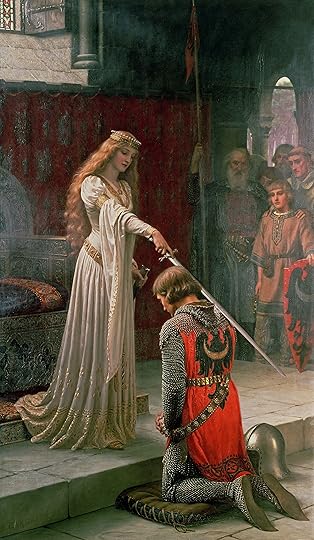
Chrétien de Troyes’ Arthurian Romances, written in the late 12th-century, provide a vital link between the Classical Roman poets, Ovid in particular, and the later medieval world of Dante and Chaucer. The five major verse tales, namely Érec and Énide (c1170), Cligès (c1176), Yvain or the Knight of the Lion (before 1181) Lancelot or the Knight of the Cart (before 1181), and Perceval (before 1190), introduce motifs and plot elements that recur frequently in later literature. Well-structured, lively, and witty the tales were written for a sophisticated courtly audience, and the five stories considered together gave expression to the reality and the deeper ideals of French chivalry. Chrétien appears to have used themes culled from French and British sources, while characters such as Lancelot, and features such as the Holy Grail appear for the first time in European literature in his work. Here translated in rhyming couplets to mirror the original, rather than in unrepresentative prose, is a fresh treatment of one of France’s and Europe’s major poets.
Chrétien, likely a native of Troyes in north-eastern France, served at the court of his patroness, Marie of France, Countess of Champagne and daughter of Eleanor of Aquitaine, between 1160 and 1172. Hers was a literate court, and she herself knowledgeable in Latin as well as French texts, and Chrétien used the legendary court of King Arthur as an analogue for the French and Angevin courts of his own day. Marie’s mother Eleanor became Queen of England, in 1154, as the spouse of Henry II, following annulment of her marriage to Louis VII of France, thus Chrétien was able to blend French and British traditions in his works. Between 1170 and 1190, Chrétien, writing in fluent octosyllabic couplets, developed and transformed the narrative verse tradition, and laid the foundations for the plot-driven prose narratives of later times.
This and other texts available from Poetry in Translation.
235 pages, Kindle Edition
First published January 1, 1176
They say that once at the Ascension
toward Caerleon King Arthur wended;
his court was sumptuous and splendid.
The writer shall begin the plot
when he held court at Camelot,
as splendid as a king deserved.
The king, with dinner done and served,
did not withdraw from his companions.
The hall was filled with many barons;
together with them was the queen,
and I believe there could be seen
fair, courteous ladies thereamong,
conversant in the Gallic tongue.
A criminal was carted then
through all the streets, and, when he crossed,
his property and rights were lost.
At court no one would hear him hence
or welcome him with deference.
In those days that is what carts meant.
They were so cruel a punishment…
He gave permission, then he set
off until evening, when he met
a maiden, beautiful, and charming,
well-dressed, and polished, and disarming,
proceeding on her way to meet him.
The lovely maid began to greet him,
correct in manners and polite.
“God keep you, maid,” replied the knight,
“both sound of body and of mind.”
She said: “Nearby, sir, you will find
my house prepared for you, well kept,
if you are willing to accept.
I offer it conditionally,
for you must go to bed with me,
and so I offer and present it.”
Without threats, they began to deal
tremendous blows with swords of steel,
like those whose mutual hate is fierce.
So roughly did they tear and pierce
the helms and shining hauberk’s mail,
blood sprang forth in the iron’s trail.
The knights put up a splendid fight,
dealt savage blows with all their might,
and stunned each other with hard clouts.