Jump to ratings and reviews
Rate this book

The Young Visiters

Rate this book
A romantic and comic gem from a precocious Victorian nine-year-old that has charmed readers for a century

The Young Visiters is a comic masterpiece that has delighted generations of readers since it was first published in 1919. A classic story of life and love in later Victorian England as seen from the nursery window, it was written in 1890 by nine-year-old Daisy Ashford.

It all starts when Alfred Salteena, who is 'not quite the right side of the blanket', takes young Ethel Montacue to stay with his friend Bernard Clarke... Daisy Ashford has an exquisite eye for matchmaking and manners in English society, and her tale, with its hilarious observation and idiosyncratic spelling, is as irresistible today as it ever was.

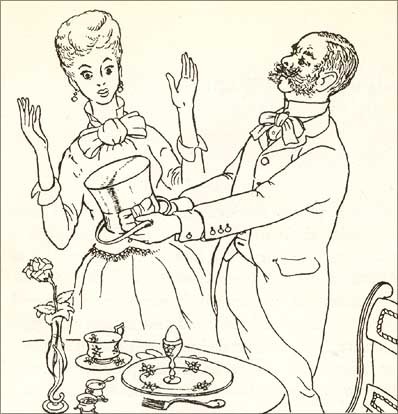
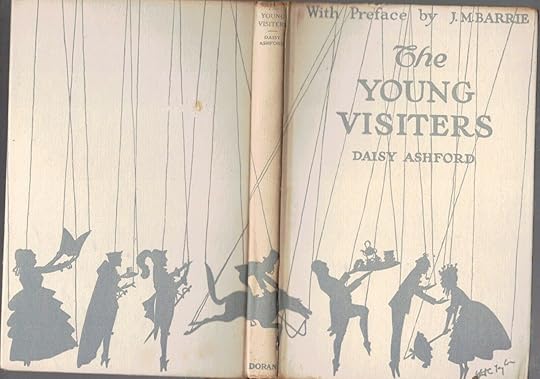
This edition of The Young Visiters is illustrated with drawings by Posy Simmonds which are as enchanting and witty as the story. The text has been transcribed from the original manuscript and includes J.M. Barrie's famous preface to the first edition.

96 pages, Hardcover

First published May 22, 1919

68 people are currently reading
2114 people want to read

About the author

Daisy Ashford

17 books15 followers
Daisy Ashford, full name Margaret Mary Julia Ashford (later Devlin) was an English writer who is most famous for writing The Young Visiters, a novella concerning the upper class society of late 19th century England, when she was just nine years old. The novella was published in 1919, preserving her juvenile spelling and punctuation. She wrote the title as "Viseters" in her manuscript, but it was published as "Visiters"

Ratings & Reviews

What do you think?
Rate this book

Friends & Following

Create a free account to discover what your friends think of this book!

Community Reviews

5 stars
324 (27%)
4 stars
379 (32%)
3 stars
358 (30%)
2 stars
77 (6%)
1 star
22 (1%)
Displaying 1 - 30 of 256 reviews
Profile Image for Mir.
4,976 reviews5,330 followers
December 23, 2016
This is really pretty hilarious, but I don't think, contrary to some shelving I see, that it would be very interesting for children. It is BY a child, but clearly modeled on adult conversation and novels. That these were not entirely understood by the author is a gap from which much of the entertainment arises. We have characters who were "sinister" or born "on the wrong side of the blanket" and little Daisy knew that meant a fellow was "not quite a gentleman". She apparently missed entirely the fact that nice girls don't go stay alone with unmarried men (one, and then another; poor Ethel really gets handed off like an unwanted pet).

The social interactions and dialogue are mostly quite implausible, especially for rigidly stratified and uptight English people. "My life will be sour grapes and ashes without you!" exclaims a rejected suitor. His love object promises to "think of you in a warm manner" to which he responds, "Half a loaf is better than none." He is very sad at the wedding but cheers up when he sees all the fancy desserts.


Despite the serious weaknesses of plot and structure and spelling, Ashford does have a sense of prose style, and also some strong characterization. She is particularly good at understand the feelings of awkwardness and uncertainty that characters might experience in certain situations. I can see why some readers doubted this was really by a nine-year-old.


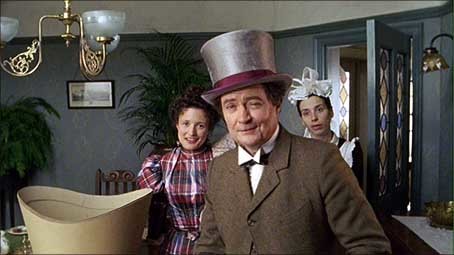
Quite enjoyable. And apparently there is a film adaptation with Jim Broadbent; I'll have to check that out.

Profile Image for Brigid ✩.
581 reviews1,830 followers
January 2, 2015
3.5 stars

This book was written by a 9-year-old so of course it's not the most brilliantly-written thing in the world––but Daisy Ashford's prose and attention to detail is certainly impressive considering her age. It's kind of unclear whether the story was meant to be satirical or whether Ashford intended readers to take it seriously, but either way it's cute and funny and I found it very entertaining.

I'll probably edit this review later and add in some quotes that I found particularly funny. :)
Profile Image for Bill Kupersmith.
Author 1 book245 followers
July 8, 2019
I discovered this book reading The Church Times, which reprinted a review from 100 years ago when it first appeared. It may be the funniest book ever written, at least the funniest book by a nine year old author. The spelling and syntax match the sentiments: as inverted commas are omitted for quotes, it could be a work of postmodern fiction like Sally Rooney only much more enjoyable.

Sample: Here Mr Salteena thourght he had better go to bed as he had had a long jornney. Bernard always had a few prayers in the hall and some whiskey afterwards as he was rather pious but Mr Salteena was not very adicted to prayers so he marched up to bed. Ethel stayed as she thourght it would be a good thing. The butler came in as he was a very holy man and Bernard piously said the Our Father and a very good hymm called I will keep my anger down and a Decad of the Rosary.
Profile Image for Alwynne.
941 reviews1,610 followers
September 8, 2020
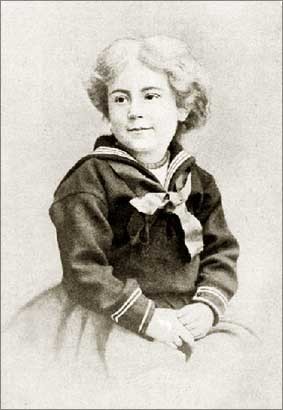
The “owner of the copyright” guarantees that “The Young Visiters” is the unaided effort in fiction of an authoress of nine years. “Effort,” however, is an absurd word to use, as you may see by studying the triumphant countenance of the child herself, which is here reproduced as frontispiece to her sublime work. This is no portrait of a writer who had to burn the oil at midnight (indeed there is documentary evidence that she was hauled off to bed every evening at six): it has an air of careless power; there is a complacency about it that by the severe might perhaps be called smugness. It needed no effort for that face to knock off a masterpiece. It probably represents precisely how she looked when she finished a chapter. - J.M. Barrie

In 1919, when Ashford’s novella was first published, it was a bit of an oddity, it still is. It’s a wonderful – or annoying depending on your sense of humour – story riddled with Ashford’s misspellings and malapropisms, all adding to its comic charm.

Ashford’s central character is Mr Salteena, who

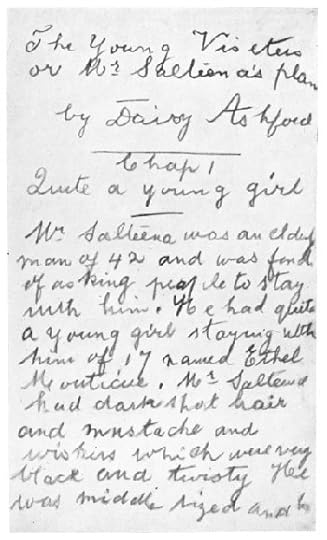
”…was an elderly man of 42 and was fond of asking peaple to stay with him. He had quite a young girl staying with him of 17 named Ethel Monticue. Mr Salteena had dark short hair and mustache and wiskers which were very black and twisty. He was middle-sized and he had very pale blue eyes. He had a pale brown suit but on Sundays he had a black one and he had a topper every day as he thorght it more becoming. Ethel Monticue had fair hair done on top and blue eyes. She had a blue velvit frock which had grown rarther short in the sleeves.”
Mr Salteena receives a “quear shaped parcel” inviting him to visit the majestic Rickamere Hall, so off he goes taking Ethel with him. The rest of the plot hinges on Mr Salteena’s attempts to rise above his station as a mere butcher’s son and join the ranks of the great and noble, maybe winning the hand of Ethel along the way.

Not sure how best to describe Ashford’s hilarious book, although it’s close to what I imagine an episode of Downton Abbey might’ve been like if spliced with sections of The Diary of a Nobody, though that doesn’t really sum it up. But fellow fans of a particular vein of British, period humour that runs through The Importance of Being Earnest and the work of Jerome K. Jerome will be the most likely to understand its appeal.
Profile Image for Beth Bonini.
1,416 reviews326 followers
December 29, 2017
There is no way to get around the novelty factor of this book: a huge part of the pleasure is the fact that this 'society novel' about romance and manners was written by the 9 year old Miss Daisy Ashford. Clearly a very precocious girl, whose parents let her have the (often) inappropriate run of their library, Miss Ashford displays a wonderful sense of the upper echelons of Edwardian society and the courtship dance. Two of her main characters - Alfred Salteena (who wants to be a gentleman, but is not top drawer) and Ethel (pretty, only 17, and conspicuously unchaperoned) - are trying to get on in society, and one senses that their creator knows quite a bit more about the matter than they do.

"Will he bring our luggage asked Ethel nervously.
I expect so said Mr Salteena lighting a very long cigar.
Do we tip him asked Ethel quietly.
Well no I dont think so not yet we had better just thank him perlitely." (sic)

Of course much of the humour comes from the gap between what the author does know, what she thinks she know, and what she really doesn't grasp at all. But actually, she has a marvellous grasp of characterisation - and even of plotting, as the introduction by J.M. Barrie humourously points out - and the story does zip along. The spelling errors and lack of punctuation are no bar to enjoyment and sometimes contribute to it. Some of my favourites were Miss Ashford's fondness for the words 'sumshious', 'parshial' and 'varse'.

The illustrator of my edition (1984), Posy Simmonds, says that Miss Ashford's partiality for a nice spot of 'ruuge' became part of her own family legend.

"I shall put some red ruuge on my face said Ethel because I am very pale owing to the drains in this house."

Yes, this is a period piece - but it is very charming.
Profile Image for Ksenia Anske.
Author 10 books634 followers
November 22, 2015
Oh, what a queer little delight I just read. To all of you whining writers, this book was written by a nine-year-old and stood the test of time. You know why? It's pure story, from start to finish. Read it to study it and have a good laugh and a grin on your face when you're finished. (It will take you about an hour.)
Profile Image for Tisha (IG: Bluestocking629).
925 reviews40 followers
May 22, 2018
What a charming little read...by a nine year old...for adults.

The story, in addition to charming, is also funny at times...along with the spelling. I mean she was nine years old.

This is not a book for children even though it was written by one. It is a romance / society book.

I'm very glad I took the time to read these 77 pages.
Profile Image for Deb (Readerbuzz) Nance.
6,449 reviews335 followers
April 9, 2019
I certainly didn't expect The Young Visiters by Daisy Ashford on the list of 1001 Children's Books You Must Read.

When I was looking for the book, I wondered about the word "visiters" in the title. I knew the book was an older title. Was that how "visitors" was spelled in the past?

No, it's just one of many, many misspellings in the book. And why? Because The Young Visiters author was only nine years old when she wrote the book.

It's perfectly charming. Here's a little sample:

"Ethel he murmured in a trembly voice. Oh what is it said Ethel hastily sitting up. Words fail me ejaculated Bernard horsly my passion for you is intense he added fervently. It has grown day and night since I first beheld you. Oh said Ethel in supprise I am not prepared for this and she lent back against the trunk of the tree. Bernard placed one arm tightly round her. When will you marry me Ethel he uttered you must be my wife it has come to that I love you so intensly that if you say no I shall perforce dash my body to the brink of yon muddy river he panted wildly. Oh dont do that implored Ethel breathing rarther hard. Then say you love me he cried. Oh Bernard she sighed fervently I certinly love you madly you are to me like a Heathen god she cried looking at his manly form and handsome flashing face I will indeed marry you."
Profile Image for Perry Whitford.
1,952 reviews76 followers
October 6, 2014
'The Young Visitors' is an impossibly charming story written by a nine year old about Mr. Salteena, who love Ethel and wants to learn how to become a gentleman. A friend they go to visit, Mr. Bernard Clark, can help Mr. Salteena to get in with an earl, but he also takes a shine to the pretty Ethel.

What a delight the whole thing is! At nigh on a hundred pages the young author has virtually composed an equivalent of 'Anna Karenina' (though the chapters do get noticeably shorter near the end!), full of the kind of innocent yet unerring observations that only a child is capable of.

Young Ashford's cavalier attitude to punctuation may have given Joyce and Becket some ideas, whilst the first conversation between Mr. Salteena and the Groom of the Chambers at 'Crystale Palace' would not look out of place in Kafka.

As you expect, spelling mistakes in virtually every line, with all of them adding to the charm - 'jellus' for jealous, 'viacle' for vehicle, 'sumpshous' for sumptuous etc

Go on, give it a quick read, you won't be disappointed. There is also a sweet picture of the genius herself and a wonderful introduction by JM Barrie, who confidently declares: 'It needed no effort for that face to knock off a masterpiece. '

I have to give you a few samples of the sublime stuff within:

'You will look very silly said Mr Salteena with a dry laugh.
Well so will you said Ethel in a snappy tone and she ran out of the room with a very superier run throwing out her legs behind and her arms swinging in rithum.
Well said the owner of the house she has a most idiotick run.'

'She was not so pretty as Ethel as she had rarther a bulgy figure and brown eyes but she had lovely raven tresses a pointed nose and a rose like complexion of a dainty hue. She had very nice feet and plenty of money. Her name was called Lady Helena Herring and her age was 25 and she mated well with the earl.'

'So you might responded Ethel giving him a speaking look.'

Maybe Tolstoy was right after all, maybe only children really understand how to tell a story!
Profile Image for BookishStitcher.
1,457 reviews57 followers
July 25, 2018
Imagine you are 9 yrs. old you write a short story, then put it in a drawer for decades, and then take it out and it gets published. If you think this is a good idea then you would be wrong. Maybe you would assume it would have an editor?

Nope!

This story was so full of spelling and grammar mistakes that it was hard to read, multiple errors on every page. Everyone makes mistakes, but seriously before you publish it clean it up. If my son had written this when he was nine it would be cute to show friends and family but not to share with the world. The only thing that stopped me from giving it a one star was one funny sentence, but the spelling was atrocious.

I mean com on peaple its not majic or misttickal.
Profile Image for Ellinor.
759 reviews360 followers
September 12, 2013
I've read all of Jane Austen's juvenilia and enjoyed them very much. The Young Visitors also is a peace of juvenilia. Daisy Ashford wrote it when she was nine and re-discovered it several years later. It was then published almost exactly as it had been written.
It should better have stayed hidden in the drawer. It is fairly obvious why Ms Austen became a famous writer and we didn't hear anything from Ms Ashford again.
Profile Image for Allamaraine.
103 reviews38 followers
February 2, 2022
This book, written by a nine year old in 1890, and published many years later in 1919, is probably the best thing I've read this year so far. It was published with all the spelling, punctuation, and grammar mistakes intact and I can definitely say it's all the better for it. Any novel that begins: "Mr Salteena was an elderly man of 42 and was fond of asking peaple to stay with him." is a sure winner in my estimation.

I read it in 45 minutes, cackled like a madwoman throughout, then stormed in on my busy husband and forced him to listen to extracts:

"Oh Bernard she sighed fervently I certinly love you madly you are to me like a Heathen god she cried looking at his manly form and handsome flashing face I will indeed marry you."

"I shall put some red ruge on my face said Ethel because I am very pale owing to the drains in this house."

It's hilarious, a great satire (whether intended or not) and the story actually makes sense. (Quite honestly I'm not sure if I could write a novel now, even a short one, and have it make ANY sense) and everything is tied up in a neat bow at the end. A tremendous accomplishment for a nine year old.

5 stars, rounded up to, like, a MILLION.
Profile Image for Judy.
Author 30 books19 followers
May 10, 2015
I've just re-read this. The Posy Simmonds illustrated edition with a different version of the text and explanatory notes. I just love it. I love it more than I did the first time I read it. Maybe because I now have children aged 10 and 11 and have a better idea of how astonishing a feat it was for a nine year old to write it. It's not just Daisy's ability to craft a story and describe a party scene, dialogue, a love scene, and so on; it's her acute observations of the culture and class structure of her time. While some of the observations indicate her natural naivety, others seem astonishingly far from naive! And the fact that she can enter into the feelings and thoughts of different characters, many of them adult men, is similarly remarkable.

Posy Simmonds' illustrations are an absolute delight.
Profile Image for Judy.
3,545 reviews65 followers
November 16, 2016
Not knowing what to expect from a book written by a nine year old English girl in 1890, I found myself chuckling and then searching the internet to learn more about the book and the author. Daisy Ashford's take on society and romance makes for a fun read. I am impressed that she actually finished the book.

I didn't know where to shelve this. It's value to me is as an example of a book by a young author, which is a contestable decision. I may change my mind.
Profile Image for Veronica.
101 reviews
June 14, 2024
Just a joy. But I am salty that a Victorian child is a better writer than me, a college graduate
Profile Image for Jenny.
174 reviews6 followers
December 30, 2017
A nine-year-old with published book is the stuff of legend. But Daisy Ashford did it in the 1890s. The Young Visiters is very funny and very mature and well done for such a young child. She was clearly advanced for her age and had read many books herself. Everyone should read it at least once.
13 reviews1 follower
April 28, 2020
I wish I wrote that when I was 9.... Dang...
Profile Image for Jude.
77 reviews
May 31, 2015
I was first given this book to read by my grandmother as a child, under the knowledge that it was written by a little girl. Unfortunately the knowledge of the book fell somewhere into the back of my mind, and when my grandparent passed away I realised I had forgotten the title. With no one to ask the book was lost to me somewhere within the household clutter that results from many lives well lived. I recently decided to try and find the name of the book and was surprised to find how simple the task was, such are the wonders of the internet. I treated myself to a lovely little second had edition and it seemed natural that this would make it into my Christmas list.

The Young Visiters was written by Daisy Ashford at the remarkable age of nine, and was discovered many years later in a notebook hidden amongst her mother’s possessions. The book was published in a completely unedited state, save for having the single block of text which makes up each chapter divided into paragraphs for readability. Needless to say, the book is truly extraordinary, as J M Barrie writes in his preface to the work: ‘It seems to me to be a remarkable work for a child, remarkable even in its length and completeness, for when children turn author they usually stop in the middle, like the kitten when it jumps.’

There is so much I could say about The Young Visiters; such is my love for this charmingly childish tale. Since rediscovering the work I have recommended it to so many, and have bought it as a Christmas gift for others. It makes a beautiful addition to any collection, and reading it is an experience I can guarantee you will enjoy.

I remember enjoying the book when I first read it, but reading it as an adult has afforded me a whole new appreciation of Ashford’s writing. When I was first given the book by my grandmother she interrogated me almost immediately, asking me if I had noticed anything funny about the book. I remember referring to the sentence ‘Then he sat down and eat the egg which Ethel had so kindly laid for him.’ I will confess does still afford a little chuckle from me, but I noticed so much more about the little girl’s writing this time round, the main thing being her fantastic perception of people and society. J M Barrie writes in his preface that had the author paid a visit to your house ‘I am sure that when you left your bedroom this child stole in, examined everything and summed you up.’ She has a certain way with words, expressing a character with all of the subtlety of a child: ‘My own room is next the bath room said Bernard it is decerated dark red as I have somber tastes.’ Can you think of any better way to sum up ones personality?

There is something so refreshing in reading something written by one so young, who has such a great understanding of life. The heroine in the story Ethel is forever powdering her face with ‘ruge’ for fear that she appears too pale and sickly, an ongoing theme in novels of the time, as stated most eloquently by Ethel : ‘I am very pale owing to the drains in this house’. It is an ongoing these in early 20th century literature that women are almost like china dolls, and liable to break at any moment, which one can pick up quite easily from reading a Jane Austen novel. God forbid a girl gets caught in the rain she is likely to have to stay in bed for the whole summer. Perhaps my favourite snippet from the book in this respect is when Ethel is so overcome with happiness that she faints. The gentleman she is with, Bernard, is very concerned that she is gravely ill, but the matter is soon resolved: ‘Oh no I am very strong said Ethel I fainted from joy she added to explain matters.’

I could delve further into the story, but really, I don’t feel there is any need. I don’t feel anyone is better equipped to tell the tale than the ‘smug’ – as J M Barrie refers to her – little nine-year-old who wrote it. I would highly recommend this book to just about anyone who enjoys reading. Buy it, read it, and pass it on, you won’t regret it.

Originally posted on Jade the Obscure
Profile Image for Adam Stevenson.
Author 1 book15 followers
January 22, 2023
Daisy Ashford’s The Young Visiters is charmingly, innocently and naively hilarious. Written with great seriousness of intent when she was nine, Daisy Ashford found the manuscript while clearing out her dead parents’ house and sent it to cheer up a friend who was sick in bed with flu. Passed around by friends, it ended up being published just as it was, spelling errors and all.

What makes it so wonderful, is that it was clearly a very ‘straight’ attempt at an adult story by a child who clearly doesn’t fully understand adults, their stories or their world. She’s heard things, she’s read things and she’s put them together with what she does understand about the world to create something wonderfully otherworldly, unworldly and delightful.

The book tells the story of Alfred Salteena, an ‘elderly man of 42’ who has Ethel Montecue, ‘quite a young girl of 17’ staying with him. One day he receives an extravagant hat ‘wrapped in tishu paper’ and an invitation to stay from an old friend, Bernard Clark. They spend a few days together, marvelling at Bernard’s rich lifestyle, with its tea in bed and ‘hose thing for washing your head’. Alfred realises he isn’t the gentleman he wishes to be and so goes to Crystal Palace (a real, liveable location in this book with ‘compartments’ to live in) and learns to be a Gentleman. Meanwhile Bernard and Ethel fall in love, leading to their marriage at which Alfred cries loudly.

There are multiple wonderful lines and set pieces in this book, I particularly loved the proposale by the river, where Bernard Clark, fed up being nervous with is question, “took the bull by the horns and kissed her.” Ethel is not her freshest at this point, having had a quick wash in the morning because she “had my bath last night.” This a book where sophisticated adult parties often involve ice cream and jellies, or people ‘lapping’ whisky.

My favourite section was this one about ancestors;

“I see you have a lot of ancesters said Mr. Salteena in a jelous tone, who are they.
Well said Bernard they are all quite correct. This is my aunt Caroline she was rarther exentrick and quite old.
So I see said Mr. Salteena and he passed on to a lady with a very tight waist and quearly shaped. That is Mary Ann Fudge my grandmother I think said Bernard she was very well known in her day.
Why asked Ethel who was rarther curious by nature.
Well I dont quite know said Bernard but she was and he moved away to the next picture. It was of a man with a fat smiley face and a red ribbon round him and a lot of medals. My great uncle Ambrose Fudge said Bernard carelessly.
He looks a thourough ancester said Ethel kindly.
Well he was said Bernard in a proud tone he was really the Sinister son of Queen Victoria.
Not really cried Ethel in excited tones but what does that mean.
Well I dont quite know said Bernard Clark it puzzles me very much but ancesters do turn quear at times.”

Having read the book (no huge feat, it’s not very long) I watched a BBC adaptation of it. While the earlier parts are as lovely as the book and it maintains it’s loveliness when it remembers to live in a child’s-eye view of the world, when the actors and direction start to add sexual elements, it becomes something creepy. For the young author, there is nothing ‘off’ about a forty year old man having a seventeen year-old woman round his house. While an adult could read Ethel Montecue as a manipulative social climber and Alfred Salteena as a snob-aspirant, those things are more in the adult reader than the child writer.
Profile Image for Rebecca.
308 reviews168 followers
December 22, 2008
This is a completely charming and funny story written by an English girl named Daisy Ashford in 1890, when she was only nine years old. The story goes that every morning after breakfast and before her bath, Daisy would sit down and write one chapter of her story, finishing the whole thing in 12 days. The story, which Daisy wrote in an exercise book, fell into the hands of a publisher and was published in 1919 with all her spelling mistakes intact (which explains the misspelled title of the book). You can read a free copy of the story (which is very short) at Project Gutenberg: http://www.gutenberg.org/files/21415/....

The story concerns Mr. Salteena, a bumbling and stupid (though likable) man who falls in love with a 17-year-old girl, Ethel, who is staying with him at his house. When the two of them go to visit an acquaintance of Mr. Salteena's, Lord Clark, Mr. Salteena becomes exceedingly class-conscious and decides, at the suggestion of the lord, to attend a training school for common people who want to become noble so that he might be worthy of asking Ethel to marry him. In Mr. Salteena's absence, however, Ethel and Lord Clark fall in love and decide to go to London to party it up. Various adventures continue from there.

The most amazing thing about this book was the observant eye and delightful language of its nine-year-old author. She apparently read a lot of adult novels about 19th century British "high life," and took inspiration from conversations she had overheard between her mother's friends, but the story is all hers. It's very funny and pokes holes in all kinds of adult vanity and silliness, but it also has the sweet innocence of a young girl's imagination. In 2003, the BBC produced a made-for-TV movie of the story and got some top-notch actors to perform in it. The production is brilliantly done and, when told through the filter of sarcastic adult screenwriters, even funnier than the original story.

Profile Image for Adam.
664 reviews
July 8, 2010
This Victorian curiosity is a novella written by a girl who was just nine years old, and it has two storylines: a love triangle story and a rise-in-fortunes story in which the titular Mr. Salteena pursues his worthy goal of becoming an authentic English gentleman. There’s a good chuckle on nearly every page here--all provided by young Ms. Ashford’s distinctive phrasing, creative spelling and grammar, and Cormac McCarthy-like, almost non-existent punctuation. But maybe the primary value of this hour-or-so-long read is its ability to give its audience intimate access to the mind of a child who lived in a very different time and place. Her perceptiveness about certain aspects of Victorian life is just as revealing as her more obvious ignorance of particular mores of the time.

And this is just the sort of book I can’t comment on without also supplying a few favorite passages--such as the following bit in which we learn of Bernard Clark’s idiosyncratic evening ritual:

Bernard always had a few prayers in the hall and some whiskey afterwards as he was rather pious but Mr Salteena was not very addicted to prayers so he marched up to bed.

Also, consider the Prince of Wales, in a rare, unguarded moment:

One grows weary of Court Life he remarked.

Ah yes agreed the earl.

It upsets me said the prince lapping up his strawberry ice all I want is peace and quiut and a little fun and here I am tied down to this life he said taking off his crown being royal has many painfull drawbacks.


And then there’s the case of Mr. Clark’s passion for young Ethel:

She looked a dainty vishen with her fair hair waving in the breeze and Bernard bit his lips rather hard for he could hardly contain himself and felt he must marry Ethel soon.

But I’ll restrain myself from quoting from the two chapters in which Ethel receives proposals of marriage. It would be almost criminal to spoil those moments for anyone.
Profile Image for Collin.
1,122 reviews45 followers
November 17, 2017
This is so FRICKING cute. I didn't even highlight all my favorite lines in the Kindle version but I did get some good ones. This is literature as only a precocious 9-yo can write it. I just found out that Daisy Ashford wrote more books and I can't wait to have money so I can buy her entire library. I will become a Daisy Ashford scholar, you WATCH me.
Profile Image for Katarina.
7 reviews16 followers
Read
May 1, 2022
The book is titled "The Young Visiters" and then it starts with "Mr Salteena was an elderly man of 42 and was fond of asking peaple to stay with him." :D :D
Anyway, spelling mistakes and simplistic story aside it's hard to believe that it was written by a 9-year-old.
Profile Image for tradcat.
60 reviews1 follower
March 15, 2025
My life will be sour grapes and ashes without you
Profile Image for Susan.
254 reviews1 follower
April 19, 2025
Perhaps the funniest book I have ever read... I last read The Young Visiters when I was about 12 and while I thought it was humourous then a lot of what makes it funny escaped me at the time. This very short book was written by 9-year-old Daisy Ashford sometime around 1880, and was published when she was an adult and it was found amongst her mother's things, in 1919. While mimicking the society novels of the Victorian era, it is also incredibly well written for such a young girl.

There are three main characters: Mr Salteena (best name ever), Ethel Monicue, who is staying with him (more on that later), and Mr Salteena's good and wealthy friend Bernard Clark. Bernard writes Mr Salteena to ask him to stay, adding, "Please bring one of your young ladies whichever is the prettiest in the face." We learn almost immediately that Ethyl is a very young 17 while Mr Salteena is an elderly man of 42 so we may immediately jump to conclusions about their relationship. However, there are clear signs that they are not particularly friendly:

"I shall put on some red ruge on my face said Ethel because I am very pale owing to the drains in this house. / You will look very silly said Mr Salteena with a dry laugh. / Well so will you said Ethel in a snappy tone and she ran out of the room with a very superier run throwing out her legs behind and her arms swinging in rithum. / Well said the owner of the house she has a most idotick run."

We find out at Bernard's house that Mr Salteena was born 'on the wrong side of the sheets' but wishes desperately to become a gentleman. Bernard (perhaps with ulterior motives) sends him off to his good friend the Earl of Clincham at the Crystal Palace, where he runs a sort of finishing school for the gentry. Mr Salteena immediately plunks down 10 pounds to engage his services, although the Earl warns him, "it will be 42 pounds before I have done with you." The highlight of his training is being taken to a party thrown by the Prince of Wales. While we do find out a lot of surprising things about the gentry at this party my favourite part was dressing to go:

"What shall I wear he gasped. / Well of course you ought to have black satin knickerbockers and a hat with white feathers also garters and a star or two. / You supprise me said Mr Salteena I have none of those articles. / Well said Procurio kindly his lordship will lend you his second best cocked hat as you are obliged to wear one and I think with a little thourght I might rig you up so as to pass muster. / Then they rumaged among Mr Salteenas things and Procurio got very intelligent and advised Mr Salteena to were his black evening suit and role up his trousers. He also lent him a pair of white silk stockings which he fastened tightly round his knees with red rosettes. Then he quickly cut out a star in silver paper and pinned it to his chest and also added a strip of red ribbon across his shirt front. Then Mr Salteena survayed himself in the glass. Is it a fancy dress party he asked. / No they always were that kind of thing."

While Mr Salteena is learning to be a gentleman Ethel and Bernard are getting along like a house on fire. We are not surprised because it's clear from the earliest pages of the book that Ethel loves luxury:

"Now my dear what do you think of the sceenery. / Very nice said Ethel gazing at the rich fur rug on her knees."

And:

"A glorious tea then came in on a gold tray two kinds of bread and butter a lovely jam role and lots of sugar cakes. Ethels eyes began to sparkle and she made several remarks during the meal."

It gets worse during the house tour:

"I see you have a lot of ancesters said Mr Salteena in jelous tone, who are they. / Well said Bernard they are all quite correct.... This is Mary Ann Fudge my grandmother I think said Bernard she was very well known in her day. / Why asked Ethel who was rarther curious by nature. / Well I dont quite know said Bernard but she was."

Bernard seems to know what he is doing because after Mr Salteena departs for London he gives Ethel another house tour:

"Ethel passed bright remarks on all the rooms and Bernard thourght she was most pretty and Ethel began to be a bit excited."

He then whisks her off to London. However, it is telling that they do not look up Mr Salteena until they have been there a week, and when they do run into himd quite by accident it is all rather awkward:

"Well shall I introduce you to a few of my friends [said the Earl of Clincham]. / Oh please do said Ethel with a dainty blow at her nose. / The Earl disserppeard into the madding crowd and presently came back with a middle aged gentleman. This is Lord Hyssops he said my friend Miss Monticue he added genially. / Ethel turned a dull yellaw. Lord Hyssops she said in a faint voice why it is Mr Salteena I know him well."

Mr Salteena then declares his love to Ethel and proposes marriage:

"You must know Ethel he said blushing a deep red I always wished to marry you some fine day. / This is news to me cried Ethel still peevish. / But not me murmed Mr Salteena and his voice trembled in his chest. I may add that I have always loved you and now I seem to do so madly he added passionately. / But I dont love you responded Ethel. / But if you married me you might get to said Mr Salteena. / I think not replied Ethel and all the same it is very kind of you to ask me and she smiled more nicely at him. / This is agony creid Mr Salteena clutching hold of a table my life will be sour grapes and ashes without you. / Be a man said Ethel in a gentle whisper and I shall always think of you in a warm manner."

Of course I don't want to spoil the book but I always felt poor Mr Salteena, who joins the Prince of Wales' retinue, missed his chance at true love back at his own humble house, after this exchange as he left for his visit way back at the start of the book:

"I am just going upstairs to say goodbye to Rosalind the housemaid. / Well dont be long said Ethel. Mr S. skipped upstairs to Rosalinds room. Good-bye Rosalind he said I shall be back soon and I hope I shall enjoy myself. / I make no doubt of that sir said Rosalind with a blush as Mr Salteena silently put 2/6 on the dirty toilet cover. / Take care of your bronkitis said Mr S. rarther bashfully and he hastilly left the room waving his hand carelessly to the housemaid."

One of the very amusing things about this book are the awkward interactions with various servants - something which no doubt was a staple of the time but is only reported upon by a child. Who do you tip? When do you tip? How much do you tip? How do you interact with a superior servant? Why are they all dressed so well? It's all very confusing terrain to navigate.

This book can easily be read in under an hour, but I advise only reading it someplace where you can laugh out loud without distrubing anyone.
Profile Image for Pierre-Antoine.
91 reviews
December 3, 2025
Daisy Ashford, la nièce de J. M. Barrie (Peter Pan) a 9 ans quand elle écrit Les jeunes visiteurs, au crayon sur un cahier à couverture rouge (nous sommes en 1890)

et bah c'est mdr, sans filtre et sans ponctuation, c'est pur, mon dieu la prose d'une enfant de 9 ans c'est un plaisir rare

"Bernard a une grande maison dit Mr. S en fixant Ethel dans les yeux il a tendance à être riche"

"Mr. Salteena fonda une grande famille de dix enfants cinq partout mais il s'aigrit au fil des ans"

"C'est Mary Anne Fudge ma grand-mère je crois dit Bernard elle a eu son heure de gloire. Pourquoi demanda Ethel plutôt curieuse de nature. Eh bien je ne sais pas au juste mais elle l'a eue dit Bernard et il passa au tableau suivant"

Intéressant de voir comment cette enfant écossaise retranscrit les rapports amoureux homme/femme et les mœurs de son temps, comme elle se trouve libre, mais imprégnée déjà de certains schémas
Displaying 1 - 30 of 256 reviews

Join the discussion

Can't find what you're looking for?

Get help and learn more about the design.