

What do you think?

Winterbergs letzte Reise
Jan Kraus arbeitet als Altenpfleger in Berlin. Geboren ist er in Vimperk, dem früheren Winterberg, im Böhmerwald, seit 1986 lebt er in Deutschland. Unter welchen Umständen er die Tschechoslowakei verlassen hat, das bleibt sein Geheimnis. Und sein Trauma. Kraus begleitet Schwerkranke in den letzten Tagen ihres Lebens. Die Tage, Wochen, Monate, die er mit seinen Patienten verbringt, nennt er „Überfahrt“. Einer von denen, die er auf der Überfahrt begleiten soll, ist Wenzel Winterberg, geboren 1918 in Liberec, Reichenberg. Als Sudetendeutscher wurde er nach dem Krieg aus der Tschechoslowakei vertrieben. Als Kraus ihn kennenlernt, liegt er gelähmt und abwesend im Bett. Es sind Kraus' Erzählungen aus seiner Heimat Vimperk, die Winterberg aufwecken und ins Leben zurückholen. Doch Winterberg will mehr von Kraus, er will mit ihm eine letzte Reise antreten, auf der Suche nach seiner verlorenen Liebe – eine Reise, die die beiden durch die Geschichte Mitteleuropas führt. Von Berlin nach Sarajevo über Reichenberg, Prag, Wien und Budapest. Denn nicht nur Kraus, auch Winterberg verbirgt ein Geheimnis.
544 pages, Kindle Edition
First published January 1, 2019
About the author
Jaroslav Rudiš
58 books204 followersVyrostl v Lomnici nad Popelkou. Navštěvoval gymnázium v Turnově, po něm vystudoval Pedagogickou fakultu Technické univerzity v Liberci (obor němčina – dějepis). Dále studoval v Praze a Curychu. V letech 2001 až 2002 pobýval v Berlíně, kde obdržel novinářské stipendium na Svobodné univerzitě.
Pracoval jako učitel, DJ, manažer punkové skupiny, hotelový portýr a naposledy jako novinář v deníku Právo. Nyní je spisovatelem na volné noze. Příležitostně vystupuje se skupinami U-Bahn a The Bombers, píše také písňové texty (mj. pro skupiny Umakart a Lety mimo). S básníkem a prozaikem Igorem Malijevským pořádá v pražském Divadle Archa každý měsíc literární kabaret EKG.
Prvotina Nebe pod Berlínem (2002) ho proslavila. Kniha získala Cenu Jiřího Ortena a byla také oceněna jako Nejkrásnější kniha roku. Román byl přeložen do pěti jazyků.
Vydal také trilogii komiksů Alois Nebel (spolu s kreslířem Jaromírem 99, tj. Jaromírem Švejdíkem, Bílý Potok, Hlavní nádraží a Zlaté Hory, 2003–2005) o česko-německém výpravčím vlaků, sloužícím na malé stanici v Sudetech.
Pracoval jako učitel, DJ, manažer punkové skupiny, hotelový portýr a naposledy jako novinář v deníku Právo. Nyní je spisovatelem na volné noze. Příležitostně vystupuje se skupinami U-Bahn a The Bombers, píše také písňové texty (mj. pro skupiny Umakart a Lety mimo). S básníkem a prozaikem Igorem Malijevským pořádá v pražském Divadle Archa každý měsíc literární kabaret EKG.
Prvotina Nebe pod Berlínem (2002) ho proslavila. Kniha získala Cenu Jiřího Ortena a byla také oceněna jako Nejkrásnější kniha roku. Román byl přeložen do pěti jazyků.
Vydal také trilogii komiksů Alois Nebel (spolu s kreslířem Jaromírem 99, tj. Jaromírem Švejdíkem, Bílý Potok, Hlavní nádraží a Zlaté Hory, 2003–2005) o česko-německém výpravčím vlaků, sloužícím na malé stanici v Sudetech.
Ratings & Reviews
Friends & Following
Create a free account to discover what your friends think of this book!
Community Reviews
Displaying 1 - 30 of 97 reviews

October 14, 2021
"Ano, ano, když mlha neustále objímá krajinu, musím vždycky myslet na válku a na řízek."
Winterberg mě štval. Tak moc mluvil, že jsem občas musela odložit čtení, nadechnout se a potom teprve jet dál. Winterberg mě dojímal, protože záchvaty historie jsou pořád lepší, než záchvaty hysterie, Winterberg mě uklidňoval. Ten rytmus, cesty vlakem skrz dějinama. Jo, tohle se povedlo. Tohle se opravdu moc povedlo. Jednoznačně musím doporučit ke čtení!
Winterberg mě štval. Tak moc mluvil, že jsem občas musela odložit čtení, nadechnout se a potom teprve jet dál. Winterberg mě dojímal, protože záchvaty historie jsou pořád lepší, než záchvaty hysterie, Winterberg mě uklidňoval. Ten rytmus, cesty vlakem skrz dějinama. Jo, tohle se povedlo. Tohle se opravdu moc povedlo. Jednoznačně musím doporučit ke čtení!

July 28, 2022
Dla mnie najlepsze są tu wirtuozersko przełożone monologi Winterberga, po bernhardowsku mądro-głupie, absurdalne i doniosłe. Używanie mieliby koneserzy Austro-Węgier (ja się nie znam, chciałbym się znać). Brawa dla tłumaczki, Małgorzaty Gralińskiej!

June 3, 2022
Dalsie prekvapenie od tohto autora. A opat velmi pozitivne.
Budem si pamatat, ktore mrtvoly jsou hezke
Budem si pamatat, ktore mrtvoly jsou hezke

October 22, 2024
I looked at Winterberg and thought about how often I'd considered leaving him somewhere.
With his Baedeker. With his magnifying glass. With his glasses. With his winter coat. With his history. With Cornus sanguinea. With his pistol. With his rope. With his historical fits. With all his madness. With Lenka. With all his dead wives. With the Englishman. With his "beautiful landscape of battlefields, cemeteries and ruins". With all the water corpses and noose corpses and defenestration corpses. With his Feuerhalles. With his Central Cemeteries. With his railways. With his train stations. With his tracks through the Alps. With his war. With his fog. With his battles. With his Königgrätz.
I should have done it, but I didn't.
Winterberg's Last Journey is Kris Best's translation of Winterbergs letzte Reise by Jaroslav Rudiš.
It is the latest book from the Republic of Consciousness Book of the Month club which raises funds that support the UKs most exciting annual book prize, as well as showcasing a collection of books from the vibrant small independent press scene.
The novel, set in the present day, opens:
FROM KÖNIGGRÄTZ TO SADOWA
'The Battle of Königgrätz runs through my heart, said Winterberg, looking out the foggy window of the train. He squeezed his breast so tightly, it seemed that he wanted to crush not only the thick wool of his old, grey coat, but his ninety-nine-year-old heart as well.
"The Battle of Königgrätz is the beginning of my end; he continued, staring out of his horn-rimmed glasses at the snowy Bohemian landscape as it passed us by.
The small train moved slowly, swaying like a lonely ship without a captain on the high seas. The young conductor gazed at her phone and swayed along with it. As did we.
'The Battle of Königgrätz is the beginning of all my calamities, the beginning of all our calamities, if you were born under the sign of the Battle of Königgrätz, you were lost forever. That's why I'm lost, that's why this country is lost, and that's why you, dear Herr Kraus, are lost, whether you like it or not, yes, yes, there's no escape, it's not as easy as laying railway tracks across the Alps. The Battle of Königgrätz is like a trap, one that we set ourselves, which we lured ourselves into and into which we willingly fall, the Battle of Königgrätz is an abyss into which we all plummet, the Battle of Königgrätz grasps at our necks, it's closing around my throat, it's like a cord, like a noose, always getting tighter, yes, yes, like the rope with which we all hang ourselves in the end, whether we like it or not, yes, yes, and noose corpses aren't a pretty sight, as my father always said, rambled Winterberg, still looking out of the window.
Look at that, Herr Kraus, the wild boar on the edge of the forest, aren't they beautiful? I'd just love to paint them. I used to love to paint, especially peaceful winter landscapes like this, but even the boar are lost, yes, yes, the Battle of Königgrätz is an ever-sprawling Cornus sanguinea‘

Václav Sochor: The Battery of the Dead
Our narrator (who immediately remarks to himself/the reader that the ‘boar’ in Herr Winterberg’s ramblings are actually deer), is Herr Kraus, from Vimperk in the Czech Republic, known as Winterberg in German. After a troubled history, including a prison sentence, he is now working in Germany providing private and one-to-one palliative care to terminally ill patients, accompanying them on their crossing as he thinks of it, sometimes for up to 2 years.
His most recent assignment, one he didn’t expect to last long, was for a 99 year old man, Herr Winterberg, who wasn’t even communicative when he first took charge of his care. But when Herr Kraus mentions the coincidence of the name of his hometown, Herr Winterberg begins to talk. And once he starts talking he is hard to stop.
And he said: 'Feuerhalle' And everything changed.
It surprised me a bit, and I think it would have surprised anyone.
I didn't know the word. I was hearing it for the first time. I wasn't sure what it meant. I didn't know how often I would come to hear that word.
There was a lot that I didn't know.
About Winterberg. About Lenka Morgenstern. About his daughter Silke. About Reichenberg and about the Feuerhalle. About the many corpses, and about love. About the war. About history and about the railway. About Königgrätz and about Sarajevo.
About me.
The Feuerhalle, meaning a crematorium, that is Herr Winterberg’s first words from his seemingly terminal state, refers to the one built in Liberec (or Reichenberg as Herr Winterberg has it), the first build in the Austro-Hungarian empire, designed by the architect Rudolf Bitzan, and which was not able to be operated, due to the law of the land, until the founding of the Czech Republic. Herr Winterberg says that the building was finished on the day he was born, and that his father operated the crematorium.

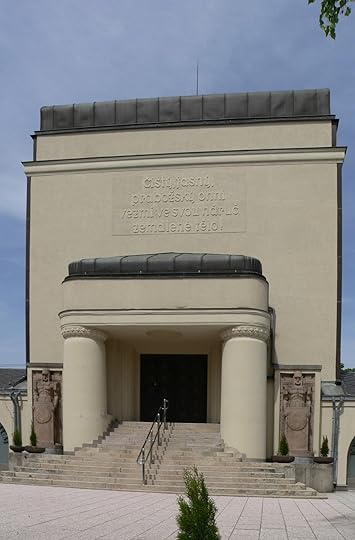
The inscription above the entrance of the Feuerhalle which Best translates in English from Winterberg's German as 'O, pure, primal glorious fire, take this world-weary body into your arms'.
The reinvigorated Herr Winterberg persuades (bribes? forces?) Herr Kraus to embark with him on a madcap adventure, by train (and only by train - don’t get Herr Winterberg started on the motor car or, worse, the rail replacement bus service) across the Ghoulash and Schnitzel Empires as he has it, travelling as far north as Peenemunde and as far south as Sarajevo, taking in various countries, towns, cities and historical sights. The beautiful landscape of battlefields, cemeteries and ruins - as Herr Winterberg is fond of quoting “the Englishman”, a WW2 bomber crew member he once met and formed a strong bond with, who was visiting the various sights he has set ablaze in the war to understand the historical circumstances behind them, a cause dear also to Herr Winterberg’s heart.
The two travel not by the use of smartphones (Herr Winterberg’s first act on their journey is to destroy and dispose of Kraus’s phone) and Google Maps … but rather following Herr Winterberg’s sacred text, the 1913 Edition of Baedecker’s guide to Austria-Hungary.
The highest point of the line at 897 metres is located in the 1430-meter-long Semmering tunnel, yes, yes, then it all goes downhill from there, yes, yes, the Apex of the Semmering railway lies in the Semmering tunnel and the apex of railway history in Central Europe lies in the year 1913, yes, yes, precisely, that’s the year of my Baedeker, the year it all tipped over, after that it only went downhill with the railway and with history and with Central Europe too, dear Herr Kraus, it went straight downhill into complete derangement, yes, yes,…
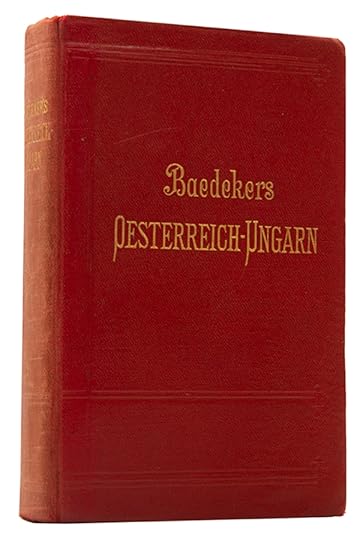
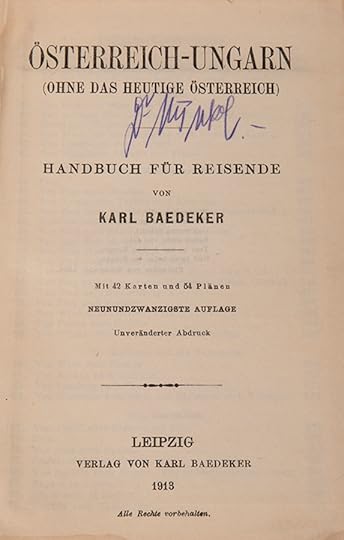
And as they travel, Herr Winterberg reads verbatim from the Baedeker, interspersed with his own commentary and historical ramblings, which often get him increasingly agitated (‘historical fits’) until he suddenly falls asleep. Winterberg is seemingly in dialogue with an interlocutor (in practice the exasperated Herr Kraus struggles to get a word in, although Herr Winterberg berates him for imagined interruptions), and his ramblings are rife with catchphrases and motifs: the central place of the Battle of Königgrätz; Herr Winterberg’s three wives but his true love Lenka whose murderer he seeks on this journey; a fixation with Cornus sanguinea (bloody dogwood) bunches of which he likes to leave on tombs in the cemeteries he also loves; extortions as he reads facts and figures to “Please make note of that, dear Herr Kraus, I can’t keep track of everything”; and perhaps his favourite of all, any reference to a particular type of death followed by defenestration* corpses aren’t a pretty sight, as my father always said (* or whatever cause of death is then under discussion - and there are many).
An accompanying composition Winterberg – The Beautiful Landscape.
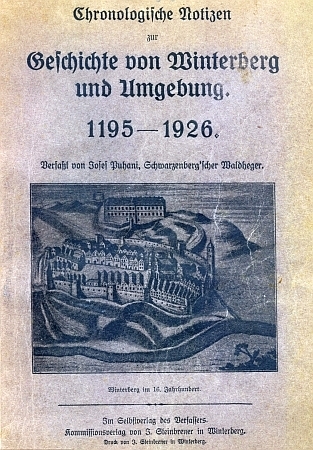
A history of Winterberg from 1195 to 1926 by Joseph Puhani which Herr Winterberg spots in an antique book shop and gifts to, the not terribly interested, Herr Kraus
Wonderfully all of the places, rail journeys, historical stories and quotes from the Baedecker are real (even the Feuerhalle that could not be used until a change of Empire) and the novel serves as a wonderfully evocative, if deliberately overly detailed and repetitive, travelogue of both past and present.
And here we alighted and couldn't travel on. We had to look around the city after all, since the last trains still running from Jičín that evening were heading towards Sadová and Hradec Králové, and we didn't want to go back. We'd both had enough of the Battle of Königgrätz.
We looked for the hotel Hamburg, which was recommended in the Baedeker, with 20 rooms let for between 2.40 and 4 crowns at the time, and a woman told us that Hamburg was now called Paris and showed us the way.
The Baedecker entry:

The changing name of both the town itself, and the city paid tribute to in the hotel - at other times it was also known as Stalingrad and Astra - representative of the ever evolving geo-political allegiances in the area, one of the novel's themes.
Alongside that, as the journey progresses, buried beneath the avalanche of facts and figures the reader, and the two men, comes to understand each other stories, and indeed confront their own demons, historical but largely personal.
Impressively researched and great fun - as well as poignant - to read.
The publisher
Jantar is an independent publisher of European Literary Fiction and Poetry based in London and has been praised widely for its choice of texts, artwork, editorial rigour and use of very rare and sometimes unique fonts in all its books.
Founded in 2011 by Michael Tate and a group of his friends, Jantar’s guiding principle was to select, publish and make accessible previously inaccessible works of Central European Literary Fiction through translations into English… texts ‘trapped in amber’. This, to some, whimsical endeavour found further expression in the publication of Kytice, a bi-lingual version of the 19th century collection of poems written by the Czech folklorist and poet Karel Jaromír Erben. Though the original poems written in the Czech language will not be familiar to English-language readers, themes and rhythms featured in those poems are well-known to music lovers as they provided the inspiration for Antonín Dvořák’s tone poems The Water-sprite, The Golden Spinning-wheel, The Spectre’s Bride, The Noon-day Witch and The Wild Dove. First published in 2013, Kytice remains Jantar’s best-selling book, a fact that continues to delight and confound all connected with our company. An expanded edition including some of Erben’s larger poetry fragments is planned for our tenth anniversary in 2021.
In 2017, Jantar widened its mission to publish fiction and poetry exploring notions of ‘difference’ and the borders of European language and culture. Since then, Jantar has become better-known for being a fierce advocate of wider contemporary European Literary Fiction.
With his Baedeker. With his magnifying glass. With his glasses. With his winter coat. With his history. With Cornus sanguinea. With his pistol. With his rope. With his historical fits. With all his madness. With Lenka. With all his dead wives. With the Englishman. With his "beautiful landscape of battlefields, cemeteries and ruins". With all the water corpses and noose corpses and defenestration corpses. With his Feuerhalles. With his Central Cemeteries. With his railways. With his train stations. With his tracks through the Alps. With his war. With his fog. With his battles. With his Königgrätz.
I should have done it, but I didn't.
Winterberg's Last Journey is Kris Best's translation of Winterbergs letzte Reise by Jaroslav Rudiš.
It is the latest book from the Republic of Consciousness Book of the Month club which raises funds that support the UKs most exciting annual book prize, as well as showcasing a collection of books from the vibrant small independent press scene.
The novel, set in the present day, opens:
FROM KÖNIGGRÄTZ TO SADOWA
'The Battle of Königgrätz runs through my heart, said Winterberg, looking out the foggy window of the train. He squeezed his breast so tightly, it seemed that he wanted to crush not only the thick wool of his old, grey coat, but his ninety-nine-year-old heart as well.
"The Battle of Königgrätz is the beginning of my end; he continued, staring out of his horn-rimmed glasses at the snowy Bohemian landscape as it passed us by.
The small train moved slowly, swaying like a lonely ship without a captain on the high seas. The young conductor gazed at her phone and swayed along with it. As did we.
'The Battle of Königgrätz is the beginning of all my calamities, the beginning of all our calamities, if you were born under the sign of the Battle of Königgrätz, you were lost forever. That's why I'm lost, that's why this country is lost, and that's why you, dear Herr Kraus, are lost, whether you like it or not, yes, yes, there's no escape, it's not as easy as laying railway tracks across the Alps. The Battle of Königgrätz is like a trap, one that we set ourselves, which we lured ourselves into and into which we willingly fall, the Battle of Königgrätz is an abyss into which we all plummet, the Battle of Königgrätz grasps at our necks, it's closing around my throat, it's like a cord, like a noose, always getting tighter, yes, yes, like the rope with which we all hang ourselves in the end, whether we like it or not, yes, yes, and noose corpses aren't a pretty sight, as my father always said, rambled Winterberg, still looking out of the window.
Look at that, Herr Kraus, the wild boar on the edge of the forest, aren't they beautiful? I'd just love to paint them. I used to love to paint, especially peaceful winter landscapes like this, but even the boar are lost, yes, yes, the Battle of Königgrätz is an ever-sprawling Cornus sanguinea‘
Václav Sochor: The Battery of the Dead
Our narrator (who immediately remarks to himself/the reader that the ‘boar’ in Herr Winterberg’s ramblings are actually deer), is Herr Kraus, from Vimperk in the Czech Republic, known as Winterberg in German. After a troubled history, including a prison sentence, he is now working in Germany providing private and one-to-one palliative care to terminally ill patients, accompanying them on their crossing as he thinks of it, sometimes for up to 2 years.
His most recent assignment, one he didn’t expect to last long, was for a 99 year old man, Herr Winterberg, who wasn’t even communicative when he first took charge of his care. But when Herr Kraus mentions the coincidence of the name of his hometown, Herr Winterberg begins to talk. And once he starts talking he is hard to stop.
And he said: 'Feuerhalle' And everything changed.
It surprised me a bit, and I think it would have surprised anyone.
I didn't know the word. I was hearing it for the first time. I wasn't sure what it meant. I didn't know how often I would come to hear that word.
There was a lot that I didn't know.
About Winterberg. About Lenka Morgenstern. About his daughter Silke. About Reichenberg and about the Feuerhalle. About the many corpses, and about love. About the war. About history and about the railway. About Königgrätz and about Sarajevo.
About me.
The Feuerhalle, meaning a crematorium, that is Herr Winterberg’s first words from his seemingly terminal state, refers to the one built in Liberec (or Reichenberg as Herr Winterberg has it), the first build in the Austro-Hungarian empire, designed by the architect Rudolf Bitzan, and which was not able to be operated, due to the law of the land, until the founding of the Czech Republic. Herr Winterberg says that the building was finished on the day he was born, and that his father operated the crematorium.
The inscription above the entrance of the Feuerhalle which Best translates in English from Winterberg's German as 'O, pure, primal glorious fire, take this world-weary body into your arms'.
The reinvigorated Herr Winterberg persuades (bribes? forces?) Herr Kraus to embark with him on a madcap adventure, by train (and only by train - don’t get Herr Winterberg started on the motor car or, worse, the rail replacement bus service) across the Ghoulash and Schnitzel Empires as he has it, travelling as far north as Peenemunde and as far south as Sarajevo, taking in various countries, towns, cities and historical sights. The beautiful landscape of battlefields, cemeteries and ruins - as Herr Winterberg is fond of quoting “the Englishman”, a WW2 bomber crew member he once met and formed a strong bond with, who was visiting the various sights he has set ablaze in the war to understand the historical circumstances behind them, a cause dear also to Herr Winterberg’s heart.
The two travel not by the use of smartphones (Herr Winterberg’s first act on their journey is to destroy and dispose of Kraus’s phone) and Google Maps … but rather following Herr Winterberg’s sacred text, the 1913 Edition of Baedecker’s guide to Austria-Hungary.
The highest point of the line at 897 metres is located in the 1430-meter-long Semmering tunnel, yes, yes, then it all goes downhill from there, yes, yes, the Apex of the Semmering railway lies in the Semmering tunnel and the apex of railway history in Central Europe lies in the year 1913, yes, yes, precisely, that’s the year of my Baedeker, the year it all tipped over, after that it only went downhill with the railway and with history and with Central Europe too, dear Herr Kraus, it went straight downhill into complete derangement, yes, yes,…
And as they travel, Herr Winterberg reads verbatim from the Baedeker, interspersed with his own commentary and historical ramblings, which often get him increasingly agitated (‘historical fits’) until he suddenly falls asleep. Winterberg is seemingly in dialogue with an interlocutor (in practice the exasperated Herr Kraus struggles to get a word in, although Herr Winterberg berates him for imagined interruptions), and his ramblings are rife with catchphrases and motifs: the central place of the Battle of Königgrätz; Herr Winterberg’s three wives but his true love Lenka whose murderer he seeks on this journey; a fixation with Cornus sanguinea (bloody dogwood) bunches of which he likes to leave on tombs in the cemeteries he also loves; extortions as he reads facts and figures to “Please make note of that, dear Herr Kraus, I can’t keep track of everything”; and perhaps his favourite of all, any reference to a particular type of death followed by defenestration* corpses aren’t a pretty sight, as my father always said (* or whatever cause of death is then under discussion - and there are many).
An accompanying composition Winterberg – The Beautiful Landscape.
A history of Winterberg from 1195 to 1926 by Joseph Puhani which Herr Winterberg spots in an antique book shop and gifts to, the not terribly interested, Herr Kraus
Wonderfully all of the places, rail journeys, historical stories and quotes from the Baedecker are real (even the Feuerhalle that could not be used until a change of Empire) and the novel serves as a wonderfully evocative, if deliberately overly detailed and repetitive, travelogue of both past and present.
And here we alighted and couldn't travel on. We had to look around the city after all, since the last trains still running from Jičín that evening were heading towards Sadová and Hradec Králové, and we didn't want to go back. We'd both had enough of the Battle of Königgrätz.
We looked for the hotel Hamburg, which was recommended in the Baedeker, with 20 rooms let for between 2.40 and 4 crowns at the time, and a woman told us that Hamburg was now called Paris and showed us the way.
The Baedecker entry:
The changing name of both the town itself, and the city paid tribute to in the hotel - at other times it was also known as Stalingrad and Astra - representative of the ever evolving geo-political allegiances in the area, one of the novel's themes.
Alongside that, as the journey progresses, buried beneath the avalanche of facts and figures the reader, and the two men, comes to understand each other stories, and indeed confront their own demons, historical but largely personal.
Impressively researched and great fun - as well as poignant - to read.
The publisher
Jantar is an independent publisher of European Literary Fiction and Poetry based in London and has been praised widely for its choice of texts, artwork, editorial rigour and use of very rare and sometimes unique fonts in all its books.
Founded in 2011 by Michael Tate and a group of his friends, Jantar’s guiding principle was to select, publish and make accessible previously inaccessible works of Central European Literary Fiction through translations into English… texts ‘trapped in amber’. This, to some, whimsical endeavour found further expression in the publication of Kytice, a bi-lingual version of the 19th century collection of poems written by the Czech folklorist and poet Karel Jaromír Erben. Though the original poems written in the Czech language will not be familiar to English-language readers, themes and rhythms featured in those poems are well-known to music lovers as they provided the inspiration for Antonín Dvořák’s tone poems The Water-sprite, The Golden Spinning-wheel, The Spectre’s Bride, The Noon-day Witch and The Wild Dove. First published in 2013, Kytice remains Jantar’s best-selling book, a fact that continues to delight and confound all connected with our company. An expanded edition including some of Erben’s larger poetry fragments is planned for our tenth anniversary in 2021.
In 2017, Jantar widened its mission to publish fiction and poetry exploring notions of ‘difference’ and the borders of European language and culture. Since then, Jantar has become better-known for being a fierce advocate of wider contemporary European Literary Fiction.

November 29, 2021
Nelze jinak než za 5*. I když mě občas Winterberg těmi svými historickými záchvaty mírně štval (být Krausem, asi by mi z něj praskla hlava doslova), i když mě štval Kraus tou svojí smutnou letorou (jasně, asi na to měl i nárok, ale nebyl s to zkusit ukročit stranou, takže být Winterbergem, asi bych měla chuť ho neustále nějak provokovat), i tak to byla jedna velká historická jízda. Zas další z knih, co by mohla v určitém směru doplnit výuku dějepisu. Zas jsem se tu toho tolik dozvěděla. Zas jsem měla chuť listovat dál, pročíst si o událostech, které Winterberg předkládal. Sednout na vlak a jet, jet prostě někam. Semtam na nádraží vystoupit a koukat, zvlášť teda, když tam bude nádražka, kterých bohužel ubývá (smutné), dát si tam pivo a utopence a nasávat. Nejen to pivo, ale i historii, atmosféru a třeba zase pivo. A zase jet dál. Až tam, kam to půjde. Kam dá můj život a život těch okolo. Tohle byl train trip jako jeden vychlazený půllitr za druhým. A train trip through the history. Mám ráda knížky, co popouzejí k dalším činům, byť by to bylo jen listování další knihou, nebo hledání souvislostí.

March 11, 2020
Die Langeweile war leider immens. Man muss sich das so vorstellen, dass der Inhalt des Buches aus dem Inhalt eines anderen Buches besteht, nämlich aus einem Reiseführer/Baedeker nach dem 1.Weltkrieg, das andauernd und oft über Seiten hinweg von dem neunundneunzigjährigen Protagonisten vorgelesen wird, während er und sein Pfleger Jan durch Österreich, Ungarn, Tschechien und Bosnien reisen und die Gegenden abklappern, die in dem Buch verzeichnet sind. Man muss sich das so vorstellen, dass der alte Mann cirka zwanzig Phrasen hat, die er auf jeder zweiten Seite vor sich hinmurmelt. "The beautiful landscape of battlefields, cemeteries and ruins" steht zB einundvierzig Mal in diesem Buch. Es gab manche anreizende Situation und Warmherziges und Trauriges, aber der Rest war Folter, aber ich vermute, das war schon gewollt und Absicht, aber ich mein, so fühl ich mich jetzt auch.

September 20, 2020
Jan Kraus ist Sterbebegleiter. Tag und Nacht kümmert er sich um Menschen, deren Tod bevorsteht in deren eigenen Wohnungen. Überfahrt nennt er es, die Menschen, die er begleitet sind seine Matrosen. Aber der 99-jährige Winterberg ist noch nicht so weit, er will mit sich ein paar Dinge auf einer letzten Reise klären, die die beiden durch das ehemalige Österreich-Ungarn führen.
Winterberg und Kraus stammen beide aus Böhmen, der eine als deutschsprachiger, der andere als tschechischsprachiger Böhme. Aber nicht nur die Herkunft verbindet sie, beide haben etwas in ihrer Vergangenheit, über das sie nicht sprechen können, das sie zu vergessen suchen. Zunächst bemerkt man jedoch die Unterschiede.
Winterberg ist ein Eisenbahnfan und leidet an „historischen Anfällen“ wie er es nennt. Für ihn begann der Untergang 1866 mit der Schlacht bei Königgrätz, aber 1913 war für ihn die Welt noch einigermaßen in Ordnung. Deshalb liebt er den Baedecker-Reiseführer aus diesem Jahr, mit dem sie die Reise unternehmen. Es ist eine besondere Reise, in der der Leser nicht nur einiges über Orte der ehemaligen k. u. k.-Monarchie erfährt, sondern sehr viel über Eisenbahnbauten, Eisenbahnpioniere, über Kriege und Schlachten, über die Feuerbestattung und über Friedhöfe, über die Ermordung des Kronprinzen und die Trottel der Geschichte. Und nicht zuletzt über persönliches Schicksal und persönliche Schuld, die sich nicht verdrängen lässt.
Der Schreibstil ist außergewöhnlich. Winterberg ist ein äußerst anstrengender Protagonist. Er redet nicht nur ununterbrochen, in dem er z. B. lange Passagen aus dem Baedecker vorliest, sondern hat eine begrenzte Anzahl von Floskeln, die sich ständig wiederholen. Da mein Opa im hohen Alter auch Sprüche wiederholte, machte es für mich die Figur Winterberg glaubhaft. Die veränderte Kombination der Floskeln, die ständig neuen Verbindungen zwischen den Themen Eisenbahn, Tod, Krieg und persönlichem Schicksal fand ich raffiniert und gut gelungen. Überhaupt ist der Schreibstil geprägt durch Anaphern, die ich in dieser Menge noch nie in einem Buch gesehen habe. Es gab Momente, da gingen mir die Wiederholungen auf die Nerven, manchmal hätte es etwas weniger auch getan, finde ich.
Besonders der erste Teil der Reise durch Böhmen löste bei mir eine Unmenge an Erinnerungen aus. Auf S. 71 z. B. heißt es „Dort ist die Burgruine Trosky, ja, ja, keiner in Deutschland kennt Trosky...“ doch, klar kenne ich Trosky von den vielen Pfingstfahrten ins Böhmische Paradies, klar kenne ich Reichenberg (Liberec) vom Winterurlaub, klar kenne ich Königgrätz (Hradec Kralové) von der Radtour an der Elbe oder Königinhof (Dvur Kralové), der Ort, aus dem mein Schwiegersohn stammt usw. Aber die Geschichte, die sich z. B. in Königgrätz abspielte, die kannte ich nicht.
Für mich ein empfehlenswertes Buch, das Orte in Mitteleuropa in den Blick rückt, die meist weniger im Blick liegen und das ein Plädoyer für die Beschäftigung mit Geschichte ist, der man nicht entkommen kann. (S. 167: „Die Menschen von heute lassen sich eher von einem stummen Eisbären im Zoo berühren als von der Geschichte, ja, ja, das macht mich ein wenig melancholisch.“) sowie ein Buch, das von Schlachten handelt und den Frieden preist. Ich hätte selbst Lust, die Orte mit dem Zug zu bereisen, aber auf S. 105 heißt es „Touristen sind die Krieger von heute, nein, die Touristen sind noch schlimmer, sie überfallen und zerstören alles.“
Noch eine kleine Bemerkung am Schluss: Rudiš als tschechischsprachiger Autor hat mit diesem Buch sein erstes Werk auf deutsch geschrieben. das ist sehr beachtlich, hätte aber beim Lektoriat etwas mehr Aufmerksamkeit erfordert. Eine noch akzeptable Menge an grammatikalischen oder Rechtschreibfehlern wurde für mein Empfinden überschritten. Schade.
Winterberg und Kraus stammen beide aus Böhmen, der eine als deutschsprachiger, der andere als tschechischsprachiger Böhme. Aber nicht nur die Herkunft verbindet sie, beide haben etwas in ihrer Vergangenheit, über das sie nicht sprechen können, das sie zu vergessen suchen. Zunächst bemerkt man jedoch die Unterschiede.
Winterberg ist ein Eisenbahnfan und leidet an „historischen Anfällen“ wie er es nennt. Für ihn begann der Untergang 1866 mit der Schlacht bei Königgrätz, aber 1913 war für ihn die Welt noch einigermaßen in Ordnung. Deshalb liebt er den Baedecker-Reiseführer aus diesem Jahr, mit dem sie die Reise unternehmen. Es ist eine besondere Reise, in der der Leser nicht nur einiges über Orte der ehemaligen k. u. k.-Monarchie erfährt, sondern sehr viel über Eisenbahnbauten, Eisenbahnpioniere, über Kriege und Schlachten, über die Feuerbestattung und über Friedhöfe, über die Ermordung des Kronprinzen und die Trottel der Geschichte. Und nicht zuletzt über persönliches Schicksal und persönliche Schuld, die sich nicht verdrängen lässt.
Der Schreibstil ist außergewöhnlich. Winterberg ist ein äußerst anstrengender Protagonist. Er redet nicht nur ununterbrochen, in dem er z. B. lange Passagen aus dem Baedecker vorliest, sondern hat eine begrenzte Anzahl von Floskeln, die sich ständig wiederholen. Da mein Opa im hohen Alter auch Sprüche wiederholte, machte es für mich die Figur Winterberg glaubhaft. Die veränderte Kombination der Floskeln, die ständig neuen Verbindungen zwischen den Themen Eisenbahn, Tod, Krieg und persönlichem Schicksal fand ich raffiniert und gut gelungen. Überhaupt ist der Schreibstil geprägt durch Anaphern, die ich in dieser Menge noch nie in einem Buch gesehen habe. Es gab Momente, da gingen mir die Wiederholungen auf die Nerven, manchmal hätte es etwas weniger auch getan, finde ich.
Besonders der erste Teil der Reise durch Böhmen löste bei mir eine Unmenge an Erinnerungen aus. Auf S. 71 z. B. heißt es „Dort ist die Burgruine Trosky, ja, ja, keiner in Deutschland kennt Trosky...“ doch, klar kenne ich Trosky von den vielen Pfingstfahrten ins Böhmische Paradies, klar kenne ich Reichenberg (Liberec) vom Winterurlaub, klar kenne ich Königgrätz (Hradec Kralové) von der Radtour an der Elbe oder Königinhof (Dvur Kralové), der Ort, aus dem mein Schwiegersohn stammt usw. Aber die Geschichte, die sich z. B. in Königgrätz abspielte, die kannte ich nicht.
Für mich ein empfehlenswertes Buch, das Orte in Mitteleuropa in den Blick rückt, die meist weniger im Blick liegen und das ein Plädoyer für die Beschäftigung mit Geschichte ist, der man nicht entkommen kann. (S. 167: „Die Menschen von heute lassen sich eher von einem stummen Eisbären im Zoo berühren als von der Geschichte, ja, ja, das macht mich ein wenig melancholisch.“) sowie ein Buch, das von Schlachten handelt und den Frieden preist. Ich hätte selbst Lust, die Orte mit dem Zug zu bereisen, aber auf S. 105 heißt es „Touristen sind die Krieger von heute, nein, die Touristen sind noch schlimmer, sie überfallen und zerstören alles.“
Noch eine kleine Bemerkung am Schluss: Rudiš als tschechischsprachiger Autor hat mit diesem Buch sein erstes Werk auf deutsch geschrieben. das ist sehr beachtlich, hätte aber beim Lektoriat etwas mehr Aufmerksamkeit erfordert. Eine noch akzeptable Menge an grammatikalischen oder Rechtschreibfehlern wurde für mein Empfinden überschritten. Schade.

February 8, 2022
(Sporo przede mną ale podróżuję z panami W i K ogarnięty taką myślą: współczesny środkowoeuropejski Charon miast przeprawić Odyseusza na drugą stronę, zabiera się z nim w podróż... pociągiem, jaki ciągnie tuwimowska "Lokomotywa"...)
Powyższe przyszło mi do głowy po pierwszych kilkudziesięciu stronach "Podróży..." - jedno zdanie o tej lokomotywie: chodziło mi o sposób narracji - pod żadnym pozorem o tuwimowski humor! Po prostu Rudisowi udało się dokładnie to samo - jego narracja miejscami toczy się jak pociąg. Niebywałe wrażenie.
A to opowieść niezwykle serio, i - chyba jak najlepsze takie "opowieści drogi" - o bardzo wielu różnych ważnych sprawach, dla których sam podróż jest w zasadzie pretekstem, formą osnowy.
Bohaterowie miotani wszechobecną - nieco parszywą - historią, konfrontowani z własną i cudzą starością, umieraniem... Można sporo o "Ostatniej podróży" pisać...
Wyjątkowa książka - nie sposób być oryginalnym w jej ocenie.
Powyższe przyszło mi do głowy po pierwszych kilkudziesięciu stronach "Podróży..." - jedno zdanie o tej lokomotywie: chodziło mi o sposób narracji - pod żadnym pozorem o tuwimowski humor! Po prostu Rudisowi udało się dokładnie to samo - jego narracja miejscami toczy się jak pociąg. Niebywałe wrażenie.
A to opowieść niezwykle serio, i - chyba jak najlepsze takie "opowieści drogi" - o bardzo wielu różnych ważnych sprawach, dla których sam podróż jest w zasadzie pretekstem, formą osnowy.
Bohaterowie miotani wszechobecną - nieco parszywą - historią, konfrontowani z własną i cudzą starością, umieraniem... Można sporo o "Ostatniej podróży" pisać...
Wyjątkowa książka - nie sposób być oryginalnym w jej ocenie.
August 14, 2022
To nie książka dla każdego, trzeba zdecydowanie lubić kolej i podróże, mieć sentyment do historii i na początku szczyptę cierpliwości do Winterberga. Ale jak już się wsłucha w jego opowieść, to ma się uczucie, że jedzie się razem z nim i przemierza Europę, i to nie tylko Europę współczesną, ale też na przestrzeni wieków. Polecam czytać ją w trakcie jazdy pociągiem (najlepiej po Czechach 😉)

March 26, 2022
Rudiše mám rád, ale tady jsme se nepotkali. Miluju historii, ale vyprávění senilního dědka je otravné. Snaha o určitou lyriku je na škodu a celkově kniha je dost nudná. Konec nepřekvapil. Vlastně 3 hvězdy proto, že Rudiš psát umí a má vždy dobré dialogy.

July 13, 2022
Strašně upovídané a opakující se. Až nesnesitelně. A ano, "takhle o historii střední Evropy ještě nikdo nevyprávěl", jak pravdivě slibuje přebal knihy. Dostáváme totiž doslova "záchvaty historie" propletené s hutnými odstavci ne/souvisejících informací dávno neplatného bedekru z roku 1913 (ideálně vybrané jsou tu kousky pro šotouše a/nebo přátele žehu) a životními osudy dvou knižních postav... Nemít i verzi audioknihy, asi bych skončil někde v Plzni, ovšem poslechem jsem se nakonec přenesl až do Vídně, kdy mi dříve nesnesitelné postavy začaly připadat docela zajímavé a historické exkurzy z průvodce cíleněji směřované. A ke konci knihy už jsem ústřední dvojici začal mít svým způsobem i rád. Je to opravdu divná kniha, ale svým divným způsobem mě nakonec potěšila. Jen tedy dle mě není potřeba tolik pesimistické nostalgie kritizující vše nové, co ale taky čekat od skoro stoleté postavy, že...
Na knize zároveň oceňuji dvě věci – postavu "převozníka" představenou takto lidsky, se vším, co k tomuto povolání patří. A pak přebal knihy, krásná to rozkládací mapa, kterou k prohlédnutí doporučuji i posluchačům audioverze.
Poznámka z Brna: Nechápu, co autor myslí tunelem mezi ústředním hřbitovem a zastávkou tramvají. Je tam jeden tunel tramvajový, kam ovšem pěší nemůžou, a jeden pro pěší, ten je ale na druhé straně hřbitova, než je krematorium, spojuje parkoviště s hřbitovem a chodit tam ze zastávky by bylo pěkné prodloužení cesty. Buď je to autorské znázornění zmatenosti pana Winterberga, nebo nějaká chybka poznávání... A škoda, že si Jaroslav Rudiš nevzpomněl také na Vídeňský viadukt, který je projektem tolikrát zmíněného rytíře Ghegy, nebo na historii tří konkurujících si hlavních brněnských nádraží. (O roli Brna v románu si taky můžete přečíst/poslechnout víc na Českém rozhlasu.)
Poznámka o místě uvaření: Někdo má svůj osudový tunel, pro jednoho člena naší rodiny je osudové ono strmé náměstí ve Winterbergu. Tam, co byl ten velký požár...
Máte ještě Winterbergerovskou náladu? Chcete se taky umět dívat skrz historii? Stáhněte si celý originální bedekr a začtěte se do 588 německých stran z roku 1913: Österreich-Ungarn: nebst Cetinje, Belgrad, Bukarest. Handbuch für Reisende.
Na knize zároveň oceňuji dvě věci – postavu "převozníka" představenou takto lidsky, se vším, co k tomuto povolání patří. A pak přebal knihy, krásná to rozkládací mapa, kterou k prohlédnutí doporučuji i posluchačům audioverze.
Poznámka z Brna: Nechápu, co autor myslí tunelem mezi ústředním hřbitovem a zastávkou tramvají. Je tam jeden tunel tramvajový, kam ovšem pěší nemůžou, a jeden pro pěší, ten je ale na druhé straně hřbitova, než je krematorium, spojuje parkoviště s hřbitovem a chodit tam ze zastávky by bylo pěkné prodloužení cesty. Buď je to autorské znázornění zmatenosti pana Winterberga, nebo nějaká chybka poznávání... A škoda, že si Jaroslav Rudiš nevzpomněl také na Vídeňský viadukt, který je projektem tolikrát zmíněného rytíře Ghegy, nebo na historii tří konkurujících si hlavních brněnských nádraží. (O roli Brna v románu si taky můžete přečíst/poslechnout víc na Českém rozhlasu.)
Poznámka o místě uvaření: Někdo má svůj osudový tunel, pro jednoho člena naší rodiny je osudové ono strmé náměstí ve Winterbergu. Tam, co byl ten velký požár...
Máte ještě Winterbergerovskou náladu? Chcete se taky umět dívat skrz historii? Stáhněte si celý originální bedekr a začtěte se do 588 německých stran z roku 1913: Österreich-Ungarn: nebst Cetinje, Belgrad, Bukarest. Handbuch für Reisende.

March 20, 2022
Na této knize je nepochybně něco... něco. Nemohu sice říct, že bych si ji chtěl přečíst znovu, a čtení jsem si ne tak úplně užíval, ale přesto jsem ji zhltnul na mé poměry vcelku rychle. Možná je to tématem, možná zpracováním. Nejspíš kombinací obého.
Dívat se skrz historii
Hlavní postavy cestují dnešní Evropou, ale p. Winterberg na soudobou krajinu, která dnes tvoří Německo, Česko, Rakousko, Slovensko, Chorvatsko atd., nazírá stále jako na Rakousko-Uhersko. Winterberg tomu říká dívat se skrz historii. Nebo alespoň myslím, že toto znamená dívat se skrz historii. Může to ale dost dobře být i něco jiného.
Kniha je originálním spojením beletristického příběhu a vyprávění o životě postav a historického líčení o dějinách střední Evropy. Přestože mi styl hlavního hrdiny a jeho neustálé senilní opakování (ano, ano, pane Krausi, vy se neumíte dívat skrz historii) celkem lezlo na nervy, musí se nechat, že jsem si zase díky tomu zapamatoval poměrně dost o bitvě u Hradce Králové, která prochází srdcem páně Winterberga. Kromě toho se děj v nemalé míře točí kolem Reichenbergu a tamějšího žároviště, odkud pocházím. Totiž z Reichenbergu (Liberce), ne z žároviště. Možná právě proto pro mne celý příběh byl o to zajímavější.
Budeš trpět, ale náramně si to užiješ
Vlastně mám k této knize poněkud schizofrenní vztah. Na jednu stranu, jak jsem psal výše, mi moc nesedl ten styl. Při čtení jsem tak trochu trpěl. Zvlášť při Winterbergových záchvatech historie.
Na druhou stranu musím ale říct, že na slohu, jakým autor příběh napsal mě něco zaujalo. Nedá se mu upřít kvalita. A originalita. Právě proto se to ve mě pere. Nakonec tři hvězdičky, ale spíš tak tři a půl, kdyby to šlo.
Dívat se skrz historii
Hlavní postavy cestují dnešní Evropou, ale p. Winterberg na soudobou krajinu, která dnes tvoří Německo, Česko, Rakousko, Slovensko, Chorvatsko atd., nazírá stále jako na Rakousko-Uhersko. Winterberg tomu říká dívat se skrz historii. Nebo alespoň myslím, že toto znamená dívat se skrz historii. Může to ale dost dobře být i něco jiného.
Kniha je originálním spojením beletristického příběhu a vyprávění o životě postav a historického líčení o dějinách střední Evropy. Přestože mi styl hlavního hrdiny a jeho neustálé senilní opakování (ano, ano, pane Krausi, vy se neumíte dívat skrz historii) celkem lezlo na nervy, musí se nechat, že jsem si zase díky tomu zapamatoval poměrně dost o bitvě u Hradce Králové, která prochází srdcem páně Winterberga. Kromě toho se děj v nemalé míře točí kolem Reichenbergu a tamějšího žároviště, odkud pocházím. Totiž z Reichenbergu (Liberce), ne z žároviště. Možná právě proto pro mne celý příběh byl o to zajímavější.
Budeš trpět, ale náramně si to užiješ
Vlastně mám k této knize poněkud schizofrenní vztah. Na jednu stranu, jak jsem psal výše, mi moc nesedl ten styl. Při čtení jsem tak trochu trpěl. Zvlášť při Winterbergových záchvatech historie.
Na druhou stranu musím ale říct, že na slohu, jakým autor příběh napsal mě něco zaujalo. Nedá se mu upřít kvalita. A originalita. Právě proto se to ve mě pere. Nakonec tři hvězdičky, ale spíš tak tři a půl, kdyby to šlo.

February 16, 2026
Ke spojenosti mi stačí breptání a drmolení takřka staletého, lehce nesnesitelného a lehce halucinujícího muže, který předčítání z bedekru roku 1913 doplňuje repetitivními průpovídkami ("to nejsou hezké mrtvoly", "smutné, smutné", "beautiful lanscape of battlefields, cementaries and ruins", "dívat se skrz historii", "já vím, co chcete říct" – nikdo to říct nechce, ale řekne si to sám), rytmizováno doopravdy jako jízda starou lokálkou (i v pásmu vypravěče – "chodil jsem...", "myslel jsem..."); pro šotouše to musí být vůbec slast (výklady o nádražích, horských železnicích a úzkolejkách), ale zajímavá je i převoznická figura (k vodním plochám se přitom nepáchne), osudové chápání rakousko-uherských událostí (ve srovnání s dnešními spory o politice paměti, které se zaměřují spíš na 20. století), proměňující se dynamika hlavních postav, nakonec stejně šílených a ztracených (podrážděnost a kárání, ale nakonec snad i vcítění se – cesta Střední Evropou zároveň jako cesta k sobě navzájem, ale i k vlastní – neblahé a postupně odkrývané – minulosti), motiv zahlédnutých srnek nebo očekávání agonie, které nebrání fascinaci pohřebnictvím (časopis Zpopelnění, tvl). Konec možná trochu toporně mysteriózně vyšinutý, ale jinak wow, jestli se takové knihy čtou v Česku a Německu masově, tak Střední Evropa možná není zas tak mizerné místo k žití.
Otec chtěl, abych se jmenoval Wenzel Winterberg, protože když napíšu své iniciály, jsou v těch písmenech vidět hory obklopující Reichenberg, ano, ano, ochraňují ho stejně, jako hory ochraňují celé české údolí, jako oba strážcové smrti ochraňují jeho žároviště... A uprostřed mezi těmi W ční k nebo nejkrásnější hora... Ne, není to Ještěd, jak by si mnozí mysleli, je to Monstranční vrch se žárovištěm. A tak budu vždycky vědět, odkud pocházím, říkal otec. A kam mám jít... WW."(s. 421)

November 4, 2023
Nepopsatelný čtenářský zážitek, pokud milujete evropskou historii a chcete se projet vlakem a popovídat si o všech zásadních momentech se stoletým staříkem, který má velice specifické názory a humor. Je to smutné, je to drsné, ale zároveň je to neskutečně příjemné čtení... a cesta. Díky!

May 12, 2020
4,5 Sterne
January 2, 2022
Bezprostředně po dočtení se ve mně mísí dva dojmy: zážitek z podmanivého, rytmického jazyka, repetitivních a zvolna variovaných motivů, jako když hnětete těsto, jako když čtete Thomase Bernharda (podobnost je jen volná, Rudišův text je tam, kde vypráví, úsečný a nikoliv litanický). Na straně druhé je to rozpačitost z dalšího příběhu s fantaskním a přece jen otevřeným koncem. Jako by Rudišovi došla trpělivost s jeho užvaněným Winterbergem a chtěl se ho rychle zbavit, stejně jako několikrát i druhá hlavní postava a vypravěč příběhu - emigrant a pečovatel Jan, který se resetuje alkoholem.
Winterberga charakterizuje posedlost dějinami. Jeho posedlost historií je rámována čtyřmi fenomény: bedekrem po Rakousku-Uhersku z roku 1913, libereckým krematoriem, železnicí a bitvami a jejich vojevůdci. Hojné citování údajů z průvodce po mocnářství, z nějž po paměti hlavní postava cituje, vykresluje její umanutost, a zároveň nechává román značně nabít na objemu. Některé kapitoly kvůli tomu vypadají spíše jako překladová a rešeršní cvičení. Svět minula představuje kontrapunkt k současnosti i osobním dějinám Winterberga, který je obdařen jistou kuriozností. Syn ředitele prvního krematoria v Rakousku-Uhersku, narozen ve stejném roce jako samostatný československý stát, jehož kvůli tomu obsesivně provází téma smrti od raného mládí, které se odráží i ve skutečnosti, že Winterberg měl být řidičem poslední tramvaje v Západním Berlíně. Tato zkušenost jej spojuje i s vypravěčem, který své klienty přepravuje "na druhý břeh". V tomto případě se však z plavby stane několikatýdenní cesta po střední Evropě.
Posedlost dějinami se na první pohled jeví jako odlišná od té, kterou zažíváme ve veřejném prostoru. Není na první pohled dominována výkladem svobody a totality, ale připomínáním toho, co bylo skončilo na druhé koleji dějin, co se nevešlo do dějin psaných vítězi. Svět monarchie, fin-de-siécle je pak zlatým věkem, kdy pokrok (symbolizovaný železnicí) a multikulturalita (symbolizovaná údaji o tom, že téměř v každém městě, kudy Winterberg s Krausem projíždějí, žily alespoň dvě etnika a vícero denominací), k němuž vzhlížíme jako ke světu, který "byl ještě v pořádku". Rudiš bezpochyby s touto polaritou pracuje záměrně. Když Winterberg při zpáteční cestě po stopách své první, velké a jediné lásky hází svůj baedekr z okna nočního vlaku do tmy, odhazuje tím své oporou a musí se vyznat z vlastního historického selhání během nacistického režimu, aniž by ho však jakkoliv soudil. Ukazuje tíhu dějin a jejich nesamozřejmost. Vyzdvihování schopnosti "dívat se skrze dějiny" tak znamená schopnost vidět se jako produkt dějinných událostí, snad i trochu jako jejich oběť - dva jeho předci padli na obou stranách bitvy u Sadové - a tedy i umenšovat výčitky z vlastních rozhodnutí.
Pokud bude román čten jako průvodce po zajímavostech a pamětihodnostech (já se třeba chystám do vídeňského Arsenalu), bude to dobře. Pokud jako dílo, jehož poselstvím je, že posedlost historií může sice člověka pohánět, ale na cestě k sebereflexi může být naopak paralyzující, pak to bude skvělé. "Laskavý čtenář" se však musí připravit na poněkud na to, že punku u Rudiše odzvonilo a svou nostalgií román vyznívá mírně konzervativně, zejména tam, kde Winterberg hodnotí život své dcery, který jako by z oka vypadl všem kulturně konzervativním kritikům postmoderny.
Winterberga charakterizuje posedlost dějinami. Jeho posedlost historií je rámována čtyřmi fenomény: bedekrem po Rakousku-Uhersku z roku 1913, libereckým krematoriem, železnicí a bitvami a jejich vojevůdci. Hojné citování údajů z průvodce po mocnářství, z nějž po paměti hlavní postava cituje, vykresluje její umanutost, a zároveň nechává román značně nabít na objemu. Některé kapitoly kvůli tomu vypadají spíše jako překladová a rešeršní cvičení. Svět minula představuje kontrapunkt k současnosti i osobním dějinám Winterberga, který je obdařen jistou kuriozností. Syn ředitele prvního krematoria v Rakousku-Uhersku, narozen ve stejném roce jako samostatný československý stát, jehož kvůli tomu obsesivně provází téma smrti od raného mládí, které se odráží i ve skutečnosti, že Winterberg měl být řidičem poslední tramvaje v Západním Berlíně. Tato zkušenost jej spojuje i s vypravěčem, který své klienty přepravuje "na druhý břeh". V tomto případě se však z plavby stane několikatýdenní cesta po střední Evropě.
Posedlost dějinami se na první pohled jeví jako odlišná od té, kterou zažíváme ve veřejném prostoru. Není na první pohled dominována výkladem svobody a totality, ale připomínáním toho, co bylo skončilo na druhé koleji dějin, co se nevešlo do dějin psaných vítězi. Svět monarchie, fin-de-siécle je pak zlatým věkem, kdy pokrok (symbolizovaný železnicí) a multikulturalita (symbolizovaná údaji o tom, že téměř v každém městě, kudy Winterberg s Krausem projíždějí, žily alespoň dvě etnika a vícero denominací), k němuž vzhlížíme jako ke světu, který "byl ještě v pořádku". Rudiš bezpochyby s touto polaritou pracuje záměrně. Když Winterberg při zpáteční cestě po stopách své první, velké a jediné lásky hází svůj baedekr z okna nočního vlaku do tmy, odhazuje tím své oporou a musí se vyznat z vlastního historického selhání během nacistického režimu, aniž by ho však jakkoliv soudil. Ukazuje tíhu dějin a jejich nesamozřejmost. Vyzdvihování schopnosti "dívat se skrze dějiny" tak znamená schopnost vidět se jako produkt dějinných událostí, snad i trochu jako jejich oběť - dva jeho předci padli na obou stranách bitvy u Sadové - a tedy i umenšovat výčitky z vlastních rozhodnutí.
Pokud bude román čten jako průvodce po zajímavostech a pamětihodnostech (já se třeba chystám do vídeňského Arsenalu), bude to dobře. Pokud jako dílo, jehož poselstvím je, že posedlost historií může sice člověka pohánět, ale na cestě k sebereflexi může být naopak paralyzující, pak to bude skvělé. "Laskavý čtenář" se však musí připravit na poněkud na to, že punku u Rudiše odzvonilo a svou nostalgií román vyznívá mírně konzervativně, zejména tam, kde Winterberg hodnotí život své dcery, který jako by z oka vypadl všem kulturně konzervativním kritikům postmoderny.

March 26, 2023
Ta książka będzie miała wysokie miejsce w moim zestawieniu najbardziej przygnębiających książek (przynajmniej w tym roku).
Podróż bardzo niedobranej pary: pana Winterberga, lat 99, emerytowanego tramwajarza z Berlina, i pana Krausa, opiekuna osób starszych i umierających. Kraus został wynajęty przez córkę Winterberga, aby opiekować się jej ojcem w ostatnich dniach jego życia. Tymczasem starszy pan wykazuje się sporą determinacją i postanawia wyruszyć w ostatnią podróż swojego życia, kierowany chęcią odnalezienia chociażby śladów pierwszej i najważniejszej miłości swojego życia. Oczywiście Kraus będzie mu towarzyszył i będzie także wspominał. W podróży korzystają z bedekera wydanego w 1913 roku. Podróżują głównie przez Czechy i Austrię, ale jednocześnie przez nieistniejące już Austro-Węgry, przez przeszłość i historię, przez Europę Środkową, "piękny krajobraz pól bitewnych i ruin"...
Mimo smutku i melancholii, jest to piękna proza. Da się nawet polubić Winterberga, mimo jego nieustannego słowotoku i "napadów historii".
Jestem pełna podziwu dla tłumaczki, bo to musiała być ciężka praca, a powieść czyta się doskonale. Świetne jest oddanie rytmiczności opowieści snutych w wagonach kolejowych, w rytm turkotu kół.
Podróż bardzo niedobranej pary: pana Winterberga, lat 99, emerytowanego tramwajarza z Berlina, i pana Krausa, opiekuna osób starszych i umierających. Kraus został wynajęty przez córkę Winterberga, aby opiekować się jej ojcem w ostatnich dniach jego życia. Tymczasem starszy pan wykazuje się sporą determinacją i postanawia wyruszyć w ostatnią podróż swojego życia, kierowany chęcią odnalezienia chociażby śladów pierwszej i najważniejszej miłości swojego życia. Oczywiście Kraus będzie mu towarzyszył i będzie także wspominał. W podróży korzystają z bedekera wydanego w 1913 roku. Podróżują głównie przez Czechy i Austrię, ale jednocześnie przez nieistniejące już Austro-Węgry, przez przeszłość i historię, przez Europę Środkową, "piękny krajobraz pól bitewnych i ruin"...
Mimo smutku i melancholii, jest to piękna proza. Da się nawet polubić Winterberga, mimo jego nieustannego słowotoku i "napadów historii".
Jestem pełna podziwu dla tłumaczki, bo to musiała być ciężka praca, a powieść czyta się doskonale. Świetne jest oddanie rytmiczności opowieści snutych w wagonach kolejowych, w rytm turkotu kół.

March 8, 2019
Eine Tour de Force durch die Geschichte Mitteleuropas (Böhmen, Ungarn, Bosnien, Österreich, Kroatien,), ein Traintripmovie durch die Länder der ehemaligen Habsburgmonarchie. Wie der logghoroeische alte Winterberg Geschichte erzählt, frei assoziierend und sich alles immer wieder auf seine Jugendliebe Lenkt zuspitzt, wie sein jüngerer Begleiter als Kontrapunkt dazu seine Geschichte und seine Verbindung zu Carla träumend wieder- und nacherlebt und wie alles einer ascensio im Schneesturm in Peenemünde zustrebt, das ist wahrlich meisterhaft auf 540 musilkalisch gestalteten Seiten beschrieben. Eine Lesefreude nicht nur für Freunde der Geschichtsschreibung.
February 18, 2022
Ta kniha má všechny ingredience správně: vlaky, historii, bitvy, Liberec, krematoria, ztracenost. Děla se mi u ní zvláštní věc. Když jsem četl, byla to radost. Když jsem nečetl, nechtělo se mi do ní vracet.

November 14, 2019
Geschwätzige und lehrerhafte Prosa. Anstrengende Redundanzen, die erzählerische Strategie langweilt, nachdem man sie durchschaut hat. Bisweilen auch furchtbar larmoyant.

June 30, 2020
Mir leider zu oft doch zu ausschweifend. Ich kam in den Charakter des Alten einfach nicht rein, war zu ungeduldig für diese Lektüre. Aber es ist nichtsdestotrotz ein gut geschriebenes Buch!
May 29, 2025
Wspaniała to była przeprawa. Rudiš wykorzystuje tu chyba cały swój arsenał wątków i tematów, tworząc mitteleuropejskie opus magnum z dwoma barwnymi bohaterami. Płynie się przez tę książkę, nawet jeśli miejscowo męczy, ale tak trzeba, to konsekwencja przyjętych postaci. Są tu powidoki Sebalda, Kundery, nie ma żartów - Rudiš to duży pisarz.
November 9, 2025
Budu muset navštívit bojiště bitvy u Hradce Králové. Občas mě štvaly ty dlouhé historické exkurzy, ale zpětně to dává smysl.
Úplně vidím, jak se někdo přeřekl s "záchvat historie" místo "hysterie" a vznikla z toho tahle kniha.
Ideální čtení do vlaku.
Úplně vidím, jak se někdo přeřekl s "záchvat historie" místo "hysterie" a vznikla z toho tahle kniha.
Ideální čtení do vlaku.

January 20, 2020
RUDIS, Jaroslav: „Winterbergs letzte Reise“, München 2019
Ein Pfleger fährt mit einem 99-jährigen Greis mit dem Zug durch Europa. Der alte Mann will nochmals alte Erinnerungen auffrischen. Einerseits liebt er – so scheint es zu Beginn – ehemalige Schlachtfelder wie Königgrätz und Austerlitz, die er besuchen will. Aber letztlich stellt sich heraus, dass er dem Fluchtweg seiner Geliebten folgen will. Sie war eine Jüdin und musste im Dritten Reich fliehen. Seine Familie goutierte den Umgang mit diesem Mädchen nicht. Er versprach seiner Geliebten ihr zu folgen, was er letztlich nicht tat. Im hohen Alter kommen das Schuldgefühl und die verflossene Liebe zurück. Er sucht die Strecke ab. Als Fortbewegungsmittel verwenden sie ausschließlich die Eisenbahn. Dabei geht es nicht um Reisegeschwindigkeit, wie so oft in der heutigen Zeit: „Alle wollen schnell am Ziel sein, doch wozu? Ich hasse schnelle Züge, ja, ja, am liebsten würde ich nur mit Lokalbahnen reisen.“ (Seite 447) Die befahrenen Strecken sind auch sehr detailliert beschrieben. Jeder Tunnel und jede Brücke werden angeführt. Deshalb kann ich das Buch speziell Eisenbahnfans empfehlen. Aber auch für „normale Reisende“ ist es nicht uninteressant. Allen großen europäischen Eisenbahnpionieren wie Ritter von Ghega wird gedacht. Neben den Eisenbahnen sind es die Krematorien, denen viel Platz gewidmet wird. Selbst Parallelen zwischen den Feuerhallen und der Eisenbahn und den Dampflokomotiven werden hergestellt. Krematorien werden als Fortschritt und modern gegenüber der traditionellen Erdbestattung dargestellt.
Erstaunlich ist das ausgezeichnete Geschichts- und Geographiewissen des Autors. Nicht allgemein bekannte Dinge werden aufgezeigt. Ein Geschichtsbuch. Bedingt ist dies auch darin, dass der alte Mann einen Baedeker Reiseführer aus dem angehenden 20. Jahrhundert verwendet. Viele angegebene Hotels existieren nicht mehr. Bahnhöfe sehen anders aus. Und so wird es ein Geschichtsbuch, ein Zurückdrehen der Zeit zum Beginn des 20. Jahrhunderts, aber erlebt im 21. Jahrhundert.
Interessant auch der Stil des Autors. Viele Stehsätze wiederholen sich im Buch. Zu Beginn erschien mir das beim Lesen lästig. Zunehmend empfand ich sie aber als nett. Stehsätze wie „Unterbrechen sie mich nicht“, obwohl der Pfleger Nichts gesagt hatte. Oder „Wo bin ich hängengeblieben?“ Typische Redewendungen eines alten Mannes. Trotz seines hohen Alters zeigt er weiterhin Interesse an Frauen und findet sich nicht als „durchsichtig“, wobei er mit diesem Wort meint, dass er von Frauen nicht registriert würde.
Der Pfleger, dessen Beruf es ist Menschen so lange zu versorgen bis sie sterben, muss all diese Sterbefälle – er nennt sie „Überfahrten“ seelisch verkraften und sucht Zuflucht im Alkohol. Die Auswirkungen sind: „Mir war schlecht, in meinem Kopf dröhnten Hunderte von Bohrmaschinen und ich musste an meinen Vater denken, der immer sagte, der Kater ist die einzige Sicherheit, die man in Böhmen hat. Die einzige Sicherheit, die uns niemand wegnehmen kann. Das ganze Land kann besetzt sein. Das ganze Land kann wieder frei sein. Wir sollten kämpfen. Wir sollten feiern. Doch wir sind immer verkatert und so machen wir gar nichts. Denn wir sind verkatert, und das Einzige, was wir machen können, ist, das nächste Bier trinken.“ (Seite 191/192)
Der ganze Roman wird aus der Sicht des Pflegers dargestellt. Dialoge finden primär zwischen dem alten Mann und seinem Pfleger statt. Ausgenommen sind spontane Treffen auf der Reise und der Kontakt mit der Tochter des zu Pflegenden.
Die über 500 Seiten sind eine lange Wegstrecke zum Lesen, aber zunehmend wird man in den Bann gezogen. Immer wieder aufgelockert durch gute Formulierungen. So meint er, dass die Bezeichnung „Donaumonarchie“ für die „Österreichisch-Ungarische Monarchie“ nicht richtig sei, weil es auch andere wichtige Flüsse gegeben hat. Er schlägt daher den Begriff „Elbemoldaudonausavebosnamonarchie“ vor.
Das Ziel der Reise sollte Sarajevo sein. Nachdem man nach Sarajevo nicht oder nur schwer mit dem Zug kommt endet die Reise in Zagreb. Die Beiden fahren nach Berlin zurück und von dort an die Ostsee, wo der alte Mann im Krieg Lokomotivführer war und sich der Raketen-Teststation des Dritten Reichs erinnert. Dort endet auch die Reise und wahrscheinlich – direkt wird es nicht angesprochen – das Leben des fast Hundertjährigen.
Ein Pfleger fährt mit einem 99-jährigen Greis mit dem Zug durch Europa. Der alte Mann will nochmals alte Erinnerungen auffrischen. Einerseits liebt er – so scheint es zu Beginn – ehemalige Schlachtfelder wie Königgrätz und Austerlitz, die er besuchen will. Aber letztlich stellt sich heraus, dass er dem Fluchtweg seiner Geliebten folgen will. Sie war eine Jüdin und musste im Dritten Reich fliehen. Seine Familie goutierte den Umgang mit diesem Mädchen nicht. Er versprach seiner Geliebten ihr zu folgen, was er letztlich nicht tat. Im hohen Alter kommen das Schuldgefühl und die verflossene Liebe zurück. Er sucht die Strecke ab. Als Fortbewegungsmittel verwenden sie ausschließlich die Eisenbahn. Dabei geht es nicht um Reisegeschwindigkeit, wie so oft in der heutigen Zeit: „Alle wollen schnell am Ziel sein, doch wozu? Ich hasse schnelle Züge, ja, ja, am liebsten würde ich nur mit Lokalbahnen reisen.“ (Seite 447) Die befahrenen Strecken sind auch sehr detailliert beschrieben. Jeder Tunnel und jede Brücke werden angeführt. Deshalb kann ich das Buch speziell Eisenbahnfans empfehlen. Aber auch für „normale Reisende“ ist es nicht uninteressant. Allen großen europäischen Eisenbahnpionieren wie Ritter von Ghega wird gedacht. Neben den Eisenbahnen sind es die Krematorien, denen viel Platz gewidmet wird. Selbst Parallelen zwischen den Feuerhallen und der Eisenbahn und den Dampflokomotiven werden hergestellt. Krematorien werden als Fortschritt und modern gegenüber der traditionellen Erdbestattung dargestellt.
Erstaunlich ist das ausgezeichnete Geschichts- und Geographiewissen des Autors. Nicht allgemein bekannte Dinge werden aufgezeigt. Ein Geschichtsbuch. Bedingt ist dies auch darin, dass der alte Mann einen Baedeker Reiseführer aus dem angehenden 20. Jahrhundert verwendet. Viele angegebene Hotels existieren nicht mehr. Bahnhöfe sehen anders aus. Und so wird es ein Geschichtsbuch, ein Zurückdrehen der Zeit zum Beginn des 20. Jahrhunderts, aber erlebt im 21. Jahrhundert.
Interessant auch der Stil des Autors. Viele Stehsätze wiederholen sich im Buch. Zu Beginn erschien mir das beim Lesen lästig. Zunehmend empfand ich sie aber als nett. Stehsätze wie „Unterbrechen sie mich nicht“, obwohl der Pfleger Nichts gesagt hatte. Oder „Wo bin ich hängengeblieben?“ Typische Redewendungen eines alten Mannes. Trotz seines hohen Alters zeigt er weiterhin Interesse an Frauen und findet sich nicht als „durchsichtig“, wobei er mit diesem Wort meint, dass er von Frauen nicht registriert würde.
Der Pfleger, dessen Beruf es ist Menschen so lange zu versorgen bis sie sterben, muss all diese Sterbefälle – er nennt sie „Überfahrten“ seelisch verkraften und sucht Zuflucht im Alkohol. Die Auswirkungen sind: „Mir war schlecht, in meinem Kopf dröhnten Hunderte von Bohrmaschinen und ich musste an meinen Vater denken, der immer sagte, der Kater ist die einzige Sicherheit, die man in Böhmen hat. Die einzige Sicherheit, die uns niemand wegnehmen kann. Das ganze Land kann besetzt sein. Das ganze Land kann wieder frei sein. Wir sollten kämpfen. Wir sollten feiern. Doch wir sind immer verkatert und so machen wir gar nichts. Denn wir sind verkatert, und das Einzige, was wir machen können, ist, das nächste Bier trinken.“ (Seite 191/192)
Der ganze Roman wird aus der Sicht des Pflegers dargestellt. Dialoge finden primär zwischen dem alten Mann und seinem Pfleger statt. Ausgenommen sind spontane Treffen auf der Reise und der Kontakt mit der Tochter des zu Pflegenden.
Die über 500 Seiten sind eine lange Wegstrecke zum Lesen, aber zunehmend wird man in den Bann gezogen. Immer wieder aufgelockert durch gute Formulierungen. So meint er, dass die Bezeichnung „Donaumonarchie“ für die „Österreichisch-Ungarische Monarchie“ nicht richtig sei, weil es auch andere wichtige Flüsse gegeben hat. Er schlägt daher den Begriff „Elbemoldaudonausavebosnamonarchie“ vor.
Das Ziel der Reise sollte Sarajevo sein. Nachdem man nach Sarajevo nicht oder nur schwer mit dem Zug kommt endet die Reise in Zagreb. Die Beiden fahren nach Berlin zurück und von dort an die Ostsee, wo der alte Mann im Krieg Lokomotivführer war und sich der Raketen-Teststation des Dritten Reichs erinnert. Dort endet auch die Reise und wahrscheinlich – direkt wird es nicht angesprochen – das Leben des fast Hundertjährigen.

September 30, 2021
Jan Kraus jest Czechem mieszkającym w Niemczech. Opiekuje się starymi, schorowanymi osobami. Jego kolejnym ,,pacjentem” jest Wenzel Winterberg – niemalże stuletni Niemiec, który urodził się na terenie dawnej Czechosłowacji. Choć staruszek jest schorowany i przeszedł ciężką chorobę, postanawia wybrać się w podróż życia. Chce powtórzyć trasę, w którą dawno, dawno temu wyruszyła jego niedoszła żona – Lenka, Żydówka. Między mężczyznami powoli rodzi się nietypowa więź, a my – wraz z historią każdego kolejnego miasta i wsi, przez którą przejeżdżają bohaterowie – poznajemy ich losy, udręki, smutki i bolączki…
Chyba jeszcze nigdy nie miałam okazji przeczytać TAKIEJ KSIĄŻKI.
Pełnej historii. Pełnej kolei. Z nieustannym motywem podróży. Pełnej niedopowiedzeń i urywków. Tak nietypowo napisanej. Z tyloma zwrotami ,,tak, tak”, że gdyby je usunąć z treści to objętość książki zmniejszyłaby się o – na oko – jedną czwartą. Tak specyficznie stworzonej, że początkowo nie umiałam się w nią w ogóle wgryźć, a gdy już to zrobiłam i teoretycznie poznałam bohaterów, to nadal niewiele wiedziałam…
,,Ostatnia podróż Winterberga” Jaroslava Rudiša nie jest ani słodka, ani lekka, ani oczywista. Jest nietypowa, obszerna, wciągająca. Trudno zmieścić ją w jakiś ramach. Nie tego się spodziewałam, gdy po nią sięgałam, ale dostałam coś całkowicie innego. To literatura piękna z całkowicie innej półki, którą albo się pokocha, albo rzuci w kąt po pierwszych stu stronach. Ja zdecydowanie należę do tej pierwszej strony. A wy? Musicie przekonać się sami.
Ja na pewno do niej kiedyś wrócę. Może dostrzegę więcej. Zrozumiem bardziej.
Chyba jeszcze nigdy nie miałam okazji przeczytać TAKIEJ KSIĄŻKI.
Pełnej historii. Pełnej kolei. Z nieustannym motywem podróży. Pełnej niedopowiedzeń i urywków. Tak nietypowo napisanej. Z tyloma zwrotami ,,tak, tak”, że gdyby je usunąć z treści to objętość książki zmniejszyłaby się o – na oko – jedną czwartą. Tak specyficznie stworzonej, że początkowo nie umiałam się w nią w ogóle wgryźć, a gdy już to zrobiłam i teoretycznie poznałam bohaterów, to nadal niewiele wiedziałam…
,,Ostatnia podróż Winterberga” Jaroslava Rudiša nie jest ani słodka, ani lekka, ani oczywista. Jest nietypowa, obszerna, wciągająca. Trudno zmieścić ją w jakiś ramach. Nie tego się spodziewałam, gdy po nią sięgałam, ale dostałam coś całkowicie innego. To literatura piękna z całkowicie innej półki, którą albo się pokocha, albo rzuci w kąt po pierwszych stu stronach. Ja zdecydowanie należę do tej pierwszej strony. A wy? Musicie przekonać się sami.
Ja na pewno do niej kiedyś wrócę. Może dostrzegę więcej. Zrozumiem bardziej.

December 27, 2020
This is a delicious book, which relies principally on one not particularly promising ingredient: an old man who yammers on continuously, and repetitively, about crematoria, military history, and the building of the railroad in Central Europe. Winterberg's ravings are relayed to us by hired carer, Kraus, as the two journey to various sites that matter to the old man, and regularly consult, for advice on hotels and restaurants, a 1913 Baedeker guide to Austria-Hungary (the novel is set in the very recent past.)
Rudiš is a Czech who wrote the book in German, and I found the German simple and pleasurable to read. The novel's considerable complexity is all in the gradual tricking out of Winterberg's and Kraus' own backstories, and their shifting relationship to each other. Really, a marvel of construction, originality, and economy. Funny, and poignant too. Would make a terrific movie.
Rudiš is a Czech who wrote the book in German, and I found the German simple and pleasurable to read. The novel's considerable complexity is all in the gradual tricking out of Winterberg's and Kraus' own backstories, and their shifting relationship to each other. Really, a marvel of construction, originality, and economy. Funny, and poignant too. Would make a terrific movie.

November 11, 2021
Zase Rudiš, který vás chytne a nepustí, bude vás iritovat, stejně jako Winterberg, budete si přát, aby to celé už skončilo, a když se vám to konečně splní, budete prostě sedět a říkat si "ok, a co teď?" a navždycky už vám bude srdcem procházet bitva u Hradce Králové.
Jednoduše skvělé, víc takových.
Jednoduše skvělé, víc takových.

September 28, 2022
Winterberg vám vymluví díru do hlavy, ale stejně s ním vydržíte až do hořkého konce jeho poslední cesty. Opakující se motivy, osobitý Rudišův sloh ("Ty čteš básničky?" zeptal se mě můj muž) a docela nečekané rozuzlení. Skvělé to bylo!
Mimochodem, moje kartografické srdce plesá nad obálkou.
Mimochodem, moje kartografické srdce plesá nad obálkou.
April 12, 2022
To, oč se Srdce Evropy jen snažilo, se Winterbergově poslední cestě povedlo. Vydařený roadtrip po dějinách střední Evropy.

December 5, 2021
Já jsem to vlastně ani nechtěla číst, protože mi to pořád doporučovala mamka a její nezdravej zájem o česko-německý historický otázky mě od toho strašně odrazoval. Ale... Dlouho jsem nečetla fyzickou tlustou knihu, to byl úplně základní důvod, proč jsem se na to vrhla. A druhej byl ten česko-německej souboj táhnoucí se odjakživa a nekončící druhou světovou válkou. Protože jsem tím posedlá úplně stejně jako mamka.
Strašně mě to bavilo. Přestože jsem samozřejmě nenáviděla to Winterbergovo věčný žvanění, četla jsem každé slovo, každé jsem přečetla, ale většinu z nich jsem nevnímala. Snad to tak má být.
Chtěla jsem napsat, že nejvíc mě bavily ty dvě roviny - jak Winterberg žvaní, jak Kraus myslí na svý věci, jak se to občas vystřídá, jak se jejich myšlenky, promluvy, nálady a konání prolínají, zamotávají do sebe.
Ale taky mě hrozně moc bavilo to, jak si navzájem odkrývali svou minulost, svoje chápání světa a jak si dokázali rozumět, protože se do sebe promítali navzájem.
A taky se mi hrozně líbilo, jak se ke konci začalo všechno obracet.
Samozřejmě jazyk a historie a opakující se motivy, to bylo vono.
Jen nevím, co se nakonec stalo s Carlou. Jen tuším, co se nakonec stalo s Carlou.
Strašně mě to bavilo. Přestože jsem samozřejmě nenáviděla to Winterbergovo věčný žvanění, četla jsem každé slovo, každé jsem přečetla, ale většinu z nich jsem nevnímala. Snad to tak má být.
Chtěla jsem napsat, že nejvíc mě bavily ty dvě roviny - jak Winterberg žvaní, jak Kraus myslí na svý věci, jak se to občas vystřídá, jak se jejich myšlenky, promluvy, nálady a konání prolínají, zamotávají do sebe.
Ale taky mě hrozně moc bavilo to, jak si navzájem odkrývali svou minulost, svoje chápání světa a jak si dokázali rozumět, protože se do sebe promítali navzájem.
A taky se mi hrozně líbilo, jak se ke konci začalo všechno obracet.
Samozřejmě jazyk a historie a opakující se motivy, to bylo vono.
Jen nevím, co se nakonec stalo s Carlou. Jen tuším, co se nakonec stalo s Carlou.
Displaying 1 - 30 of 97 reviews